Climate tipping points could topple like dominoes, warn scientists

https://www.theguardian.com/environment/2021/jun/03/climate-tipping-points-could-topple-like-dominoes-warn-scientists

Analysis shows significant risk of cascading events even at 2C of heating, with severe long-term effects
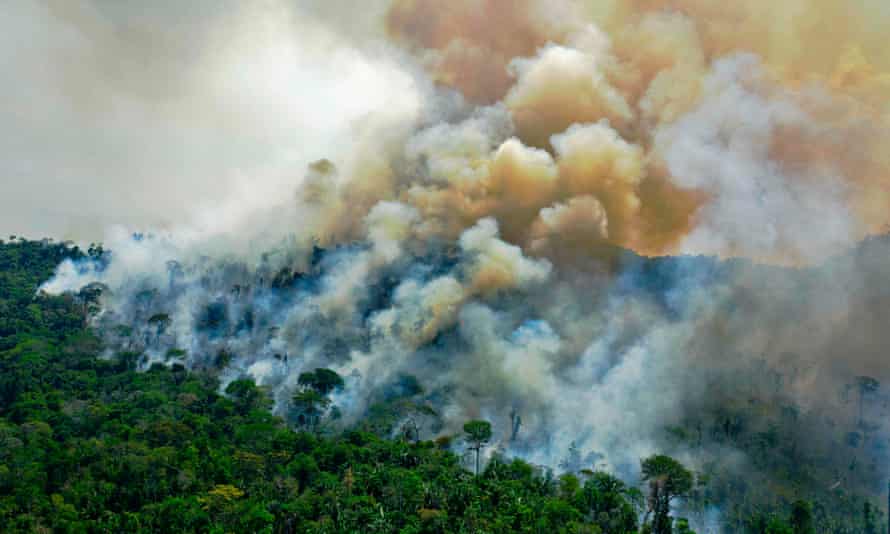
Smoke rises from the Amazon rainforest in Brazil
A burning area of rainforest reserve in Pará state, Brazil. Much of the Amazon is close to a tipping point at which it becomes savannah, researchers have warned. Photograph: Carl de Souza/AFP/Getty Images

Damian Carrington Environment editor@dpcarringtonThu 3 Jun 2021 12.34 EDT

Ice sheets and ocean currents at risk of climate tipping points can destabilise each other as the world heats up, leading to a domino effect with severe consequences for humanity, according to a risk analysis.

Tipping points occur when global heating pushes temperatures beyond a critical threshold, leading to accelerated and irreversible impacts. Some large ice sheets in Antarctica are thought to already have passed their tipping points, meaning large sea-level rises in coming centuries.

The new research examined the interactions between ice sheets in West Antarctica, Greenland, the warm Atlantic Gulf Stream and the Amazon rainforest. The scientists carried out 3m computer simulations and found domino effects in a third of them, even when temperature rises were below 2C, the upper limit of the Paris agreement.AdvertisementBiden provides details on plan to share 80m Covid vaccine doses globally – liveNetanyahu attacks ‘dangerous’ coalition seeking to topple himUnited Airlines aims to revive Concorde spirit with supersonic planesUS DoJ investigating postmaster general over political fundraising‘Mind-blowing’: tenth of world’s giant sequoias may have been destroyed by a single fireUS DoJ investigating postmaster general overpolitical fundraisinghttps://imasdk.googleapis.com/js/core/bridge3.462.0_en.html#goog_1133111315https://imasdk.googleapis.com/js/core/bridge3.462.0_en.html#goog_693384201https://imasdk.googleapis.com/js/core/bridge3.462.0_en.html#goog_475190248

The study showed that the interactions between these climate systems can lower the critical temperature thresholds at which each tipping point is passed. It found that ice sheets are potential starting points for tipping cascades, with the Atlantic currents acting as a transmitter and eventually affecting the Amazon.

“We provide a risk analysis, not a prediction, but our findings still raise concern,” said Prof Ricarda Winkelmann, at the Potsdam Institute for Climate Impact Research (PIK) in Germany. “[Our findings] might mean we have less time to reduce greenhouse gas emissions and still prevent tipping processes.”

The level of CO2 in the atmosphere required to push temperatures beyond the thresholds could be reached in the very near future, she said. “In the next years or decades, we might be committing future generations to really severe consequences.” These could include many metres of sea-level rise from ice melting, affecting scores of coastal cities.

“We’re shifting the odds, and not in our favour – the risk clearly is increasing the more we heat our planet,” said Jonathan Donges, also at PIK and part of the research team.

In May, scientists reported that a significant part of the Greenland ice sheet was on the brink of a tipping point. A 2019 analysis led by Prof Tim Lenton at the University of Exeter suggested the world may already have crossed a series of climate tipping points, resulting in what the researchers called “an existential threat to civilisation”.

The climate crisis may also mean much of the Amazon is close to a tipping point, at which carbon-storing forest is replaced by savannah, researchers have warned. The ocean currents of the Atlantic Meridional Overturning Circulation (AMOC), of which the Gulf Stream is an important part and keeps western Europe mild, are at their weakest in more than a millennium.

The research, published in the journal Earth System Dynamics, used a new type of climate model because existing models are very complex and require huge computing power, making them expensive to run many times. Instead, the researchers used an approach that focused specifically on how the temperature thresholds for the tipping points changed as the systems interacted, allowing them to run the 3m simulations.

An example of the complex chain of interactions the researchers tracked is the melting of the Greenland ice sheet. This releases fresh water into the ocean and slows down the AMOC, which is driven partly by dense, salty water being pulled down towards the ocean floor. A weaker AMOC means less heat is transported from the tropics towards the north pole, which in turn leads to warmer waters in the Southern Ocean. This can then destabilise ice sheets in Antarctica, which pushes up global sea level and causes more melting at the edges of the Greenland ice sheet.

“The study suggests that below 2C of global warming – ie in the Paris agreement target range – there could still be a significant risk of triggering cascading climate tipping points,” said Lenton. “What the new study doesn’t do is unpack the timescale over which tipping points changes and cascades could unfold – instead it focuses on the eventual consequences. The results should be viewed as ‘commitments’ that we may be making soon to potentially irreversible changes and cascades, leaving as a grim legacy to future generations.”

However, the chance of a cascade of tipping points leading to a runaway greenhouse effect, where the planet gets ever hotter even if humanity stops carbon emissions, is extremely unlikely, according to Prof Anders Levermann, also at PIK but not involved in the new work. “The Earth will get as warm as we make it, which means we’re the ones [that must] stop it,” he said.

How Flu’s Mutations Threaten Birds, Pigs and Humans

Jason Gale Jun 02 2021, 12:10 PM Jun 02 2021, 4:30 PM (Bloomberg) — New strains of influenza are constantly emerging. Although the virus is associated with winter flu epidemics in people, wild migratory birds are its main target — and are responsible for much of its global distribution. From them it may jump into mammals, especially pigs, wh

Read more at: https://www.bloombergquint.com/quicktakes/how-flu-s-mutations-threaten-birds-pigs-and-humans-quicktake
Copyright © BloombergQuint

Demand for eggs bounces back amid 2nd Covid wave

https://www.business-standard.com/article/current-affairs/demand-for-eggs-bounces-back-amid-2nd-covid-wave-121060200776_1.html

The demand for eggs, which had fallen during January-February due to the bird flu outbreak, has bounced back with rise in consumption of key poultry commodity, according to government officials.

Topics
eggs | Coronavirus

Press Trust of India  |  New Delhi Last Updated at June 2, 2021 15:55 ISTFollow us on  eggsPhoto: Shutterstock

The demand for eggs, which had fallen during January-February due to the bird flu outbreak, has bounced back with rise in consumption of key poultry commodity to boost immunity amid the second wave of the COVID-19 pandemic, according to government officials and industry experts.

The revival in demand amid tight supplies after bird flu outbreak and a sharp rise in poultry feed cost have led to an increase in retail prices to Rs 6-7 per egg depending on the areas.

But farm gate rates have not gone up commensurate to rise in input cost, affecting farmers, they said.

Egg is among the protein-rich foods prescribed for COVID-19 patients and is the cheapest source of protein available to people, experts said.

“There is a trend in increase in consumption of eggs in the last few months. Egg has the highest 11 per cent protein content,” O P Chaudhary, Joint Secretary in the Animal Husbandry, Poultry and Dairy Ministry, told PTI.

Another official in the ministry said it is difficult to estimate a monthly rise in egg consumption.

However, he said India’s annual consumption has increased to 86 eggs per person in 2019-20 from 79 eggs per person in the previous year.

Indian Broiler Group Managing Director Gulrej Alam said the poultry industry was impacted badly during April-May 2020 last year due to the lockdown as demand for both eggs and chicken declined.

However, he said demand revived between June and December last year.

Alam said the demand got again impacted in January-February this year due to bird flu outbreak. In June 2020, monthly consumption stood at average 7 eggs per person, which fell to 4 eggs per person due to bird flu scare.

“After March, the demand has bounced back to average 7 eggs per person as demand for eggs as immunity booster caught the minds of people during the second wave of the pandemic,” he said.

The demand for eggs is more in urban areas when compared with rural areas. When the urban demand rises, prices automatically go up, said Praveen Garg, Zonal Chairman at National Egg Coordination Committee.

“Egg is still the cheapest source of protein today. At a retail price of Rs 7 per egg, you are getting 11 per cent protein. In no other source of protein, you will get this much protein at just Rs 7. Therefore, there is good demand for egg,” said Prasanna Pedgaonkar, general manager of poultry-focused Venky’s.

The supply of eggs is tight as poultry farms are not operating at their full capacity in many parts of the country after bird flu early this year, covid-induced restrictions and other reasons like rising feed cost, he added.

As per the government data, India’s egg production rose to 140 billion in 2019-20 from 103 billion in 2018-19. And 98 per cent of the eggs produced is consumed in the country itself.

Gurugram-based startup Eggoz cofounder Abhishek Negi said: “We have seen huge surge in demand for branded and Eggoz eggs in the past few months since the onset of second wave of covid pandemic.”

Eggoz branded business has grown by more than 100 per cent month-on-month over the past few months, he said.

“Customers are becoming increasingly aware of health and immunity boosting benefits of eggs,” Negi said.

He informed that Eggoz has launched an enriched variant called Nutraplus where two eggs can fulfill daily recommended intake of Vitamin D and B12 among other vitamins.

“An egg that used to fetch around Rs 3-3.5/piece for the farmers in the months of April, May in Haryana touched all time high of Rs 5.5 and is now trailing at Rs 4.8/piece,” Negi said.

This has provided much-needed financial boost to layer farmers in the country and will help them meet their higher cost of production due to increased prices of soya, Negi said.

Unpackaged eggs in retail are currently being sold at around 7-8 per piece in untraceable format which has increased from normal Rs 5-6 per piece, he said.

Branded eggs are sold at higher rates, around Rs 10 and above.

Eggoz has its own poultry farm in Bihar and Madhya Pradesh. It also has tie ups with other poultry farms for procurement of eggs.

“Dead Zones” Formed Repeatedly in North Pacific During Warm Climates Over the Past 1.2 Million Years

Exposing the Big Game's avatarThe Extinction Chronicles

TOPICS:Climate ChangeClimate ScienceOceanographyUC Santa Cruz

ByUNIVERSITY OF CALIFORNIA – SANTA CRUZJUNE 3, 2021

Deep Ocean Current

Over the past 1.2 million years, marine life was repeatedly extinguished in low-oxygen ‘dead zones’ in the North Pacific Ocean during warm interglacial climates.

An analysis of sediment cores from the Bering Sea has revealed a recurring relationship between warmer climates and abrupt episodes of low-oxygen “dead zones” in the subarctic North Pacific Ocean over the past 1.2 million years.

The new study, led by researchers at UC Santa Cruz, was published on June 2, 2021, inScience Advances. The findings provide crucial information for understanding the causes of low oxygen or “hypoxia” in the North Pacific and for predicting the occurrence of hypoxic conditions in the future.

Sediment cores from the Bering Sea hold a…

View original post 764 more words

Most Intense Burst of Evolution Ever Seen: Fossil Secret May Shed Light on Origins of Many of Earth’s First Animals

Exposing the Big Game's avatarThe Extinction Chronicles

TOPICS:EvolutionGeographyPaleontologyUniversity Of Portsmouth

ByUNIVERSITY OF PORTSMOUTHJUNE 2, 2021

Drs. Minter and Bath Enright, of the University of Portsmouth’s School of the Environment, Geography and Geosciences, studied the Burgess Shale area of British Columbia, both on location in the field and with laboratory experiments. Credit: Dr. Orla Bath Enright

A large group of iconic fossils widely believed to shed light on the origins of many of Earth’s animals and the communities they lived in may be hiding a secret.

Scientists, led by two from theUniversity of Portsmouth, UK, are the first to model how exceptionally well preserved fossils that record the largest and most intense burst of evolution ever seen could have been moved by mudflows.

The finding, published inCommunications Earth & Environment, offers a…

View original post 738 more words

Montana officials kill 3 grizzlies after livestock attacks

https://nbcmontana.com/news/local/grizzly-bears-euthanized-near-whitefish?fbclid=IwAR1tskabpWwx40iOnMnxqp8G36VDmaa_zUH28Ttk4Uk6hWWQiZ0tR3xSD_Q#:~:text=KALISPELL%2C%20Mont.,involved%20in%20numerous%20livestock%20attacks


by The Associated PressTuesday, June 1st 2021AA

Montana FWP officials euthanized a pair of grizzly bears after they several depredations on llamas, sheep, goat and chickens over time near Whitefish. (Photo by John Moore/Getty Images)

Montana FWP officials euthanized a pair of grizzly bears after they several depredations on llamas, sheep, goat and chickens over time near Whitefish. (Photo by John Moore/Getty Images)

Facebook Share Icon
Twitter Share Icon
Email Share Icon

KALISPELL, Mont. — Montana wildlife officials said Tuesday that state bear management specialists killed a pair of grizzly bears near Whitefish that had been involved in numerous livestock attacks.

An adult female grizzly bear was captured on Monday and its yearling captured on Tuesday in the Haskill Basin area.

The animals were euthanized because of a history of killing livestock including sheep, llamas, chickens and a goat.

Last week, authorities killed an adult male grizzly bear in the Dupuyer area after it was suspected of attacking calves across numerous ranches.

The following was sent out by Montana Fish, Wildlife and Parks:

Montana Fish, Wildlife & Parks bear management specialists euthanized a pair of grizzly bears after numerous depredations on llamas, sheep, goat, and chickens over time near Whitefish.

FWP specialists captured an adult female grizzly bear on May 31 and its yearling on June 1 in the Haskill Basin area. The decision was made to kill both bears due to their history of livestock depredations and in consultation with the U.S. Fish and Wildlife Service.

The bears most recently entered an enclosure holding numerous animals on private property and killed a llama. The bear pushed through a gate to enter the pen where the llama was located along with other animals, including six wallaroos. FWP staff responded to assist the landowner and continue efforts to capture the bears.

The adult female bear was previously captured and fitted with a GPS radio collar, but the collar was malfunctioning and came off in the summer of 2019. Data collected from the radio collar identified the bear at several sites where sheep, llamas, and chickens were killed around Whitefish. Attempts to recapture the adult female were unsuccessful during 2020.

Earlier this spring, FWP received reports of sheep killed off East Edgewood Drive. Staff with the U.S. Department of Agriculture’s Wildlife Services set a trap in the area and attempted to capture the bear but was unsuccessful. Cameras set up at the site identified the adult female and yearling. Several days later, the bears killed goats on private property in Haskill Basin. Additional traps and cameras were set but efforts to capture the bears was unsuccessful until most recently. Reports of chickens killed on private property in the area persisted at the same time.

Mama grizzly bear killed on highway in Yoho National Park orphans two cubs

https://www.rmotoday.com/banff/mama-grizzly-bear-killed-on-highway-in-yoho-national-park-orphans-two-cubs-3836288?fbclid=IwAR3wlQPSczNkFAuj1IqXzmBoE37X_OQMoONAhafDJXJyebsB0r4vHX901Zo

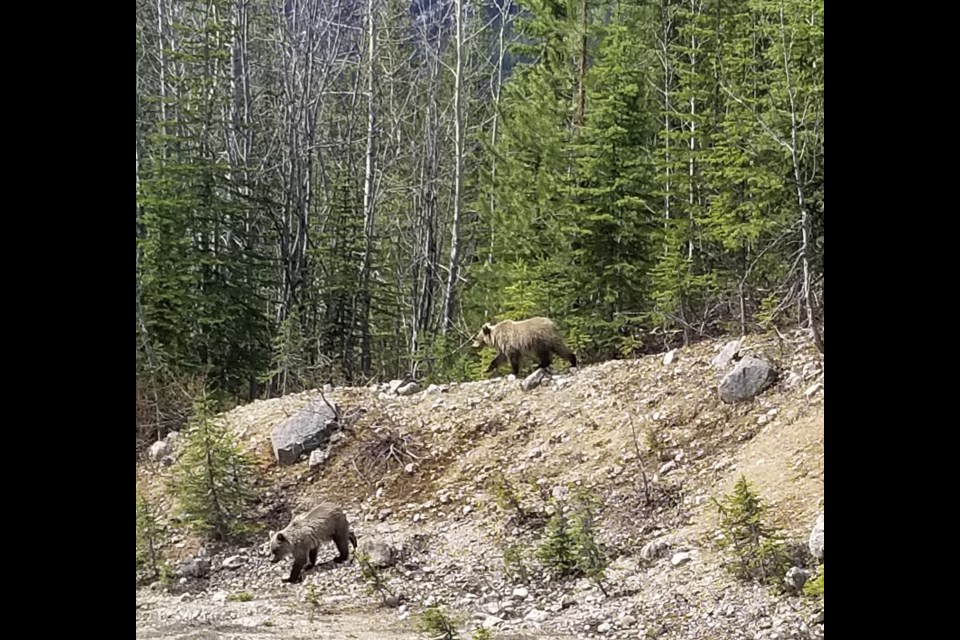
The orphaned cubs, a male and a female, were relocated by wildlife specialists into a remote backcountry area within their mother’s traditional home range, which included parts of Banff and Yoho national parks.a day ago By: Cathy Ellis

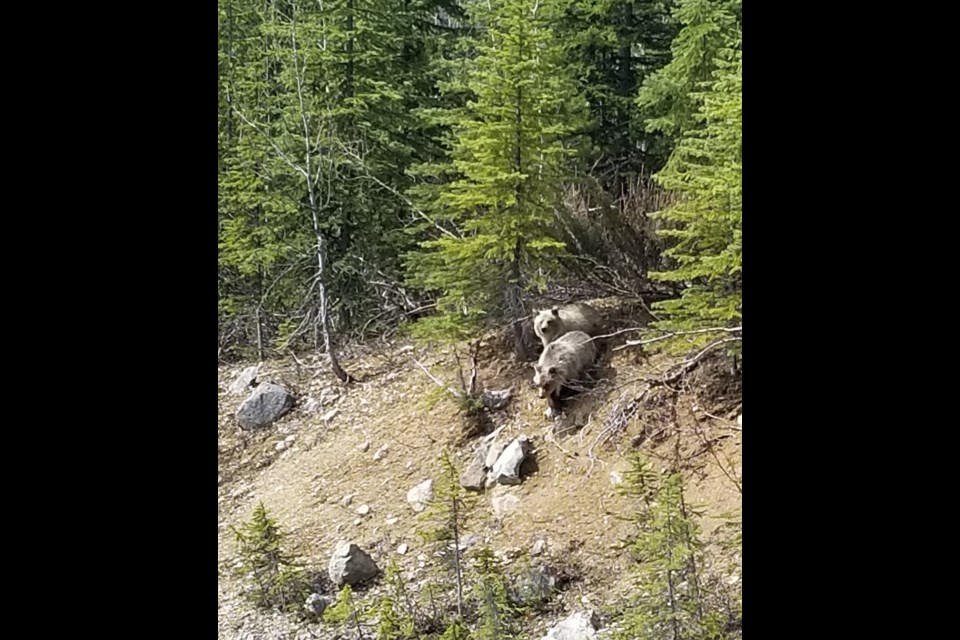
  • Two yearling grizzly bear cubs have been orphaned following the death of a well-known mama bear on the busy Trans-Canada Highway in Yoho National Park.

Photo by Parks Canada
  • Two yearling grizzly bear cubs have been orphaned following the death of a well-known mama bear on the busy Trans-Canada Highway in Yoho National Park.

Photo by Parks Canada
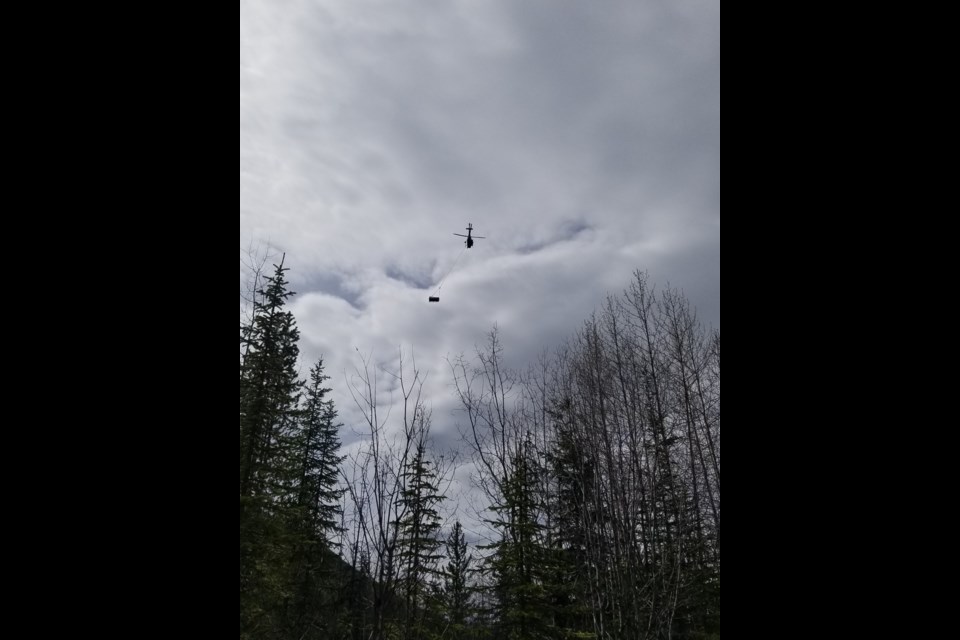
  • The bear cubs are transported by helicopter to the new location.

Photo by Parks Canada

PreviousNext1 / 3 Two yearling grizzly bear cubs have been orphaned following the death of a well-known mama bear on the busy Trans-Canada Highway in Yoho National Park. Photo by Parks CanadaExpand

Two yearling grizzly bear cubs have been orphaned following the death of a well-known mama bear on the busy Trans-Canada Highway in Yoho National Park.

Photo by Parks Canada
Two yearling grizzly bear cubs have been orphaned following the death of a well-known mama bear on the busy Trans-Canada Highway in Yoho National Park.

Photo by Parks Canada
The bear cubs are transported by helicopter to the new location.

Photo by Parks Canada

FIELD – Two yearling grizzly bear cubs have been orphaned following the death of a well-known mama bear on the busy Trans-Canada Highway in Yoho National Park.

Female grizzly bear No. 156, who produced two litters of cubs in her nine years of life, was struck by a car on the highway about one kilometre east of Field at 2 a.m. on Saturday (May 29).

The cubs, a male and a female, were relocated by wildlife specialists into a remote backcountry area within their mother’s traditional home range, which included parts of Banff and Yoho national parks.

Parks Canada wildlife experts say they wanted to give the one-and-a-half-year-old cubs every possible opportunity to remain in the wild, adding the young bruins were continuing to hang around the collision site on the weekend.

“There was a very high risk that they were going to get struck and killed as well,” said Jon Stuart-Smith, a human-wildlife management specialist for Lake Louise, Yoho and Kootenay.

A team of trained wildlife responders and experts assess individual situations and respond with management interventions aimed at the best possible outcomes for wildlife.

Previous research has indicated cubs in this region, on average, typically stay with their mothers for about four years. However, previous experience has shown one-and-a-half-year-old cubs have survived on their own in this area.

In 2011, two other cubs the same age were orphaned when their mother was struck by a train on the Canadian Pacific Railway line.  One of the cubs survived four years before getting run over on the Trans-Canada Highway in Yoho in 2015. The male bruin sustained serious injuries and had to be euthanized on site.

Stuart-Smith gives bear No. 156’s cubs a greater than 30 per cent chance of making it on their own.

“There is precedent that they can survive on their own at this stage of their life,” he said.

“Every year the chances of surviving into adulthood get greater and greater.”

The siblings’ chances of beating the odds also get better if they stay together. They can forage for food together and be vigilant and on the look-out for predators.

“Siblings together often have a higher survival rate than when they’re on their own,” Stuart-Smith said.

The cubs weighed about 50 pounds, which is on the low side, but otherwise appeared healthy.

After the wildlife specialists handled them and put ear tags in each of them for future identification, the cubs were flown by helicopter to the release site.

“They were doing well and we let them go,” said Stuart-Smith said.

The bears are too little for GPS collars, which track where the animals travel. As bears grow quickly at this age, any collar would have had to come off in short order.

“Although it would have been very important information to get, we wanted to put their well-being and their chance of survival as the first priority,” Stuart-Smith said.

The biggest risk to the young bears is a large male grizzly bear predating upon them. Adult male bears are known to kill cubs that are not theirs – and it’s the mother that typically defends them.

The other great risk is if the cubs return at some point to the deadly stretch of highway where their mother was killed in search of the easy-to-get roadside dandelions and vegetation.

Stuart-Smith said although there were limited relocation options because of snow in the high country, the bears were taken to an area with natural foraging opportunities.

He said he’s optimistic the cubs will find enough nutrition to sustain themselves through summer and fall in order to den up and make it through the winter with enough reserves to come out in the spring.

“Getting them away from the highway was important for us, but now it’s just a matter of them figuring out how to survive and feed themselves,” said Stuart-Smith.

“We’re hoping the conditions that we found for them are enough to keep them there and away from human habituation and the highway where they would have a higher risk of being struck or getting into trouble.”

Bear 156 spent most of her life in the backcountry, but historically brought her cubs down to the valley bottom by the Trans-Canada Highway for a few weeks each spring to feed on roadside green-up.

It is hoped No. 156’s cubs have learned the lessons she has taught them, including following the green-up as snow melts and feeding on natural food sources previously shown to them.

“She would spend most of her time in the backcountry in Banff and Yoho, and amazingly enough, not really run into anybody back there,” Stuart-Smith said.https://9033353bdaee190a7d5260c5f8e269d9.safeframe.googlesyndication.com/safeframe/1-0-38/html/container.html

“She probably would have moved them on to other habitat shortly, so it’s quite unfortunate she was struck at this time.”

Bear No. 156 was captured and fitted with a GPS collar as part of the joint Parks Canada-Canadian Pacific Railway five-year study on ways to reduce bear mortality on the train tracks.

This is her second litter of cubs. Her previous litter of two, which includes a rare white grizzly bear, has been spotted again this spring. Those bears are now in their fifth year.

“We have seen them periodically and thankfully most visitors have been respectful of their space,” Stuart-Smith said.

“Hopefully they continue to make a living and go on to produce offspring themselves as well.”

Parks Canada urges motorists to consider not stopping when they see bears by the side of the road if it is unsafe, but to stay in their vehicles if they do decide to pull over.

Following the death of bear No. 156, motorists are also reminded to observe speed limits and to drive with extra caution in the early morning and evening hours when wildlife are most active.

“These are really important things in order to avoid tragic incidents like this,” Stuart-Smith said.

Please report all wildlife sightings on the roads or any wildlife incidents to Parks Canada dispatch at 403-762-1470.

NASA aims for 2 new missions to Venus to learn more about ‘lost habitable’ world

Exposing the Big Game's avatarThe Extinction Chronicles

https://www.foxnews.com/science/nasa-aims-for-2-new-missions-to-venus-to-learn-more-about-lost-habitable-world

13 hours ago

In 1989, NASA used a space shuttle to send its Magellan spacecraft into orbit around Venus

ByEdmund DeMarche| Fox News

closehttps://static.foxnews.com/static/orion/html/video/iframe/vod.html?v=20210526013148#uid=fnc-embed-1

Fox News Flash top headlines for June 2

For the past few years, Mars has beenhaving its moment.

The planet has captured the fascination of Hollywood, the U.S. and China both landed rovers on its surface and Elon Musk, the head of SpaceX, recently announced that his company hopes to launch its next-generation rocket in 2022 from a platform in the Gulf of Mexico. His sights are set on Mars.

Other planets have become something of an afterthought. When was the last time you caught yourself thinking about Neptune? Pluto had the worst fate of all and in 2006 wasdowngraded to dwarf planet.

(NASA/JPL-Caltech)

But NASA on Wednesday announced its intention to bring more…

View original post 270 more words

Biden suspends Trump-era oil drilling leases in Alaska’s Arctic refuge

https://www.theguardian.com/us-news/2021/jun/01/biden-suspends-oil-drilling-leases-alaska-arctic-refuge-trump-era

Interior department order follows a temporary moratorium on oil and gas lease activities imposed by president on first day in office

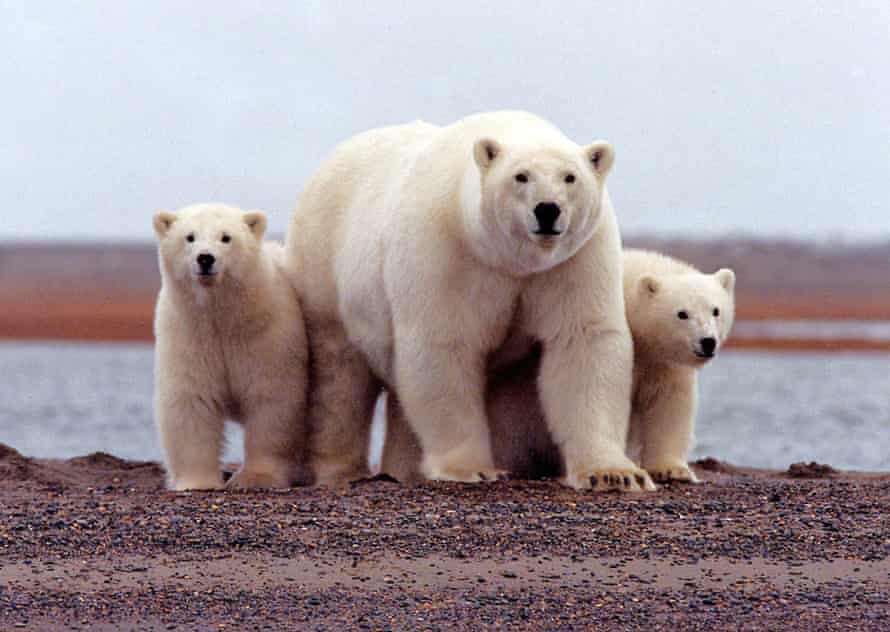
A polar bear keeping close to her young along the Beaufort Sea coast in the Arctic National Wildlife Refuge in Alaska.
A polar bear keeping close to her young along the Beaufort Sea coast in the Arctic national wildlife refuge in Alaska. Photograph: Reuters

Supported by

SEJ

About this contentJillian AmbroseWed 2 Jun 2021 10.21 EDT

The Biden administration has reversed plans approved by Donald Trump to allow companies to drill for oil and gas in Alaska’s Arctic national wildlife refuge, a remote region that is home to polar bears, caribou – and 11bn barrels of oil.

The decision to suspend the oil drilling licences follows the temporary moratorium on oil and gas lease activities imposed by Joe Biden on his first day in the White House, and serves as a high-profile show of his climate credentials after approving hundreds of requests to drill on federal lands in recent weeks.

Biden used his 2020 presidential campaign to oppose drilling in the remote, 19.6m-acre Alaskan refuge, which is considered sacred by the indigenous Gwich’in communities and is also home to polar bears, caribou, snowy owls and other wildlife, including migrating birds from six continents.

The region has long been an area of deep political contention between Republicans and the oil industry, which have long been trying to open up the oil-rich refuge, and the Democrats, environmental groups and some Alaska Native tribes which have been trying to block drilling since the mid-1990s.

But after a decades-long battle the first sale of the lease areas in the refuge earlier this year failed to attract interest from the oil industry’s biggest players, potentially making the decision to suspend the oil drilling licences an easier option for Biden’s officials which last week angered environmental groups by defending a major oil project on Alaska’s north slope.Advertisement

California teen who shoved bear to save dogs: ‘I didn’t know I had it in me’

https://imasdk.googleapis.com/js/core/bridge3.462.0_en.html#goog_1130443918https://imasdk.googleapis.com/js/core/bridge3.462.0_en.html#goog_1779031852https://imasdk.googleapis.com/js/core/bridge3.462.0_en.html#goog_4316489

The US Department of Justice said the Trump-era decision to allow the project in the National Petroleum Reserve of Alaska’s north slope was “reasonable and consistent” with the law and should be allowed to go ahead. It added that opponents of the Willow project were seeking to stop development by “cherry-picking” the records of federal agencies to claim environmental review law violations.

The decision to green light the Willow project, spearheaded by $78bn oil company Conoco-Phillips, was heavily criticised by climate campaigners which claim that it flies in the face of Biden’s pledges to address climate change. It has also raised concern that the Biden administration is not willing to take a stand against US oil giants.

The Arctic is heating up at three times the rate of the rest of the planet and ConocoPhillips will have to resort to installing “chillers” into the Alaskan permafrost, which is rapidly melting due to global heating, to ensure it is stable enough to host drilling equipment.

By contrast, the suspension of oil drilling in Alaska’s Arctic national wildlife refuge is unlikely to be opposed by the oil industry after the the first sale of drilling rights raised less than $15m (£11m) from two small oil drillers and failed to attract interest from companies including ExxonMobil, Chevron and ConocoPhillips.

Kristen Miller, acting executive director of the Alaska Wilderness League, hailed suspension of the Arctic leasing program, which she said was the result of a flawed legal process under Trump.

“Suspending these leases is a step in the right direction, and we commend the Biden administration for committing to a new program analysis that prioritises sound science and adequate tribal consultation,” she said.

More action is needed, Miller said, calling for a permanent cancellation of the leases and repeal of the 2017 law mandating drilling in the refuge’s coastal plain.

The drilling mandate was included in a massive tax cut approved by congressional Republicans during Trump’s first year in office. Republicans said it could generate an estimated $1bn over 10 years, a figure Democrats call preposterously overstated.

Bernadette Demientieff, executive director of the Gwich’in Nation steering committee, thanked the president and the interior secretary, Deb Haaland, and said that tribal leaders are heartened by the Biden administration’s “commitment to protecting sacred lands and the Gwich’in way of life”.

Agencies contributed to this report