Cyberattack on food supply followed years of warnings

https://www.msn.com/en-us/news/us/cyberattack-on-food-supply-followed-years-of-warnings/ar-AAKJBMo?ocid=winp1taskbar

By Ryan McCrimmon and Martin Matishak – 1h agoLike|163

© David Zalubowski/AP PhotoA shopper surveys the overflowing selection of packaged meat in a grocery early Monday, April 27, 2020, in southeast Denver.

Security analysts from the University of Minnesota warned the U.S. Agriculture Department in late May about a growing danger — a cyber crime known as ransomware that could wreak more havoc on Americans’ food sources than Covid-19 did.

A week and a half later, the prediction became reality as a ransomware attack forced the shutdown of meat plants that process more than a fifth of the nation’s beef supply in the latest demonstration of hackers’ ability to interrupt a critical piece of the U.S. economy.

The hack of the global meatpacking giant JBS last weekend is also the starkest example yet of the food system’s vulnerability to digital threats, especially as internet technology and automation gain an increasing role across farmlands and slaughterhouses. But federal oversight of the industry’s cybersecurity practices remains light, despite years of warnings that an attack could bring consequences ranging from higher grocery prices to contaminated food.

Virtually no mandatory cybersecurity rules govern the millions of food and agriculture businesses that account for about a fifth of the U.S. economy — just voluntary guidelines exist. The two federal agencies overseeing the sector include the USDA, which has faced criticism from Congress for how it secures its own data. And unlike other industries that have formed information-sharing collectives to coordinate their responses to potential cyber threats, the food industry disbanded its group in 2008.

Now, food producers need to face the fact that disruptive cyberattacks are part of what Agriculture Secretary Tom Vilsack calls their “new reality.”© Susan Walsh/AP PhotoAgriculture Secretary Tom Vilsack speaks during an event at The Queen theater in Wilmington, Del.

National security threats to the agricultural supply chain haven’t received enough attention across the entire federal government, argued Rep. Rick Crawford (R-Ark.), who serves on both the House Intelligence and Agriculture committees.

“Too often agriculture is dismissed as: ‘It’s important but it’s not that big a deal,’” Crawford said in an interview. “If you eat, you’re involved in agriculture. We all need to recognize that it’s a vital industry and this [incident] illustrates that.”

The North American Meat Institute, which represents meatpackers, declined to comment on the state of the industry’s cybersecurity measures or potential changes following the hack.

The downside of ‘enormous technology’

The cry of alarm from the University of Minnesota’s Food Protection and Defense Institute arrived in the most unassuming of packages: as one of more than 180 official comments filed to the USDA related to a presidential order about securing the nation’s supply chains.

“Fast-spreading ransomware attacks could simultaneously block operations at many more plants than were affected by the pandemic,” the institute warned in its May 18 filing, noting that Covid-19 last year forced a shutdown of slaughterhouses that prompted fears of meat shortages and price spikes.

It was just the latest in a series of warnings from national security and law enforcement agencies, private cybersecurity companies and academic researchers.

In November, the cybersecurity firm CrowdStrike said in a report that its threat-hunting service had witnessed a tenfold increase in interactive — or “hands-on-keyboard” — intrusions affecting the agriculture industry over the previous 10 months. Adam Meyers, the company’s senior vice president of intelligence, said that of the 160 hacking groups or gangs the company tracks, 13 have been identified in targeting agriculture.

2018 report from the Department of Homeland Security examined a range of cyber threats facing the industry as it adopts digitized “precision agriculture,” while the FBI said in April 2016 that agriculture is “increasingly vulnerable to cyberattacks as farmers become more reliant on digitized data.”

The industry also offers plentiful targets: As the Department of Homeland Security’s cyber agency notes, the ag and food sector includes “an estimated 2.1 million farms, 935,000 restaurants, and more than 200,000 registered food manufacturing, processing, and storage facilities,” almost all under private ownership.

For decades, however, most farmers and foodmakers have prized productivity over all else, including security — trying to eke out profits in an industry with chronically narrow margins and meet the growing global demand for food. In the quest for efficiency, meat plants are ratcheting up their processing line speeds and investing in robotics to more quickly carve up carcasses. Farmers are adopting high-tech innovations like drones, GPS mapping, soil sensors and autonomous tractors, with vast data behind it all.

All that connectivity and automation comes at a cost.

Video: Alarming rise of ransomware attacks (ABC News)Play VideoAlarming rise of ransomware attacks

“This is part of the downside of having an enormous technology, enormous capacity to turn a lot of data and become more efficient,” Vilsack said. “There are risks associated with that.”

‘No industry is off limits’

The disruption to JBS, which controls nearly a quarter of America’s cattle processing, has raised concerns mainly about the impact on meat markets. USDA data shows wholesale beef prices have steadily ticked higher each day since the hack, with choice cuts climbing above $341 per hundred pounds as of Thursday morning.

Higher prices are just one of many potential consequences. Cyberattacks could also lead to the sale of tainted food to the public, financial ruin for producers, or even the injury and death of plant workers, according to the Food Protection and Defense Institute, a DHS-recognized group.

In its public comments to USDA, the institute highlighted gaping holes in the industry’s preparedness, including a general “lack of awareness throughout the sector” and scant guidance from government regulators. It also noted that large parts of the industry rely on decades-old, custom-written software that is essentially impossible to update, along with outdated operating systems like Windows 98.

“The agriculture industry probably lags behind some of the other industries that have been hit harder by cyber crime” like the financial sector, which has long been a prime target for criminals, said Michael Daniel, president and chief executive of the Cyber Threat Alliance, a nonprofit organization.

However, the JBS hack, just like the ransomware attack on Colonial Pipeline in May and the ensuing gasoline-buying panic, shows that “no industry is off limits,” he added. Ransomware operators “are going to go wherever they think they can extract money.”

Daniel, a cyber coordinator during the Obama administration, said he would recommend that industry executives take basic steps like assessing their companies’ digital preparedness and reviewing federal security guidelines.

“What I would be telling them is: You really need to be thinking about how you manage your cybersecurity risk, just like you manage commodity price risk, just like you manage natural disaster risk, just like you manage legal risk,” Daniel said.

The White House similarly advised all companies on Thursday to harden their defenses, including by installing the latest software updates and requiring extra authentication for anyone logging onto their systems.

Meyers, from CrowdStrike, said seriousness with which cybersecurity is regarded varies “depending on who you’re talking to in the ag industry.” He said multinational conglomerates that have intellectual property worth protecting make it a priority, but “as you get down the food chain, so to speak, they probably think about it less seriously.”

The JBS hack “is the big wake-up call for all these small, medium and large businesses. You can’t stick your head in the sand, and hope it’s not going to happen to you because it is,” Meyers said. “You need to be prepared, and you need to get yourself ready to fight. Because if you don’t, you’re going to be paying a ransom and somebody’s going to be eating your lunch.”

A call for Congress to act

Congress may need to step in to help fix the situation, said Crawford, the House member from Arkansas, who reintroduced legislation earlier this year that would establish an intelligence office within USDA. The office would serve as a conduit for the department to keep farmers informed of threats to their livelihood, including espionage and cyber operations by malign actors.

A key reason the industry isn’t prepared against dangers like ransomware is that the U.S. intelligence community hasn’t considered the national security threats to agriculture as much as it should, Crawford argued.

He added that communication must go both ways: Companies need to have their cyber experts share what they see with their government counterparts. No such requirements exist for the food and ag industry.

“What I would advise the private sector to do is be proactive on these things as possible,” according to Crawford, who is organizing a “business intelligence and supply chain integrity” forum this summer that will feature cybersecurity experts, government officials and representatives from the clandestine community to educate local businesses about digital threats.

USDA has not proposed any significant policy changes following the JBS attack, instead asking food and agriculture companies to take voluntary steps to safeguard their IT and infrastructure from cyber threats. Vilsack on Thursday pointed to guidelines from DHS’ Cybersecurity and Infrastructure Security Agency that companies can adopt for their own protection.

There’s no shortage of policy recommendations from experts in the field. Most proposals involve educating industry leaders and employees, setting minimum standards for cyber safety or improving coordination between companies and agencies.

Another step recommended by the Food Protection and Defense Institute: USDA and DHS should work with the industry to create a cyber threats clearinghouse — known as an “information sharing and analysis center” — to collaborate on studying and addressing digital risks.

Other critical industries, including the electricity and financial sectors, already have their own ISACs, but the food industry does not. Instead, some food and ag companies have joined a broader information-sharing group that covers the information technology industry, said Scott Algeier, executive director of the IT-ISAC.

“They wanted to engage with other companies but did not have an ISAC. So they applied to us,” said Algeier, whose organization also provides a threat-sharing forum for the elections industry.

The nonprofit Internet Security Alliance has called for federal grants and other incentives for food companies to step up their cyber defenses.

“Increasing cybersecurity will cost money, and finding the additional funding will not be simple for the sector since it is governed by tight margins and faces a highly competitive world market,” the group wrote on its website.

Helena Bottemiller Evich contributed to this report.

Microsoft may earn an Affiliate Commission if you purchase something through recommended links in this article.Continue reading

West Virginia Expands Prizes For COVID-19 Vaccinations, Including Hunting Rifles And Cash

Exposing the Big Game's avatarCommittee to Abolish Sport Hunting Blog

https://pittsburgh.cbslocal.com/2021/06/03/wv-covid-vaccine-lottery-and-guns/

June 3, 2021 at 10:05 amFiled Under:Charleston,Coronavirus,COVID-19,Gov. Jim Justice,Hunting Rifles,Local TV,West Virginia Newshttps://www.cbsnews.com/live/cbsn-local-pit/?premium=1&optanonConsent=15

CHARLESTON, W.Va. (KDKA) – West Virginia Governor Jim Justice’s office announced they are expanding the state’s vaccination lottery to include several prizes including hunting rifles.

During a Tuesday briefing, Justice announced those vaccinated would be entered to win hunting rifles, a $1.588 million grand prize, a $588,00 second-place prize, full scholarships to any higher education institution in West Virginia, custom trucks, weekend vacations at state parks, and lifetime hunting and fishing licenses.READ MORE:Child Tax Credit: When Monthly Checks Start And Other Important Info

Justice’s office also said the hunting rifles and shotguns would be customized for the winner.READ MORE:Body Found In Burned Vehicle In Washington County Identified, Cause And Manner Of Death Still Pending

“The faster we…

View original post 96 more words

The [overpopulated] world’s forgotten greenhouse gas

Exposing the Big Game's avatarThe Extinction Chronicles

https://www.bbc.com/future/article/20210603-nitrous-oxide-the-worlds-forgotten-greenhouse-gas

Share using EmailShare on TwitterShare on FacebookShare on Linkedin(Image credit: Getty Images)

Agriculture is the principal source of N2O emissions from human activity (Credit: Getty Images)

By Ula Chrobak3rd June 2021FromKnowable MagazineEmissions of the greenhouse gas commonly known as laughing gas are soaring. Can we cut emissions from its greatest anthropogenic source?I

In the world’s effort to cut greenhouse gas emissions, the source of our food is coming into the spotlight. There’s good reason for that:Agriculture accounts for 16 to 27% of human-caused climate-warming emissions.But much of these emissions are not from carbon dioxide, that familiar climate change villain. They’re from another gas altogether: nitrous oxide (N2O).

Also known as laughing gas, N2O does not get nearly the attention it deserves, says David Kanter, a nutrient pollution researcher at New York University and vice-chair of the International Nitrogen Initiative, an organisation focused on nitrogen pollution research and policy making. “It’s a forgotten greenhouse gas,”…

View original post 1,578 more words

Arctic sea ice thinning twice as fast as thought, study finds

Exposing the Big Game's avatarThe Extinction Chronicles

https://www.theguardian.com/world/2021/jun/04/arctic-sea-ice-thinning-twice-as-fast-as-thought-study-finds

Less ice means more global heating, a vicious cycle that also leaves the region open to new oil extraction

Snow weighs the ice down, so it is critical to know how deep it is in order to calculate the thickness of the ice
Snow weighs the ice down, so it is critical to know how deep it is in order to calculate the thickness of the ice.Photograph: Natalie Thomas/Reuters

Damian CarringtonEnvironment editor@dpcarringtonFri 4 Jun 2021 01.01 EDT

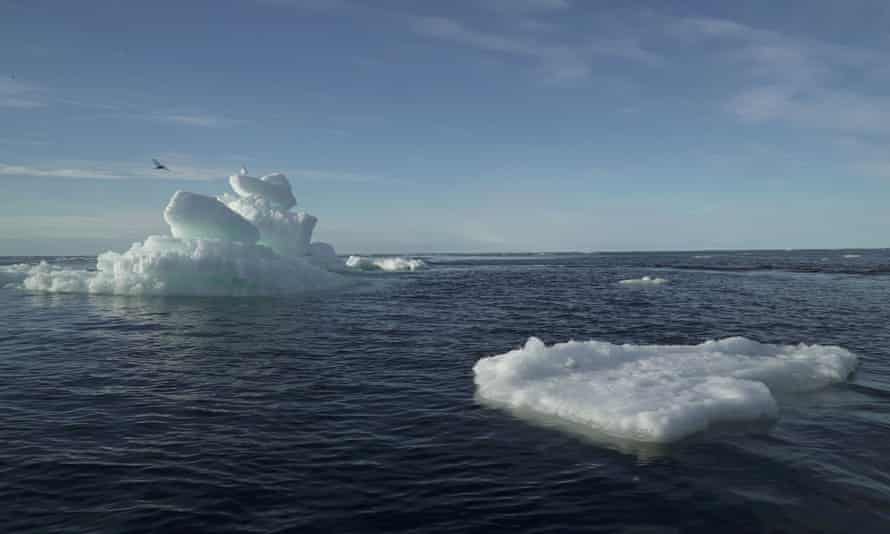
Sea ice across much of theArcticis thinning twice as fast as previously thought, researchers have found.

Arctic ice is melting as the climate crisis drives up temperatures, resulting in a vicious circle in which more dark water is exposed to the sun’s heat, leading to even more heating of the planet.

The faster ice loss means the shorter north-eastern shipping passage from China to Europe will become easier to navigate, but it also means new oil and gas extraction is more feasible.

Calculating the thickness of sea ice from satellite radar…

View original post 663 more words

Playing Russian Roulette with Grizzly Matron 399 and the Bears of Yellowstone

MAY 24, 2021

BY LOUISA WILLCOXFacebookTwitterRedditEmail

Photo by Tom Mangelsen.

This is the first of a two-part essay on the famous bear matron of Jackson Hole, Grizzly 399, and the mounting threats she and other grizzlies face. Part 2 will focus on a path forward. You might also want to listen to a fascinating Grizzly Times podcast (2 episodes) with renowned photographer Tom Mangelsen, who waxes eloquent about his 15-year relationship with this special bear and his advocacy for the wild.

Few if any animals have been more celebrated than 399, the matron grizzly bear of Grand Teton National Park. Each year, families flock to Jackson Hole hoping to catch a glimpse of her shepherding her latest brood – now four irrepressible yearlings. Her grown-up daughter, Grizzly 610, accompanied by two pre-adolescent cubs now as large as she is, generates almost as much excitement. Today, about 10 grizzlies of 399’s lineage make their living along Jackson Hole’s roads in the company of people.

With a global fan club, Grizzly 399 is an ambassador for grizzlies everywhere. Her tolerance for people is legendary. To cross a road, she is known to look both ways before threading through parked cars and mobs of delighted onlookers, as doors slam and kids shriek – placidly returning to fetch a cub still wrestling with a road cone. Who could still cling to the myth that grizzlies are vicious man-eaters after beholding the ways of 399?

But as the fame of these roadside grizzlies had grown, so have the crowds. Current systems to keep visitors and grizzlies safe are breaking down. As summer tourist season begins with a vengeance, officials are often either nowhere to be seen — or they are firing projectiles at bears in a cruel, disorganized, and futile effort to haze grizzlies rather than manage people.

Not long ago 399 and her four youngsters were swarmed by 300 people – with no Park Ranger in sight. And 610, known as an especially protective mom, bluffed charged two tourists out of a mob of 150 who got too close. East of the park, 863 (aka “Felicia”) and her adorable new cubs face a tsunami of people, cracker shells fired by state managers, as well as semis barreling down the adjacent highway at 70 miles an hour.

Anywhere grizzlies are visible we are seeing scenes of bedlam and terrifying close calls – and tourist season has just begun. Last year, record numbers of people — throngs numbering as many as 1000 — gathered any time 399 or other roadside grizzlies appeared. The spectacle lasted from Memorial Day to New Year’s Day, when 399 broke trail for her youngsters through chest-deep snow to reach her den.

Caring citizens, most of them veteran photographers and wildlife watchers, are doing what they can to keep tourists from crowding Jackson Hole’s grizzlies. Last year these citizen volunteers saved the lives of 399, 610 and other grizzlies many times. So did Wyoming Game and Fish biologist Mike Boyce, who spent long days and nights trying to keep 399 safe as she ventured south of the town of Jackson onto private lands.

But these efforts are a drop in the bucket of a sea of need. This summer we can expect another valence shift in tourism as pent-up families seek beauty, solace and adventure in our National Parks. With ever more airlines servicing the Yellowstone and Grand Teton region, another record-breaking year of visitation is virtually guaranteed – and with it, more pressure on the region’s world-class wildlife.

When I asked veteran Jackson News and Guide reporter Mike Kosmrl what he thought this summer would bring for Grand Teton’s grizzlies, he offered one word: “chaos.”

This chaos surrounding 399 and her offspring highlights the threats posed by so many people, compounded by long-neglected deficiencies in grizzly bear management. Courageous government action is urgently needed – on behalf of not just grizzlies, but also on behalf of the multitudes who care about these wild animals.

Grizzly 399’s Unique Strategy: Depending on the Kindness of Strangers

Grizzly 399 makes her living near people, teaching generations of cubs how to live amicably along roads and around recreation areas. Her main reason for settling into these human-impacted environments is to keep her cubs safe from aggressive male grizzlies—known as boars—that often prefer to hang out in more remote areas.

For her and other female grizzlies who frequent roadsides, staying near people is a better bet than mixing it up with boars who can and will kill cubs. Every day, these females and their offspring literally depend on the kindness of strangers, to borrow from Blanche Dubois’ famous line in A Streetcar Named Desire.

To these grizzlies, people are allies – even, at times, babysitters. This should not surprise us given the stories told for millennia by Native Peoples throughout the Northern Hemisphere about humans living among bears, saved by bears, even marrying bears.

We know more about 399 than most grizzly bears because she has lived her long life so close to us. Tom Mangelsen, a world-famous photographer, has photo-documented his 15-year relationship with this special bear, co-writing a lovely book about her.

A successful and attentive mom, 399 is the quintessential mother with muffins in the oven. She birthed and successfully raised three sets of triplets. And last year, she performed a miracle when she emerged with quadruplets at the age of twenty-four – ancient for a mother bear. Her feat is especially noteworthy given that only eight litters of quadruplets have been documented in the Yellowstone ecosystem since 1983.

We cannot forget the difference that one good mom can make. All existing Yellowstone grizzly bears are the decedents of perhaps only 50 females alive during the early 1980’s. Every mom matters. And a female such as 399 is an Olympian.

But despite her competence as a mother, so far 399 has raised only two females who have also had cubs, Grizzlies 610 and 962, the latter just appearing with a new cub. The reasons are straight-forward. Grizzly bear birth rates are inherently low and many of 399’s offspring have been killed by humans.

But humans can be benevolent. There is no doubt that 399 would not still be with us were it not for the dedication of the Park Service. Indeed, a past superintendent of Grand Teton Park, Mary Scott, spared 399’s life when, as a young mom with cubs, she mauled a jogger who came too close as she fed upon a dead elk. Since then, with the help of volunteers who comprise its Bear Brigade, Grand Teton Park has tried to ensure that everybody — bears and humans — stays safe.

But the crush of park visitors is overwhelming agency capacity. Despite clear warning signs that this year would see record tourism, government agencies are again on their back heel. They have also failed to adapt to the tangible impacts of a warming climate, which is prompting bears to be up long before the Brigade is typically assembled and long after it disbands for the season.

Moreover, when 399 steps outside the borders of the National Parks, she enters a more dangerous world.

The Perils of an Olympian Mom

Much of 399’s home range lies outside the protected landscapes of Grand Teton Park. She dens and forages on Bridger Teton National Forest lands that abut the park. The Forest is a deadlier environment because it is managed for “multiple use,” meaning mostly for the benefit of hunters, ranchers, off-road vehicle users and increasingly, mountain bikers. Not surprisingly, one of 399’s cubs, Grizzly 587, was killed by managers after depredating cows on a Forest Service grazing allotment, where notoriously anti-grizzly ranchers dominate management of public lands that are ostensibly owned by all citizens.

399 must also dodge poachers who often are undeterred by the hefty penalties that can be levied under the Endangered Species Act — but too often are not. Indeed, one of her daughters, Grizzly 615, aka Persistence, was gunned down illegally as she ate a moose carcass on National Forest land close to the Park border.

She and other bears such as Grizzly 863 must also avoid being splattered on the roads as trucks and tourists speed to their next destination. And even inside Grand Teton Park, roads are dangerous. Two of 399’s cubs have been killed by vehicle collisions.

399 must, moreover, navigate private lands, dogs, compost piles, beehives, garbage and more. Even in Jackson, where wildlife is abundant, too many people still unthinkingly contribute to destroying bears by poorly managing food and garbage. One woman has continued to feed grizzlies and other wildlife despite government efforts to dissuade her. The results are predictable. One of 399’s cubs, Grizzly 964, developed such a bad garbage habit that she was relocated last summer to the north end of the ecosystem.

And now 399 and other roadside bears must dodge projectiles fired from shotguns, part of an ill-conceived, haphazard and doomed effort by the Park Service to haze her and other grizzlies away from the roadside environment they depend on.

Of Riot Control and Half Measures

With the Park Service understaffed and its Bear Brigade not fully assembled, the agency is floundering to deal with crowds gathering long before Memorial Day, the traditional kickoff date for summer tourist season. But instead of expanding its program and more aggressively managing the people, government officials are taking out their anxiety on innocent bears by shooting them with rubber bullets and rock salt or dosing them with bear spray when they near roads. The effort is erratic and disorganized, with contradictory messages to the public about what the agency is doing and why. (The Park Service did not respond to an interview request by deadline).

Such riot control tactics will fail, even as they harm the bears. Roadside females are more terrified of male bears in the backcountry that might eat their cubs than they are of the poorly implemented and ill-thought-out hazing efforts. Grizzlies such as 399 and 610 have long relied on limited roadside habitats and cannot—more importantly will not—just pick up and relocate.

Many roadside bears would rather suffer the punishment of rubber bullets, no matter how severe, than mix it up with aggressive bears that can be a mortal threat. Proving this point, years ago one black bear was actually bludgeoned to death by rubber bullets while cowering along a narrow strip of habitat along a road in Yellowstone Park. And hazing is deeply stressful and confusing to the animals. As anyone who has trained or rescued a dog knows well, stress and fear can make animals more unpredictable and aggressive towards people.

Furthermore, an effective hazing program is extraordinarily difficult to implement. Negative experiences need to be unrelenting and consistent if bears are to learn to avoid specific environs such as roadsides. Execution of such a program requires resources, discipline, and skill on the part of managers—something that has never been achieved before. Without this mix of ingredients, hazing programs devolve into little more than the gratuitous infliction of pain on targeted bears. And bears are intelligent, which makes the job even harder. In Yellowstone, grizzlies targeted for hazing quickly learned to disappear when the green Park Service trucks arrived and return to the roadsides when they left.

The Park Service is hardly the only agency failing these bears and the broader public who care about their well-being. Others with authority over grizzlies include the state of Wyoming, Bridger Teton National Forest, US Fish and Wildlife Service, Wyoming Department of Transportation, and Teton County.

Importantly, the state of Wyoming dictates wildlife management on nonpark lands. State managers have long been hostile towards large predators such as grizzlies, seen as competitors for elk and moose. In the zero-sum calculous of state managers, any elk or moose killed by a predator translates into lost hunting-license revenues. As problematic, those predators that managers do allow to live are seen as little more than grist for the mill of trophy hunting. It is no surprise that state managers resent celebrity roadside grizzlies because, beloved by nonhunters, these bears represent an alien and even existential threat.

The fundamentally antagonistic view of Wyoming Game and Fish towards these bears and their fans has been on full display on Togwotee Pass in recent days, where officials are exploding cracker shells at Felicia and her newborns and imposing erratic constraints on viewers. (Wyoming Game and Fish did not respond to an interview request by deadline). Wyoming Game and Fish large carnivore specialist Dan Thompson, who is in charge of these efforts, made his view clear several years ago, saying: “Habituation towards people and the roadside bear situation, it’s not something that we’re supportive of.”

Gutted by budget cuts, the Bridger Teton Forest is also ill-equipped to manage mounting numbers of recreational users on forest lands near Grand Teton Park, even as the agency continues to shirk its legal duty to conserve wildlife. Similarly, Teton County has struggled to ensure meaningful sanitation on private lands. And Wyoming Department of Transportation has done precious little to improve safe passage for wildlife, in contrast to successful systems of overpasses and underpasses built in Montana’s Flathead Valley and in Canada’s National Parks.

But the agency with the clearest legal authority to help these bears is the one that is most conspicuously absent: the US Fish and Wildlife Service (FWS). The Endangered Species Act charges FWS with recovering threatened species, using the best available science in decision-making, and ensuring that federal and state agencies take a precautionary approach in decisions affecting protected species. Despite this duty, the FWS has done little lately other than sanction the killing and relocating of grizzlies that are increasingly deemed to be “surplus” by FWS managers.

Thankfully, citizen volunteers have been stepping into the breach.

Into the Breach

In recent years, concerned citizens, most of them photographers, have been helping manage tourists at often understaffed wildlife jams – and they are up to their eyeballs this spring. Too numerous to count, citizens routinely step in to slow traffic and keep tourists from getting too close, literally saving not only people who are careless, but also the lives of roadside bears. Any time a person gets injured, the involved bear almost invariably pays the ultimate price.

Recognizing the scale of the need, last winter, photographers Jack and Gina Bayles created Team 399 to raise money through donations and the sale of merchandise to help support Grand Teton Park’s Wildlife Brigade, through the Park’s nonprofit arm, Grand Teton Park Foundation. They are hoping that contributions from these bears’ enormous social media following can be channeled into work to help keep them safe.

This summer Team 399 is also partnering with Friends of the Bridger Teton National Forest, the nonprofit private adjunct of the Forest, to sponsor additional seasonal staff to help educate and manage roadside throngs of bear-watchers in Felicia’s haunts along Highway 287 on Togwotee Pass. After a successful foray last year, Friends of the Bridger Teton has again hired two roadside bear ambassadors to help manage viewers along this hazardous stretch of highway.

Meanwhile, other local organizations are engaged in complementary work. The Jackson Hole Wildlife Foundation is working with Wyoming Department of Transportation to improve signage along area roads. Greater Yellowstone Coalition has been working with the Bridger Teton Forest to increase the number of bear-resistant storage boxes at campsites. Wyoming Wildlife Advocates, Wyoming Untrapped and Cougar Fund work to raise awareness of the value of large carnivores, especially grizzlies, wolves and mountain lions. And Friends of 760, named for a grandson of 399 who was killed as a result of government bungling, is working to make sure similar mistakes do not happen again.

But while citizens and nonprofit groups can help immeasurably, they lack legal authority and anything close to adequate resources to tackle the crisis facing grizzlies around Jackson. The government must step in — immediately and in a much bigger way — on behalf of the public trust and threatened grizzlies that will always depend on the kindness of strangers.

Part 2 outlines a path forward to ensure that 399 and the other grizzlies of Greater Yellowstone flourish.

Louisa Willcox is a longtime grizzly bear activist and founder of Grizzly Times. She lives in Montana.

New from
CounterPunch

CounterPunch+

Weekend Edition
June 04, 2021
Friday – SundayPAUL STREET
No Time to Relax: Dark Clouds in Biden’s AmericaHENRY GIROUX
America’s Nazi Problem and the End of PolicingJEFFREY ST. CLAIR
Roaming Charges: Trumpism With a Human(oid) FaceDANIEL FALCONE
With Naftali Bennett, Things May Fundamentally Change, For the WorseLOUIS PROYECT
Thinking Like an OctopusVIJAY PRASHAD – ZOE ALEXANDRA
Peace in Colombia Should Mean Land Reform and an End to HungerDAVE LINDORFF
Peace-Washing: Is a Network of Major Donors Neutralizing Activism in the Peace Movement?SAMANTHA BRUEGGER
I Know Who is Scarier Than the Big Bad Wolf, Do You?RAMZY BAROUD
The Fumbling King of Palestine: Palestinians are Defeating the Oslo CultureJONATHAN LATHAM – ALLISON WILSON
A Chinese PhD Thesis Sheds Important New Light On The Origin of the COVID-19 CoronavirusW. T. WHITNEY
U.S. Imperialists Deprive Cuba of Syringes That Are Needed NowPAUL FEATHER
Finding Ourselves at Peehee Mu’huh: An Interview with Daranda HinkeyMEDEA BENJAMIN – MARCY WINOGRAD
Schumer’s Anti-China Bill Sacrifices Climate for EmpireHY THURMAN
The Patriot Party and TrumpTHOMAS KLIKAUER – CATHERINE LINK
An Ordinary German Neo-Nazi Death Squad ManMARK MUHICH
The Geneva Summit: Biden and Putin Need to Pull Back From the Nuclear BrinkPHIL KNIGHT
Montana: Worth Fighting For, Despite the State’s Current Political MessJAKE JOHNSTON
How the International Community is Supporting an Illegal Power Grab in HaitiEVE OTTENBERG
Lies About January 6CESAR CHELALA
Lessons from the PandemicRUHI BHASIN
How Getting a Vaccine in India Is a ‘Privilege’ Especially For Those in Rural AreasSONALI KOLHATKAR
How the Tulsa Race Massacre Was a Violent Act of Racist Economic InjusticeANTHONY FULTON
Confronting The Book of JoshuaJOHN FEFFER
Democracy on the Precipice?BINOY KAMPMARK
That Old Story: Spying on FriendsLARRY EVEREST
Vicious Wave of Repression Sparks Global Movement to Free Iran’s Political PrisonersLINDSAY KOSHGARIAN
Biden’s Unconscionable Military BudgetRON JACOBS
It’s A Man’s WorldBRIAN CLOUGHLEY
The Future For BelarusCHRIS ORLET
Critical Race Theory is Just Another Shot in the GOP’s Culture WarJ.P. LINSTROTH
The Genocide We’re Allowing in AmazoniaLAWRENCE DAVIDSON
The Supreme Court Sacrifices Children On the Altar of States’ RightsEVAN FREUND
Israel at the CrossroadsED RAMPELL
Armageddon Then: Candid Doc Brings the War in the Pacific HomeNIAZ ABDULLAH
India’s Hindu Nationalist Government Targets Muslims With New RegulationsTHOMAS KNAPP
 Convention of States Wouldn’t Fix the US ConstitutionAMY YEE
The Hidden Struggles of Asian-AmericansMEL GURTOV
War Over Taiwan? Avoiding a US-China MiscalculationSARAH ANDERSON
A Plan to End Poverty in the United StatesJILL RICHARDSON
What’s the Point of Studying History, If Not to Learn From the Past?GARY LEUPP
The Connections Between Racism and ImperialismNICKY REID
NATO Monsters (and Super Creeps)STEPHEN F. EISENMAN
Packing My LibraryYVES ENGLER
Trudeau and HaitiDAVID ROVICS
The Death of Aziz 

Gosport man acquitted of any wrongdoing in a hunting accident

Exposing the Big Game's avatarCommittee to Abolish Sport Hunting Blog

Gosport man acquitted of any wrongdoing in a hunting accident

Gosport man acquitted of any wrongdoing in a hunting accident

MAY 18, 2021

BLOOMINGTON –A two-day trial in Monroe Circuit Court last week, cleared hunter Michael Nanny, of Gosport of any wrongdoing.

Nanny was accused of two counts of criminal recklessness with a deadly weapon.

Nanny was accused of firing his New England-brand 12-gauge shotgun while turkey hunting just before dawn on Sunday, April 29, 2018, leaving two other Gosport men injured.

According to Indiana Conservation officers the victims, a 43-year-old man, and a 48-year-old man were turkey hunting around 6:40 a.m. on private property in northwest Monroe County.

As they hunted, another hunter was walking along the field line when hesaw and heard what he thought to be a turkey, and fired in the direction ofthe two men.

Officials said the men were struck but neither man’s injuries…

View original post 12 more words

Man paralyzed after accident learns to hunt in wheelchair

Exposing the Big Game's avatarCommittee to Abolish Sport Hunting Blog

https://www.wtoc.com/2021/06/03/man-paralyzed-after-accident-learns-hunt-wheelchair/

Timeout 10 seconds.Man paralyzed after accident learns to hunt in wheelchairBy Dal Cannady| June 3, 2021 at 6:57 PM EDT – Updated June 3 at 6:57 PM

SCREVEN COUNTY, Ga. (WTOC) – A Screven County man has spent decades learning how to hunt and fish again after a devastating injury.

Now, he and his best friend devote their time to sharing the experience with others who need a helping hand.

Jason Beard could have let his tragedy separate him from his passion for the outdoors. But he found resources, in people and products to help him overcome. His foundations help share that with others.

Beard became paralyzed in a diving accident the summer he graduated high school. During his rehab, he heard about adaptive hunting equipment for people in wheelchairs.

“It started early on, but technology has definitely evolved since then. They have track chairs now, shooting rests…

View original post 115 more words

Endangered Right Whales Are Shrinking. Scientists Blame Commercial Fishing Gear

June 3, 202111:06 AM ET

EVE ZUCKOFF

FROM

Scientists from NOAA Fisheries Service approach a young North Atlantic right whale in order to disentangle it. New research shows whales with severe entanglements in rope and fishing gear are experiencing stunted growth, and body lengths have been decreasing since 1981.NOAA News Archive 011811

North Atlantic right whales now grow smaller than they did 40 years ago, and new research suggests a leading cause is the damage human activity inflicts on the critically endangered mammals.

The findings, published today in the journal Current Biology, reveal that when fully grown, a North Atlantic right whale born today would be expected to be about one meter shorter than a whale born in 1980. Currently, full-grown members of the species average 13 to 14 meters in length (43 to 46 feet).

“The first inkling that we had came from the folks who were collecting the data in the field, where, as the story goes, they saw what looked to be a really young whale, a calf, or maybe one- or two-year-old,” said Joshua Stewart, a postdoctoral researcher with the National Oceanic and Atmospheric Administration’s (NOAA) Marine Mammal and Turtle Division and lead author of the new study. “But it turns out that they were actually 5-year-old or 10-year-old whales that were smaller than a typical 2-year-old.”

The researchers used high-resolution aerial photographs to track size and body condition over time of 129 right whales. There are only about 366 North Atlantic right whales in existence now, compared to 481 in 2011, the known high for the population in recent years. Their numbers were much higher before commercial whaling brought them to the brink of extinction by the early 1890s. The mammals’ high fat content and buoyancy after death led to their name: whalers called them the “right whales” to kill.

A photo illustration demonstrates how much shorter a North Atlantic right whale born in recent years would be compared to one born years earlier. In each image, the outline shows how long researchers expected each whale to be had it been born in 1981. “It’s just astonishing,” said Joshua Stewart, lead author on the paper.Madeline Wukusick

The research, with contributions from scientists with the New England Aquarium, Woods Hole Oceanographic Institution, and Oregon State University, indicated that a prime reason for the animals’ recent stunted growth is entanglement in rope and fishing gear.

More: https://www.npr.org/2021/06/03/1002612132/endangered-right-whales-are-shrinking-scientists-blame-commercial-fishing-gear

David Attenborough Netflix documentary: Australian scientists break down in tears over climate crisis

https://www.theguardian.com/environment/2021/jun/04/david-attenborough-netflix-documentary-australian-scientists-break-down-in-tears-over-climate-crisis

Breaking Boundaries: The Science of Our Planet shows the toll the demise of the Earth’s natural places is having on the people who study them

Graham Readfearn@readfearnThu 3 Jun 2021 13.30 EDT

One of Australia’s leading coral reef scientists is seen breaking down in tears at the decline of the Great Barrier Reef during a new Sir David Attenborough documentary to be released globally on Friday evening.

Prof Terry Hughes is recounting three coral bleaching monitoring missions in 2016, 2017 and 2020 when he says: “It’s a job I hoped I would never have to do because it’s actually very confronting …” before tears cut him short.

The emotional scene comes during the new Netflix documentary, Breaking Boundaries: The Science of Our Planet, and shows the toll the demise of the planet’s natural places is having on some of the people who study them.

The film visits scientists working on melting ice, the degradation of the Amazon, and the loss of biodiversity, and looks at a 2019/2020 “summer from hell” for Australia that featured unprecedented bushfires and the most widespread bleaching of corals ever recorded on the Great Barrier reef.

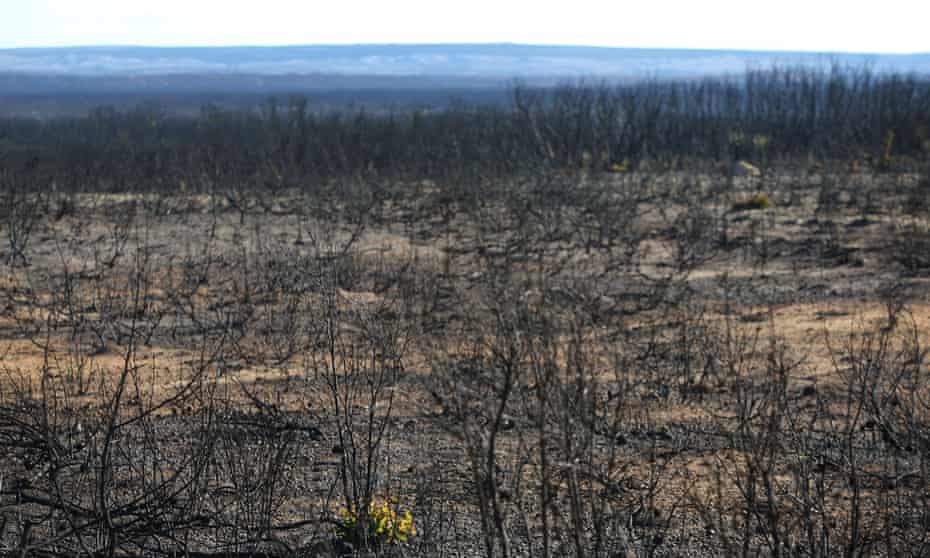
The 70-minute film features another Australian scientist, Dr Daniella Teixeira, walking through a blackened landscape where she was working to conserve endangered glossy black cockatoos.

“There’s no sign of any wildlife at all,” says Teixeira, with footage of twisted and burnt animals and trees turned to charcoal. “There’s nothing left.”

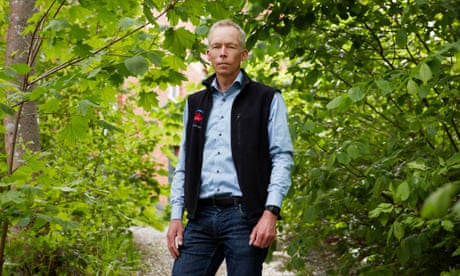
The documentary, fronted by Attenborough, is centred on the research of Swedish scientist Prof Johan Rockström, whose work looks at the concept of tipping points and boundaries in different systems around the planet, such as the polar regions, the Earth’s biodiversity and the climate.

Netflix says the film documents “the most important scientific discovery of our time – that humanity has pushed Earth beyond the boundaries that have kept Earth stable for 10,000 years, since the dawn of civilisation.”AdvertisementBiden provides details on plan to share 80m Covid vaccine doses globally – liveNetanyahu attacks ‘dangerous’ coalition seeking to topple himClimate tipping points could topple like dominoes, warn scientistsUnited Airlines aims to revive Concorde spirit with supersonic planesUS DoJ investigating postmaster general over political fundraising‘Mind-blowing’: tenth of world’s giant sequoias may have been destroyed by a single fireClimate tipping points could topple like dominoes,warn scientistshttps://imasdk.googleapis.com/js/core/bridge3.462.0_en.html#goog_109985475https://imasdk.googleapis.com/js/core/bridge3.462.0_en.html#goog_1728788371https://imasdk.googleapis.com/js/core/bridge3.462.0_en.html#goog_1797282270Climate tipping points could topple like dominoes, warn scientists

Hughes has become a high-profile scientific figure in Australia for his research on the complex impacts of global heating on the world’s biggest reef system and his monitoring flights to document mass bleaching.

“In big thermal extremes like we’ve been seeing during mass bleaching events in recent decades [corals] can actually die very very quickly. They cook,” he says in the documentary.

Hughes told the Guardian that “if anything I think the emotional response has lessened over time” and that the 2016 bleaching event in the north of the reef “was the most confronting”.

“But it’s still deeply saddening,” he said.

He said Rockström’s research, which he has collaborated on, was “simple and powerful” and showed how the world was on a “trajectory that is not sustainable”.

a landscape of thousands of blackened and burnt trees
Australian scientist Daniella Teixeira revisits Kangaroo Island after the devastating black summer bushfires in Sir David Attenborough’s new Netflix documentary. Photograph: Lisa Maree Williams/Getty Images

“You can easily transgress a tipping point and not notice it for a couple of decades,” he said, adding he thought the amount of CO2 in the atmosphere had probably reached a tipping point for coral reefs in the 1980s.

Hughes, of James Cook University’s Centre of Excellence for Coral Reef Studies, said the black summer bushfires and coral bleaching “points to Australia’s vulnerability”.

In the documentary, Attenborough says: “We are heading for a future where the Great Barrier Reef is a coral graveyard.”

He describes Australia’s 2019/20 summer as “a summer from hell, fuelled by record-breaking temperatures and drought”.

Texeira, from the University of Queensland, is filmed in February 2020 returning to sites on Kangaroo Island off the South Australian coast where she was studying endangered glossy black cockatoos.

She finds one of the nests erected to help the birds on a fallen tree with an iron plate around the trunk to stop possums climbing up and attacking the young.

With the iron buckled from the heat and the nest melted, Texeira says: “They weren’t enough to save them.”

She told the Guardian: “There are days when I still get overwhelmed. At the end of the day, we’re humans and we have emotions.”

She had been visiting the island for four years and the fires had come just as she was completing her PhD.

“I have come out the other side now but it has really made me more focused on the urgency of the problems and how we as scientists can make changes now.”

  • Breaking Boundaries: The Science of Our Planet is available on Netflix on 4 June