Does the world need millions of machines sucking carbon dioxide directly out of the air to beat the climate crisis? There is a fast-growing number of companies that believe the answer is yes and that are deploying their first devices into the real world.
From turning CO2into rock in Iceland, to capturing the breath of office workers, to “putting oil back underground”, their aim is to scale up rapidly and some have already sold their CO2removal services to buyers including Bill Gates, Swiss Re, Shopify and Audi. Prices, however, are sky high – $600 (£440) per tonne…
Paul DuginskiSat, September 25, 2021, 5:00 AM·4 min read
Almost half of California is in what the U.S. Drought Monitor calls “exceptional drought.”(Paul Duginski / Los Angeles Times)
Increasing evaporative demand is escalating summertime drought severity in California and the West, according to climate researchers.
Evaporative demand is essentially the atmosphere’s “thirst.” It is calculated based on temperature, humidity, wind speed and solar radiation. It’s the sum of evaporation and transpiration from plants, and it’s driven by warmer global temperatures, which can be attributed to climate change.
The meteorological summer of 2021 in the contiguous United States, which runs from June through August, tied the extreme heat of the Dust Bowl summer in 1936.- ADVERTISEMENT -https://s.yimg.com/rq/darla/4-6-0/html/r-sf-flx.html
Evaporative demand has propelled almost half of California into what the U.S. Drought Monitor calls “exceptional drought.” It causes faster drying soils and vegetation, making fuels more dangerously combustible during the summer and…
BEIJING—The health authority in southern China’s Guangdong province said on Wednesday that a single case of a human being infected with the H5N6 strain of bird flu has been reported in the city of Dongguan.
The infected patient, a 53-year-old male, is being treated in hospital, the Health Commission of Guangdong Province said in a statement, adding that experts considered the risk of transmission to be low at this stage. Reuters
Sunbirds are very important in an ecosystem as they pollinate flowers. Credit: Maximilian Vollstädt
Microorganisms, plants, and animals accomplish great feats every day. For example, by decomposing material, producing plant biomass, or pollinating flowers, they keep nature ‘up and running,” thereby securing the livelihood of humans. Numerous studies have shown that a high biodiversity can have a positive impact on these as well as on other ecosystem functions.https://909ed1af5af9e3f6f6b8ae24496999a8.safeframe.googlesyndication.com/safeframe/1-0-38/html/container.html
“But there is another important factor at play. If the environmental conditions of an ecosystem are heterogeneous, for example, in terms of soil properties and climate, this could give an additional boost to the positive effect of biodiversity on ecosystem functions,” says Dr. Jörg Albrecht of the Senckenberg Biodiversity and Climate Research Centre.
Teaming up with other researchers, Albrecht examined whether the degree of environmental heterogeneity influences the positive effect of biodiversity on ecosystem functions. To this end, the researchers analyzed data from 13 natural and man-made ecosystems on Africa’s highest mountain, Mount Kilimanjaro. It is one of the first studies to investigate such a question in real ecosystems along an elevational gradient of more than 3500 meters.
“The data show that the positive effect of biodiversity on ecosystem functions is about 20 percent higher in a heterogeneous environment,” explains Albrecht, and he continues, “This means that, if the global trend towards land-use intensification continues, the positive effect of biodiversity on ecosystem functions could be diminished.”
In addition, the researchers examined which aspect of biodiversity is most beneficial to the provision of ecosystem functions: Changes in species richness or species turnover, that is, changes in the species composition along the elevational gradient. It became apparent that species richness plays a greater role in ecosystem functions than species turnover.
“Frankly, this came as a surprise to us, since in theory, the opposite had been assumed. Moreover, species communities in the savanna at the foot of the mountain are completely different from those in the cloud forests or at the alpine summit. Thus, species turnover is very high. In contrast, species richness, that is, the number of species that co-occur in an ecosystem, changes to a lesser extent, but is far more important for ecosystem functioning,” says Dr. Marcell Peters of the University of Würzburg.
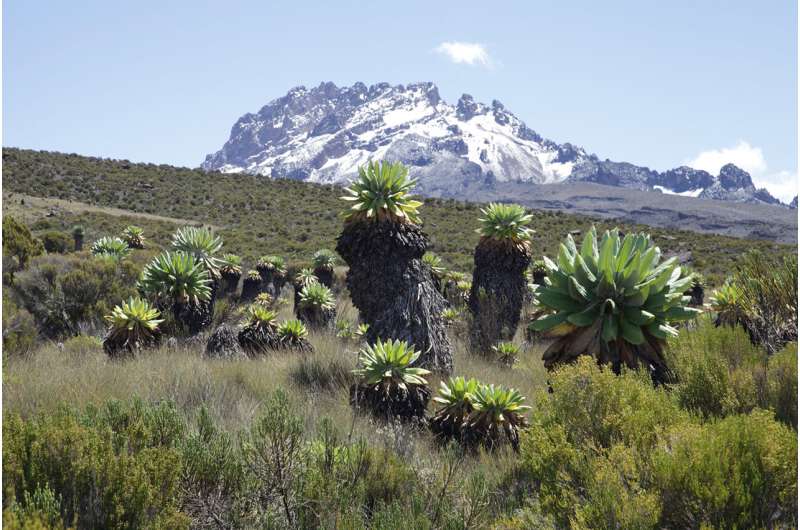
Ecosystem with alpine vegetation at Mount Kilimanjaro. Credit: Andreas Hemp
The researchers consider the results to be evidence that regional conservation efforts should focus on preserving species richness. “Our results confirm that biodiversity is not only important on a small scale as has been shown in experiments, but that these effects become even stronger in real, large-scale landscapes. We were thus able to show that protecting biodiversity is not a luxury, but essential for maintaining functional ecosystems,” concludes Peters.
By Leanne DelapSpecial to the KitFri., Sept. 24, 2021timer5 min. read
Billie Eilish threw down a Gen Z power move at the Met Gala last week.
The 19-year-old singer single-handedly forced the fashion house Oscar de la Renta to stop selling fur by making that a condition for her to wear one of the label’s gowns to the Met Ball, a peach tulle vision of Old Hollywood glamour with a 15-foot train, inspired by her childhood Barbies and Marilyn Monroe. Fashion’s biggest night saw other activism wrought in garment form — from congresswoman Alexandria Ocasio-Cortez’s hotly debated “Tax the Rich” dress by Aurora James to Cara Delevingne’s Dior bustier emblazoned with “Peg the Patriarchy” — but Eilish’s effort achieved immediate and measurable change.
Oscar de la Renta’s designers, Laura Kim and Fernando Garcia, had already stopped using fur on the runway, telling the New York Times they didn’t find it “chic, modern or relevant.” But fur sold in stores represented “a meaningful and significant profit,” said the label’s CEO Alex Bolen in the same article. So the brand took a financial hit in this deal with Eilish, which has reignited the antifur movement.
As recently as 2015, the New York Times declared fur was back in fashion, in response to a trend for coloured, chubby furs on the runway. Gucci led the way on the antifur movement within the industry in 2017, dropping pelts on the runway because designer Alessandro Michele decreed fur was “not modern.” Versace, Giorgio Armani, Michael Kors, Diane von Furstenberg and Coach followed suit. That momentum has been building ever since.
In 2019, we saw another wave of designers, retailers, fashion weeks, even entire cities banning the use of fur. After a sustained email campaign by the Fur Free Alliance, Prada joined the ranks. Holt Renfrew, Neiman Marcus and Bergdorf Goodman stopped selling fur. London Fashion Week went fur-free. The same year, the State of California banned fur sales, and proposals are pending in Hawaii and Rhode Island. (Earlier this year, Israel became the first country to ban fur sales. England is on the verge of such a move: polls show 72 per cent of citizens support a ban.)
Kim Kardashian, long denounced by protestors as a “fur hag,” wrote on Instagram that she’d had all of her “fave furs” replicated in faux form in 2019. The same year, the Queen’s dresser, Angela Kelly, wrote in her book that the monarch had decided she would no longer wear “new” fur. She didn’t toss her existing pieces and will continue to wear her ceremonial ermines, but the fur linings on many of her older garments have been replaced with faux.
Even Anna Wintour is wavering. The all-powerful Vogue editor, who was long a steadfast champion of fur (fur ads used to contribute big bucks to Vogue magazine publisher Condé Nast’s bottom line), has long been a target for antifur protestors. She’s had cream pies tossed in her face, paint thrown on her, maggot-infested guts mailed to her office and, most memorably, had a dead raccoon thrown on her plate during a power lunch. In the past year or two, she has been wearing faux furs by Gucci and long-time animal-rights-activist Stella McCartney. Notably, the meals at last week’s Met Gala, which is Wintour’s baby, were plant-based.
Here in Canada, activists have placed a lot of focus on fur-trimmed winter garments. Canada Goose has announced it will stop purchasing new fur for its products by 2022 and will use reclaimed existing fur instead; Moose Knuckles has also committed to eliminating fur from its collections.
The notable exception to this movement is the concurrent rise in profile of Indigenous designers in the fashion industry. For many Indigenous artists, fur, skins and feathers are an integral part of their culture and heritage, weaving meaning into the work. Toronto-based Indigenous Fashion Week prefaces the following statement on all its sites and materials: “IFWTO supports the use of fur and other animal products as vital for the survival and sovereignty of Indigenous cultures, land and people.”
Outside of Indigenous usage, fur’s reputation as a signifier of decadence and luxury is fading fast. But fur is still big money. It accounts for a billion dollars annually for the Canadian economy, according to the Fur Institute of Canada. It is a $40-billion (U.S.) market worldwide, according to the Fur Information Council of America, which also reports that the number of designers using fur is actually increasing (albeit not marquee names like Oscar de la Renta).
The big holdout is China, which accounts for some 80 per cent of the international fur trade and represents more than a third of the overall luxury market. Russia, the U.S. and South Korea remain major fur markets as well, according to market research firm Euromonitor. Much of this fur is used for smaller trim elements for accessories, not full-length coats like the kind in the old Blackglama mink ads starring Audrey Hepburn, Elizabeth Taylor and Janet Jackson.
Fashion designers are hired to pay attention to the horizon and the horizon is shifting. Fashion is a business, after all, and big decisions like fur use are driven by consumers’ shopping habits. Nine out of 10 Gen Z consumers “believe companies have a responsibility to address environmental and social issues,” according to a 2019 McKinsey report called “The influence of ‘woke’ consumers on fashion.” This is a shift from the millennial generation, “which had a greener focus.” The report says that Gen Z and millennials together represent some $350 billion (U.S.) in spending power.
Older consumers care about what brands do and represent, too. McKinsey found that two-thirds of all consumers worldwide “say they would switch, avoid, or boycott brands based on their stance on controversial issues.” That is a lot of passion — and wallet power — riding on companies’ values.
Speaking of power, Eilish has over 91 million followers on Instagram. She has used the platform in the past for her activism: sharing graphic videos of minks being killed for clothing and items like false eyelashes, as well as images of how sheep can be injured in wool harvesting.
The brash, paint-throwing animal-rights activism tactics of the past no longer shock. The “I’d rather go naked than wear fur” PETA billboards of the ’90s, which featured supermodels like Naomi Campbell and Tatjana Patitz, and celebrities such as Pamela Anderson in the buff, feel out of touch now, too (partly because objectification is no longer in vogue) — and, in fact, PETA retired the 30-year campaign in 2020, saying it was no longer necessary.
Eilish has demonstrated a new way to wield celebrity power to effect change and likely represents a large chunk of her generation in doing so. Following the Met Gala, she wrote: “I’m honoured to have been a catalyst and to have been heard on this matter. I urge all designers to do the same.”
Leanne Delap is a Toronto-based freelance contributor for the Star and The Kit,
Writing in 2003, the American environmentalist Bill McKibben observed that although “some small percentage” of scientists, diplomats and activists had known for 15 years that the Earth was facing a disastrous change, their knowledge had almost completely failed to alarm anyone else.
It certainly alarmed McKibben: in June 1988, the scientistJames Hansentestified to the US Congress that the world was warming rapidly and human behaviour was the primary cause – the first loud and unequivocal warning of the climate crisis to come – and before the next year was out, McKibben had published The End of Nature, the first book about climate change for a lay audience. But few others seemed particularly worried. “People think about ‘global warming’…
Framed by a backdrop of volcanoes, a semi-circle of gigantic fans in Iceland are sucking in air, super-heating it, then filtering out the carbon dioxide.
This carbon capture and storage facility, named Orca, turned on two weeks ago…
In mid-September, theNational Park Servicefinalized a General Management Plan Amendment (GMPA) for thePoint Reyes National Seashore, changing aruleto allow livestock production to continue for 20 years in this national park in the San Francisco Bay area of California. This rule change, and the ranching it enables, poses an immediate threat to the local environment, the global climate and the people of San Francisco, especially its underserved communities. It also sets an alarming precedent for degrading national parks throughout the country.
Northern California is facing some of themost dangerous climate impacts in the United States. This region leads the nation in terms of drought, wildfires, smoke and ocean degradation. Our summers are gone, and each year is worse than the last. Livestock production in Point Reyes directly…




 Reuters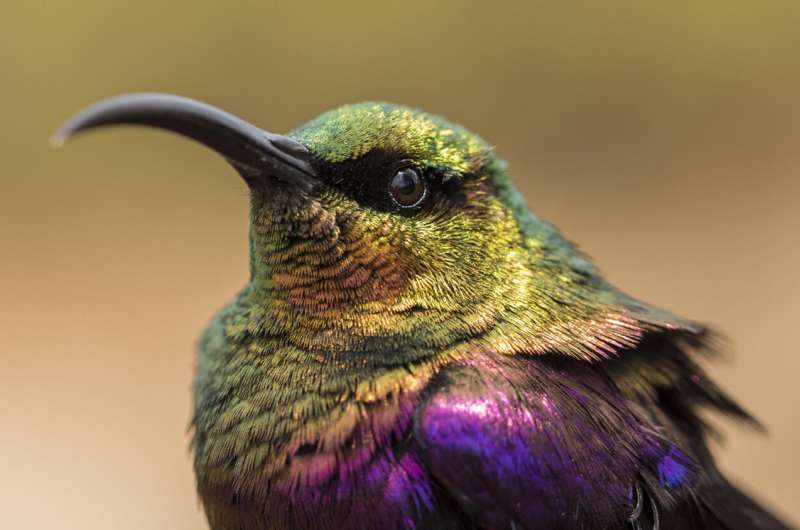
/https://www.thestar.com/content/dam/thestar/life/fashion_style/2021/09/24/how-billie-eilish-has-reignited-the-anti-fur-movement/billie.jpg)
/https://www.thestar.com/content/dam/thestar/life/fashion_style/2021/09/24/how-billie-eilish-has-reignited-the-anti-fur-movement/kim.jpg)
/https://www.thestar.com/content/dam/thestar/life/fashion_style/2021/09/24/how-billie-eilish-has-reignited-the-anti-fur-movement/queen.jpg)
/https://www.thestar.com/content/dam/thestar/life/fashion_style/2021/09/24/how-billie-eilish-has-reignited-the-anti-fur-movement/peta_pam.jpg)





 Exposing the Big Game