WHY AMERICA’S FAVORITE HOLIDAY TURNS SO MANY PEOPLE VEGAN

What do the 50 million turkeys killed for Thanksgiving dinner say about our ethics? 

by JILL ETTINGER

NOVEMBER 25, 2021

https://vegnews.com/2021/11/turkeys-facts

WHY AMERICA’S FAVORITE HOLIDAY TURNS SO MANY PEOPLE VEGAN

What do the 50 million turkeys killed for Thanksgiving dinner say about our ethics? 

by JILL ETTINGER

NOVEMBER 25, 2021


3,481 Shares

We celebrate lots of things. Some holidays matter more than others, of course. There are those relevant to our history, traditions, faith. There are others we celebrate, because, let’s face it, as a species, we’re inherently indulgent. And, lest we forget, our sacred corporations need holidays, too.

The celebrations rooted in religion bring with them a nod to something greater than the celebrator. They bring a call to contemplate, to take stock of our place in the universe. And as indulgent and superficial as many of us can be on holidays like Christmas or Easter, there is, ultimately, a humbleness—an underlying sense of our cellular stardust, a smallness–dare we call it meekness—all wrapped up and tied off with a bow. 

But secular celebrations bring an entirely different ethos, typically rooted in nationalism. Independence Day sees us gloat over battles won long ago as we conjure patriotic relevance as an excuse to light the sky afire and drink too much on a weekday. But for all the pomp that July 4th brings, Thanksgiving, our other most notably American celebration, is subdued. It’s the somber yin to that explosive summer yang. Blame the colder weather, the shorter days, maybe, but its gravity lies perhaps in the obligatory gathering around the table, fully surrendering to the tensions of family triggers, the discomfort of distended bellies, that all-too infrequent inward gaze as we ponder whether or not we’re thankful enough. 
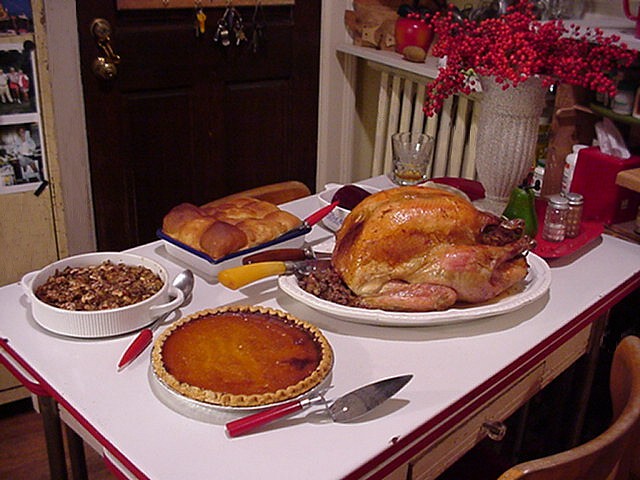
thanksgiving-vegnews

The Thanksgiving Table 

The turkey, the largest of the birds in the Meleagris genus, is native to the Americas. Benjamin Franklin offered the grandiose turkey and its wild, unapologetic plumage, its bright red wattle, both dignified and ridiculous, to be our national bird.

When Franklin made the case for the turkey over the bald eagle, he claimed it was a more “respectable bird,” a “true original” when compared to the thieving bald eagle. “He is besides, (though a little vain and silly ‘tis true, but not the worse emblem for that) a bird of courage,” Franklin wrote. 

The founding father argued it was more worthy of recognition than the eagle, which holds the official title. The turkey, it seemed, had another destiny altogether: the symbolic sacrament of America’s stolen land.

If you grew up with a double-X chromosome assignment, it’s likely you were called to or felt obliged to spend much of Thanksgiving in the kitchen. The women in my family woke before dawn, stuffed and basted, mashed and stirred between cigarette breaks, cooking until they nearly dropped as dusk began to loom. My grandfather would pull out the electric carving knife like a sword and lay claim to the bird for us all to feast on. My grandmother and aunts sat muted in exhaustion, too tired to ever fully enjoy the fruits of their labor.

An animal centerpiece is not unique to Thanksgiving; most meals still include meat in some form. Loins and roasts, whole chickens, and whole fish are commonly placed at the center of dinner tables—especially those in celebration. But there’s something about that Thanksgiving turkey, all dressed up in her basted demise. All those autumnal sides placed around her like offerings at an altar. It’s the stuffing bursting out of her from head to tail, those featherless wings tucked up neatly alongside her breasts as if she willfully sat down and sacrificed herself for our feasting. 

What’s evident in the Thanksgiving turkey, more than our obsession with burgers or even steak, is the wholeness, the undeniable entity now soulless and rubbed with sage.

Going Meatless

But things are changing.

Nearly one-third of Americans considered going meatless for Thanksgiving in 2019. As the pandemic gave way to spiking sales among plant-based foods—and the options increasingly abundant, those numbers are expected to rise again this year.

But, perhaps, Thanksgiving sees so many new meatless plates year after year because teenagers and young adults are more likely to experiment with meatless diets than their older family members. And if squeezing around a table with your immediate family does anything, elevating stress levels is quite near the very top. (Ahem, pass the wine.)

According to a poll conducted by the University of Michigan Mott Children’s Hospital, over half of parents with teenagers on a meatless diet said the diet choice is particularly stressful during the holidays. Teens will cling to their newly exercised identities during stressful times. Awkward uncles and 30-pound headless seasoned birds make it easy to lean into that new identity. After all, sweet potatoes don’t talk (or squawk) back.

But for many, it’s more than that. The significant insignificance of this meal becomes undeniable. Unlike religious traditions, say the bitter herbs eaten on Passover to signify the suffering of the Jewish people, there’s no moral or religious impetus to eat Thanksgiving turkey. No one angers the gods or sleights ancestors by skipping the meat. Perhaps that makes the killing of more than 50 million Thanksgiving turkeys this year feel even more morally bankrupt. The sacrifice is only to our highly redacted history books—the Thanksgiving chapter already marred with injustice.
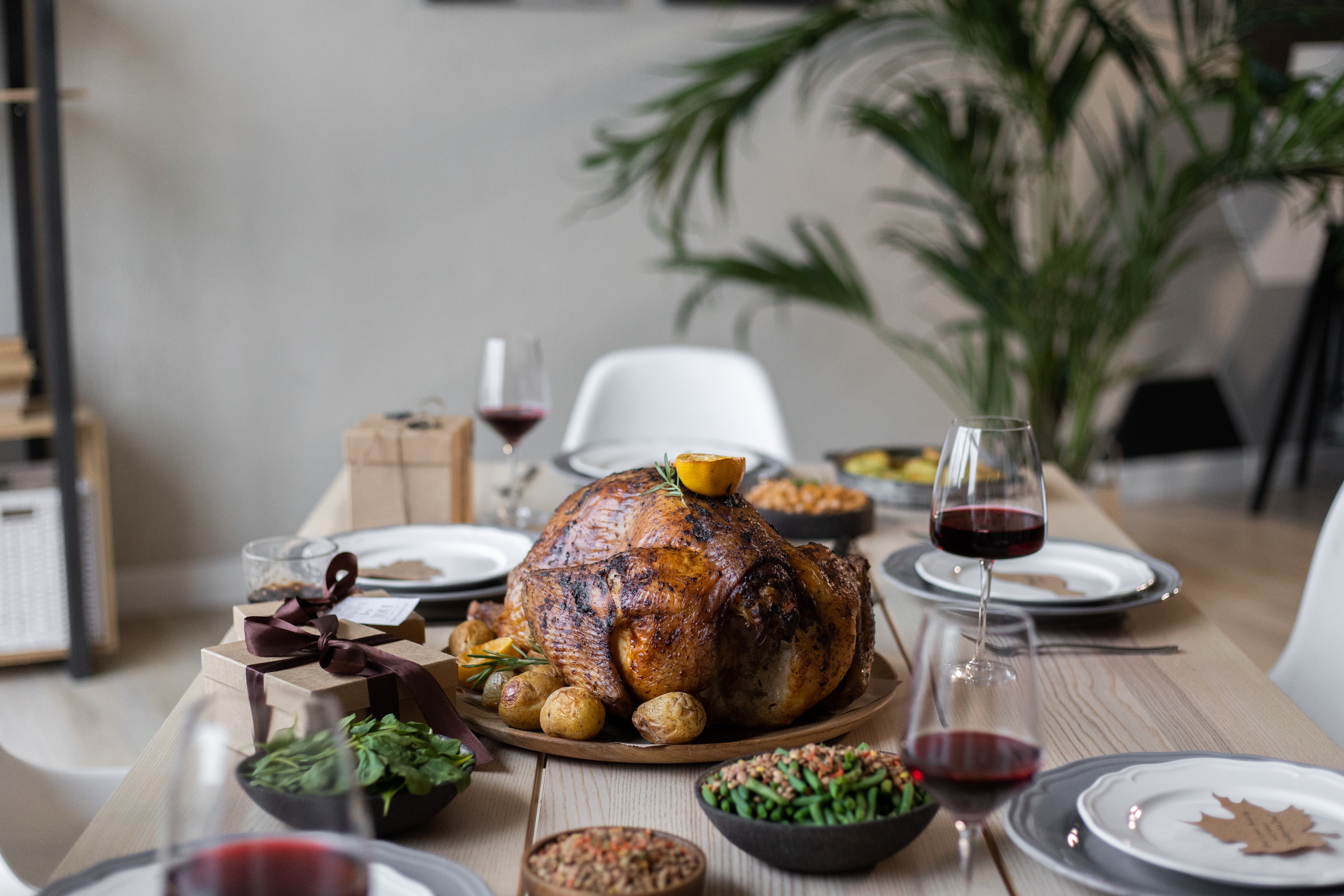
thanksgiving-turkey-vegnews

Animal welfare and moral values are among the top reasons people switch to a vegan diet after health and the climate. And while Thanksgiving is supposed to signify gratitude and abundance—the holiday centers around the autumn harvest—for many, it’s the opposite.

“It’s all about eating and the murder of these birds or other animals,” Patty Shenker, a 30-year vegan told the LA Times. “I love the idea of giving thanks—I just don’t like the way we do it,” she said. “Thanksgiving has become a dark day for me.”

Add to that the controversy that hovers over the holiday—the brutal slaughter of Native Americans and stealing their land—and the turkey is an ever-more symbolic representation of force and destruction a growing number of people want no part in.

Raised for Food

In the grand scheme of animal slaughter, humans currently consume far more fish and chicken, pork, and beef than turkey. Of the more than 55 billion land animals consumed every year, turkey is among the lowest; about 250 million, with 80 million of those spread out mostly around Thanksgiving, Christmas, and Easter. 

But the ritualized feasting—the 50 million consumed on a single day by more than 300 million people—brings with it the undeniable reality of animal slaughter. It’s a veritable Neo in the Matrix moment: which reality do we choose?

Philosopher Peter Singer, largely credited with sparking the modern vegan movement in his seminal 1975 book “Animal Liberation,” says there’s been a new level of awareness in the decades since the book was released. 

“A lot has changed, really,” he told Vox. “There has been a huge amount of change in awareness. Quite frankly, there is an animal movement now, which is concerned about all animals, not just about dogs and cats and horses.”
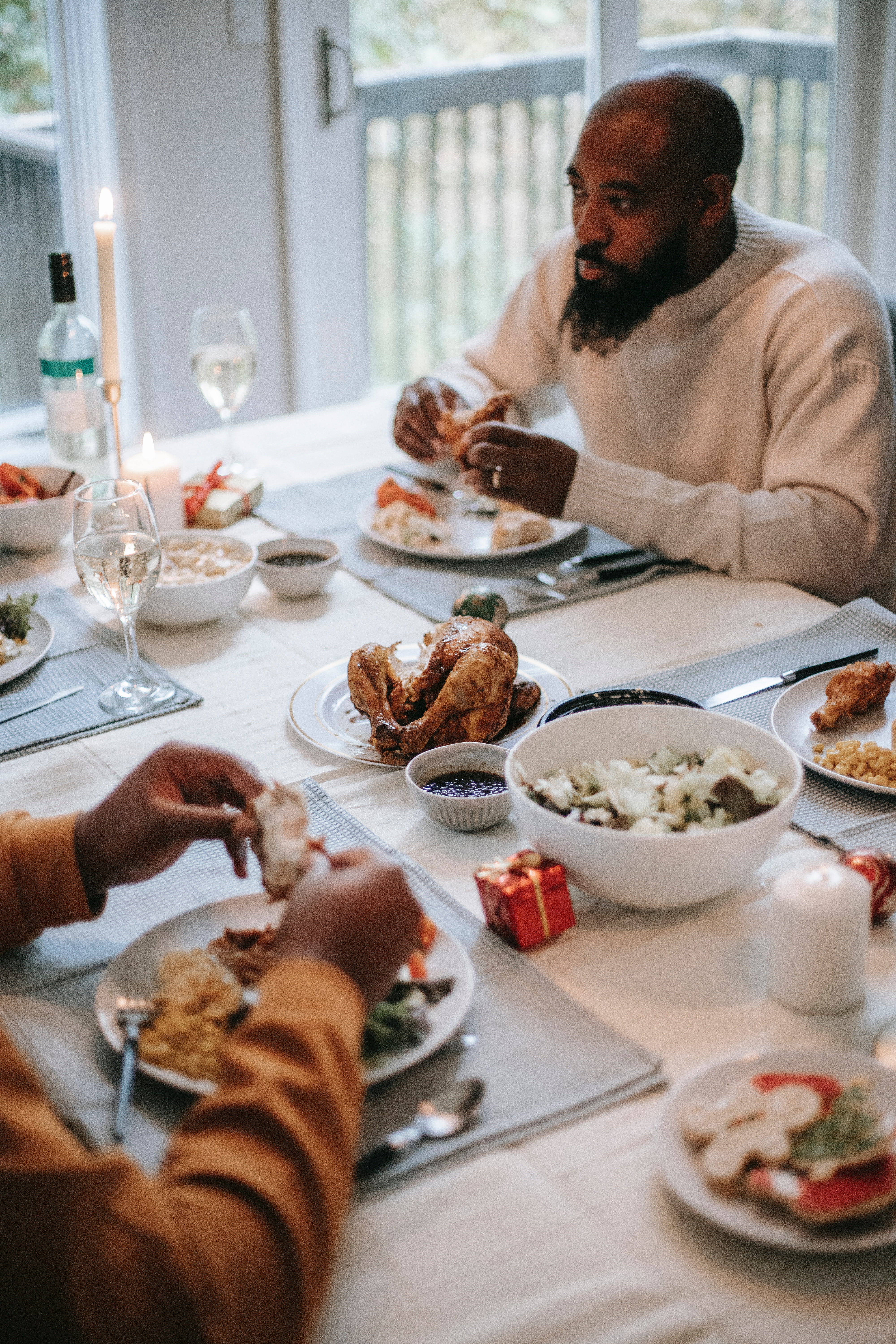
thanksgivingtable-vegnews

That awareness, which has sparked major legislative victories for animals raised for food, has also brought about big business.

“[T]here’s a huge change in the availability of vegetarian and vegan food,” Singer said. “Nobody would have known what ‘vegan’ meant in 1975.”

Last year, turkey alternative leader Tofurky reported a more than 25 percent spike in sales at mainstream retailers including Target, Walmart, and Kroger. Once the butt of Thanksgiving table jokes, Tofurky is a solid dinner contender, rivaled by offerings from a growing number of brands, including conventional meat companies getting in on the action. 

“Going into the holidays, we’re seeing [a] great uptick in orders,” Dan Curtin, president of Greenleaf Foods, which owns Field Roast, told CNN last year. Greenleaf is a subsidiary of Canada’s leading meat conglomerate, Maple Leaf Foods. Curtin says sales of Field Roast’s holiday roasts are on the rise. “You don’t have to be just a plant-based food consumer only to try the product.”

The Moral Dilemma

Protesting animal exploitation is not new. Celebrities lend their names to all manner of animal rights causes. And they have long spoken out against Thanksgiving turkey slaughters. In 2018, filmmaker Kevin Smith went vegan after suffering a major heart attack. That shift ultimately led to a moral pivot as well. 

“This’ll be the first year that we’re breaking the chain with bad tradition and nobody’s going to be eating any bird,” Kevin told Farm Sanctuary as he sat surrounded by rescued turkeys a few years back.
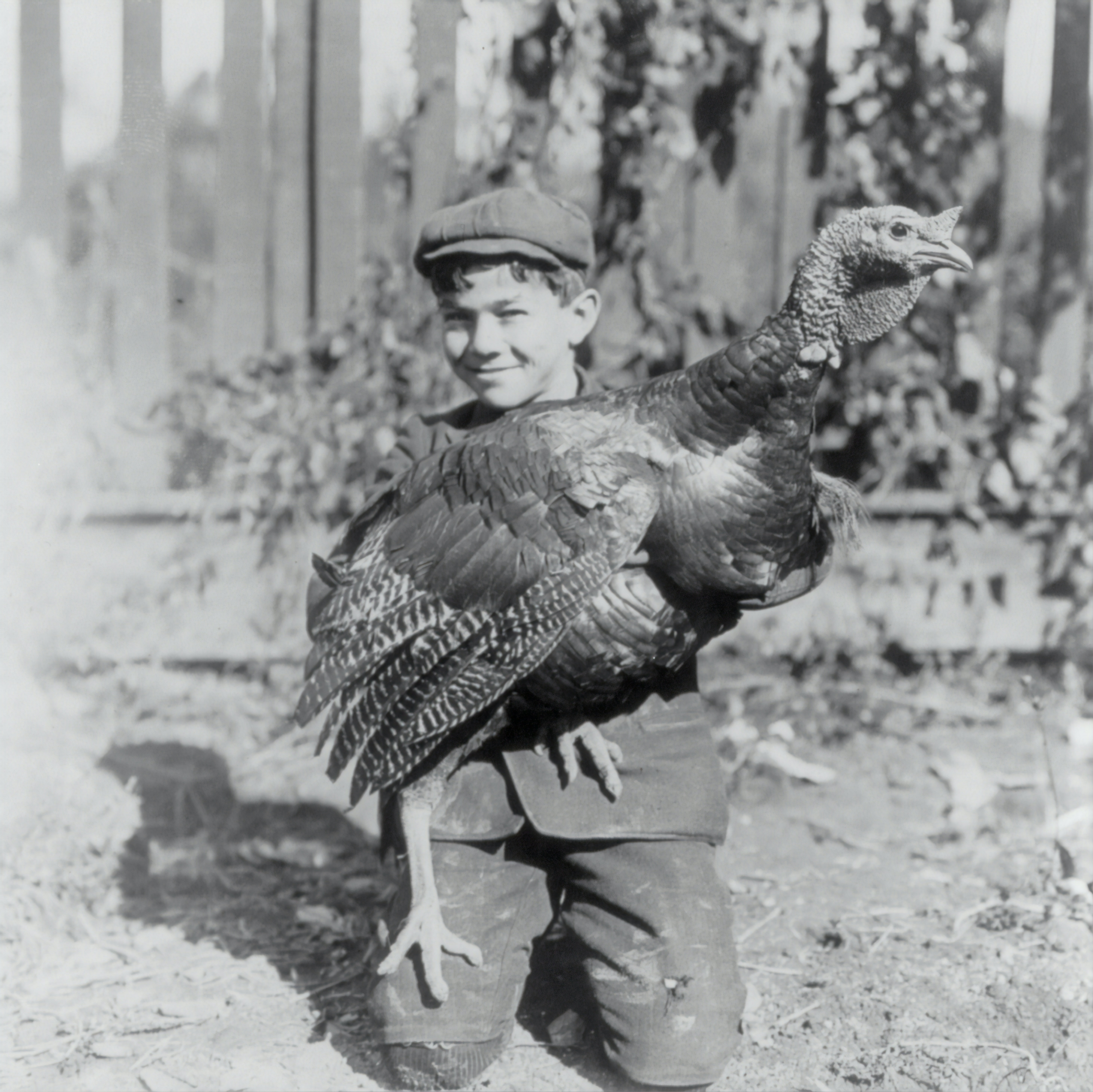
boy-turkey-vegnews

In 2019, Academy Award winner Joaquin Phoenix also urged his fans to go turkey-free. “I object to animal cruelty, environmental destruction, the exploitation of slaughterhouse workers, and the deep wounds inflicted upon rural communities by the factory farming industry,” the longtime vegan said.

Phoenix, who’s been vegan since age 4, said last year that he would be celebrating a more compassionate Thanksgiving “by leaving turkey off” of his dinner plate.

This year, Phoenix partnered with Billie Eilish in urging President Biden to allow pardoned turkeys to go live at a sanctuary.

“As we approach the holiday season—meant to be a time of gratitude and goodwill—we hope you’ll accept our offer to provide sanctuary and the best life possible for pardoned turkeys,” read the letter to the President.

Singer says this moral impetus continues to remain relevant—even more so now. Denying the value, or, dare we call it the necessity of veganism, he says, removes us completely “from complicity in practices that are not morally defensible about the raising and killing of animals for food.”

Having choices is reason enough to be grateful, but many of us have so much else to be thankful for, especially these last few years. It’s only natural that these feelings of abundance and gratitude can make us ponder our moral codes, our ethics. The string of compassion unravels quickly, once we start to pull at it.

So, should we eat turkey on Thanksgiving or not? 

The question certainly goes for any animal and any meal. But on this day, when there’s so much expectation around what’s eaten, the one thing we can be most thankful for, perhaps, is that unlike the bird at the center of so many tables, we get a choice.  

For more about veganism and Thanksgiving, read:
7 Tricks for Surviving Thanksgiving As a Vegan
9 Meatless Vegan Thanksgiving Recipes
12 Wonderful Turkey Facts 


3,481 Shares

We celebrate lots of things. Some holidays matter more than others, of course. There are those relevant to our history, traditions, faith. There are others we celebrate, because, let’s face it, as a species, we’re inherently indulgent. And, lest we forget, our sacred corporations need holidays, too.

The celebrations rooted in religion bring with them a nod to something greater than the celebrator. They bring a call to contemplate, to take stock of our place in the universe. And as indulgent and superficial as many of us can be on holidays like Christmas or Easter, there is, ultimately, a humbleness—an underlying sense of our cellular stardust, a smallness–dare we call it meekness—all wrapped up and tied off with a bow. 

But secular celebrations bring an entirely different ethos, typically rooted in nationalism. Independence Day sees us gloat over battles won long ago as we conjure patriotic relevance as an excuse to light the sky afire and drink too much on a weekday. But for all the pomp that July 4th brings, Thanksgiving, our other most notably American celebration, is subdued. It’s the somber yin to that explosive summer yang. Blame the colder weather, the shorter days, maybe, but its gravity lies perhaps in the obligatory gathering around the table, fully surrendering to the tensions of family triggers, the discomfort of distended bellies, that all-too infrequent inward gaze as we ponder whether or not we’re thankful enough. 

thanksgiving-vegnews

The Thanksgiving Table 

The turkey, the largest of the birds in the Meleagris genus, is native to the Americas. Benjamin Franklin offered the grandiose turkey and its wild, unapologetic plumage, its bright red wattle, both dignified and ridiculous, to be our national bird.

When Franklin made the case for the turkey over the bald eagle, he claimed it was a more “respectable bird,” a “true original” when compared to the thieving bald eagle. “He is besides, (though a little vain and silly ‘tis true, but not the worse emblem for that) a bird of courage,” Franklin wrote. 

The founding father argued it was more worthy of recognition than the eagle, which holds the official title. The turkey, it seemed, had another destiny altogether: the symbolic sacrament of America’s stolen land.

If you grew up with a double-X chromosome assignment, it’s likely you were called to or felt obliged to spend much of Thanksgiving in the kitchen. The women in my family woke before dawn, stuffed and basted, mashed and stirred between cigarette breaks, cooking until they nearly dropped as dusk began to loom. My grandfather would pull out the electric carving knife like a sword and lay claim to the bird for us all to feast on. My grandmother and aunts sat muted in exhaustion, too tired to ever fully enjoy the fruits of their labor.

An animal centerpiece is not unique to Thanksgiving; most meals still include meat in some form. Loins and roasts, whole chickens, and whole fish are commonly placed at the center of dinner tables—especially those in celebration. But there’s something about that Thanksgiving turkey, all dressed up in her basted demise. All those autumnal sides placed around her like offerings at an altar. It’s the stuffing bursting out of her from head to tail, those featherless wings tucked up neatly alongside her breasts as if she willfully sat down and sacrificed herself for our feasting. 

What’s evident in the Thanksgiving turkey, more than our obsession with burgers or even steak, is the wholeness, the undeniable entity now soulless and rubbed with sage.

Going Meatless

But things are changing.

Nearly one-third of Americans considered going meatless for Thanksgiving in 2019. As the pandemic gave way to spiking sales among plant-based foods—and the options increasingly abundant, those numbers are expected to rise again this year.

But, perhaps, Thanksgiving sees so many new meatless plates year after year because teenagers and young adults are more likely to experiment with meatless diets than their older family members. And if squeezing around a table with your immediate family does anything, elevating stress levels is quite near the very top. (Ahem, pass the wine.)

According to a poll conducted by the University of Michigan Mott Children’s Hospital, over half of parents with teenagers on a meatless diet said the diet choice is particularly stressful during the holidays. Teens will cling to their newly exercised identities during stressful times. Awkward uncles and 30-pound headless seasoned birds make it easy to lean into that new identity. After all, sweet potatoes don’t talk (or squawk) back.

But for many, it’s more than that. The significant insignificance of this meal becomes undeniable. Unlike religious traditions, say the bitter herbs eaten on Passover to signify the suffering of the Jewish people, there’s no moral or religious impetus to eat Thanksgiving turkey. No one angers the gods or sleights ancestors by skipping the meat. Perhaps that makes the killing of more than 50 million Thanksgiving turkeys this year feel even more morally bankrupt. The sacrifice is only to our highly redacted history books—the Thanksgiving chapter already marred with injustice.

thanksgiving-turkey-vegnews

Animal welfare and moral values are among the top reasons people switch to a vegan diet after health and the climate. And while Thanksgiving is supposed to signify gratitude and abundance—the holiday centers around the autumn harvest—for many, it’s the opposite.

“It’s all about eating and the murder of these birds or other animals,” Patty Shenker, a 30-year vegan told the LA Times. “I love the idea of giving thanks—I just don’t like the way we do it,” she said. “Thanksgiving has become a dark day for me.”

Add to that the controversy that hovers over the holiday—the brutal slaughter of Native Americans and stealing their land—and the turkey is an ever-more symbolic representation of force and destruction a growing number of people want no part in.

Raised for Food

In the grand scheme of animal slaughter, humans currently consume far more fish and chicken, pork, and beef than turkey. Of the more than 55 billion land animals consumed every year, turkey is among the lowest; about 250 million, with 80 million of those spread out mostly around Thanksgiving, Christmas, and Easter. 

But the ritualized feasting—the 50 million consumed on a single day by more than 300 million people—brings with it the undeniable reality of animal slaughter. It’s a veritable Neo in the Matrix moment: which reality do we choose?

Philosopher Peter Singer, largely credited with sparking the modern vegan movement in his seminal 1975 book “Animal Liberation,” says there’s been a new level of awareness in the decades since the book was released. 

“A lot has changed, really,” he told Vox. “There has been a huge amount of change in awareness. Quite frankly, there is an animal movement now, which is concerned about all animals, not just about dogs and cats and horses.”

thanksgivingtable-vegnews

That awareness, which has sparked major legislative victories for animals raised for food, has also brought about big business.

“[T]here’s a huge change in the availability of vegetarian and vegan food,” Singer said. “Nobody would have known what ‘vegan’ meant in 1975.”

Last year, turkey alternative leader Tofurky reported a more than 25 percent spike in sales at mainstream retailers including Target, Walmart, and Kroger. Once the butt of Thanksgiving table jokes, Tofurky is a solid dinner contender, rivaled by offerings from a growing number of brands, including conventional meat companies getting in on the action. 

“Going into the holidays, we’re seeing [a] great uptick in orders,” Dan Curtin, president of Greenleaf Foods, which owns Field Roast, told CNN last year. Greenleaf is a subsidiary of Canada’s leading meat conglomerate, Maple Leaf Foods. Curtin says sales of Field Roast’s holiday roasts are on the rise. “You don’t have to be just a plant-based food consumer only to try the product.”

The Moral Dilemma

Protesting animal exploitation is not new. Celebrities lend their names to all manner of animal rights causes. And they have long spoken out against Thanksgiving turkey slaughters. In 2018, filmmaker Kevin Smith went vegan after suffering a major heart attack. That shift ultimately led to a moral pivot as well. 

“This’ll be the first year that we’re breaking the chain with bad tradition and nobody’s going to be eating any bird,” Kevin told Farm Sanctuary as he sat surrounded by rescued turkeys a few years back.

boy-turkey-vegnews

In 2019, Academy Award winner Joaquin Phoenix also urged his fans to go turkey-free. “I object to animal cruelty, environmental destruction, the exploitation of slaughterhouse workers, and the deep wounds inflicted upon rural communities by the factory farming industry,” the longtime vegan said.

Phoenix, who’s been vegan since age 4, said last year that he would be celebrating a more compassionate Thanksgiving “by leaving turkey off” of his dinner plate.

This year, Phoenix partnered with Billie Eilish in urging President Biden to allow pardoned turkeys to go live at a sanctuary.

“As we approach the holiday season—meant to be a time of gratitude and goodwill—we hope you’ll accept our offer to provide sanctuary and the best life possible for pardoned turkeys,” read the letter to the President.

Singer says this moral impetus continues to remain relevant—even more so now. Denying the value, or, dare we call it the necessity of veganism, he says, removes us completely “from complicity in practices that are not morally defensible about the raising and killing of animals for food.”

Having choices is reason enough to be grateful, but many of us have so much else to be thankful for, especially these last few years. It’s only natural that these feelings of abundance and gratitude can make us ponder our moral codes, our ethics. The string of compassion unravels quickly, once we start to pull at it.

So, should we eat turkey on Thanksgiving or not? 

The question certainly goes for any animal and any meal. But on this day, when there’s so much expectation around what’s eaten, the one thing we can be most thankful for, perhaps, is that unlike the bird at the center of so many tables, we get a choice.  

For more about veganism and Thanksgiving, read:
7 Tricks for Surviving Thanksgiving As a Vegan
9 Meatless Vegan Thanksgiving Recipes
12 Wonderful Turkey Facts 

Guide outfitter loses court bid to overturn hunting-licence suspension after Dall sheep shot in Yukon, not B.C.

Exposing the Big Game's avatarCommittee to Abolish Sport Hunting Blog

by Charlie Smith on November 28th, 2021 at 6:01 AM

https://www.straight.com/news/guide-outfitter-loses-court-bid-to-overturn-hunting-licence-suspension-after-dall-sheep-shot-in

2 of 2

  • This 2009 YouTube screen shot shows guide outfitter Abe Dougan with happy clients who had taken a big horn sheep as a trophy.YOUTUBE SCREEN SHOT

Abraham John Norman Dougan is proud of his ability to hunt big game in B.C.

On YouTube, videos show many large B.C. animals taken by his guide-outfitting clients, including one called“Trophy Gallery”.

However, he ran into trouble when his company killed Dall sheep in Yukon in 1999 while he held a B.C. hunting licence.

RELATED STORIES

https://47e30a2442e09278641ea9b03b2db3f7.safeframe.googlesyndication.com/safeframe/1-0-38/html/container.html

That led the B.C. government to suspend his licence for two years in 2018.

On November 25, a B.C. Supreme Court Justice Robert Punnett dismissed…

View original post 273 more words

Animal Farmers Respond to the Rise of Plant-Based Meat

ByHolly Pate May 26, 2021Rob Mattson / Samuel Roberts Noble Foundation
sustainable agriculture
Can Sustainable Agriculture Fix the Broken Food System?

Animal Farmers Respond to the Rise of Plant-Based Meat

For decades, family farmers were the backbone of the livestock industry in the United States. Now, most small farmers find themselves on their own, competing against the large corporations they formerly partnered with and the growing popularity of plant-based foods. Some farmers hope that the meatless market will be a way out of financial hardship. Most of them, however, see it as another sector for Big Meat to dominate.

Major food companies like Tyson, Smithfield, Perdue, Hormel, and Nestle have started expanding their non-meat enterprises, advertising their growing assortment of meatless meats including plant-based burgers, meatballs, and ‘chicken’ nuggets.

Mike Weaver has also decided to call it quits with meat – just not in the dietary sense. With the rise of corporate agriculture, the 69-year-old West Virginian is part of a small but increasing movement of farmers looking to get out of meat production and take advantage of the new plant-based economy, an industry some experts say could be worth $85 billion by the year 2030.

Now, Weaver is using his old chicken barns to grow industrial hemp, which removes more CO2 per acre than any other crop. Though, Weaver says his decision to transition his coops and sell CBD oil products had more to do with rising farmer debt and corporate greed and less to do with sustainability. 

Weaver explained that large production corporations, citing Tyson and Perdue as examples, ignited small farmer hardships long before the plant-based push, often entering economically depressed areas and recruiting farmers to invest in poultry complexes that can cost upwards of $1.5 million. 

“Many of these farmers end up not being able to pay their bills, feed their families, and sometimes have to get additional jobs to supplement their chicken habit,” Weaver said. 

Big Ag’s response? Often, they exploit a contractual loophole that allows them to move on to the next farmer. 

Weaver added that large-scale corporate plant misfires such as the Tyson Holcomb fires and the Perdue big rig accident, diminish family farmers’ integrity and leave lasting financial burdens on small producers. He hoped to free himself of this cycle before reaching economic ruin and shift into plant-related production, predicting that in 5 years, meat substitutes will maintain 15-20 percent of the market share. He is not that far off, and research points to a potentially poor economic future for traditional meat.

Yet, other data disagrees with plant-based power, and many farmers cite the overall rise in meat consumption as a sign that the industry is here to stay. 

Although meat alternatives continue to appeal to American diners and hamburger lovers—animal farming, specifically beef production, is not under threat, according to a 2021 report conducted for the lobbying group Cattlemen’s Beef Promotion and Research Board. In fact, since the 1960s, global meat production has more than quadrupled, from 71 million tons to more than 340 million tons of meat. 

However, with hefty government subsidies that provided more than $50 billion dollars to farmers in 2020, it is hard to know the true value of animal products—let alone their socioeconomic, environmental, and human cost. 

Methane is one of the gasses believed to have the largest impact on climate change and cows, sheep, and goats are estimated to expel 14 percent of all the gasses that contribute to global warming. 

This pollution is also disastrous for the health and wellbeing of those who live near factory farms, often low-income minority populations. It is estimated that the feces-laden air breathed in by those neighboring these corporate farms leads to about 17,900 U.S. deaths per year, according to The Washington Post

These factory farms and ranches are currently not required to report their emissions or warn the surrounding community. Yet a new study published in Science reveals just how important it is to tackle food-related emissions to mitigate the climate crisis. This research showed that isolated food system emissions alone will most likely put the Paris Agreement climate targets out of reach and outlines potential government and public health strategies for meat reduction.

The most effective model this report found in cutting food emissions is the global adoption of a plant-rich diet. Yet, governments seem reluctant to address meat and dairy consumption or elicit taxes similar to those on alcohol and tobacco. For now, it seems that traditional farming’s fate and plant-based popularity are largely in the hands of consumers and the federal government .

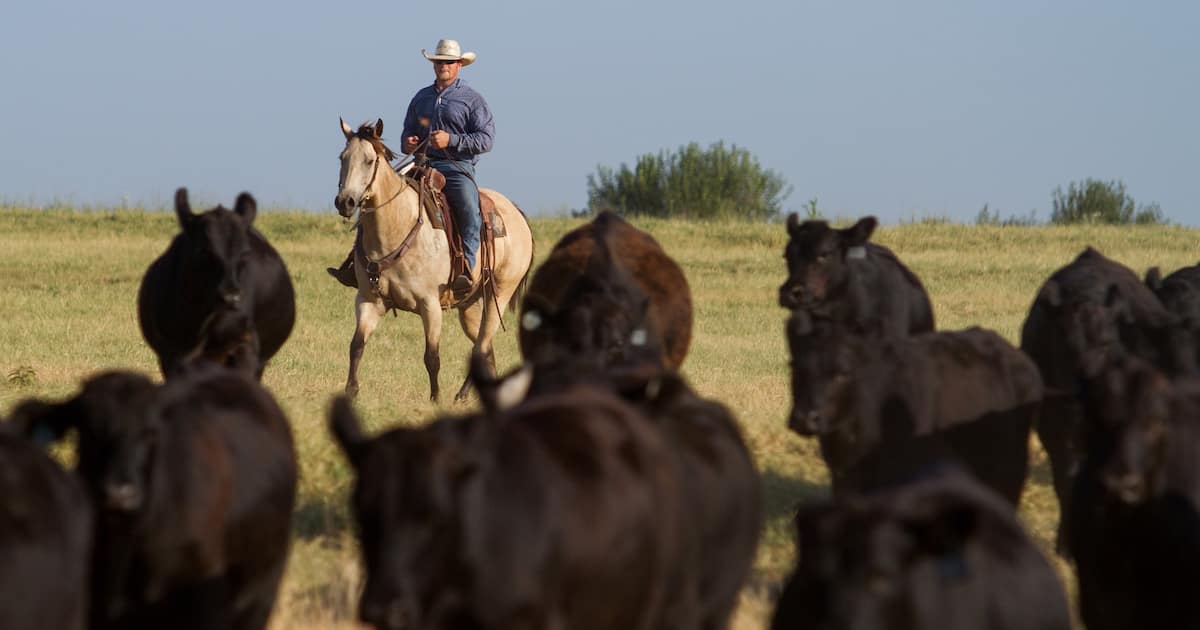
To others in the ag industry, the beef with animal farming and traditional meat stems from misunderstood practices rather than corporate greed or bureaucratic mishandlings. 

“There is a lot of misinformation around the impact that cattle have on the environment,” Brandi Buzzard Frobose, the Director of Communications for the industry lobbying group Red Angus Association of America and Kansas rancher said. “But there is always going to be a demand for livestock and animal products.”

Mike Schultz, owner of Schultz Farms in Brewster, Kansas, who has worked as a cattle rancher since 1975 when he bought his first cow—a heffer that he remembers costing exactly $287.56—agreed. A self-proclaimed ‘semi-cowboy,’ Schultz is skeptical about plant-based meats. 

“I think [plant-based] meat can be worse for the environment over time,” Schultz said. “You can’t live on grass alone and I don’t know that you can get an adequate amount of protein from just eating Beyond Meats.” 

But, just last month, Beyond Meat announced the development of a new “3.0” version of its plant-based burger. The patty’s formulation offers less fat, saturated fat, and calories than both its predecessor and 80/20 ground beef made from animals. Its protein content also remains higher than traditional ground beef. This summer, plant-based chicken will also be on the Beyond Meat menu. 

For now, plant-based meat does not seem to cause the same amount of environmental destruction as animal farming, nor do its protein portions appear insufficient. But Schultz is correct in that it may represent a looming form of industrial agriculture whose power we do not know quite yet. 

Read More

How One Small City in California Is Going Plant-Based

Animal Farmers Press Charges Against Activists, Cruelty Continues

How to Change a Chicken Farmer’s Mind

New undercover investigation shows the cruelty of ‘certified’ fur farms

November 29, 2021 0 Comments

New undercover investigation shows the cruelty of ‘certified’ fur farms

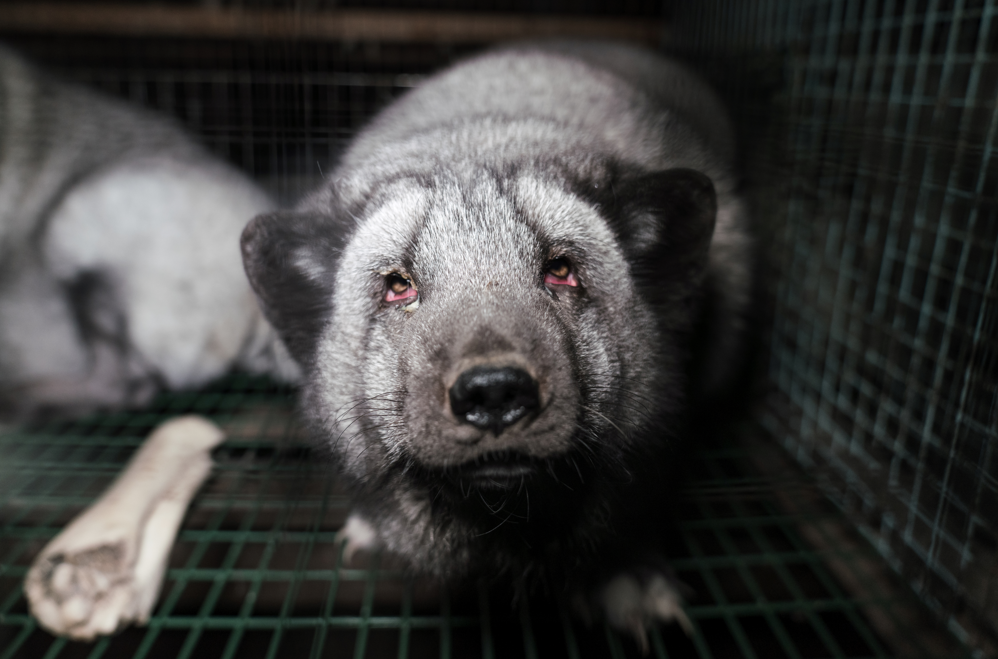
An arctic fox in a bare wire cage on a fur farm in Finland, where investigators found animals suffering from deformed feet, overgrown claws and diseased eyes. Kristo Muurimaa/Oikeutta eläimille

The fur industry is swiftly running out of ways to justify continuing the mass raising and killing of animals like foxes, mink and raccoon dogs for fashion. A new undercover investigation reveals what’s really going on at three fur farms in Finland, two of which are touted as having “the highest level of animal welfare,” according to the fur trade’s SAGA Furs certification program.

The industry boasts to designers, policymakers and the public alike that SAGA-certified farms have good animal health and welfare, supposedly providing safe and stimulating housing, as well as good farm hygiene and feed that fulfills the animals’ nutritional needs. But Humane Society International’s October investigation into fur farms in Finland tells a very different story.

Artic foxes packed closely in small wire cages on a fur farm in Finland. Claire Bass/HSI

Investigators from Humane Society International/UK and Finnish animal campaigners Oikeutta Eläimille brought along a veterinarian, Dr. Marc Abraham, on their undercover visit to three Finnish fur farms. The investigators found foxes in small, barren cages suffering with deformed feet, diseased eyes and missing ears.

Two of the farms held “monster foxes,” who are bred with huge pelts and rolls of fat folded over their bodies in order to increase the volume of fur that can be taken from them. In 2017, the fur trade stated it would put an end to the breeding of oversized foxes, and yet HSI investigators found foxes struggling to move because of their weight, something that they’ve also witnessed during previous investigations.

“Monster foxes” are bred with huge pelts and rolls of fat to increase the amount of fur that can be harvested from their bodies. Claire Bass/HSI

Dr. Abraham also noted that the foxes showed signs of self-mutilation, a common symptom of psychological trauma that occurs when wild animals are denied appropriate enrichment or the freedom to move, run and exercise in their natural environments.

The photos capture the moments the investigators first encountered the animals. It’s striking how they curiously approached the people from the recesses of their wire cages, looking directly at them. The fur trade often claims that these animals are not wild, and that their more domesticated personality traits means that forcing them to live in cages isn’t cruel. That’s absurd on its face: No dog lover would ever keep domesticated canines in such confined and barren conditions.https://www.youtube-nocookie.com/embed/JivvVZBxY30?feature=oembed&wmode=transparent&iv_load_policy=1&modestbranding=0&rel=0&autohide=1&autoplay=0

It is truly shocking that the brutal practices that treat these animals as nothing more than objects continue.

Investigation after investigation of fur farms has shown amply that there is simply no way to make the fur industry humane, and the past year has also demonstrated that this cruelty risks public health. Outbreaks of COVID-19 have been documented on 447 mink fur farms in 12 different countries in Europe and North America since April 2020.

Some foxes approached investigators from the recesses of their small cages, reaching out to them. Claire Bass/HSI

Finland is the largest producer of fox fur in Europe and the second largest in the world, rearing and killing as many as two million foxes every year. While some countries and regions have banned fur farming within their borders, their fur imports keep afloat what should be a dying industry. Brands including Fendi, Moncler, Yves Salomon, Woolrich, Herno and Max Mara use fur from Finnish fur farms, and the skins from these animals can be seen in iconic luxury shops, like Harrods in London. Because of this pipeline that keeps such a gruesome and brutal industry going, HSI/UK is urging the government to ban fur imports and sales in the UK, a move supported by 72% of the British public.

Across the world, more than 100 million animals are killed for their fur every year, both on fur farms and through trapping in the wild—that’s equivalent to three animals dying every second, just for fashion.

You can be a voice for animals by signing a petition calling on the UK to end the sale of fur.

Follow Kitty Block on Twitter @HSUSKittyBlock.

11-year-old girl shot, killed by father during hunting accident in East Texas, deputies say

Exposing the Big Game's avatarCommittee to Abolish Sport Hunting Blog

Harrison County Sheriff’s Office received a call for a hunting accident in Hallsville Saturday

Jacksonville Sheriff's Office JSO generic police lights
Jacksonville Sheriff’s Office JSO generic police lights(WJXT)

HARRISON COUNTY, Texas– An 11-year-old girl is dead after she was accidentally shot by her father during a hunting outing in East Texas, according to the Harrison County Sheriff’s Office.

The Marshall News Messengerreports that sheriff’s deputies were called for the hunting accident in Hallsville around 5:15 p.m., Saturday.

“Further calls determined that a father had accidentally shot his 11-year-old daughter at a hunting lease near Young and Hickey Road, with a high-powered rifle,” HCSO officials said.

Sheriff’s deputies said when they arrived on scene, they found the girl with life-threatening injuries.

The girl was supposed to be taken to the hospital by helicopter but due to inclement weather in the area, all emergency helicopters were grounded. Deputies said she had to be taken by EMS to…

View original post 35 more words

Maine’s fall hunting seasons ending for the year

Exposing the Big Game's avatarCommittee to Abolish Sport Hunting Blog


by Associated PressSunday, November 28th 2021

https://wgme.com/news/local/maines-fall-hunting-seasons-ending-for-the-year

UserWay icon for accessibility widget

<img src=”https://wgme.com/resources/media2/16×9/full/1015/center/80/c25f6d8c-0a26-475b-8f50-076dff00b289-large16x9_LockandLoad1BB.jpeg” alt=”

<p>A Maine hunter loads his rifle at first light in the Maine woods near Northeast Carry as he prepares to hunt for a bull moose in 2006. (Bridget Brown / BDN){/p}

Facebook Share Icon

Twitter Share Icon

Email Share Icon

AUGUSTA, Maine (AP) — Maine’s big fall hunting seasons ended for the year on Saturday.

The state’s “big four” game animals are black bears, wild turkeys, white-tailed deer and moose. The seasons for bears, deer and moose all ended on Saturday, and the turkey season ended earlier in the month.

State officials say deer in Fairfield area could be contaminated with dangerous chemicals

Maine wildlife managers have encouraged more hunting these past two years because it’s a socially distant activity. The state also uses the hunts to keep the populations of the animals at healthy levels.

Deer hunters who use muzzleloaders have a special season that begins on Monday. They’re…

View original post 8 more words

UK RECOGNIZES LOBSTERS, OCTOPUSES, AND CRABS AS SENTIENT BEINGS. WILL NO LONGER BOIL THEM ALIVE

UK Recognizes Lobsters, Octopuses, and Crabs as Sentient Beings. Will No Longer Boil Them Alive. 

A new government report finds that lobster, octopuses, and crabs all experience pain, prompting the UK to change its welfare laws around these animals. 

by ANNA STAROSTINETSKAYA

NOVEMBER 24, 2021


https://vegnews.com/2021/11/uk-lobsters-octopi-crabs-sentient-beings

15,124 Shares

Lobsters, octopuses, crabs, and other sea creatures are getting new protections in the United Kingdom after a government-commissioned report found that cephalopod molluscs and decapod crustaceans have the capacity to feel pain. The report was compiled by the London School of Economics and Political Science where researchers examined 300 scientific studies to determine that these animals are sentient beings. Given the findings, the sea creatures will now be included in the forthcoming Animal Welfare (Sentience) Bill.  

“The UK has always led the way on animal welfare and our Action Plan for Animal Welfare goes even further by setting out our plans to bring in some of the strongest protections in the world for pets, livestock, and wild animals,” Animal Welfare Minister Lord Zac Goldsmith said in a statement. “The Animal Welfare Sentience Bill provides a crucial assurance that animal well being is rightly considered when developing new laws. The science is now clear that decapods and cephalopods can feel pain and therefore it is only right they are covered by this vital piece of legislation.”

Outside of the UK, boiling lobsters alive is also illegal in other regions around the world, including Switzerland, New Zealand, and the United States. 

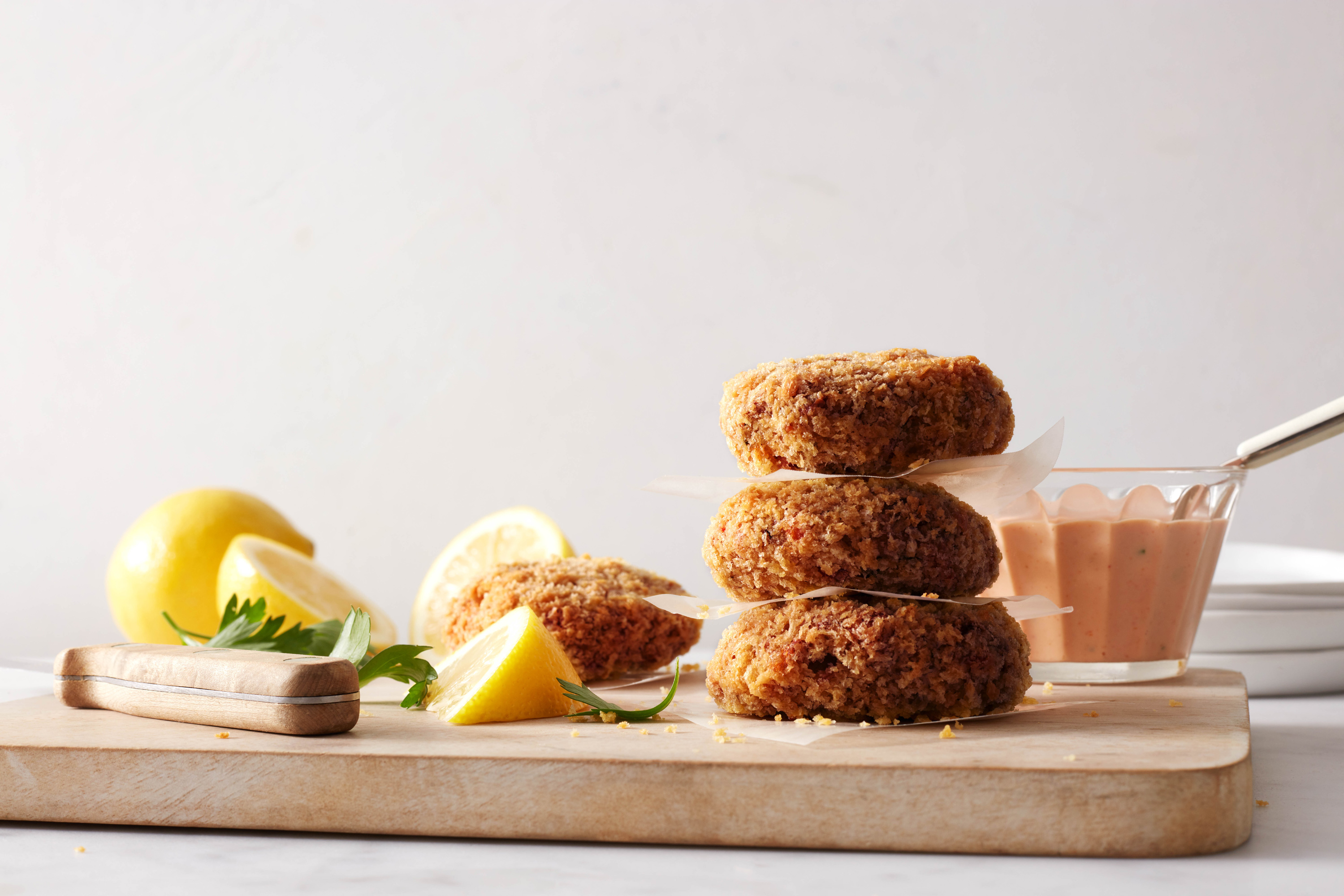
VegNews.GoodCatchVeganCrabCakes

Saving lobsters, octopi, and crab with vegan seafood

While reducing the amount of pain sentient beings feel when they are killed is a step in the right direction, choosing vegan seafood negates the need to kill them in the first place. Luckily, this sector of the plant-based food industry has been growing exponentially with many options available around the world. 

In the UK, seafood alternatives are plentiful, with VBites fish filets available as a seamless substitute for traditional fish and chips. In Europe, food giant Nestlé just launched konjac-based vegan shrimp under its Garden Gourmet brand, which already offered Sensational Vuna (vegan tuna) available in Germany, Italy, the Netherlands, and Switzerland. 

In Hong Kong, OmniFoods—known for its popular pork alternatives—is also getting into the vegan seafood business with the launch of its OmniSeafood line. Earlier this month, Starbucks began serving the brand’s Omni Crab Cakes as part of a salad at its 170 Hong Kong locations, marking the first time the coffee giant has featured vegan seafood on its menu. 

In the US, vegan brand Good Catch has been expanding the presence of its plant-based seafood products, which are made from a proprietary blend of six beans and legumes. While Good Catch’s seafood products—which include pouches of tuna, crab cakes, and fish filets—have been on retail shelves since 2019, this year, the brand is making its way onto restaurant menus, including at traditional fish-centric chains such as Long John Silver’s

VegNews.ShiokMeats2

In addition to plant-based seafood alternatives, new developments in cellular aquaculture means that real fish, crab, and lobster meat can be made without the need to slaughter sea animals. In Singapore, Shiok Foods is growing real crab meat from a small amount of animal cells in a nutrient-rich environment (similar to a greenhouse). In September, the startup had its first public tasting at local restaurant Kubaya where guests sampled cell-based shrimp in a Tom Yum Soup and cell-based lobster in Lobster Potato Chips—all made without the need to kill sentient beings by boiling them, alive or otherwise. 

For more about fish-free seafood, read:

Bumble Bee’s New Venture Makes Vegan Seafood Widely Available
TIME Names Vegan Tuna One of the 100 Best Inventions of 2021

Trader Joe’s Is Working on Vegan Seafood

Wild Chimps With Leprosy Confirmed For The First Time

Exposing the Big Game's avatarThe Extinction Chronicles

10.5KSHARES Share on Facebook Share on TwitterPLANTS AND ANIMALS

https://www.iflscience.com/plants-and-animals/wild-chimps-with-leprosy-confirmed-for-the-first-time/

Wild Chimps With Leprosy Confirmed For The First Time

A CHIMPANZEE NAMED WOODSTOCK WITH LEPROSY IN TAÏ NATIONAL PARK, CÔTE D’IVOIRE. IMAGE CREDIT: TAI CHIMPANZEE PROJECT

By Tom Hale

13 OCT 2021, 16:19

Scientists have confirmed the first known cases of wild chimpanzees suffering from leprosy, a bacterial disease that typically infects humans. It remains a bit of a mystery how the chimps caught the infection, but researchers say the findings suggest that leprosy is most likely circulating in chimps and other wild animals much more than previously believed.

An international team of researchers from West Africa, Europe, and the US presented their findings in the journalNature. The paper was previously published as a preprint in November 2020, whichIFLScience covered, but the findings have since undergone peer review and confirmation.

The leprosy cases were documented in two wild populations of western chimpanzees (Pan…

View original post 629 more words

Rare hunting scene raises questions over polar bear diet

by Pierre-Henry Deshayes

https://phys.org/news/2021-11-rare-scene-polar-diet.html

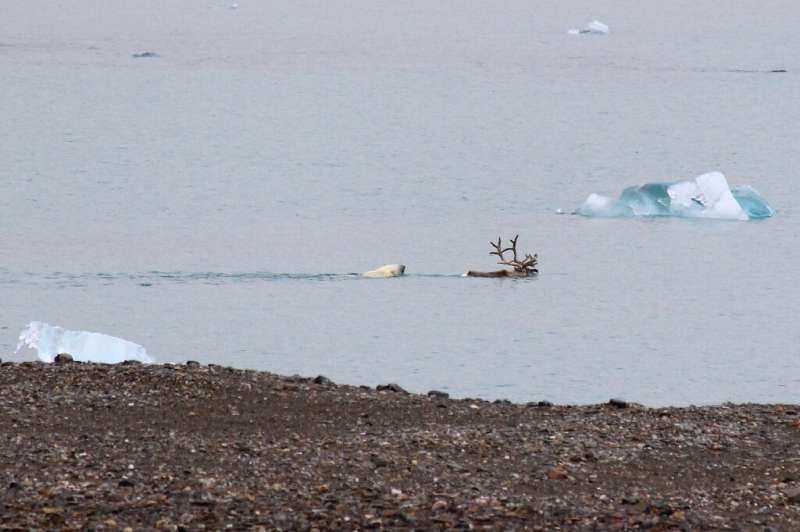
A research team from a Polish scientific station caught on camera a polar bear hunting a reindeer in Norway's Svalbard archipela
A research team from a Polish scientific station caught on camera a polar bear hunting a reindeer in Norway’s Svalbard archipelago.

A polar bear chases a reindeer into the water, drags it ashore and devours it, in a striking scene caught on film for the first time.

With sea ice melting, the king of the Arctic may be changing its diet.

The dramatic spectacle played out in Norway’s Svalbard archipelago on August 21, 2020—in summer, the sea ice retreats and takes with it the seals that make up the polar bear’s main source of food.

A research team from a nearby Polish scientific station watched it happen and caught for the first time on camera a polar bear hunting a reindeer.

The video shows a young female chasing a male reindeer into the icy waters, catching and drowning it, then pulling it on shore and making a meal of it.

“The whole situation was so amazing that it was like watching a documentary,” said Izabela Kulaszewicz, a biologist at the University of Gdansk.

“You could almost hear the voice of a narrator in the background saying that you absolutely have to watch this event because we will most likely never see anything like it again,” she told AFP.

Down to ‘modern media’ ?

The scene was so unusual that she co-wrote Polar Biology with two other researchers.

In it, they argued that the incident was one of a series of observations that suggest polar bears are increasingly preying on terrestrial animals to make up for their limited access to seals.

In Svalbard, just over 1,000 kilometres (620 miles) from the North Pole, some 300 sedentary polar bears live alongside around 20
In Svalbard, just over 1,000 kilometres (620 miles) from the North Pole, some 300 sedentary polar bears live alongside around 20,000 reindeer.

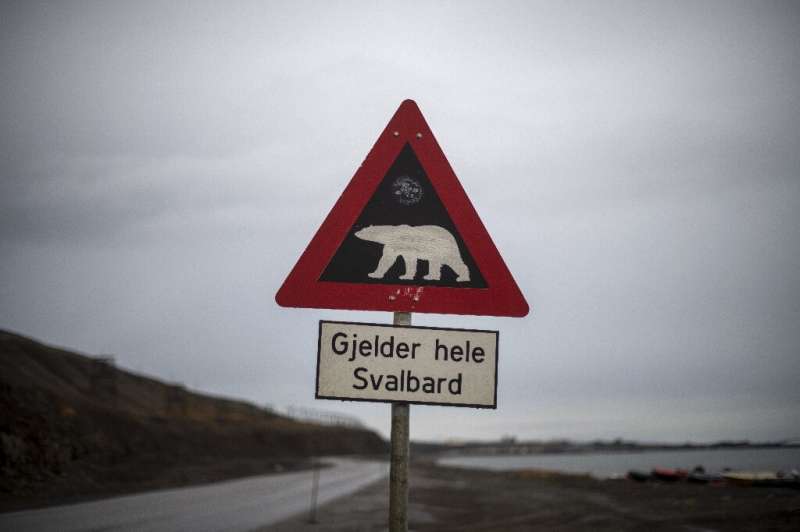
In Svalbard, just over 1,000 kilometres (620 miles) from the North Pole and where signposts warn of the danger of polar bears, some 300 sedentary bears live alongside around 20,000 reindeer.

According to the article’s authors, there are indications that polar bears have been hunting reindeer more frequently in recent decades.

They say that two factors are at play: the retreating sea ice is stranding the bears on land for longer periods, and the number of reindeer has been steadily rising on Svalbard since a 1925 hunting ban.

Eating reindeer is therefore a matter of both necessity and opportunity for the furry white beast, they suggest.

However, other experts caution against reading too much into the incident.

“If polar bears were killing reindeer back in the 1950s and 60s, it would have been very rare to have been seen, as there were few people, few bears, and few reindeer” in Svalbard at the time, said Andrew Derocher, a professor at the University of Alberta.https://googleads.g.doubleclick.net/pagead/ads?client=ca-pub-0536483524803400&output=html&h=280&slotname=5350699939&adk=3784993980&adf=1857921027&pi=t.ma~as.5350699939&w=753&fwrn=4&fwrnh=100&lmt=1638131323&rafmt=1&psa=1&format=753×280&url=https%3A%2F%2Fphys.org%2Fnews%2F2021-11-rare-scene-polar-diet.html&flash=0&fwr=0&rpe=1&resp_fmts=3&wgl=1&adsid=ChEIgO6MjQYQkMaXprGyq8bvARI9AKhnC_HhOXKS_loOkGU3xqBd1r_QiLr7Q5uunClNn0I5g3UGqJxXPcOyFpJDxPCPAVcDtDoBueVFblJE4w&uach=WyJXaW5kb3dzIiwiMTAuMC4wIiwieDg2IiwiIiwiOTYuMC40NjY0LjQ1IixbXSxudWxsLG51bGwsIjY0Il0.&dt=1638131221736&bpp=44&bdt=4041&idt=861&shv=r20211111&mjsv=m202111110101&ptt=9&saldr=aa&abxe=1&cookie=ID%3D5d55f89f953c9743%3AT%3D1627424980%3AS%3DALNI_MYJoz4kOqYpSwwDbG0_Fp9qnf-_8w&prev_fmts=0x0%2C1123x537&nras=2&correlator=6826809011367&frm=20&pv=1&ga_vid=185394846.1565457508&ga_sid=1638131223&ga_hid=78686264&ga_fc=1&u_tz=-480&u_his=1&u_h=640&u_w=1139&u_ah=607&u_aw=1139&u_cd=24&dmc=4&adx=263&ady=3010&biw=1123&bih=537&scr_x=0&scr_y=900&eid=21066435&oid=2&pvsid=1139695317038859&pem=466&tmod=1412764051&eae=0&fc=896&brdim=0%2C0%2C0%2C0%2C1139%2C0%2C1139%2C607%2C1139%2C537&vis=1&rsz=%7C%7CpEebr%7C&abl=CS&pfx=0&fu=128&bc=31&jar=2021-11-28-17&ifi=1&uci=a!1&btvi=1&fsb=1&xpc=IYmdTEnlYO&p=https%3A//phys.org&dtd=M

“Now, with modern media, everyone has a camera, social media and the ‘news’ spreads fast,” he added.

Opportunistic hunters

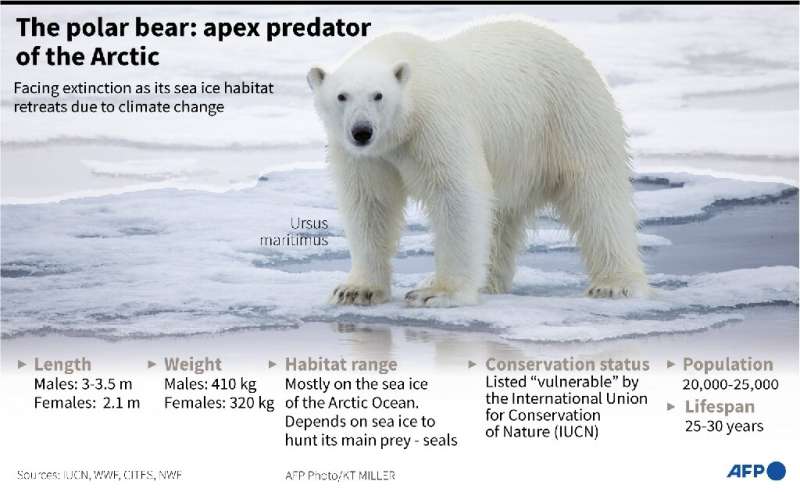
While high-fat, high-calorie ringed and bearded seals make up their main diet, polar bears are also known to feed on eggs, birds, rodents and even dolphins.

Weighing between 70 and 90 kilos (155 and 200 pounds) as adults, reindeer would be a good complement for the bears during the lean summer period, which has grown longer due to global warming.

Key facts about the polar bear, apex predator of the Arctic
Key facts about the polar bear, apex predator of the Arctic.

Two days after the Polish researchers filmed their video, the same polar bear was observed devouring another reindeer carcass.

“Reindeer can be important, at least for some polar bears when they have to stay on land for extended periods,” said Norwegian expert Jon Aars, co-author of the article.

Experts note, however, that the new diet would not make a difference in bolstering the animal’s population size.

“While an occasional successful predation attempt on reindeer may be good in the short-term for an individual bear or two (and the media), I think there is little significance at the population level for either polar bears or reindeer,” said professor Ian Stirling, of the Canadian Wildlife Service.

Polar bears are strong swimmers—their Latin name is Ursus maritimus—but they can’t keep up with reindeer on long distances on land.

Elsewhere in the Arctic, caribou—as North American reindeer are known—are not as vulnerable as their Svalbard cousins, whose wariness seems to have dissipated since the hunting ban.

Caribou “are also larger animals and have co-evolved with land predators, namely wolves, wolverines, and barren ground grizzlies, making them more challenging prey,” said Geoff York, of conservation organisation Polar Bears International.

The future looks especially ominous for Svalbard’s polar bears.

“There’s not enough ice to sustain a polar bear population,” Derocher said.

“I suspect that given the trend, the Barents Sea polar bear population—which includes Svalbard—is one that will disappear this century.”


Explore furtherNorway fines tourist guide for scaring polar bear