Do humans and carbon dioxide have no effect on climate change? Is science being weaponized, and are scientists comparable to Nazi propagandists?
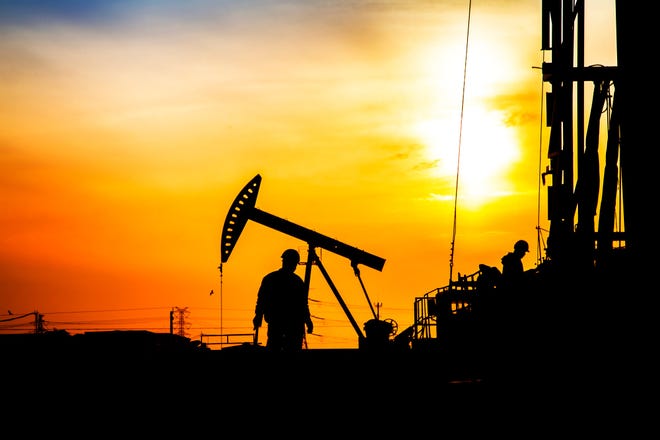
That’s what one politician told the Kansas Independent Oil & Gas Association during its annual convention in Wichita last week.Sen. Mike Thompson, a Republican from Shawnee, is the chair of the Senate utilities committee. He is also a retired meteorologist.
Following are eight claims Thompson made during a seminar on “The Weaponization of Climate Science”— and what the climate experts at the University of Kansas contacted by The Topeka…
The Wildlife NewsWolves in the West are collateral damage of human selfishnessMaximilian WernerJun 16 Agricultural interests bend the language to blame wolves for things they didn’t do.Whenever my life seems difficult, all I have to do is think about the challenges that predators face here in the American West and suddenly I don’t feel so bad anymore.Thanks in part to what Idaho Fish and Game describes as the state’s “liberalized wolf hunting and trapping season,” Idaho is currently vying for the title of Most Barbaricwhen it comes to its treatment of wolves. The state has no bag limit or season for wolves on public land, which means that hunters can kill as many wolves as they want, provided they have tags for them. And what is the life of a wolf worth in the great state of Idaho? $13.50.The situation is even worse on private lands, where “hunters” can…
Russian state television has again pushed the idea that the war in Ukraine could escalate, with one guest warning that the world should be prepared for a “colossal” conflict involving NATO.
Programs on the channel Russia-1 have repeatedly promoted the prospect of the Russian invasion of Ukraine spreadingbeyond the country’s borders. On Wednesday, the host ofEvening with Vladimir Solovyevrevisited the theme, starting his show with a monologue in which he said he had a “feeling that we don’t fully understand the gravity of this moment.”
Are we alone? It’s one of the most fundamental questions of humankind. Yet the signals reported this week from China’s FAST telescope are not aliens, says a SETI researcher. Image via Breakthrough Listen/ Danielle Futselaar/SETI Institute.
On June 14, 2022,EarthSky and other media reportedon the Twitter chatter about possible artificial signals detected by China’sFAST radio telescope. We noted that the “suspicious signals” might be some kind of natural radio interference. Or not. On June 15, writing atFuturism, Toronto-based science journalistVictor Tangermannreported on a rebuttal of the “alien” idea by an American scientist involved with the China project.
Dan Werthimeris a SETI researcher at the University of California, Berkeley. He…
The monarch butterfly species is one of thousands which states have flagged for conservation, but have limited resources to support.
Matt Slocum/AP
A bill to conserve endangered species — from thered-cockaded woodpeckerto thesnuffbox mussel— was passed by the U.S. House in a 231-to-190 vote on Tuesday.
TheRecovering America’s Wildlife Actwould create an annual fund of more than $1.3 billion, given to states, territories, and tribal nations for wildlife conservation on the ground. While threatened species have been defined and protected under the Endangered Species Act since 1973, that law does not provide robust funding to proactively maintain their numbers.
The effort comes as scientists andinternational organizationssound the alarm about accelerating species decline.
“Too many people don’t realize … that roughly one-third of our wildlife is at increased risk of extinction,”…
New data has revealed extraordinary rates of global heating in theArctic, up to seven times faster than the global average.
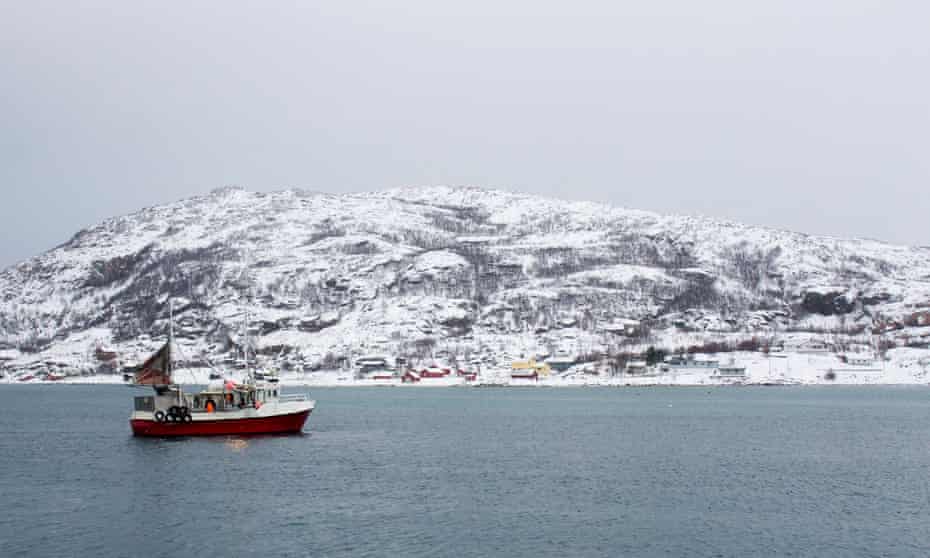
The heating is occurring in the North Barents Sea, a region where fast rising temperatures are suspected to trigger increases in extreme weather in North America, Europe and Asia. The researchers said the heating in this region was an “early warning” of what could happen across the rest of the Arctic.
The new figures show annual average temperatures in the area are rising across the year by up to 2.7C a decade, with particularly high rises in the months of…
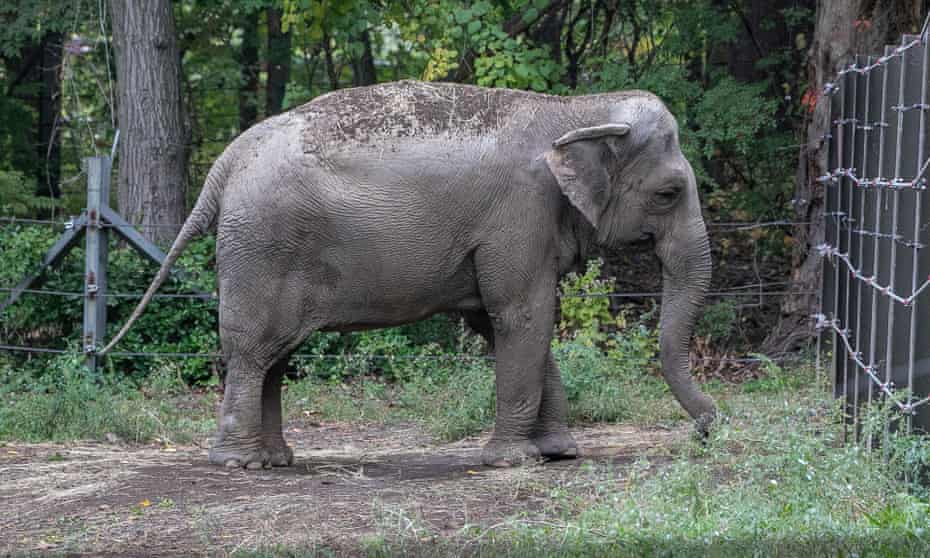
New York’s top court has ruled that Happy, an elephant residing at the Bronx Zoo since the 1970s, cannot legally be considered a person in a closely watched case that tested the boundaries of applying human rights to animals.
The case brought by an animal rights group argued Happy should be released from the zoo. The Nonhuman Rights Project argued that Happy is an autonomous, cognitively complex elephant worthy of the right reserved in law for “a person”.
The zoo and its supporters warned that a win for the Nonhuman Rights Project could open the door to more legal actions on behalf of animals, including pets, farm animals and other species in zoos.
The state court of appeals ruled on Tuesday 5-2, with a decision written by Chief Judge Janet DiFiore echoing that point. “While no one disputes that elephants are intelligent beings deserving of proper care and compassion”, a writ of habeas corpus was intended to protect the liberty of human beings and did not apply to a nonhuman animal like Happy, said DiFiore.
Happy was born in the wild in Asia in the early 1970s, captured and brought as a one-year-old to the US. She arrived at the Bronx Zoo in 1977 with Grumpy, a fellow elephant who was fatally injured in a 2002 confrontation with two other elephants.
The decision affirms a lower court ruling and means Happy will not be released to a more spacious sanctuary through a habeas corpus proceeding, which is a way for people to challenge illegal confinement.
Extending that right to Happy to challenge her confinement at a zoo “would have an enormous destabilizing impact on modern society”. And granting legal personhood in a case like this would affect how humans interact with animals, according to the majority decision.
“Indeed, followed to its logical conclusion, such a determination would call into question the very premises underlying pet ownership, the use of service animals, and the enlistment of animals in other forms of work,” read the decision.
Operators of the Bronx Zoo argued Happy is neither illegally imprisoned nor a person, but a well-cared-for elephant “respected as the magnificent creature she is”.
Happy in 2018. Photograph: Bebeto Matthews/AP
Two judges, Rowan Wilson and Jenny Rivera, wrote separate, sharply worded dissents saying the fact that Happy is an animal does not prevent her from having legal rights. Rivera wrote that Happy was being held in “an environment that is unnatural to her and that does not allow her to live her life”.
“Her captivity is inherently unjust and inhumane. It is an affront to a civilized society, and every day she remains a captive – a spectacle for humans – we, too, are diminished,” Rivera wrote.
The ruling from New York’s highest court cannot be appealed. The Nonhuman Rights Project has failed to prevail in similar cases, including those involving a chimpanzee in upstate New York named Tommy.
Steven Wise, the group’s founder, said he was pleased it managed to persuade some of the judges. He noted that the group had a similar case under way in California and more planned in other states and other countries.
“We will take a really close look at why we lost and we’ll try to make sure that that doesn’t happen again to the extent that we can,” he said.
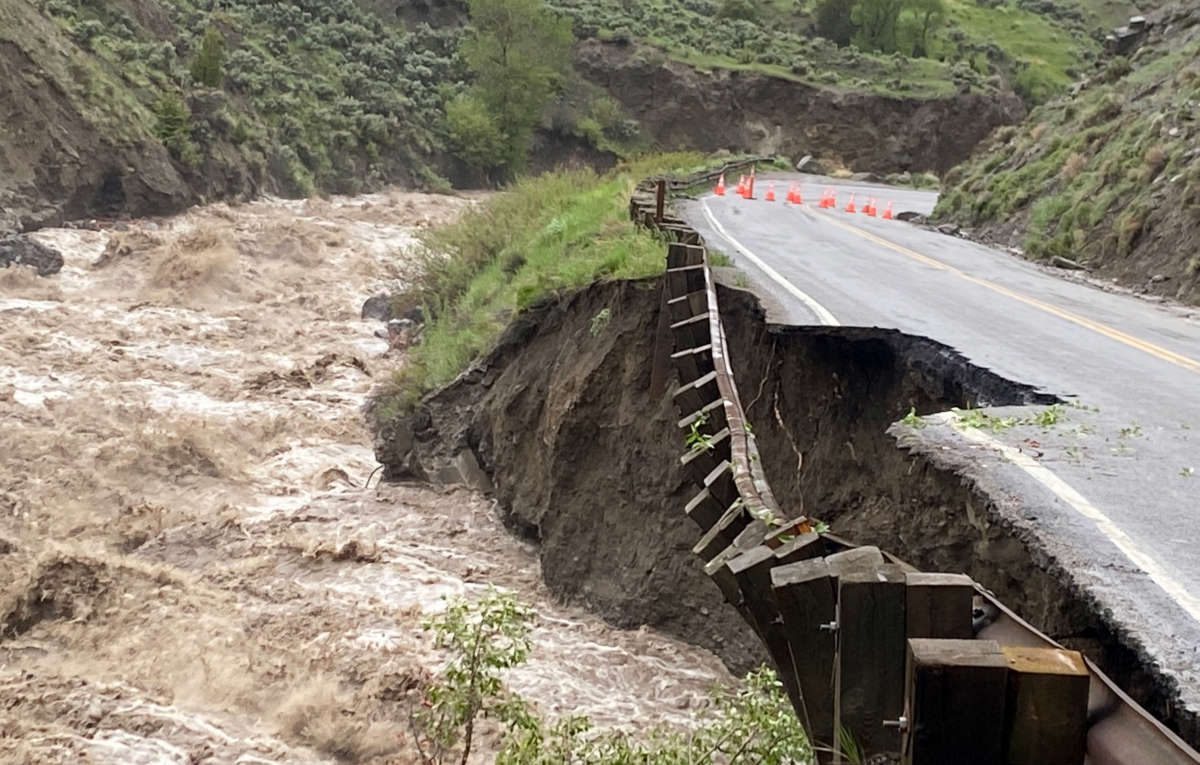
In this handout photo provided by the National Park Service, water levels in Gardner River rise alongside the North Entrance Road in Yellowstone National Park on June 13, 2022, in Gardiner, Montana.
Probably, you’re hot right now. Or soaked. Or in the dark. Or frightened. Or all of the above. Phrases like “ring of fire” have entered the weather lexicon beside “heat dome,” “polar vortex,” “atmospheric river” and “bombogenesis” (also known as a “bomb cyclone,” because that isn’t terrifying or anything) to try and explain the bedlam weather affecting basically every one of the contiguous 48 states.
That’s cool, I guess; I’ve always been a Johnny Cash fan, and I love the Social Distortion cover. It requires electricity to hear them, though, and for about 500,000 people in Ohio, Michigan, Indiana and Illinois, that’s not an option at present. The power is out for the foreseeable future. There was a tornado warning during rush hour in Chicago, and wind speeds were clocked over 80 miles per hour as storms swept the region. One storm near Fort Wayne was almost 70,000 feet tall.
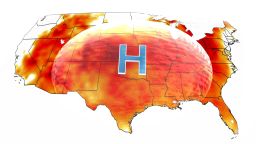
“The heat dome is centered near Nashville,” reportsThe Washington Post. “It has established dozens of high temperature records since it first formed late last week over Texas and the Southwest. Temperatures soared to as high as 123 degrees in Death Valley, Calif., while Phoenix hit 114 and Las Vegas 109 over the weekend.”
Uncompromised, uncompromising news
Get reliable, independent news and commentary delivered to your inbox every day.
Email
Meanwhile, the Post adds, many cities set high-temperature records on Monday:
Austin and San Antonio made it to 105…. Lincoln, Neb. (with a high of 103 degrees), Columbia, S.C. (103), Austin (102), St. Louis (100), Charlotte (98), Nashville (97), and Louisville and Paducah, Ky. (both 97) set June 13 records Monday. North Platte, Neb., hit 108 degrees — not just a daily record, but the highest temperature ever recorded there during the month of June.
Yellowstone National Park is closed because large parts of it are flooding and eating houses. Roads through the park have been obliterated, bridges have collapsed, with mud and rockslides battering what’s left. Park visitors have been ordered to evacuate, but there is no accounting for how many may be trapped in the back country. All entrances have been closed.
“The US Geological Survey on Monday said the Yellowstone River at Corwin Springs stage increased by about 6 feet in the past 24 hours,” reportsAxios, “which is above the National Weather Service’s flood stage. In fact, it rose to an unprecedented level, over 2 feet higher than its previous all-time record flood in 1918, according to the NWS.”
According to The New York Times, the weather-related battering has cashiered a significant portion of the park for the remainder of the tourist season, with no expectation of change in sight:
“Devastating rain and mudslides that tore out bridges, flooded homes and forced some 10,000 people to evacuate will keep the northern reaches of Yellowstone National Park, one of the nation’s most-visited natural wonders, cut off to tourists for the rest of the busy summer travel season. And officials warned that more rain and flooding could be on the way.”
And then there are the fires, massive ones, again, now spread over six different states. In this, the contiguous 48 do not stand alone; Alaska is currently enduring 23 significant infernos. In places like Arizona, California and New Mexico, the fires are being fueled by the aforementioned record-setting heat that has exacerbated an ongoing multistate drought of historic proportions.
The existential question of water availability is officially pressing, and no longer merely relegated to the someday-maybe corner. Towns in multiple states are running out of water, and Lake Mead in Colorado — the once-massive reservoir providing water to some 20 million people — has almost ceased to exist. In Utah, the Great Salt Lake is drying up, setting the stage for clouds of arsenic dust to blow in the wind from the dry lake bed.The future is now, and it is hot, thirsty, windy and dangerous.
Chalk it up to anthropogenic (Read: we did this to ourselves) climate disruption, the monster that was under the bed for years before it finally blasted through the mattress and took over the room. The evidence of human-made climate change is now so brazenly obvious that the denial camp has moved from “It’s not real” to “It can’t be fixed,” marking another milestone in their eternal quest to be not one bit helpful in salvaging the situation if there’s still a buck to be made from fossil fuels.
Here’s how it works for much of the west: Drought leads to lower and occasionally nonexistent snowfall in the mountains. That accumulated snowfall, back when it happened, would melt as the season warmed and feed water to the various states. Now, the absence of snow leads to parched summers. When there is snow, the extreme heat causes it to melt too quickly, leading to flooding calamities like the one currently lashing Yellowstone.
“Suffice it to say,” climate reporter Dahr Jamail wrote in Truthout in July of 2019, “all of us now, if we live long enough, are likely to become climate refugees at some point … whether it be from lack of food and water, rising seas, wildfires, smoke, or extreme weather events. For many, their time as climate refugees has already begun.”
The future is now, and it is hot, thirsty, windy and dangerous. This truth is baked into tomorrow, and tomorrow, and tomorrow again. It will not get better. How much worse it gets depends, in an ever decreasing measure, upon us.
At least 2,000 cattle deaths occurred in the southwestern part of Kansas as high temperatures, humidity, and low winds made it difficult for the cows to stay cool, Kansas Department of Health and Environment Communications Director, Matt Lara, told CNN.
Lara said the number of deaths is representative of the facilities that have contacted the department to assist with the disposal of carcasses.
An unusual weather event last weekend, where areas of southwestern Kansas saw a 10 to 14-degree increase in temperature and an increase in humidity almost overnight Friday into Saturday, with little wind and lows only falling to around 70 degrees throughout the night-time hours, caused heat stress issues in some cattle in the region, Scarlett Hagins with the Kansas Livestock Association told CNN.
According to Hagins, the sudden change did not allow cattle to acclimate as quickly as needed. “Heat stress is a concern this time of year and producers make every effort to mitigate the situation prior to an extreme heat event by making sure extra water is available, altering feeding schedules and rations if needed, and implementing sprinkler systems,” she said.
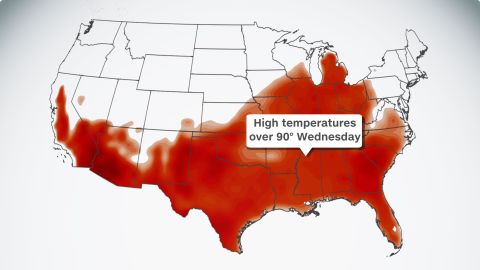
Temperatures across much of the US are expected to remain higher-than-normal Wednesday, according to forecastscnnweatherCNN—
At least 16 US cities set or tied records for their highest temperature for the date, with Macon, Georgia, hitting 103 degrees Fahrenheit on Wednesday, the National Weather Service reported.
That was 3 degrees higher than the previous June 15 mark in Macon, set in 2010.
Chicago’s O’Hare airport reported a record temperature of 96, which is 15 degrees above normal and well above the 77 degrees it was last year on that date. The prior mark was 95, most recently reached in 1994, according to the weather service.










 Exposing the Big Game
