FILE – A man wades into the ocean at sunset on June 22, 2021, in Newport Beach, Calif. The National Oceanic and Atmospheric Administration announced Friday, June 3, 2022, that the amount of carbon dioxide in the atmosphere in May averaged 421 parts per million, more than 50% higher than pre-industrial levels. The NOAA said carbon dioxide levels in the air in May have reached a point last known when Earth was 7 degrees hotter, millions of years ago. (AP Photo/Jae C. Hong, File)
The amount of heat-trapping carbon dioxide in the atmosphere has shot past a key milestone — more than 50% higher than pre-industrial times — and is at levels not seen since millions of years ago when Earth was a hothouse ocean-inundated planet, federal scientists announced Friday.
The National Oceanic and Atmospheric Administration said its long-time monitoring station at Mauna Loa, Hawaii, averaged 421 parts per million of carbon dioxide for the month of May, which is when the crucial greenhouse gas hits its yearly high. Before the industrial revolution in the late 19th century carbon dioxide levels were at 280 parts per million, scientists said, so humans have significantly changed the atmosphere. Some activists and scientists want a level of 350 parts per million. Industrial carbon dioxide emissions come from the burning of coal, oil and gas.
Levels of the gas continue to rise, when they need to be falling, scientists say. This year’s carbon dioxide level is nearly 1.9 ppm more than a year ago, a slightly bigger jump than from May 2020 to May 2021.
“The world is trying to reduce emissions, and you just don’t see it. In other words, if you’re measuring the atmosphere, you’re not seeing anything happening right now in terms of change,” said NOAA climate scientist Pieter Tans, who tracks global greenhouse gas emissions for the agency.
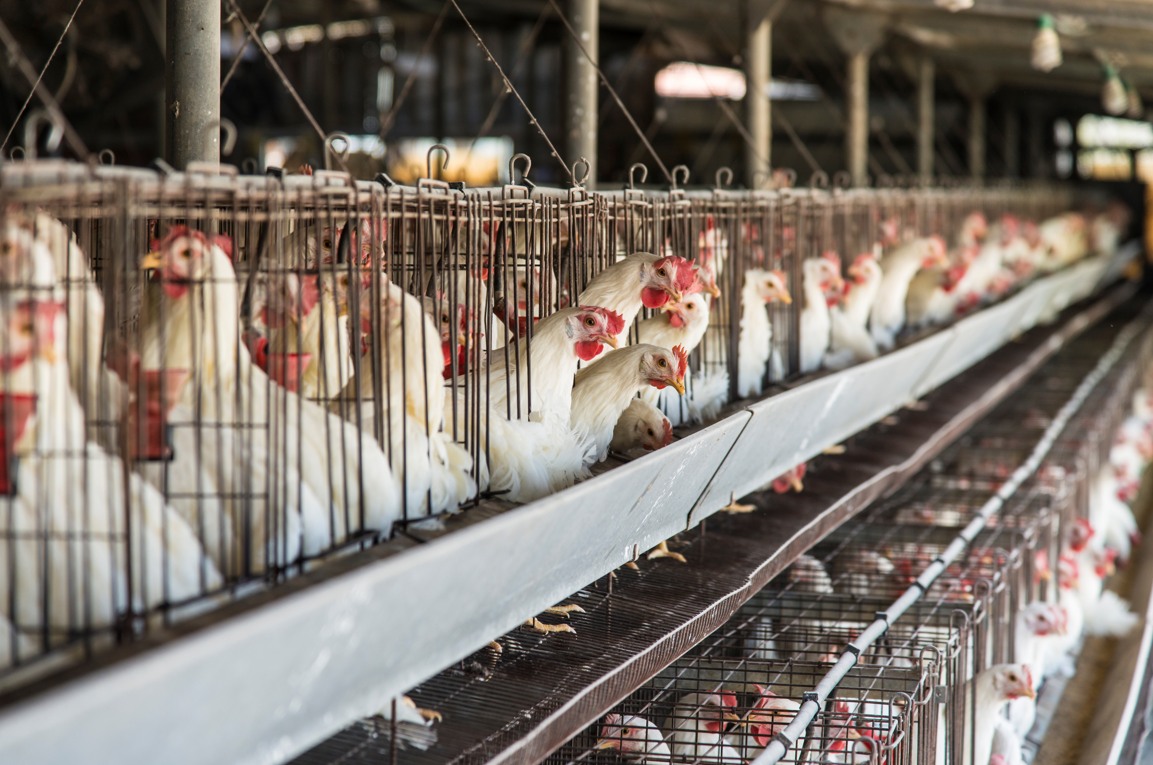
The U.S. government’s response to bird flu outbreaks involves killing and burying or burning millions of tightly confined birds, which threatens wildlife, habitats, water supplies, air quality and human health. iStock.com
62SHARES
When a strain of bird flu sweeps through factory farms, where birds are tightly confined, the current “solution” involves immense cruelty.
This is why it’s a genuine milestone in the fight against factory farming that the Humane Society of the United States, Farm Sanctuary and Mercy For Animals just settled a lawsuit against the U.S. Department of Agriculture over its reckless response plan for outbreaks of Highly Pathogenic Avian Influenza.
Factory farms (where virtually all meat, eggs and dairy now come from) are breeding grounds for disease. By packing thousands of stressed animals into cages or sheds, factory farms provide viruses and other pathogens with the perfect conditions to spread and mutate into more dangerous and contagious strains, a process known as amplification. State laws that prohibit cruel, tight confinement like California’s Proposition 12 have an important role to play here, but factory-farming interests are seeking to strip states of their ability to pass such laws. More on that below.
In a bird flu outbreak, the current USDA approach involves killing every animal at or near the impacted facility. Often this is done by an exceptionally cruel method called “ventilation shutdown,” which means shutting off a facility’s ventilation system and slowly suffocating conscious birds to death. The government then uses taxpayer dollars to reimburse producers for the cost of restocking their operations with new animals.
In 2015, the HSUS proposed a better way: that the agency should require producers re-stocking their facilities after an outbreak to shift to cage-free or other systems that give birds more space and the ability to engage in healthy, natural behaviors. But the USDA decided to stick to an approach that incentivizes re-stocking factory farms with dangerously high numbers of animals, often confined to the point of virtual immobilization.
Our lawsuit alleged that the agency’s plan inadequately analyzed how killing and burying or burning millions of tightly confined birds threatens wildlife, habitats, water supplies, air quality and human health. The settlement requires the agency to revisit these issues and conduct a more in-depth analysis of these threats. This is an important and timely development, as currently the U.S. is in the midst of another nationwide bird flu outbreak that has quickly spread to 40 states.
Though the USDA agreed that overcrowding animals can amplify influenza, instead of doing anything to discourage it, the agency said that it planned to just “encourage farmers to consider reducing the number of birds in poultry houses as part their best management practices.” Unfortunately, there’s no evidence that this supposed encouragement led to any reduction in cruel and dangerous confinement anywhere, and now six years later the U.S. is enduring of another devastating bird flu outbreak.
But thanks to the settlement, the USDA will go back to the drawing board, and nothing is stopping the agency from adopting the anti-confinement incentives the HSUS suggested in 2015. The agency never questioned the efficacy of those incentives; it rejected them without examining whether they may prove effective in limiting the threat of bird flu.
This case overlaps with a major legal battle in which the HSUS is currently engaged. We’re defending California’s landmark Proposition 12 in front of the U.S. Supreme Court. The HSUS led the campaign that passed Proposition 12 in 2018, banning the extreme confinement of mother pigs, egg-laying hens and calves used for veal, while prohibiting the sale of pork, eggs and veal from factory farms that cruelly confine animals. Instead of complying with this commonsense and hugely popular reform, the pork industry is trying to get the law overturned.
It’s obvious to most people that the pork industry’s practice of locking a mother pig in a barren metal cage so tightly that she can’t turn around is cruel. But these cages (known as “gestation crates”) also pose an enormous threat to public health. Confining mother pigs in gestation crates stresses the animals and this suppresses their immune responses. In pig breeding facilities, hundreds or thousands of pigs are confined right next to each other in these crates, helping influenza and other pathogens spread more easily. Just like overcrowding birds, overcrowding pigs risks amplifying influenza, increasing the likelihood of generating a virus that could become the next devastating human pandemic. This is not hypothetical: The 2009 swine flu pandemic jumped from pigs to humans and killed hundreds of thousands of people worldwide.
Factory farms that force animals to live in overcrowded, filthy conditions are a massive threat to public health, in addition to being our nation’s largest source of animal suffering. The HSUS will continue to battle intensive farm animal confinement wherever the fight takes us—whether it be in courts, corporate boardrooms, online or the public square. You can join us by adding your name to this action alert.
The bird flu lawsuit was prepared and defended by pro bono counsel at the law firm Shearman & Sterling, LLP and the HSUS’s Animal Protection Law team along with co-plaintiffs, Mercy For Animals and Farm Sanctuary.
Sara Amundson is president of the Humane Society Legislative Fund.
While fishermen are notorious for telling tall tales about the sizes of their catches without supporting evidence, the photos for this story are accessible … and horrifying.
It all began on May 22 when a spearfisher in Thailand, in the Phatthalung province in the far south of the country, washuntingand came up for air.
As he surfaced, another creature did, too.
Advertisement – story continues below
A 5-inch-longfishknown as an Anabas leaped into the air — and directly into the man’s throat.
The Anabas fish’s dorsal fin is spiky, making the ordeal that much more painful.
While the fisherman certainly wasn’t expecting the fish to leap into his mouth, the fish didn’t seem too happy about the situation either, and it tried to wiggle out, but took a wrong turn.
Television sitcoms once portrayed women almost exclusively as June Cleavers and Donna Reeds, housewives with no interests beyond serving their husbands and children. These characters represented the absence of a woman’s perspective, a cultural denial of a woman’s life. But over time, sitcoms evolved to more accurately reflect the lives of women, and popular culture evolved with them. When will this evolution happen for nonhuman animals and the acknowledgment of the cruelty of animal agriculture?
Studies show that television sitcoms can shape public opinion regarding gender, race, and human rights, and “have the potential to substantially shape individual-level opinion.”
Sitcoms provide an opportunity to inform and educate the public about the realities of animal agriculture, but instead mostly ignore, deny, and excuse the killing and suffering of animals, reinforcing our cultural blindness to the plight of nonhumans.
The most common way that sitcoms teach us to live in denial about the atrocities that underlie animal-based food production is simply by pretending that meat has no source. There are countless examples of sitcom characters happily eating hamburgers and pot roasts or cooking bacon and eggs, behaving as if the meat in front of them did not come from a dead, abused animal body.
Modern Family, Parks & Rec, and 30 Rock
Modern Family’s Thanksgiving episode “Three Turkeys” focuses on the experiences of Phil and Gloria spending the day cooking turkeys. One of the dead turkey bodies is carelessly tossed into a suitcase for comedic effect. This treatment of the turkey’s carcass as an object and a prop models a cavalier attitude toward the dead body that would be considered odd and inappropriate if the characters acknowledged the fact that they were tossing around the body of a recently living being. Instead, the audience is encouraged to pretend, along with Phil and Gloria, that the turkey’s carcass was never a living creature, that it has no history or context, and that it is simply an object for humans to do with whatever they’d like.
Some sitcoms, such as Parks & Recreation, take this form of denial one step further by fetishizing meat-eating. Throughout the series, Ron Swanson makes it clear that meat is his favorite food. This is considered an endearing attribute by his coworkers and by fans of the show. In the episode “Indianapolis,” Ron proudly displays a scrapbook he has assembled with photos of every steak he has ever eaten from his favorite steakhouse. Such fetishizing separates the meat from the life of the individual cow who was killed, encouraging viewers to do the same.
This abstraction of the reality of what the meat is allows the meat object to exist as a sort of ethical blank slate, which Ron is then able to associate with a feeling of pleasure and identity, like a favorite sports team. As we watch Ron fetishize meat-eating with no criticism or consequences from his fellow characters, a strong message is sent to the audience that there is no reason to feel uncomfortable about eating meat, that it is a source of contextless joy and something that Ron is proud to associate himself with. If the reality of the suffering each cow endured before being killed and dismembered to end up on Ron’s plate was acknowledged instead of pretended away, Ron’s extreme love of meat-eating would seem shockingly callous.
Other sitcoms do acknowledge the animal suffering connected to meat and food production, only to then quickly discount, justify, or rationalize it away by creating excuses for harming and killing animals for food. For example, on 30 Rock, in “Chain Reaction of Mental Anguish,” Kenneth has a memory of bonding with a pig and eventually eating him. To his credit, he shows actual emotion and remorse. But Jack Donaghy quickly thinks up an excuse to assuage Kenneth’s guilt. Jack tells Kenneth that he actually honored his pig friend by eating him and benefited from the pig’s “sacrifice.” If watchers had any doubts about their meat-eating, those doubts are washed away by this process of internal justification. This sends the clear message that animal agriculture is an unavoidable reality that we must learn to accept, shrug off or ignore.
How TV shows can do better
Television writers must come to understand that, as with issues of gender, race, and human rights, they have a social responsibility when depicting meat-eating to acknowledge what is really happening and where that meat came from.
Two examples of a starting place for sitcoms to acknowledge the suffering of animals that underlies our food system are Lisa Simpson in The Simpsons and Dina Fox in Superstore.
In The Simpsons, Lisa Simpson has been an important voice for compassion toward animals for most of the show’s 32-year history. In “Lisa the Vegetarian,” she connects a lamb she bonded with at a petting zoo with the meat she is being served for dinner. While she sits at the table in front of a plate of two slices of meat, Lisa imagines the lamb standing in front of her with two empty spaces in his body. In her imagination, she makes the lamb’s body whole again by returning the two slices of meat to it. Not surprisingly, the showrunner at the time, David Mirkin, was a vegetarian himself.
In Superstore, Dina Fox is an animal-loving vegan character. In “Golden Globe Party,” she decides to eat a piece of chicken despite her veganism in order to support her best friend. Her friends watch uncomfortably as she holds the drumstick and tearfully says, “I guess this is what he used to stand on, they just took off the little foot.” Then, she holds the chicken up to her mouth and says, “I’m going to eat a bird now. I’m going to eat a bird now.” This scene forces the audience to take the first step toward facing the realities of animal agriculture by opening our eyes and looking at what we are really doing when we eat meat.
These examples provide a path for sitcoms to acknowledge the connection between meat-eating and the cruel realities of animal agriculture, and to begin to emerge from the denial of the atrocities against nonhumans committed by our society.
Concentrations of carbon dioxide in the atmosphere in May were 50 percent higher than during the pre-industrial era, reaching levels not seen on Earth for about four million years, the main US climate agency said on Friday.
The amount of carbon dioxide in the atmosphere passed the threshold of 420 parts per million (ppm), the National Oceanic and Atmospheric Administration (NOAA) said. PPM is a unit of measurement used to quantify pollution in the atmosphere.
Last May, the rate was 419ppm, and in 2020, 417ppm.
Global warming caused by humans, particularly through the production of electricity using fossil fuels, transport, the production of cement, or even deforestation, is responsible for the new high, the NOAA said.
CO2 is a greenhouse gas that traps heat, gradually causing global warming. It remains in the atmosphere and oceans for thousands of years.
Many huge automotive companies are transitioning to cleaner car manufacturing. Electric vehicles have been the focal point of that conversation, allegedly expelling less energy and leaving behind virtually no carbon footprint. But manufacturing the vehicle from its wheels to its battery could have significant damage to the earth. Consumer skepticism remains around if electric cars are as environmentally friendly as they’re marketed.
What vehicle is worse for the environment, electric cars or gasoline-powered cars? On the surface, electric vehicles create no carbon emissions because they’re not expelling harmful fumes into the atmosphere. Standard vehicles, of course, emit all kinds of pollutants into the earth and the air, which is not suitable for the upkeep of the planet. But…
Exclusive: Focus on human needs must not result in impact on animals being overlooked, say researchers
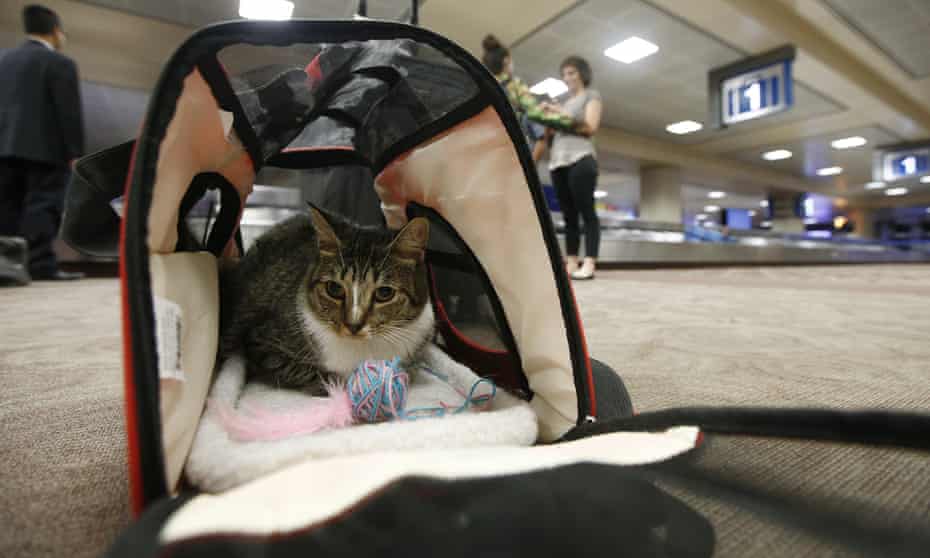
Emotional support animals are not trained to aid their owners, as is the case for assistance animals such as guide dogs. Photograph: Ross D Franklin/AP
Taking a pet everywhere for emotional support, from aeroplanes to the daily shop, may be all the rage, but experts have warned animal welfare is at risk of being overlooked.
But experts say the focus on human needs must not mean the potential impact on the animals themselves is overlooked.
“We need to be careful with our enthusiasm, and not lose sight of what the animal might need,” said Dr Elena Ratschen, associate professor in health services research at the University of York, whose work has explored animal-assisted interventions.
Advertisement
“We have a duty here to make sure the benefit of the human-animal relationshipis reciprocal in the greatest possible way.”
Emotional support animals are not trained to aid their owners, as is the case for assistance animals such as guide dogs, and in many countries – including the UK – they are not covered by the same laws that protect assistance animals.
Instead, said Prof Janet Hoy-Gerlach of the University of Toledo, they are often pets who helps to mitigate the impact of their owner’s physical or mental health condition through everyday benefits of human-animal interaction.
However, Ratschen said it was challenging to conduct sufficiently large, randomised controlled studies around emotional support animals themselves. “It is incredibly difficult to conduct rigorous studies in this field,” she said.
Among research into the use of emotional support animals, is a pilot study by a team including Hoy-Gerlach that paired 11 participants with serious mental illness with a rescue dog or cat. The results suggest the participants experienced an improvement in their mental health wellbeing, with reductions seen in anxiety, depression, and loneliness – however, the pilot was small and lacked a control group.
A key concern raised by Hoy-Gerlach is animal welfare, noting that being out and about could put animals in situations that cause them stress, a particular concern where undomesticated animals are concerned.
“An emotional support animal isn’t trained to be out in public,” she said, adding by contrast service animals such as guide dogs are given plenty of preparation to help them cope.
Ratschen agreed. “If we then say [emotional support] animals are allowed to travel on aeroplanes, or enter, for example, crowded places where animals [are] not normally accepted, yes, of course, you could think that this will most likely incur substantial stress on them,” said Ratschen. “If you imagine the peacock on the plane, do you think the peacock enjoyed it? Probably not.”
The Conservation Officer Service says the investigation included help from the U.S. Fish and Wildlife Service after a moose carcass in northern B.C. was spotted by a pilot.B.C. Conservation Officer Service
An Alberta man has lost hishuntingand guiding privileges in B.C. following an investigation that included cross-border help from the U.S. Fish and Wildlife Service.
TheB.C. Conservation Officer Service(COS) says Richard Todd Bunnage pled guilty in May to being involved in an illegal guiding operation by Tenaka River Guide Service in northern British Columbia.
Default Mono Sans Mono Serif Sans Serif Comic Fancy Small CapsDefault X-Small Small Medium Large X-Large XX-LargeDefault Outline Dark Outline Light Outline Dark Bold Outline Light Bold Shadow Dark Shadow Light Shadow Dark Bold Shadow Light BoldDefault Black Silver Gray White Maroon Red Purple Fuchsia Green Lime Olive Yellow Navy Blue Teal Aqua OrangeDefault 100% 75% 50% 25% 0%Default Black Silver Gray White Maroon Red Purple Fuchsia Green Lime Olive Yellow Navy Blue Teal Aqua OrangeDefault 100% 75% 50% 25% 0%
The search for an injured black bear in Juneau County is intensifying.
Published: Jun. 2, 2022 at 8:46 AM PDT|Updated: 21 hours ago
NEW LISBON, Wis. (WMTV) – The search for an injured black bear in Juneau County is intensifying. Volunteers from the organization Help Asheville Bears or HAB arrived in New Lisbon this week to find the bear and help remove a small game trap from its right front paw. NBC15 first reported on the bear last week when a viewer sent us a video of the bear hobbling around in their backyard.
“We had seen the same thing happen in North Carolina last year — almost a year ago to date — and the bear ended up losing its paw after a few weeks,” said Alex Williams, a volunteer with HAB. “So, we knew how important it was to find the bear quickly before it lost its paw.”
Williams and his brother Jody arrived at the home in New Lisbon Wednesday morning where the bear spotted searching for food and going after bird feeders. In the video, you can see the bear has a trap on its paw.
A still frame from the video of the bear. You can see the trap stuck on it’s front right paw.(Tim Elliott)
ADVERTISEMENT
“Our concern has always been from the beginning to get help for the bear,” said Ian Judd, the man who filmed the bear. “Seeing the bear with the trap on is heartbreaking.”
The type of trap the bear stepped on is called a conibear trap. Despite its name, the trap is not designed to catch bears. Instead, it’s designed to catch small animals like a raccoon. Trapping bears is illegal in Wisconsin. However, the type of trap seen in the video is legal.
“Currently in Wisconsin, we don’t have any trapping season open this time of year. However, state law does allow landowners to trap and remove nuisance animals that are on their land, year-round,” said Kris Johansen with the Wisconsin Department of Natural Resources.
Alex Williams pours a bottle of maple syrup on a pile of doughnuts, pies, and other sweet treats in an attempt to get the bear into the live trap set up by wildlife officials(Tim Elliott)
ADVERTISEMENT
Johansen believes the bear inadvertently stepped on the trap, but says “no one wants to see an animal that is in distress like that.”
The bear was filmed on Saturday, May 21. The next day, the USDA Wildlife Service put a live bear trap on Judd’s property is an attempt to catch the bear and safely tranquilize it. They would then remove the trap and then set the bear free.
As of Thursday, the bear still has not entered the live trap.
The Williams brothers spent Wednesday morning setting up 10 trail cameras around Judd’s seven-acre property to hopefully document the bear’s movement. They also dumped gallons of maple syrup, molasses, and other sugary sweets on the property in an attempt to entice the bear to come back to the property and enter the live bear trap.
ADVERTISEMENT
This is one of several trail cameras set up on the Judd’s property to try to document the bear’s movement(Tim Elliott)
“The goal right now is to use baits and scents and attractants like these to get the bear closest to the barrel trap as we can,” said Williams.
Williams says HAB started two-and-a-half years ago in North Carolina to stop poachers in the area from trapping black bears. He believes trapping animals with these conibear traps – or really any spring-loaded trap– is barbaric.
“So how does the trap know whether a bear or a raccoon steps in it? Maybe it’s your dog that accidently gets out of your yard or gets off the leash and wanders out of the yard,” he said. “We should all look at the traps and say, ‘does this really make sense in our modern times? Do we want animals being maimed and limping around at all times or is it time to put this old way of doing this down?”
ADVERTISEMENT
In addition to helping bears, Williams says HAB’s goal is to “document their injuries and missing limbs to try to get this cruelty stopped,” Williams says if the trap is not removed in a reasonable amount of time, the bear will chew his own paw off to get free.
Judd says since his video has gotten out, the community has really banded together to find the bear.
“The outpouring of sympathy for the bear has been quite enormous. It just shows there are people out there that care, people are still concerned for animals.”
The Williams brothers are determined to help – and if nothing else – shine a spotlight on what happens when an animal gets trapped.
ADVERTISEMENT
“Even if we can’t save the limb and it’s chewing it off right now and it’s too late, we can’t stop until we document what happened to this bear from beginning to end. The story is too important,” said Williams.
The Williams brothers say there has been a sighting of a black bear in the area with a missing right front paw. It’s unclear if this is the same bear that was filmed in the Judd’s backyard. NBC15 is working to confirm with the Wisconsin DNR if this recent sighting is in fact the same bear.










/cloudfront-us-east-1.images.arcpublishing.com/gray/T3OGBKXL2VGLVAZHRQD5TPSKRQ.png)
/cloudfront-us-east-1.images.arcpublishing.com/gray/L7GEUY3Z4VF65B7AX56MQKHZJY.jpg)
/cloudfront-us-east-1.images.arcpublishing.com/gray/LIBL7IK22NGDTBZG3FHFRQ7PHM.jpg)
 Exposing the Big Game
