GREEN RIVER — Two Texas men have lost their hunting, fishing, and trapping privileges for 5 years in 48 states after they pleaded guilty to numerous charges related to illegally killing antelope in Wyoming, according to a press release from the Wyoming Game and Fish Department.
Matthew Adams, 26, and Carl Denmon, 25, of Texas, have pleaded guilty to numerous wildlife crimes, resulting in over $31,000 in fines and restitution. Each man was sentenced to and served 30 days in jail, and 11 1/2 months of unsupervised probation. The men also lost their hunting, fishing and trapping privileges for five years. Because Wyoming is a member of the wildlife violator compact, the men are suspended from hunting, fishing and trapping in 48 states. Adams and Denmon also were made to surrender the firearms used in committing these crimes which…
NASHVILLE — The Tennessee Wildlife Resources Agency and the Tennessee Fur Harvesters Association will be hosting the inaugural Becoming an Outdoors Woman (BOW) Trapper Workshop Jan. 20-21 at Buffalo Ridge Refuge in Humphreys County.
Instructors at the camp are outdoor women who will teach the fundamentals of trapping, snaring, fur handling, and tanning animals. The two-day workshop is free, but registration is mandatory, and participation is limited. Registration may be madehere.
Check-in for each of the training camps will begin with registration on Friday from 5-7 p.m. Friday with classroom instruction from 7-9 p.m. Saturday’s session will begin with breakfast at 7 a.m. with instruction to begin at 8 a.m. Lunch also be provided at noon and instruction will resume from 1-5 p.m.
On-site primitive camping is available, and participants must provide their own camping gear, have appropriate clothing, and bring…
Coroner David West said Matthew Roach, 40, of Elgin, died.
West said Roach was a member of the hunting club.
The accident is under investigation by the South Carolina Department of Natural Resources, the Kershaw County Sheriff’s Office and the Kershaw County Coroner’s Office.
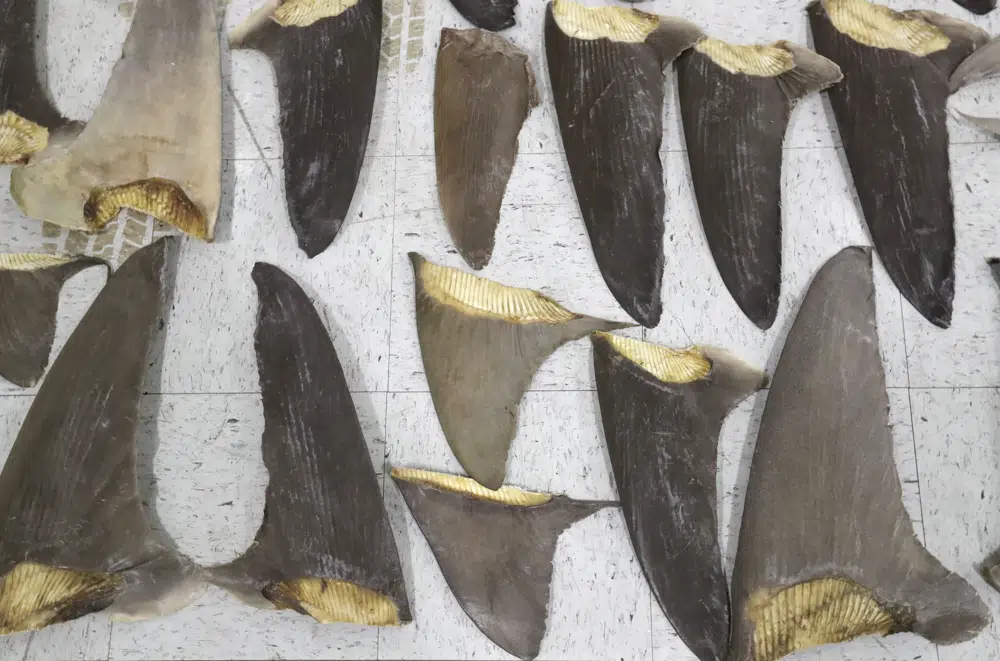
FILE – Confiscated shark fins are displayed during a news conference, Thursday, Feb. 6, 2020, in Doral, Fla. In 2022, the U.S. House and Senate passed identical versions of a proposed shark fin ban as part of a broader defense spending bill that President Joe Biden is expected to sign into law. Once he does, it will be illegal for Americans to buy, sell, transport or even possess foreign-caught fins — something ocean conservation activists have long sought. (AP Photo/Wilfredo Lee)
MIAMI (AP) — The U.S. is poised to ban the lucrative trade in shark fins, a move conservationists hope will help protect millions of sharks that are butchered every year to satisfy demand in China and other parts of Asia.
The practice of shark finning, whereby sharks are caught for their fins and their carcasses then dumped back into the ocean, has been banned in U.S. waters for decades. But the U.S. remains a major hub for the brisk trade where the fins of as many as 73 million sharks are cut off around the world each year.
The House and Senate passed identical versions of the proposed ban as part of a broader defense spending bill that President Joe Biden is expected to sign into law. Once he does, it will be illegal for Americans to buy, sell, transport or even possess foreign-caught fins — something ocean conservation activists have long sought.
“Our ports are no longer open for business for shark fins,” said Gib Brogan, campaign director with the ocean conservation group Oceana. “That will take them out of the supply chain and we expect it to disrupt the global fin market.”
But some scientists who study shark fisheries aren’t so certain. They believe the legislation will have little impact on the trade in shark fins and will only serve to shut down a regulated American fishery for shark meat and other legal products.
U.S. shark fisheries, although small, are well managed, and removing the country from the fin trade could encourage more exploitation of sharks in parts of the world where it’s less sustainable, said Robert Hueter, senior scientist emeritus at Mote Marine Laboratory in Sarasota, Florida.
“It’s putting the wrong people out of the fishery, creating opportunities for those that are doing it the wrong way to have more market share,” Hueter said. “People think this is going to solve the problems, and it’s not.”
While not all sharks are killed just for their fins, none of the other shark parts — such as its meat, jaws or skin — can compete with fins in terms of value. Depending on the type of shark, a single pound of fins can fetch hundreds of dollars, making it one of the priciest seafood products by weight.
ADVERTISEMENT
Kevin Wark, a shark fisherman based in New Jersey, said the new rules have the potential to put fishermen out of business.
“I understand there might be a lot of illegal fishing in the South China Sea and around the world, and there might be a couple incidents in the U.S., but there’s a lot of hardworking, honest guys here,” Wark said.
However, conservationists say the U.S. must act forcefully to encourage other countries to take similar steps, much in the way the U.S. ban on the ivory trade has been pivotal in protecting African elephants. The fin ban, first floated in 2017 by a bipartisan group of lawmakers, is similar to action already taken by Canada.
ADVERTISEMENT
Overfishing has led to a 71% decline in shark species since the 1970s. The International Union for Conservation of Nature, a Switzerland-based group that tracks wildlife populations, estimates that more than a third of the world’s 500-plus shark species are threatened with extinction.
At an international wildlife conference in Panama last month, governments from around the world extended trade restrictions to more than 90 shark species that are increasingly being hunted not only for their fins, but also their meat, some of which ends up in pet food.
___
This story was corrected to reflect that the fins of as many as 73 million sharks are cut off each year, not that 73 million fins are cut off.
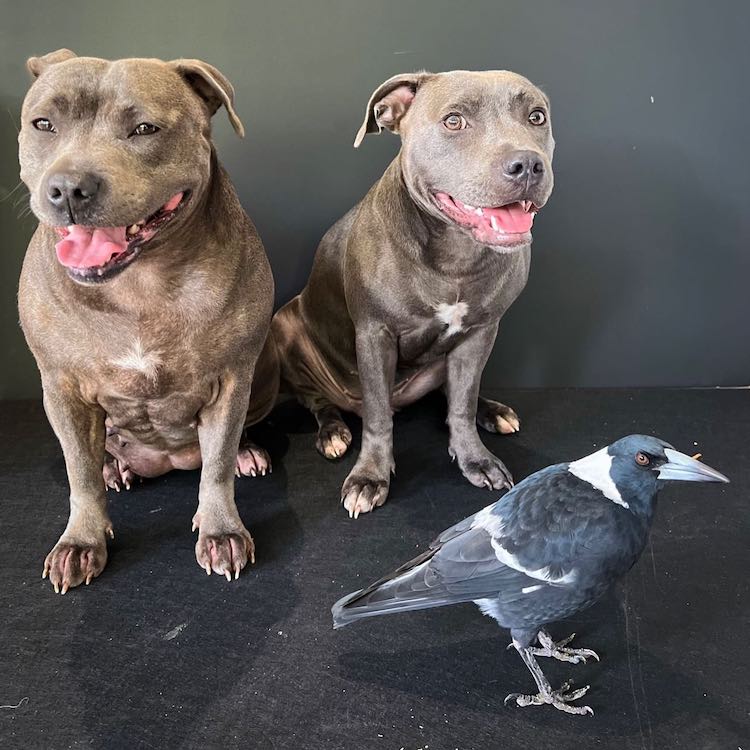
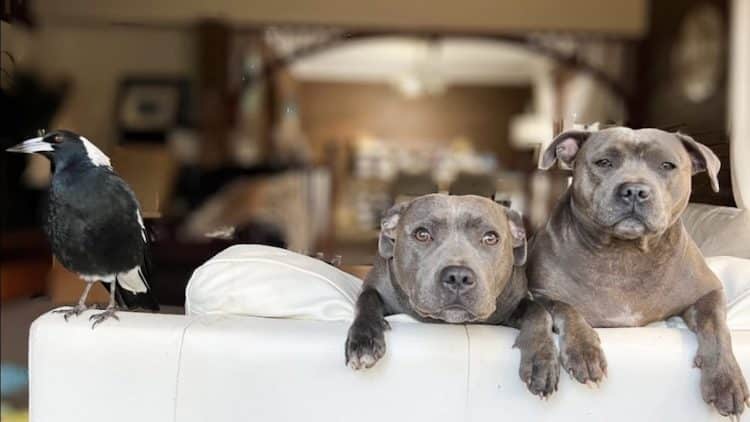
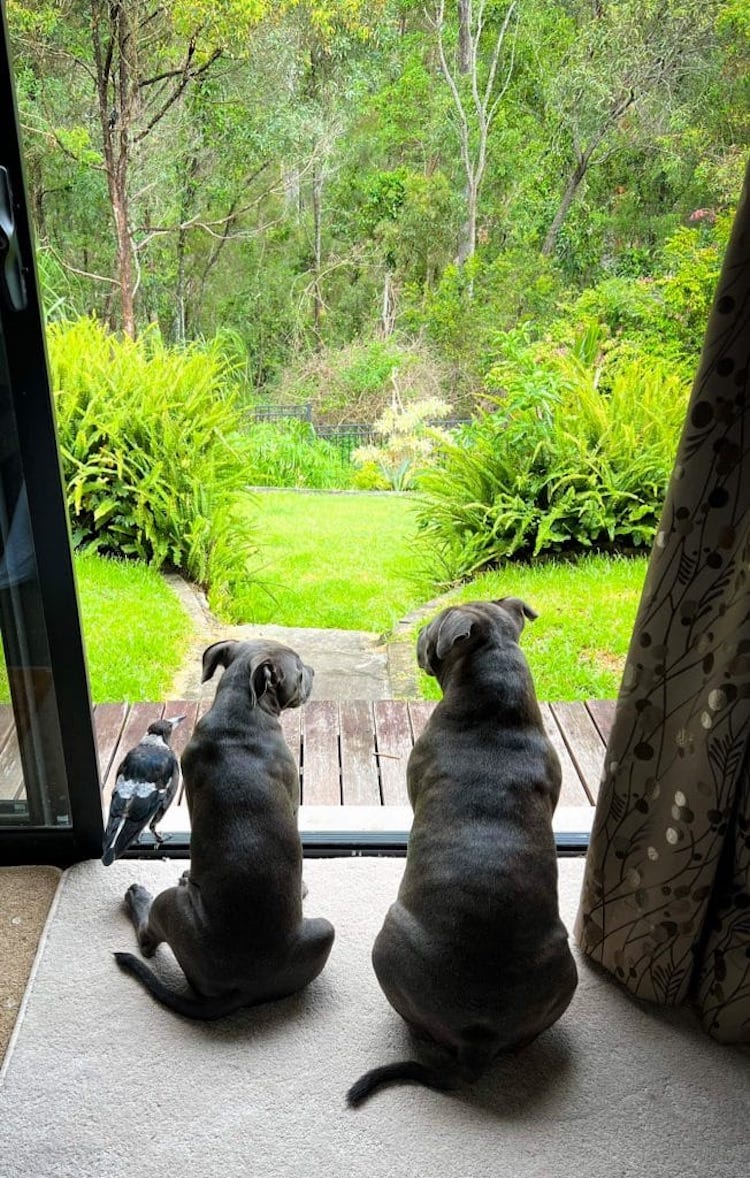
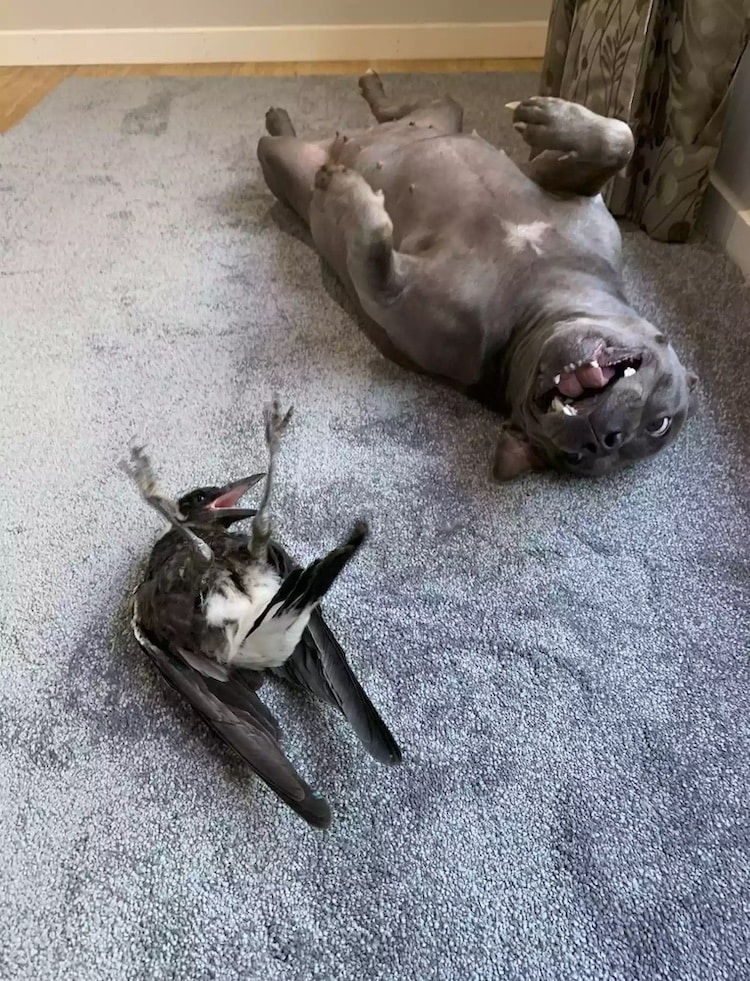
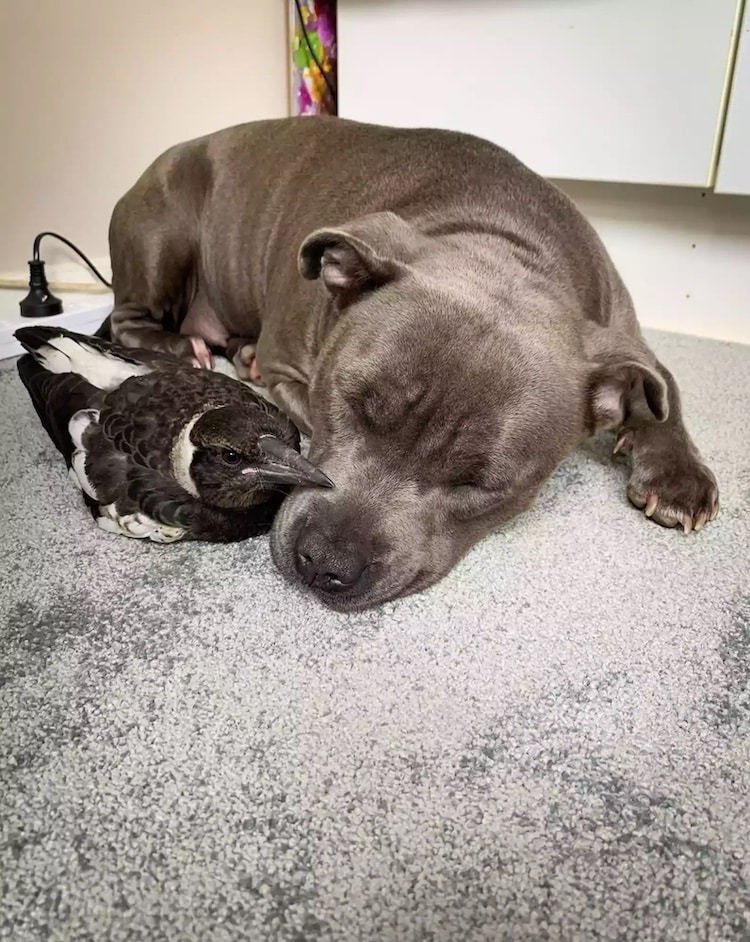
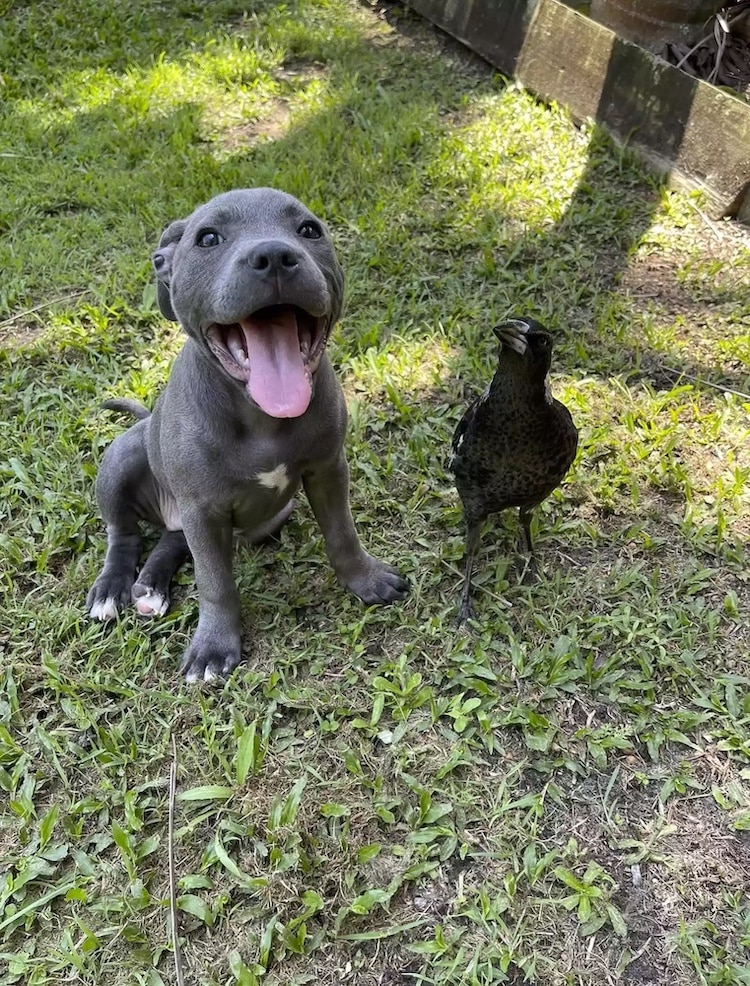
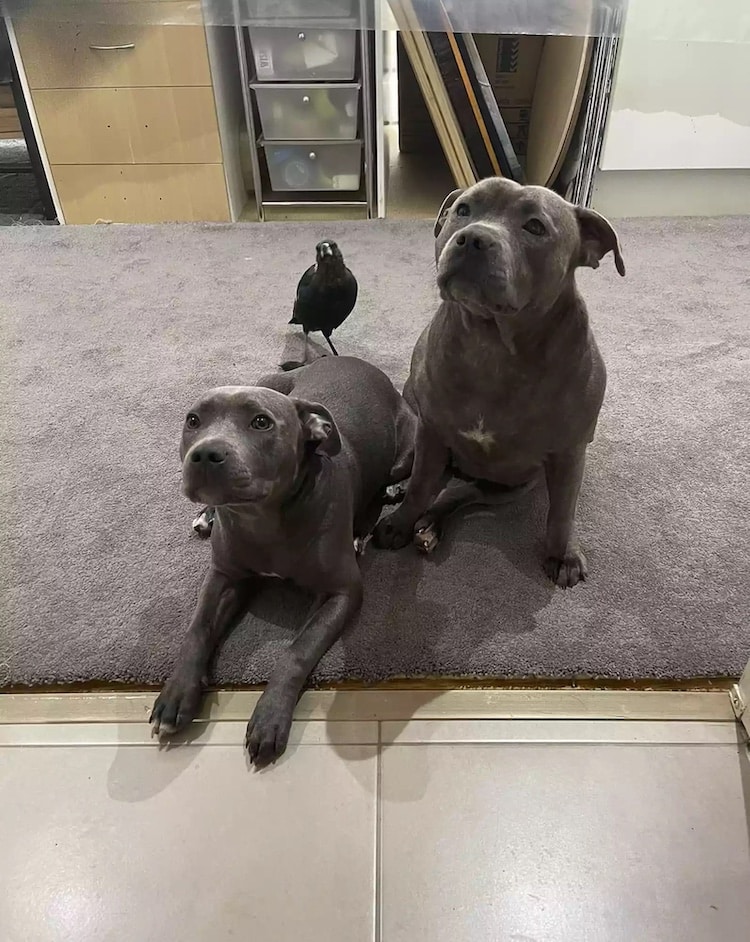
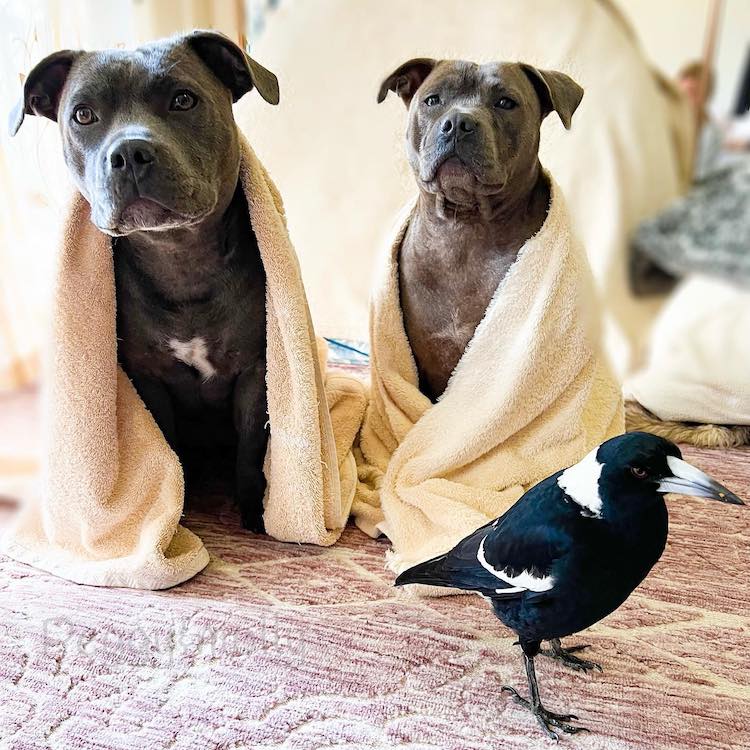
Two dogs and a magpie have formed an unlikely friendship with deep bonds. Peggy, a Staffordshire bull terrier, her pup Ruby, and Molly the (male) magpie flock together at their home in Queensland, Australia. They enjoy naps, outdoor adventures, and singing (barking) in each other’s presence. They don’t have to be doing much to have a good time—the mark of a true friendship.
Peggy and Molly met two years ago when Juliette Wells and her partner Reece found the baby bird abandoned at a dog park near their home. It was during magpie breeding season, and the couple saw the tiny creature wandering the park. They were concerned about it and waited there for hours to see if the bird’s parents would come back to help it. Much to Juliette and Reece’s dismay, they never did.
With Molly alone in the park, the couple knew they had to act. They took the magpie back to their home and contacted friends in a wildlife rescue. Unfortunately, none of the rescues had the capacity to take in the bird, so Juilette and Reece decided to care for Molly with guidance from their animal rescue friends. The humans’ loving care helped Molly thrive, and she didn’t want to leave their nest. Juilette and Rece are so glad she decided to stay.
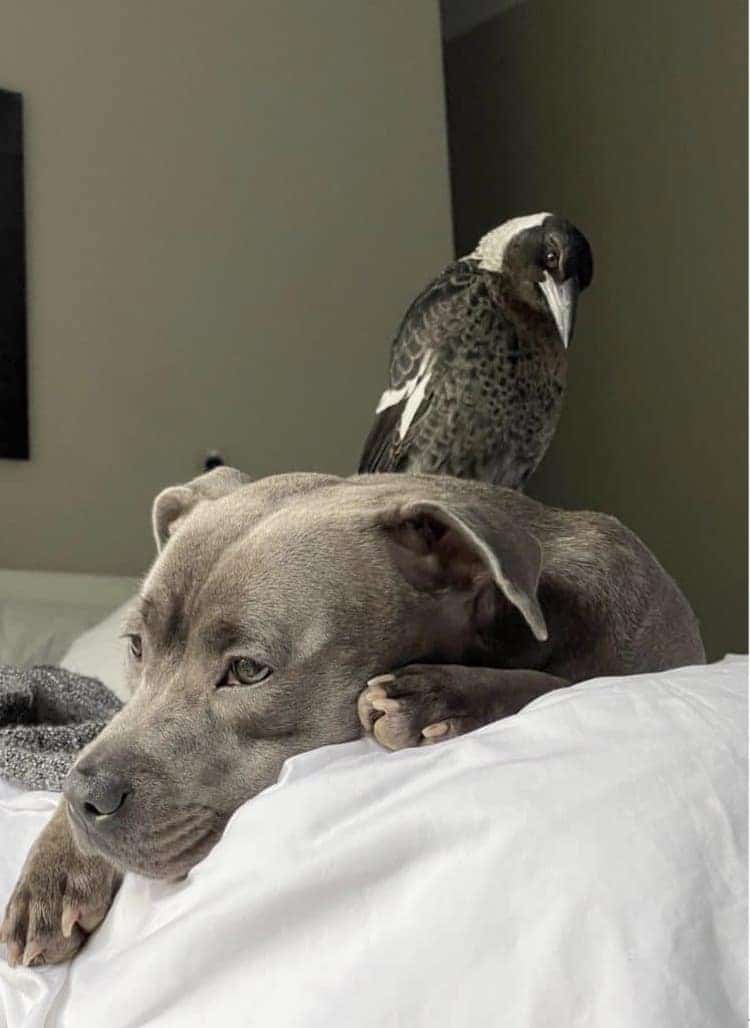
Peggy was, understandably, unsure of how to handle the new baby bird in the house. But after a few days, she became curious and the two formed a friendship. As Molly grew, Juliette began sharing their bond on social media where the unusual and sweet relationship continues to gain a lot of attention.
“I love to describe them as ‘acceptance, love, and unity’ despite their differences,” Juliette tells My Modern Met. “We call it our modern-day Pooh and Piglet story.” Ruby was added to the mix later on, and she and Molly became instant friends.
The living situation is not without its challenges. Peggy is protective of Ruby, and Molly can be aggressive when it’s the magpie mating season. To ensure that things remain calm and safe for everyone, Juliette and Reece make sure that the animals have the space to be themselves. For Molly, in particular, this means having access to the outdoors with other wild birds.
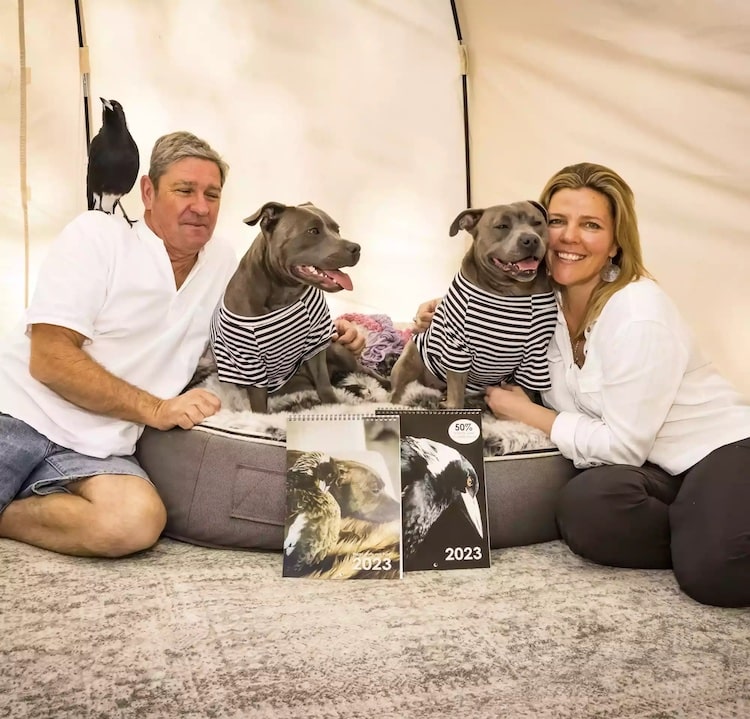
Follow the trio on Instagram to see what they’re up to next. You can even purchase a calendar and be reminded of their friendship month after month.
Two dogs and a magpie have formed an unlikely friendship with deep bonds.
Peggy, a Staffordshire bull terrier, her pup Ruby, and Molly the (male) magpie flock together at their home in Queensland, Australia.
They enjoy naps, outdoor adventures, and singing (barking) in each other’s presence.
They don’t have to be doing much to have a good time—the mark of a true friendship.
Juliette Wells and her partner Reece found Molly in a park near their home and took in the then-baby bird.
Now, the animals’ popular Instagram account shares a peek into their lives.
“So Far We Have Survived Nuclear Armageddon By Luck” Paul Craig Roberts
“The long lucky streak can’t go on forever. President Reagan understood this and focused on ending the Cold War. This achievement has been overturned by the evil neocons operating through the last three US presidents.” click here for additional P.C.R. sourced article Ticking Closer to Nuclear Midnight.
“In a nuclear war, immense nuclear firestorms in burning cities would create millions of tons of thick, black, radioactive smoke. This smoke would rise above cloud level and quickly surround and engulf the entire Earth. The smoke would form a stratospheric smoke layer that would block sunlight from reaching the surface of Earth for a period of about ten years. Heated smoke in the stratosphere would cause massive destruction of the protective ozone layer. Huge amounts of harmful Ultraviolet light would penetrate the smoke and reach the surface of…
PANJIM: The State government has order probe into the incident wherein a leopard was killed after getting trapped in a wired snare near Kopordem village.
A carcass of full-grown leopard was found near Kopordem village on Friday early morning. Forest officials informed that the male leopard died after getting caught in the trap.
Forest Minister Vishwajit Rane has ordered an investigation into the incident and has assured to take harsh measures.
In a tweet, Rane informed that directions are issued to the Principal Chief Conservator of Forest (PCCF) to conduct an investigation to track down those responsible for laying wire snare traps for wild animals.
“We will take harsh measures against those involved. Such action will not be tolerated,” Rane said.
The Minister said that the protection of wildlife is an important aspect of the forest department and under the Wildlife Protection Act, the government is committed…
Temperatures were expected to moderate across the Northeast and Midwest Tuesday after days of frigid weather from “the blizzard of the century” left at least 62 dead nationwide and caused Christmastravel chaos. Around half of those deaths were in Erie County, New York, where Buffalo is located.
Blizzard conditions persisted in parts of the Northeast — the stubborn remnants of a sprawl of extreme weather that gripped the country over several days, causing widespread power outages, travel delays and deaths in nine states, according to official figures.
In New York state, authorities described ferocious conditions, particularly in Buffalo, with hours-long whiteouts, bodies being discovered in vehicles and under snow banks, and emergency personnel going “car to car” searching for survivors.
The perfect storm of fierce snow squalls, howling wind and sub-zero temperatures forced the cancelation of more…
“Free-range organic” young turkeys with surgically mutilated beaks at Diestel Turkey Ranch, a Whole Foods supplier
Photo by East Bay Animal Advocates
Back in the early 1980s, when I joined the emerging Animal Rights Movement, little attention was paid to farmed animals. The general attitude back then was: “It’s hard enough to get people to care about whales. How can we ever hope to get them to care about a chicken?” Back then, most if not all of those running the traditional animal welfare organizations ate animals. Animals were on their plates, not off them.
But in the mid-1980s, a Revolution was getting underway. New animal advocacy groups sprang up: Farm Animal Reform Movement, Farm Sanctuary, PETA. These groups were founded and led by activists who practiced and promoted, veganism – ethical veganism for the animals, not just about food and diet.
In the 1990s, farmed animals started appearing on the animal advocacy agenda. Veal calves isolated from their mothers in wooden crates comparable to a coffin. Hens caged for life in Henitentaries. These two abuses, especially, drew attention. At the same time, the idea persisted that being vegan is a personal choice rather than an ethical imperative. “We can’t impose our values” kind of thing.
Today, most animal organizations in the U.S. include farmed animals, whose plight on factory farms they acknowledge. The question is, what form does farmed animal advocacy take in our contemporary animal advocacy movement? What are groups actually doing? What are they asking, or urging, their supporters and others to do for the largest population of abused animals on the planet: those billions of chickens, turkeys, cows, pigs, ducks, aquatic animals and so many more, each of whom is an individual, an embodied consciousness with feelings, the same as ourselves.
The question involves asking: What is our goal for farmed animals?
I take this opportunity to express a concern I have, looking forward.
One group’s long-term goals for several categories of animals are: ending fur-wearing, ending puppy mills, ending the use of animals in personal-care product testing. By contrast, this group’s long-term goal, or “vision,” for farmed animals is, vaguely, “a better life” – a “better life’ in conditions that cannot be good, compared to the life these animals need and deserve to enjoy every bit as much as you or I, a cat or a dog. For farmed animals, the long-term goal for this advocacy group is merely to eliminate “extreme confinement and other inhumane practices.” The single exception: “Dogs are no longer raised and killed for their meat.”
Unlike wearing fur, for example, dining on animals other than dogs is not an issue as long as the animals on the plate were treated “humanely” on the farm and during slaughter. The term “humane” in this context is whitewashed not only by animal-abusing industries, but by animal advocacy societies that support the continuation of animal farms. One’s eyes glaze over just looking at the word, “humane.” What does “animal advocacy” even mean when it condones cutting an animal’s throat for cuisine? And when it hides the realities of so-called humane animal farming in a way that hardly differs from how agribusiness and its affiliates bury their brutalities in euphemisms and lies?
Seldom, if ever, does a “humane farming” advocacy group reveal the atrocities of one of its humane-certified farms. Typically it takes an OUTSIDER – an investigative journalist, an accidental visitor, a whistleblower – to reveal what goes on in those places. Only then might we learn that a “humane certifier,” so-called, has “suspended” certification of a particular farm. Doesn’t this say something about the entire “humane farming” enterprise?
Another large animal advocacy group posted an article this month advocating what its president called, “Smaller farms that treat animals humanely,” going on to say that “factory farming” . . . is just as brutal to humans as it is to animals.” It is painful to read this false equivalence and to quote it.
Factory-farming is NOT just as brutal to humans, by which the writer means small rural farmers and factory-farm workers, as it is to the animals. Yes, it is brutal to workers, in corporate slaughterhouses especially. But there’s a Huge Difference here: Unlike the chickens, turkeys, cows, pigs, fishes and other victims of factory farming, the workers are not the legally enslaved property of corporations. They are not the ones being SLAUGHTERED.
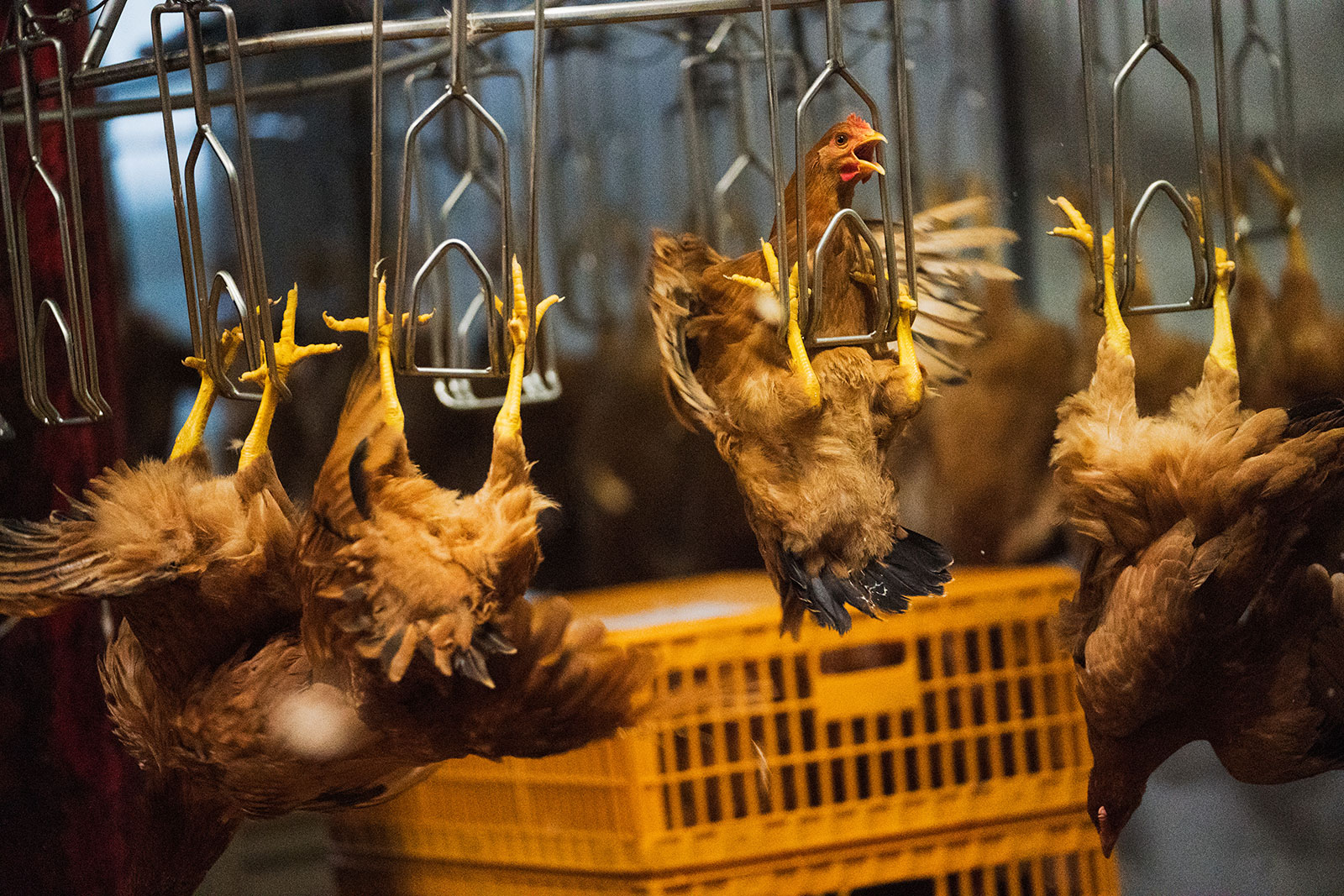
Moreover, the workers are not intentionally mutilated (without pain relievers, of course) as the animals are (debeaked, detoed, ear-cropped, etc.). They do not endure the terror and indignity of artificial insemination and masturbation that turkeys and pigs helplessly endure; they are not subjected to genetic assault to produce bodies and body parts designed for human consumption. “We are no longer selling broilers, we are selling pieces. A knowledge of how broilers of different strains and sexes grow and become pieces is increasingly important” (“Latest research findings reported at annual poultry science meeting,” Feedstuffs, Sept. 7, 1992).
The workers and rural farmers are not forced to live without respite in filthy, polluted buildings and feedlots from which they cannot escape. Unlike the animals, workers can walk outside for a breath of air if they choose. Not being enslaved property like the animals, they can walk away for good; and, unlike the animals, the workers get to go home, even after a miserable work shift. By contrast, the animals never get to “go home,” ever. The only “home” they will ever know is that Home in the Sky where they are finally free, in other words, Dead.
As we begin the New Year, I urge my fellow animal rights advocates to think about what we want to say and do on behalf of farmed animals and their plight in 2023 and beyond. A fellow activist sent me an email this month about the situation I have described. He wrote:
If they had said that their ultimate vision was that no animal should be exploited and raised for food, no animal should be killed, and the animal-based food industries should pass out of existence, but until that happens it is a good thing to lessen the suffering of captive animals if we can do that, that would be an argument that might work. But they couldn’t bring themselves to say that.
Why couldn’t they? What are the forces that put farmed animals forever in the Land of the Forsaken by their “advocates”?
In The Divine Comedy, Dante passes through the gate of Hell, which bears the inscription: “Lasciate ogne speranza, voi ch’intrate,” typically translated as “Abandon all hope, ye who enter here.”
Translation: “Long-term vision” for farmed animals. Is this our vision? As farmed animal advocates, we really do have to choose.
KAREN DAVIS, PhD is the President and Founder of United Poultry Concerns, a nonprofit organization that promotes the compassionate and respectful treatment of domestic fowl including a sanctuary for chickens in Virginia. Inducted into the National Animal Rights Hall of Fame for Outstanding Contributions to Animal Liberation, Karen is the author of numerous books, essays, articles and campaigns. Her books include A Home for Henny; Instead of Chicken, Instead of Turkey: A Poultryless ‘Poultry’ Potpourri; Prisoned Chickens, Poisoned Eggs: An Inside Look at the Modern Poultry Industry; More Than a Meal: The Turkey in History, Myth, Ritual, and Reality; and The Holocaust and the Henmaid’s Tale: A Case for Comparing Atrocities. Karen’s latest book is For the Birds: From Exploitation to Liberation – Essays on Chickens, Turkeys, and Other Domesticated Fowl. Karen hosts a biweekly podcast series titled: “Thinking Like a Chicken: News & Views.”
Most of us can agree that friendship is a vital part of life. Our friends give us support, connection, and laughter, but they also help to prevent loneliness and isolation. Research suggests that in America, most people have between three and five close friends. You know the kind we’re talking about. The people you can have a good old talk about life with or share endless private jokes and memories with. But friendship isn’t just for humans. Research suggests that cows, and many other animals, have best friends, too—they just show their bond in a different way. And that’s because, just like us, they have the capacity to experience emotions, connection, and empathy.
The emotional lives of cows
For thousands of years, humans have farmed cows for meat and milk. But while open-field farming used to be the norm for most cattle, things have changed over the last century. Today, factory farming is the most common method of raising cows in the food industry. In the US, 99 percent of farm animals are raised in cramped industrialized conditions.
Maria Teneva/Unsplash
All farm animals are sentient, and that means they all suffer in exploitative circumstances. But we know that dairy cows, in particular, are subjected to a tough and emotional existence. And that’s because they show us. After mother dairy cows give birth, their calves are taken away, and farmers themselves have confirmed the grief and sorrow that ensues.
“Soon after birth, the farmer comes along, picks up the freshly washed and loved newborn calf, and heaves it into a trailer before driving off,” Jackie Scurr, a former dairy farmer who was in the profession for 18 years, recalled for Free From Harm.
“The mother cow, naturally horrified and distressed out of her mind, chases alongside the trailer, bellowing and calling to her baby, while the confused and terrified calf cries back to the mother.” —Former Dairy Farmer Jackie Scurr
But anguish isn’t the only emotion cows can feel. If given the opportunity, they can demonstrate a range of emotions. And in 2020, one study from the University of Sydney suggested that cows express these emotions through the way they moo.
Researchers analyzed more than 330 recordings of cow vocalizations from a period of six months and found they made different sounds depending on their circumstances. If they were about to be fed, for example, they made positive sounds. But if they were experiencing something negative, like isolation from the rest of their herd, they made different sounds. “Recording vocalizations is non-invasive,” said lead author Alexandra Green to Psychology Today. “So this is a potential way to assess animal welfare on a farm without disturbing expression of the cows’ natural behaviors.”
Do cows have best friends?
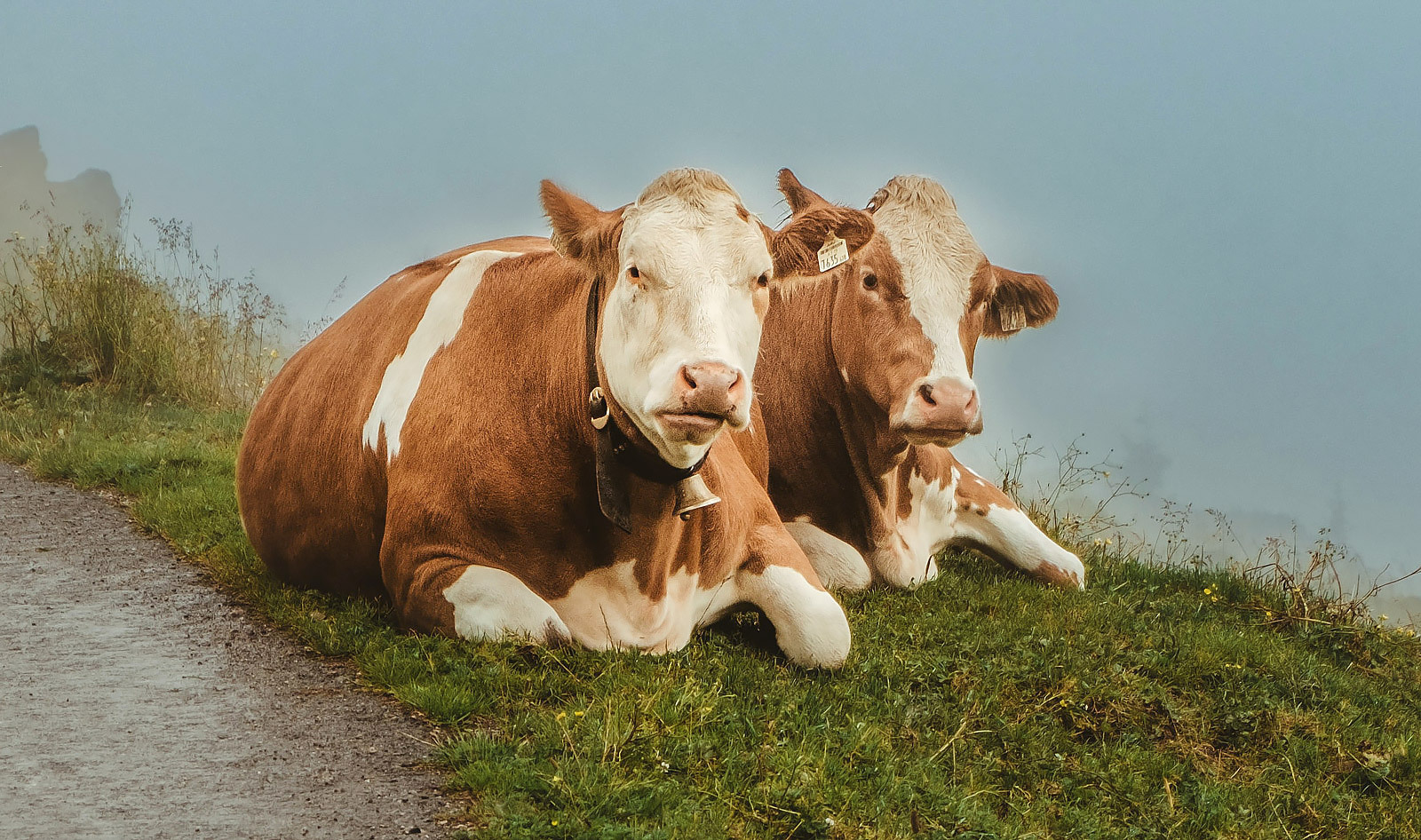
Because cows can experience emotions, they can also experience connection. Just like humans, research suggests that the animals have particular friends that calm them down and make them feel good.
In 2011, one study from Northampton University examined cows who had been placed in pens for 30 minutes on two separate occasions. The first time, they were with a partner they spent a lot of time with, also known as their best friend. But the second time, they were with a cow they were not familiar with. When with a friend, their heart rates and levels of cortisol (the stress hormone) were lower.
The results indicate that cows are much happier when they have a friend with them, and Krista McLennan, the lead author, told The Daily Mail that farmers had also anecdotally confirmed this theory. ”I’ve spoken to a number of farmers who have said they do notice bonds building among their cows and some spending a lot of time together,” she said.
Adobe
McLennan’s research also looked at thousands of observations from dairy farms and discovered a pattern of relationships. More than 50 percent of cows chose to do most of their grazing and resting with one specific friend.
Can cows be friends with humans?
There is much anecdotal and video evidence out there that proves cows can feel affectionate toward human beings. For example, this video from Kinder World, shows several clips of the animals enjoying strokes, scratches, and cuddles from humans, as well as licking and rubbing them in return and resting their heads peacefully on human laps.
Elina Sazonova/Pexels
Experts believe that cows can also bond with farmers and vets, even when they are being raised for meat or dairy. “We still form bonds with these animals, especially ones we work with closely,” Janice Swanson, PhD, of Michigan State University, said. “Farmers may form a bond with the lead cow, or a veterinarian might bond with an animal who had a difficult birth and required special care.”
But not all cows are the same. Some prefer to be left alone and may not express the same amount of affection towards human beings or other animals, while others are incredibly social. It all comes down to individual preference and personality. Just like human beings, some are more introverted, while others are more extroverted.
Ranae Smith/Unsplash
What about other animals? Do they have friends?
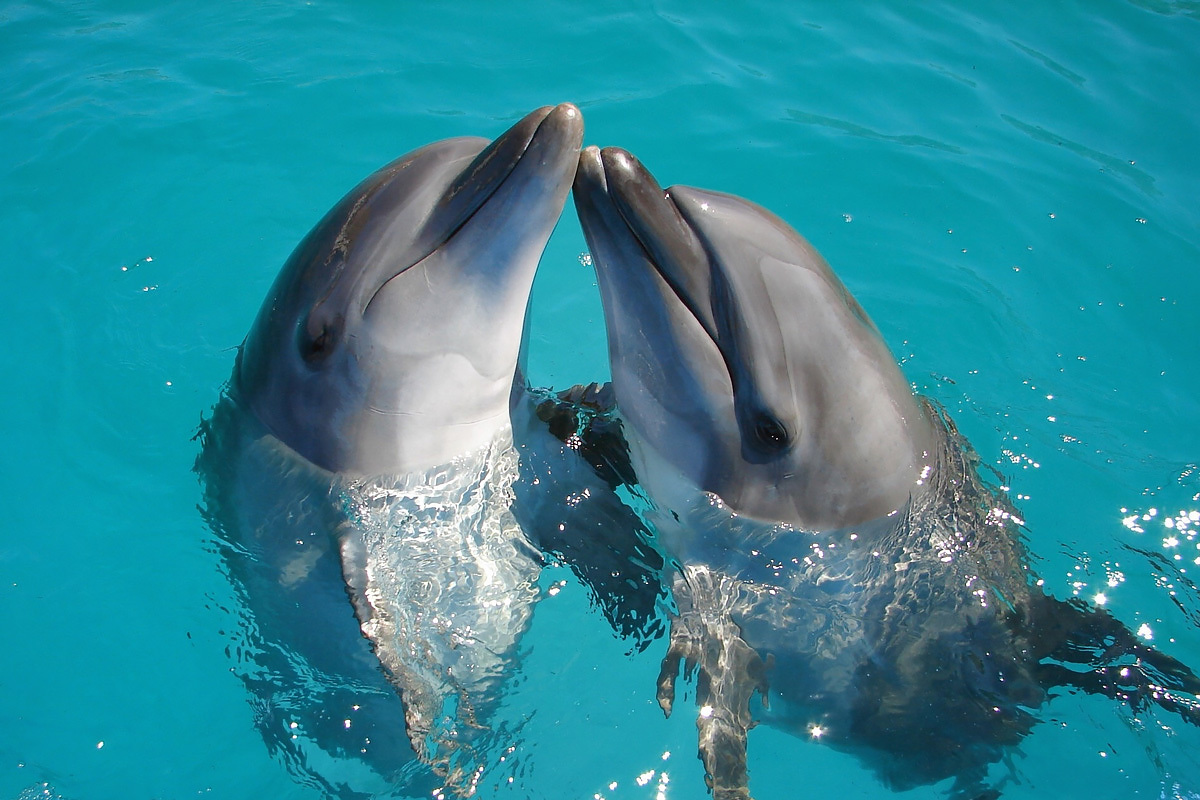
Cows are far from alone when it comes to making friends. Research suggests that dolphins, for example, have incredibly close and long-lasting friendships. They are also quite protective of their peers and can shun others who are not in their own clique.
Horses have also been known to bond with other horses, and, like cows, they are herd animals, so they don’t like to be alone. Dogs also form long-lasting attachments, both with other dogs and humans. And elephants are known to enjoy being in groups, because, again they are herd animals, and they like socializing.
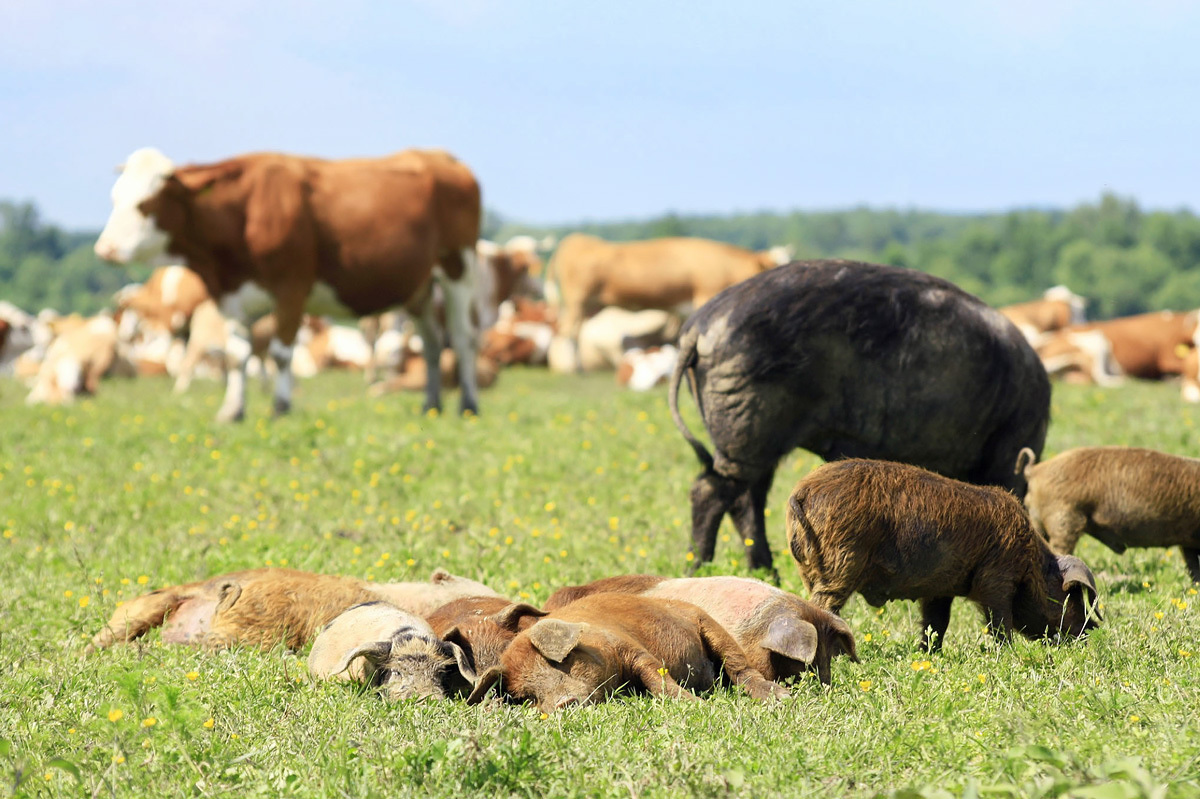
Pigs, sheep, birds, monkeys, and even bats are just a few more examples of the other types of animals that have demonstrated a desire for socialization or friendship.
The science behind animal bonding
According to the Baylor College of Medicine, it’s likely humans evolved to have close friendships because it increased our chance of living longer, and our children’s chance of living longer. By coming together, our individual strengths benefit each other. And this is shown in the animal kingdom, too. Killer whales, for example, share with each other when prey is hard to find. And research has also shown that wolves elect to help each other out with food, too. Ultimately, it comes down to one thing: survival.
When animals bond with humans, this is also mutually beneficial. A companion animal can boost a human’s mental health and well-being, for example, and they may also provide protection and in some instances, service. In return, animals have many needs, like food, water, and shelter, taken care of. Plus, whether they’re a cow in a sanctuary or a companion animal like a dog, they also get to enjoy a few strokes and scratches, too.








 Maria Teneva/Unsplash
 Adobe
Adobe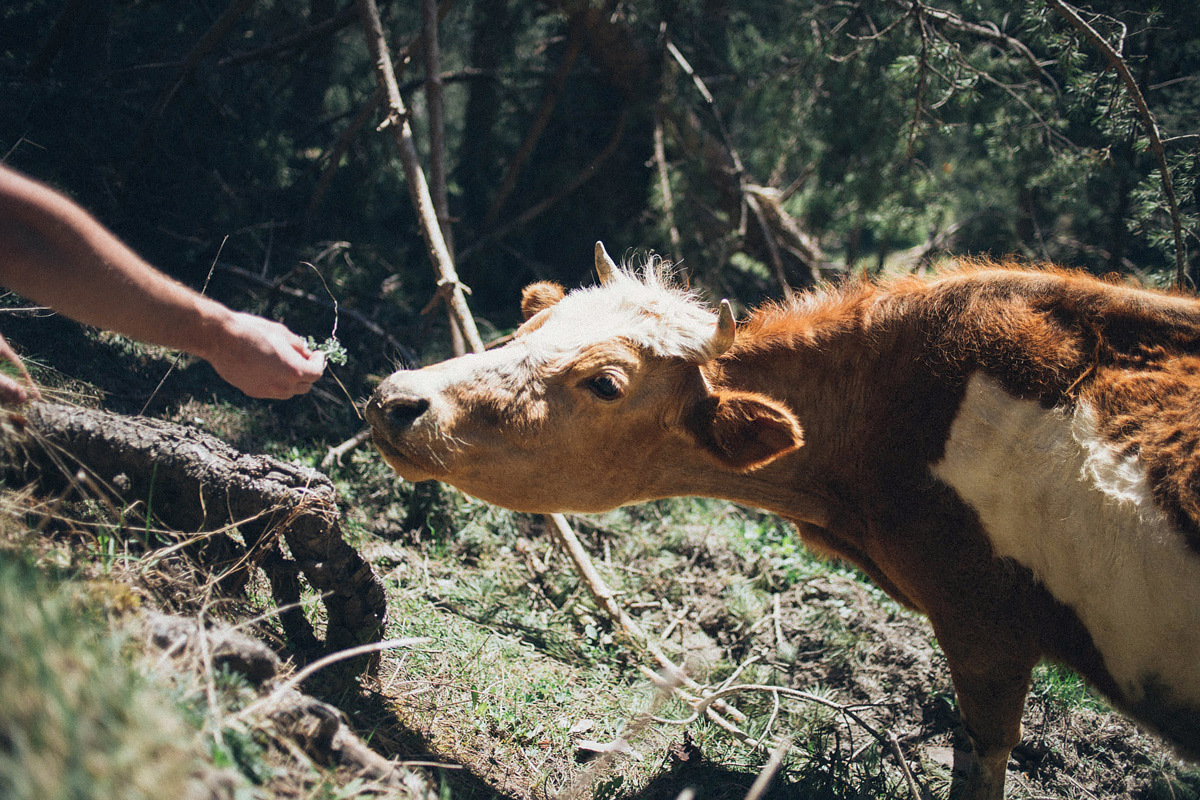 Elina Sazonova/Pexels
 Ranae Smith/Unsplash
 Exposing the Big Game