Can geoengineering fix the climate? Hundreds of scientists say not so fast

The Biden administration is developing a controversial solar geoengineering research plan to the dismay of many experts

https://www.theguardian.com/environment/2022/dec/25/can-controversial-geoengineering-fix-climate-crisis

Proposed geoengineering methods include pumping salt water into clouds to make them more reflective of sunlight, or to place ice particles in clouds to stop them from trapping heat.
Proposed geoengineering methods include pumping salt water into clouds to make them more reflective of sunlight, or to place ice particles in clouds to stop them from trapping heat. Photograph: Charlotte Observer/MCT/Getty Images

Oliver Milman

@olliemilman

Sun 25 Dec 2022 05.00 EST

As global heating escalates, the US government has set out a plan to further study the controversial and seemingly sci-fi notion of deflecting the sun’s rays before they hit Earth. But a growing group of scientists denounces any steps towards what is known as solar geoengineering.

The White House has set into motion a five-year outline for research into “climate interventions”. Those include methods such as sending a phalanx of planes to spray reflective particles into the upper reaches of the atmosphere, in order to block incoming sunlight from adding to rising temperatures.

Graphic showing a polar ice cap melting through an hourglass onto a city beneath.

The work is required by Congress. It is “not new research, but a report that highlights some of the key knowledge gaps and recommendations of priority topics for relevant research”, said a spokesperson for the White House’s office of science and technology policy, adding Joe Biden’s administration wants “effective and responsible CO2 removal” as well as deep cuts to greenhouse gas emissions.

Several American researchers, somewhat reluctantly, want to explore options to tinker with the climate system to help restrain runaway global heating, even as they acknowledge many of the knock-on risks aren’t fully known. “Until recently, I thought it was too risky, but slow progress on cutting emissions has increased motivation to understand techniques at the margins like solar geoengineering,” said Chris Field, who chaired a National Academies of Sciences report last year that recommended at least $100m being spent researching the issue.

“I don’t think we should deploy it yet and there are still a ton of concerns, but we need to better understand it,” Field said. “Climate change is causing widespread impacts, it’s costing lives and wrecking economies. We are in a tough position; we are running out of time, so it’s important we know more.”https://interactive.guim.co.uk/uploader/embed/2022/12/archive-zip/giv-6562M4eflCusuvs7/Diagram showing three potential solar geoengineering methods.

Previous attempts at running experiments for what is known as solar radiation management (SRM) have faced staunch opposition. Last year, an exploratory flight in Sweden of a high-altitude SRM balloon, led by Harvard University researchers, was halted after objections by environmentalists and Indigenous leaders.

But at least one US startup is now hoping to leap ahead with solar geoengineering.

Make Sunsets, backed by two venture capital funds, launched in October. It claims to have already run two internal test flights for its plan to inject sulphur via balloons into the stratosphere, more than 20km above the Earth’s surface.

The venture, named after the deep red sunsets that would occur if particles were seeded into the stratosphere, says its “shiny clouds” will “prevent catastrophic global warming” and help save millions of lives. “Any human-caused release of carbon dioxide is geoengineering,” it argues on its website, which asks people to buy “cooling credits” to fund its work. “We screwed up the atmosphere, and now we have a moral obligation to fix things!”

Edward Parson, an expert in environmental law at University of California, Los Angeles, says Make Sunsets’ claims that it could return the world to its pre-industrial temperature for just $50bn a year are “absurd”. He explains that most researchers are wary of deploying what they consider to be a desperate, last-ditch option.

Seven reasons to be cheerful about the Amazon in 2023 – and three to be terrifiedRead more

But Parson says the risks in researching solar geoengineering have been overblown and that the US “is probably the bold leader on this. It would be a big step forward if we have a research program.”

“In my opinion, the probability that a nation makes a serious effort on solar geoengineering over the next 30 years is about 90%,” he adds. “As impacts get much worse and if mitigation doesn’t massively increase, I judge it quite likely that some major nation considers its citizens are suffering climate harms that are intolerable.”

This prospect horrifies opponents of solar geoengineering. An open letter signed by more than 380 scientists demands a global non-use agreement for SRM; it also says that growing calls for research in this area are a “cause for alarm”, due to an unknown set of ramifications that will have varying consequences in different parts of the world and could scramble “weather patterns, agriculture and the provision of basic needs of food and water”.

Frank Biermann, an expert in global governance at Utrecht University, said he’s also disturbed that solar geoengineering will create a sort of moral hazard where governments ease off efforts to cut emissions and fossil fuel companies use it as cover to continue business as usual. Planet-heating emissions are expected to hit a record high this year, even though they must halve this decade if the world is to avoid dangerous levels of global heating.

This debate threatens to derail current climate policies. It’s a huge risk.

Frank Biermann, global governance expert

“I would say the majority of scientists believe this is a crazy idea for a variety of reasons,” said Biermann, who thinks the US is an outlier because of its own large per-capita emissions and inconsistent adherence to global agreements.

“Soon, everyone who is dependent on coal, oil and gas will jump on the solar engineering bandwagon and say, ‘we can continue for 40 years with fossil fuels’ now. This debate threatens to derail current climate policies. It’s a huge risk.”

Biermann likens research on blocking sunlight to the satirical movie Don’t Look Up, in which researchers who warn of a catastrophic incoming meteoroid are sidelined in favor of an outlandish plan to deal with it. “The only way to find out whether this works is to do it to the whole planet for several years,” he said.

“I mean will 8 billion people sit there in our living rooms having our last meal waiting and hoping that elite western universities got it right, that the Americans will not mess it up?”

White cumulus fluffy clouds in the sky.

There isn’t any international governance around solar geoengineering for now. Critics fret that unilateral action to alter the climate could spark conflict if one part of the world benefits, while another suffers knock-on droughts or floods.

Also, the addition of aerosols would have to be continuous to maintain the cooling – any disruption, either intentional or otherwise, would cause a sort of “termination shock”, where bottled up warming would be unleashed in a disastrously rapid jolt.

“Termination shock terrifies me,” said Lili Fuhr, a climate and energy expert at the Center for International Environmental Law. “This is just a gigantic gamble with the systems that sustain life on Earth. It could be weaponized, it could be misused – imagine if, say, India and Pakistan disagreed over one of them doing this.

“We need to do more than just emissions cuts and I wish we had a magical fix to this, but this doesn’t turn bad ideas into good ones,” Fuhr adds.

The UN secretary general, António Guterres, at the UN biodiversity conference (Cop15) youth summit in Montreal, Canada, earlier this month

The idea of recalibrating the world’s climate to deal with heat-trapping emissions isn’t new. A group of scientific advisers to Lyndon Johnson cautioned the US president about global heating in 1965, musing that “deliberately bringing about countervailing climatic changes therefore need to be thoroughly explored”.

Calls for intervention have grown in recent years as countries continue to dawdle over emissions cuts and as an internationally agreed limit of 1.5C of global heating over pre-industrial times looms into view.‘I had to fulfil my responsibility’: Fauci on his career, Covid and stepping down‘Life-threatening hazard’: 28 dead in Arctic storm battering USArchbishop of Canterbury and Pope Francis call for end to war in UkraineMore migrants bussed to Kamala Harris’s home on Christmas EveTwo missing after avalanche in Austria on Christmas DayTwo dead at Jehovah’s Witnesses center in Colorado‘Life-threatening hazard’: 28 dead in Arctic stormbattering US

https://imasdk.googleapis.com/js/core/bridge3.549.0_en.html#goog_930831216

https://imasdk.googleapis.com/js/core/bridge3.549.0_en.html#goog_1113177797

https://imasdk.googleapis.com/js/core/bridge3.549.0_en.html#goog_1323415193

There are several types of proposed geoengineering, such as pumping a mist of salt water into clouds to make them more reflective of sunlight, or to place ice particles in high-altitude clouds to stop them trapping so much of the heat that bounces off Earth.

The most high-profile method, though, is firing a reflective substance such as sulphur or chalk dust from nozzles into the stratosphere, where the particles would then circulate around the world and start deflecting the sun’s rays. David Keith, professor of applied physics and of public policy at Harvard, estimates that around 2m tons of sulphur a year, injected via a fleet of about 100 high-flying aircraft, would cool the planet by around 1C, around the amount it has heated up since the Industrial Revolution.

All of this would cost several billion dollars a year according to an estimate, and provide a relatively quick drop in temperatures. Keith argues it is more compelling than various carbon capture technologies that can take a long time and involve complex, expensive infrastructure. “Pretending that climate change can be solved with emissions cuts alone is a dangerous fantasy,” Keith has stated.

We have lost so many easy paths to limit the harms of climate change that we only face worse options.

David Keith, professor of applied physics and of public policy at Harvard University

The basic physics of doing this is well understood, Parson said, likening it to the huge eruption of Mount Pinatubo in the Philippines in 1991, an event that expelled nearly 20m tons of sulphur dioxide into the stratosphere and caused global temperatures to drop temporarily by about 0.5C.

“Most people didn’t notice that and there have been studies since that give us confidence it can be done,” said Parson. “We don’t know how it should be done, yet, and the environmental aspects and the governance remain concerns. It would be reckless to just start deploying this now but we have lost so many easy paths to limit the harms of climate change that we only face worse options.”

Spraying sulphur into the skylight of the Earth could deplete the ozone layer, some have suggested, and perhaps make the sky a milky white color.

Other effects on regional weather are more uncertain, to the extent one recent novel based on the topic, The Ministry for the Future by Kim Stanley Robinson, depicted India embarking upon solar geoengineering to save itself from deadly heatwaves while another, Termination Shock by Neal Stephenson, conversely had India sabotaging a sulphur deployment system in Texas because it interfered with its monsoon.

The debate over how much we should meddle with the climate is likely to intensify as the fallout from global heating worsens. For now, opponents won’t back down. To Biermann, solar geoengineering should be considered by governments as being akin to landmines or biological weapons and blacklisted internationally.

“This is just another one on this list,” he said. “People talk about the freedom of research, but you don’t have the freedom to sit in your back yard and develop a chemical bomb.”

Two men lose hunting, fishing and trapping privileges for five years

Exposing the Big Game's avatarCommittee to Abolish Sport Hunting Blog

December 23, 2022Floyd Whiting

The Wyoming Game and Fish Department reports that Matthew Adams (26) and Carl Denmon (25) of Texas, have pled guilty to numerous wildlife crimes, resulting in over $31,000 in fines and restitution. Each man was sentenced to and served 30 days in jail, and 11.5 months of unsupervised probation. The men also lost their hunting, fishing and trapping privileges for five years. Because Wyoming is a member of the wildlife violator compact, the men are suspended from hunting, fishing and trapping in 48 states. Adams and Denmon also were made to surrender the firearms used in committing these crimes which included two .22LR rifles with homemade suppressors.

Adams was charged with 11 counts, as follows:

-Wanton destruction (2 Counts)

-Taking a big game animal with an illegal caliber firearm (2 counts)

-Shooting outside legal…

View original post 239 more words

Grand Blanc Township man accused of killing hunter in 2018

Exposing the Big Game's avatarCommittee to Abolish Sport Hunting Blog

Grand Blanc Township man accused of killing hunter in 2018
Thomas Olson of Grand Blanc Township and Robert Rodway of St. Johns are accused of killing Chong Yang in Rose Lake State Park in 2018.

BATH TOWNSHIP, Mich. (WJRT) – A Grand Blanc Township man is one of two suspects arraigned on murder charges for the death of a hunter in Clinton County’s Bath Township in 2018.

The Michigan Attorney General’s Office charged 34-year-old Thomas Olson of Grand Blanc Township and 34-year-old Robert Rodway of St. Johns with felony murder and using a firearm to commit a felony.

Both suspects face up to life in prison with no chance of parole if they are convicted.

Prosecutors say Olson and Rodway were hunting in the Rose Lake State Park in Bath Township on Nov. 16, 2018, when they encountered Chong Yang. Yang’s family reported…

View original post 180 more words

Female Southern Pied Babblers Seem to Get Stupider as They Have More Babies

[No surprise there.]

NATURE23 December 2022

https://www.sciencealert.com/female-southern-pied-babblers-seem-to-get-stupider-as-they-have-more-babies

ByDAVID NIELD

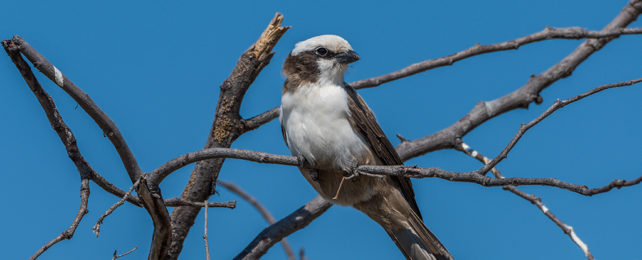
Southern Pied BabblerThe Southern Pied Babbler. (nicholas_dale/iStock/Getty Images Plus)
Researchers have discovered something strange about female southern pied babblers, a small black-and-white bird found in Africa’s dry savannah: the more chicks that they have over the years, the less smart they seem to get.

https://14c9cf6367675fd91d31e79eafcedfef.safeframe.googlesyndication.com/safeframe/1-0-40/html/container.html

As these birds age, they typically produce more offspring each year. Meanwhile, according to a series of controlled tests conducted by researchers from the University of Western Australia, their cognitive ability declines.

This findings suggest intelligence and reasoning comes at a cost in energy. In animals where energy and resources are at a premium, the survival of the next generation has priority.

“Analyzing over 10 years of breeding data, we found that individuals with lower general cognitive performance produced more fledglings per year,” UWA evolutionary biologist Camilla Soravia and colleagues write in their published paper.

“Collectively, our findings support the existence of a trade-off between cognitive performance and reproductive success in a wild bird.”

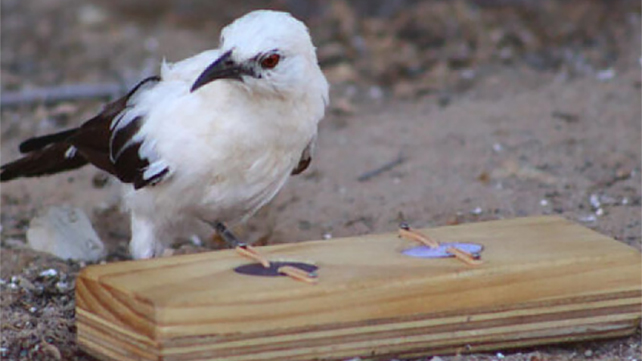
Cognitive performance refers to the ability to take in information, process it, and then act accordingly. In the case of this study, 38 wild southern pied babblers (Turdoides bicolor) were tested on how well they could learn associations, adapt to changes in the experiments, and control counterproductive behaviors, with food used as a reward.

Southern Pied Babbler
One of the tests used in the study. (Soravia et al, Proceedings of the Royal Society B, 2022)

The birds that did well on one task generally performed well on all tasks, demonstrating high levels of general cognitive performance (or GCP). This GCP varied considerably across all birds of both sexes, but was comparatively lower among female birds who were older in age.

https://14c9cf6367675fd91d31e79eafcedfef.safeframe.googlesyndication.com/safeframe/1-0-40/html/container.html

At the same time, a measure of the females’ reproductive success suggested their fertility tended to increase with each passing year.

In male birds, there was no significant difference in cognitive ability across birds of different ages. There was also no evidence that living in larger groups increased intelligence, as has been suggested by some other studies of Western Australian magpies (Gymnorhina tibicen dorsalis).

“To our knowledge, our finding represents the first evidence of sex differences in age-related cognitive decline in a wild animal,” write the researchers.

As the researchers point out in their finished study, breeding is competitive if you’re a southern pied babbler: females try to dominate each other and fight to get the attention of males, and clutches of eggs often get destroyed and need to be laid all over again.

https://14c9cf6367675fd91d31e79eafcedfef.safeframe.googlesyndication.com/safeframe/1-0-40/html/container.html

This requires a lot of energy. For younger female birds, it might pay off to establish yourself with some smart acting. As females get older, they might put more of their efforts into reproducing rather than maintaining their nervous system and brain – this is something that has been noticed in butterflies, for example.

Given the study constitutes a snapshot in time of birds at different ages, it can’t be ruled out that female birds with lower GCP simply outlived females who spent more energy on cognitive performance, rather than experience a decline in intelligence. More data taken over a longer period of time would help prove this is what’s happening. However, it’s an interesting association that the study authors want to explore further.

“In order to understand how selection acts on cognition we need to consider not only its benefits but also its costs,” Soravia and colleagues conclude.

“Future studies should consider expanding the test battery by including, for example, tasks assessing social cognition, the ability to make inferences and reaction time.”

The research has been published in Proceedings of the Royal Society B.

Brown Co. Sheriff’s Office: Two people shot in hunting accident Dec. 16

Exposing the Big Game's avatarCommittee to Abolish Sport Hunting Blog

The incident took place on Highway 279N and the status of the two is unknown at this time.

https://www.myfoxzone.com/article/news/local/brown-co-sheriffs-office-two-people-shot-in-hunting-accident-dec-16/504-37d0cbcd-2149-4ffb-8992-003d713fd1fe

Credit: Brown County Sheriff’s Office

Author:FOX West Texas staff

Published:5:02 PM CST December 21, 2022

Updated: 5:02 PM CST December 21, 2022

BROWN COUNTY, Texas — A 70-year-old man and one other person were shot Dec.16 in Brown County in what the Brown County Sheriff’s Office said was a hunting accident.

The two were riding in a vehicle while hunting for ducks when the driver tried to jump a pond. However, the vehicle hit a pothole and a 12-gauge shotgun discharged, hitting the passengers in the front and the back left.

The passenger in the front was shot in the arm while the passenger in the back was shot in the ear. The Lake Bride Volunteer Fire Department responded to the scene with Deputy Herring from the BCSO.

The person shot in…

View original post 42 more words

Rare Parasite Infects Two Hunters in New Hampshire

Exposing the Big Game's avatarCommittee to Abolish Sport Hunting Blog

284

Mon, December 19, 2022 at 1:30 PM PST·2 min read

Rare Parasite Infects Two Hunters in New Hampshire

parasite
parasite

Photo by dotana via Getty

https://www.yahoo.com/lifestyle/rare-parasite-infects-two-hunters-213018101.html#

In New Hampshire, two hunters were infected with “A parasite never before seen in humans.” The infection happened after the pair hunted and butchered a moose with their dogs, saysNewsweek.

AsDr. Elizabeth Talbot, infectious disease physician at Dartmouth Hitchcock Health toldWMUR Channel 9, “It’s the first time it’s been identified in humans.”Because of this, the state’s Health and Human Services Department has healthcare workers on high alert.

Although humans rarely contract the parasite, dogs in contact with raw game meat can. As a result, hunters with dogs in moose territory are at a notably higher risk. According to Dr. Talbot, the state’s been tracking tapeworms in moose populations for several years.

How do people get infected with parasites?

“Typically,” said…

View original post 250 more words

DNR investigating ‘hunting incident’ in Charleston County

Exposing the Big Game's avatarCommittee to Abolish Sport Hunting Blog

DefaultMono SansMono SerifSansSerifComicFancySmall CapsDefaultX-SmallSmallMediumLargeX-LargeXX-LargeDefaultOutline DarkOutline LightOutline Dark BoldOutline Light BoldShadow DarkShadow LightShadow Dark BoldShadow Light BoldDefaultBlackSilverGrayWhiteMaroonRedPurpleFuchsiaGreenLimeOliveYellowNavyBlueTealAquaOrangeDefault100%75%50%25%0%DefaultBlackSilverGrayWhiteMaroonRedPurpleFuchsiaGreenLimeOliveYellowNavyBlueTealAquaOrangeDefault100%75%50%25%0%

First responders were called to a “hunting incident” in Charleston County Monday night.

ByMarissa Lute

Published:Dec. 19, 2022 at 3:42 PM PST|Updated:15 hours ago

CHARLESTON COUNTY, S.C. (WCSC) – First responders were called to a “hunting incident” in Charleston County Monday night.

An official with the Department of Natural Resources (DNR) has confirmed there was a hunting incident in the Adams Run community near Parkers Ferry Road.

Charleston County Sheriff’s Office spokesperson Andrew Knapp says deputies were called to the area of 6601 Parkers Ferry Rd. around 5:30 p.m. for a report of a person with a gunshot wound. EMS transported the person to the hospital, Knapp says.

The investigation has been turned over to the DNR.

The extent of their injuries is unknown at this time.

This is a developing…

View original post 6 more words

Man dies in tree stand accident in Monroe County

Exposing the Big Game's avatarCommittee to Abolish Sport Hunting Blog

Ambulance

Photo by: WRTV

By:Jacqueline White

https://www.wrtv.com/news/working-for-you/man-dies-in-tree-stand-accident-in-monroe-county

Posted at2:39 PM, Dec 19, 2022

and last updated11:41 AM, Dec 19, 2022

MONROE COUNTY – Indiana Conservation Officers are investigating after a Hiltonville man died in a tree stand fall incident in Monroe County Saturday.

Emergency was dispatched to Bruce Lane near State Road 45 in Morgan-Monroe State Forest after a fellow hunter discovered a man who fell.

Recent Stories from wrtv.comTop VideosWATCH MORESome Sunday sun. Tempsstay chilly.

https://imasdk.googleapis.com/js/core/bridge3.549.0_en.html#goog_1063144203

https://imasdk.googleapis.com/js/core/bridge3.549.0_en.html#goog_729540477

https://imasdk.googleapis.com/js/core/bridge3.549.0_en.html#goog_1587514956

Kevin Leech, 57, was deer hunting from a climbing tree stand when for unknown reason the stand malfunctioned, causing Leech to fall. Leech, who was not wearing a full body safety harness, was pronounced dead at the scene, officials said.

An exact cause of death is pending autopsy results.

Conservation Officers remind everyone using elevated platforms to hunt to always wear a full body harness, use a tree stand’s…

View original post 26 more words

Whitebark pine in Chelan and Okanogan counties is threatened, US says

Exposing the Big Game's avatarThe Extinction Chronicles

white bark
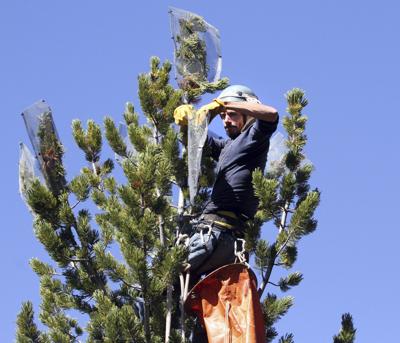
FILE – In this 2013 photo, cone collectors like Gabe Thorne, of Hamilton, head up into the high country around the west to climb to the very top of whitebark pine and collect cones from disease-free trees in Sula, Mont. U.S. officials say climate change, beetles and a deadly fungus are imperiling the long-term survival of the high-elevation tree found in the western U.S. (Perry Backus/Ravalli Republic via AP, File)Perry Backus

Whitebark pine trees can live more than 1,000 years, but in just two decades more than a quarter of the trees that are a key food source for some grizzly bears have been killed by disease, climate change, wildfires and voracious beetles, government officials said as they announced federal protections Wednesday.

The U.S. Fish and Wildlife Service will designate whitebark pine as threatened…

View original post 856 more words

Canada’s polar-bear capital Churchill warms too fast for bears

  • Published20 hours ago

Share https://www.bbc.com/news/science-environment-63603489

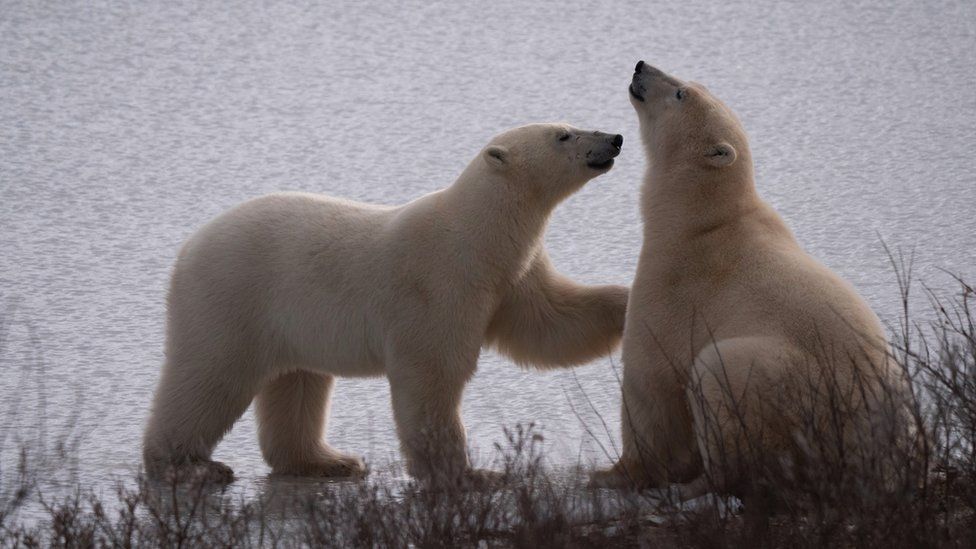
Polar bears in Churchill (c) PBI/BJ Kirschhoffer

By Victoria Gill

Science correspondent, BBC News

“The bears know the ice will be back soon – they’re waiting,” says Alysa McCall, from Polar Bears International (PBI).

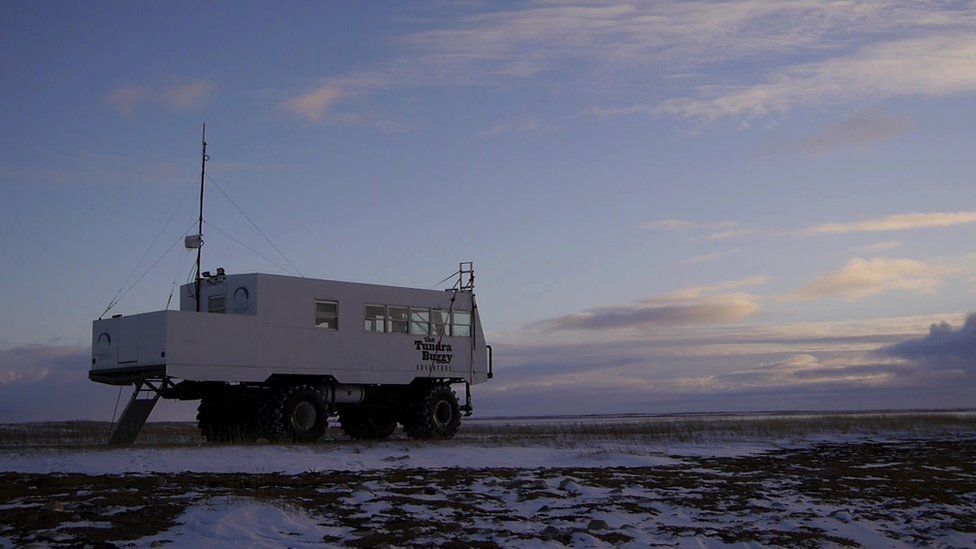
Alysa and her team are in the Canadian Arctic just outside Churchill, Manitoba, in a tundra buggy – an observation lab on tracks, which allows them to watch bears in safety.

Churchill is dubbed the “polar-bear capital” of the world.

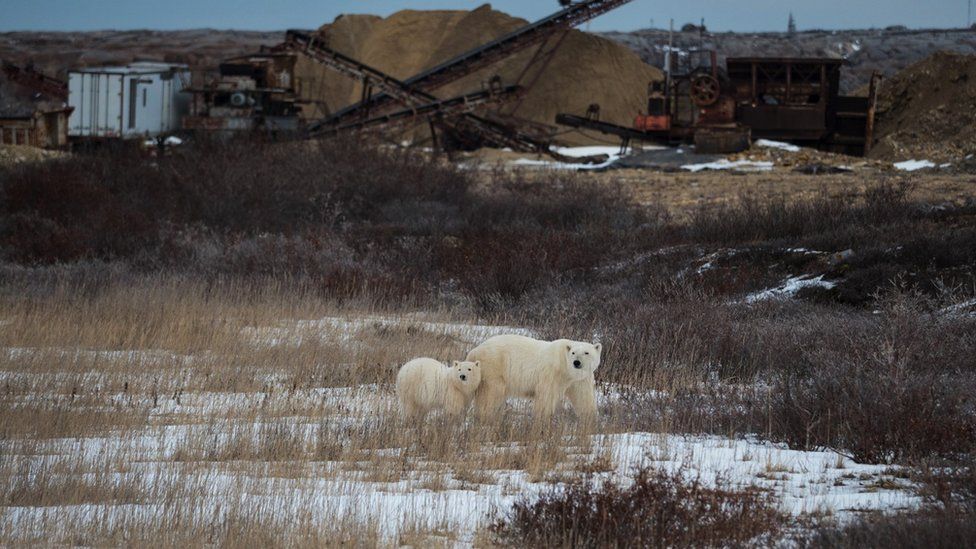
Day-to-day life is shaped by the polar bears’ proximity to the town. Residents have bear-proof rubbish bins and the province employs bear-patrol guards to accompany children when they are trick-or-treating at Halloween.

ADVERTISEMENT

ADVERTISEMENT

It is common practice for people to leave their parked-car doors unlocked so others have somewhere to run to should they encounter a wandering bear.

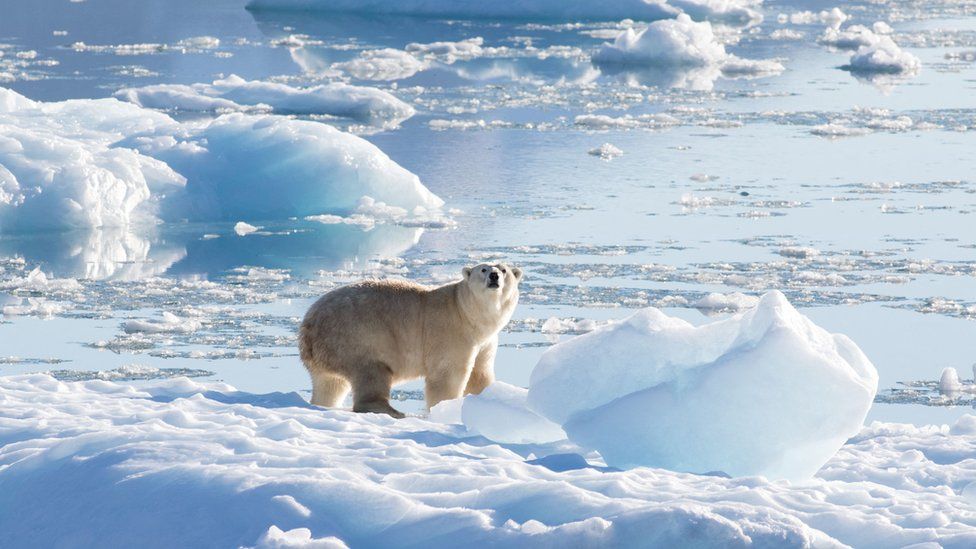
In Churchill’s frozen Hudson Bay, bears use the sea-ice as a platform to hunt seals.

But the sea-ice-free season in this part of the Canadian Arctic is lengthening, leaving bears unable to hunt for long periods.

About 2,000km south in Montreal, world ministers are gathering at the UN biodiversity summit in an effort to reach an agreement that will to protect wild spaces and reverse the human-driven loss of nature.

But as the polar bear becomes an icon of climate change, the bears’ plight in Churchill embodies the inextricable link between preserving the natural world and fighting global warming. The polar-bear capital of the world is simply getting too warm for polar bears.

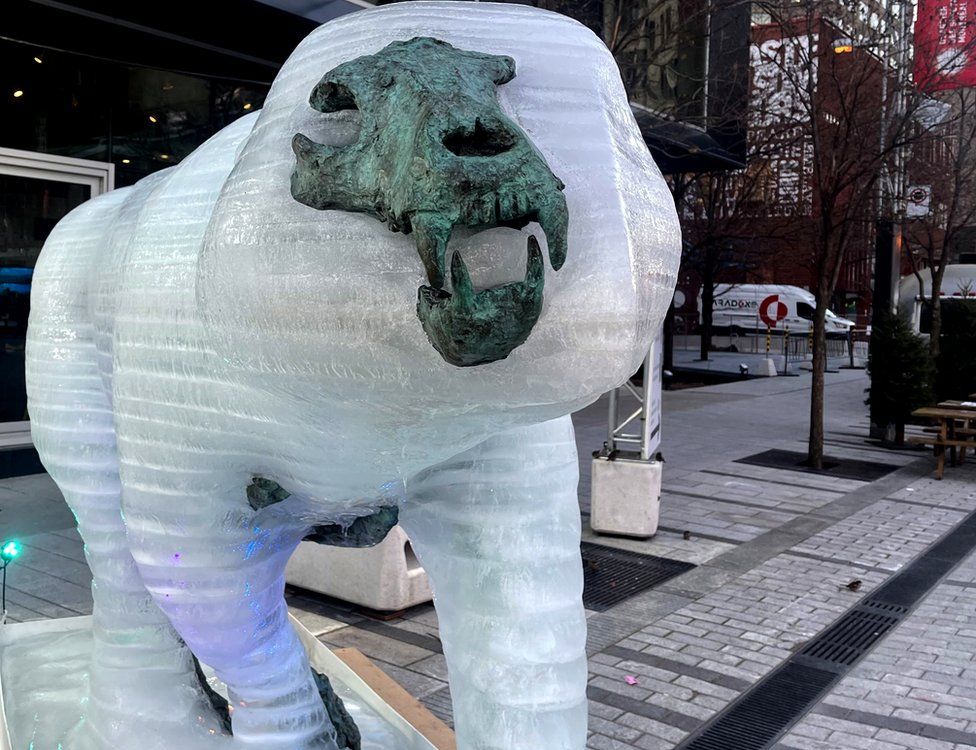
Polar bear ice sculpture in Montreal, where the UN biodiversity summit is taking place (c) Victoria Gill
Image caption,A polar bear ice sculpture in Montreal, where the UN biodiversity summit is taking place

By 2050, conservation scientists now say, the length of the season during which there is no ice could push bears to the point of starvation.

“Looking over the last couple of decades, it forms later and later and it breaks up earlier and earlier in spring,” Dr Flavio Lehner, of conservation charity PBI, says.

“So this season in between – where the bears are on land and can’t take advantage of those hunting opportunities – that’s is getting longer and longer, with warming.”

Tundra buggy (c) PBI
Image caption,Tundra buggies allow the team to watch and study the bears in safety

Bears depend on the blubber of seals for energy. Mothers raising cubs, in particular, need to consume sufficient fat.

“At 180 days [without sea-ice], we start to see impacts on their reproductive success,” Dr Lehner says. “So beyond that, we’re likely to see declines, simply because they can’t reproduce successfully any more.”

These omnivorous predators will eat just about anything they can find on land, including berries, eggs, small rodents and even reindeer, Ms McCall says, “but nothing replaces that [high fat] seal blubber”.

These changes are bringing bears and humans into closer proximity, making places such as Churchill, where polar bears and people coexist, riskier for both.

A US Geological Survey study, using data from satellite tracking collars on more than 400 polar bears in Alaska, shows the time they spend onshore has grown significantly in recent decades.

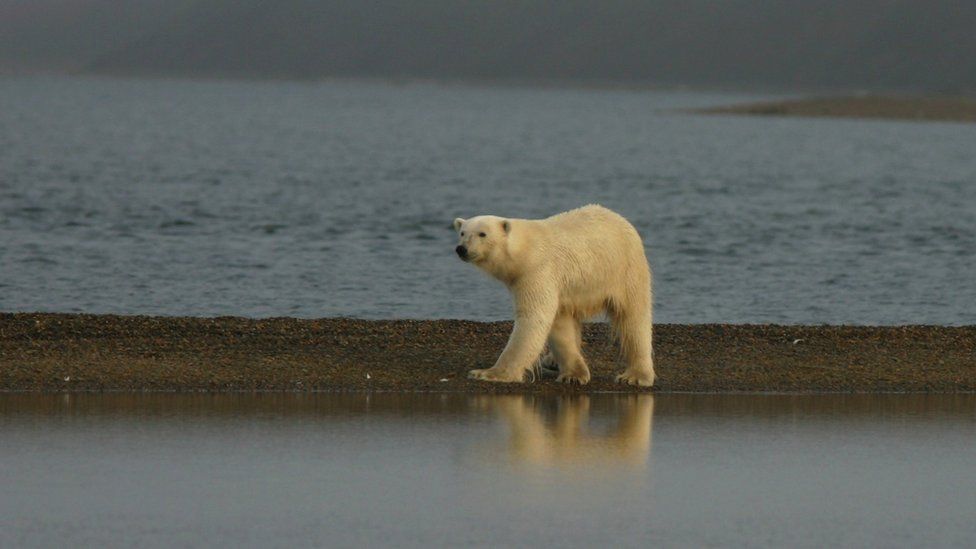
Polar bear in Alaska
Image caption,Polar bears in Alaska have been seen onshore earlier in the year

“Back in the 1980s, polar bears would only spend a couple of weeks onshore each summer,” USGS research wildlife biologist Dr Karyn Rode says.

“Now, many spend nearly two months ashore each year.”

And communities along Alaska’s North Slope have been seeing bears earlier.

Polar bears near Churchill, Manitoba
Image caption,Life in Churchill is shaped by the bears’ proximity to the town

The fate of Churchill, its seasonal sea-ice and Hudson Bay’s hundreds of polar bears fundamentally depends on what every country in the world does to reduce emissions of the planet-heating gases that are changing this place so rapidly.

“The sea-ice projections are strongly dependent on the temperature – and the temperature is dictated by how much greenhouse gas we emit into the atmosphere,” Dr Lehner says.

“So, from a scientific perspective, there is a beautiful relationship between how much we emit and what that means for the sea-ice and for the bears.”

Ms McCall says the western Hudson Bay subpopulation of bears, which she and her colleagues study, has declined up to 30% in the past 30-40 years, because of less access to sea-ice.

“They are warning us what’s to come for polar bears that live farther north [where icy winters are currently longer],” she adds.

Dr Lehner says climate change has transformed how we need to think about conservation.

“It permeates all life on this planet,” he tells the BBC.

“So something like setting up a national park is not bad, but it’s not going to help if that ecosystem fundamentally changes because of climate change.

“These are not separate issues – if you care about animals, if you care about conservation, you have to care about climate change.”

Hear a special episode of Inside Science from the UN Biodiversity summit in Montreal on BBC Sounds

Follow Victoria on Twitter

More on this story