




BY LI COHEN
JANUARY 13, 2023 / 2:52 PM / CBS NEWS
One of the few remaining individuals of the rarest whale species in the world is now “likely to die” after becoming severely entangled, the National Oceanic and Atmospheric Administration said Thursday.
The 4-year-old marine mammal is a North Atlantic right whale, a species with only a few hundred remaining members.
The whale, identified as #4904, was first seen wrapped in lines on Jan. 8 by an aerial survey team from Florida’s Clearwater Marine Aquarium. The team found the whale roughly 20 miles east of Rodanthe, North Carolina, with “several wraps of line around the mouth and tail” and more line trailing behind it, NOAA said.
Those lines have left her with “numerous wounds across her body and whale lice on her head.”
“After reviewing documentation of this new entanglement case, NOAA Fisheries biologists have made a preliminary determination that it meets the criteria of a ‘serious injury,'” the agency said Thursday. “This means the whale is likely to die from this injury.”
At the time she was found, NOAA said it was “too late in the day” for an entanglement response team to go after her and she was too far from shore. However, the agency is working to find her again in an attempt to free her from the lines.
The young whale is the daughter of another tracked member of the right whale species, an adult female named “Spindle,” who was recently seen with her tenth calf off the coast of Georgia. This was the first time that Spindle’s daughter had been seen since May of last year in Massachusetts Bay, NOAA said, at which point she was not entangled.
https://platform.twitter.com/embed/Tweet.html?dnt=true&embedId=twitter-widget-0&features=eyJ0ZndfdGltZWxpbmVfbGlzdCI6eyJidWNrZXQiOlsibGlua3RyLmVlIiwidHIuZWUiLCJ0ZXJyYS5jb20uYnIiLCJ3d3cubGlua3RyLmVlIiwid3d3LnRyLmVlIiwid3d3LnRlcnJhLmNvbS5iciJdLCJ2ZXJzaW9uIjpudWxsfSwidGZ3X2ZvbGxvd2VyX2NvdW50X3N1bnNldCI6eyJidWNrZXQiOnRydWUsInZlcnNpb24iOm51bGx9LCJ0ZndfaG9yaXpvbl90aW1lbGluZV8xMjAzNCI6eyJidWNrZXQiOiJ0cmVhdG1lbnQiLCJ2ZXJzaW9uIjpudWxsfSwidGZ3X3R3ZWV0X2VkaXRfYmFja2VuZCI6eyJidWNrZXQiOiJvbiIsInZlcnNpb24iOm51bGx9LCJ0ZndfcmVmc3JjX3Nlc3Npb24iOnsiYnVja2V0Ijoib24iLCJ2ZXJzaW9uIjpudWxsfSwidGZ3X3Nob3dfYnVzaW5lc3NfdmVyaWZpZWRfYmFkZ2UiOnsiYnVja2V0Ijoib24iLCJ2ZXJzaW9uIjpudWxsfSwidGZ3X2NoaW5fcGlsbHNfMTQ3NDEiOnsiYnVja2V0IjoiY29sb3JfaWNvbnMiLCJ2ZXJzaW9uIjpudWxsfSwidGZ3X3R3ZWV0X3Jlc3VsdF9taWdyYXRpb25fMTM5NzkiOnsiYnVja2V0IjoidHdlZXRfcmVzdWx0IiwidmVyc2lvbiI6bnVsbH0sInRmd19taXhlZF9tZWRpYV8xNTg5NyI6eyJidWNrZXQiOiJ0cmVhdG1lbnQiLCJ2ZXJzaW9uIjpudWxsfSwidGZ3X3NlbnNpdGl2ZV9tZWRpYV9pbnRlcnN0aXRpYWxfMTM5NjMiOnsiYnVja2V0IjoiaW50ZXJzdGl0aWFsIiwidmVyc2lvbiI6bnVsbH0sInRmd19leHBlcmltZW50c19jb29raWVfZXhwaXJhdGlvbiI6eyJidWNrZXQiOjEyMDk2MDAsInZlcnNpb24iOm51bGx9LCJ0ZndfZHVwbGljYXRlX3NjcmliZXNfdG9fc2V0dGluZ3MiOnsiYnVja2V0Ijoib24iLCJ2ZXJzaW9uIjpudWxsfSwidGZ3X3ZpZGVvX2hsc19keW5hbWljX21hbmlmZXN0c18xNTA4MiI6eyJidWNrZXQiOiJ0cnVlX2JpdHJhdGUiLCJ2ZXJzaW9uIjpudWxsfSwidGZ3X3Nob3dfYmx1ZV92ZXJpZmllZF9iYWRnZSI6eyJidWNrZXQiOiJvbiIsInZlcnNpb24iOm51bGx9LCJ0ZndfbGVnYWN5X3RpbWVsaW5lX3N1bnNldCI6eyJidWNrZXQiOnRydWUsInZlcnNpb24iOm51bGx9LCJ0Zndfc2hvd19nb3ZfdmVyaWZpZWRfYmFkZ2UiOnsiYnVja2V0Ijoib24iLCJ2ZXJzaW9uIjpudWxsfSwidGZ3X3Nob3dfYnVzaW5lc3NfYWZmaWxpYXRlX2JhZGdlIjp7ImJ1Y2tldCI6Im9uIiwidmVyc2lvbiI6bnVsbH0sInRmd190d2VldF9lZGl0X2Zyb250ZW5kIjp7ImJ1Y2tldCI6Im9uIiwidmVyc2lvbiI6bnVsbH19&frame=false&hideCard=false&hideThread=false&id=1612843564509155328&lang=en&origin=https%3A%2F%2Fwww.cbsnews.com%2Fnews%2Frare-north-atlantic-whale-likely-to-die-north-carolina%2F&sessionId=3b008aff12de057e9c497bec087cc5fce7a39b49&siteScreenName=CBSNews&theme=light&widgetsVersion=2b959255e8896%3A1673658205745&width=550px
Right whale Spindle and calf sighted on January 7, east of St. Catherines Island, GA. Spindle is approximately 41 years old and this is her 10th documented calf! At this time, 11 calves have been documented this right whale calving season. pic.twitter.com/x75dGXvZKJ— Clearwater Aquarium (@CMAquarium) January 10, 2023
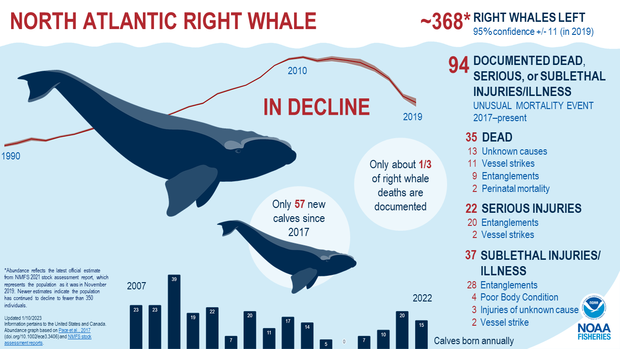
The North Atlantic right whale is among the rarest whale species in the world. And the critically endangered species is fighting for survival amid an ongoing unusual mortality event that has left fewer than an estimated 350 whales of the species remaining, hitting the lowest population numbers in nearly 20 years in 2021. NOAA said that #4904 is the 94th right whale to be documented in the event since 2017 and the 22nd case of serious injury.
If she does die, it only further strains the ability of the species to continue. Female right whales are not able to reproduce until around the age of 10, and currently, researchers believe there are fewer than 70 female right whales left who actively reproduce. The animals are pregnant for a year and can only give birth to one calf at a time, and often only have calves every six to 10 years on average.
Since 2017, when the unusual mortality event began, only 57 whales have been born. This amount is far below what is needed, however, as the species must produce 50 or more calves a year for multiple years to stop the species’ decline.
Humans remain the leading cause of the species’ decline, primarily from entanglements and vessel strikes, NOAA data shows. Since its onset in 2017, 11 whales have been killed by vessel strikes while nine have died after becoming entangled. Twenty have been seriously injured from being entangled.
The news of this young whale comes just weeks after it was discovered that a humpback whale by the name of Moon rose to national attention. A vessel strike left the whale with a broken spine and unable to use her tail to propel her through the ocean. But even still, she managed to capture the hearts of many who learned of her, as she swam 3,000 miles from Canada to Hawaii on one “last journey.”
https://www.cbsnews.com/news/rare-north-atlantic-whale-likely-to-die-north-carolina/
Axios on facebook
Axios on twitter
Axios on linkedin
Axios on email
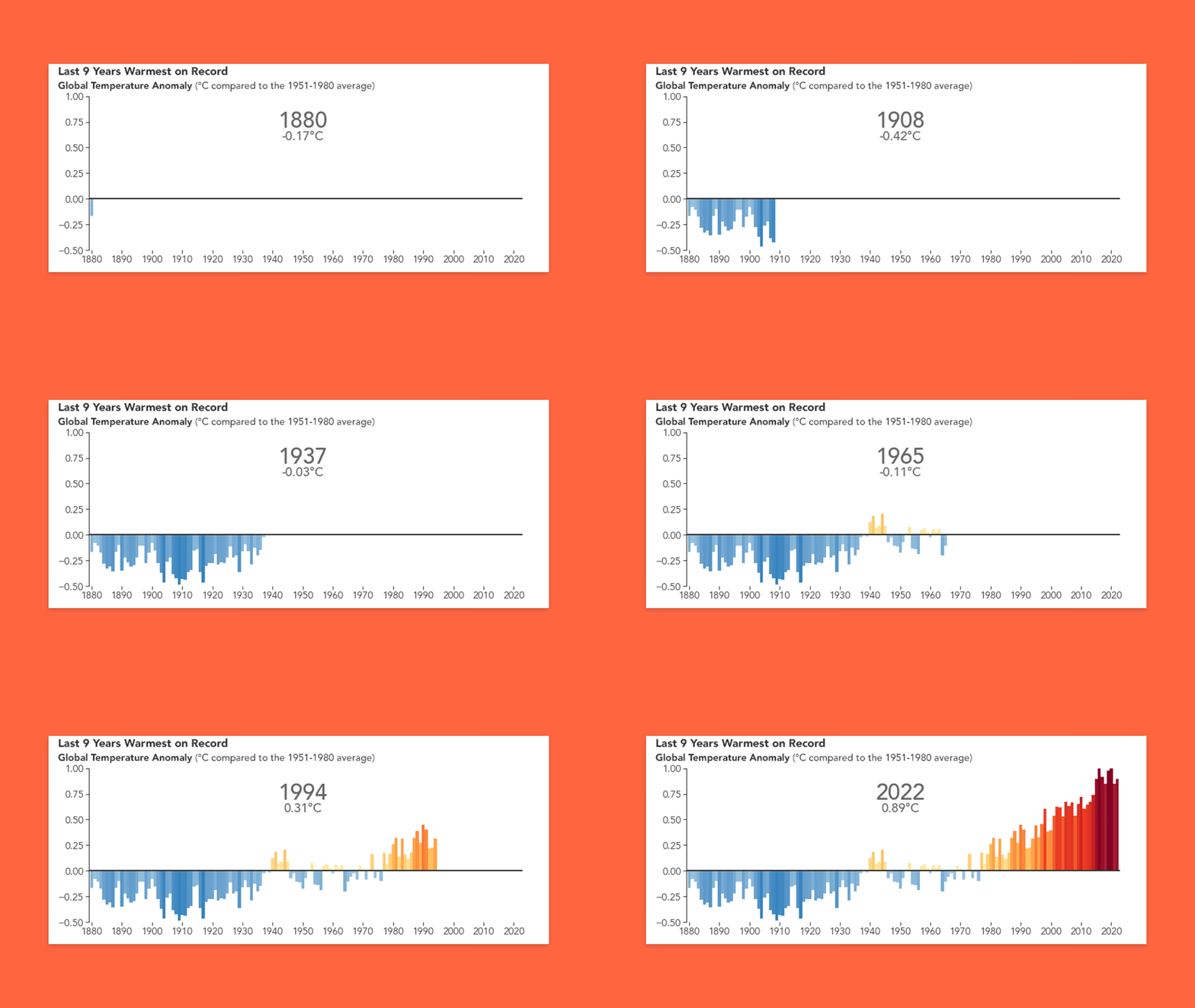
Believe it or not, average global surface temperatures have actually been relatively cool over the last three years — but that’s about to change.
Why it matters:Temperatures are expected to jump this year — and 2024 could set a new global record.
The big picture:Arare “triple dip” La Niñain the tropical Pacific Ocean kept temperatures in check in 2022, with the year ranking fifth-warmest since instrument records began.
View original post 433 more words


Signed-in readers now can bookmark stories to read later.
NEW!
272
shares
By
A deer hunter had mistaken a dog for a coyote, shooting and killing the animal.
The incident happened in the woods of Berks County Saturday morning. The hunter shot the dog in the stomach with a rifle. “Who shot my dog?” Chris Heller screamed, running to get help!
According to Pennsylvania Game Commission, it was a case of mistaken identity. Hence, the hunter won’t face charges.
While the dog’s owners want the hunter to undergo more training or lose his license, the game commission said “no game law violations were detected,”The Philadelphia Inquirerreported.
The Hellers want an apology from the hunter for killing their dog also named Hunter, a recently adopted 8-year-old malamute mix.
“This was a family pet,” Jennifer Heller told thenews outlet
View original post 38 more words
“People will become complacent, but the ground is saturated. It is extremely, extremely dangerous,” said the director of the California Governor’s Office of Emergency Services.
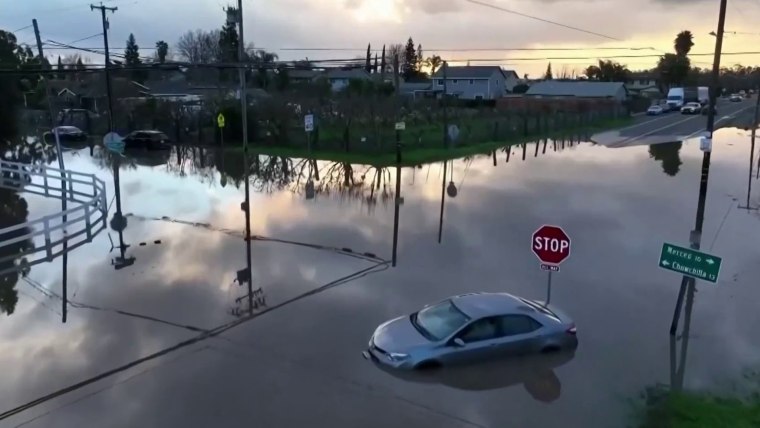
02:50
Link copied
Jan. 14, 2023, 11:03 AM UTC
Californians should brace for flooding and possible landslides as “heavy to excessive rainfall” is expected over the weekend and into next week, forecasters warned early Saturday.
Withrecovery efforts continuing in parts of the statewhich was battered by storms earlier this week, the National Weather Service said in abulletinthat a couple of Pacific storm systems were forecast to impact the West this weekend “bringing heavy lower elevation rain, significant mountain snow, and strong winds.”
The first system would approach the coast Saturday and move inland, the bulletin said, adding that there were “multiple slight risks of excessive rainfall,” that could…
View original post 444 more words
HOWARD LEE-1/13/2023, 4:15 AM
43WITH 0 POSTERS PARTICIPATING
The climate event, known as the Paleocene-Eocene Thermal Maximum (PETM), warmed the already-hot climate of the time by about5.6° Cdue to a jump in atmospheric CO2. Levels of that greenhouse gas rosefrom about 1,120 parts per million to about 2,020 ppm—much higher than today’s417 ppm. Although it didn’t trigger a major extinction, it still exterminated somedeep-sea creaturesandtropical plants. Scientists want…
View original post 1,307 more words

Morgan KeaneFacebook/Un Jour Un Chasseur
ByInside Edition Staff
First Published: 12:58 PM PST, January 12, 2023
A French man dodges prison time for his fatal shooting of another man he thought was a boar.
Julien Feral, 35, was participatingin an organized hunt in Southwest France in December 2020 when he accidentally shot and killed Morgan Keane, 25, who was outside near his home chopping wood,CBS Newsreported.
Feral was sentenced to a two-year suspended jail term and was banned from hunting for the rest of his life due to the incident, according to CBS News. The organizer of the wild boar hunt also was punished, receiving an 18-month suspended sentence and a five-year hunting ban, said the news site.
Friends of Keane createdUn Jour Un…
View original post 103 more words


1 / 4
The body of a humpack whale lies on a beach in Brigantine N.J., after it washed ashore on Friday, Jan. 13, 2023. It was the seventh dead whale to wash ashore in New Jersey and New York in little over a month, prompting calls for a temporary halt in offshore wind farm preparation on the ocean floor from lawmakers and environmental groups who suspect the work might have something to do with the deaths. (AP Photo/Wayne Parry)
ASSOCIATED PRESS
WAYNE PARRY
Fri, January 13, 2023 at 12:33 PM PST·4 min read
In this article:
BRIGANTINE, N.J. (AP) — New Jersey’s governor said Friday he does not think undersea preparations for offshore wind farms should be halted in response to a recent spate of whale deaths in New Jersey and New York.
Democrat Phil Murphy spoke after lawmakers at the local, state and federal levels called for a temporary pause in ocean floor preparation work for offshore wind projects in New Jersey and New York after another dead whale washed ashore in the area.
Also on Friday, most of New Jersey’s environmental groups warned against linking offshore wind work and whale deaths, calling such associations “unfounded and premature.”
The death was the seventh in a little over a month. The spate of fatalities prompted an environmental group and some citizens groups opposed to offshore wind to ask President Biden earlier this week for a federal investigation into the deaths.
The latest death Thursday was that of a 20- to 25-foot-long (6- to 7.6-meter-long) humpback whale. Its remains washed ashore in Brigantine, just north of Atlantic City, which itself has seen two dead whales on its beaches in recent weeks.
There was no immediate indication of what caused the latest death. The Marine Mammal Stranding Center, based in Brigantine, said it and several other groups were formulating plans Friday for a post-mortem examination of the whale’s remains before the animal’s carcass is disposed of, most likely through burial on the beach.
“We should suspend all work related to offshore wind development until we can determine the cause of death of these whales, some of which are endangered,” said New Jersey state Sen. Vince Polistina, a Republican who represents the area. “The work related to offshore wind projects is the primary difference in our waters, and it’s hard to believe that the death of (seven) whales on our beaches is just a coincidence.”
Murphy said he does not think pausing offshore wind prep is necessary.
“This is tragic, obviously,” he said.
Murphy cited the National Oceanic and Atmospheric Administration, which earlier this week said that no humpback whale — the species accounting for most of the recent whale deaths in New Jersey and New York — has been found to have been killed due to offshore wind activities.
“They have said it’s been happening at an increased rate since 2016, and that was long before there was any offshore wind activity,” the governor said. “It looks like some of these whales have been hit by vessels.”
Orsted, the Danish wind power developer tabbed to build two of the three offshore wind projects approved thus far in the waters off New Jersey, said its current work off the New Jersey coast does not involve using sounds or other actions that could disturb whales.
It did not say what specific type of work it is doing off New Jersey and did not answer that question in an email to The Associated Press on Friday.
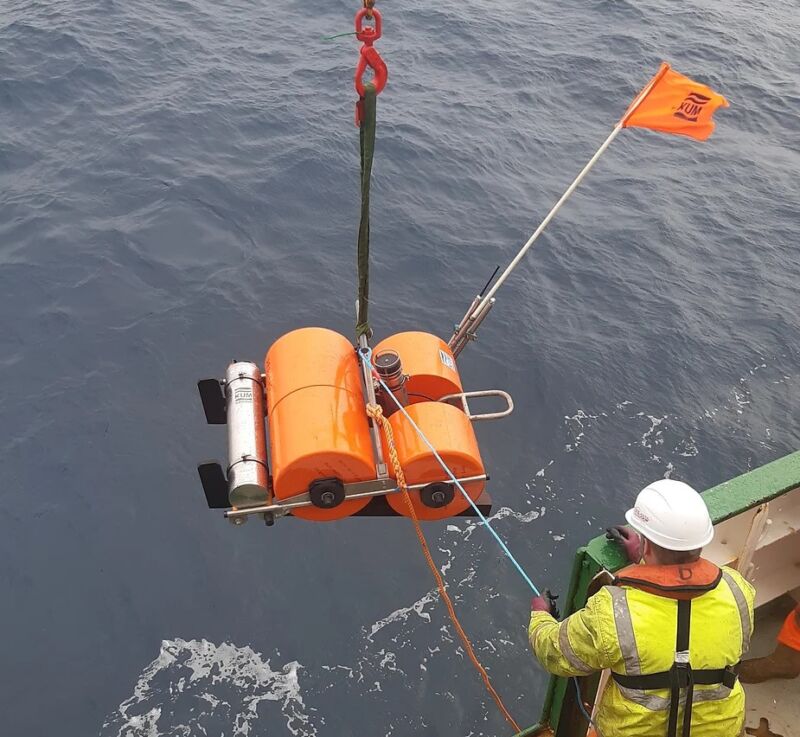
The Clean Ocean Action environmental group said such site work typically involves exploring the ocean floor using focused pulses of low-frequency sound in the same frequency that whales hear and communicate, which could potentially harm or disorient the animals.
Brigantine’s mayor, Vince Sera, joined in the call for a temporary halt to offshore wind site prep, as did U.S. Rep. Jeff Van Drew, a Republican congressman representing southern New Jersey.
At a news conference Monday in Atlantic City, the groups calling on Biden to probe the deaths said offshore wind developers have applied for authorization to harass or harm as many as 157,000 marine mammals off the two states.
NOAA said 11 such applications are active in the area but involve nonserious injuries or harassment of marine animals, not killing them.
“NOAA Fisheries has not authorized, or proposed to authorize, mortality or serious injury for any wind-related action,” agency spokesperson Lauren Gaches said.
Most of New Jersey’s major environmental groups said this week that they support offshore wind energy.
“The climate crisis demands that we quickly develop renewable energy, and offshore wind is critically important for New Jersey to reach the state’s economic development and environmental justice goals,” the groups said in a statement.
The groups include Clean Water Action, Environment New Jersey, the Sierra Club, New Jersey Audubon, NY/NJ Baykeeper and others.
“Blaming offshore wind projects on whale mortality without evidence is not only irresponsible but overshadows the very real threats of climate change, plastic pollution, and unsustainable fishery management practices to these animals,” said the Sierra Club’s New Jersey director, Anjuli Ramos-Busot.
“We need to base our decision making on science and data, not emotions or assumptions,” added Allison McLeod, policy director of the New Jersey League of Conservation Voters.
Posted Jan 11, 2023 Updated: Jan 10, 2023 @ 3:47 PM
PinMervin RiconAngel R. Gutierrez RinconJose A. Perez LambranoOrlando Teran
WARSAW — Four Warsaw men were recently arrested after allegedly hunting on a Warsaw property without consent.
Mervin Ricon, 32; Angel R. Gutierrez Rincon, 23; Jose A. Perez Lambrano, 32; and Orlando Teran, 23, all of Warsaw, are each charged with criminal trespass, a class A misdemeanor; and refusal to identify self, use of private land without consent, hunting wild animals without a license, and jacklighting from a vehicle, all class C misdemeanors.
On Dec. 15, 2022, Indiana conservation officers responded to a report of individuals hunting on a Warsaw property without consent. The property owner said he saw lights being used by the suspects and noted prior trespass issues on Dec. 2 and 11.
According…
View original post 102 more words
https://news.yahoo.com/2022s-series-disasters-could-linked-194800017.html
Lauren Leffer
Wed, January 11, 2023 at 11:48 AM PST·6 min read

Severe storms have brought massive rainfall, winds, and waves to California over the past few weeks. Ocean warming is likely a driver of the state’s recent extreme weather.
California is in its third week of back-to-back-to-back extreme weather events. The Pacific coast has been drenched by consecutive atmospheric rivers spanning from the end of last year into the present, with precipitation totals 400%-600% above average in some regions. At least 17 people have died as a result of the storms, and nearly 100,000 people faced evacuation orders, as reported by The New York Times. Hundreds of thousands of people lost power, and tens of thousands in the state remain without electricity, according to PowerOutage.us.
A new scientific study could help explain why. 2022 was the hottest year ever recorded for Earth’s oceans, according to research published Wednesday in the journal Advances in Atmospheric Sciences. All that heat has major implications for global climate, extreme weather, and marine health.
Read more
As ocean temperatures reach new heights, storms have more energy and moisture to fuel them. “I think we are seeing some of the repercussions of that in the storms that are hitting California,” said Kevin Trenberth, a researcher at the National Center for Atmospheric Research and one of the new study’s authors, in an article from the Washington Post. “The heavy rainfalls are a direct consequence of this [ocean heat] anomaly,” he added.
And it’s not just California. Intense rainfall, hurricanes, and flooding hit lots of regions around the world this past year. Climate change, and the specific consequences of increasing ocean heat, is likely a contributing factor in nearly all of those instances.
Extreme weather linked to climate change cost the U.S. at least $165 billion in 2022, according to NOAA data released on Monday. All told, the past year’s cumulative climate disasters made it the third most expensive since NOAA began keeping tabs, surpassed only by 2017 and 2005.
In addition to the storms, warming oceans exacerbate sea level rise, alter patterns of salinity and nutrient levels, and cause die-offs of marine life, the Advances study authors point out.
Then, there’s what our oceans can tell us about the land and our planet as a whole. The newly set 2022 record is a strong and dire signal of the consequences of human greenhouse gas emissions. Compared to air, water absorbs and releases heat more slowly. In our rapidly shifting world, oceans are a more consistent measure of global heat patterns than atmospheric temperatures, argue Trenberth and his co-researchers. Global air and surface temperature averages are undoubtedly rising over time, but year to year they fluctuate. Oceans though, are less variable.
This year’s record surpasses the ones set previously in 2021, 2020, 2019, and 2017. We are on our fourth year in a row of record-hot oceans. “If we keep breaking records, it’s kind of like a broken record,” John Abraham, a climatologist at the University of St. Thomas in Minnesota and one of the study researchers, told the Washington Post.
Ocean heat content “is a particularly robust metric of global climate change,” the study authors write. “Driven by anthropogenic greenhouse gas emissions, there is an energy imbalance in the Earth’s climate system,” and the oceans are bearing the brunt of that imbalance. Past research has determined that about 90% of the excess energy (i.e. heat) dumped into Earth’s climate system ends up stored in the ocean.
Keep in mind, though, that trends for land surface temperature aren’t much more encouraging. Though 2022 was not the hottest year ever recorded overall (that was 2016), the past eight years combined have been the warmest on record, according to a recent analysis from European Union scientists. Persistent La Niña conditions have made certain regions unusually cool for the past three years, but that anomaly doesn’t change the overall warming trend.
In their new ocean research, Trenberth, Abraham, and colleagues analyzed the temperature of the upper 2,000 meters (about 1.24 miles) of the world’s ocean water using data from the Chinese Academy of Sciences and the U.S. National Oceanic and Atmospheric Administration. Analyses from both institutions found 2022 to be the hottest ocean year on record, but exact measures differed slightly because of variations in approach.
Regardless, the scientists found that, between 1958 and 2022, the upper oceanic reaches across the planet have warmed by an average of about 5.4 Zettajoules per year. A Zettajoule is a massive unit of energy, equivalent to 240,000,000,000,000,000,000 calories. And that warming trend is rapidly accelerating. In 2022, the oceans got about 10 ZJ hotter than they were just a year earlier. For context: all of the energy humans use worldwide in a single year is equal to about half a Zettajoule, according to a news release from the study team.
“The fact that we’re seeing such clear increases in ocean heat content, extending over decades now, shows that there is a significant change underway,” Linda Rasmussen, a retired researcher at the Scripps Institute of Oceanography who wasn’t involved in the new work, told the Washington Post.
And though the ocean warming is consistent, it isn’t uniform. Four basins (the North Pacific, North Atlantic, Mediterranean Sea, and southern oceans) are warming particularly quickly and had record-hot years in 2022, according to the study—which could help explain some of the weather and warming trends of late, like intense heatwaves across Europe and climate shifts in the northeastern U.S..
Ocean circulation patterns are also shifting in response to the temperature rise, the researchers confirmed. Warmer water is less dense and more buoyant than its colder counterpart. The expansion of the top layer of our oceans is contributing to overall sea level rise and exacerbating stratification between the oceans’ upper and lower layers, as surface water becomes less prone to sinking and mixing diminishes. Without that circulation, the deeper ocean loses access to crucial nutrients and oxygen—which is also being depleted at upper levels of the ocean because warmer water holds onto gas less effectively. Thus, ocean warming is a multifold risk to sea life.
Salinity, too, is impacted. Hotter surface water leads to more evaporation, which boosts salt concentrations. Meanwhile, increased freshwater rainfall in some regions causes patches of diminished saltiness. Overall, the study authors determined that—through human-caused climate change and ocean warming—an old paradigm is continuing to hold true: “salty gets saltier—fresh gets fresher.”
So far, there are no signs that any of the above tendencies will shift course. “Until we reach net zero emissions…we’ll continue to break ocean heat content records,” said Michael Mann, an atmospheric scientist at Pennsylvania State University and one of the study authors, in the news release.
Even if humanity takes the necessary, drastic action to avert the worst consequences of climate change, ocean warming is likely locked in for the next 75 years, according to the U.N.’s Intergovernmental Panel on Climate Change. These marine trends and their knock-on effects are our new, ever-amplifying normal. People and ecosystems are suffering for it.
 Exposing the Big Game