Coyote found in illegal trap released by SD Humane Society

Exposing the Big Game's avatarCommittee to Abolish Sport Hunting Blog

Posted:March 10, 2023

Updated: 7:05 PMhttps://www.kusi.com/coyote-found-in-illegal-trap-released-by-sd-humane-society/

KUSI Newsroom

RAMONA (CNS) – A coyote caught in an illegal jaw trap in February was today released into the wild by the San Diego Humane Society’s Project Wildlife team after three weeks of care.

The adult female coyote was rescued from a residential property by SDHS’s Humane Law Enforcement on Feb. 17, where she was found in the Skyline neighborhood “dangling on a chain link fence from a jaw trap attached to her left front leg,” a statement from SDHS read.

The humane officers rushed her to SDHS’s Ramona Wildlife Center, where Project Wildlife’s medical team provided pain medication, took X-rays and tended to her wounds. The coyote had soft tissue damage to her lower leg due to the trap, but no fractures or permanent damage.

https://602c3c802f05b9d2d3a367d1309cc072.safeframe.googlesyndication.com/safeframe/1-0-40/html/container.html

While under anesthesia, veterinarians also noted the coyote needed significant dental care, including a tooth extraction, which…

View original post 193 more words

BILL TO OPEN ‘VELVET BUCK’ SEASON IN OKLAHOMA PASSES THROUGH THE STATE SENATE

Friday, March 10th 2023, 8:20 am

By: Tess Maune
Play Video

https://www.news9.com/story/640b3ebc01fc9b0d96b648d6/bill-to-open-velvet-buck-season-in-oklahoma-passes-through-the-state-senate

spaceplay / pause 

qunload | stop 

ffullscreen

shift + slower / faster

volume 

mmute

seek 

 . seek to previous

12… 6 seek to 10%, 20% … 60%

TULSA, Okla. –

A bill to open a “velvet buck” season in Oklahoma has passed through the state senate this week and is now headed to the house of representatives for consideration.

Senate Bill 910 aims to create a nine-day archery season for bucks in velvet that would start the Saturday morning prior to the last weekend of August and go to the Sunday evening of the last weekend of August.

Velvet is a living tissue that covers antlers when they grow back in the spring and summer. The velvet is full of blood vessels that supply the growing antlers with nutrients. Wildlife experts say antlers appear larger in their late-season velvet. Then as fall approaches, antler growth stops, antlers harden, and bucks begin to shed velvet. In Oklahoma, that typically happens from late August through September.

Sen. Blake “Cowboy” Stephens, a lifelong hunter, told News On 6 he authored the bill to give hunters another nine days of deer season, to add more opportunity for hunters and to create another revenue stream.

“I can remember the first deer I harvested, and passing down that tradition to my children,” Stephens said. “With this legislation, I hope even more fellow Oklahomans can make memories and share these traditions with their own families and be a part of history when our state hosts its first velvet buck season.”

The legislation says hunters would need a hunting license, velvet buck permit or stamp to hunt in the velvet buck season.

Sen. Stephens said there would be a set number of permits, established by the Oklahoma Wildlife Commission, and hunters would have to pay, then draw out for a velvet buck permit. The cost of a permit would also be established by the commission, Stephens said.

Although it’s not specified in the bill, Sen. Stephens said the velvet buck season would only be open on private land. The Oklahoma Department of Wildlife Conservation said about 30% of hunters rely on public land for hunting. Sen. Stephens said there would be opportunity to expand and open it to public land in years to come.

The bill says any hunters could only harvest one velvet buck per season and that buck would count against regular season’s two-buck limit. That means hunters would still only get two buck tags per deer season.

Only a few states have seasons dedicated hunting velvet bucks, although hunting season opens early enough in a handful states, like Kansas, that some bucks are still in velvet.

“Oklahoma’s tourism industry would greatly benefit from introducing a velvet buck season as only a few states offer this season,” Stephens said. “Hunters from across the country will be looking to travel to our state to take part in the first season and many thereafter.”

Still Stephens says Oklahomans would have priority with 90% of all velvet buck permits going to Oklahoma resident hunters.

News On 6 reached out to the Oklahoma Department of Wildlife Conservation regarding the legislation.

“We are working closely with legislators every day to provide them the information they need to make decisions on this bill and others,” Communications & Education Assistant Chief Micah Holmes said. “Oklahoma is one of the best states in the nation for deer hunting and we all share a goal to keep it that way. Our strategy is to provide as much hunting opportunity as possible while maintaining healthy wildlife populations and our biologists will continue to examine season and bag limit changes like these so we can make science-based recommendations.”

The House of Representatives will now consider Senate Bill 910.

If it becomes law, the Oklahoma Wildlife Commission would establish regulations and the velvet buck season likely would not go into effect until the 2024-2025 deer season.

Storm breaches California river’s levee, thousands evacuate

By NIC COURY and STEFANIE DAZIO31 minutes ago

https://apnews.com/article/california-atmospheric-river-storm-2677c9eeb138f2a672a2596ef4b1563e

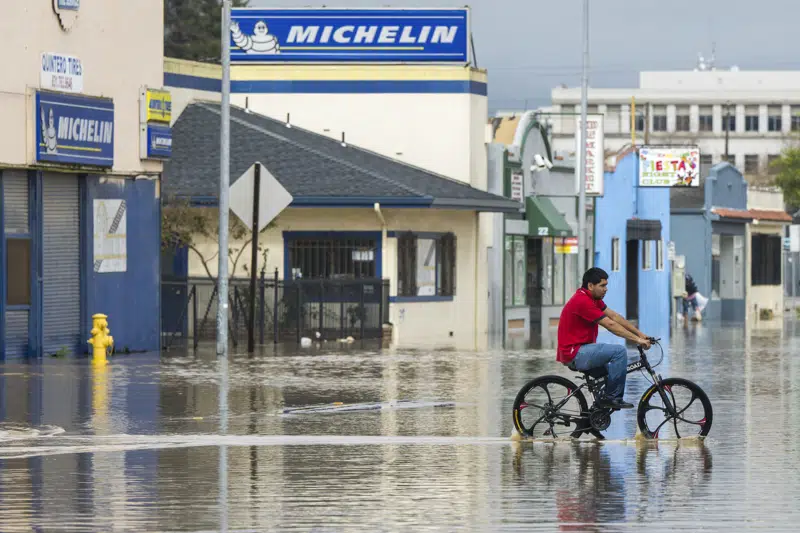
A man rides his bicycle through floodwaters in Watsonville, Calif., Saturday, March 11, 2023. Gov. Gavin Newsom has declared emergencies in 34 counties in recent weeks, and the Biden administration approved a presidential disaster declaration for some on Friday morning, a move that will bring more federal assistance. (AP Photo/Nic Coury)

1 of 12

A man rides his bicycle through floodwaters in Watsonville, Calif., Saturday, March 11, 2023. Gov. Gavin Newsom has declared emergencies in 34 counties in recent weeks, and the Biden administration approved a presidential disaster declaration for some on Friday morning, a move that will bring more federal assistance. (AP Photo/Nic Coury)

WATSONVILLE, Calif. (AP) — A Northern California agricultural community famous for its strawberry crop was forced to evacuate early Saturday after the Pajaro River’s levee was breached by flooding from a new atmospheric river that pummeled the state.

Across the Central Coast’s Monterey County, more than 8,500 people were under evacuation orders and warnings Saturday, including roughly 1,700 residents — many of them Latino farmworkers — from the unincorporated community of Pajaro.

Officials said the Pajaro River’s levee breach is about 100 feet (30.48 meters) wide. Crews had gone door to door Friday afternoon to urge residents to leave before the rains came but some stayed and had to be pulled from floodwaters early Saturday.

First responders and the California National Guard rescued more than 50 people overnight. One video showed a member of the Guard helping a driver out of a car trapped by water up to their waists.

ADVERTISEMENT

“We were hoping to avoid and prevent this situation, but the worst case scenario has arrived with the Pajaro River overtopping and levee breaching at about midnight,” wrote Luis Alejo, chair of the Monterey County Board of Supervisors, on Twitter.

Alejo called the flooding “massive,” saying the damage will take months to repair.

POLITICS

Records in Fox defamation case show pressures on reportersWill it take market crash for Congress to raise debt limit?US agencies debunk Florida surgeon general’s vaccine claimsDeSantis visits Iowa as interest in likely Trump rival rises

The Pajaro River separates the counties of Santa Cruz and Monterey in the area that flooded Saturday.

Officials had been working along the levee in the hopes of shoring it up when it was breached around midnight Friday into Saturday. Crews began working to fix the levee around daybreak Saturday as residents slept in evacuation centers.

The Pajaro Valley is a coastal agricultural area known for growing strawberries, apples, cauliflower, broccoli and artichokes. National brands like Driscoll’s Strawberries and Martinelli’s are headquartered in the region.

In 1995, the Pajaro River’s levees broke, submerging 2,500 acres (1,011 hectares) of farmland and the community of Pajaro. Two peopled died and the flooding caused nearly $100 million in damage. A state law, passed last year, advanced state funds for a levee project. It was scheduled to start construction in 2024.

Evacuations ordered as storm pummels California

More than 9,000 California residents were under evacuation orders Friday as a new atmospheric river brought heavy rain, thunderstorms and strong winds, swelling rivers and creeks and flooding several major highways during the morning commute. (March 10)

https://imasdk.googleapis.com/js/core/bridge3.561.0_en.html#goog_45838821

0 seconds of 1 minute, 2 secondsVolume 90%

This week’s storm marked the state’s 10th atmospheric river of the winter, storms that have brought enormous amounts of rain and snow to the state and helped lessen the drought conditions that had dragged on for three years. State reservoirs that had dipped to strikingly low levels are now well above the average for this time of year, prompting state officials to release water from dams to assist with flood control and make room for even more rain.

ADVERTISEMENT

Across the state on Saturday, Californians contended with drenching rains and rising water levels in the atmospheric river’s aftermath. In Tulare County, the sheriff ordered residents who live near the Tule River to evacuate, while people near the Poso Creek in Kern County were under an evacuation warning. The National Weather Service’s meteorologists issued flood warnings and advisories, begging motorists to stay off deluged roadways.

ADVERTISEMENT

Democratic Gov. Gavin Newsom has declared emergencies in 34 counties in recent weeks, and the Biden administration approved a presidential disaster declaration for some on Friday morning, a move that will bring more federal assistance.

The atmospheric river, known as a “Pineapple Express” because it brought warm subtropical moisture across the Pacific from near Hawaii, was melting lower parts of the huge snowpack built in California’s mountains.

Snow levels in the Sierra Nevada, which provides about a third of the state’s water supply, are more than 180% of the April 1 average, when it is historically at its peak. Officials reported 32 inches (81 centimeters) of snow had fallen by Saturday morning at the Mount Rose ski resort on the edge of Reno, Nevada.

The snowpack at high elevations is so massive it was expected to be able to absorb the rain, but snow below 4,000 feet (1,219 meters) could start to melt, potentially contributing to flooding, forecasters said.

State transportation officials said Friday they removed so much snow from the roadways in February that it would be enough to fill the iconic Rose Bowl 100 times.

ADVERTISEMENT

Lake Oroville — one of the most important reservoirs in the state and home to the nation’s tallest dam — has so much water that officials on Friday opened the dam’s spillways for the first time since April 2019. The reservoir’s water has risen 180 feet (54.8 meters) since Dec. 1. Of the state’s 17 major reservoirs, seven are still below their historical averages this year.

State water managers were also grappling with the best way to use the storms to help emerge from a severe drought. On Friday, Newsom signed an executive order making it easier for farmers and water agencies to use floodwater to refill underground aquifers. Groundwater provides on average about 41% of the state’s supply each year. But many of these underground basins have been overdrawn in recent years.

Forecasters warned that mountain travel could be difficult to impossible during the latest storm. At high elevations, the storm was predicted to dump heavy snow, as much as 8 feet (2.4 meters) over several days.

ADVERTISEMENT

Do Chickens Mind Seeing Other Chickens Killed in Their Presence?

Thinking Like a Chicken Podcast
News & Views!

Two hens in factory watching other chickens being killed
Photo of “spent” hens in a poultry slaughter market by Unparalleled Suffering Photography.

https://upc-online.org/podcasts/230310_do_chickens_mind_seeing_other_chickens_killed.html

Absurd as it may sound to anyone familiar with chickens, some people, including one high-profile animal pontificator who shall be nameless, have claimed based on false and unquestioned assertions, that chickens do not mind seeing and hearing other chickens being slaughtered in their presence. This would include seeing one or more members of their flock being tortured by humans or harmed by a natural predator such as a hawk or a fox. In this podcast episode I address the question of traumatic empathy in chickens. Please join me.

https://www.buzzsprout.com/1968177/12353053-do-chickens-mind-seeing-other-chickens-killed-in-their-presence?client_source=small_player&iframe=true&referrer=https://www.buzzsprout.com/1968177/12353053-do-chickens-mind-seeing-other-chickens-killed-in-their-presence.js?container_id=buzzsprout-player-12353053&player=small

Thinking Like a Chicken Overview

Transcript

Do Chickens Mind Seeing Other Chickens Killed in Their Presence?

Hello, and thank you for joining me today. I’m Karen Davis, the founder and president of United Poultry Concerns, a nonprofit organization that promotes compassion and respect for chickens, turkeys, ducks, and other domesticated birds.

Today I want to speak to you about whether chickens are bothered by seeing other chickens harmed in their presence, including being killed.

A fellow activist once asked me if I believed chickens don’t mind watching and hearing other chickens being killed in their presence. He asked because a farmer had told him they don’t mind. Was this true?

Lest anyone think that chickens don’t mind hearing and seeing other chickens die violently in front of them, or be grabbed by a predator or otherwise traumatized, nothing could be further from the truth. As a chicken sanctuary director for more than three decades, I’ve seen the effect on chickens of a hawk or a fox and the terror those predators inspire in the birds, including the aftermath of trauma.

I learned the hard way back in the early days of keeping a few rescued chickens in an unfenced yard. (Those naïve days are long gone, and our 12,000 square-foot sanctuary is now fully predator-proof.) One of our chickens back then, named Ethel Murmur, was in the yard one Saturday afternoon, next to the porch with her friend Bertha, when a fox stole Bertha, and left her dead in the woods.

Before this happened, Ethel Murmur was so vigorous and loud that we named her after the famous Broadway singer Ethel Merman on account of her imposing character, her ample physique, and her big voice. Afterward, Ethel Murmur was never the same. She stopped making a joyful noise, she stopped yelling for attention, and could hardly walk anymore. Her whole body shriveled, and she died a week later. Although she herself had not been attacked, she had watched the attack on her friend, and could not recover.

Another situation arose one morning when I put our brown hen, Alexandra, outside with her bantam rooster companion, Josie. It was a spring day, and the kitchen door was open. Suddenly, Alexandra ran shrieking through the door into the house, jumped up on a table, and could not calm down. I cried, “Alexandra, what happened?” Panic stricken, I ran outside. Josie was nowhere. Once again – a fox. Once again, heartache.

As for chickens not minding watching members of their flock being killed by a farmer, a man once told me how a small flock of chickens he and some others were keeping on a commune he belonged to at the time were slaughtered in front of each other by a member of their group. Three hens and a rooster who were previously friendly with these people fled the scene. They disappeared for more than two weeks, before reappearing, timidly, and never again trustingly. Their behavior following the slaughter was totally altered, the man sadly said.

In nature, chicken parents will confront a predator by first pushing their chicks into foliage for safety behind themselves. Puffing out their feathers and spreading their wings wide, they will charge the predator while sounding alarm calls. One May day, when a pair of our hens and roosters produced an unexpected family, the tiny chicks squeezed through the wire fence to the other side, then peeped piteously at being stuck there. Shrieking and dashing about, unable to reach her chicks, the frantic mother hen instinctively flew straight up into my face when I approached her. (I quickly rescued all five chicks, and we covered the openings safely.)

When questioning the emotional complexity of farmed animals, we need to remember that a farmed animal is essentially a natural animal in captivity. A chicken’s physical environment and bodily deformations, imposed by exploiters, retain the fundamental instincts, sensitivities, emotions and intelligence of a bird whose evolutionary home is the tropical forest. Like their wild cousins of the tropics, domesticated chickens, perceiving a predator in their yard, will typically react with a loud clamor, and they will hide themselves among the trees and bushes for protection.

Chickens in a state of abnormal, chronic fear and severe, inescapable captivity tend by contrast to become very still and quiet, evincing what psychologists call learned helplessness – that is, behavior exhibited by individuals enduring repeated, traumatizing treatment beyond their control, even if their senses are on high alert. They may develop a condition of muscular immobility produced by their intense fear at being helpless, and knowing they are going to die.

I am confident that chickens are empathic creatures who are capable of experiencing not only the imminence of their own death, but the emotional tones of dread and dying in others trapped in a violent setting such as a slaughterhouse, a live poultry market, or a cockfighting ring. They sense, in these places, when they themselves and their companions are in immediate danger, as shown by their ready response to danger in a diversity of settings.

The day after Josie, our little rooster, was grabbed by a fox in front of Alexandra our hen, I was filled with grief and guilt. “Why oh why did I let them outside yesterday morning unprotected?” I berated myself. I sat on the floor and could not stop crying. Here, then, came big white billowy Sonia, a hen whom we’d rescued with Josie and other chickens from a filthy shed in back of a shiny farmers market in Virginia, here Sonia came across the living room floor. She rested her head against me and began softly purring, over and over. My sadness deepened with love for this gentle being, who maybe knew or did not know why I was crying, but who sensed my sadness and rose from where she was sitting to plod across the floor to comfort me in this moment of empathy that we shared, together in this tragic world.

I hope you have found today’s podcast informative and inspiring on behalf of chickens and that you will share it with your social media network. Thank you very much for joining me today, and, please join me for the next podcast episode of Thinking Like a Chicken – News & Views! And have a wonderful day.

KAREN DAVIS, PhD is the President and Founder of United Poultry Concerns, a nonprofit organization that promotes the compassionate and respectful treatment of domestic fowl including a sanctuary for chickens in Virginia. Inducted into the National Animal Rights Hall of Fame for Outstanding Contributions to Animal Liberation, Karen is the author of numerous books, essays, articles and campaigns. Her latest book is For the Birds: From Exploitation to Liberation: Essays on Chickens, Turkeys, and Other Domesticated Fowl published by Lantern Publications & Media.

Karen with Rainbow the rooster
Photo by Unparalleled Suffering Photography
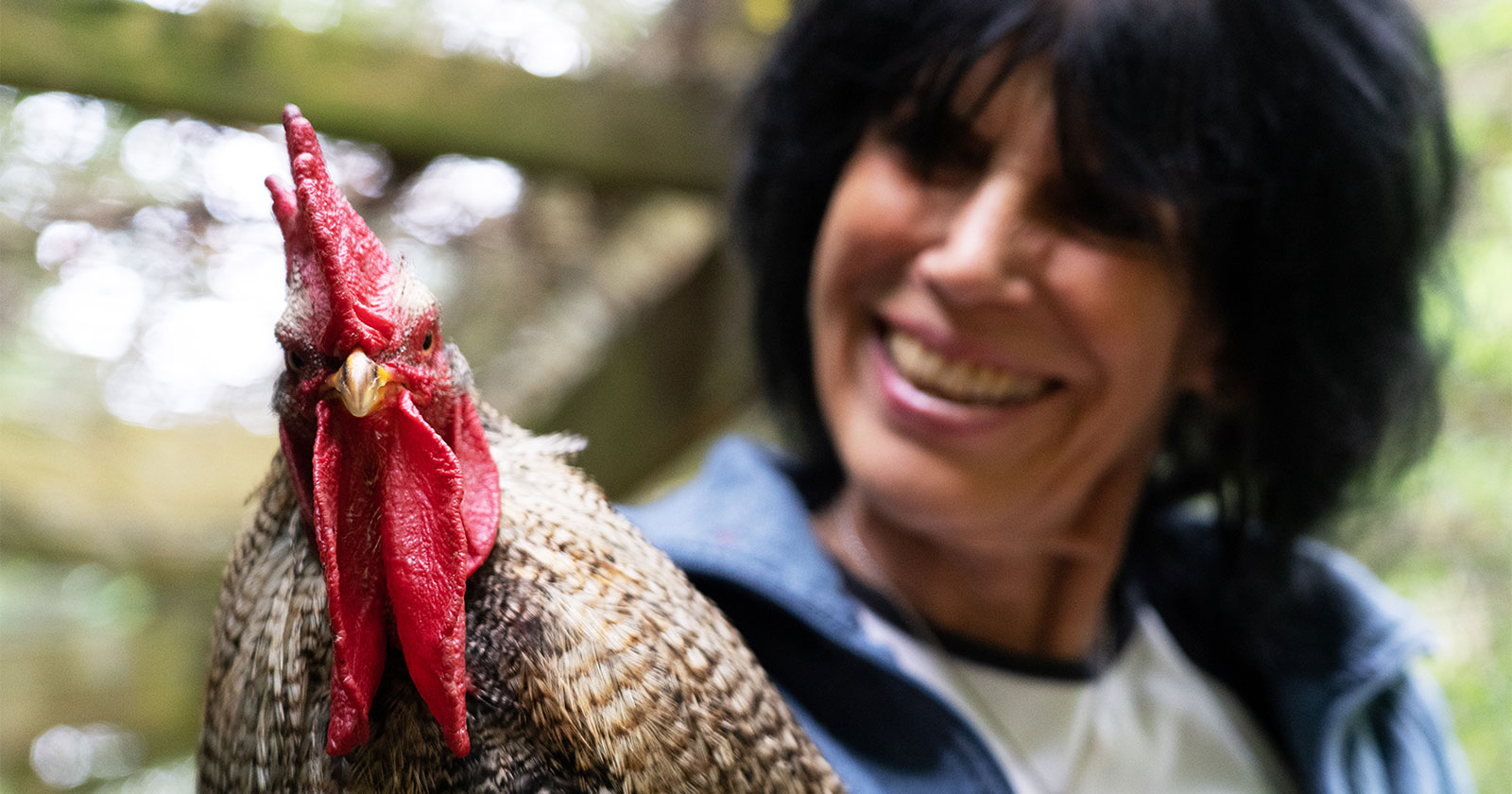
Rainbow looking into the camera. Karen smiling and looking at Rainbow

More From UPC


WILD ANIMALS AND HUMAN LIFE – Savage Din, Soft Lyre and the Call of Wild Natures


Do Chickens Mind Seeing Other Chickens Killed in Their Presence?


Anthropomorphism as Activism: How to Promote Animal Liberation

United Poultry Concerns

www.upc-online.org

Runner shot on public trail in St. Charles County sues turkey hunter, state

Exposing the Big Game's avatarCommittee to Abolish Sport Hunting Blog

Trail system
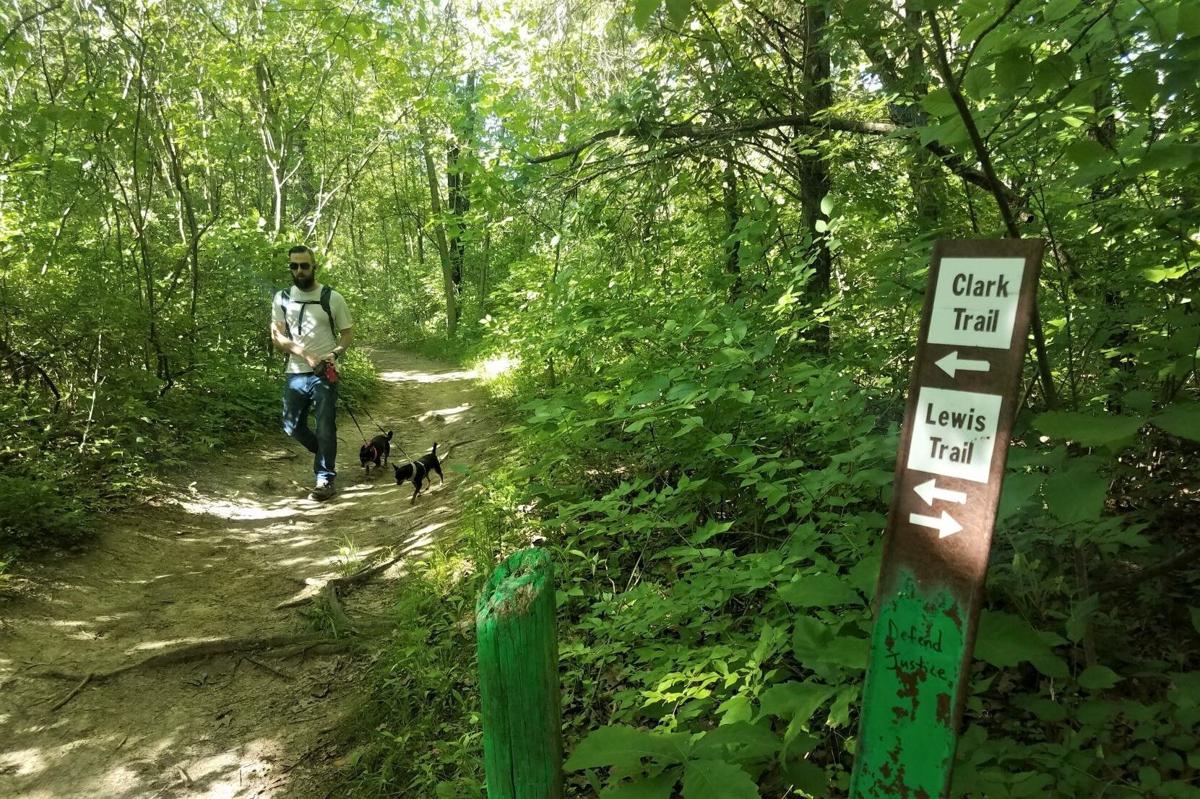
Mike Petty, 35, of Wentzville, hikes the Lewis and Clark Trail with his dogs, Bella and Drogs, on Wednesday, May 12, 2021, in the Weldon Spring Conservation Area.Jesse Bogan, Post-Dispatch

https://trinitymedia.ai/player/trinity-player.php?pageURL=https%3A%2F%2Fwww.stltoday.com%2Fnews%2Flocal%2Fmetro%2Frunner-shot-on-public-trail-in-st-charles-county-sues-turkey-hunter-state%2Farticle_77690dae-f1f1-5ea2-8534-2fbc28d9bb9a.html&partner=Flex&FAB=1&textSelector=I2FydGljbGUtYm9keQ%3D%3D&unitId=2900003117&userId=0e101693-6fc6-4d98-a504-fd5407027dbc&isLegacyBrowser=false&version=20230309_b40b16d124290786751a74187536598730c4aaf2&useCFCDN=0&themeId=140

Jesse Bogan

ST. CHARLES COUNTY — An endurance runner who was shot by a turkey hunter in the Weldon Spring Conservation Area is suing the sportsman, the state and a group involved with developing trail systems in the region.

“The users of these trails have a reasonable expectation that they will not be shot at and suffer life-altering injuries,” the lawsuit claims.

Fred Cay, of O’Fallon, Missouri, was hit by pellets from a shotgun blast May 8, 2021, during spring turkey season, while running on the Lewis Trail, according to an incident report. Mark A. Polson, a seasoned hunter from Arnold, soon approached Cay…

View original post 865 more words

Reward offered for information in illegal trapping and death of bobcat

Exposing the Big Game's avatarCommittee to Abolish Sport Hunting Blog

DefaultMono SansMono SerifSansSerifComicFancySmall CapsDefaultX-SmallSmallMediumLargeX-LargeXX-LargeDefaultOutline DarkOutline LightOutline Dark BoldOutline Light BoldShadow DarkShadow LightShadow Dark BoldShadow Light BoldDefaultBlackSilverGrayWhiteMaroonRedPurpleFuchsiaGreenLimeOliveYellowNavyBlueTealAquaOrangeDefault100%75%50%25%0%DefaultBlackSilverGrayWhiteMaroonRedPurpleFuchsiaGreenLimeOliveYellowNavyBlueTealAquaOrangeDefault100%75%50%25%0%

KOLD News 5-5:30 p.m. recurring

ByMikala Novitsky

Published:Mar. 9, 2023 at 4:47 PM PST

TUCSON, Ariz. (13 News) – The inhumane death of a bobcat in Southern Arizona has officials demanding answers and they need your help.

This week, a bobcat was found dead hanging from a tree by an illegal leg hold trap.

This happened on Tucson’s Eastside near Colossal Cave Road and Mary Ann Cleveland Way. Arizona Game and Fish recovered the bobcat Wednesday and they’re offering a reward.

The reward is up to $500 for any information leading to an arrest of whoever used the illegal trap and hung the bobcat in the tree. Game and Fish said they don’t offer rewards often, but this is a very serious and sick crime.

https://01f73f883c8e1c7542ef310c5c1f82de.safeframe.googlesyndication.com/safeframe/1-0-40/html/container.html

“That bobcat was hung 20-feet off the…

View original post 352 more words

Alaska Legislature approves free trapping licenses for disabled veterans

Exposing the Big Game's avatarCommittee to Abolish Sport Hunting Blog

BY:JAMES BROOKS– MARCH 8, 20232:20 PM

Sen. Jesse Kiehl, D-Juneau (left), talks about changes in Senate Bill 10 with Sen. James Kaufman, R-Anchorage, and Sen. Shelley Hughes, R-Palmer, before a final vote on Wednesday, March 8, 2023. (Photo by James Brooks/Alaska Beacon)

The Alaska Legislature has unanimously passed a bill thatgives disabled veterans and members of the Alaska National Guard free trapping licensesin addition to the free hunting and fishing licenses they already receive.

The Alaska House of Representatives voted 39-0 in favor of Senate Bill 10 on Monday, and on Wednesday, the Alaska Senate voted 19-0 to agree with a House amendment and send the bill to Gov. Mike Dunleavy.

After the Senate transmits the bill to the governor, he will have 15 days — excluding Sundays — to sign the bill, veto it, or allow it to become law without his signature.

Sen. Jesse…

View original post 50 more words

Possible Crack Down on Anonymous Hunting Traps

Exposing the Big Game's avatarCommittee to Abolish Sport Hunting Blog

1of 2

Trap ID

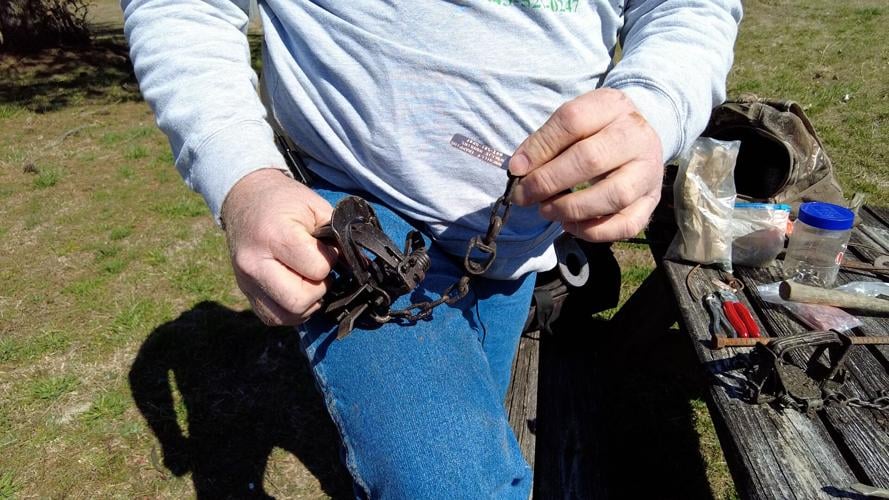
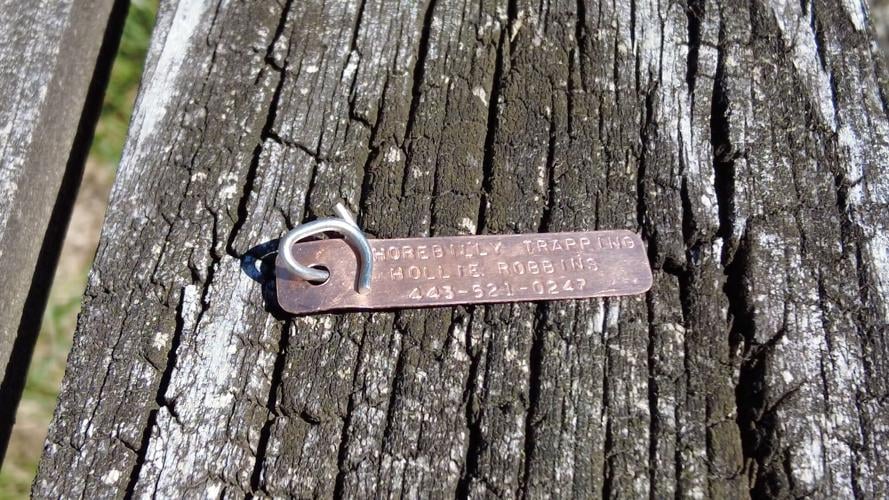
Hollie Robbins showing one of his traps and the ID tag that he is required to have on all of them.

Trap ID

An ID tag that goes on traps.

MARYLAND — Lawmakers in Annapolis are debating a pair of bills that would require identification on traps used to catch animals. If something happens at a trap, the goal is Maryland’s Department of Natural Resources would be able to easily locate the owner.

While DNR said the goal of this legislation is to increase accountability, others feel this could hurt what they call a dying tradition. Trappers say the days of trapping for fun and to keep nuisance animals in check, are dwindling.

It’s why Jamie Wink, owner of Wink’s Sporting Goods, thinks this legislation would deter people from using traps.

“It’s something that…

View original post 427 more words

Legislature passes trapping bill for disabled veterans and Alaska National Guard members

Exposing the Big Game's avatarCommittee to Abolish Sport Hunting Blog

By Greg Knight | March 8, 2023 | 

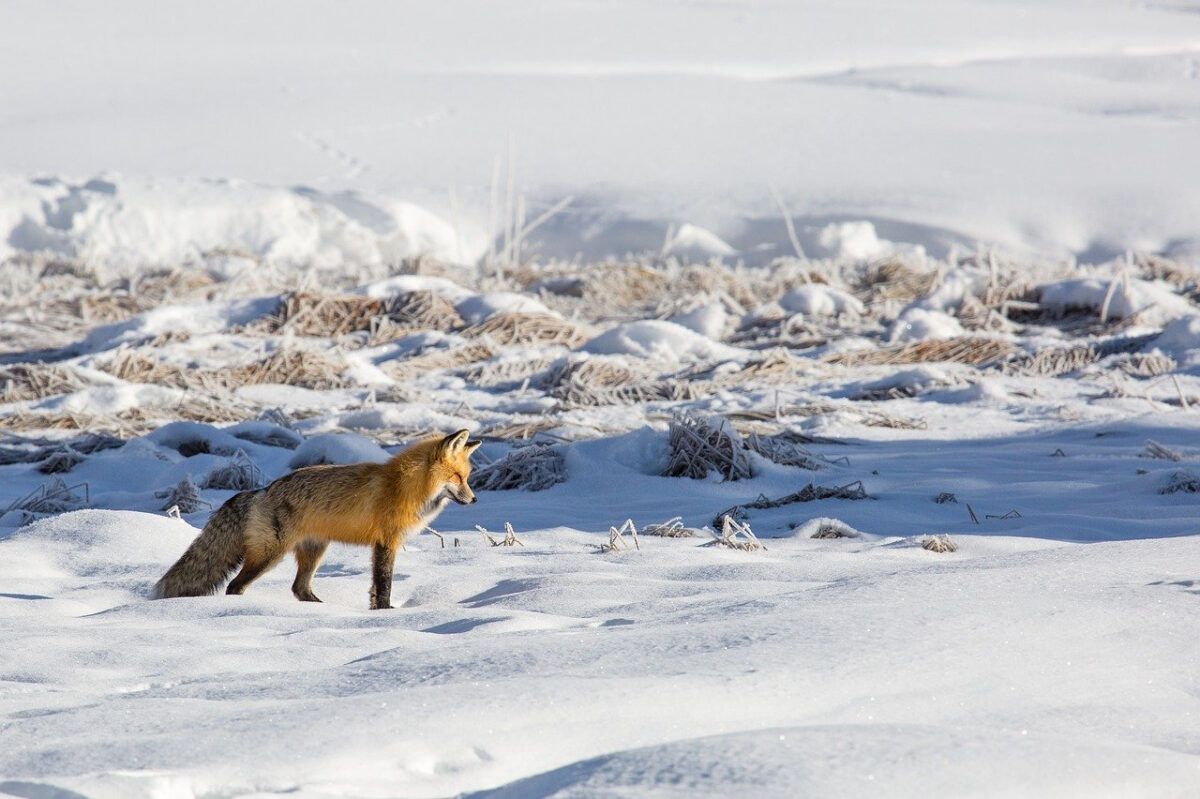
fox in snow

A BILL THAT WOULD PROVIDE VETERANSand members of the Alaska National Guard with free trapping licenses has passed the Alaska Legislature.

Senate Bill 10, authored by Juneau Sen. Jesse Kiehl, passed the House of Representatives on a 39-0 vote Monday. Representative Tom McKay was excused from the call in the House.

Representative Mike Cronk of Tok, who had filed an identical companion bill in the House, carried the bill for Sen. Kiehl.

“This bill extends a free trapping license to service-disabled veterans and active-duty National Guard and Reserves,” Cronk said on the House floor Tuesday. “They currently receive a free hunting and fishing license, and I’m not sure why the trapping part was left out. I am always encouraging that we support our trapping.”

The free trapping licenses would be added…

View original post 208 more words

Several new laws will have an impact on wildlife, hunting

Exposing the Big Game's avatarCommittee to Abolish Sport Hunting Blog

Press Release

March 9, 2023

(h/t WGFD)

Share

(Cheyenne, WY)–The 2023 Wyoming Legislature passed several bills that will make changes to Wyoming Game and Fish Department laws and regulations. The following is a summary of the notable Game and Fish-related bills that passed, how they will impact the public and the next steps for implementation. Game and Fish will continue to provide updates as these changes move through the regulation process.

Hunting of predatory animals–amendments (HB0104)

Hunters will be allowed to hunt predatory animals on public or state land at night with the use of artificial light, including thermal and infrared imaging. The Wyoming Game and Fish Commission has been granted the authority to establish rules and regulations regarding the creation of zones, areas, seasons and methods for the taking of predatory animals with the use of artificial light on public or state land. Game and Fish will…

View original post 639 more words