An adult moose can weigh over 2,000lb and move at speeds up to 25mph, so you don’t want to get on their bad side – especially not for a photo.
On a recent visit to Yellowstone, one hiker filming a herd of moose in Round Prairie was surprised to spot two of the huge animals chasing after a park visitor who had chosen to get a little too close, and was sprinting to escape.
Moose attacks are rare, but the animals can charge if they or their young are threatened, and are particularly likely to lash out if dogs are nearby since they cannot differentiate between a domestic dog and a wolf.
This particular incident was captured by Leah Hilton and shared this week via Instagram account TouronsOfYellowstone, which calls out careless behavior at US National Parks, often involving wildlife. Other close calls have included people taunting elk, harassing bison, and even chasing bears, all of which are federal crimes punishable by a hefty fine or even jail time.
The National Park Service (NPS) warns visitors that animals at Yellowstone are wild and can be unpredictable, no matter how calm they may seem in the moment. The best and safest place to view them is from within a car, and you should always stay at least 25 yards (23 meters) away from bison, moose and elk.
Stay safe around moose
Moose are naturally more inclined to be inquisitive rather than aggressive, but they can attack people if they feel threatened, with serious consequences. They tend to react particularly strongly around dogs, which they see as wolves.
Last year, a woman was charged and knocked down by a cow moose while walking her dog in the Rocky Mountains. As Associated Press reported, the animal headbutted and trampled her as she walked her pet on a wooded trail. She was taken to hospital for treatment, having been stomped on “several times”.
“If a moose thinks a dog is a threat it’s going to react to it, and that’s normal for a moose,” said Kara Van Hoose, a spokesperson for Colorado Parks and Wildlife.
Up nextVideo: Bison charge tourists at YellowstoneChase MartinThu, May 23, 2024 at 9:59 AM PDT·1 min read3A bison and a calf trot down a road in Yellowstone National Park on Aug. 6, 2018. | Chuck Wing, Deseret NewsApproaching wild animals can be very dangerous. Even those that appear docile and friendly can quickly turn on people and attack.A recent video of tourists at Yellowstone National Park highlights why this advice should be followed and the importance of maintaining a safe distance from wild animals.The footage, taken by a park guest from a safe distance, shows a herd of bison passing through the park while a man seated on a nearby bench remains still. The situation escalates when another group of tourists approaches and obstructs the herd’s path.Someone in the video can be heard saying, “Oh, I don’t think that’s wise.”The bison become agitated and charge at the tourists. Fortunately, the tourists manage to get out of the way in time.https://www.youtube.com/embed/VchqjFCvPJQ?feature=oembedAccording to USA Today, nobody was injured in the exchange.Yellowstone National Park is home to thousands of free-roaming bison. It has the largest population on public lands, per the park’s website.Male bison can weigh up to 2,000 pounds, while females can reach up to 1,000 pounds. These animals can be aggressive and are capable of running up to 30 miles per hour.The park’s guidelines emphasize the unpredictability of its wildlife. Yellowstone says that, “The animals in Yellowstone are wild and unpredictable, no matter how calm they appear to be. The safest (and often best) view of wildlife is from inside a car. Always stay at least 100 yards away from bears and wolves, and at least 25 yards away from all other animals, including bison and elk.” View comments (3)https://cc92085fa519f57f787eb7ff735222a7.safeframe.googlesyndication.com/safeframe/1-0-40/html/container.htmlhttps://cc92085fa519f57f787eb7ff735222a7.safeframe.googlesyndication.com/safeframe/1-0-40/html/container.html
Up nextNew Zealand Man Who Belly Flopped Onto Orca Learns His FateChris Malone MéndezTue, May 21, 2024 at 4:51 PM PDT·1 min read778With the recent string of orcas attacking boats and the nickname of “killer whale,” not to mention their endangered status around the world, one would likely think to stay away from one in the wild. One man in New Zealand recently decided instead to go for a swim with a male orca and his calf. But rather than jump in and swim alongside them, he belly flopped from a boat onto the orca’s in a stunning display caught on video.Now, the man is facing consequences for his actions. According to The Standard, the 50-year-old man has been fined $600 after flopping stomach-first onto the marine mammal. The incident happened in Davenport, Auckland back in February after his friends encouraged him to do it. “I touched it!” he yelled after he came down on the orca.Hayden Loper, an investigator with the New Zealand Department of Conservation, explained in a statement just how bad of an idea it was.”This is stupid behavior and demonstrates a shocking disregard for the welfare of the orca. It is extremely irresponsible,” Loper said. “Orca are immensely powerful animals, and this really could have ended horribly – with either the startled whale being injured, or the man responsible being harmed by the aggravated animal.”He pointed out that the man’s behavior was “a very clear breach of the Marine Mammals Protection Act,” noting that “orca are classified as whales under conservation legislation and it is illegal to swim with whales, or disturb or harass any marine mammal.”https://www.youtube.com/embed/MnVAealCUhMIt’s probably best to admire Lolita from afar. View comments (778)https://cc92085fa519f57f787eb7ff735222a7.safeframe.googlesyndication.com/safeframe/1-0-40/html/container.html
Up nextCan you spot the Yellowstone bison and three grizzly bears?Pete ThomasWed, May 22, 2024 at 9:47 AM PDT·1 min read31A guide who leads hiking excursions in Yellowstone National Park on Tuesday shared a “quiz” image via X, asking:“Can you find the lone bison and the three grizzly bears from this picture from Yellowstone National Park?”It’s not a difficult quiz for those who blow up the image. (Answer provided below.)https://platform.twitter.com/embed/Tweet.html?dnt=true&embedId=twitter-widget-0&features=eyJ0ZndfdGltZWxpbmVfbGlzdCI6eyJidWNrZXQiOltdLCJ2ZXJzaW9uIjpudWxsfSwidGZ3X2ZvbGxvd2VyX2NvdW50X3N1bnNldCI6eyJidWNrZXQiOnRydWUsInZlcnNpb24iOm51bGx9LCJ0ZndfdHdlZXRfZWRpdF9iYWNrZW5kIjp7ImJ1Y2tldCI6Im9uIiwidmVyc2lvbiI6bnVsbH0sInRmd19yZWZzcmNfc2Vzc2lvbiI6eyJidWNrZXQiOiJvbiIsInZlcnNpb24iOm51bGx9LCJ0ZndfZm9zbnJfc29mdF9pbnRlcnZlbnRpb25zX2VuYWJsZWQiOnsiYnVja2V0Ijoib24iLCJ2ZXJzaW9uIjpudWxsfSwidGZ3X21peGVkX21lZGlhXzE1ODk3Ijp7ImJ1Y2tldCI6InRyZWF0bWVudCIsInZlcnNpb24iOm51bGx9LCJ0ZndfZXhwZXJpbWVudHNfY29va2llX2V4cGlyYXRpb24iOnsiYnVja2V0IjoxMjA5NjAwLCJ2ZXJzaW9uIjpudWxsfSwidGZ3X3Nob3dfYmlyZHdhdGNoX3Bpdm90c19lbmFibGVkIjp7ImJ1Y2tldCI6Im9uIiwidmVyc2lvbiI6bnVsbH0sInRmd19kdXBsaWNhdGVfc2NyaWJlc190b19zZXR0aW5ncyI6eyJidWNrZXQiOiJvbiIsInZlcnNpb24iOm51bGx9LCJ0ZndfdXNlX3Byb2ZpbGVfaW1hZ2Vfc2hhcGVfZW5hYmxlZCI6eyJidWNrZXQiOiJvbiIsInZlcnNpb24iOm51bGx9LCJ0ZndfdmlkZW9faGxzX2R5bmFtaWNfbWFuaWZlc3RzXzE1MDgyIjp7ImJ1Y2tldCI6InRydWVfYml0cmF0ZSIsInZlcnNpb24iOm51bGx9LCJ0ZndfbGVnYWN5X3RpbWVsaW5lX3N1bnNldCI6eyJidWNrZXQiOnRydWUsInZlcnNpb24iOm51bGx9LCJ0ZndfdHdlZXRfZWRpdF9mcm9udGVuZCI6eyJidWNrZXQiOiJvbiIsInZlcnNpb24iOm51bGx9fQ%3D%3D&frame=false&hideCard=false&hideThread=false&id=1792944940198264906&lang=en&origin=https%3A%2F%2Fwww.advnture.com%2Fnews%2Fhikers-mob-moose-photos-yellowstone-doesnt-go-well&sessionId=7da1f50b6788322e3c72267a7ee3e60e242c9f6c&siteScreenName=Yahoo&theme=light&widgetsVersion=2615f7e52b7e0%3A1702314776716&width=550pxBut Douglas Scott’s images from this encounter are interesting because they show a momma grizzly bear with yearling cubs in a seemingly peaceful coexistence with a nearby bison.“The bison was pretty alert, but there were no issues, as bears rarely, if ever try to attack a full-grown bison,” Scott, who runs The Outdoor Society, told FTW Outdoors. “The cubs were definitely were curious about it, occasionally stopping their grazing and watching the bison.”Grizzly bear family walks around bison. Photo: Douglas ScottScott tweeted a second image from the encounter, which shows the bear family walking around the bison, with the bison standing and alert.“Do you see all three grizzlies?” Scott asked his followers. “The bison certainly did.”Scott said the encounter occurred northeast of the Fountain Paint Pots boardwalk on May 10 at 5 p.m.Grizzly bears (left) and bison at the edge of a meadow. Photo: Douglas ScottMay is an excellent month for viewing grizzly bears and bison in Yellowstone National Park, as both species are often in close viewing range with youngsters in tow.Story originally appeared on For The Win
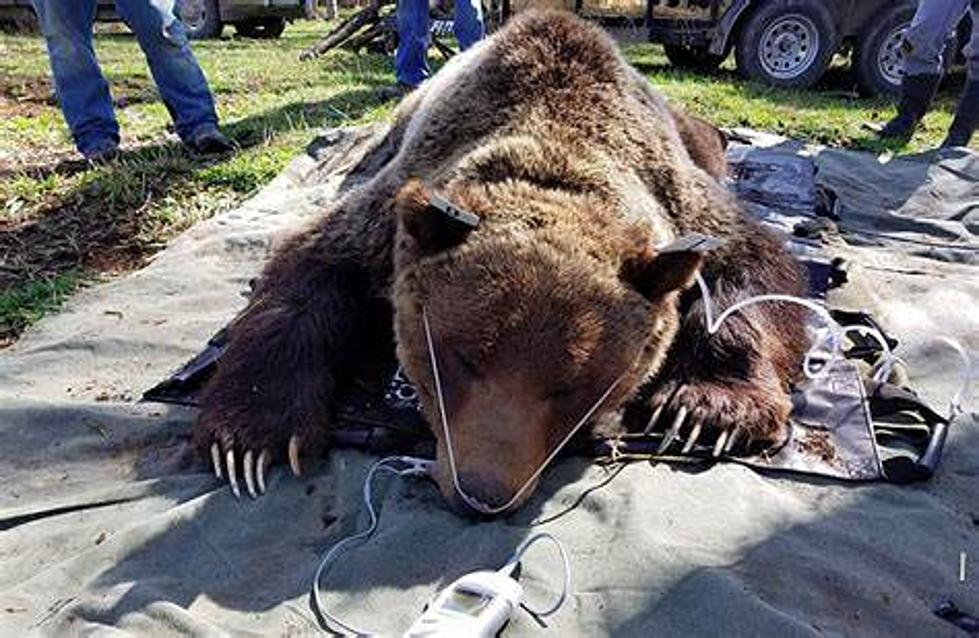
A final decision on the petitions to remove the grizzly bear from the list of threatened species and the protections of the Endangered Species Act (delisting) may come in June or early July. Currently, authority over grizzly bear management is vested in the U.S. Fish & Wildlife Service. If the petitions are approved, management will be turned over to the states.
26.1K
Biden hosts Kenya’s William Ruto for CEO summit as part of state visit
Both Montana and Wyoming would have trophy hunts for grizzly bears. Wyoming would begin immediately and Montana in five years. But what would stop the politicians once they’ve achieved control over the bears?
Keep in mind that all grizzly bear hunting is trophy hunting. There is no subsistence hunting for bears in the lower 48. People do not eat bear meat and Montana hunting regulations do not require black bear hunters to eat the meat. To the contrary, hunters of elk, deer and other species can be fined if they waste the meat. Grizzly bear hunting is for the trophy and the thrill of shooting a grizzly bear.
Montana might use private citizens to remove bears with a history of management or habituation. This is not hunting. Since most bears with a management history are radio-collared, hunters might be directed to the bear’s location. This is not ethical or fair chase nor would it be allowed for any other animal.
The states also intend to arbitrarily limit where grizzly bears may be, even where they are in excellent habitat on public lands such as the Missouri Breaks with over one million acres of public lands and Wilderness. Hunting tags may be issued in specific areas to limit grizzly bear distribution to Wilderness and National Parks, which are not large enough to support viable populations. It’s the antithesis of wildlife habitat connectivity.
Montana Fish, Wildlife & Parks (FWPs) earned a reputation as being the leading state wildlife management agency in the U.S. and has been highly trusted by the public. Unfortunately, political interference is tarnishing this reputation. The Montana Fish & Wildlife Commission used to have professional biologists as members including Chairs Dr. Gary Wolf and Dr. Bob Ream. No more. There is not a single biologist on the Commission, whose members are all appointed by the Governor.
Moreover, the legislature enacted many laws governing wildlife management that retired FWPs biologists and others have warned are extreme, unsporting and threaten stable populations of wildlife. This pervasive influence led FWPs to produce a statewide management plan for grizzly bears that reads like a trophy hunting plan. Many justifications are offered for trophy hunting grizzly bears, but few if any for not doing it.
The political override of state biologists is affecting Montana’s wildlife heritage from elk on down the line. In Wyoming the Cody Roberts wolf torture episode, which Wyoming Fish & Game sat on for five weeks, further erodes confidence in state management of carnivores and predators. Trust must be re-earned and that takes time.
If you oppose the trophy hunting of grizzly bears then you must also oppose removing the grizzly bear from the protections of the Endangered Species Act because that would immediately enable unsustainable trophy hunting. Relisting a species is almost unheard of and takes much time that the grizzly bear does not have.
There is no ordinary hunting of grizzly bears. It is trophy hunting plain and simple. Please consider contacting the U.S. Fish & Wildlife Service and tell them no delisting and no trophy hunting of grizzly bears. In the Search box, enter FWS-R6-ES-2022-0150, which is the docket number for this action.
Biologists and law enforcement rangers investigate the scene of the bear attack, which occurred Sunday near Signal Mountain in Grand Teton National Park.COURTESY PHOTO/GRAND TETON NATIONAL PARK
Grand Teton National Park will take no action against a grizzly bear that attacked a visitor, officials say.
“We are not considering any management actions,” Chief of Staff Jeremy Barnum said. “It’s pretty clear in talking to the person who was injured and based on the site investigation that this was a surprise encounter and that the bear, likely a sow, responded defensively because she had at least one cub.”
ADVERTISING
Grizzly attacks in Grand Teton
According to Grand Teton National Park records, there have been only seven bear attacks in the park or the John D. Rockefeller Memorial Parkway since the park was founded in 1929.
August 1994 — Michael Dunn is attacked while jogging near Two Ocean Lake.
September 1997 — An unnamed visitor is attacked while hunting in the John D. Rockefeller Memorial Parkway.
March 2001 — Jim Olsen is attacked while skiing near Berry Creek.
April 2001 — Ken Bates is attacked while he is fishing in the John D. Rockefeller Memorial Parkway.
October 2001 — Conrad James Smith is attacked while hunting at School House Hill near Moran.
June 2007 — Dennis VanDenbos is attacked by Grizzly 399 while hiking the Wagon Road near Jackson Lake Lodge.
October 2011 — Timothy Hix is attacked while hunting the Snake River bottom near Blacktail Ponds Overlook.
May 2024 — An unnamed visitor is attacked near Signal Mountain Lodge. The circumstances remain uncertain.
Teton park rangers and Teton County Search and Rescue responded to the Sunday grizzly bear attack near Signal Mountain, the first grizzly attack in the Greater Yellowstone Ecosystem this year.
From 2012 to 2022, grizzlies have typically attacked an average of five people a year in the Greater Yellowstone Ecosystem. But attacks in Grand Teton are rare, and the Sunday incident is the first reported in the park since 2011, when a grizzly injured a hunter participating the park’s fall elk hunt. At that time there had only been six bear attacks in Grand Teton’s history, none of them fatal, per park records.
By that account, the attack Sunday is the seventh since Teton park was founded in 1929.
The fact that park rangers have determined the bear acted “defensively” is also significant.
When it comes to bear attacks, biologists view attacks in self-defense differently than even rarer acts of predation. Grizzly or black bears that pursue or stalk humans are often killed. But bears that swipe or maul a human that surprises them are often spared that fate. That sort of response is typically deemed natural.
On Sunday the Massachusetts man was hiking through a forested area, carrying bear spray and intentionally making noise based on bear safety information Teton park had posted. When he saw a smaller bear in close proximity running away, he reached for his bear spray and was simultaneously charged by a larger bear, according to a park report on the incident provided to the News&Guide.
Rescuers short haul the victim of the Sunday bear attack from the scene of the incident to a landing zone near the Potholes Turnout.COURTESY PHOTO/GRAND TETON NATIONAL PARK
The victim was able to remove his bear spray from his holster but didn’t have time to let it loose because of how quickly the larger bear approached.
When the bear hit him, the man dropped, fell to the ground on his stomach and played dead, “interlacing his fingers behind his neck with the bear spray canister caught in one of his fingers,” the report says.
The bear hit the man several times and ultimately punctured the bear spray can. After that, the bears left.
The man was able to move to an area with cell coverage and call for help around 4 p.m. Sunday.
Rangers located the victim and provided emergency care. The Search and Rescue chopper airlifted him from the Signal Mountain area to a landing zone near the Potholes Turnout. From there he was transferred to an ambulance and driven to St. John’s Health.
He was discharged Monday and is expected to make a full recovery.
The News&Guide’s efforts to reach the victim were unsuccessful by press time. Officials did not release his name, citing privacy concerns.
Grand Teton biologists and law enforcement rangers investigated the incident Monday and Tuesday, and were able to talk with the victim for a second time Tuesday. After that conversation, they were able to adjust their characterization of the responsible bears from “two grizzly bears” to a sow and “at least one older cub.”
While the description of the bears involved matches the description of Grizzly 399 and the one, yearling cub she’s raising this year, Barnum said the park does not believe 399 was involved in the attack “at this time.”
“We can’t even say with 100% certainty it was a sow and a cub,” Barnum said. “We can’t rule out that it’s a mating pair or something else. We’re moving to a likely assumption without confirmation.”
The park does not know what bears were involved and may never know for certain.
Tom Mangelsen, a wildlife photographer who has documented 399 for the last decade, said 399 has been frequenting the northern part of Teton park. On Thursday, 399 and her young cub were seen at Moose Island near Leeks Marina, then showed up at Colter Bay on Friday as she ventured out to Hermitage Point.
Grand Teton National Park officials said a visitor was attacked by a grizzly sow on Sunday near Signal Mountain, pictured here from the shore of Oxbow Bend.THOMAS KRIESEGrizzly 399 and her yearling cub roam Grand Teton National Park in early May. Park officials say 399 is not a suspect in the Sunday attack.THOMAS D. MANGELSEN
After that, 399 wasn’t seen until Tuesday morning, when she emerged near the sewer ponds south of Colter Bay, heading north, traveling in a way indicating she came from Hermitage Point, not Signal Mountain. Hermitage Point and Signal Mountain are only 3.5 miles apart as the crow flies — close enough for a grizzly to make the trek in day. But Mangelsen and others have studied 399’s behavior for years. He doesn’t think making a trek from Hermitage point to Signal would have made any sense.
“It’s just really not her normal behavior. I’m pretty sure she isn’t the one that attacked the guy,” Mangelsen said. “It’s possible that she’s done it, but it doesn’t make sense.”
As the first reported grizzly bear attack in the Greater Yellowstone, the Sunday encounter follows a slew of high-profile incidents in 2023, including a grizzly attack that left a woman dead in West Yellowstone and a separate attack near Dubois where the victim survived. But bear biologists say attacks remain rare.
More attacks have occurred as grizzly range expands outside the core of the Greater Yellowstone Ecosystem. However, because more grizzlies are now occupying more densely populated, or more heavily visited areas like Grand Teton National Park, researchers say attacks are down on a per capita basis. They attribute that to better education about methods to prevent bear attacks, such as avoiding hiking and running alone, making noise in the woods and avoiding moving through forested areas at dusk.
As bears have been emerging from dens, Grand Teton officials have been urging visitors to use caution. Park regulations require visitors to give bears and wolves 100 yards of space, including with their vehicles. There are wildlife closures in place to protect high-quality bear habitat, elk calving areas and carcasses on the landscape, as well as no-stopping zones in areas where bears frequently cross the road.
Closures are intended to give wildlife space, and biologists have asked that people respect them to stay safe. At the time of the attack, the Signal Mountain Road was closed to vehicles, as it always is this time of year. There were not, however, any wildlife-related closures in the area. It was legal to walk the road by foot.
Prevent human-bear conflicts
To prevent human-bear conflicts Grand Teton National Park asks visitors to do the following:
Never leave food unattended unless it is properly secured.
Keep a clean camp and adhere to all food storage orders. Store all attractants, including coolers, cooking gear, pet food and toiletries, inside a bear-resistant food locker (i.e., bear box) or a hard-sided vehicle with the windows rolled up.
Properly store garbage until you can deposit it into a bear-resistant dumpster.
Do not eat or cook in your tent, and never keep food or other scented items in your tent.
Respect all wildlife closure areas.
If you see a bear, give it space. Always stay at least 100 yards away. If you choose to watch or photograph the bear, use a spotting scope, binoculars or a telephoto lens. Park in designated areas, and never block travel lanes. Follow the directions of staff in places where bears are sighted.
While exploring the backcountry, visitors must:
Be alert and aware of surroundings.
Make noise, especially in areas with limited visibility or when sound is muffled (e.g., near streams or when it is windy).
Carry bear spray, know how to use it, and keep it readily accessible.
Hike in groups of three or more people.
Do not run. Back away slowly if you encounter a bear.