Bird flu waning but global pandemic risk still high
Reply

Egg shortage persists. REUTERS/Sam Mircovich
Published Aug 9, 2024
Share


SOUTH Africans might encounter sporadic shortages of eggs on shop shelves as the poultry industry recovers from last year’s outbreak of avian influenza.
The South African Poultry Association (Sapa) says it’s aware of stock problems in some areas because the industry is still in the rebuilding phase of getting back to normal production.Play Video
https://imasdk.googleapis.com/js/core/bridge3.657.0_en.html#goog_525957230
The association’s Dr Abongile Balarane said 30% of the industry was destroyed in the outbreak in several provinces in 2023, but there hasn’t been any avian flu this year.
“It will take us about 17 months to recover that lost production. Normally we have about 27 million chickens that give us eggs, so that has been down to about 19 million at this stage. We anticipate everything should be back to normal as early as next year, around May.”
Last year’s outbreak of bird flu resulted in egg shortages and price increases, while some shops resorted to rationing the amount of eggs customers could buy. At the time millions of chickens were culled and farmers in several provinces suffered huge losses.
However, Balarane is confident that by next May poultry farmers would have recovered and that production will then proceed as expected.
“We also lost some breeding stock. So we have to start by producing fertile eggs which will be placed in incubators. From those incubators you get your day-old chick. From that day-old chick, you have to raise it until it gets to 18 weeks. Once it’s at 18 weeks to 19 weeks then it starts to give you eggs,” he said.
The good news is that come Christmas there won’t be a scramble for eggs as supplies would have picked up by then. “Closer to December this year we’ll start to see from that 30% (loss), maybe 20% recovered or 15% recovered. Early January maybe another 5% will come to the system,” said Balarane.
The industry would try to plug the current shortages by continuing to import liquid and powdered eggs so that all the available eggs are channelled to retailers or consumers. Balarane said the egg powder and liquid was mainly used in bakeries or for industrial purposes.
“Farmers decided not to take the existing eggs in the market and crack them to make powder and liquid. We said we’ll rather import that product, the liquid and powder, and all the remaining eggs in South Africa we’ll channel to your retailers where people can buy those fresh eggs. We did have some imports from Swaziland, not a huge quantity, just to close the gaps in some of the areas,” Balarane said.
The Department of Agriculture said avian influenza was a highly contagious viral disease that affected several species of food-producing birds, pet birds and wild birds. Occasionally other mammals, including humans, contracted avian influenza and surveillance operations were continuing.
“All highly pathogenic avian influenza (HPAI) suspect farms are immediately placed under quarantine and no movement of birds, eggs or products are allowed on, off or through these farms. Samples are collected for verification of the suspicion and back and forward tracing is implemented to detect any possible spread of disease. So far most of the affected properties have culled out the chickens and carcasses were disposed of by dumping at an approved hazardous dump site, incineration, rendering or composting on farm; or on-farm burials were allowed by the Environmental Affairs Department,” it said.
Side Effects Public Media | By Benjamin Thorp
Published August 9, 2024 at 11:09 AM CDT
Listen • 4:24

Between July and October states across the country hold their annual state fairs.
The events are known for things like Ferris wheels and corn dogs, sculptures made entirely from butter and the biggest pig in the state. But state fairs can also be places where it’s easier to spread disease –– bringing humans and animals from farms across the state into close contact.
That’s of particular concern this year, as H5N1 or bird flu infections have been confirmed in dairy cattle in 13 U.S. states for the first time ever. The virus has also infected four dairy workers across Michigan, Texas, and Colorado.
But that’s not keeping many fairgoers from lining up in front of the cattle nosing their way out of their barn fences.
Mel Ventimiglia stood by several cows with his grandkids inside a barn at the Indiana State Fair in Indianapolis. He said bird flu isn’t even on his radar.
“I haven’t heard anybody mention it except for you,” he told Side Effects. “Hopefully, I forget about it pretty quickly.”
At another nearby cattle barn, farmer Randy Mason says he follows basic precautions to keep his cattle from getting sick while at the fair, but he’s not particularly worried.
“A lot of that in my opinion gets overblown,” he said. “They get one or two cases and then it becomes –– like everything the government does –– it becomes overblown and out of proportion.”

But across the country, bird flu infections have been confirmed in nearly 200 herds, according to the Centers for Disease Control and Prevention.
That’s led officials at some state fairs to enact stricter rules to keep the virus from spreading.
In Minnesota, which has detected cases of bird flu within its dairy cattle, the state is requiring all cows to have a negative bird flu test before coming to the state fair.
That’s not the case in many other states, however, including Indiana, where there hasn’t been confirmed cases of bird flu.
“Since we’ve not had a diagnosis, we’ve not put those additional measures,” said Bret Marsh, Indiana state veterinarian.
He said the state has told farmers to keep an eye out for signs of bird flu in their animals. They have also communicated to farmers the risks of spreading illness when coming to the fair and advised that animals are quarantined for 30 days after being shown –– but without a positive test, Marsh said, the state doesn’t need to put tighter restrictions in place.
Why are state fairs a concern?
But scientists widely agree that there is not enough testing going on to fully understand which states have cows infected with bird flu.
Amesh Adalja, a senior scholar at the Johns Hopkins Center for Health Security, said states like Indiana don’t have any positive bird flu cases in cattle because they aren’t looking for them.
“The assumption should be, this virus is in the state of Indiana, we just haven’t found it yet,” he said. “That’s what they should be messaging, not ‘Our cows are free.’ That’s foolish to believe.”
That makes sites like state fairs –– where humans will be coming into contact with different animals –– especially concerning. Scientists worry that the bird flu could mutate to become a human virus if given the opportunity.
Currently, the virus seems to only have infected humans coming in direct contact with the udders and equipment used on infected cows, and have resulted in cases of conjunctivitis or pink eye in humans. The broader concern is that the virus could mutate into a respiratory virus which would spread more easily from person to person.
And fairs have a history of being places where that spillover –– from animals to humans –– happen.
In 2012 a major swine flu outbreak led to over 300 infections in the U.S., with the majority of those associated with exposure at agricultural fairs. And last year, the CDC reported that two people caught swine flu after visiting pig exhibits.
Each time an influenza virus jumps into a new host it’s given an opportunity to evolve, potentially becoming one that could easily spread through humans.
Experts worry that the risk of H5N1 becoming a human virus could be substantially heightened if the virus makes it to pigs in particular because they are a perfect mixing vessel for viruses from different species. This means that the different viruses can exchange genetic material and learn from one another, potentially mutating and becoming more adept at infecting humans.
“One of the things that people bring up so much about Covid-19 are the animal markets in China, where you have multiple different animals and different species interacting with each other,” Adalja said. “Similar things happen at state fairs in the United States. That’s not really any different.”
Andrew Bowman, professor of veterinary preventive medicine at the Ohio State University, agrees that the co-mingling of animals and people at state fairs poses a risk.
“We’ve thought about new pandemic viruses arising from Southeast Asian live animal markets. And we think, ‘Oh, we would never do that in the U.S.’ Well, fairs kind of mimic that,” he said.
The risk to humans is still low

Still, experts like Bowman say that isn’t a reason to miss out on the state fair altogether.
“I’m still going to the fair, and my family is still going to the fair. I had a milkshake when I was there,” Bowman said.
He added that at-risk populations, such as the immunocompromised, should consider avoiding the cattle barn this year.
“You know, exercise caution and really kind of think about which contacts [you] need to have,” Bowman said. “Can I enjoy the animal exhibits, maybe from a little further distance, and not get right in the middle of it?”
The CDC issued guidance in June for state fairs to reduce the spread of bird flu, including a prohibition on dumping milk on the ground, because raw milk from infected cattle is likely to carry live virus. The guidance also advises keeping cows from different herds apart, and encourages visitors to wash their hands before leaving a barn.
Earlier this year the U.S. Department of Agriculture instituted a rule requiring cows test negative for the virus before crossing state lines.
Still, the risk to humans from the bird flu virus remains low, according to the CDC’s assessment.
Adam Britton, 53, was sentenced to 10 years and five months in Australian prison on Thursday after he pleaded guilty to 56 counts of bestiality and animal cruelty charges, the BBC and NBC News reported. Britton, who was arrested in 2022 in connection with the crimes, also admitted to four counts of accessing child abuse material, according to the outlets.
The Northern Territory Supreme Court heard from prosecutors that Britton filmed himself from November 2020 to April 2022 torturing 42 dogs of varying ages and breeds until the animals almost died, NBC News reported, citing court documents. He then shared the explicit videos online under different pseudonyms.
Britton, who used an Australian online marketplace to secure dogs from owners who had to give their pets away, would abuse the animals in a shipping container on his property that he placed recording equipment inside of, the BBC reported, per court documents. He would call this container the “torture room.”
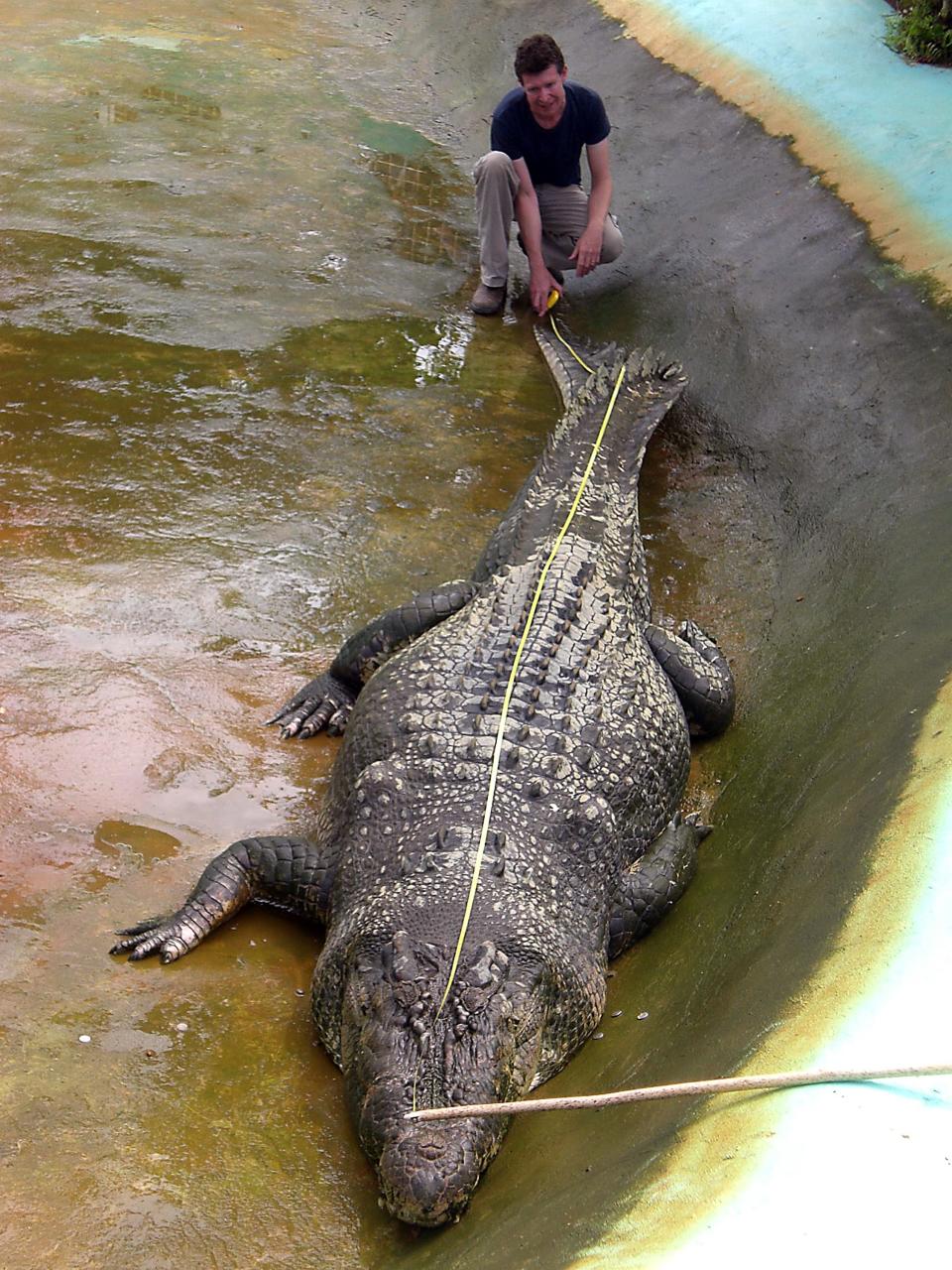
Once killed, Britton would feed some of the dogs’ remains to crocodiles, according to the BBC, per the court filings.
“I deeply regret the pain and trauma that I caused to innocent animals,” Britton said in a letter dated July 16, per NBC News.
Chief Justice Michael Grant also called Britton’s actions “grotesque,” and said the “unalloyed pleasure” he took in torturing the dogs was “sickeningly evident,” the BBC reported.
The judge confirmed that at least 39 of the dogs were intentionally killed by Britton.
Britton was caught by authorities after he uploaded a clip of him torturing at least eight dogs, which were all puppies except one, according to the BBC. Someone who saw the video passed it on to the Northern Territory Police Force in an anonymous tip. Police in April 2022 seized recording devices, animal remains, weapons and a laptop, which also contained 15 files containing child abuse material.
“[Your] depravity falls entirely outside any ordinary human conception,” Grant said about Britton during his sentencing hearing, per British service broadcaster.
Britton told the court during the sentencing hearing that he was suffering from a mental disorder that caused intense and atypical sexual interests that were harmful to others. He added that he would seek long-term treatment for his issues.
“I now acknowledge that I’ve been fighting a rare paraphilic disorder for much of my life,” he said, per NBC News. “and that shame and fear prevented me from seeking the proper help I needed.”
Before Britton’s crimes were uncovered, he sexually abused his own dogs, Ursa and Bolt, for years, according to NBC News, citing court documents.
“My own dogs are family and I have limits,” he said in a Telegram message cited in the documents. “I only badly mistreat other dogs… I have no emotional bond to them, they are toys pure and simple. And (there are) plenty more where they came from.”
Even growing up in West Yorkshire before he moved to Australia 20 years ago, Britton was harboring a “sadistic sexual interest” in animals, court documents say, per the BBC.
“I was sadistic as a child to animals, but I had repressed it. In the last few years, I let it out again, and now I can’t stop. I don’t want to. :),” he wrote in one message the BBC reported was shared in court.
This article originally appeared on USA TODAY: Adam Britton sentenced for sex crimes involving dogs who were tortured
https://www.yahoo.com/news/british-crocodile-expert-sentenced-sexually-210552339.html

 Exposing the Big Game