Why do people go vegan? For some, it’s dissent against animal abuse and cruelty. Vegans are radical. That’s why we need them.

Vegans are the dissenters in society’s war on animals.

https://www.vox.com/future-perfect/362321/factory-farming-veganism-animal-rights-movement-meat

by Jishnu Guha-Majumdar

Aug 8, 2024, 3:00 AM PDT

MarkHarris_Vox_Veganism

Mark Harris for Vox; Getty Images

Jishnu Guha-Majumdar is an assistant professor of political theory in the political science department at Butler University. His academic research considers the relationships between animal advocacy, ecological advocacy, and antiracism.

Despite decades of advocacy, vegans and veganism remain deeply unpopular, even detested. Many influential animal activists are now debating a question that would have once seemed absurd: Is it worth the movement’s precious time and resources to keep advocating for meatless diets, an apparently lost cause?

One surprising thing

The share of Americans who are vegetarian or vegan is incredibly hard to measure accurately. But one thing is clear: It hasn’t changed much in recent decades, and may have even decreased.

This piece is part of How Factory Farming Ends, a collection of stories on the past and future of the long fight against factory farming. This series is supported by Animal Charity Evaluators, which received a grant from Builders Initiative.

Although people define veganism in different ways, it fundamentally entails avoiding all animal products to the greatest extent possible, including meat, dairy, and eggs, but also non-dietary products like wool and leather. Whereas the more commonly practiced vegetarianism only rejects meat consumption, the vegan movement generally rejects the property status of animals and aims to fully divest from animal cruelty and exploitation.

Vegans are often considered too extreme, especially in a meat-obsessed country like the US — a perception that persists despite the growing popularity of vegan products. The famed late chef Anthony Bourdain once compared vegans to Hezbollah, declaring them “the enemy of everything good and decent in the human spirit.” His aversion seems representative of the public’s feelings. One 2015 study found that, in the United States, negative attitudes toward vegans rivaled those toward atheists.

These social headwinds are making veganism unpopular even among influential voices in the animal movement. Matt Ball, who co-founded the advocacy group Vegan Outreach in the 1990s but has since changed his tune on the strategic necessity of promoting animal-free diets, has argued that the “‘vegan’ brand is damaged beyond repair.” Bruce Friedrich — founder of the Good Food Institute, a nonprofit that seeks to develop alternative proteins that do not require animal slaughter — has made a moderated version of a similar claim. In a 2019 interview, he lamented that “we’ve tried to convince the world to go vegan, and it has not worked.”

The percentage of Americans who are vegan or vegetarian remains small, though it is a notoriously difficult figure to pin down. This minute figure, juxtaposed with the clearly documented increase in US per-capita meat consumption, suggests veganism seems to be failing. For Friedrich and others, this failure to affect dietary habits signals a need to shift animal advocacy’s emphasis toward larger-scale policy and technological innovations, like cell-cultivated (sometimes known as lab-grown) meat, that can reduce the number of animals slaughtered for food in the absence of dietary change. It also requires that pro-animal advocates tone down their dogmatism, abandon the quest for purity, and compromise more with large corporations.

I suspect that at least some aspects of this weariness resonate with large swathes of people who advocate for animal rights or are sympathetic to their plight: the warning against dogmatism and a call for nuance, a healthy skepticism toward individualism and consumerism, and the sense that something is better than nothing, even if that something is less radical than we’d like. Indeed, on its own, even the strictest veganism can feel like a minuscule choice against the onslaught of the factory farming death machine, which tortures and kills more than 10 billion land animals annually in the US alone. Why spend so much energy convincing people to undertake such a massive life change if it seems akin to using a bucket to bail water out of a sinking cruise liner?

While I sympathize with these sentiments, I worry that they miss the promise and radical force of veganism: It can be an act of solidarity with nonhuman animals. Veganism takes the recognition that animals are sentient beings with lives of their own and infuses it into one’s body and everyday practice. In a world that relies on extracting the literal lifeblood of nonhuman animals, that depends on externalizing the costs of “progress” onto them and distributing the benefits to privileged humans, veganism refuses to pass the buck. It is a way of “saying” to nonhumans, non-verbally and without the promise that the message will be received: The world has turned against you, depends on your flesh and bone. But we will not. We refuse.

black-and-white linocut drawing of a large crowd of people with linked arms, labeled “VEGANS,” standing in front of a cow and calf, while a man representing the meat industry stands in front of them holding a knife and money bag with blood dripping from it.

“Vegans Defend” (2016) by Sue Coe.© 2016 Sue Coe/Courtesy Galerie St. Etienne, New York

This exhortation has profound implications for the animal movement’s future direction. Animal advocates have often been mired in debate over which tactics are the best use of our time, and which ones meaningfully help animals instead of creating a “humanewashing” smokescreen. Promoting veganism need not be the movement’s only or primary strategy, but it should remain its heartbeat. After all, if we’re not committed to fighting for a world free from animal exploitation, then what exactly is the movement fighting for? Veganism as solidarity provides a core commitment and standard that can help set movement priorities.

Society enlists us into war against animals

The strategic case against veganism largely depends on the claim that the percentage of Americans who have gone vegetarian or vegan remains minute — perhaps as low as 2 percent — and has not appreciably increased in decades. But there are more optimistic ways to read the data. Communications scholar Vasile Stanescu argued in 2019 that rates of vegetarianism and veganism in the US have increased, to somewhere between 8 and 13 percent. Even if his figure proves an overestimate — no peer-reviewed work, to my knowledge, exists to settle the question — it seems unwise to throw away a pillar of animal rights when we aren’t even sure of the numbers. One must also consider the counterfactual: How high might meat consumption be if consumers faced a firehose of industry-sponsored, pro-meat messaging without a pro-vegan counterbalance?

Still, one might argue, it makes little sense to invest scarce resources on promoting veganism without evidence of a clear and measurable impact. This objection makes a lot of sense if we understand veganism as primarily a consequentialist, consumer-oriented approach, of “voting with your dollar.”

But reframing veganism as solidarity encourages advocates to think beyond quantifiable market consequences (though these effects are still relevant). Put differently, veganism matters not only because of its economic divestment from animal exploitation, but also because of its less quantifiable political effects. Going vegan builds political energy and connections with other humans invested in animal liberation and with the animals that vegans recognize as sentient and social creatures. It builds glimpses of a desired future in the present.

Perhaps most importantly, solidaristic veganism acknowledges that in today’s world, after centuries of humans’ intense exploitation of animals, it’s nearly impossible to have an ethical relationship with animals without addressing the most direct ways that most people benefit from the destruction of animal life. Animals are not simply mistreated beings. Rather, society is organized around slaughtering, torturing, and dominating animals, as a class, on a massive scale.

A brief look at the statistics evinces this claim: Globally, an additional 70 billion land animals are killed for food on top of the US’s 10 billion. Factory-farmed fish, which are harder to count, may add more than 100 billion. Habitat destruction, primarily driven by industrial animal farming, is snowballing out of control. Tens of millions, maybe hundreds of millions, of animals are held captive and experimented on in scientific labs. Even dogs and cats, perceived as the most pampered animals in America, are still legal property, living largely at the whims of whoever happens to own them (not to mention the 6 million in shelters, nearly 1 million of whom are killed annually, partly due to the pet breeding industry).

To become politically vegan is to become a conscientious objector

Another way of framing this dire state of affairs, as the social theorist Dinesh Wadiwel does, is that the world acts as if it is at war with animals. Not all humans are equally to blame for the atrocities of this war, but living in and benefitting from a society that, as a rule, marks animals for torture and death, changes the nature of one’s responsibility. For Wadiwel, veganism offers a “truce” to animals.

We can extend this war framework a step further: To become politically vegan is to become a conscientious objector.

Think about those who became conscientious objectors in the face of being drafted for the Vietnam War. Those who refused conscription could claim conscientious objector status only if participating in the war conflicted with their deeply held beliefs, and not merely because they had a self-interest in not being killed. Depriving the military of one soldier was not going to change the course of the war, but conscientious objection had other effects: It made private opposition public, it broke the facade of a uniform pro-war consensus, and it provided a rallying point for further political action. Objectors in the 1960s and ’70s became part of the largest anti-war movement in US history.

Painting of a slaughterhouse filled with stressed-looking farm animals of various species and workers preparing to slaughter them. A woman and daughter stand near the entrance as a pig runs toward them attempting to flee.

“My Mother and I Watch a Pig Escape from the Slaughterhouse” (2006) by Sue Coe.© 2006 Sue Coe/Courtesy Galerie St. Etienne, New York

Now, imagine that you were talking to a conscientious objector and said: “The data is against you. Very few people want to become conscientious objectors. You are only alienating people, and your refusal to serve is just a drop in the bucket compared to the military’s power. Perhaps you should try more moderate steps first.”

To say this would be to misunderstand the goal of conscientious objection. Anti-vegan critics have a similar misapprehension. The world “conscripts” us in its war against animals in the way it structures our choices when we buy clothes, food, and other necessities whose production depends on violence against animals. To become vegan is not only to try to prevent some animal death and exploitation, but to build political opposition to our forced participation in this war.

The false binary of purity vs. pragmatism

Veganism is sometimes strawmanned as a kind of purity politics that only benefits sanctimonious activists. It’s true that being purely cruelty-free is impossible: organic fertilizers use animal products, pesticides harm many animals, and large-scale plant farming generally kills and displaces animals (though not anywhere near as many as animal agriculture). Similarly, by analogy, becoming an anti-war conscientious objector does not wash one’s hands of all complicity; even paying taxes abets the war effort.

But framing veganism as an act of solidarity can shatter the false binary between purity and pragmatism. There are uses for the public rigor that solidarity demands that go beyond purity. It punctures the smooth surface of everyday life, putting its everyday violence in view.

Consider a scenario Friedrich presents in an older piece of writing, where a vegan dines with omnivorous companions at a restaurant with limited vegan options. For Friedrich, if “you give the server the third degree about the ingredients or about how it was cooked, you are forgetting the essence of being vegan” because you make veganism seem more difficult to others at the table.

I certainly agree that one shouldn’t give underpaid servers a hard time, but not with the scenario’s underlying respectability politics. Yes, veganism may seem more difficult, but demonstrating this difficulty highlights the gap between what the world is willing to provide and what justice demands. Perhaps your tablemates will be put off by this demonstration, but perhaps the situation provides the opportunity for a conversation that would not have occurred if you simply smoothed over the issue. Perhaps they will admire your willingness to stick to your principles even when it’s inconvenient. Perhaps they are more likely to pay attention when vegan options are available.

The fundamental point is that politics is not only about calm, rational persuasion and consensus-building. It can also be purposefully oppositional, concerned with dissensus and agonistic conflict. The great non-violence movements of the 20th century were not primarily focused on easing their opponents to their side but on raising the costs of the status quo via boycotts, sit-ins, and disruptive marches.

From this perspective, if the numbers of vegans truly are small, that is not in itself a cause for worry. Popularity is not the only goal of a movement that seeks to disrupt the public’s “common sense.”

How solidarity with animals can inform movement tactics (and it’s not just advocating for veganism)

This perspective on veganism’s politics affects the movement’s strategy in two ways. First, veganism should remain a core principle. That is not to say that it should be the only strategy: I agree with the need to experiment with different tactics and to focus beyond shifting individual people’s beliefs toward changing social and industrial infrastructures with innovations like “clean meat” and policies that limit animal mistreatment.

But solidaristic acts like veganism serve as the “political fuel” necessary for broader changes to policy and cultural norms, philosophers Alasdair Cochrane and Mara-Daria Cojocaru argue. The political will for new vegan technologies and anti-cruelty policies does not come miraculously from the ether but requires building a critical mass of people committed to a world without animal exploitation.

Solidaristic acts like veganism serve as the “political fuel” necessary for broader changes to policy and cultural norms

Second, veganism as solidarity provides a lens through which to evaluate tactics deployed by the movement, like farm animal welfare laws. For decades, animal advocates have argued fiercely over the value of incremental reforms to the factory farm system like, say, banning the most extreme forms of cage confinement. Do these strategies help us end factory farming, or do they merely give a false humane sheen to the killing machine?

Veganism as solidarity provides a rubric by which to evaluate pro-animal reforms: Does the reform in question come out of a place of solidarity with animals, one that may ultimately lead toward abolishing their status as commodities, or does it ultimately enable conditions that undermine the potential for this solidarity?

We can borrow a helpful framework from the prison abolitionist movement: the idea of non-reformist reforms. Non-reformist reforms help create the conditions for meaningfully shifting the power structure, while reformist reforms may only reify it.

For example, when major animal welfare organizations publicly congratulate (and give free advertising to) large meat producers for signing on to voluntary welfare standards, I question whether this action advances solidarity. True accountability is limited to the corporations themselves, and they get to walk away with a gold star that increases their credibility even as their fundamental business model remains the same. To extend the anti-war analogy, would it be solidarity with the victims of war if Lockheed Martin agreed to use slightly more “humane” methods of war and modern activists went out of their way to congratulate the company?

Further, when activists implore consumers to eat one type of animal rather than another — “save animals by eating more beef and less chicken” or “save the environment by eating less beef and more chickens” — they betray that obligation to solidarity. Even work like that of the famed livestock scientist Temple Grandin, who has designed livestock handling systems that reduce animals’ fear and resistance as they walk down a chute to meet a bolt gun, only helps them acquiesce in their oppression and reduces the friction in the meat industry’s slaughter pipeline.

black-and-white drawing of anguished-looking pigs being gassed before slaughter in a gas chamber. Two slaughterhouse workers in the scene slaughter and hang pigs that have already been gassed

“Gassing Hogs” (2010) by Sue Coe.© 2010 Sue Coe/Courtesy Galerie St. Etienne, New York.

I feel more sanguine about recent policy victories in which advocates have gotten numerous states, most recently, Nevada, to ban battery cages for chickens. Obviously, these bans don’t challenge the fundamental commodity status of chickens, and chickens deserve far more. But it does impose an external cost on the smooth operation of chicken farming, one that the industry would not willingly adopt for itself.

From this standpoint, I am disheartened when I see animal advocates so publicly decry veganism’s supposed failures. Partly because doing so creates a self-fulfilling prophecy — discouraging individuals from going vegan by making it seem like a lost cause from the get-go, as Stanescu notes. But more fundamentally, it inaccurately frames the present moment. It is not that “promoting veganism has failed, so it is time to move onto new strategies.” Rather: veganism opens the way for these new strategies. The acorn does not negate the value of the oak tree it came from.

Admittedly, solidarity doesn’t provide clean lines that can uncontroversially decide which reforms are or are not permissible. But it hopefully offers more useful criteria than reform for the sake of reform.

The joy of veganism

I have so far emphasized that veganism has broader, political implications beyond individual behavior change. But the way that it shapes the lives of individuals who become vegan can be extremely powerful, too. Political veganism can better attune advocates as they persuade individuals of the practice’s virtues.

Political scientists have observed that political protests change the character of those who protest, even if the protest doesn’t achieve its stated policy goal. If, for example, you attend a protest against a new oil pipeline, what was once an abstract issue on a computer screen becomes alive to you. You learn that you are not alone, and you might find sustenance in community with others who care about climate politics as well.

Related:

Veganism as solidarity can have a similar effect. Abstaining from animal products in a world that disavows animal suffering prevents the vegan from forgetting the character of this world; it puts them into constant confrontation with it every time they go to the grocery store, buy clothes, and commune with others. To rework Upton Sinclair’s famous line, it is hard to get a person to think clearly about animals when their everyday life depends on animal slaughter, degradation, and exploitation.

One objection to this individual-level view is that veganism privileges those without gastrointestinal or other disabilities and those who can financially afford these restrictions. You may have an image of a vegan eating organic vegetables and overpriced meat substitutes from Whole Foods. While I would note there is evidence suggesting that plant-based diets can cut food costs in industrialized countries and that survey results find that people with lower incomes are more likely to be vegan, framing veganism as solidarity offers an alternative way of considering this issue. Calling for solidarity with regard to any cause or campaign entails asking potential allies to undertake some sort of sacrifice, whether that be in terms of money, time, or power. Having the resources to undertake these sacrifices is by nature unequally distributed.

The call for solidarity with animals goes out equally to every person, but fulfilling that call may look different for everyone. For those who do not face substantial financial or health barriers, the demands are quite high, in my view. For others, full veganism might be an aspiration, which they fulfill in the present by lowering their animal consumption where possible. This is not an iron-clad, all-or-nothing law. Accidentally consuming animal products, or eating an “emotional-support pastry” in an otherwise vegan diet, is less important in the long scheme of things, because solidarity is a call that can be answered anew each day.

Processing Meat

A newsletter analyzing how the meat and dairy industries impact everything around us.Email (required)Sign Up

Answering this call is not about purist asceticism; it is affirmatively oriented toward building community. It builds new connections that wouldn’t have otherwise existed; it helps you see new ways of being in the world that weren’t there before. It opens you to the joy of being with nonhuman others, of refusing “species loneliness,” what botanist Robin Wall Kimmerer describes as “a deep, unnamed sadness stemming from estrangement from the rest of Creation.” You see the world as more enchanted and alive when creatures around you appear as individuals and not interchangeable automatons.

Veganism, thought of in this way, is not the province of dour, dogmatic scolds; it is a practice of joy and creativity that sustains hope for coexistence between species. As Cochrane and Cojocaru write, this sort of solidarity recognizes that “the world in which we live is not the one we must live with forever.”

It’s a vision worth fighting for.

VP Kamala Harris has long, strong record on animal issues

July 21, 2024 By Merritt Clifton

(Beth Clifton collage)

Pro-animal record as prosecutor,  candidate,  and in office

WASHINGTON D.C.––U.S. Vice President Kamala Harris,  59,  endorsed by President Joe Biden to become his successor as Democratic presidential candidate in the November 5,  2024 general election,  would become not only the first African-American female and first Asian-American candidate to head the ticket for a national political party,  but also the first presidential candidate to have endorsed,  helped to pass,  and helped to enforce strong,  specific pro-animal legislation throughout her political career.

Harris has in fact made animal advocacy a prominent theme in her campaigns.

(Beth Clifton collage)

Horseracing Integrity & Safety Act and Big Cat Public Safety Act

Two longtime Harris legislative goals,  now achieved,  were the December 2020 passage of the Horseracing Integrity & Safety Act and the December 2022 passage of the Big Cat Public Safety Act.

The Horseracing Integrity & Safety Act prohibits race day horse drugging and authorized the creation of a new national Horseracing Integrity & Safety Authority.

Enforcement was recently delayed in Texas,  Louisiana,  and Mississippi by the Fifth U.S. Circuit Court of Appeals,  contradicting a 2023 ruling by the Sixth U.S. Circuit Court of Appeals.

(See Trump-appointed judges stall Horse Racing Safety & Integrity Act rules.)

The Big Cat Public Safety Act restricts possession of large and exotic cats to zoos,  accredited sanctuaries,  universities,  and government agencies.

(See Joe Biden signs the Big Cat Public Safety Act.)

Kamala Harris.  (Beth Clifton collage)

Farmed animal welfare

Harris throughout her career has also advocated for farmed animal welfare legislation and opposed measures such as the EATS Act,  now before Congress,  which would prevent states from excluding the sale of animal products and byproducts not produced in accordance with those states’ own animal welfare standards.

Recounted Harris as a then-U.S. Senator from California,  in an April 13, 2018 letter to a constituent shared with ANIMALS 24-7 by Eric Mills of Action for Animals,  “Animals deserve to be treated with our compassion and respect.  As Attorney General of California,”  prior to running for the U.S. Senate,  “I fought to promote animal welfare and enforce protection laws.

“That included defending laws that restrict forced over-feeding of ducks and geese,  and laws that prohibit harvesting sharks for their fins.  I also defended laws that require stores in California to only sell eggs from free-range hens or hens kept in cages that allow full range of movement.

Kamala Harris & friend.
(Beth Clifton collage)

“I recognize there is still much work to do”

“I recognize there is still much work to do regarding federal protection for pets,  farm animals,  wildlife,  and other creatures,”  Harris finished.

Harris during her 2016 U.S. Senate campaign issued a platform pledge that she would “Fight for Nationwide Protections for Animal Rights.”

“As San Francisco district attorney,”  Harris reminded voters,  she “successfully sponsored legislation that now allows judges to include a family’s pets in protective orders in domestic violence cases.”

Harris pledged then to “protect the rights of animals by supporting humane legislation, opposing government programs that use taxpayer funds to harm animals,  supporting initiatives to protect animals and for adequate enforcement of animal welfare laws,  and opposing inhumane laws or those which weaken current protections.”

(Beth & Merritt Clifton collage)

Service dogs for veterans & puppy mills

Harris also said she would “push for federal funding for programs that enable veterans with post-traumatic stress disorder to train [shelter] dogs as a form of therapy and provide trained companion dogs to disabled veterans.”

This was accomplished.

Harris further said she would “support strong enforcement to crack down on puppy mills and ensure humane care for dogs in commercial breeding operations,”  and “support enforcement of the Animal Welfare Act,  providing funding for USDA inspectors overseeing conditions at puppy mills, research laboratories,  roadside zoos,  circuses,  and other regulated facilities.”

Sonny Perdue.

Trump appointee undid progress

Progress in this direction was severely undermined by former agriculture secretary Sonny Purdue,  appointed by then-U.S. President Donald Trump and in office throughout the Trump presidency,  2017-2021.

Much of the damage,  but not all of it,  has been repaired during the Biden/Harris administration,  despite opposition from the Republican majority in the House of Representatives.

Harris as a U.S. Senator specifically endorsed the Safeguard American Food Exports (SAFE) Act,  promoted by the Humane Society of the U.S. but not yet enacted into law,  “to ban exports of horses for slaughter in other countries,  and prevent horse slaughter plants from re-opening in the U.S.”

(Kamala Harris/Twitter photo)

Wild horses,  animal testing,  wildlife

Harris also said she would “push for more humane treatment and population control of wild horses by the Bureau of Land Management,”  promised to “fight for greater funding for the development and approval of alternative chemical testing methods,”  and pledged to “support continued funding for wildlife conservation,  habitat protection programs and efforts to combat poaching.”

Harris further pledged to “oppose any efforts to weaken the Endangered Species Act,”  as she consistently has.

Kamala Harris.  (Beth Clifton collage)

Concerned about climate change, but not veg

Harris continued that she “supports legislation to prohibit monkeys,  chimpanzees,  and other primates from being shipped across state lines for the pet trade,”  another goal not yet achieved.

Harris finally mentioned that “We shouldn’t forget that entire species are at risk for extinction because of climate change.”

While Harris is not a vegetarian,  she has mentioned in campaign appearances that she “would support changing the U.S. dietary guidelines to reduce the recommended intake of red meat specifically,”  because of the contribution of meat production to global warming.

(Beth Clifton collage)

Elijah McClain

Harris took early notice of the August 24,  2019 police killing by ketamine overdose of mild-mannered African-American violinist,  vegetarian,  and animal shelter volunteer Elijah McClain,  in Aurora,  Colorado,  as “absolutely crushing.”

Two paramedics and one police officer were subsequently convicted of negligent homicide for their role in McClain’s death.

Signing of PACT Act:  HSUS president Kitty Block at left, Donald Trump at right, with Humane Society Legislative Fund president Sara Amundson directly behind Trump.
(Beth Clifton collage)

Humane Society Legislative Fund endorsement

Humane Society of the U.S. president Kitty Block and Humane Society Legislative Fund president Sara Amundson endorsed the Biden/Harris ticket in 2020,  they recalled in a March 2022 blog posting, “based on their individual records and the poor performance of the incumbent [Donald Trump] administration in critical areas of animal welfare concern.

Wrote Amundson during the 2020 election campaign,  “Senator Kamala Harris achieved a score of 100% every year on the Humane Scorecard,”  a project of the Humane Society Legislative Fund,  since being elected to the U.S. Senate.

(Beth Clifton collage)

PACT Act

As a U.S. Senator,  Amundson recounted,  Harris cosponsored “legislation to crack down on horse soring abuses,  prohibit the trade of shark fins,  reduce wildlife trafficking,  and address widespread doping of racehorses.  She also supported the PACT Act to create a felony penalty for malicious animal cruelty [committed on federal property],  which [in November 2019] was signed into law by President Trump,”  and was promptly claimed by Trump as his landmark accomplishment for animal welfare.

The PACT Act,  however,  exempts anything done in connection with legal hunting,  fishing,  or trapping;  “customary and normal” agricultural and veterinary practices;  slaughtering animals for food;  pest control;  medical and scientific research;  euthanasia;  or actions “necessary to protect the life or property of a person.”

Most vertebrate species are otherwise covered,  including birds,  reptiles,  and amphibians,  but fish and invertebrates are not covered at all.

            (See HSUS, Donald Trump, & the PACT Act: The Art of the Deal.)

Who needs foie gras when there is peanut butter?  (Beth Clifton collage)

Foie gras & fighting dogs

Amundson also praised Harris “for introducing the Help Extract Animals from Red Tape (HEART) Act,”  to “expedite the disposition of abused animals who have been rescued and seized from persons involved in unlawful animal fighting or gambling,”  endorsed by both the Humane Society of the U.S. and the American SPCA.

This bill might have accelerated either adoptions or euthanasias of fighting dogs and gamecocks,  but failed in committee in both the 115th and 116th Congresses.

“As California’s attorney general (2011-2017),  Kamala Harris defended a series of pioneering animal protection laws approved in the state,”  Amundson added.

Harris continuously defended California’s ban on foie gras sales after producers launched a series of challenges in the courts.

Selling foie gras,  an oily spread made from the diseased livers of force-fed ducks and geese,  was banned in California in 2004,  but Los Angeles U.S. District Judge Stephen V. Wilson on July 14,  2020 ruled that Californians may continue to purchase it from out-of-state suppliers.

(See Amazon et al may sell foie gras to Californians despite state ban, rules judge.)

(Beth Clifton photo)

Defended California battery cage laws

Wayne Pacelle,  Humane Society of the U.S. president 2004-2018,  now heading Animal Wellness Action and the Center for A Humane Economy,  also praised Kamala Harris for her work as California attorney general.

In particular,  Pacelle singled out Harris in January 2015 for having “defended a series of pioneering animal protection laws,”  winning “four separate challenges to Proposition 2 and AB 1437.”

Proposition 2,  approved by California voters in 2008,  centered on purportedly prohibiting egg-laying hens in so-called battery cages.  AB 1437 was passed by the California legislature to clarify that eggs from hens kept in battery cages elsewhere were also barred from sale in California.

Aiden Harris confronts Kamala Harris.

Confronted by vegan activist

Before co-sponsoring federal legislation to protect sharks,  which has yet to win passage,  Kamala Harris also “defeated a challenge to California’s ban on the possession and sale of shark fins,”  Pacelle recalled.

Direct Action Everywhere cofounder Wayne Hsiung,  now blogging as Simple Heart,  issued a public apology to Harris on June 2,  2019,  a day after activist Aiden Cook,  24,  identifying himself with Direct Action Everywhere,  jumped onstage during a Harris campaign appearance,  took the microphone from Harris,  and briefly spoke before security personnel hauled him away.

Cook had in 2018 comparably disrupted a campaign appearance by then-presidential candidate Bernard Sanders,  senior U.S. Senator from Vermont.

(Beth Clifton collage)

Harris & the Diane Whipple mauling death

Long before doing any of the things that Block,  Amundson,  and Pacelle remembered Kamala Harris for doing,  she led the San Francisco legal response to fatal and disfiguring dog attacks,  including pit bull proliferation.

Harris was handling child abuse and neglect cases for the San Francisco Family & Children’s Services Division when on January 26,  2001 two Presa Canarios belonging to San Francisco attorneys Marjorie Knoller and Robert Noel fatally mauled St. Mary’s College lacrosse coach Diane Whipple,  33,  at the door to her apartment.

Marjorie Knoller & Robert Noel.

Knoller & Noel convicted

Harris was not involved in the initial prosecution of Knoller and Noel,  who were tried in Los Angeles,  rather than San Francisco,  in order to find an impartial jury.

Knoller on March 21,  2002 was convicted of second degree murder.  Both Knoller and Noel were also convicted of manslaughter and keeping a dangerous animal.

San Francisco Superior Court judge James Warren prevented prosecutors Terrence Hallinan, James Hammer,  and Kimberly Guilfoyle (now fiancé of Donald Trump Jr.) from presenting evidence that Knoller and Noel had sexual relations with the Presa Canarios.

This,  the prosecution contended,  might have contributed to the fatal attack.

On appeal,  Warren in 2004 threw out the second degree murder conviction of Knoller,  and allowed her to be released on bail,  as she had completed her manslaughter sentence.

Robert Noel,  meanwhile,  had been released from prison in 2003.  He died in 2018.

Robert Noel & Marjorie Knoller with Presa Canario.  (Beth Clifton collage)

Harris sent Knoller back to prison & kept her there

Running against Hallinan in 2003,  Harris won 56% of the vote.

Harris took over the Knoller prosecution.

“We believe the defendant should be sentenced as originally mandated by the jury,”  Harris said.

The California First District Court of Appeal in May 2005 reinstated the second degree murder conviction.  Further  litigation of the conviction and sentence continued until in February 2016 the conviction was affirmed by U.S. Ninth Circuit Court of Appeals.

Harris continued oversight of the case until she was elected California state attorney general in November 2010.  Knoller,  denied parole in February 2023,  remains in prison.

(See Diane Whipple died for the sins of dangerous dog advocacy.)

Nicholas Faibish.

The Nicholas Faibish case

Harris handled her second dog attack fatality case after Nicholas Faibish,  12,  was killed on June 3,  2005 by two pit bulls kept by his mother,  Maureen Faibish, 39.

Maureen Faibish was charged with felony child endangerment resulting in death,  Harris told media,  because she knew it was dangerous to leave Nicholas alone with the pit bulls.

On July 31,  2006,  however,  “A San Francisco jury deadlocked after deliberating for more than two days,”  reported San Francisco Chronicle staff writer Jaxon Van Derbeken.

“Ten of the 12 panelists favored acquittal on the charge of felony child endangerment,”  Van Derbeken wrote.  “A 7-5 split favored conviction on a misdemeanor charge.

Nicholas Faibish,  bitten earlier in the day by Maureen Faibish’s 70-pound male pit bull,  had been left alone in a basement with food and video games,  but no working toilet.

The male pit bull was left upstairs with a female pit bull who was in heat.

Nicholas Faibish was found dead in an upstairs bedroom.

Harris opted against retrying Maureen Faibish,  she told media,  because of the risk of again having a hung jury.

Diane Whipple in front of the San Francisco apartment house where she died.
(Beth Clifton collage)

Pit bull sterilization ordinance

With the Faibish case pending,  the San Francisco city council adopted an ordinance promoted by then-San Francisco mayor Gavin Newsom,  now governor of California,  which has required since January 1,  2006 that pit bulls must be sterilized if brought within the San Francisco city limits.

Enforced by Harris,  the ordinance reduced San Francisco shelter intakes of pit bulls by two-thirds in two years,  and brought San Francisco the lowest volume of pit bull killing in shelters of any major U.S. city.

(Beth Clifton collage)

Case against the ASPCA

A lesser known case arising during Harris’ tenure as California Attorney General arose when the State Humane Association of California,  alleging “unfair and deceptive fundraising practices which harm local humane societies and SPCAs,”  in May 2011 filed a consumer protection complaint against the American SPCA.

(See Fundraising turf war brings California groups’ complaint against the ASPCA.)

The State Humane Association of California complaint was dropped after the Better Business Bureau National Advertising Division in April 2013 issued an opinion favoring the ASPCA.

The National Advertising Division,  however,  “recommended that the ASPCA modify its website to more clearly explain that the organization is not directly affiliated with local SPCAS or local humane associations,”  a National Advertising Division media release said.

The State Humane Association of California,  founded in 1909,  merged with the California Animal Control Directors Association in 2018 to become the California Animal Welfare Association.

(Beth Clifton collage)

Alleged misuse of police dogs

The last animal-related case coming before Harris as California Attorney General concerned allegations of frequent civil rights violations and misuse of force,  including misuse of police dogs,  by the Bakersfield Police Department and Kern County Sheriff’s Department––the two largest law enforcement agencies in Kern county.

Harris ordered a state investigation,  but had already been elected to the U.S. Senate by the time the investigation concluded.

Beth & Merritt Clifton with friends.

As gray wolves divide conservationists and ranchers, a mediator tries to tame all sides

By Cara Tabachnick

August 25, 2024 / 7:00 AM EDT / CBS News

When Francine Madden heard about a Wyoming man who killed a gray wolf after injuring it with his snowmobile and showing it off at his local bar, she was disturbed, but not very surprised.  

She’s seen a lot during her almost three decades working as a mediator for wildlife conflict. She’s resolved disputes over gorillas in Uganda and tigers in Bhutan, but for 50-odd years, the management of gray wolves has been an intractable American problem.

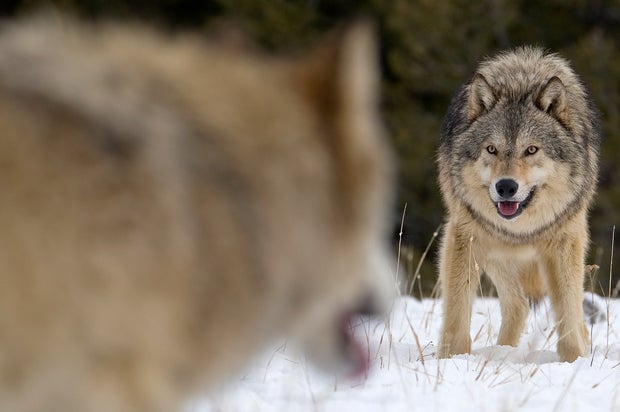
Gray wolves
An alpha male gray wolf (Canis lupus) confronts another wolf in Montana.Dennis Fast / VWPics/Universal Images Group via Getty Images

Since 1973, the gray wolf has been on and off the federal government’s endangered species list. When the wolves are on the list, advocates say the protections help wolves’ place in the natural environment and allow them to roam the great American West as they did for hundreds of years — not be treated, as some say, “like vermin.” On the other side, some ranchers then say there are too many wolves and they have to bear the economic — and emotional — costs of lost livestock. 

“I watch my animals die and get murdered,” Kathy McKay, owner of the 1,600-acre K-Diamond-K ranch in Washington state, told CBS News. She says she can’t sleep at night in fear for the lives of her animals, and she’s lost about 40 to wolves.

When the wolves are off the endangered species list, as they are now in certain states in the lower 48, advocates say wolves are killed indiscriminately. Attorney and advocate Collette Adkins, carnivore conservation director at the Center for Biological Diversity, says wolf carcasses are “piling up” and there is a “cowboy mentality” around a species often not seen as worthy. 

wolf-damage-1.jpg
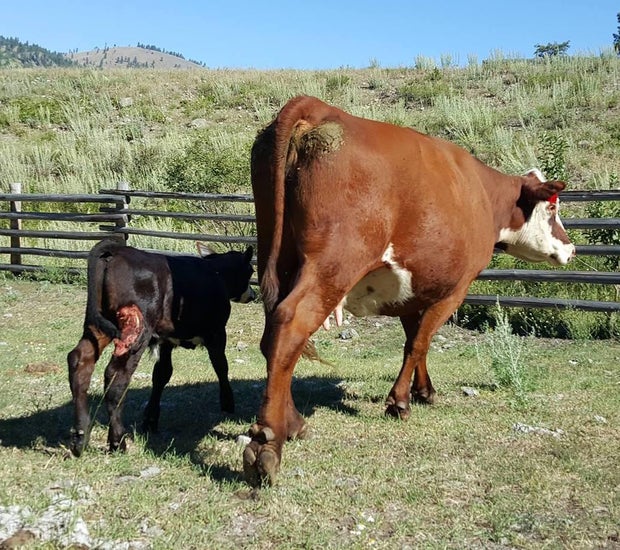
A cow and her calf on K-Diamond-K Guest Ranch in Washington state. Their owner says the animals were mauled by gray wolves.K-Diamond-K Guest Ranch

Enter Madden. Hired as a mediator by the federal government in December, this is her second time wading into the morass, albeit on a much larger scale. She facilitated Washington state’s 18-person working group on the gray wolves in 2015, helping to come to some policy decisions around population management. 

Almost a decade later, she and her firm Constructive Conflict are back, this time at the national level. But in some ways, the sides have become more entrenched. Madden says she’s speaking to Americans who “feel their way of life, or what they care about, is under very real threat.” Yet she remains confident she’ll have all sides at the table starting in 2025. 

Sides drawn along partisan lines

Thousands of gray wolves roamed America’s wilderness for centuries until hunters, ranchers and others nearly decimated the species. In 1973, the federal government listed them as endangered in the lower 48 states.  Fewer than 1,000 wolves roamed in the U.S. at that time, according to the International Wolf Center. 

Protected from hunting, gray wolves began to proliferate, and some people grew concerned they were killing livestock and threatening tribal communities and lands. Soon the pushback began.

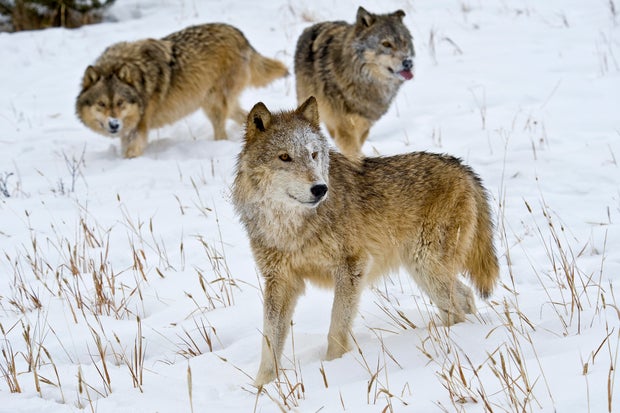
Gray wolves
Three gray wolves in Montana.Dennis Fast / VWPics/Universal Images Group via Getty Images

Animals were killed, businesses were shut, and the sides — often drawn along partisan lines — dug in, each convinced they knew the right approach to managing gray wolves. For many, “wolves became a symbol of government overreach,” said Adkins. Recent action sowed even more division; as the population rebounded, the gray wolf was taken off the federal government’s endangered species list in 2020 and the management was shifted to the states. 

Wolves began to die. One example: a third of Wisconsin’s gray wolf population was killed by hunters and poachers when protections were removed, researchers at the University of Wisconsin found in 2021.

John Vucetich, a professor at Michigan Technological University, along with more than 100 other scientists, wrote to the Biden administration to reinstate protections. Lawsuits began, and on Feb. 10, 2022, gray wolves in the lower 48 states — with the exception of the Northern Rocky Mountain population — were added back to the list by a court order.  

The news devastated McKay, who was born on the ranch her parents bought in 1961. 

“I don’t know how people 300 miles away have so much control over our livelihood and the survival of our livestock,” said McKay. “Why do we even have to ask?” 

420181788-10160954809684061-6647670479676610031-n-1.jpg
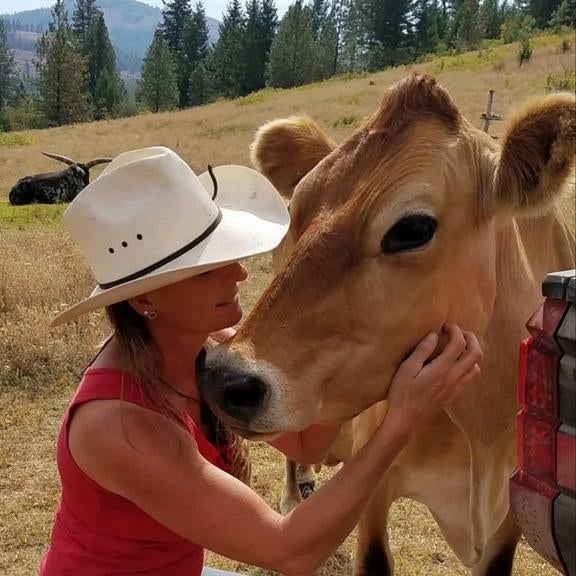
Ranch owner Kathy McKay in Washington state with a cow on her land.K-Diamond-K Guest Ranch

Differing viewpoints, ongoing divisions

Working group members in Washington state couldn’t move any policy forward in the years before Madden arrived, she said, and they “couldn’t speak civilly or constructively to each other.” 

“The costs of the conflict over wolves has been staggering,” she said, adding that no agency has truly been able to count the damage the economic costs — or societal costs — of the conflict.

We weren’t that comfortable in the same room, with such differing viewpoints. Ranchers were carrying all of the burden, and there were environmentalists we felt didn’t have skin in the game,” said Washington rancher Molly Linville, a working group member whose husband’s family has worked 6,000 acres of land for more than 100 years.

In the year after Madden started mediating the local conflict, “they were able to come up with a decision they all agreed upon,” she said. At the end of a three-year, $1.2 million state contract, she said, the working group hammered out a series of constructive policies to manage wolves in their state. 

Madden brings the same optimism to the national dialogue. 

She’s close to the end of the first year of a three-year, $3 million contract. Her group contracted three companies to work on this project; one, a film company, will document the conversations around gray wolves and share the film with the public. Her group has already started selecting the roughly 24 participants who will have ongoing conversations on how to come together around gray wolves.

She traveled to Montana in June to meet with livestock producers and reservations and visit tribal nations. For the past year, she met with people from Wisconsin, Montana, California, Idaho, New Hampshire, North Carolina, Colorado, Maryland, Pennsylvania and Indiana. Madden acknowledges that “skepticism” abounds when she tells people her group’s approach to the conflict, but says many are open to talking as they feel that the “current vicious cycle of conflict in this country is harming people and wolves.” 

She still believes in the power of Americans to listen to each other. 

“There is a genuine hope that at a national scale, in this deeply divided society, we can come together for this conversation to take a step in the right direction for the long-term viability of communities, cultures and wildlife conservation,” said Madden.