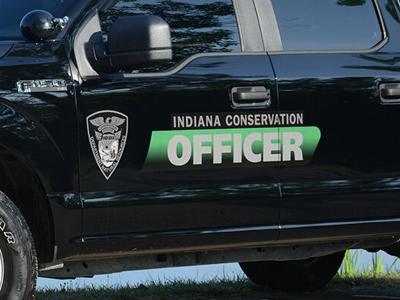
TERRE HAUTE, Ind. (WTHI) – We have more information about a Terre Haute death investigation led by the Department of Natural Resources.
We first told you Tueday that conservation officers said they were called to the 7500 block of East Devonald Avenue for an unresponsive man. That man was identified as Mike Pastorious, 51. Officials said he was later pronounced dead.
Now, the DNR says Pastorious fell from an elevated hunting stand, about 15 feet in the air.
After an autopsy, his cause of death was determined to be blunt force trauma, along with contributory medical issues. His exact cause of death is still pending toxicology results.
The Forest Service contends its cattle grazing expansion has a minimal impact on the area’s grizzly bear population, but a conservation group disagrees.
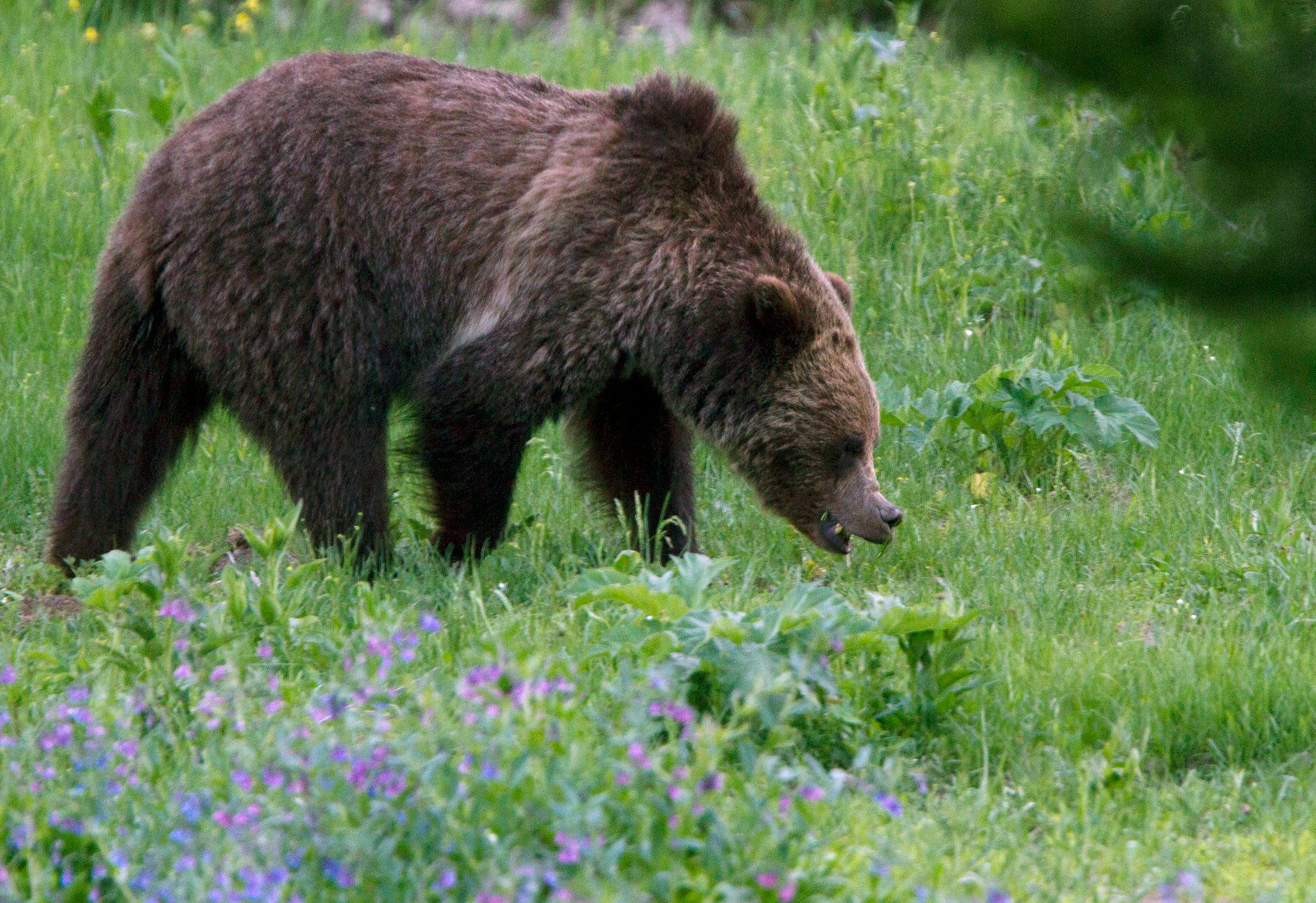
FILE – In this Wednesday, July 6, 2011, file photo, a grizzly bear roams near Beaver Lake in Yellowstone National Park. The U.S. Interior Department announced Thursday, June 22, 2017, that the grizzly population in the Yellowstone vicinity has recovered and federal protections will be lifted, which will allow Montana, Wyoming and Idaho to hold limited bear hunts outside park boundaries. (AP Photo/Jim Urquhart, File)
(CN) — The question of whether the expansion of cattle grazing on public lands near Yellowstone National Park will endanger grizzly bears took center stage in Montana federal court Tuesday.
The case centers on the Forest Service’s authorization and expansion of cattle grazing on public land to the north of Yellowstone National Park. The nonprofit conservation group Western Watersheds Project accuses the Forest Service of foregoing the necessary analysis required under federal environmental law.
“This is a special place and rugged landscape that remains largely wild,” Matthew Bishop, attorney for the group, said during an oral argument before U.S. Magistrate Judge Kathleen DeSoto on Tuesday morning. “It’s also an area very important for grizzly bear conservation.”
At issue are six allotments of land in the Custer-Gallatin National Forest’s Absaroka Mountains. Three of the allotments have been used for cattle grazing for over 100 years, but the decision authorizes additional acreage and a prolonged season. The other three are vacant currently, but the agency may permit future grazing.
In 2021, the Forest Service issued an environmental assessment as required under the National Environmental Protection Act, authorizing the expansion of the grazing allotments.
“At the time that decision was made there was and remains a significant escalation in human-caused grizzly mortality in the Greater Yellowstone, including from livestock grazing,” Bishop said.
The Forest Service pointed out that successful recovery efforts have increased the grizzly bear population.
“This increase in grizzly bear population and disbursement has caused conflict with livestock and humans to increase as well,” Krystal-Rose Perez, attorney for the federal defendants, said.
The Forest Service considered the increased risks of potential conflicts and concluded there wouldn’t be a significant impact when it issued the environmental assessment, Perez said.
Western Watersheds argued that the Forest Service neglected to take a “hard look” at the effects to grizzly bears and relied on an outdated standard ignoring the current conditions and cumulative effects of the decision.
The Forest Service argued the impacts were considered and the environmental assessment is intended to be brief to be understandable to the public, drawing questioning from the judge.
“How concise is too concise?” DeSoto asked, noting that she understands the intent of the document is to summarize agency decisions. “There’s a point at which an EA becomes so concise as to be devoid of any information, and when I read the cumulative effects section here, I’m concerned about that.”
The conservation group argued that ongoing activities in the area and other issues, like the disruption of bear connectivity, are absent from the document.
The Forest Service pushed back on that argument.
“While this is the first time they are doing NEPA analysis, the Forest Service has complied with substantive environmental laws for decades now,” Perez said.
Further, Perez argued, vacating the environmental assessment would mean the conservation measures outlined in the plan would also be vacated, such as invasive grass control and minimizing damage to streams.
“We certainly wouldn’t want to vacate any positive repairing restoration efforts,” Bishop said.
DeSoto asked the conservation group how the court should reckon with navigating a possible vacatur.
“What scalpel can I use, under your theory, to allow some of the benefits, including the invasive grass issues and things like that, but not allow the change?” DeSoto asked.
Bishop told the court the conservation group would request a partial vacatur limited to cattle grazing.
“We certainly feel like the significance of the errors, in terms of overlooking this potential effect, far outweighs any disruptive consequences,” Bishop said.
Maine’s traditional fall hunting seasons are in full swing, but hunters are being asked to avoid eating their game in parts of the state because of the possibility of harmful chemicals in animal meat
PORTLAND, Maine (AP) — Maine’s traditional fall hunting seasons are in full swing, but hunters are being asked to avoid eating their game in parts of the state because of the possibility of harmful chemicals in animal meat.
Hunters from around the Northeast trek each autumn to Maine, where deer and wild turkeys are two of the most popular game animals. The Maine Department of Inland Fisheries and Wildlife said it has issued a “do not eat wildlife consumption advisory” in several communities in the central part of the state.
The department said in a statement that it sampled wildlife in the area and found they had levels of PFAS in their muscle tissue that warranted the advisory. PFAS, or per- and polyfluoroalkyl substances, are chemicals that persist in the environment and are linked to human health problems including cancer and low birth weight.
“The advisory areas encompass areas that have been contaminated by high levels of PFAS through the spreading of municipal and/or industrial sludge that contained PFAS. Deer and turkey feeding in these contaminated areas have ingested these chemicals and now have PFAS in their meat and organs,” the department said Thursday.
The advisory covers portions of Unity, Unity Township, Albion and Freedom, in addition to existing advisory areas in Fairfield and parts of Skowhegan, the department said. The department said it based the advisory on the testing of 54 deer and 55 turkeys for the presence of PFAS. The advisory arrived not long before the state’s popular “resident only day” for deer hunters on Nov. 2.
It’s unknown how long the advisories will stay in place. The department said New Hampshire, Michigan and Wisconsin have also issued consumption advisories regarding PFAS and deer.
Maine was one of the first states to detect PFAS in deer. The presence of the “forever chemicals” in wildlife and fish has been increasing as a focus for public health regulators in recent years.
PFAS substances have long been used in household products such as non-stick cookware and food packaging. The chemicals are also used in firefighting foams and appear in some fertilizers. Federal authorities have also taken actions to try to limit PFAS pollution amid concerns about the substances appearing in food, drinking water systems and private wells.
Mason County firefighters were called to the scene, but asked for help from the sheriff’s office in getting to the victim below. But because of the steep landscape, neither deputies nor firefighters were able to safely reach the victim.
Switching to another tactic, an Aberdeen Police officer arrived with a drone and flew it to the victim’s location. From the video, it was determined that the woman was dead, and was believed to have died upon impact with the ground.
Though firefighters and deputies wanted to recover the victim’s body as soon as possible, the steep terrain and bad weather kept them from reaching her that night. They asked for the help of the Mason County Sheriff’s Office Special Operations Rescue Team (SORT), but by the time the team climbed to the location, the rising river had swept the victim’s body downstream.
As of Sunday, the Thurston County Sheriff’s SORT — specifically trained in swift water rescue — is working with Mason County SORT to find and recover the victim.
The victim was identified as 24-year-old Haley Benjamin of Elma.
“Our condolences go out to her family and friends,” the Grays Harbor Sheriff’s Office said in a Facebook post. “The Grays Harbor County Sheriff’s Office appreciates all the multi-jurisdictional support we have received during this tragic event. Operations are ongoing.”
Default Mono Sans Mono Serif Sans Serif Comic Fancy Small CapsDefault X-Small Small Medium Large X-Large XX-LargeDefault Outline Dark Outline Light Outline Dark Bold Outline Light Bold Shadow Dark Shadow Light Shadow Dark Bold Shadow Light BoldDefault Black Silver Gray White Maroon Red Purple Fuchsia Green Lime Olive Yellow Navy Blue Teal Aqua OrangeDefault 100% 75% 50% 25% 0%Default Black Silver Gray White Maroon Red Purple Fuchsia Green Lime Olive Yellow Navy Blue Teal Aqua OrangeDefault 100% 75% 50% 25% 0%After a Berkeley Co. man’s hunting dog was shot this month, he wants the public to be aware of what protections these animals face in South Carolina.
BERKELEY COUNTY, S.C. (WCSC) – After a Berkeley Co. man’s hunting dog was shot this month, he wants the public to be aware of what protections — or lack thereof — these animals face in South Carolina.
Hunter KJ Rhode says he was out hunting with his dogs Wednesday within the Francis Marion National Forest when his dog Highball chased a buck and crossed onto private property. He says that’s when Michael Trent Williams shot him.
Williams has been charged with one count of shooting and killing a hunting dog and two counts of removing dog collars, according to the South Carolina Department of Natural Resources. He has since been released from jail on bond.
Michael Trent Williams is charged with one count of shooting and killing a hunting dog and two counts of removing dog collars, the South Carolina Department of Natural Resources said.(Hill-Finklea Detention Center)
“If he would’ve let my dog go 50 more yards, I would’ve had my hands on him,” Rhode said.
But Rhode isn’t the only person affected. SCDNR says they’ve handed out 48 charges under the statute for dog hunting since Sept. 1, 2023. Four of them were for specifically killing or harming a hunting dog.
A person who does this could face up to a $500 fine or up to 30 days in jail. However, attorney Stephan Futeral says there’s a minimum.
“It’s possible to get charged with it and suffer no penalty,” Futeral said.
He says the results are discretionary.
“You take the same case and put it in front of a different magistrate, well, you may get a completely different outcome,” Futeral said.
For example, Rhode says his friend lost his dog in an extremely similar incident in Sumter County last year. He says the person convicted was only fined $125.
“I feel like it should be the same for any dog, you know?” Rhode said. “No matter if it’s a house dog, a hunting dog, any of it I feel like should be straight up, across the board.”
Futeral says the only way to avoid this from being subjective is for South Carolina to sign a stricter law to make the harsh results mandatory.
“For magistrates to take sort of a hard stance, if you will, and be a little more uniform in their decision-making,” Futeral said.
Rhode says he just wants justice for Highball.
Williams’ court date is set for Dec. 2. For the charges for removing the electronic dog collars, he could also face up to a $500 fine or 10 days in jail for a first offense or up to a $1,000 fine or 30 days in jail for a second.
“They are not just hunting dogs,” Rhode said. “I mean, we care for these dogs every day.”
SCDNR says if anyone suspects hunting laws are being violated to contact them through their 24/7 Operation Game Thief Hotline at 1-800-922-5431 or submit an anonymous tip by texting 847411. Use the keyword SCDNR along with the tip information.




:quality(70)/cloudfront-us-east-1.images.arcpublishing.com/cmg/4CYTCKZOKBD7PFPU7TZVGYQASI.jpg)

 Exposing the Big Game