Bird flu detected in 4 mammal species in Texas Panhandle
Reply


It may take 100 years for the southern elephant seal colony of Península Valdés in Argentine Patagonia to look like it did in 2022. A study published in Marine Mammal Science projected population trajectories after the 2023 epidemic of the High Pathogenicity Avian Influenza H5N1 virus, which killed almost all newborn pups and an unknown number of adults.
Had the episode killed only pups, the future population could recover to 2022 levels (18,000 adult females) as soon as 2029, and as late as 2051. This is because natural mortality is always high at the early stages of life for the species. But if the disease had mainly impacted a significant part of the reproductive female population, the expected year of recovery would be 2091.
There are even worse possible scenarios, such as when female mortality is combined with lost reproductive opportunities due to adult male mortality, or when the epidemic repeats and kills seals that are susceptible. In the worst cases, the population would not look like that of 2022 until the mid 22nd century.
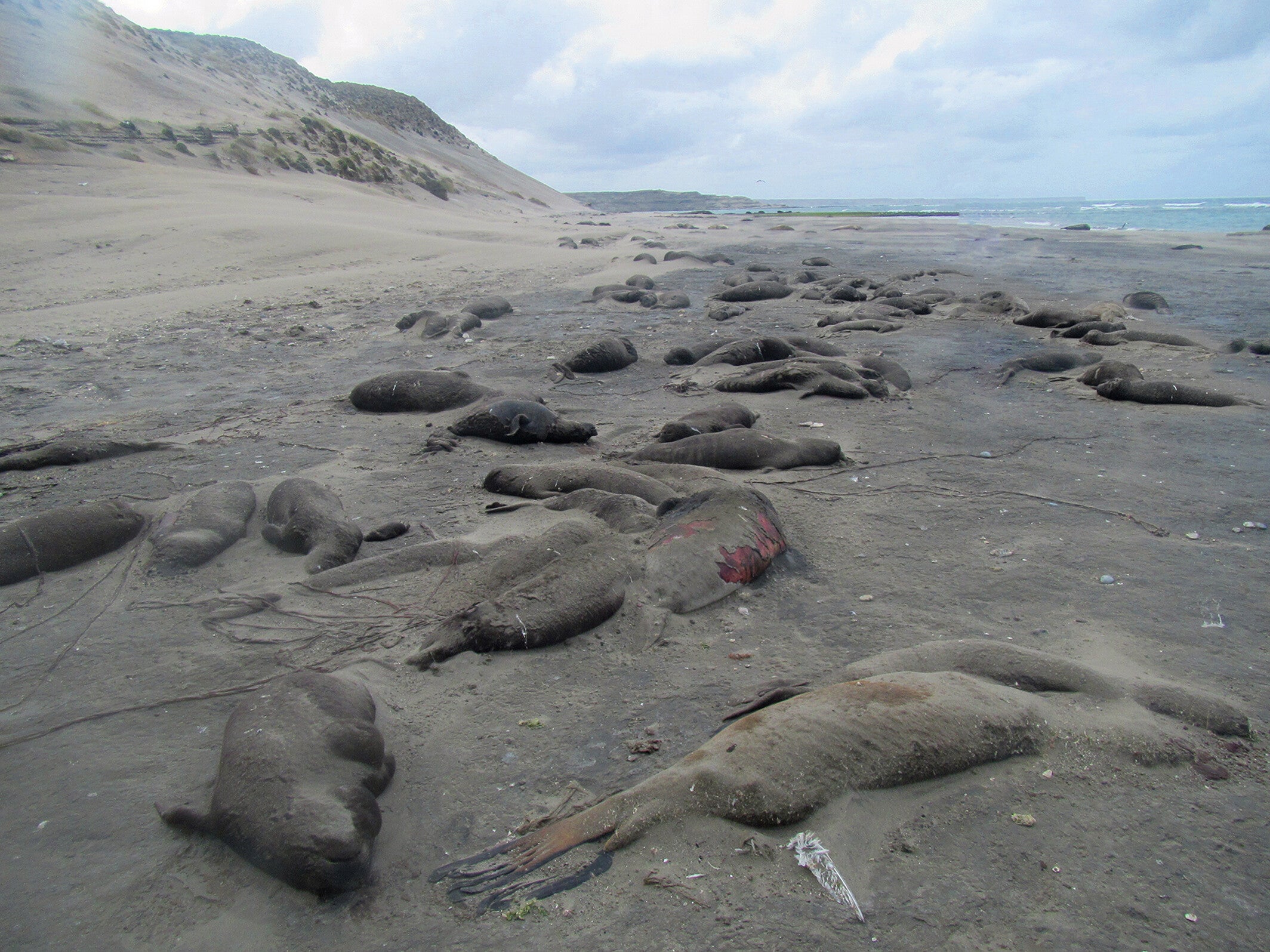
The first real-world test of the hypothetical scenarios occurred during the 2024 breeding season. Counts yielded support to scenarios of high adult mortality, with 67% fewer reproductive females at beaches that had typically been the most densely populated of the entire colony (6,938 females in 2022 vs. 2,256 in 2024). Differences could be attributed to mortality, a delay in the arrival of animals, animals that skipped a season, or a redistribution and colonization of new places. Yet, data for the molting season strongly suggest that adult mortality explains the results.
So far, evidence suggests that the viral episode significantly impacted adult individuals, reversing the conservation status of a population previously having no significant threats to stable growth. It demonstrates how in just a few weeks, the future of the population mutated from no conservation concern to quite vulnerable and uncertain.
The risk of infectious diseases impacting natural populations could increase with the worsening of climate change.
“Avian influenza has starkly demonstrated the devastating impact that infectious diseases can have on wildlife populations,” said study co-author Marcela Uhart, director of UC Davis’ Latin America program at the Karen C. Drayer Wildlife Health Center. “These effects are likely to intensify under current and projected climate change conditions. It is imperative that we significantly strengthen our upstream prevention efforts to mitigate future risks.”
Claudio Campagna, WCS Argentina senior advisor and also co-author of the study, pointed out that “only resilient populations with healthy numbers and ample distribution may survive these threats and remain safe from most of the many causes of mortality associated with human activities, such as high-impact fisheries, large-scale agriculture and mining, and pollution. Yet, the more global warming and ocean acidification are out of control, the worse for biodiversity in general, making epidemics a path toward potential extinctions.”
These scenarios are supported by decades of demographic and animal health data gathered by researchers from the Wildlife Conservation Society Argentina (WCS Argentina), the National Research Council of Argentina (CONICET) and UC Davis, supported by the Liz Claiborne and Art Ortenberg Foundation, a key donor for monitoring coastal-marine species in Patagonia.
“With decades of growth, the southern elephant seal of Península Valdes was a healthy population and a protagonist of amazing natural spectacles—until the avian flu of 2023 left thousands of dead calves and our eyes in tears,” concluded Valeria Falabella, WCS Argentina director of coastal marine conservation and study co-author. “The continuous monitoring carried out by WCS Argentina and CONICET allows us to measure the impact, and now more than ever we will need the support of our donors to continue monitoring this and other sentinel species of the integrity of our coastal and marine ecosystems.”
Sarah Kuta – Daily CorrespondentApril 14, 2025
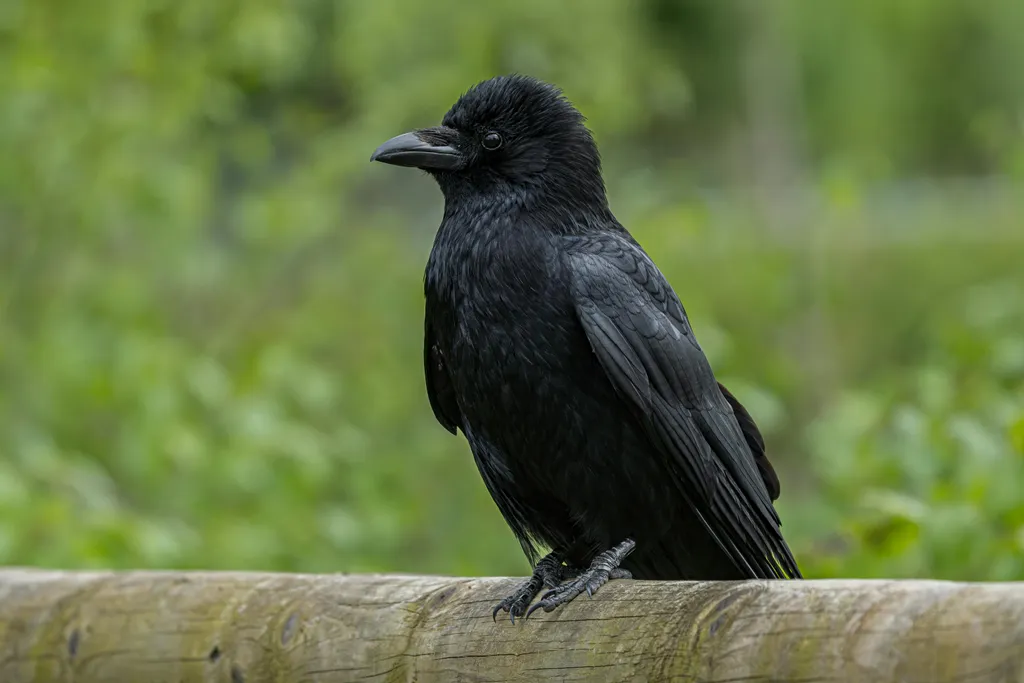
Crows are arguably among the smartest creatures on the planet, possessing some cognitive abilities that rival those of 5- to 7-year-old human children. Now, a new study adds basic geometry to the list of subjects these brainy birds seem to be able to master.
The Shocking History and Legacy of the Salem Witch Trials
In a paper published in the journal Science Advances last week, researchers report that carrion crows can recognize “geometric regularity,” meaning they may discern traits like length of sides, parallel lines, right angles and symmetry. In the study, they could tell the difference between shapes like stars, crescents and squares, as well as between squares and irregular figures with four sides.
Researchers once thought this ability was unique to humans. But the findings suggest that’s not true—and they hint at the possibility that other species may be capable of similar feats, too.
“The crows show a sort of intuitive, strictly perceptual recognition of geometric properties,” says Giorgio Vallortigara, a neuroscientist at the University of Trento in Italy who was not involved with the work, to Scientific American’s Gayoung Lee.
To test the birds’ mathematical abilities, scientists in Germany placed two male carrion crows (Corvus corone) in front of a digital screen in a laboratory. They displayed six shapes on the screen, then trained the birds to peck at the outlier—the one that looked different from all the others. Whenever the birds chose correctly, researchers rewarded them with a tasty snack, either a mealworm or a bird seed pellet.Report This Ad
At first, the researchers made the outliers obvious—such as one flower amid five crescents, reports NPR’s Nell Greenfieldboyce. But as the birds got more comfortable with the task at hand, the team made the experiment increasingly challenging. They showed the crows similar-looking squares, parallelograms and other irregular four-sided figures.
Even as the game got more difficult, the crows could still pick out the outlier. They continued correctly pecking at the outlier, even after the scientists stopped giving them treats.
/https://tf-cmsv2-smithsonianmag-media.s3.amazonaws.com/filer_public/68/04/6804a6e3-d46a-4637-9306-75ddc61c6ee6/sciadvadt3718-f1.jpg)
Why would crows need to be able to tell shapes apart? Researchers don’t know for sure. But they suspect this ability may help them with navigation and orientation as they fly around, they write in the paper. The birds may also have developed this ability to help them forage for food or identify other individual crows—including mates—based on their facial features.
“All these capabilities, at the end of the day, from a biological point of view, have evolved because they provide a survival advantage or a reproductive advantage,” study senior author Andreas Nieder, a neurophysiologist at the University of Tübingen in Germany, tells Scientific American.Report This Ad
In the future, researchers hope to investigate which areas of the birds’ brains are helping them excel at geometry. Birds don’t have a cerebral cortex—at least, not in the same way that humans do. But for us, that part of the brain is responsible for thinking and other complex functions. Crows still have these abilities, so the researchers posit there must be something else going on inside their heads.
“Obviously, evolution found two different ways of giving rise to behaviorally flexible animals,” Nieder says to Scientific American.
The team also hopes future research will probe the “geometric regularity” abilities of other species. In the past, researchers have run similar experiments with baboons. But even after extensive training, the primates didn’t seem to share our mathematical understanding.
Still, scientists say it’s unlikely that humans and crows are the only animals with this ability. “It’s just now opening this field of investigation,” Nieder tells NPR.Report This Ad
Crows are the whiz kids of the animal kingdom. Past research has found that they can vocally count up to four, distinguish between human voices and faces, and grasp a pattern-forming concept thought to be unique to humans. Some species can build tools for future use, while others are likely aware of their own body size.
These and other examples of animals’ intelligence are upending the long-held notion that humans are the only species capable of high-level cognitive functioning.
“Humans do not have a monopoly on skills such as numerical thinking, abstraction, tool manufacture and planning ahead,” Heather Williams, a biologist at Williams College, told CNN’s Scottie Andrew last year. “No one should be surprised that crows are ‘smart.’”
 Exposing the Big Game