Governor Signs Bill on Hunting Deer With Bait in North Dakota
Reply

By Bar-Ilan University29 Comments4 Mins Read
FacebookTwitterPinterestTelegram

A groundbreaking study led by Bar-Ilan University reveals that starch-rich plants played a central role in the diet of ancient hunter-gatherers.
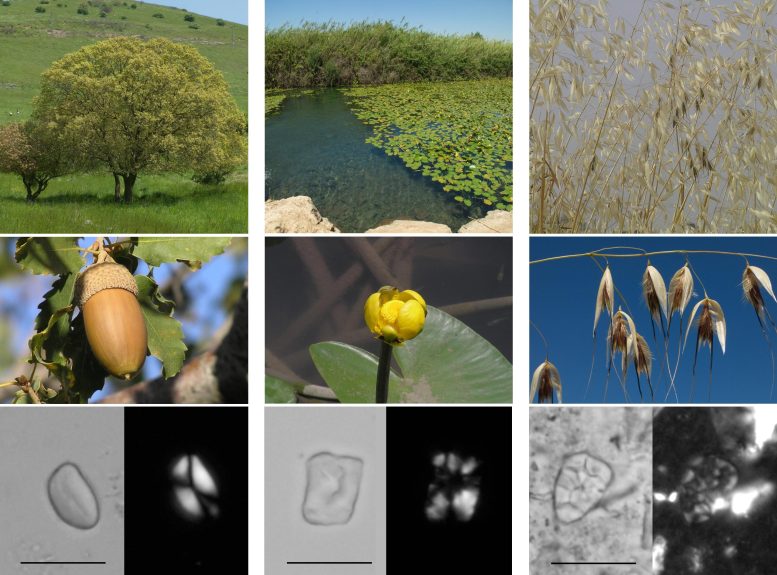
A new archaeological study along the Jordan River, just south of northern Israel’s Hula Valley, sheds new light on the diets of early humans and challenges long-standing assumptions about prehistoric eating habits. The research shows that ancient hunter-gatherers relied heavily on plant foods, especially starchy varieties, as a key energy source. Contrary to the popular belief that early hominids primarily consumed animal protein, the findings reveal a varied plant-based diet that included acorns, cereals, legumes, and aquatic plants.
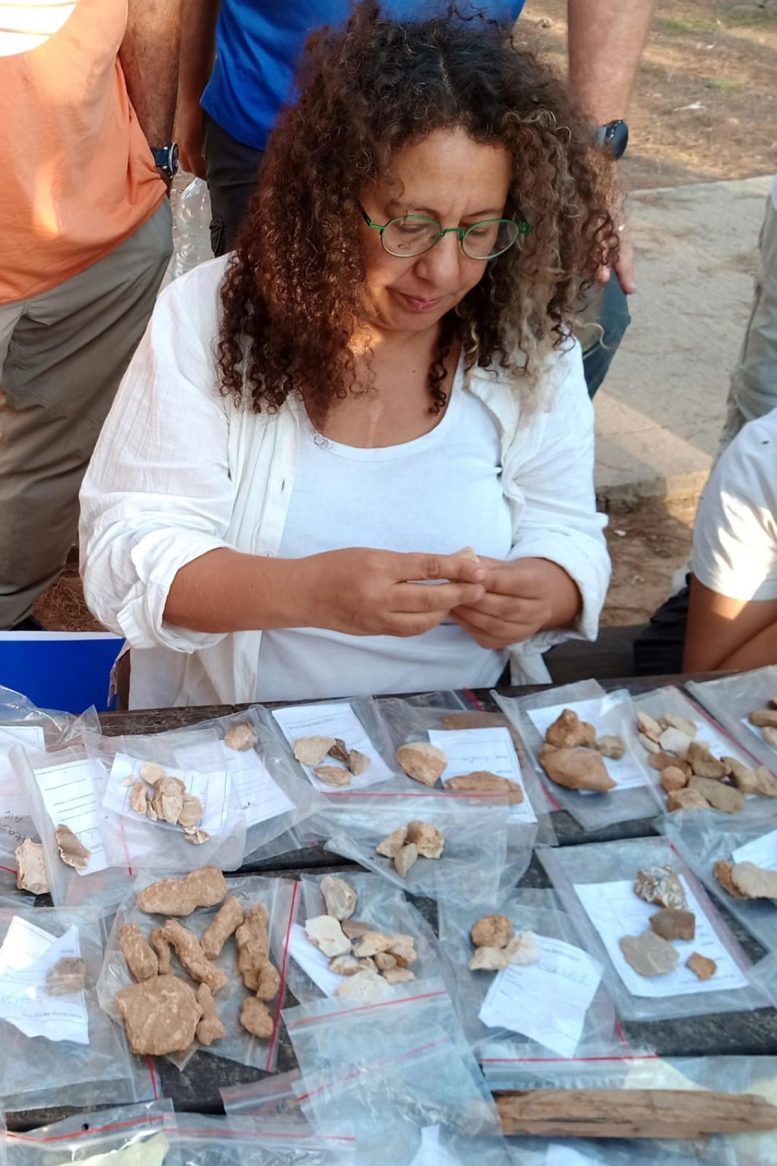
Published in the Proceedings of the National Academy of Sciences, the multidisciplinary study centers on the discovery of 780,000-year-old starch grains found on basalt tools at a prehistoric settlement near Gesher Benot Ya’akov. This site, located on the ancient shores of Lake Hula, has yielded extensive archaeological evidence, including more than 20 layers of human occupation, fossilized animal bones, and preserved plant remains like seeds and fruits.
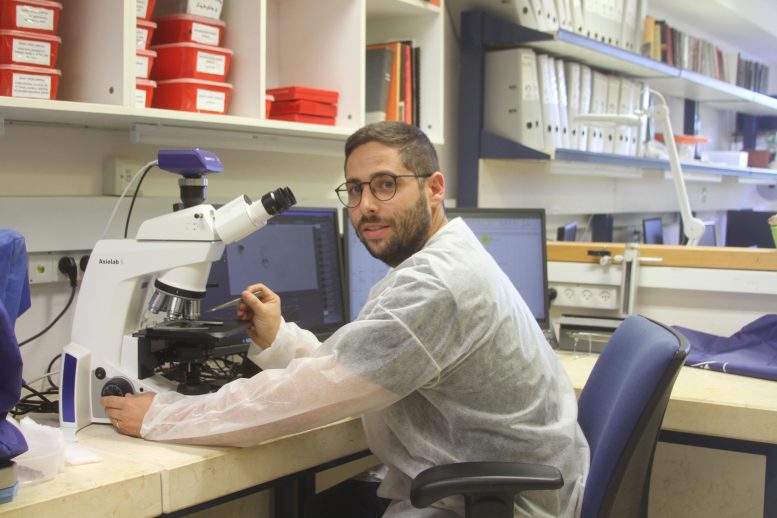
The research was part of Dr. Hadar Ahituv’s doctoral work at Bar-Ilan University’s Martin (Szusz) Department of Land of Israel Studies and Archaeology. He now works at the Laboratory for Ancient Food Processing Technologies (LAFPT) at Haifa University’s Zinman Institute of Archaeology.
The project brought together experts from several institutions, including Prof. Nira Alperson-Afil and Dr. Yoel Melamed from Bar-Ilan University, Prof. Naama Goren-Inbar from the Hebrew University, and Prof. Amanda Henry from Leiden University in the Netherlands.
The research contradicts the prevailing narrative that ancient human diets were primarily based on animal protein, as suggested by the popular “paleo” diet. Many of these diets are based on the interpretation of animal bones found in archaeological sites, with plant-based foods rarely preserved.
However, the discovery of starch grains on ancient tools provides new insight into the central role of plants, particularly starchy tubers, nuts, and roots, which are rich in carbohydrates vital for the energy demands of the human brain.
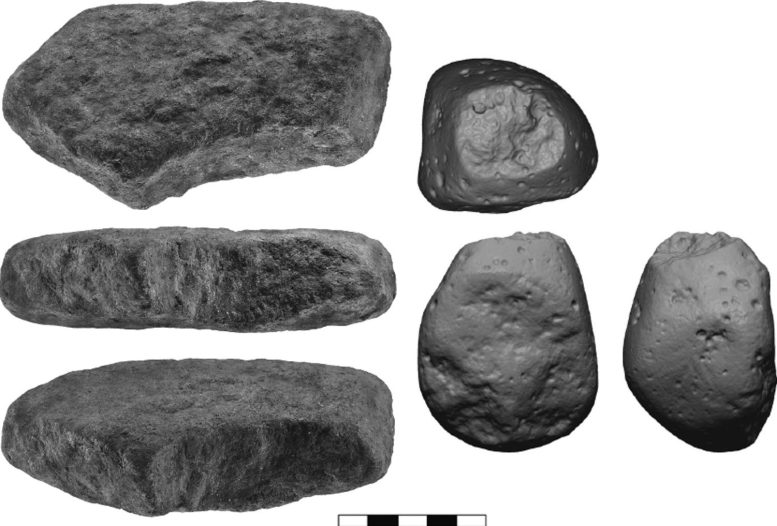
The study highlights the sophisticated methods early humans used to process plant materials. The starch grains were found on basalt maces and anvils—tools used to crack and crush plant foods.
These tools, the earliest evidence of human processing of plant foods, were used to prepare a variety of plants, including acorns, cereals, legumes, and aquatic plants like the yellow water lily and now-extinct water chestnut. Researchers also identified microscopic remains such as pollen grains, rodent hair, and feathers, supporting the credibility of the starch findings.
“This discovery underscores the importance of plant foods in the evolution of our ancestors,” said Dr. Ahituv. “We now understand that early hominids gathered a wide variety of plants year-round, which they processed using tools made from basalt. This discovery opens a new chapter in the study of early human diets and their profound connection to plant-based foods.”
The findings also offer insights into the social and cognitive behaviors of early humans. The use of tools to process plants suggests a high level of cooperation and social structure, as the hominids operated as part of larger social groups. Their ability to utilize a diverse array of resources from both aquatic and terrestrial environments shows a deep knowledge of their surroundings, much like modern humans today.
The discovery marks a significant milestone in the field of prehistoric studies and provides valuable evidence about the dietary habits of our ancient ancestors, offering new perspectives on human evolution and the development of complex societies.
Reference: “Starch-rich plant foods 780,000 y ago: Evidence from Acheulian percussive stone tools” by Hadar Ahituv, Amanda G. Henry, Yoel Melamed, Naama Goren-Inbar, Corrie Bakels, Lyudmila Shumilovskikh, Dan Cabanes, Jeffery R. Stone, Walter F. Rowe and Nira Alperson-Afil, 6 January 2025, Proceedings of the National Academy of Sciences.
Default Mono Sans Mono Serif Sans Serif Comic Fancy Small CapsDefault X-Small Small Medium Large X-Large XX-LargeDefault Outline Dark Outline Light Outline Dark Bold Outline Light Bold Shadow Dark Shadow Light Shadow Dark Bold Shadow Light BoldDefault Black Silver Gray White Maroon Red Purple Fuchsia Green Lime Olive Yellow Navy Blue Teal Aqua OrangeDefault 100% 75% 50% 25% 0%Default Black Silver Gray White Maroon Red Purple Fuchsia Green Lime Olive Yellow Navy Blue Teal Aqua OrangeDefault 100% 75% 50% 25% 0%A Hawaii man has been sentenced for killing a pet pig during a hunting contest. (Source: Hawaii News Now)
By Anthony Ferreira, KHNL and Jordan Gartner
Published: Apr. 17, 2025 at 12:49 PM PDT|Updated: 4 hours ago
HONOLULU (KHNL/Gray News) – A Maui man who admitted to killing a beloved pet pig and then lying about it to win a hunting contest will be spending a night in jail.
About three dozen people came to a Wailuku courthouse on Wednesday for Jayden Jarnesky-Magana’s animal cruelty case.
They shouted, “No excuse for animal abuse” and “Protect our pets” at a rally before the sentencing hearing.
The 19-year-old pleaded no contest to charges of animal cruelty, theft and criminal property damage in the killing of Eddie the pig.
“He was my treasured pet, a therapy pet to many, and he is and was always our sanctuary mascot,” Eddie’s owner, Sarah Haynes, shared in court.
Haynes said her 250-pound pet was taken from his pen at the Kitty Charm Farm in Haiku on May 11, 2024.
She didn’t know what happened to Eddie until she started receiving messages on social media.
“I received videos of dogs going after Eddie. Pictures of him being gutted and hung from a tree in a homemade rap music video with two men,” Haynes said.
Jarnesky-Magana later admitted to being one of the hunters in the video, authorities said. He and co-defendant Krys-Ryan Saito Carino entered the kill into a Makawao feral pig hunting contest and claimed the first-place prize of $1,000.
“It was a fraud on the family who put together the hunting contest and tried to run an honest event,” Deputy Prosecutor Mica Metter said. “And it was a fraud to the other hunters who entered the contest who tried to do it the right way.”
Jarnesky-Magana did not address the court. Instead, his attorney, Wendy Hudson, read his written statement for the judge.
“I would like to start by saying that I’ve made a mistake and it was not intentional. I’ve learned a lesson and I’m not a bad kid. I’ve always been a good kid and never gotten in any trouble,” Hudson shared.
Jarnesky-Magana faced up to 10 years for all of the charges. The judge instead sentenced him to four years of probation and one night in jail.
“I think that’s appropriate. That will teach you, hopefully deter you from engaging in any further criminal activity,” Circuit Court Judge Kirstin Hamman said. “And I think it sends the proper message regarding the nature of the crime that was committed.”
Haynes added, “I really hope that this is enough of a lesson to have him not just act appropriately but maybe think appropriately. I’m glad that he left today in handcuffs and that he’s at least getting some time.”
A trial for co-defendant Krys-Ryan Saito Carino is scheduled to begin on April 28.
 Exposing the Big Game