For the World’s Wildlife, it’s Apocalypse Now
Reply

The coyote became trapped in the concrete enclosure under the trampoline, Mesa Fire Department said.
00:1000:17
Author: John Tanet
Published: 9:15 AM PDT June 5, 2025
Updated: 9:15 AM PDT June 5, 2025

MESA, Ariz. — You’ve heard of firefighters getting cats out of trees, but in Arizona it looks like they get coyotes out of trampolines!
On Wednesday, a Mesa fire crew was called out to rescue a young coyote pup that had gotten trapped in the concrete enclosure under an in-ground trampoline.
Fortunately, the team was able to work the trampoline up and out of the ground and got the pup into the care of Southwest Wildlife Conservation Center.
“Thanks to some teamwork and gentle maneuvering, the little guy was safely freed and is now in the care of wildlife professionals,” the Mesa Fire Department said.
A video of the rescue showed the pup running circles around the inside of the enclosure as firefighters got the trampoline out of the way. Fortunately, it seems like the young coyote is in good health and wasn’t hurt.
“Big thanks to our community for keeping a watchful eye and reporting wildlife in distress,” the department said.
Shoutout to the crew of L206 for coming to the rescue!
>> Download the 12News app for the latest local breaking news straight to your phone.
You can now watch 12News content anytime, anywhere thanks to the 12+ app!
The free 12+ app from 12News lets users stream live events — including daily newscasts like “Today in AZ” and “12 News” and our daily lifestyle program, “Arizona Midday”—on Roku, Apple TV and Amazon Fire TV.
12+ showcases live video throughout the day for breaking news, local news, weather and even an occasional moment of Zen showcasing breathtaking sights from across Arizona.
Users can also watch on-demand videos of top stories, local politics, I-Team investigations, Arizona-specific features and vintage videos from the 12News archives.
Roku: Add the channel from the Roku store or by searching for “12 News KPNX.”
Amazon Fire TV: Search for “12 News KPNX” to find the free 12+ app to add to your account, or have the 12+ app delivered directly to your Amazon Fire TV through Amazon.com or the Amazon app. Close Ad
Hawks, spikes and sonic repellants are among the measures used to deter these birds. Perhaps we should try sharing our planetSun 8 Jun 2025 03.00 EDTShare409
At this year’s Cannes film festival, some unexpected hires joined the security detail at luxury hotel the Majestic. They were clad not in kevlar but in deep chestnut plumage, with wingspans up to four feet, talons for toes and meat-ripping ebony beaks. The new recruits were Harris hawks and their mission was clear: guard stars from the aerial menace of gulls daring to photobomb or snatch vol-au-vents.
This might sound like an extreme solution to a benign problem – after all, haven’t most of us lost sandwiches to swooping beaks and come out relatively unscathed? But as these notorious food pirates come ashore in growing numbers, cities around the world are increasingly grappling with how to manage them. Hiring hawks from local falconer Christophe Puzin was the Majestic’s answer to curbing gull-related incidents (such as Sophie Marceau’s 2011 wine-on-dress situation). But in metropolises such as New York, Rome, Amsterdam and London gulls are widely considered a menace, too, as they take up permanent residence on urban stoops.

00:00
03:12
Read More
Gulls seem to be louder than ever, which makes it easy to forget their status as seabirds in crisis. All of the more than 50 global species of gull are falling victim to fragmenting habitats under conflicting marine policy measures, devastating avian flu, and even brain damage and organ failure resulting from plastic ingestion. In the UK, this torrent of trouble has rendered many species of gull in decline.
Predator-free rooftops have enticed them from the waves since the 1940s and, broadly speaking, gulls have adapted well to their changing environment – even becoming effective urban seed dispersers. Lamp-posts have replaced cliff ledges, buildings are islands, landfill is rocky shore. One study found that gulls can recognise human routines, with their presence around schools tripling during mealtimes. Their adaptation – however bothersome it might be for us – has driven their survival. Perhaps acknowledging this could help us to live alongside them.
As we have no licence to either capture or kill these birds, introducing hawks as agents of natural gull control is one method of regulating human/gull interaction. Some councils have produced gull awareness campaigns, encouraging locals to report nesting and not to feed them. Others default to installing physical barriers, such as spokes and spikes, to discourage gulls’ resting sites. Such measures are expensive for local authorities and their effectiveness is inconclusive. Some councils, such as Carlisle, opt for a more covert approach, threatening gulls more gently in the form of hawk-like kites. In Exeter, Deliveroo trialled “repellent” audio tracks, broadcasting recorded falcon cries and gull distress calls to deter them. Researchers at the University of Exeter have also investigated the benefit of holding eye contact with a gull, in making them think twice about stealing food.
But such an array of anti-gull options perpetuates the patronising narrative of these animals as pests. The fact that gulls are thriving in cities points to our own ecological failures as a society. Global household waste is growing rapidly, most of which is thrown into landfill, where it is left to rot, releasing large amounts of methane – a greenhouse gas 80 times more harmful than carbon dioxide for 20 years after its release. We aren’t so much giving gulls an ocean eviction notice as we are begging for them to come inland, feeding their instinct to dive, rip and smash around us – one bin day at a time.
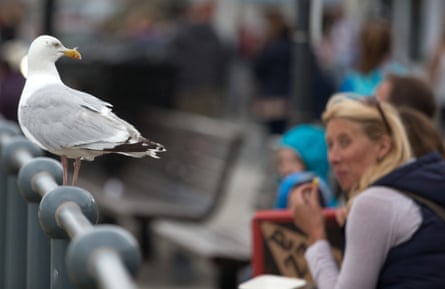
So what are urban gulls, if not a menace? Perhaps, in Cannes, they’re a message of timing. The film festival takes place in May, during gull breeding season (April to July). It is a period when gulls are loud and chaotic, their defensiveness spiking when hatching and fledging; and when food is visible, we’re baiting them with easy pickings. With broods to protect, reflexes are heightened.
It is easy to conflate gulls’ seasonal survival with year-round behaviour. On wilder shores, these periods of increased activity would unfold unnoticed. But we have altered ecological niches to make cities too tempting, deforming the instincts of species trying to adapt with acts of imagination and resilience.
As a long-living social species that has mastered feats of adaptation, gulls have much to teach us. And as they adapt to urban habitats, we must also learn to live alongside them. This offers us a chance to change the story, to shape the future of shared urban spaces. Spaces where festival organisers align with nature’s calendar, and the rhythms of life are respected. Spaces where waste is not just managed, but reimagined. Spaces where human impact is studied with intent, not ignorance. Spaces that would allow our relationship with the wild to mature so profoundly, conflict would become obsolete.
SATURDAY, JUNE 07, 2025



Play
Somchuan Ratanamungklanon, director-general of the Department of Livestock Development (DLD), stated that the department had collaborated with the Consumer Protection Police Division (CPPD) to inspect the cold storage facility of a company in Mueang Samut Sakhon district following complaints about illegal imports of poultry carcasses, specifically chicken feet, without authorisation.
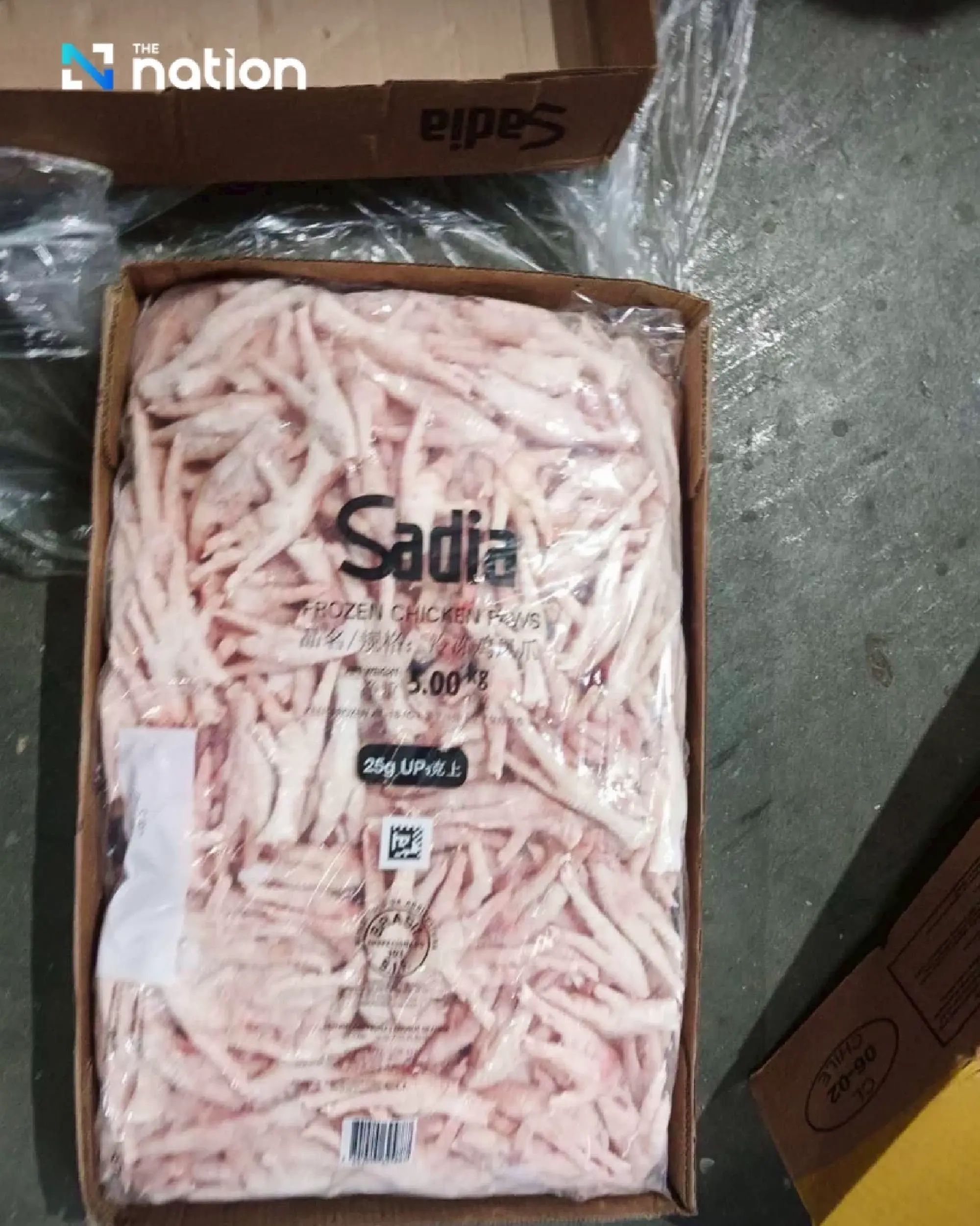
A covert investigation revealed that a portion of the confiscated chicken feet originated from Brazil, where avian influenza outbreaks have been reported. Upon inspecting the cold storage facility, authorities found large quantities of frozen chicken feet packaged in bags and boxes indicating production sources from Brazil, Chile, Turkey and Germany.
An examination of the facility’s deposit records confirmed a total of 346,390 kilograms, or approximately 346.39 tonnes, of stored chicken feet, an act deemed illegal under Sections 22 and 31 of the Animal Epidemics Act BE 2558 (2015).
Related


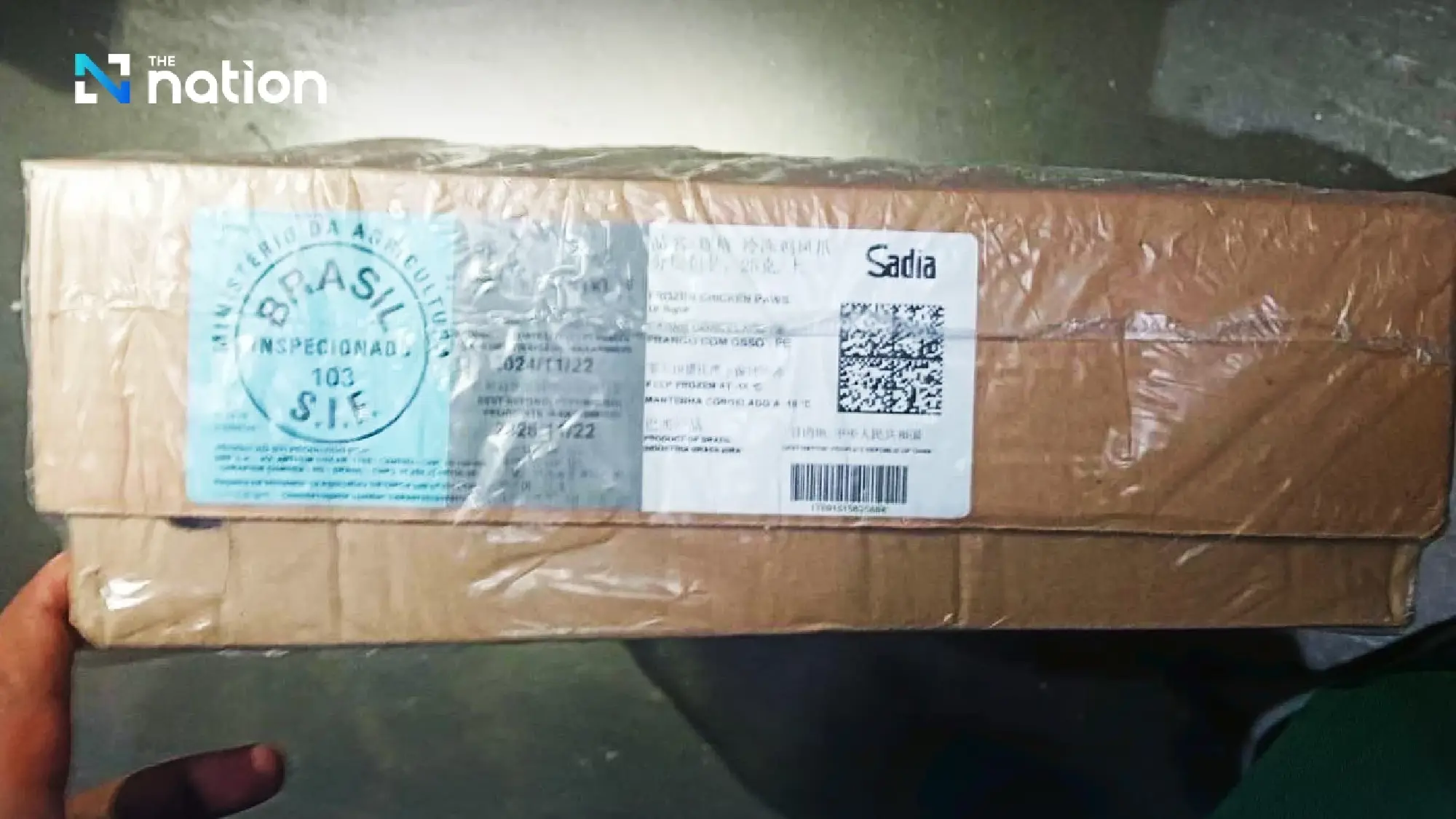
The DLD subsequently seized all the chicken feet and filed legal complaints against the perpetrators. Additionally, they planned to coordinate with the Customs Department to pursue relevant charges under the Customs Act.
The department also intends to collaborate with the Central Investigation Bureau to trace the masterminds and networks involved in the smuggling operation.
For the confiscated chicken feet, DLD officials collected random samples and sent them for laboratory analysis to detect any hazardous pathogens, particularly avian influenza, to assess the health risks to animals and ensure consumer safety.

DLD officials noted that this operation aligns with Agriculture Minister Narumon Pinyosinwat and Deputy Agriculture Minister Itthi Sirilathayakorn’s policy to crack down on the illegal import of livestock products.
The objective is to prevent foreign disease outbreaks, protect domestic consumers, and maintain a fair livestock market for Thai farmers.
by: Karina F. Garcia
Posted: Jun 6, 2025 / 06:33 PM EDT
Updated: Jun 6, 2025 / 06:34 PM EDT
SHARE https://www.wavy.com/news/local-news/migratory-birds-develop-antibodies-to-bird-flu-officials-say/
(WAVY) – Wildlife officials are keeping a close eye on the spread of avian influenza after nearly 300 birds were found dead along the North Carolina coast earlier this year — most of them brown pelicans. The outbreak has since been linked to the H5N1 strain of bird flu, a virus that continues to mutate and occasionally jump to other species, raising concern among experts.
Miranda Turner, a wildlife health biologist with the North Carolina Wildlife Resources Commission, said the area is a prime wintering ground for birds — making it easier for disease to spread.
“When you bring a lot of animals together and you have them traveling from different locations, it’s a really good way to transmit diseases,” Turner said.
Up Next – 3 dogs dead after accidental residential fire-00:23
In Hampton Roads, bird flu outbreaks aren’t new. Lisa Barlow, president of Tidewater Rehabilitation and Environmental Education, recalls treating sick and dying Canada geese during a 2021 outbreak on the Lafayette River.
“We dealt with about three to four dozen Canada geese that came in sick and dying,” Barlow said. “Only six survived the flu, and even those had to be euthanized due to severe neurological symptoms.”
Barlow described birds arriving unable to hold their heads up, their beaks caked in mud. Many died within 24 hours.
As the virus continues to affect wildlife, it’s not just birds at risk. The virus has jumped to mammals, including seals, cats and even cattle. Experts say it’s mutated at least several times since it was first identified.
“I mean, anything that can do that — it’s kind of frightening, but amazing,” Barlow said.
Despite the concerning spread, health officials emphasize the risk to humans remains low. According to the Centers for Disease Control and Prevention, 70 human cases have been reported nationwide, including one death. Most infections have been among people with repeated exposure to infected animals, such as poultry or dairy farm workers.
“There’s really low risk,” Turner said. “Still, it’s a good idea to clean bird feeders regularly and wear gloves or a mask if you handle injured wildlife.”
Barlow also urges caution for those who come across sick birds.
“If you do want to help, wear gloves, protect yourself,” she said. “Common sense goes a long way.”
Meanwhile, as migratory birds continue to interact and spread the virus, some are developing natural antibodies, according to Turner.
“They’re bouncing back and creating herd immunity,” she said.
Last week, the Associated Press reported the Trump administration canceled $766 million in funding meant to support Moderna’s development of a bird flu vaccine. The vaccine, which uses mRNA technology similar to the COVID-19 vaccine, had shown early promise in clinical trials.
For now, wildlife officials say they expect to see more outbreaks in the years ahead, especially during peak migration periods.
“Because this virus is so common in migratory birds, it is likely that we will continue to see cases here and there every winter,” Turner said.
As of right now, there have been no confirmed human cases of H5N1 in Virginia and although the risk remains low for humans, for birds it can be extremely deadly – leading to large die-off events like the ones we saw near Cape Hatteras.
“Unfortunately, this was the first kind of major large scale mortality event… while it looks really bad at that small scale of seeing 300 brown pelicans die – it’s not impacting their population as a whole or the species as a whole,” adds Turner.
Turner also explains that the surviving pelicans are still there, “The brown pelicans that did survive that event were still nesting on that island successfully and are doing well. So really, it’s a short scale kind of scary looking event, but nothing that raises alarm for biologists in the long term.”
 Exposing the Big Game