St. Lawrence County hunters harvest over 6,500 deer in 2024-25 season, DEC reports
Reply

3 Comments

Sage MarshallJun 5, 2025
The California Department of Fish and Wildlife (CDFW) recently announced a slew of eye-popping poaching busts involving two of the state’s most heavily restricted—and sought after—marine species: chinook salmon and white sturgeon.
The most noteworthy case stemmed from an investigation into a Dungeness crab trafficking ring that led officials to discover that their lead suspect was also poaching salmon from the American River. The suspect, whose identity has not been released, was found with over 150 pounds of salmon roe meant for the black market. Officials say that collecting that much roe required poaching at least 75 salmon.
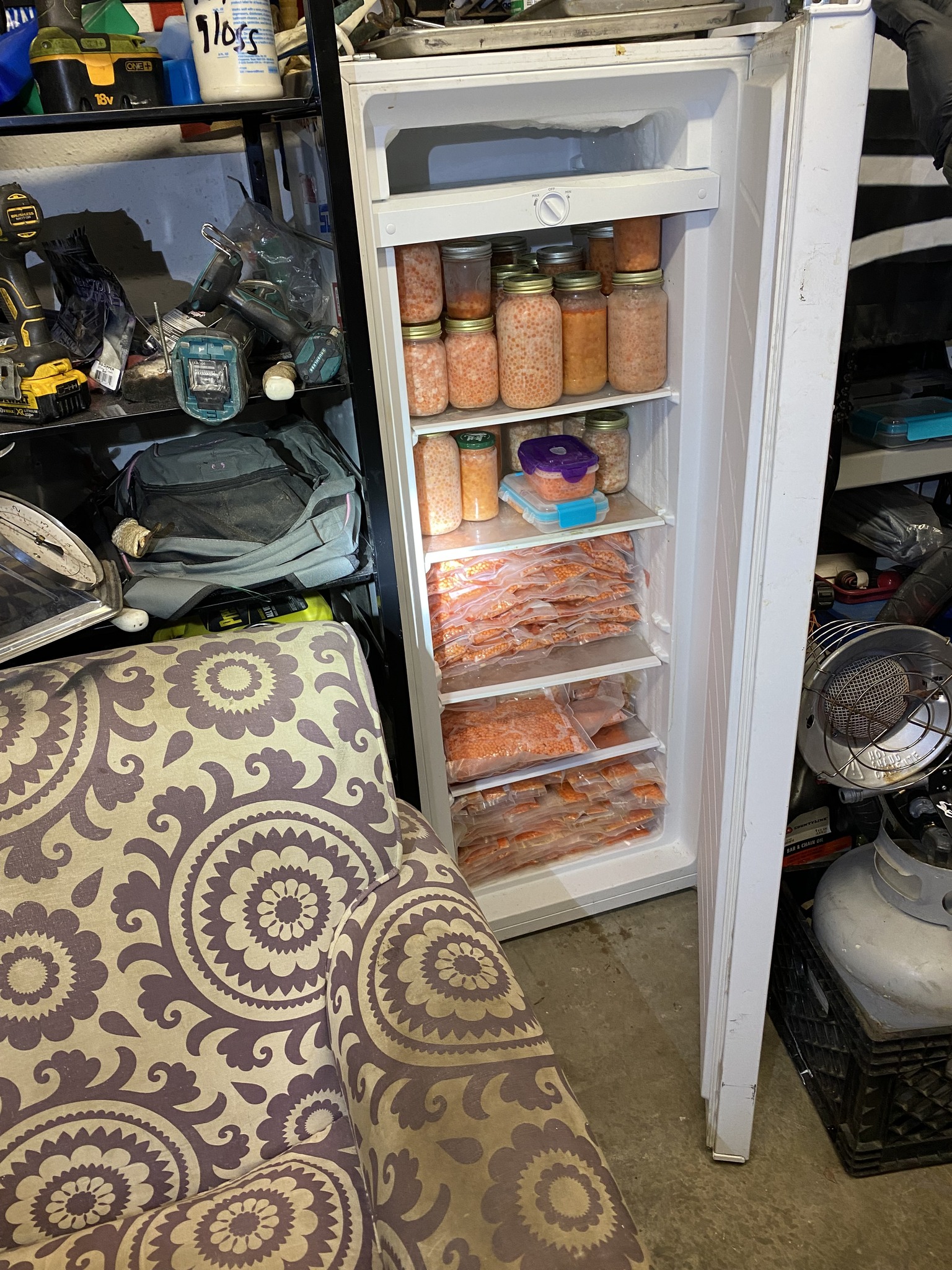
Salmon fishing on the American River, which is a tributary of the Sacramento River—and throughout California—has been shuttered for the past two years due to low population estimates. This year, the state is holding a highly regulated recreational ocean salmon season as well as sport fishing on the Mokelumne, Feather, and American rivers, beginning in mid-July. The CDFW did not disclose the potential charges that the salmon roe trafficker will face, but local anglers who’ve had to wait two years to fish for chinook salmon will certainly be hoping for serious punishments.
Meanwhile, the CDFW says its Special Operations Unit and Delta Bay Enhanced Enforcement Program have also been looking for white sturgeon poachers. The state’s white sturgeon fishing is currently catch-and-release only as biologists work to assess whether the species should be listed under the California Endangered Species Act.
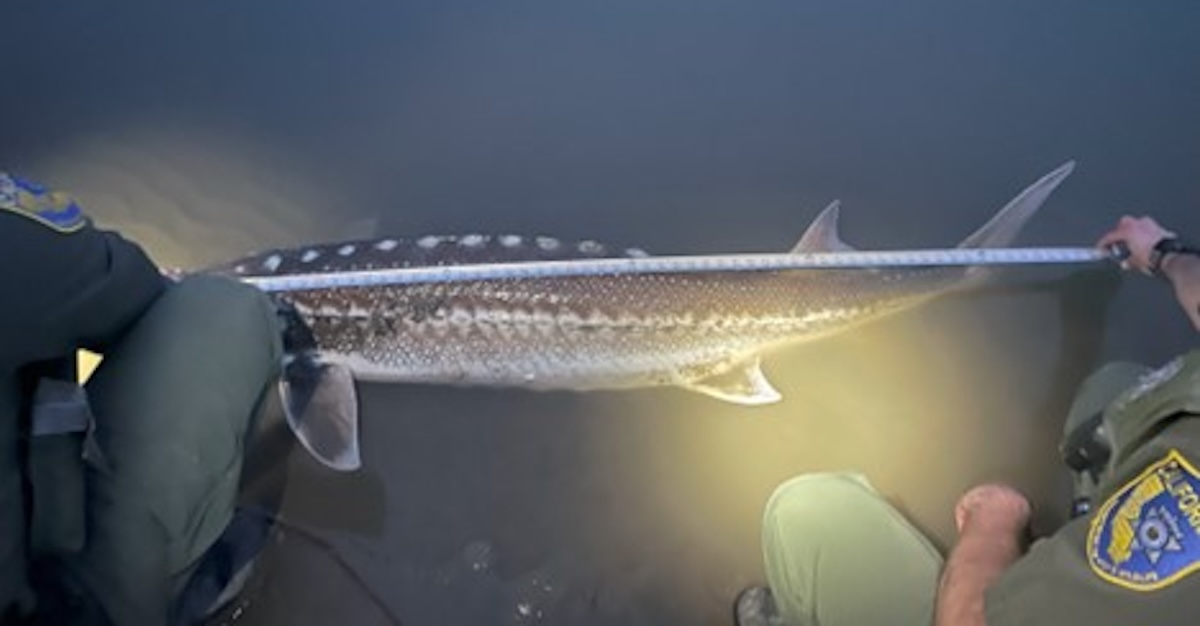
Two angling groups on the Sacramento River were observed tying off illegally possessed sturgeon 100 yards from where they were fishing “in an effort to evade wildlife officers.” Officials issued citations and released the fish in both instances, and charges are pending.
Meanwhile, two other individuals were formally charged with the take of an endangered or threatened species for sturgeon poaching. One of those accused poachers had a criminal record of wildlife crimes involving illegally snagging salmon on the American River.
California has dealt with sturgeon poaching long before the species was closed to catch-and-keep angling. White sturgeon, which are a notoriously slow growing fish, are prized for their caviar. In 2022, for instance, CDFW uncovered a massive poaching and black-market operation involving at least eight individuals.
“Wildlife officers’ patrols confirm sturgeon and salmon poaching continue during the fisheries’ closures,” wrote a CDFW spokesperson this week. “Well-organized criminal networks were observed employing advanced counter surveillance techniques, underscoring the continued high demand and profitability of illegal caviar trafficking.”
Images via California Department of Fish and Wildlife Facebook.

A beaver at Trempealeau National Wildlife Refuge in Wisconsin. (Larry Palmer/USFWS)
Citing a population decline and degraded habitat, South Dakota officials have advanced a plan to halt beaver trapping in the Black Hills for two years.
The plan will block trapping during the 2025 and 2026 seasons in the Black Hills Fire Protection District. Trapping would remain open in the rest of the state. The state legislature’s Rules Review Committee will need to approve the moratorium.
In 2012, biologists saw 60 food caches — piles of woody vegetation built by beavers for winter — in the Black Hills. By 2023, they recorded only 16. Beavers occupied 52% of Black Hills watersheds in 2012, but just 23% in 2023.
Beavers once numbered in the thousands in the Black Hills and the millions nationwide, but their numbers began to decline with the onset of fur trapping by European settlers. Officials said habitat loss, not modern trapping, is to blame for current population declines. But they also said they don’t want trapping to contribute to the problem.
“The limiting factor is habitat degradation,” said John Kanta, section chief with the South Dakota Department of Game, Fish and Parks.
Only one beaver trapping was reported in the Black Hills last season.
Without beaver dams, faster-flowing water cuts stream channels too deep for beavers to work with. Cattle also trample streambanks, leaving fewer willow and aspen for beavers to feed on.
A closed trapping season will help protect the beavers that are being reintroduced, officials say. Game, Fish and Parks is working with the U.S. Forest Service and volunteer groups to restore habitat through tree planting and manmade dams, and nuisance beavers from urban areas are being relocated to the improved habitats.
“It’s a wonderful step,” said Hans Stephenson, owner of Dakota Angler & Outfitter in Rapid City and a volunteer for the restoration efforts.

Beaver dams raise the water table, slow water flow, and create habitat that supports everything from aquatic insects to the brown and rainbow trout favored by anglers, Stephenson said.
Alex Solem, senior wildlife biologist with Game, Fish and Parks, emphasized the broader ecological role beavers play.
“Any time there’s beaver around, usually, it signals a really healthy ecosystem,” Solem said.
If more Black Hills streams had beaver dams, he said, floodplain soils would hold more water, support grazing, mitigate flooding and lessen the dangers of drought and wildfires.
In addition to the moratorium, officials adopted a new threshold-based framework to guide future decisions. Under that framework, trapping season would reopen if beaver occupancy in monitored watersheds rose above 80%, Occupancy between 50% and 79% would open the door to resident-only, private-land trapping. Levels below 50%, like now, would trigger automatic closure.
 Exposing the Big Game