Unknown's avatar

About Exposing the Big Game

Jim Robertson

Expert: RFK Jr.’s Bird Flu Suggestion ‘a Terrible Idea’

The HHS secretary has suggested letting bird flu ‘run through the flock,’ an idea one public health expert says could amplify the virus’ spread and ‘is just letting (birds) suffer.’

By Steven Ross Johnson

|

March 20, 2025, at 5:01 p.m.SaveMore

U.S. News & World Report

Expert Slams RFK Jr.’s Bird Flu Comments

More

ILLUSTRATION - 19 March 2025, Baden-Württemberg, Stuttgart: Fried eggs are fried in a pan. Following outbreaks of bird flu, eggs are scarce and expensive in the USA. Photo: Bernd Weißbrod/dpa (Photo by Bernd Weißbrod/picture alliance via Getty Images)

Bernd Weißbrod|picture alliance|Getty Images

Eggs are fried in a pan on Mar. 19, 2025, in Baden-Württemberg, Stuttgart.

Bird flu continues to spread in the U.S., infecting thousands of wild birds and poultry while posing an increasing threat to humans.

Since the outbreak among U.S. livestock was first detected in March 2024, there have been 70 human cases in the U.S., which have resulted in one death, according to the Centers of Disease Control and Prevention, and among domesticated animals, the virus has been detected in nearly 1,000 cattle and millions of chickens, according to the U.S. Department of Agriculture.

Concerns over the continued spread of bird flu in the U.S. are compounded by recent comments made by Health and Human Services Secretary Robert F. Kennedy Jr., who suggested letting the bird flu found on poultry farms “run through the flock” so that “we can identify the birds, and preserve the birds that are immune to it.”

And while much of the current bird flu outbreak has been fueled by the H5N1 subtype of bird flu, recent reports of an outbreak of the H7N9 bird flu strain on a poultry farm in Mississippi confirmed on March 13 are further complicating matters. That marks the first confirmed U.S. cases of that strain – which has proven deadly in humans – since 2017, according to the State of Mississippi Board of Animal Health.

Meghan Davis, an associate professor in the Department of Environmental Health and Engineering at the Johns Hopkins Bloomberg School of Public Health, spoke with U.S. News about Kennedy’s idea to let the virus spread, as well as the public health threat posed by the recent detection of the H7N9 strain and how the disease response effort can be more effective moving forward.

What to Know About the Bird Flu Outbreak

Bird flu continues to spread among U.S. livestock, driving up egg prices and worrying public health experts.

Steven Ross JohnsonMarch 17, 2025

AUSTIN, TEXAS - FEBRUARY 05: In this photo illustration, eggs are displayed on a table on February 05, 2025 in Austin, Texas. Waffle House has announced that it will be adding a 50-cent surcharge to all egg products because of soaring egg prices caused by the bird flu. The average price for a dozen eggs in the U.S. has increased approximately 50% in the last year. (Photo illustration by Brandon Bell/Getty Images)

The interview was edited for length and clarity.

How effective would HHS Secretary Kennedy’s idea of allowing the bird flu to ‘run through the flock’ at poultry farms be toward controlling the virus spread?

“I think it’s a terrible idea, and there are a couple of different reasons. What happens with bird flu is that these animals get quite sick, so just the animal welfare issues of just letting them suffer is one element of this that I strongly disagree with. The other element is that now you could be prolonging the infection within the flock given that the birds that don’t die very quickly could still be spreading it and that can amplify the potential spread.

“We now have identified that it may be possible for these farms to actually have proximity-based spread through shedding (of feathers) through the air. So that means now you are continuing to have lots of viruses around. So, I think what it’s going to lead to is more disease and a bigger impact to animal production than the current policy.

“If you have continued shedding , then that’s continued exposure for workers over a potentially longer period of time.”

Sign Up for U.S. News Decision Points

Your trusted source for breaking down the latest news from Washington and beyond, delivered weekdays.Sign Up

Sign up to receive the latest updates from U.S News & World Report and our trusted partners and sponsors. By clicking submit, you are agreeing to our Terms and Conditions & Privacy Policy.

How much of a public health threat does the H7N9 bird flu strain pose?

“We’ve seen it globally, just as we’d seen H5N1 prior to the late 2021, early 2022 North American incursion. When we see it globally, it can cause sporadic disease in people and it can also lead to production losses. So, I think we have reason to be concerned about it.”

 What is the chance of bird flu spreading between humans?

“What we are most concerned about is a sustained chain of transmission. What happens when you don’t have a virus that is particularly suitable for sustained transmission is that you get it going from one person to a second but you would rarely have third and fourth cases.

“Right now we’re definitely seeing sustained chains of transmission within animal species. So, this is the big thing that would be problematic for any virus – whether it was a H5 or H7 – especially if they re-assort with a seasonal influenza virus and pick up more characteristics that could potentially be associated with the ability to have a sustained transmission chain.

“That would put us a big step down the path toward a pandemic.”

READ: USAID Cuts Spark Global Health Threats

In what ways would you like to see the federal government improve its bird flu outbreak response?

“The poultry industry has struggled a little bit with vaccination given that there are trade barriers and that disease-free status is often a part of these trade agreements. But I’m starting to hear a lot more softening on that – that maybe we should be better exploring vaccination as part of our control strategy within poultry. Exactly how that would be done is something that we need to evaluate. Same thing for dairy cows, I think that we’re just starting to recognize that there could be some longer-term production loss related to it, and that could change some of the economic algorithm for use of vaccination.

“We don’t yet have great eyes everywhere, and I don’t think we have great surveillance within two key areas. The first would be among consumers – people who consume raw milk products, or who have other exposures that are outside of the workplace-based exposure.

“We also have very little in the way of companion animal surveillance. A lot of these just end up being suspect cases that go to a veterinarian who can alert the authorities rather than something that is more active and really more systematic.”

The Best Cartoons on Health Care

View All 25 Images

Tags: health, bird flu, Robert F. Kennedy Jr., Donald Trump, diseases

RFK Jr. Just Dropped A Bird Flu Take So Alarming That Scientists Are Like, “Please Don’t”

Sara Boboltz

Thu, March 20, 2025 at 3:20 PM PDT1.2k

In an interview with Fox News this week, Health and Human Services Secretary Robert F. Kennedy Jr. proposed a novel fix to the nation’s bird flu epidemic: Let the virus spread.

A person in a blue suit is seated in a dimly lit room, looking forward with a serious expression
Andrew Harnik / Getty Images

“They should consider maybe the possibility of letting it run through the flocks so that we can identify the birds, and preserve the birds, that are immune to it,” Kennedy said of poultry farmers and federal authorities.

It is the nation’s agriculture secretary, Brooke Rollins, who has authority over the nation’s poultry management, not Kennedy. But Rollins appears to be in agreement with her counterpart at HHS. As The New York Times noted, she floated the idea of a pilot program that would allow the disease to ravage a flock, while extra layers of protection contained the spread within a certain perimeter. The surviving birds could then be studied.

But there are reasons that scientists recommend immediately culling infected flocks, and letting the virus run rampant could have dire consequences.

The bird flu, H5N1, has a near 100% fatality rate in chickens and turkeys, and has already killed millions of wild birds.

One of the ways it can spread to healthy poultry farms is by a single infected duck visiting a flock and shedding the virus through feces. H5N1 kills relatively quickly, causing respiratory distress, swelling, lack of coordination and other symptoms before death. (Culling is therefore considered more humane.)

The virus has cropped up on farms and in backyard flocks around the country, resulting in some 166 million birds culled so far — resulting in the alarmingly high egg prices seen around the country.

Although not common, humans can become infected with H5N1, and one person in the U.S. has died of the infection. Most of the human cases so far have been seen in those who have had prolonged contact with infected birds or dairy cows. There has been no human-to-human transmission observed in the United States so far.

But that could change. As with other viruses, mass spread gives H5N1 the chance to mutate as it multiplies, running the risk of a mutation that allows the virus to spread easily from human to human. Experts are already alarmed at the fact that the virus has jumped from birds to dairy cows, as it represents a leap between different species.

The mortality rate in humans is estimated to be around 50%.

“Hens bred specifically for maximum egg production tend to have inherently fragile immune systems,” Scott Gottlieb, a former FDA commissioner during Trump’s first term, explained in an op-ed for Stat. “Worse, permitting unchecked transmission could inadvertently incubate viral mutations, potentially transforming the outbreak into an even more dangerous threat.”

Store shelf sign reads: "Please Note: Due to limited supply please: Limit 3 Eggs."
Kevin Carter / Getty Images

Emily Hilliard, the HHS deputy press secretary, told The New York Times that Kennedy was merely trying to say that “culling puts people at the highest risk of exposure” due to the close contact it requires, which is why the secretary and National Institutes for Health “want to limit culling activities.”

“Culling is not the solution. Strong biosecurity is,” Hilliard said.

Allowing the virus to proliferate, however, would still risk a mutation that could make H5N1 a bigger threat to humans. This article originally appeared on HuffPost.

Federal Court To Decide Fate Of Wyoming’s Rare Curly-Haired Wild Mustangs

A panel of three federal judges in 10th Circuit Court of Appeals in Denver is considering whether mustangs, including rare curly-haired horses, will be rounded up and removed from southwest Wyoming.

Mark Heinz

March 19, 20254 min read

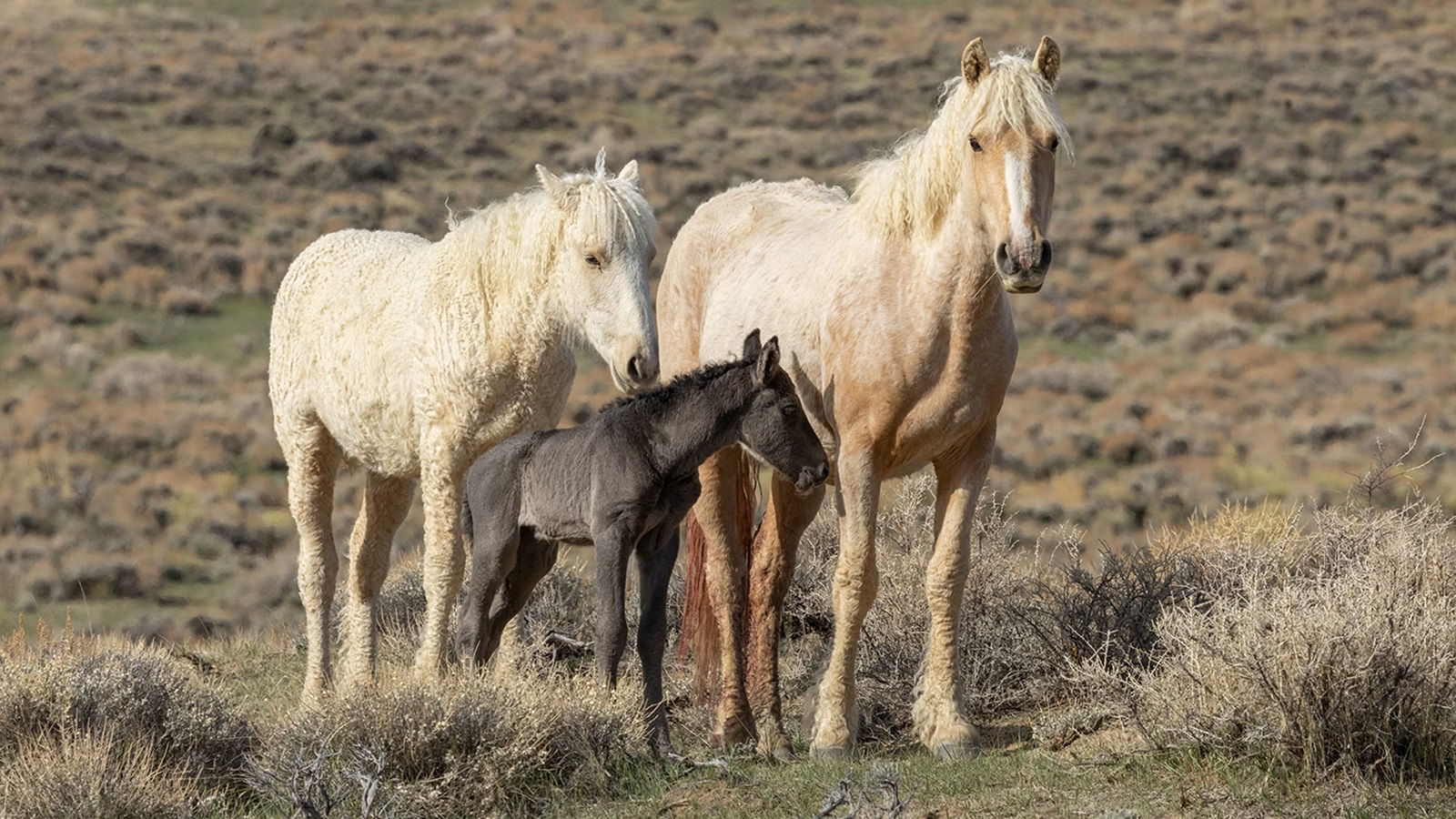
A federal court will decide whether a herd of rare curly-haired mustangs will be rounded up and removed from southwest Wyoming.
A federal court will decide whether a herd of rare curly-haired mustangs will be rounded up and removed from southwest Wyoming. (Courtesy Carol Walker)
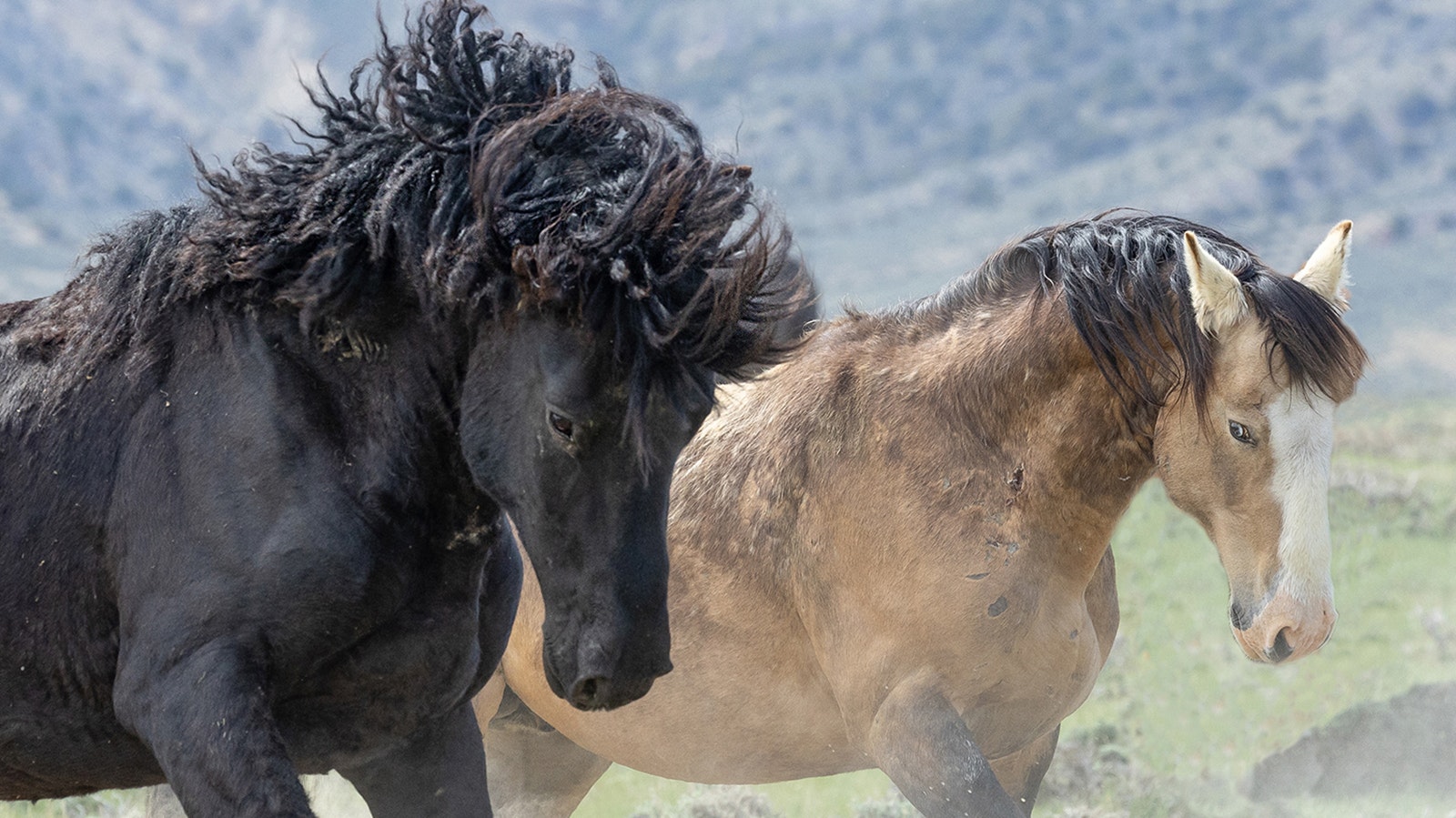
Whether a herd of rare curly-haired mustangs will continue to run free in the vast expanses of southwest Wyoming is being decided within the confines of a federal courtroom in Denver.

Attorneys this week presented their arguments to a three-judge panel in the 10th Circuit Court, regarding whether the Bureau of Land Management can proceed with plans to round up the entire Salt Wells Creek mustang herd.

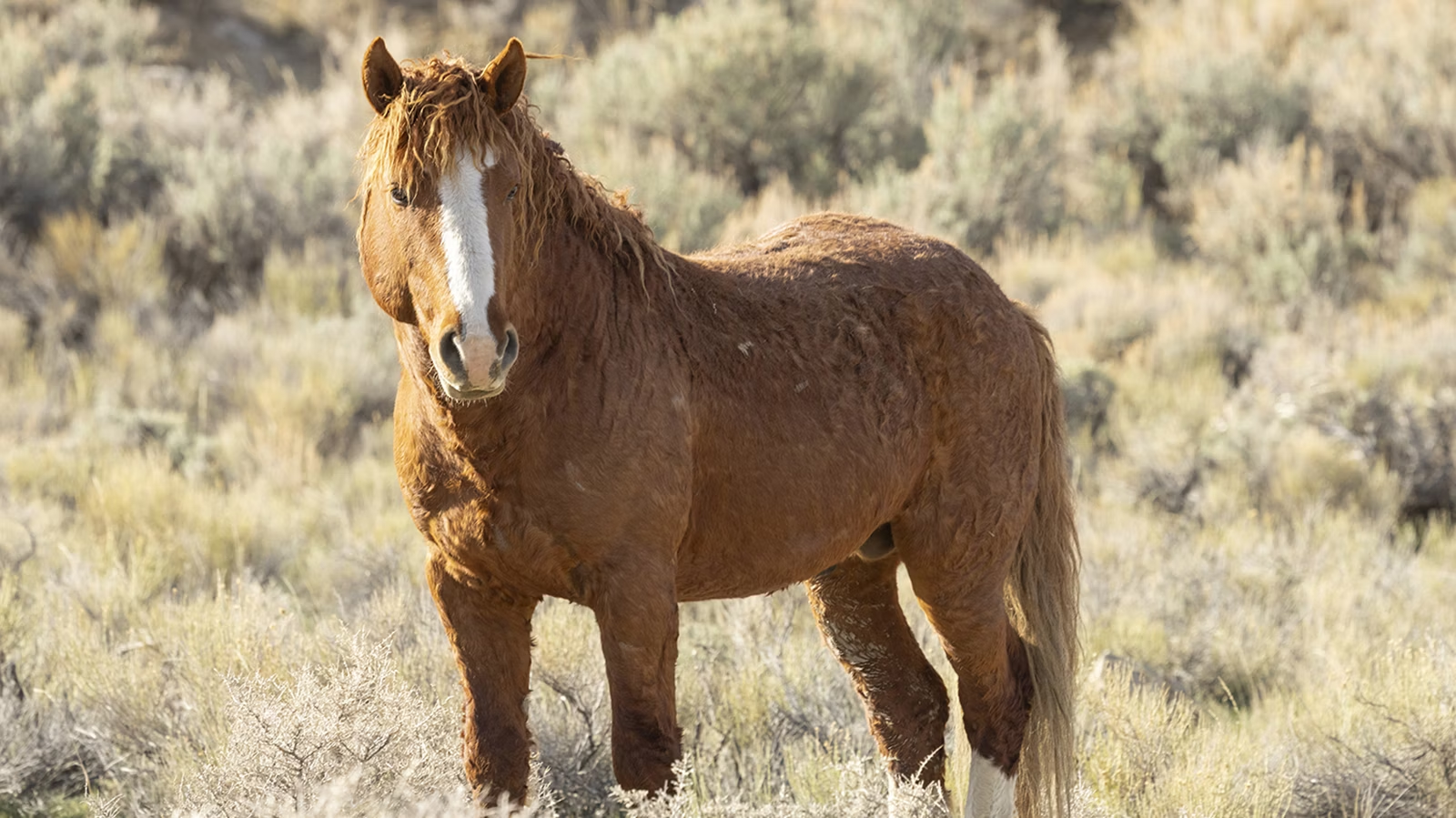
That herd is thought to include several hundred horses, about 100 of which are of the unusual curly-haired variety.

That’s the largest known population of “curlies” in the country, mustang advocate Carol Walker told Cowboy State Daily. 

The BLM also plans to round up mustangs from the Divide Basin herd. And about half of the mustangs are slated to be removed from a herd near Adobe Town, one of Wyoming’s most remote and picturesque areas. 

Walker is among the plaintiffs that filed a lawsuit against the BLM in 10th Circuit Court, calling for the cancelation of the roundups.

BLM Says Mustangs Are Invading Private Land

In the desert regions near Rock Springs, there are thought to be about 4,800 mustangs, BLM spokesman Micky Fisher told Cowboy State Daily during an interview in December 2024.

The BLM plans to whittle the herds down through roundups over the next three years, he said. There’s concern over the mustangs becoming overpopulated and degrading the desert habitat. 

Particular herds, such as the Salt Wells Creek mustangs, will be zeroed out — or entirely rounded up — because they inhabit “checkerboard” areas, he said. 

Those are areas where square BLM parcels are intermixed in a checkerboard pattern with private parcels, he said. There’s concern about the mustangs spending too much time on private land. 

Fisher declined to give further comment on Wednesday because the matter was still pending in court. 

  • A federal court will decide whether a herd of rare curly-haired mustangs will be rounded up and removed from southwest Wyoming.A federal court will decide whether a herd of rare curly-haired mustangs will be rounded up and removed from southwest Wyoming. (Courtesy Carol Walker)
  • Stallions Bubba and Scarface have curly manes, a rare characteristic found among the Salt Wells Creek mustang herd near Rock Springs.Stallions Bubba and Scarface have curly manes, a rare characteristic found among the Salt Wells Creek mustang herd near Rock Springs. (Courtesy Carol Walker)
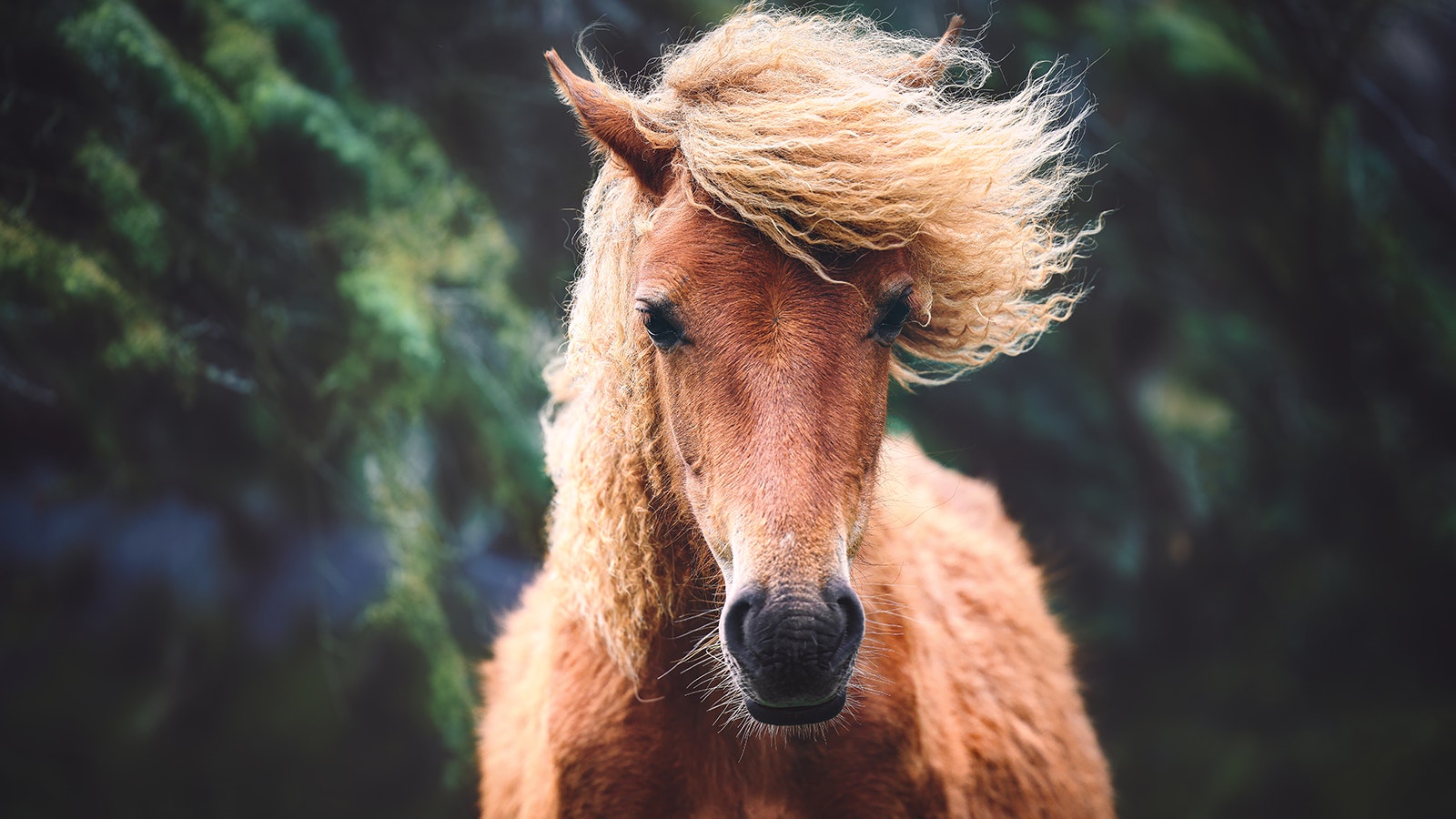
  • A rare horse with a curly coat and mane.A rare horse with a curly coat and mane. (Getty Images)
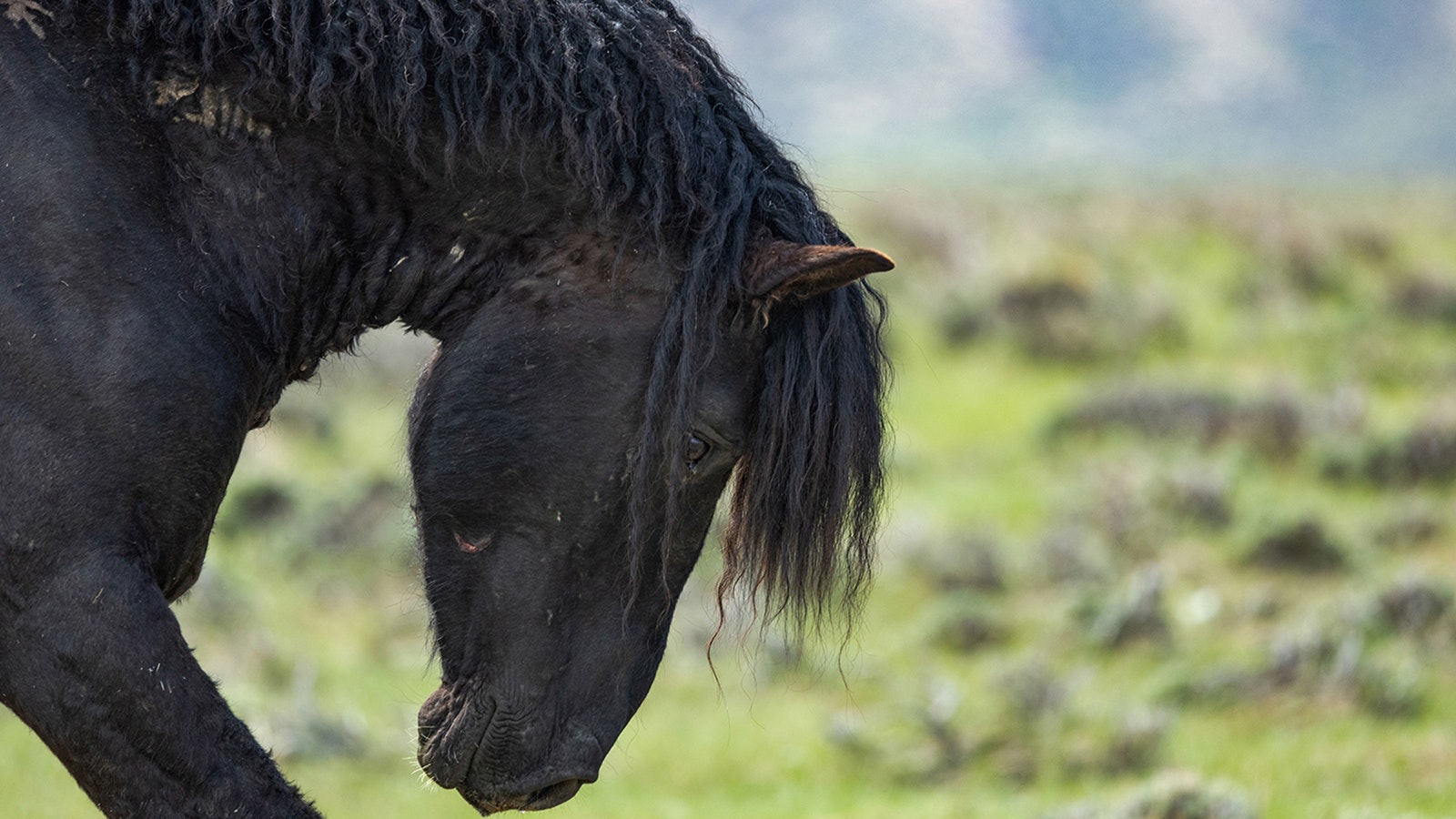
  • Bubba was a legendary curly-maned stallion that was part of the Salt Wells Creek herd near Rock Springs.Bubba was a legendary curly-maned stallion that was part of the Salt Wells Creek herd near Rock Springs. (Courtesy Carol Walker)
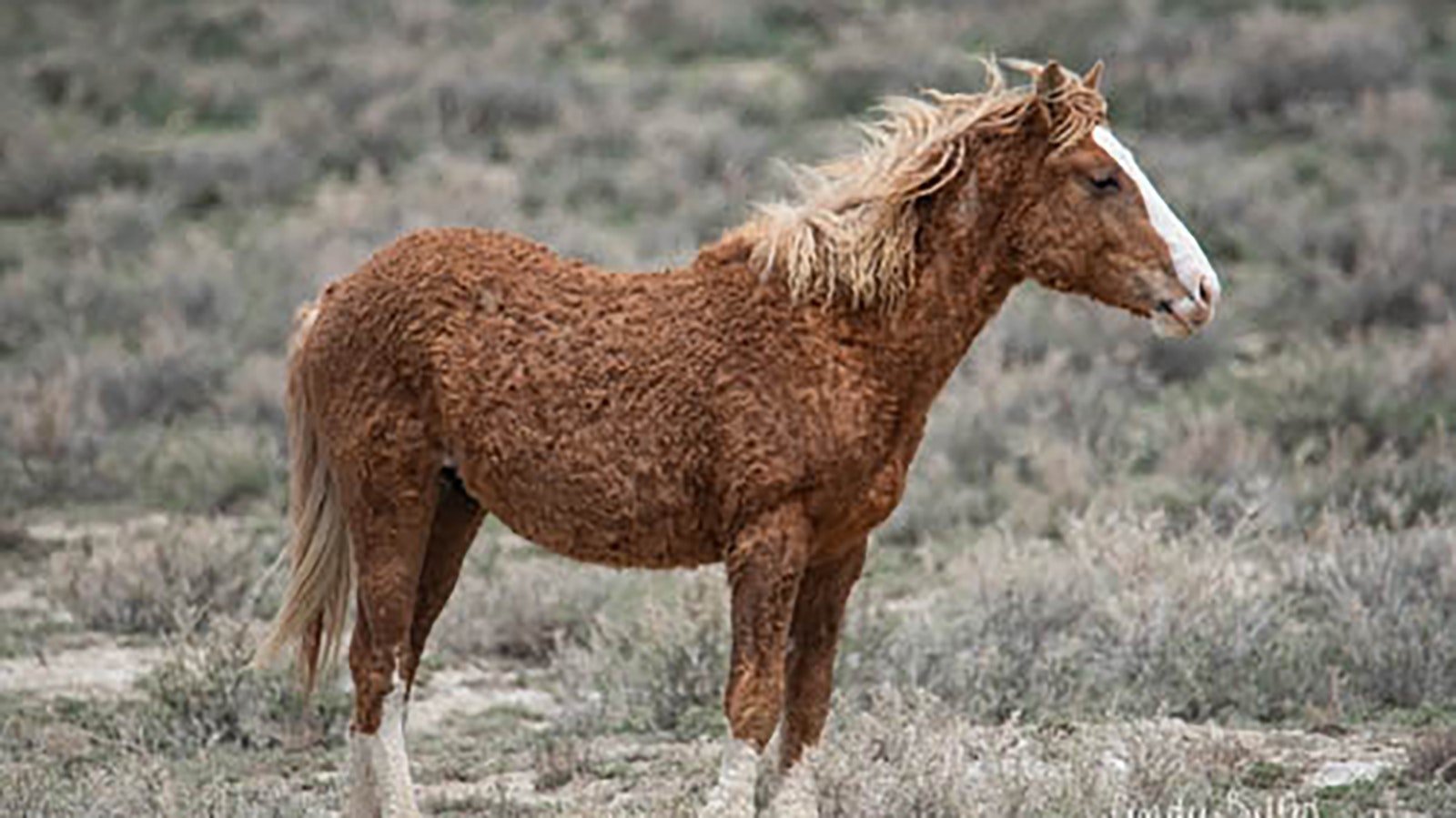
  • The Salt Wells Creek mustang herd near Rock Springs is only one of two herds in Wyoming known to have horses with curly coats.The Salt Wells Creek mustang herd near Rock Springs is only one of two herds in Wyoming known to have horses with curly coats. (Courtesy Buller)
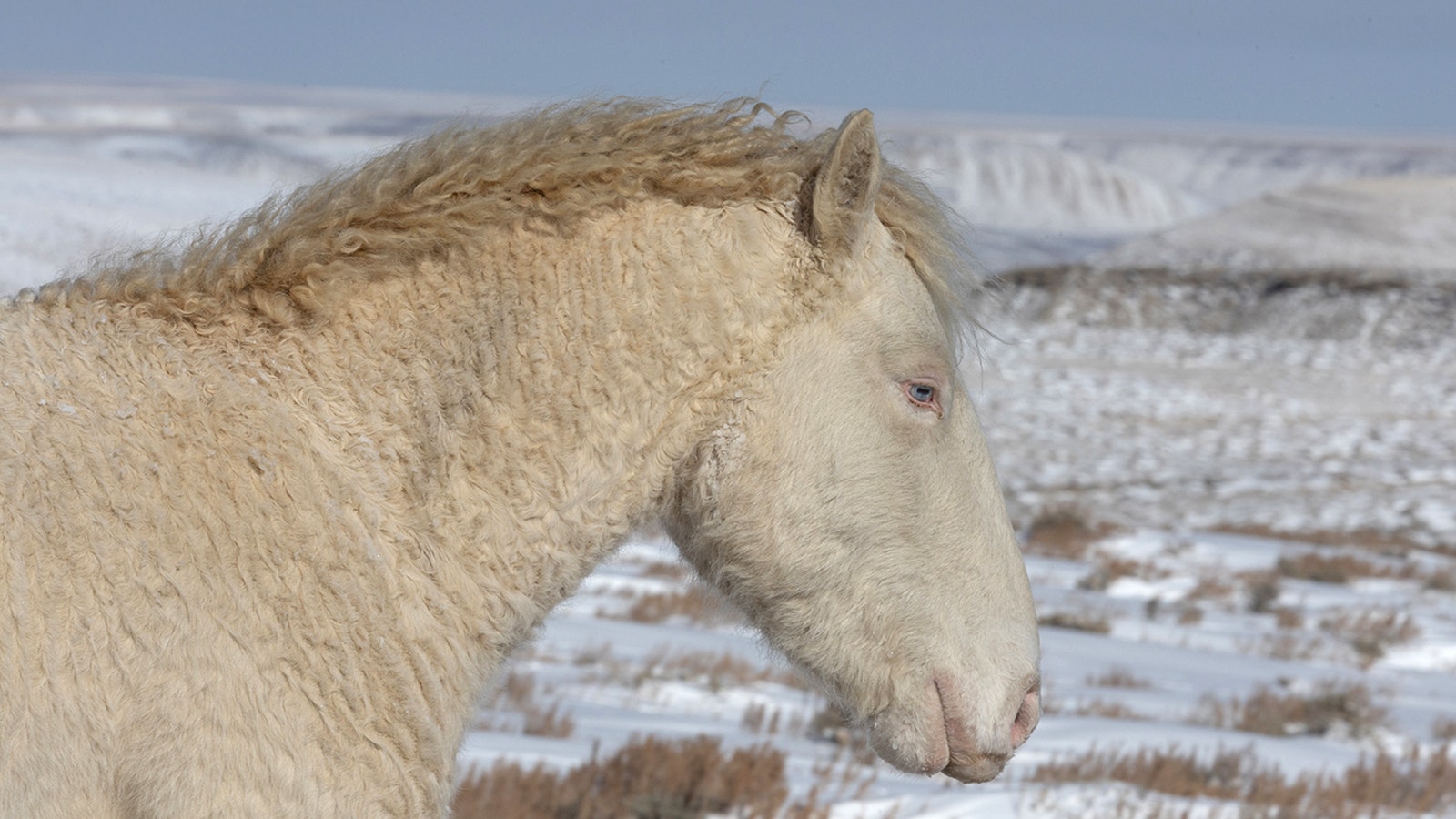
  • A mustang called Julian, part of the Salt Wells Creek herd near Rock Springs, grows a rare curly coat during the winter.A mustang called Julian, part of the Salt Wells Creek herd near Rock Springs, grows a rare curly coat during the winter. (Courtesy Carol Walker)
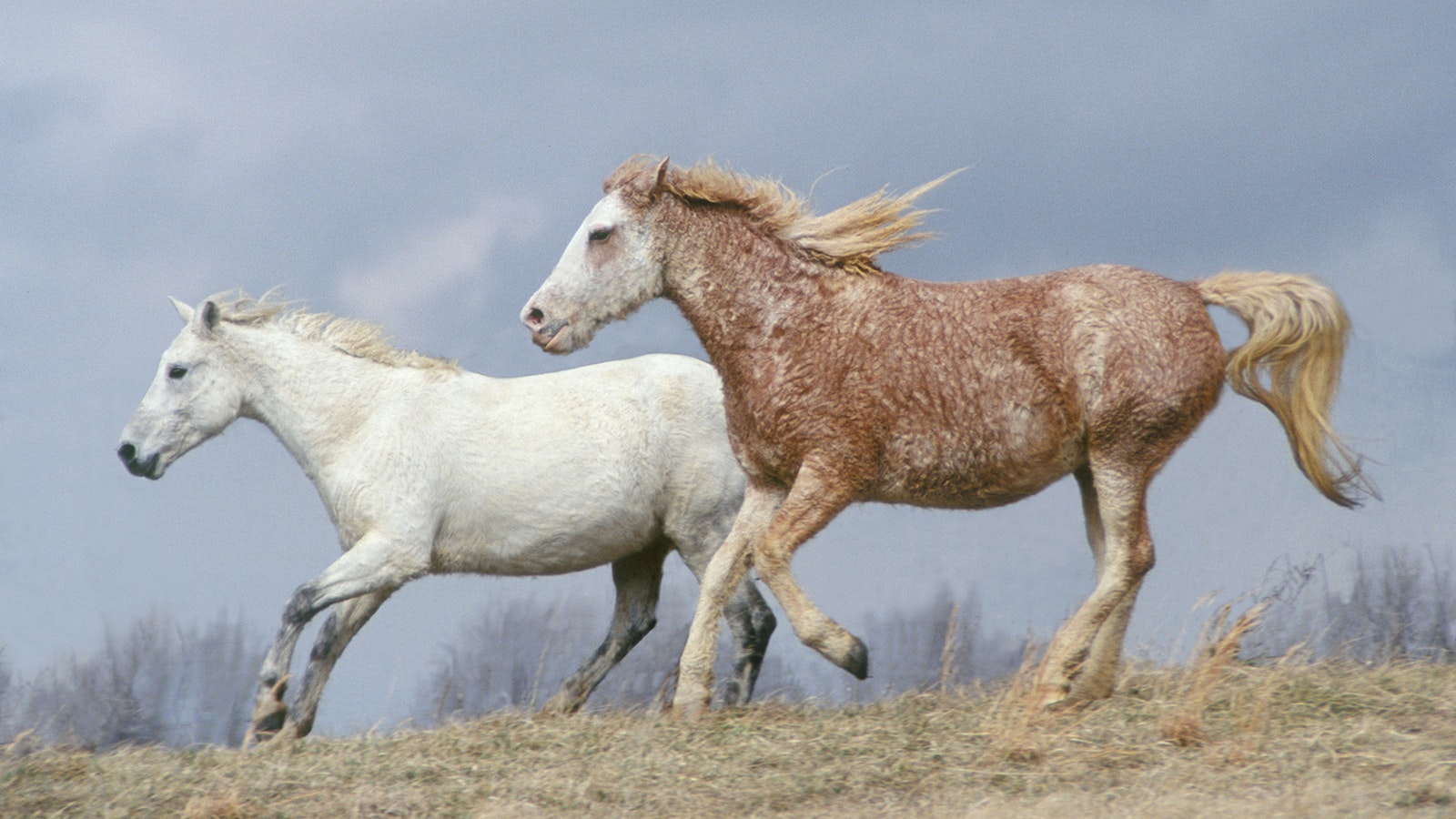
  • Two of a herd of horses with curly coats and manes.Two of a herd of horses with curly coats and manes. (Mark J. Barrett via Alamy)

Arrow leftArrow right

Attorneys Argue For Roundups

A Justice Department attorney representing the BLM argued on Tuesday that the agency has latitude to determine if habitat is suitable for mustangs, according to court records.

Leaving the horses in the areas in question would require staff to go out and push them off private land almost constantly, attorney Ezekiel Peterson argued to the panel of judges.

Danielle Bettencourt, attorney for the Rock Springs Grazing Association, also sided with the BLM, according to court records. 

Landowners may ask for mustangs to be removed from their property under a provision of Wild and Free-Roaming Horses and Burros Act of 1971, Bettencourt argued.

If the roundups go forward, the horses will be taken to BLM holding facilities in Rock Springs and Wheatland, where many of them will be put up for adoption.

‘Inconvenient’ Mustangs

Walker said the plaintiffs are arguing that the BLM’s claims don’t hold up.

The agency was put in charge of managing mustang herds under the 1971 act.  And rounding up an entire herd just because some stray on to private land isn’t sound management, the plaintiffs argue.

“You can’t just decide that because it’s inconvenient to manage them, you then just remove all of them,” Walker said. 

She added that she couldn’t guess which way the judges might rule. But she and other mustang advocates hope the court rules in their favor, before the roundups start in July.

Curly Hair Remains A Mystery

The Salt Wells Creek mustangs and nearby White Mountain mustangs are the only Wyoming herds known to have curly-haired horses.  

It’s not known for certain why these two remote Wyoming mustang herds include curly-haired horses, Walker said. 

There are some domestic horse breeds in Europe that have that feature. But a genetic link between the European horses and the Wyoming mustangs remains disputed, she said. 

Removing the Salt Wells Creek mustangs would mean the loss of a rare and hugely popular attraction, Walker said. 

“Salt Wells Creek is one of the most beloved horse herds in Wyoming. People come from all over the world to see them,” she said.

She also questioned the need to thin the herd near Adobe Town, because it already suffered heavy losses during the brutal winter of 2022-2023. 

Tens of thousands of deer, antelope and elk starved or froze to death that winter in central and southwest Wyoming, as well as in northwest Colorado.

CWD detected in some deer during the 2024-25 deer hunting season

By Other News –

March 19, 2025

198

Share on FacebookTweet on Twitter

deer
(ODNR photo)

COLUMBUS — The Ohio Department of Natural Resources Division of Wildlife confirmed that 24 white-tailed deer taken during the 2024-25 hunting season tested positive for Chronic Wasting Disease. A total of 5,783 deer were tested. Twenty-three deer were taken by hunters in Allen, Hardin, Marion and Wyandot counties. For the first time, a deer harvested by a hunter in Morrow County also tested positive for CWD.

CWD is a neurological disease that is fatal to white-tailed deer and other similar species, including mule deer, elk and moose. Once an animal is infected, there is no cure for CWD. According to the Centers for Disease Control and Prevention, there is no strong evidence that CWD is transmissible to humans. Find more information on CWD at ohiodnr.gov/cwd.

More information. Up-to-date information on Chronic Wasting Disease in Ohio can be found on the new CWD dashboard. The dashboard includes location and harvest information for all CWD-positive wild white-tailed deer confirmed since 2020. In addition, the interactive site helps hunters monitor the status of deer they submitted for testing.

The Division of Wildlife has extensively monitored and tested deer in the disease surveillance area since CWD was discovered in the wild in 2020. The Division of Wildlife has conducted routine surveillance for CWD since 2002, with more than 40,000 deer tested. The disease was first discovered in the 1960s in the western U.S. More information about this disease is available at cwd-info.org.

DNR to allow bobcat trapping in 40 counties across Indiana

Posted on 

File PhotoBy Chris Essex

INDIANAPOLIS, Ind. (WLFI) — Bobcat trapping season will officially go into effect this fall.

The decision comes after the Indiana Natural Resource Commission signed off to allow regulated trapping. 

The approved season will extend to 40 counties in southern Indiana.

This includes a limit of one bobcat per trapper and a season quota of 250 bobcats.

Bobcats are Indiana’s only native wild cat.

They were endangered at one point for more than 50 years before being removed from the endangered list in 2005.

For more information on the rule change, visit in.gov/dnr.

AR15s For Hunting – Europe vs USA

by Eric B

Published: March 19th, 2025

ar15s for hunting europe vs usa

I was recently involved in a test of more than ten AR15s for hunting, including a number of brands from both Europe and the USA. To fire guns with free ammo and let others know what you think about them is always great fun, and this occasion was no exception. The testing involved both shooting in an indoor cinema and outdoors. The good thing with the cinema was that due to the low light, it was difficult to see what kind of brand and rifle I was using, to avoid any bias to a particular brand.

The AR-15 @ TFB:

Sweepstsake Banner
ar15s for hunting europe vs usa, Ruger DAR Germany Grand Power and LWRCI left to right

Ruger, DAR Germany, Grand Power and LWRCI (left to right).

Think before you buy

In some countries, the Government restricts the number of guns you can own, but regardless here’s some general advice from my side. Don’t just buy the cheapest rifle to fill your gun safe. Take care of your hunting rifle collection and choose the right rifle—one that really suits you! Also, keep an open mind that the AR platform might not be the best solution for your specific needs. Bolt-actions can be quite nice as well, and in some hunting parties, the AR-15 might not be as welcome – or at all.

ar15s for hunting europe vs usa, The Grand Power R15 Freya with 18 barrel Note the skeletonized magazine well which is a feature I d avoid on a rifle that s to spend a lot of time in the dirt

The Grand Power R15 – Freya with 18” barrel. Note the skeletonized magazine well, which is a feature I’d avoid on a rifle that’s to spend a lot of time in the dirt.

A good friend of mine rushed to buy an AR-15 as soon as he could, without seeking better advice (mine, for instance). Now he’s stuck with a rifle that’s extremely front-heavy and has the longest, non-adjustable stock on the market. Did I mention he’s rather short? Modifying his rifle to fit him properly is certainly possible, but it will cost him thousands. He’s in the middle of that process right now, and it’s not going that well. I guess one day, after all his rebuilds, he’ll know his rifle really well and have tons of AR furniture left to sell on the secondhand market.

ar15s for hunting europe vs usa, The German take on an AR 15 for hunting the Schmeisser Hunter Pro with an 18 Lothar Walther barrel This model has Schmeisser s famous adjustable gas block which is great to adjust for your ammunition and if you re going to run it suppressed

The German take on an AR-15 for hunting, the Schmeisser Hunter Pro with an 18″ Lothar Walther barrel. This model has Schmeisser’s famous adjustable gas block, which is great to adjust for your ammunition and if you’re going to run it suppressed.

In many countries, especially in Europe, buying and selling firearms requires permits and involves a lot of bureaucracy. Do what you can to expand your budget and invest in something solid—something you will actually use and rely on. A hunting rifle you look forward to shooting. The gun(s) gathering dust in the back of your safe isn’t going to bring you any joy, or not as much joy anyway.

ar15s for hunting europe vs usa, The Diamondback Firearms DB15 Hunter Edition with an 18 barrel in 223 Rem A budget friendly example which provided good accuracy I zeroed another one at 310 meters on a 20 cm steel plate and even with the cheapest ammunition in the store and a so so optic I got about 80 hit rate which impressed me With an improved trigger this rifle would be even better

The Diamondback Firearms DB15 Hunter Edition, with an 18” barrel in .223 Rem. A budget-friendly example, which provided good accuracy. I zeroed another one at 310 meters on a 20 cm steel plate, and even with the cheapest ammunition in the store and a so-so optic I got about 80% hit rate which impressed me. With an improved trigger, this rifle would be even better.

ar15s for hunting europe vs usa, A rare sight in the USA if it even exists The Hera Arms GmbH from Germany What do you think of the design of the lower

A rare sight in the USA, if it even exists. The Hera Arms GmbH, from Germany. What do you think of the design of the lower?

ar15s for hunting europe vs usa, A LWRCI M6IC in 223 Rem I tried to blind test the rifles as much as possible and this was my favorite No wonder it also cost the most but the finish and feel were second to none Also the Geissele trigger is very good for hunting with its two stage control

A LWRCI M6IC in .223 Rem. I tried to blind-test the rifles as much as possible, and this was my favorite. No wonder it also cost the most, but the finish and feel were second to none. Also, the Geissele trigger is very good for hunting with its two-stage control. 

Shooting in a tunnel to check the accuracy. There’s no wind to mess things up, but firearms with compensators are quite unpleasant to shoot here.

More: https://www.thefirearmblog.com/blog/ar15s-for-hunting-europe-vs-usa-44819284

Washington state’s Makah Tribe submits permit for traditional whale hunt this year


by Stella Sun, KOMO News ReporterTue, March 18th 2025 at 6:09 PM

Updated Wed, March 19th 2025 at 9:35 AM

UserWay icon for accessibility widget

auto640x360, 1164kbps854x480, 1714kbps1280x720, 3364kbps0.25×0.5xnormal1.5x2x

00:00

02:34

FILE - In this May 17, 1999, file photo, a boy reaches out to touch the carcass as Makah Indian whalers strip a gray whale of its flesh and villagers and media members gather around following the tribe's first successful whale hunt in over 70 years, in Neah Bay, Wash. (AP Photo/Elaine Thompson, File)

Image icon

3

VIEW ALL PHOTOS

View All Photos

FILE – Two Makah Indian whalers stand atop the carcass of a dead gray whale moments after helping tow it close to shore in the harbor at Neah Bay, Wash., May 17, 1999. Earlier in the day, Makah Indians hunted and killed the whale in their first successful hunt since voluntarily quitting whaling over 70 years earlier. The United States on Thursday, June 13, 2024 granted the Makah Indian Tribe in Washington state a long-sought waiver that helps clear the way for its first sanctioned whale hunts since 1999. (AP Photo/Elaine Thompson, File)Listen to storyListenComment on this storyComment

110Share storyShare

chevron right arrow icon

WASHINGTON STATE — After more than a quarter century, the Makah Tribe in Neah Bay is looking to hunt gray whales in the coming months. The Tribe submitted an application on Tuesday to hunt the marine mammals from July to October.

For the Makah Tribe, hunting whales is tradition. The tribal council submitted an application for a hunt under the Marine Mammal Protection Act to the National Oceanic and Atmospheric Administration (NOAA) Fisheries. The federal regulator is seeking public comment on the Makah Tribe’s permit application for a limited hunt for eastern North Pacific gray whales for ceremonial and subsistence purposes.

“The Makah tribe, through the 1855 Treaty of Neah Bay, reserved rights of whaling and sealing. That’s been a practice that has gone on for millennia,” Timothy Greene, the Makah Tribal Council Chairman, said.

The Makah are the only tribe with a treaty with the U.S. that specifically mentioned the right to hunt whales.

RELATED | Washington state’s Makah tribe clears major hurdle toward resuming whale hunts

1999 was the last time the Makah people practiced what they call a cultural ceremony.

“It was just a wonderful time for our community, revitalized a lot of our cultural and spiritual practices and changed lives for people, Greene said.

Promoted Links

Amazon Is Losing Money as Washington Shoppers Are Canceling Prime for This Clever HackOnline Shopping Tools

The hunting permit submission comes after more than two decades of legal challenges. The 1972 Marine Mammal Protection Act forbids harming marine mammals. In June 2024, the tribe cleared a major hurdle, the feds approving the tribe’s request for a waiver to hunt gray whales.

“There’s a whole generation that hasn’t been able to undertake this activity and participate in those ceremonies and celebrate their culture around our whaling tradition,” Greene said.

NOAA Fisheries is reviewing the submission. If approved, members can hunt two or three Eastern North Pacific Gray Whales a year, or 25 total over a decade.

“We understand that [some] people are opposed to those types of activities. We’re not a threat to this whale population. We want to make sure that it’s healthy and thriving just as they do,” Greene said.

Comment bubble

JOIN THE CONVERSATION (110)

Animal rights advocates, who have long opposed whaling, could also challenge NOAA’s decision in court. DJ Schubert, a senior wildlife biologist with the Washington, D.C.-based Animal Welfare Institute, has previously told KOMO News his organization would object to the issuance of the hunting permit but likely wait until final approvals are given before deciding whether to sue.