An overdue hunter was found dead after he was mauled by a bear in Alaska, authorities said.
Tad Fujioka, 50, of Sitka, Alaska, was reported overdue from a deer hunting trip on Tuesday evening, the Alaska State Troopers said in a dispatch Wednesday. State wildlife troopers and the U.S. Coast Guard launched multiple search teams to look for Fujioka on Wednesday morning in a remote wooded area.
At about 11:30 am, Fujioka’s remains were found and an “investigation revealed he was the likely victim of a fatal bear mauling,” troopers said.
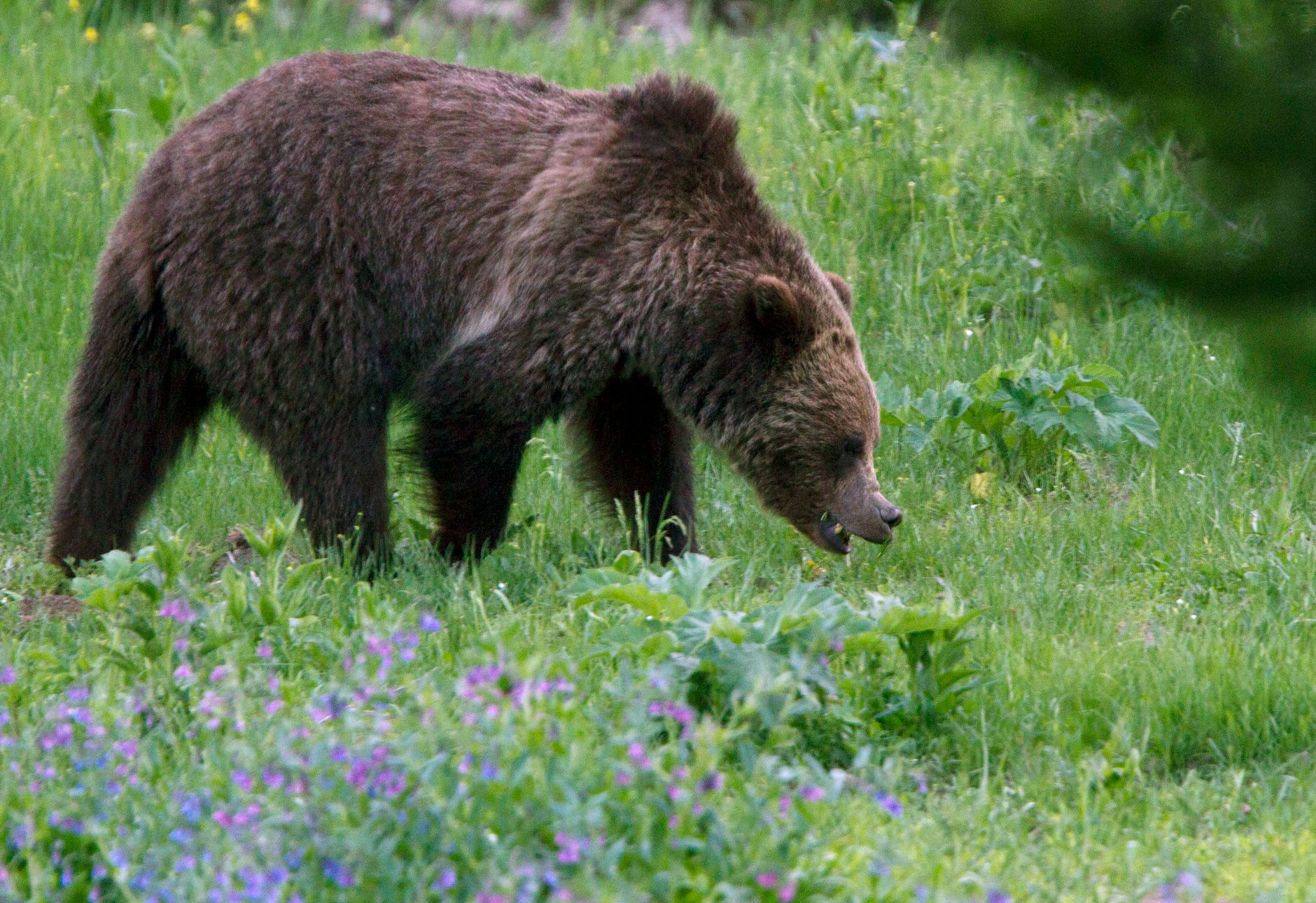
Brown bears had apparently mauled Fujioka and consumed a deer he had killed, the Associated Press reported. A Coast Guard helicopter spotted three bears near the dead deer and alerted search crews, troopers spokesperson Tim DeSpain said in an email to The AP.
Officials said that Fujioka’s body was recovered and his next of kin have been notified.
Alaska is home to black bears and polar bears but brown bears — which include grizzlies — are the most common in the state.
According to the Alaska Department of Fish and Game, brown bears and grizzly bears are both common names for the same species, Ursus arctos, but the main difference is their geographic location. Brown bears typically live along the southern coast of the state while grizzlies can be found in the northern and interior parts of the state.
Sitka is located on Baranof Island in southeastern Alaska, about 90 miles southwest of Juneau.
In August, authorities said a hunter was seriously injured in Alaska after being mauled by a brown bear and shot during an effort to fend it off.
Less than a month after reporting its first human case of bird flu, California has confirmed that 16 people have now been infected with the disease, and a Newsweek map shows how the numbers compare with the rest of the U.S.
Nationwide, the total number of people infected with the avian influenza H5N1 in 2024 now stands at 36.
“To date, [the Centers for Disease Control and Prevention (CDC)] has confirmed infection of 16 farmworkers with H5N1 bird flu in California,” the CDC said in an update on Tuesday. “Genetic sequencing of nine of these cases confirms that all are H5N1 viruses from clade 2.3.4.4b and that all are closely related genetically to the virus causing infections in domestic dairy cattle.”
All of the cases in California have arisen in dairy farmworkers, the CDC said, as is the case with the majority of infections across the country. Elsewhere, 15 cases—nine in Colorado and six in Washington—have been associated with poultry farms.
The source of infection for one patient in Missouri has still not been identified.
A map shows human cases of bird flu across the U.S. in 2024.
Number of Human Bird Flu Cases
Number of Human Bird Flu Cases001616
A map shows human cases of bird flu across the U.S. in 2024. California has seen a surge of 16 cases after reporting its first earlier this month.
California has been by far the hardest hit state since the virus, which had been infecting wild bird and poultry populations around the world, was detected in cattle earlier this year.
According to the latest CDC data, 186 livestock herds have been affected in California by the outbreak, 142 of which have been hit in the last 30 days.
“The current bird flu situation in the U.S. is quite disturbing and odd,” Jeremy Rossman, senior lecturer in virology at the University of Kent, U.K, previously told Newsweek when California reported its first cases among farmworkers. “I do not think they are doing a good job at containing the outbreak, and put simply, they are not containing the outbreak.”
So far, all cases are thought to have arisen via animal spillover, but as more and more humans get infected, the risk that the virus could jump between people increases.
“The more transmission that occurs in cows—and the more human spillover that occurs—the more chances that the virus will mutate and start to spread from person to person,” Rossman told Newsweek.
If that were to happen, especially as flu season approaches in the U.S., the implications could be serious. “The biggest concern is that we just don’t know what it would be like if, in fact, we did get this human transmissible bird flu coming from cattle,” Rossman said.
In its update, the CDC confirmed that “all available data so far suggest sporadic instances of animal-to-human spread” and that “the farmworkers in California and Washington state all described mild symptoms, many with eye redness or discharge (conjunctivitis).”
However, Rossman said that the nature of mutation means that if the virus begins spreading in human populations, its characteristics could change too. Rossman added, “The concern is that we would get person-to-person spread as efficiently as you get with seasonal flu, but that it has a very high case fatality rate.”
Montana Fish, Wildlife and Parks has released proposed regulations for the 2024-2025 wolf trapping season. The draft is available for public comment from now until November 12.
New this year is a court-established geographic area limiting wolf trapping. This comes after a judge ruled wolf trapping in certain regions threatened federally protected grizzly bears. The proposal also includes new rules that would go into effect throughout that geographic area, if a grizzly were to be incidentally caught in a trap.
Under the new regulations, the court-established geographic area will have a shorter trapping season from January 1 to February 15. Areas outside that zone of grizzly habitat will allow a longer trapping season.
The Fish and Wildlife Commission will vote on the changes in their November 12 meeting.
Western Montana big-game hunters start the season with strong harvest numbers
West central Montana hunters enjoyed a robust start to the big game general hunting season this weekend.
Montana Fish, Wildlife and Parks says data collected at check stations near Anaconda, Bonner, Darby and Fish Creek show harvest numbers ahead of last year’s opener.
For example, the white-tailed deer and elk harvest was almost double the 2023 opening weekend at the Bonner station. Region-wide, the elk harvest was up 30 percent from the same time last year.
Hunter traffic was steady, too.
More hunters passed through each of the stations this opening weekend compared to last.
Overall, west-central Montana’s four wildlife check stations saw over 2,300 hunters collectively. That’s nearly 200 more than last year.
Hunters are required to stop at all check stations they pass, even if they have not harvested any animals.
TERRE HAUTE, Ind. (WTHI) – We have more information about a Terre Haute death investigation led by the Department of Natural Resources.
We first told you Tueday that conservation officers said they were called to the 7500 block of East Devonald Avenue for an unresponsive man. That man was identified as Mike Pastorious, 51. Officials said he was later pronounced dead.
Now, the DNR says Pastorious fell from an elevated hunting stand, about 15 feet in the air.
After an autopsy, his cause of death was determined to be blunt force trauma, along with contributory medical issues. His exact cause of death is still pending toxicology results.
The Forest Service contends its cattle grazing expansion has a minimal impact on the area’s grizzly bear population, but a conservation group disagrees.
FILE – In this Wednesday, July 6, 2011, file photo, a grizzly bear roams near Beaver Lake in Yellowstone National Park. The U.S. Interior Department announced Thursday, June 22, 2017, that the grizzly population in the Yellowstone vicinity has recovered and federal protections will be lifted, which will allow Montana, Wyoming and Idaho to hold limited bear hunts outside park boundaries. (AP Photo/Jim Urquhart, File)
(CN) — The question of whether the expansion of cattle grazing on public lands near Yellowstone National Park will endanger grizzly bears took center stage in Montana federal court Tuesday.
The case centers on the Forest Service’s authorization and expansion of cattle grazing on public land to the north of Yellowstone National Park. The nonprofit conservation group Western Watersheds Project accuses the Forest Service of foregoing the necessary analysis required under federal environmental law.
“This is a special place and rugged landscape that remains largely wild,” Matthew Bishop, attorney for the group, said during an oral argument before U.S. Magistrate Judge Kathleen DeSoto on Tuesday morning. “It’s also an area very important for grizzly bear conservation.”
At issue are six allotments of land in the Custer-Gallatin National Forest’s Absaroka Mountains. Three of the allotments have been used for cattle grazing for over 100 years, but the decision authorizes additional acreage and a prolonged season. The other three are vacant currently, but the agency may permit future grazing.
In 2021, the Forest Service issued an environmental assessment as required under the National Environmental Protection Act, authorizing the expansion of the grazing allotments.
“At the time that decision was made there was and remains a significant escalation in human-caused grizzly mortality in the Greater Yellowstone, including from livestock grazing,” Bishop said.
The Forest Service pointed out that successful recovery efforts have increased the grizzly bear population.
“This increase in grizzly bear population and disbursement has caused conflict with livestock and humans to increase as well,” Krystal-Rose Perez, attorney for the federal defendants, said.
The Forest Service considered the increased risks of potential conflicts and concluded there wouldn’t be a significant impact when it issued the environmental assessment, Perez said.
Western Watersheds argued that the Forest Service neglected to take a “hard look” at the effects to grizzly bears and relied on an outdated standard ignoring the current conditions and cumulative effects of the decision.
The Forest Service argued the impacts were considered and the environmental assessment is intended to be brief to be understandable to the public, drawing questioning from the judge.
“How concise is too concise?” DeSoto asked, noting that she understands the intent of the document is to summarize agency decisions. “There’s a point at which an EA becomes so concise as to be devoid of any information, and when I read the cumulative effects section here, I’m concerned about that.”
The conservation group argued that ongoing activities in the area and other issues, like the disruption of bear connectivity, are absent from the document.
The Forest Service pushed back on that argument.
“While this is the first time they are doing NEPA analysis, the Forest Service has complied with substantive environmental laws for decades now,” Perez said.
Further, Perez argued, vacating the environmental assessment would mean the conservation measures outlined in the plan would also be vacated, such as invasive grass control and minimizing damage to streams.
“We certainly wouldn’t want to vacate any positive repairing restoration efforts,” Bishop said.
DeSoto asked the conservation group how the court should reckon with navigating a possible vacatur.
“What scalpel can I use, under your theory, to allow some of the benefits, including the invasive grass issues and things like that, but not allow the change?” DeSoto asked.
Bishop told the court the conservation group would request a partial vacatur limited to cattle grazing.
“We certainly feel like the significance of the errors, in terms of overlooking this potential effect, far outweighs any disruptive consequences,” Bishop said.
Maine’s traditional fall hunting seasons are in full swing, but hunters are being asked to avoid eating their game in parts of the state because of the possibility of harmful chemicals in animal meat
PORTLAND, Maine (AP) — Maine’s traditional fall hunting seasons are in full swing, but hunters are being asked to avoid eating their game in parts of the state because of the possibility of harmful chemicals in animal meat.
Hunters from around the Northeast trek each autumn to Maine, where deer and wild turkeys are two of the most popular game animals. The Maine Department of Inland Fisheries and Wildlife said it has issued a “do not eat wildlife consumption advisory” in several communities in the central part of the state.
The department said in a statement that it sampled wildlife in the area and found they had levels of PFAS in their muscle tissue that warranted the advisory. PFAS, or per- and polyfluoroalkyl substances, are chemicals that persist in the environment and are linked to human health problems including cancer and low birth weight.
“The advisory areas encompass areas that have been contaminated by high levels of PFAS through the spreading of municipal and/or industrial sludge that contained PFAS. Deer and turkey feeding in these contaminated areas have ingested these chemicals and now have PFAS in their meat and organs,” the department said Thursday.
The advisory covers portions of Unity, Unity Township, Albion and Freedom, in addition to existing advisory areas in Fairfield and parts of Skowhegan, the department said. The department said it based the advisory on the testing of 54 deer and 55 turkeys for the presence of PFAS. The advisory arrived not long before the state’s popular “resident only day” for deer hunters on Nov. 2.
It’s unknown how long the advisories will stay in place. The department said New Hampshire, Michigan and Wisconsin have also issued consumption advisories regarding PFAS and deer.
Maine was one of the first states to detect PFAS in deer. The presence of the “forever chemicals” in wildlife and fish has been increasing as a focus for public health regulators in recent years.
PFAS substances have long been used in household products such as non-stick cookware and food packaging. The chemicals are also used in firefighting foams and appear in some fertilizers. Federal authorities have also taken actions to try to limit PFAS pollution amid concerns about the substances appearing in food, drinking water systems and private wells.
Mason County firefighters were called to the scene, but asked for help from the sheriff’s office in getting to the victim below. But because of the steep landscape, neither deputies nor firefighters were able to safely reach the victim.
Switching to another tactic, an Aberdeen Police officer arrived with a drone and flew it to the victim’s location. From the video, it was determined that the woman was dead, and was believed to have died upon impact with the ground.
Though firefighters and deputies wanted to recover the victim’s body as soon as possible, the steep terrain and bad weather kept them from reaching her that night. They asked for the help of the Mason County Sheriff’s Office Special Operations Rescue Team (SORT), but by the time the team climbed to the location, the rising river had swept the victim’s body downstream.
As of Sunday, the Thurston County Sheriff’s SORT — specifically trained in swift water rescue — is working with Mason County SORT to find and recover the victim.
The victim was identified as 24-year-old Haley Benjamin of Elma.
“Our condolences go out to her family and friends,” the Grays Harbor Sheriff’s Office said in a Facebook post. “The Grays Harbor County Sheriff’s Office appreciates all the multi-jurisdictional support we have received during this tragic event. Operations are ongoing.”