Unknown's avatar

About Exposing the Big Game

Jim Robertson

Crows are even smarter than we thought

New evidence suggests the corvid family has surprising mental abilities.
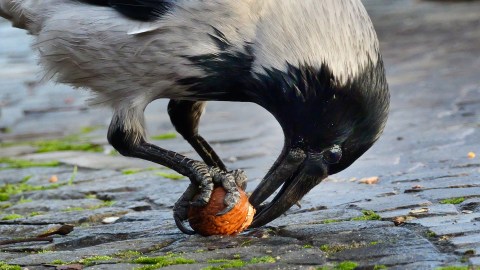
A hooded crow, exemplifying the intelligence of smart crows, pecks at a nut it holds with its claws on a mossy stone ground.
Crow uses pavement for leverage to crack a nut.Wolfram Steinberg / picture alliance / Getty Images

Kenna Hughes-CastleberryCopy a link to the article entitled http://Crows%20are%20even%20smarter%20than%20we%20thought

Share Crows are even smarter than we thought on FacebookShare Crows are even smarter than we thought on Twitter (X)Share Crows are even smarter than we thought on LinkedIn

Story by

Sign up for the Smarter Faster newsletter

A weekly newsletter featuring the biggest ideas from the smartest people

Fields marked with an * are required

Crows and ravens, which belong to the corvid family, are known for their high intelligence, playful natures, and strong personalities. They hold grudges against each other, do basic statistics, perform acrobatics, and even host funerals for deceased family members. But we keep learning new things about the savvy of these birds, and how widespread that savvy is among the corvid family.

Featured VideosThe video player is currently playing an ad. You can skip the ad in 5 sec with a mouse or keyboard

Earlier this year, a team of researchers from Lomonosov Moscow State University in Russia and the University of Bristol found that a species of crow called the hooded crow—which has a gray bust and black tail and head feathers, making it look like it is wearing a “hood”—is able to manage a mental feat we once thought was unique to humans: to memorize the shape and size of an object after it is taken away—in this case a small piece of colored paper—and to reproduce one like it.

This kind of feat, according to animal behavior researchers, requires the ability to form “mental templates.”Essentially, a mental template is an image in the mind of what a particular object looks like, even when that object is not present. Mental templates allow animals to create tools, which can be used to get food or make a stronger nest, both ultimately leading to a better chance of survival. They might also make it possible for individuals to learn about tool making from other members of their species—and to pass along improvements in tool making over time, often called “cumulative culture,” which so far seems rare among non-human animals.

We have been looking for evidence that different corvid and other bird species can create mental templates since at least 2002. That year, researchers published findings showing that Betty, a captive New Caledonian crow, was able to spontaneously bend a piece of wire to create a hook that she could use to grab a hard-to-reach treat. Betty had successfully used a pre-made hook to obtain the treat in earlier trials but in follow-up tasks didn’t seem to fully understand how hooks work.  The researchers decided she must have formed a mental template of the hook, which she then reproduced. So far, researchers have found that Goffin cockatoos, a kind of parrot, can also create tools spontaneously, which could indicate similar mental agility.

But the new hooded crow findings suggest that the ability to learn this way could be more widespread than we thought, says Sarah Jelbert, a comparative psychologist who studies animal behavior at the University of Bristol and is one of the authors of the study. Creating and using mental templates might be a skill that evolved in the ancestor of all corvids, the “Corvida” branch of songbirds, or perhaps it is even shared more broadly across the animal kingdom, she says.
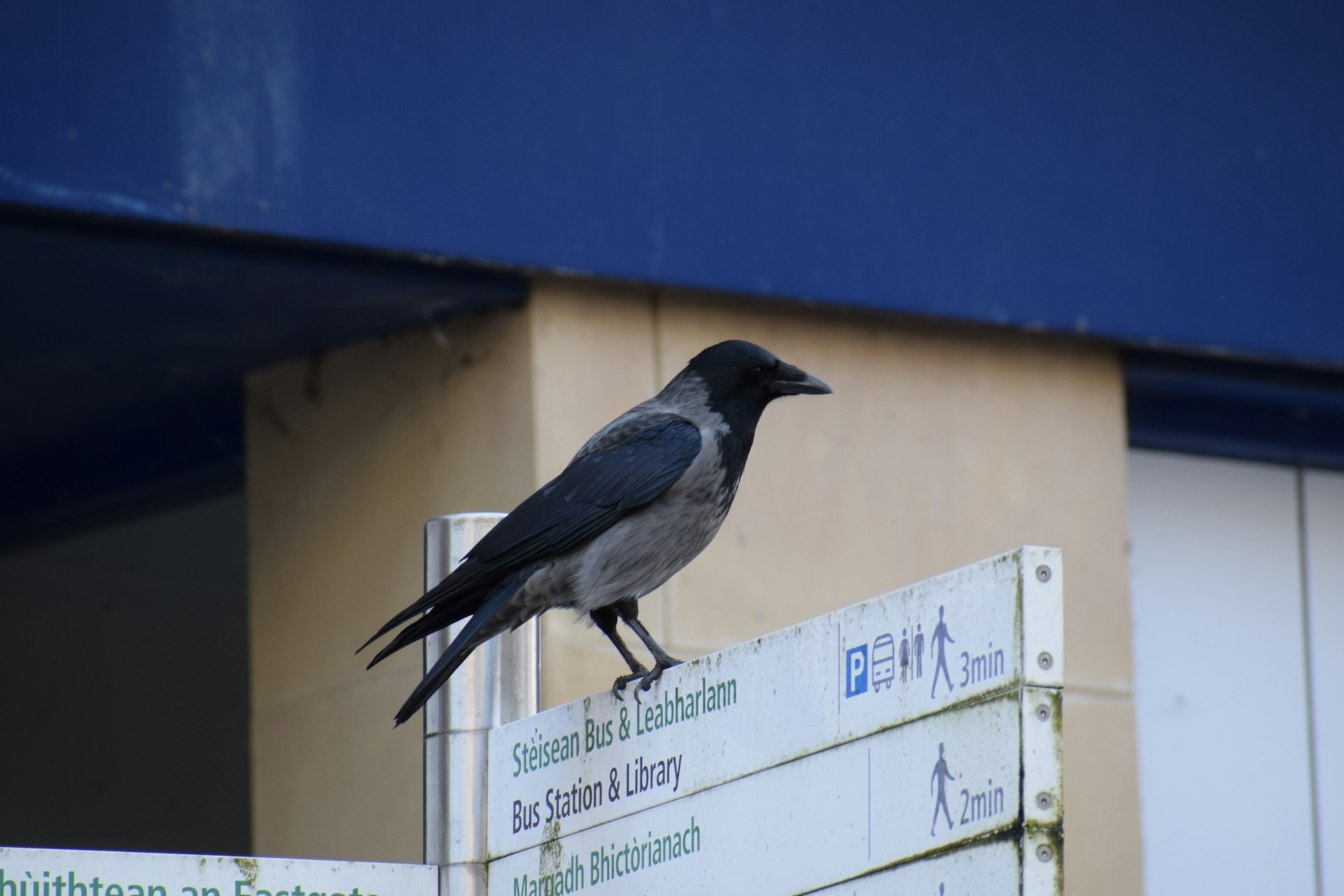
For their study, Jelbert and her colleagues first trained three hooded crows—Glaz (15 years old), Rodya (4 years old), and Joe (3 years old)—to recognize pieces of paper of different sizes and colors. To do this, they exposed the birds to “template” pieces of paper in different colors and sizes for several minutes before removing them—and then rewarded the birds for dropping scraps that matched these templates into a small slit.

Top Stories

symbol

00:24

02:40

Read More

The crows were next given the opportunity to manufacture versions of these objects in exchange for a reward. The researchers found that all three crows manufactured objects that matched the original template object they had been rewarded for in both color and size—even though the treats in this second stage of the experiment were awarded at random. The researchers also observed that Glaz, the oldest of the three hooded crows, seemed to be the most proficient at making scraps that looked like the ones the bird was trained on. This finding suggested to them that mental templates may be linked to experience garnered with age.

“Unlike humans, who regularly copy each other’s behavior … we don’t have much evidence that crows will watch each other and deliberately copy what another crow is doing,” Jelbert says. However, they will steal each other’s tools—in particular, juvenile crows often steal their parents’ tools when they are young. So it’s possible that young crows learn how to make different types of tools from experience stealing their parent’s tools, using them, remembering what these tools look like, and then trying to create something similar, Jelbert says.

What qualifies as a mental template, and how flexible these templates are, seems to be up for some debate. Research suggests birdsong and mating practices may rely on certain kinds of mental templates, which can backfire if a bird memorizes behavior from the wrong species. “For example, if a song sparrow gets imprinted on the song of a swamp sparrow and sings a song from a different species rather than its own, it will have difficulty finding mating partners,” explains Andreas Nieder, a professor of animal psychology at the University of Tübingen and a lead researcher on corvid neuroscience, who was not involved in this study. “Similarly, if one finch species gets sexually imprinted on another, it may show courtship displays to the wrong species in adulthood.”

Nieder says this kind of imprinting can become fixed in the bird’s brain, and is not changeable even in new environments. “In this case, templates may no longer represent intelligence but rather the opposite,” he adds. Researchers have not yet determined whether mental templates related to tool making remain flexible, though there is some evidence in New Caledonian crows that they may evolve.

For biologists and comparative psychologists, understanding the ways corvids use mental templates can help to illuminate not just the nature of bird intelligence, but of intelligence across the animal kingdom and evolutionary time.

This article originally appeared on Nautilus, a science and culture magazine for curious readers. Sign up for the Nautilus newsletter.
The Mistreatment of Colorado Wolves Ignores Their Emotional Needs

September 27, 2024


The Mindset of Colorado’s Wolf Snafu Needs a Pro-Wolf Reset

To date, this project cannot be called any sort of success. 

Colorado Parks and Wildlife’s unnecessary and uncompassionate dismantling of a Colorado pack of wolves sets a dire precedent.

Current management practices disregard their rich and deep emotional lives and physical and psychological wellbeing.

CPW has not uttered one compassionate word about what the deeply sentient wolves were feeling during their trap and relocate debacle during which the father wolf died and his mate and their four children were placed in captivity. 

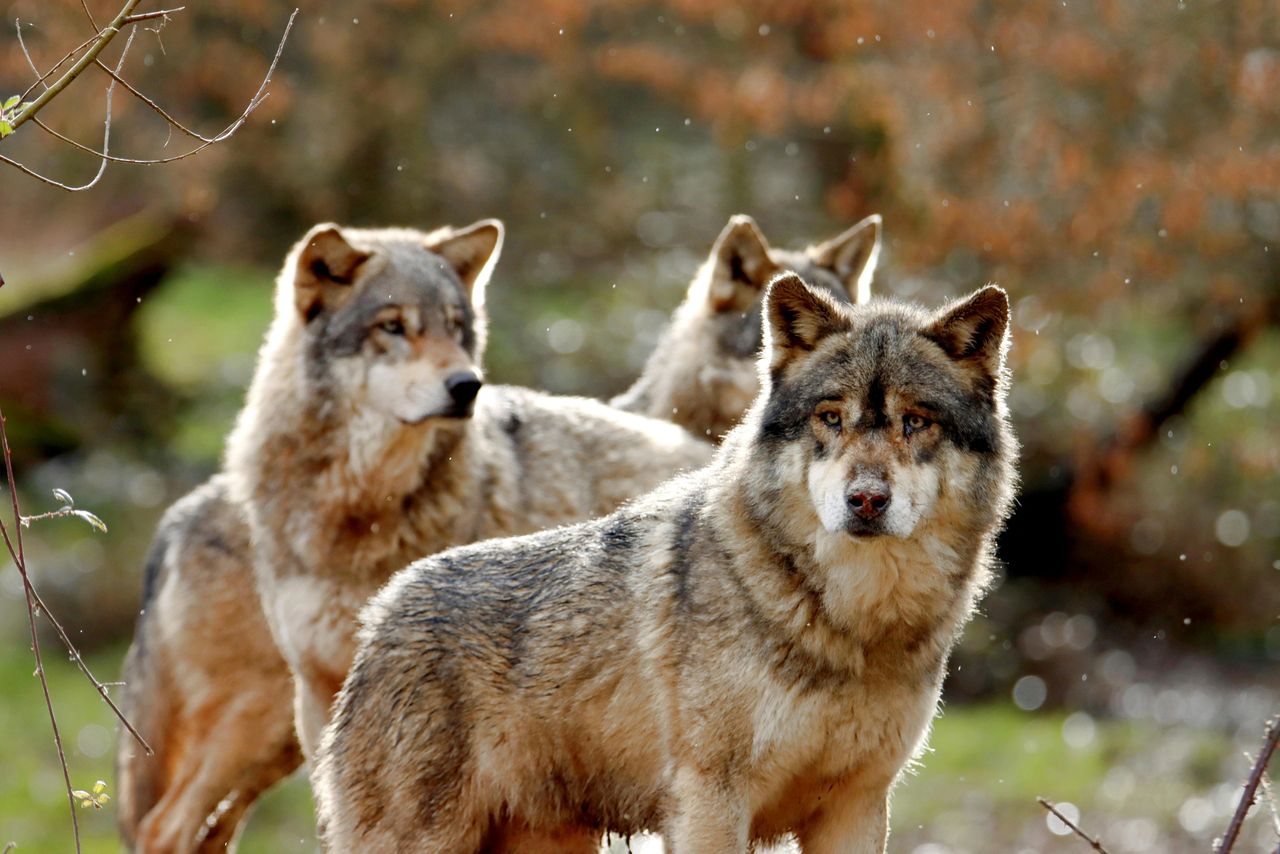
Colorado Parks and Wildlife (CPW) recently dismantled the Copper Creek pack—a family of wolves consisting of the father, mother, and their four children—because they denned on the land of a rancher who did little to nothing to deter them.1 These parents were the first breeding pair in the state and they and their children represent the DNA of Colorado’s future wolves. Doing their best to survive, they discovered the rancher’s food animals were an easy option—basically “room service”—compared to hunting wild prey. 

The problems presented here aren’t going to be isolated incidents, nor can we keep the public in the dark and hope to ignore them. Nor should we ignore what the wolves themselves are feeling as they are mistreated by humans responsible for their wellbeing. 

The Current and Ever-Changing State of Affairs

“This was—and continues to be—a complex, tragic and ultimately avoidable situation, and it’s essential that we all examine the facts and the context to prevent any similar fate for other wolves in the future.”—Kitty Block, CEO of the Humane Society of the United States, see: The tragic fate of Colorado’s Copper Creek wolf pack

Months of silence from the agency in charge and a hostile and oftentimes pessimistic media created perfect conditions for dark-age thinking and fearmongering. It’s time the voters of Colorado learn the truth about the wolves they voted to bring home. No less will do than a full accounting of the scientific and ethical missteps that led to an entirely avoidable and completely unforgivable assault on the lives of these amazing, sentient beings. 

After hearing from countless people about this entirely avoidable and unforgivable assault on the lives of these amazing sentient beings, I wanted to do my part in getting information to the public. 

Simply put, CPW’s “trap and relocate operation” fails in three ways. In the grand scheme of things, it represents a failure by its very nature: uprooting and traumatizing the lives of the pack members, just for being wolves. 

1. Scientific grounds: Science shows that interfering in the lives of these animals was most likely going to have serious negative consequences, and it did—the father died after being captured and the rest of his family are being held in captivity, the details of which remain undisclosed to the public. Even if some or all of this captive pack are released at a later date, experts fear it likely won’t be an easy transition back to the wild in what is proving to be a wolf-unfriendly state.

Of course, there is hope that those of us in the scientific community are wrong. But one thing is certain: had CPW used the “best available science,” it would not have engaged with or captured the wolves at all, instead allowing them time to adapt to their new home, with nearby ranchers doing their part to employ sensible nonlethal deterrence measures, If only, then this founding group of wolves would have been celebrated rather than scorned and ill-treated. 

Interfering in the lives of this family group also would have been discouraged had those responsible for the wellbeing of the wolves paid any attention to what scientific research has shown us about the emotional lives of these sentient beings—what they need to thrive among themselves and in the presence of humans with whom they are trying to cohabit. 

Among wolf advocates, the trap and relocation was also a failure for the precedent it set and for how it ignored what the wolves were feeling. 

2. Ethical grounds: Wolves are sentient beings, not merely objects to be moved here and there as if they aren’t impacted by what happens to them. Science shows they are, of course, extremely sensitive to changes in their social lives and where they live. They were once wild in Oregon and once wild in Colorado, and now they’ve lost their father and are being held in captivity with an uncertain fate. Surely their being trapped and relocated and the loss of their father and mate wreaks havoc with how they feel and deeply compromises their individual wellbeing. 

3. Commonsense: It was never the intent of anti-wolf ranchers to go along with the reintroduction, regardless of how often the government stepped in to offer assistance and how much it offered to pay in compensation. Reintroduction may have passed by a majority of Colorado voters, but in meeting the demands of a vocal minority, CPW has rewarded bad behavior. Within days of removing the Copper Creek pack, the same ranchers who demanded their removal began complaining that relocation wasn’t enough. And now there is a move to keep the names of complaining ranchers who ask for compensation from going public. 

Would you do it to your dog? Another element of commonsense rests on the fact that dogs share a common wolf ancestor and have wolf genes and wolf-like neural pathways in their brains. Commonsense and science mandate that if dogs have rich and deep emotional lives which of course they do, so too do wolves. That is an undebatable scientific fact. I’ve known a few dogs in my life named Cody, Ninja, Rascal, Sadie, and Dolly and I am sure that they and others would have suffered greatly by being treated like their wild relatives were treated. If you wouldn’t do it or allow it to be done to a dog, why would you do it or allow it to be done to a wolf?

CPW also ignore the possibility that the male died after being caught in a leg-hold trap and held in a cage because he was highly stressed and already was suffering from an injured leg. 

There is no doubt that each member of this family group has suffered greatly by being trapped and moved and by having their family uncompassionately dismantled by CPW. 

The treatment of the wolves requires a new mindset that incorporates their point of view

We now know that there is a plan to bring in around 15 more Canadian wolves in a few months. We must not lose sight of the fact that all this easily avoidable turmoil was the result of only two wolves mating to form a pack of six individuals. Is it not unreasonable to wonder how ranchers will better prepare to meet the moment when Colorado’s wolf population doubles? 

All signs point to trouble ahead as wolves try to settle into their new homes, begin competing with one another and other predators, and hopefully breed. Without a mandate for non-lethal management and the use of all available deterrents, the wolves will surely face calls for more trap and relocate operations, or worse. We can’t just move the “problem” around, as it begets more chaos. Surely, if there is a repeat of what has happened to the original group, the emotional lives of other wolves will be severely compromised. 

As Kylie Mohr writes:

“…wolves move quickly, spreading out in search of food, mates and territory. Next February, more of the newly arrived wolves might pair up and breed, forming new packs. More wolves will likely mean more wolf-human interactions — and more opportunities for both state wildlife officials and ranchers to keep what happened to Middle Park’s livestock and the Copper Creek Pack from happening again.”

The physical and emotional wellbeing of every individual wolf matters

If wolves are going to be punished and made an example of for finding the wrong food source, why bring in more? It’s a double-cross that cannot be defended scientifically, ethically, or using a healthy dose of commonsense.

People who want to see and hear (and possibly smell) wolves on Colorado’s landscapes want live, wild wolves who live wild wolf-appropriate lives, not severed family units, punished for doing things that wolves evolved to do.

The emotional lives and physical and psychological wellbeing of every single individual matters, and none are disposable simply for expressing their lupine—wolf-like—ways of being. One of the basic tenets of the ever-growing field of compassionate conservation is that the life of every individual matters because they are alive. Their inherent or intrinsic value is what counts, not their instrumental value that focuses on what they can do for us. 

All in all, conservation science must value individuals because they experience different emotions and their joys and pains are their own personal joys and pains. Individual wolves do not care if their species is on the brink and conservation efforts should be guided by compassion rather than by harming and killing. 

What the wolves think and feel matters and must be factored into how we choose to interfere in their lives. If you are outraged by how the wolves were treated you’re right on the mark. 

There are many lessons to be learned for how we choose to interact with our wild neighbors of any species. Respecting their rich and deep emotional lives is good for them and good for us and must be factored in to how humans choose to interfere in the lives of Colorado’s wolves and other animals. 

References

1) For more information, see: Colorado’s New Wolves: Why Was This Pack Decimated?; Colorado’s New Family of Wild Wolves Must be Celebrated; Colorado Wolves: Hyped Media Derails Neighborly Coexistence; KGNU Interview: https://howonearthradio.org/archives/9710 (CPW did not reply to their request for an update on the fate of Colorado’s newly captured wolf family/); Colorado Wolves Receive Mixed Hellos and Muddy Media; Wolf Packs Suffer When Humans Kill Their Leaders; Why We Misjudge Wolves, Bears, and Other Large Carnivores; The Hidden Slippery Slopes of Animal Reintroduction Programs; Do Individual Wolves Care if Their Species Is on the Brink?; LET’S KEEP COLORADO’S WOLVES OUT OF THE SPOTLIGHT; The Perks of Appreciating Wild Neighbors as Sentient Beings. More details can be seen here: Why was Colorado’s Precious, Promising First Wolf Pack Decimated?

Conservation Science Must Value Individuals and Anthropomorphism

Bekoff, Marc. The Emotional Lives of Animals: A Leading Scientist Explores Animal Joy, Sorrow, and Empathy―and Why They Matter. New World Library, 2024. 

Mohr, Kylie. A mixed report for Colorado’s wolves. High Country News, September 19, 2024. 

Ordiz, A. et al. Large carnivore management at odds: Science or prejudice? Global Ecology and Conservation, 2014.

Image: patrice schoefolt/Pexels.

California enacts unprecedented restrictions on rat poisons in bid to protect wildlife

A mountain lion with mange.

The famed and late mountain lion known as P-22 likely developed mange as a result of rat poisoning. A new California law bans the use of anticoagulant rat poisons, with some limited exceptions.

(National Park Service)

By Lila Seidman

Staff WriterFollow

Oct. 1, 2024 3 AM PT

  • A 2023 California Department of Fish and Wildlife report found that roughly 88% of raptors and 90% of pumas tested were exposed to the poisons.
  • The law allows the poisons to be used in agricultural settings and public health emergencies.

California has become the first state in the nation to restrict use of all blood-thinning rat poisons due to their unintended effect on mountain lions, birds of prey and other animals.

Gov. Gavin Newsom recently signed a bill that expands an existing moratorium to all anticoagulant rodenticides, with only limited exceptions. The poisons prevent an animal’s blood from clotting and cause it to die from internal bleeding. When an unsuspecting mountain lion or owl gobbles a dead or sick rat — or another animal that ate a tainted rat — the toxic substance can be passed on.

Wildlife advocates hailed the new law — set to go into effect Jan. 1 — as an important step toward protecting non-target animals. However, agricultural and pest-control groups derided the measure as a potential public health issue that sidestepped the state’s regulatory process.

Climate & Environment

Newsom signs bill to ban octopus farming in California

Sept. 29, 2024

“I’m so proud that California is leading the way in protecting wildlife from these harmful and unnecessary poisons,” said J.P. Rose, urban wildlands policy director at the Center for Biological Diversity, which sponsored AB 2552. “I think we can all agree that unintentionally poisoning native wildlife is wrong.”

Advertisement

A 2023 California Department of Fish and Wildlife report found that roughly 88% of raptors and 90% of pumas tested had been exposed to the poisons. Birds of prey — and American kestrels in particular — have been significantly harmed by chlorophacinone, one of two poisons targeted in the law, according to Lisa Owens Viani, director of Raptors Are the Solution, a co-sponsor of the bill.

Megan J. Provost, president of Responsible Industry for a Sound Environment, a trade association for the specialty pesticide and fertilizer industry, which opposed the bill, pointed to its potential harm to humans.

“Effective rodenticide products are necessary for protecting the health and safety of people, structures and businesses — including those responsible for food safety — from the diseases and property damage caused by rats and other harmful rodents,” Provost said in a statement. The new law “unfortunately removes products from the pest control toolbox that are important for managing rodent infestations, leaving fewer products for effective immediate and long-term control and for managing resistance in rodents.”

She said California’s Department of Pesticide Regulation has wide latitude to evaluate pesticides for safety “so pesticide-specific legislation … that supersedes this process was unnecessary.”

The law allows the poisons to be used in agricultural settings and public health emergencies.

Owens Viani said legislation and other efforts were necessary because state pesticide regulators were unwilling to act on their own.

Advertisement

“We’re ahead of the rest of the country with these regulations, but it hasn’t been because DPR has been a willing partner,” Owens Viani said. “We’ve had to force them every step of the way.”

A spokesperson for the agency said it “has been actively evaluating risks” related to the rodenticides since 2014.

“Evaluation has included both monitoring for impacts through a partnership with the California Department of Fish and Wildlife and initiating formal reevaluation to inform future actions to mitigate risks to wildlife,” the spokesperson said in a statement.

Owens Viani said her organization has worked for about a decade on passing legislation, including two previous laws that banned other blood-thinning rat poisons. A suit her nonprofit filed against the state agency is ongoing.

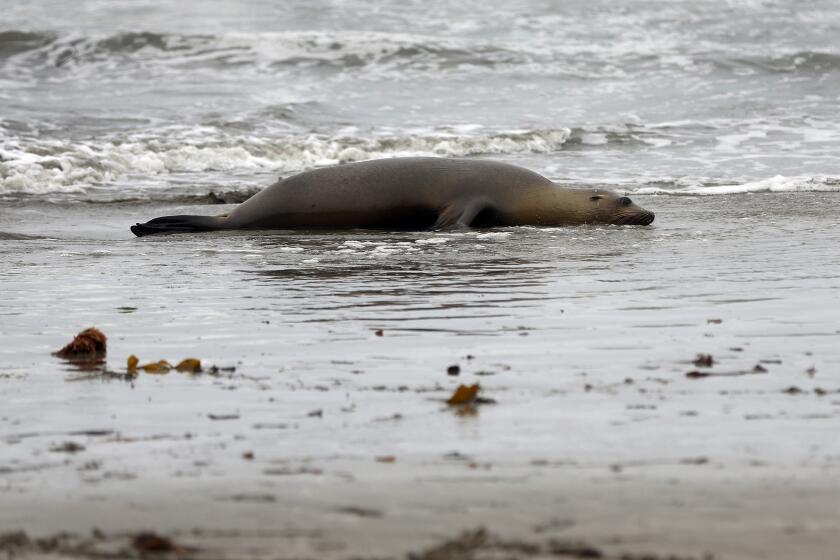
CAYUCOS, CALIFORNIA - AUGUST 05: A sick California sea lion lays on the water at Cayucos State Beach on August 05, 2024 in Cayucos, California. The Marine Mammal Center is seeing a surge of sick California sea lions washing up on Central California beaches in the past month exhibiting symptoms consistent with domoic acid poisoning, which leaves the mammals lethargic and suffering from seizures. The Marine Mammal Center, the world’s largest marine mammal hospital, typically respond to 60-80 sea lions per year impacted by the neurotoxin. Since July, 19th, they have responded to 70 calls for seal lions in distress. (Photo by Justin Sullivan/Getty Images)

Climate & Environment

Outbreak of neurotoxin killing unprecedented number of sea lions along California coast

Aug. 11, 2024

The early seeds of Owens Viani’s work on the issue began around 2011, when a neighbor ran over to tell her that Cooper’s hawk fledglings had drowned in his kiddie pool. At the time, she was studying raptors at the Golden Gate Raptor Observatory and had a hunch rat poison was involved. Tests confirmed it.

“It kept happening in my neighborhood, like people kept finding more dead hawks,” she said. They weren’t eating the bait; they were eating rats. “I knew that if people were using poison in my eco-friendly neighborhood in Berkeley, it was probably a problem everywhere. And so that’s when I decided to found my nonprofit and try to educate more people about the problem.”

Advertisement

The latest legislation, authored by Assemblymember Laura Friedman (D-Glendale), tightly restricts the use of chlorophacinone and warfarin, which are known as first-generation anticoagulant rodenticides. A law signed in 2020 put a moratorium on second-generation anticoagulant rodenticides. And last year the only other first-generation poison was added through a separate law.

The older first-generation version is slower-acting, requiring the rat to feed on the poison several times before it dies. The second-generation version is more potent, earning the moniker “one-feeding kills.”

Other states are working on similar efforts, but Owens Viani said only California has enacted a moratorium. British Columbia has placed a permanent moratorium on second-generation poisons, and the U.S. Environmental Protection Agency removed those types of poison from consumer shelves, she said.

The ban will remain in place until the state Department of Pesticide Regulation reevaluates the poisons and comes up with restrictions that meet certain criteria to protect wildlife.

The law also creates civil penalties. Anyone who sells or uses the poisons in violation of the law is subject to a fine of up to $25,000 per day for each violation.

Any money collected from violations will go to the Department of Pesticide Regulation to cover its costs in administering and enforcing the rules, and potentially other activities.

Advertisement

The department estimated the law would create a one-time cost of $258,000 and an ongoing annual cost of $193,000 to support a position “to handle anticipated increases in follow-ups and complaints associated with investigating sales and restricted materials,” according to a government analysis of the bill.

Approximately 170 Endangered southern mountain yellow-legged frogs (Rana muscosa) were released into their native habitat in the San Gabriel Mountains on Aug. 29 and 30, 2023. Animal care staff from the Los Angeles Zoo joined conservationists from the U.S. Geological Survey (USGS) to an undisclosed site to conduct the release.

Climate & Environment

Endangered frogs threatened by California wildfires once again. A rescue could be in order

Sept. 15, 2024

The analysis anticipates revenue loss of an unknown amount to the department, as well as to the California Department of Food and Agriculture’s Vertebrate Pest Control Research Advisory Committee.

The agency said it is committed to “a timely completion of its reevaluations.” Another bill signed into law this year requires that the agency share a timeline and status of all reevaluation and mitigation by the end of the year.

“The reevaluations underway include an assessment of cumulative impacts of anticoagulant rodenticides,” including first-generation varieties, the agency said in a statement, adding that it “will continue its ongoing work to address unintended wildlife exposure from first-generation and second-generation rodenticides while still retaining tools to protect public health, agriculture, critical infrastructure and the environment.”

Wildlife advocates said they compromised on certain elements of the bill as it wound through the Legislature and encountered opposition.

For example, a previous version of the bill allowed members of the public to sue bad actors for breaching the law.

Advertisement

An L.A. Times editorial from earlier this year pitched this as a powerful element of the legislation, which “could help curb the use of banned rodenticides by empowering all Californians to become enforcers.”

However, the California Chamber of Commerce called it “an expansive new private right of action that threatened businesses and created incentives for frivolous lawsuits,” and removed its opposition once the provision went away.

Owens Viani said proponents had also hoped to create buffer zones around agricultural areas, where birds of prey forage and which are part of habitat ranges for mountain lions, coyotes and other animals.

But there were other wins. Rose pointed out what he described as “exciting language … around the sentience of animals.”

The law text notes that animals “are able to subjectively feel and perceive the world around them” and that the “Legislature has an interest in ensuring that human activities are conducted in a manner that minimizes pain, stress, fear and suffering for animals and reflects their intrinsic value.”