Exposing the Big Game

Forget Hunters' Feeble Rationalizations and Trust Your Gut Feelings: Making Sport of Killing Is Not Healthy Human Behavior

Exposing the Big Game

Reward offered after 42 wild burros shot, killed in California desert

 – A reward of more than $50,000 is being offered, after dozens of protected wild burros have been found shot and killed in California’s Mojave Desert.

The Bureau of Land Management (BLM) said since May, 42 wild burro carcasses have been found along a 60 mile stretch of Interstate 15 from Halloran Springs, California to Primm, Nevada.

BLM officials said the donkeys had been shot in the neck. Some were killed near watering holes, where they were drinking.

“In many instances, the person or persons appear to be shooting at the burros from a distance,” said BLM spokeswoman Sarah Webster. “The weapon is believed to be a rifle.”

The burros being targeted are from the Clark Mountain Herd Area of the Mojave Desert, which before the shootings, had a population of about 120 burros, according to Webster, who added that these animals were and are in good health.

The BLM is offering a $10,000 reward for information leading to the arrest and conviction of the person or persons responsible for the deaths.

Others have come forward to contribute to the reward fund.

On Monday, the Humane Society said an anonymous donor from its burro protection initiative, the Platero Project, donated $32,500.

The American Wild Horse Campaign, Return to Freedom, and The Cloud Foundation have also joined in the efforts to stop the killings, offering $2,500, $5,000 and $1,000 respectively.

“We’re very glad the BLM is taking this sick crime seriously,” said The Cloud Foundation’s director, Ginger Kathrens. “The burros belong to the American people and are beloved symbols of our nation’s history and pioneer spirit. They deserve to be protected.”

Killing a protected burro is punishable by a $2,000 fine and a year in jail.

The animals are federally protected under the Wild Free-Roaming Horses and Burros Act of 1971. The law designates wild, free-roaming horses and burros as integral parts of the natural system of public lands and aims to protect the animals from capture, branding, harassment and death, according to the BLM.

“America’s public lands belong to all of us,” said Neda DeMayo, president of Return to Freedom, adding, “These cruel and hostile acts against federally protected animals strike at the heart of everyone working so hard for their protection and for humane, non-lethal solutions to management concerns.”

Anyone with information about the killings is urged to call the federal WeTip hotline at 800-782-7463 (800-78CRIME), or visit ​​​​the crime reporting website here.

More than 100 reindeer killed by freight trains in Norway ‘bloodbath’

 This article is more than 1 year old

Sixty-five animals died on railway track on Saturday while further 41 killed last week during winter migration

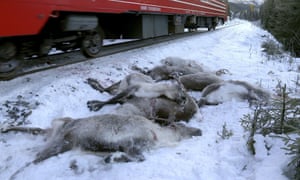
A train passes by dead reindeer near Mosjoen, northern Norway
 A train passes by the bodies of dead reindeer near Mosjøen, northern Norway. Photograph: John Erling Utsi/AP

More than 100 reindeer have been killed by freight trains in northern Norway in the past days in what has been called a senseless tragedy.

One train killed 65 deer on a track on Saturday while 41 died between Wednesday and Friday, the public broadcaster NRK reported late on Sunday.

“I’m so angry that I’m dizzy,” the owner of the 65 dead reindeer, Ole Henrik Kappfjell, told NRK. “It’s a senseless animal tragedy … a psychological nightmare.”

Norway is home to about 250,000 semi-domestic reindeer and most of them live in the far north of the country. At this time of year, herders take the reindeer to the winter pastures in search of grazing grounds, a perilous journey as many animals are hit by cars and trains. Some also drown.

Photos taken by the documentary filmmaker Jon Erling Utsi showed dead reindeer lying in the blood-stained snow. Some were shot after they were left wounded in Saturday’s incident. “It was a nightmare to watch,” he told NRK.

“The worst thing was the animals that were not killed in the accident. They were lying there, suffering. It was a bloodbath over several kilometres,” he added.

More than 2,000 reindeer were hit along the same northern railway line between 2013 and 2016.

The herders are demanding that the railway operator install a fence along the track but as yet there has been no funding.

‘Terrible way to go’: Humane society wants changes after hundreds of cows killed in blaze

Animal welfare group says barns no longer are mandated to have certain safety requirements

Firefighters battling a barn fire northeast of Steinbach on Monday morning. (Steinbach Online)
7
comments

An animal welfare group is calling on Manitoba’s provincial government to review how animals are being housed, after 800 cows were killed in a barn fire northeast of Steinbach, Man.

Brittany Semeniuk, an animal welfare consultant for the Winnipeg Humane Society, spoke on CBC Radio’s afternoon show Up To Speed, one day after the devastating blaze at Pennwood Dairy. She said the prevalence of such events drives home the need for changes.

“They do occur in a very high frequency and I mean I don’t need to convince anyone that perishing within a fire where you’re trapped in a building is a terrible way to go,” Semeniuk told host Ismaila Alfa.

Pennwood Dairy was one of Manitoba’s largest dairy producers. Of its 1,000 cattle, only 200 lived through the blaze, according to the Steinbach Fire Department.

Fire chief Kelvin Toews said the fire was the “probably the largest barn fire” the department has ever had to deal with.

“We’ve had barn fire where we’ve lost one or two barns, but this is quite a sizeable loss,” he said.

Manitoba previously had its own farm building code, but Semeniuk said in 2017 the general Manitoba building code replaced it.

She said the problem started with recent repeals and amendments of security and fire protection requirements in low-occupancy buildings, which are recommended in the dairy industry, but not always practised.

“They follow the codes of practice for their own industry which is governed through the National Farm Animal Care Council, but within these codes of practice none of these codes are mandatory,” she said.

Semeniuk said in the past 10 years about 40,000 hogs have bee killed in barn fires, and just a few months ago almost 27,000 chickens were burned alive.

“A thousand pigs or a thousand chickens could still be qualified as low human occupancy, despite having a large number of animals, but because barns proved to be a lower safety hazard than human health, it was generally accepted to remove a lot of those previous precautions,” she said.

Semeniuk says protecting animals from fires isn’t the only reason for such precautions — allowing them to enjoy a certain quality of life is also important.

“They can’t perform their basic behavioural needs like foraging and flying and rooting and things like that,” she said. “It is currently not required to provide dairy cows with any sort of access to the outdoors.”

Simply put, Semeniuk said the humane society wants better living conditions for animals and to provide them basic welfare requirements.

Regulations for barn standards are put into place by the fire commissioner, who will routinely provide updates and necessary changes to how new barns need to be constructed, according to David Wiens, a member of the board of directors for the Dairy Farmers of Manitoba.

“As we go along, there’s new regulations that come in place. New barns that are being now have fire barriers within the barn to prevent the rapid spread of the fire,” he said.

Wiens isn’t entirely sure of the makeup of the barn that caught fire, but said four barns were attached to one another.

The Officer of the Fire Commissioner of Manitoba said they do not keep track of livestock losses. The fire is still under investigation.

Protesters Demand Freedom for Bronx Zoo Elephant, Happy


AUGUST 12, 2019 BY As crowds entered the Bronx Zoo on Saturday, August 10th, dozens of activists with the Nonhuman Rights Project staged a protest at the entrance to demand that the Wildlife Conservation Society, which runs the zoo, release an elephant named Happy to a sanctuary after holding her captive in a small enclosure since 1977.

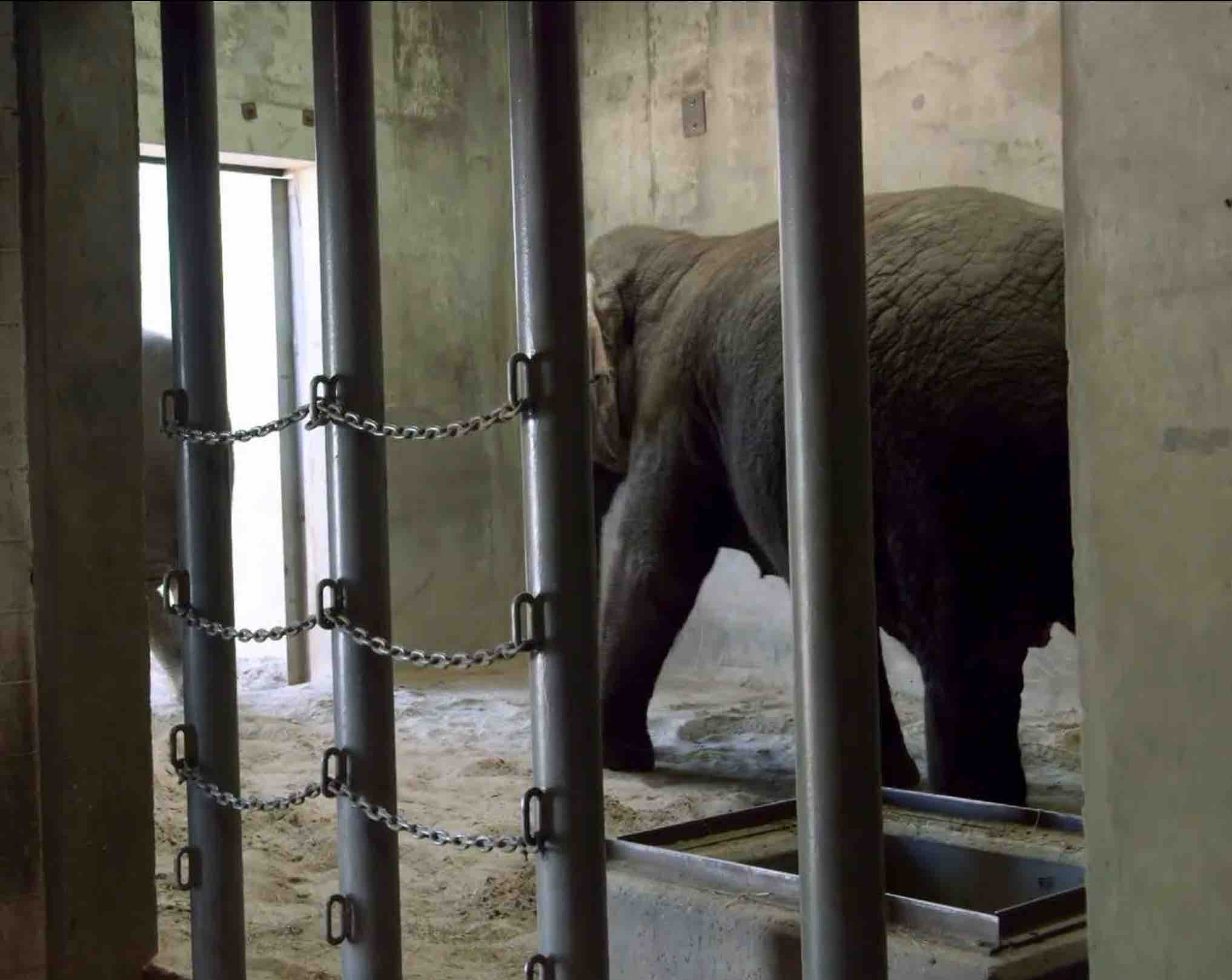
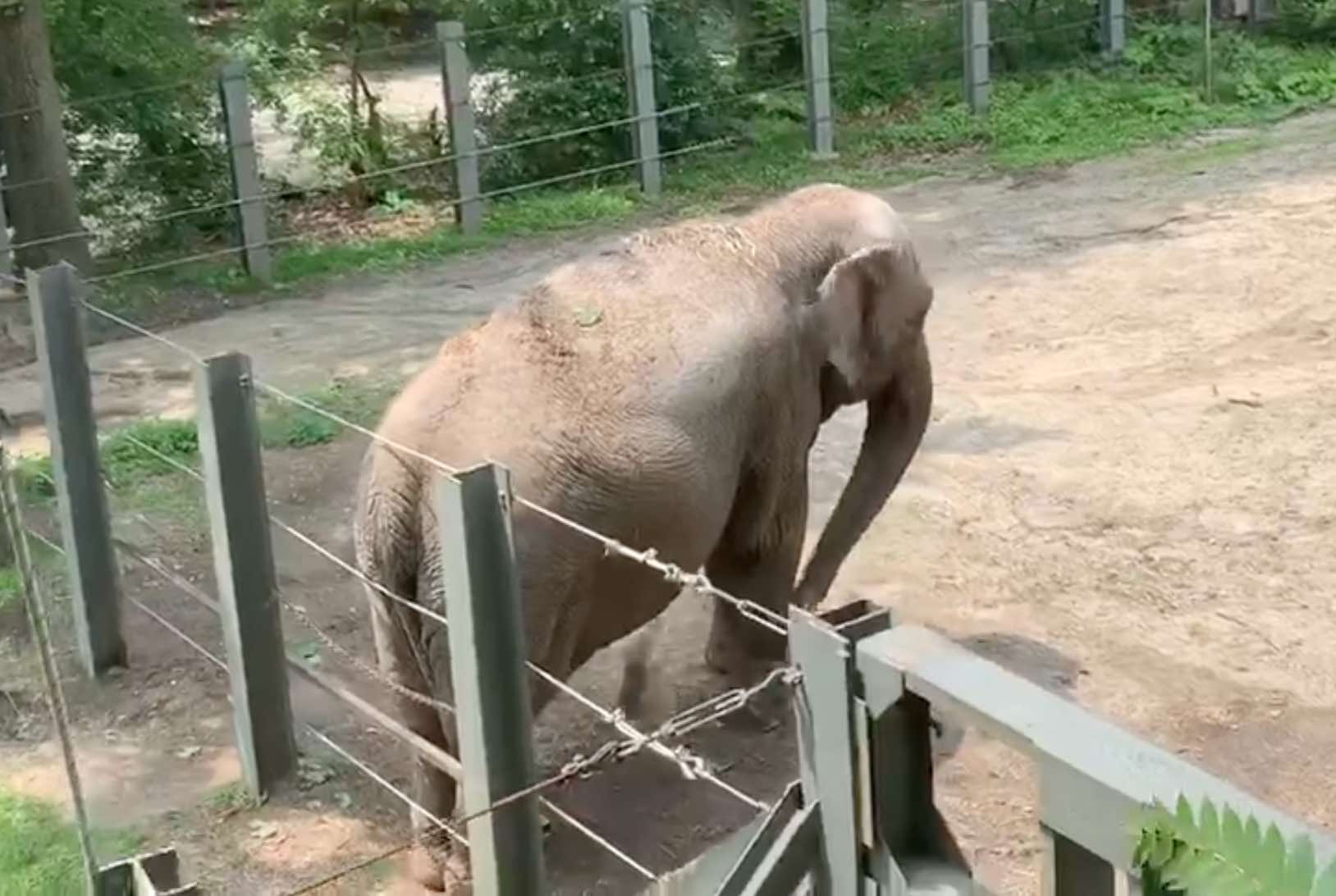
Happy is a 48 year old wild-born Asian elephant who was captured in Thailand and brought to the United States in the 1970s.  She has been held captive in the Bronx Zoo since 1977 and has lived alone in a barren one acre enclosure for the past 13 years. During the winter month, she is intensively confined to a small cement cell.

During the winter months, Happy (not pictured here) is held in this barren enclosure in the Bronx Zoo

“Elephants are social animals who need the companionship of other elephants,” said Kevin Schneider, the Executive Director of the Nonhuman Rights Project, “It’s no wonder that we see her swaying and engaging in other unnatural behaviors that indicate distress and suffering.”

Activists with the Nonhuman Rights Project demand that the Wildlife Conservation Society release Happy, an elephant held captive at the zoo since 1977, to a sanctuary

Both of the elephant sanctuaries in the United States, the Elephant Sanctuary in Tennessee and the Performing Animal Welfare Society in California, have agreed to take Happy at no cost to the Bronx Zoo, but the WCS has refused to let her go.  “The Wildlife Conservation Society acknowledged in 2006 that keeping Happy alone would be inhumane, so we don’t understand why they won’t release her from captivity,” said Schneider. “They either don’t want to acknowledge that Happy’s solitary confinement for the past 13 years has been cruel , or they don’t want to cave into pressure from animal rights advocates.”

During the warm months, Happy is held captive and alone in a one acre enclosure.

In 2018, the Nonhuman Rights Project filed a petition for a common law writ of habeas corpus in New York Supreme Court demanding recognition of Happy’s legal personhood and her fundamental right to bodily liberty. Happy is first elephant in the world to have a habeas corpus hearing to determine the lawfulness of her imprisonment.

As litigation proceeds, public support for the Happy’s freedom has grown. In June, two elected officials made public statements encouraging the WCS to free Happy. Corey Johnson, the Speaker of the New York City Council, wrote, “Happy and all elephants need more space and resources than the zoo can provide, plain and simple.  I urge the Bronx Zoo, which first planned to close the elephant exhibit back in 2006, to finally transfer Happy to one of two recommended sanctuaries so that she can enjoy the company of other elephants and the benefits afforded to a facility specifically designed to meet her needs.”  In a tweet, U.S. Representative Alexandria Ocasio-Cortez, who has voiced her opposition to solitary confinement for prison inmates, said that “The team and I are looking into what we can do” to free Happy.

In 2015, the animal advocacy group In Defense of Animals ranked the Bronx Zoo the fifth worst zoo in the United States for elephants. “The Bronx Zoo does not have the space, the resources, or the weather conditions that elephants need to live a reasonably healthy life. Shame on the Bronx Zoo for sentencing “Happy” to what is likely the most unhappy of sentences for an elephant: a life of self­ aware solitary confinement.”

Change.org petition demanding an end to Happy’s solitary confinement has garnered over one million signatures.

Surveillance Video Leads Police to Couple Suspected of Burning Dog in West Haven

Court documents state the suspects claimed they were cremating the dog, but police said their investigation suggests otherwise.

https://www.nbcconnecticut.com/news/local/Surveillance-Video-Leads-Police-to-Couple-Suspected-of-Burning-Dog-in-West-Haven-523899981.html

Police made a second arrest Tuesday in a disturbing case involving dead dog was found burned at the Sandy Point Beach Parking lot after the 4th of July.

West Haven Police say 41-year-old Maurice Jackson was arrested Tuesday. He faces charges of open burning, breach of peace, and illegal dumping charges alongside his girlfriend, 34-year-old Latrice Moody. Moody was arrested Monday and is out of jail on $30,000 bond. She also faces an animal cruelty charge.

The couple claims they were cremating Moody’s dog.

In court documents, they say after their lengthy investigation “this type of behavior is not indicative of someone who wanted to cremate a beloved pet, but rather someone who wanted to simply dispose of an animal.”

1 Arrested in West Haven Dog Burning

[HAR] 1 Arrested in West Haven Dog Burning

Police have arrested the owner of a dog found dead and burned in at West Haven beach parking lot last month. They have an arrest warrant for a second person as well.

(Published Monday, Aug. 5, 2019)

NBC Connecticut obtained exclusive surveillance video from the Elm Street Citgo just after midnight on July 5.

According to arrest warrant documents, this is what led West Haven Police to Moody and Jackson.

Court documents describe what’s caught on camera. Police say Jackson is seen buying a gas can and then filling it up before driving away in Moody’s car.

While Moody first said her dog Brooklyn ran away, police said she eventually admitted to wrapping the approximately 8-year-old Yorkshire Terrier in a towel and lighting it on fire with gasoline leaving folks to find the disturbing burn scene when the sun rose.

Police say a post on Moody’s Facebook memorialized her dead dog on July 5.

“Yesterday after having the best 4th of July ever, I came home to find my Brooklyn called home to doggie heaven.”

Police ID Suspects in Death of Dog Set on Fire

[HAR] Police ID Suspects in Death of Dog Set on Fire

On Friday, police said they have identified two suspects in the animal cruelty, arson case and interviewed one of them. That person is cooperating with police.

(Published Friday, July 12, 2019)

“It makes me sick I have a dog, I would never. The people should burn like the dog burns,” said Christine Turcio of North Haven.

Those we spoke to at the West Haven gas station are glad cameras helped catch the suspected couple.

“A dog can’t talk back. I think when a person misuses someone like a dog or baby, I think it should be prosecuted very highly,” said Kelly Moye of New Haven.

As locals continue to memorialize the pooch alongside the shore, police say extensive lab testing showed the dog had extensive kidney, cardio vascular issues and a dislocated leg, leading police to believe Brooklyn was neglected in its life even before it died and was burned.

In court documents, Jackson’s parole officer even recalls visiting their home a month before the burn investigation and seeing animal that looked in pain as it was walking on the “knuckle” of it’s leg. Police say Jackson has an extensive criminal history.

We tried speaking with who we believe was Moody earlier in the day, but she drove away. According to court documents, police say she told them she didn’t know “if Brooklyn was really sick because she never brought the dog to the vet.”

Suspects in Death of Dog Set on Fire Identified: Police

[HAR] Suspects in Death of Dog Set on Fire Identified: Police

West Haven police said they have identified two suspects in the death of a small dog that was set on fire last week.

(Published Friday, July 12, 2019)

Moody is expected in court August 20.

New permit means open season for hunting many furry predators

You can soon hunt raccoons, coyotes, and other furry predators on your private land to help protect bird populations.

It will soon be critter season all year long in Arkansas. It may be the worst news in a while for coyotes since the Acme Roadrunner trap arrived in the mail.

The Arkansas Game and Fish Commission voted to relax hunting regulations on certain predator species.

RELATED: UCAPD help save raccoon hilariously stuck in drain grate

“Raccoons, possums, red fox, coyotes — things like that,” said Randy Zellers, the assistant chief of communications for the AGFC. “What it is going to do is give a private landowner to manage on a local level if he feels that predator populations are high and maybe impacting his ground nesting birds in the area.”

Coyotes and possums like quick meals they can get from a quail’s nest. To manage that, you can now set traps or hunt them with a special permit. There doesn’t have to be a set season, and more importantly, no set hours.

“You will be able to harvest bobcat, coyote, skunk, possum, and raccoon day or night,” Zellers said after getting a free predator-control permit. That lets hunters get them when they are out and active.

Officials are not declaring a critter crisis, but the rules needed updating because the days of every kid running around with a Davy Crockett hat are long gone.

“Years ago, people used to trap animals for pelts,” Zellers said. “As that has gone out of style, there’s not as much money involved in trapping animals for pelts.”

Rules are already in place that allow you to shoot predators if they threaten people, pets, or livestock. This new permit means you can do it more efficiently with an eye on wildlife management.

A hunter is also not responsible for having to turn the skin into a coat or a hat if they have the special permit.

Zellers points out that the permit is mainly for people living in the country.

While coyotes and foxes often encroach on suburban or even residential areas in cities, local firearms laws still supersede the special permit regulations.

RELATED: Dad, teens face-off against growling coyote

If you have a raccoon or skunk problem closer to town, the AGFC has standard advice.

“We still recommend the number one thing is remove all the food sources and make sure those animals are not welcome,” Zellers said.

The permits will be available in late August.

Long Island Couple Says Neighbor Murdered Their Dog In Unprovoked Attack, Was Only Charged With Misdemeanor

HAUPPAUGE, N.Y. (CBSNewYork) – A Long Island man has been charged with killing his neighbor’s dog. That dog’s owners are now speaking out about the cruel act.

They say the killing was unjustified and the punishment from police doesn’t fit his crime.

“He was a great dog, everyone loved him,” the couple said.

The Hauppauge couple is shattered over the killing of their dog. They say they tried desperately to stop their neighbor from choking the life out of their beloved Rex.

“I was walking Rex from there, that’s when his Shih Tzu attacked.”

On Sunday their pit bull, rescued from a shelter and professionally trained to stay calm, was reportedly on a leash when two other dogs in their apartment complex were unleashed.

Long Island pit bull Rex was killed by a neighbor in an allegedly unprovoked attack. (Credit: CBS2)

A Shih Tzu and a golden doodle each separately instigating a fight with Rex.

“The golden doodle charged on my dog, bit him in the neck… the golden doodle was latched, lock jaw on my dog’s throat.”

The couple tried to separate the dogs, getting injured in the process, that’s when they say the Shih Tsu’s owner – unprovoked – strangled Rex to death.

“Came running out, ‘he is a pit bull he deserves to die,’ went like this to my dog in front of my eyes. Squashed his neck and held his nostril,” Elana Greenfield said.

“He just stayed on top to him, we tried pulling him off and he was squeezing him and there was another dog owner who said ‘bro what are you doing you’re gonna kill the dog, you’re going to kill the dog.’ ‘I don’t care he’s a pit bull,’” Dominic Primerano recalled.

Rex’s owners, Dominic Primerano and Elana Greenfield (Credit: CBS2)

Suffolk police charged neighbor Huynh Toquoc with animal cruelty – a misdemeanor.

The golden doodle owner was also cited for having an unleashed dog. Neither could be reached for comment.

All a slap on the wrist says the anguished couple and others signing a petition to increase charges when a dog is unjustifiably killed.

“Pit bulls are stereotyped… That is so undeserved… He murdered our dog for no reason,” the couple added.

They’re seeking upgraded felony charges of aggravated animal cruelty which applies to cases of animal torture.

Suffolk police told CBS2 the alleged actions fit the misdemeanor charge, but would not elaborate on their reasoning.

The penalty for animal cruelty as a misdemeanor in New York is a $1,000 fine or up to a year in jail.

Killing a dog may be legally justified if it’s deemed dangerous, but not if a dog is protecting itself from an assault by another animal.

Rewards Offered After Dog Is Intentionally Burned To Death At Sandy Point Beach

A small dog was found burned to death in the parking lot of Sandy Point Beach.
A small dog was found burned to death in the parking lot of Sandy Point Beach. Photo Credit: Google Maps/Street View

The dog was found around 10 a.m., Friday, July 5, when the West Haven Police responded to the area of Beach Street near Third Avenue/Second Avenue for a report of an uncontained fire in the Sandy Point Beach parking lot, said West Haven Police Sgt. Charles Young.

The fire was extinguished and the initial investigation found a small dead dog, possibly a 1-year-old “mini Schnauzer” with cropped ears and a cropped tail, was located at the source of the fire, Young said.

An initial investigation suggests the dog had apparently been set on fire in the Sandy Point Beach parking lot and abandoned there. Initial investigation also suggests an accelerant was used, Young added.

Police released a photo on Tuesday, July 9, of a truck that was in the area at the time that might be able to help with information. The truck’s owner has since been located and police said they have absolutely nothing to do with the crime, but did have some information.

While police search for a suspect, the public is helping speed the process by offering up reward money in hopes someone will know who committed the horrible crime.

Groups offering rewards include the Facebook groupNew Haven: Why Not? , who is offering a $2,000 reward; Desmond’s Army has offered a $500 reward, and the rescue organization Green Fur Kidz has collected about $14,000 in pledges, with a $10,000 pledge from Executive Auto Group.

At this time West Haven Police are asking for anyone who may have seen the fire or any other suspicious activity in the area between 10 p.m., Thursday, July 4 and 10 a.m., July 5 to contact the police department at 203-937-3900, Detective Wolf at 203-937-3934 or mwolf@whpd.com , or Fire Marshall Keith Flood at 203-931-0031.

The department is also asking any area residents missing a small dog to contact the police or animal control.

 to sign up for Daily Voice’s free daily emails and news alerts.

Should the Calgary Stampede ban animal events?

Calgary Stampede events, like steer wrestling, don’t put the animals first, says a spokesperson with the Vancouver Humane Society. (Todd Korol/Reuters)

Should the Calgary Stampede ban animal events?

Some rodeo events are a form of animal abuse, critic says

An animal activist is calling on veterinarians to stop supporting the Calgary Stampede.

Those who put on cowboy hats and work at the annual rodeo event are “turning a blind eye to animal abuse,” said Peter Fricker, communications director for the Vancouver Humane Society.

In an opinion piece for CBC News, Fricker said some of the activities at the Stampede cause the animals involved distress and discomfort.

Events like calf roping and steer wrestling also put them at risk of getting hurt, he said.

The Calgary Stampede is an event organized each year by a not-for-profit group — and put on with the help of thousands of volunteers — as a way to preserve and celebrate “western heritage, cultures and community spirit,” its website says.

That includes a number of traditional rodeo events.

Man holds rope in his mouth while he wrangles a calf.

Some critics say rodeo events like calf roping put the animals at risk of getting hurt. (Jeff McIntosh/The Canadian Press)

What do the vets say?

The Canadian Veterinary Medical Association (CVMA) is against activities that cause suffering to animals that would otherwise be avoidable, president Terri Chotowetz said in an email.

She said her group supports those veterinarians who are working to “safeguard animal welfare” at the Stampede, she said.

It’s not up to the CVMA to set the laws around how animals are used in sport or entertainment, Chotowetz said, but she encourages governments to keep working to improve the rules.

Man in cowboy hat holds cow by the horns.

A note on the Calgary Stampede website says event organizers are committed to treating the animals with respect and care. (Adrian Wyld/The Canadian Press)

What does the Stampede say?

The Calgary Stampede has one of the “most comprehensive animal care programs in North America,” said spokesperson Kristina Barnes, when asked to comment.

Organizers are constantly working with veterinarians in order to improve their practices, she said in an email.

They’re also careful to follow provincial and national regulations around the use of animals.

Now it’s your turn to weigh in.

https://www.cbc.ca/kidsnews/post/should-the-calgary-stampede-ban-animal-events

Your thoughts
What’s your first name?

Instead of Going Out This 4th of July, These People Comforted Scared Shelter Animals During Fireworks

https://mysticalraven.com/inspirational/15803/instead-of-going-out-this-4th-of-july-these-people-comforted-scared-shelter-animals-during-fireworks?fbclid=IwAR2y9OLt-llsLZq8TkKmfRtipPw8YSdDYUL9xkZIilEua4KMDdXVBecnTzA

Although this happened last year, we hope to share this beautiful idea with the aim of inspiring others to do the same thing this 4th of July.

Well here is a story to make you feel a little better about humanity today!

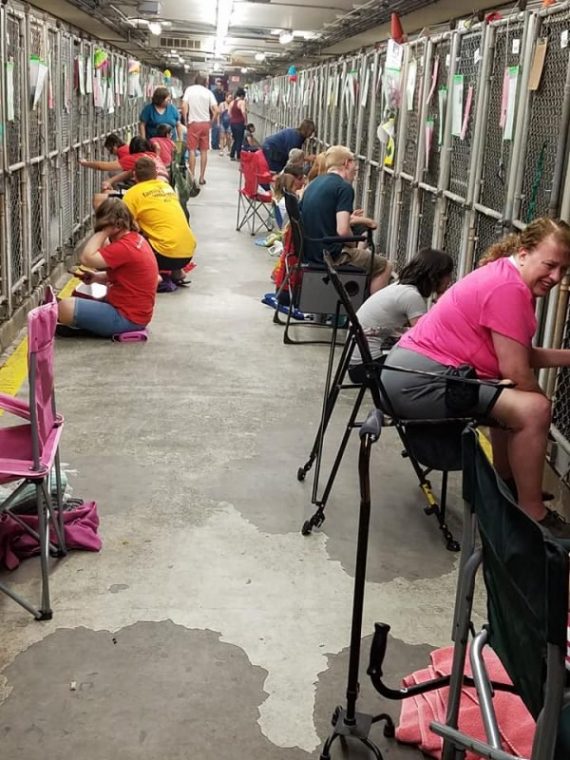
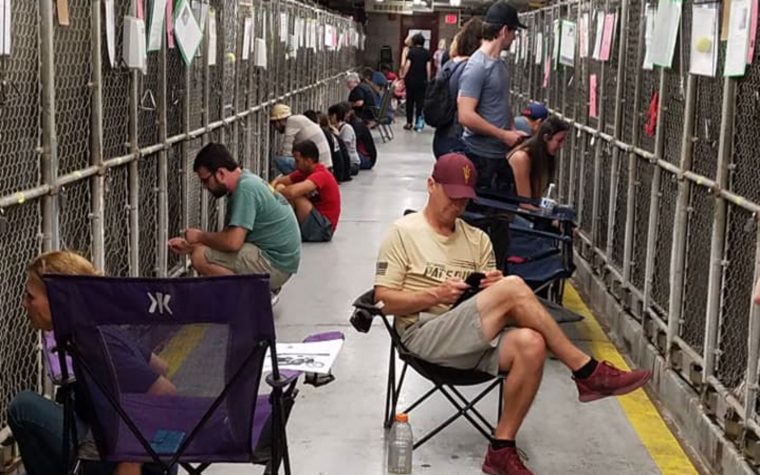
On the Fourth of July in Phoenix, Arizona, the Maricopa County Animal Care and Control began an experimental program called “Calming Companions,” where they invited the public into their shelters to sit with the dogs and cats. The loud and constant noise of fireworks being set off over the holiday can be a terrifying ordeal for small animals, and even more so in the cramped conditions of a shelter.

Around 200 caring people came out to the event, visiting either of the control’s shelters. These wonderful volunteers brought their own chairs and blankets to sit on as they read, played music, and entertained the dogs. Staff at the shelters provided treats, toys, and games that helped keep the dogs and cats occupied, and the joint effort led to a great experience for everyone involved.

Here is what volunteer Amy Engel had to say: “Ever thought about bringing your dog to crowded places? Even worse, crowded places with fireworks? I promise you dogs don’t like it. Tonight was the first year Maricopa County Animal Shelter presented “Comfort the Canines” … approximately 200 people came to help the pooches. Some people sang to them, some people read to them, some people just sat there and gave treats! it was so so awesome because the dogs absolutely love the attention and were focused on the people and not the fireworks going on outside.”

Maricopa County Animal Care and Control is used to the chaos that Fourth of July celebrations can bring. Dogs startled by the noise of the fireworks can run away, leaving their owners fearful for their safety and well-being, and they often end up being brought into these shelters. This leads to one of the busiest days for the shelters and their staff. Public information officer for the Control, Jose Santiago, said, “We expect it to be a busy day, unfortunately, a lot of people do leave their dogs outside and those loud noises and explosions cause them to dig under fences, sometimes jump over fences, we’ve heard of cases of dogs jumping through windows, all out of fear from those loud explosions.”

While fireworks can be fun for some people, we have to bear in mind that not everyone enjoys loud displays.

This Calming Companions’ initiative was such a success that it will likely be repeated again next year. Maricopa County Animal Care and Control works tirelessly to care for the animals in their community, helping pets be reunited with their families and finding stray animals loving new homes. If you are looking to adopt, volunteer, or help in any other way, please get in touch.

Written by Kelly Wang for OneGreenPlanet