Exposing the Big Game

Forget Hunters' Feeble Rationalizations and Trust Your Gut Feelings: Making Sport of Killing Is Not Healthy Human Behavior

Exposing the Big Game

HOW TO BEAT A VEGAN IN ANY ARGUMENT

: Your step-by-step guide to justify killing animals and destroying the planet.
Step 1: REMIND THEM THAT OUR ANCESTORS ATE MEAT- No vegan is aware of this, but one thing they are aware of is that if humans have been doing something for thousands of years, it must be acceptable. After all, there’s nothing worse than moral progress!

Step 2: BECOME A PLANT RIGHTS ACTIVIST- Everyone knows that cutting the throat of live animals and cutting vegetables is the same thing. Vegans aren’t aware of the fact that plants feel pain too, and make sure to raise your voice whenever a vegan cuts a carrot.

Step 3: ASK THEM WHAT THEY’D DO IF THEY WERE STRANDED ON A DESERT ISLAND- Vegans routinely get stuck on desert islands and have to eat animals of desert for survival.

Step 4: REMIND THEM THAT EATING MEAT ISN’T ILLEGAL – If politicians think killing animals is okay, then it must be!

Step 5: SHOUT “UMM CHICKEN” REPEATEDLY- Vegans have never heard of this product. This will disorientate the vegan.

Step 6: POINT AT YOUR CANINE TEETH-
we know that if you have a body part capable of doing something, that means it’s okay to do whatever it/they can be used for. For consistency, make sure to sexually assault someone and then point at your penis when the police questions you why you did it.

Step 7: TELL THEM THAT WE NEED TO EAT ANIMAL PRODUCTS TO SURVIVE- Many vegans are unaware of the fact that they are actually dead, much like Bruce Willis’ character in ‘The Sixth Sense’.

Step 8: TELL THEM THAT MEAT IS TASTY- vegans aren’t aware of this, since none of them have ever eaten meat in their entire lives. Just tell them meat is yummy,they will definitely start killing animals for meat.

Step 9: TELL THEM VEGAN FOOD TASTES LIKE SHIT- It’s a well known fact that not a single one of the 20,000 edible plant species on earth or the spices and other products derived from them are even slightly appetising.

Step 10: REMIND THEM THAT THEY USE ELECTRICITY AND MOBILE PHONES- Being involved in a justice movement is hypocritical if you use electricity or mobile phones. Be sure to also tell racial equality campaigners, women rights and gay rights activists and anti child abuse campaigners that their cause is pointless for the same reason.

Step 11: CALL THEM PUSSY AND WEAK- we all know the one who cares for the weak and voiceless is pussy and weak by heart, tell them that killing the weakest animals remorselessly is what makes us strong.

Step 12: REMIND THEM THAT YOUR SITUATION IS JUST LIKE A LION’S – tell them you eat meat because you wanna be a lion! Let them know about that one time you stalked your prey down in a jungle with your canine teeth and flawless strength of your jaws and limbs to feed your family who was dying of hunger.

Step 13: MAKE THEM AWARE OF HOW YOU EATING MEAT AND ANIMAL PRODUCTS ACTUALLY BENEFITS THINGS- Finally, make the vegan aware of all the good eating meat, cheese, milk, eggs, fish, etc. does for animals, the environment, and other humans. Seeing as veganism helps none of those things, this will make the vegan realise which is the cause REALLY worth fighting for.

Step 14:- MAKE THEM AWARE THAT WE ARE OMNIVORES BECAUSE WE CAN MAKE WEAPONS TO HUNT ANIMALS- many vegans aren’t aware that even if we are not biologically and naturally capable of hunting animals, we can use weapons to kill them,so that makes us omnivores, for consistency make sure to kill your neighbour’s dog with a weapon and tell them that you did it because you are an omnivore.

STEP 15- LET THEM KNOW THE FARM ANIMALS ARE RAISED BY US SO ITS OK TO TAKE THEIR LIVES AWAY- for consistency kill your own children and tell the police that you did it because you brought them into existence, police will definitely understand you.

Step 16- TELL THEM ITS YOUR PERSONAL CHOICE – it’s a well known fact that its a personal choice to cut the throats of the animals just to eat them.

Step 17- TELL THEM VEGANS ARE ANNOYING AND THEY SHOULDN’T ACT AS IF THEY ARE SUPERIOR TO EVERYONE ELSE- Despite the fact that they do live by a higher ethical standard, they shouldn’t feel superior just because they don’t take lives of the animals. Let them know killing animals is what makes us superior.

Step 18- TELL THEM ITS THE SURVIVAL OF THE FITTEST- Its a well known fact that the strong prey on the weak and nature is cruel, for consistency make sure to kill little kids and then tell the police “its survival of the fittest,the strong prey on the weak and tell them nature is cruel”.

Step 19- FINALLY SHUT THEM UP AND TELL THEM TO STOP FORCING THEIR BELIEFS DOWN YOUR THROAT- we all know that forcing knives against the Throats of animals is better than forcing our beliefs down someone’s throat who isn’t comfortable with hearing the truths.

Paul McCartney wishes you ditch meat for his 78th birthday

Paul McCartney wishes you ditch meat for his 78th birthdayImage: Paul McCartney

‘I want justice for all those who have died and suffered’

Sir Paul McCartney turns 78 on June 18 and before he blows the candles, he wants a birthday present.

He wants his fans to ditch meat.

Banner

In a guest blog post for animal rights group PETA (People for the Ethical Treatment of Animals), the Beatles legend wrote: “All I’ve ever wanted for my birthday is peace on Earth – including for animals.

“That’s why this year, I’m urging fans to watch a video I hosted for PETA, titled ‘Glass Walls’. We called it that because if slaughterhouses had glass walls, who would want to eat meat?”

The 12-minute clip starring McCartney was shot 10 years ago to expose the extent of animal suffering within slaughterhouses. It contains real-life footage of cows, chickens, sheep and other animals who are abused on factory farms across Europe and around the world.

“The video debuted exactly 10 years ago. Since then, the public has finally got a peek at what happens inside the meat trade, and the demand for vegan food is sky high,” he continued in his blog.

The ongoing pandemic has brought the spotlight back on the perilous nature of the meat industry and the dangers associated with it. Crowded and filthy factory farms, abattoirs, and meat markets put each human being on the planet at risk by providing a breeding ground for deadly pathogens like the ones behind COVID-19, SARS, bird flu, and more.

Public Health England states: “Many (60 to 80% [of]) emerging infections are derived from an animal source.”

According to experts, the COVID-19 outbreak originated in a wet market in Wuhan, China, where humans had direct contact with live animals and dead animal flesh.

“Whether you’re worried about diseases that spring from slaughterhouses, the animals who suffer terribly and needlessly, or the catastrophic impact of the meat industry on our environment, please watch this short video and share it with your friends. Thank you,” McCartney added in his post.

‘You’ve got to change things at some point’

McCartney is a passionate animal activist and has advocated vegetarianism for 45 years after ditching meat along with his partner the late Linda McCartney more than 40 years ago.

In  April, on a call with US radio host Howard Stern on Sirius XM, McCartney said it was high time wet markets were banned: “I think it makes a lot of sense…when you’ve got the obscenity of some of the stuff that’s going on there and what comes out of it, they might as well be letting off atomic bombs. It’s affecting the whole world.”

Comparing the markets to slavery he said: “I understand that part of it is going to be, ‘People have done it forever. This is the way we do things.’ But they did slavery forever, too. You’ve got to change things at some point.”

‘Saying nothing is not an option’

Standing for equal rights & justice, the former Beatles star has also spoken out against racism following the death of George Floyd.

Sharing a post on Instagram, he said: “I know many of us want to know just what we can be doing to help. None of us have all the answers and there is no quick fix but we need change.

“We all need to work together to overcome racism in any form. We need to learn more, listen more, talk more, educate ourselves and, above all, take action.”

Banner

Recalling how The Beatles stood up against racism during the band’s 1964 U.S. tour, he said: “I feel sick and angry that here we are almost 60 years later and the world is in shock at the horrific scenes of the senseless murder of George Floyd at the hands of police racism, along with the countless others that came before.“All of us here support and stand alongside all those who are protesting and raising their voices at this time. I want justice for George Floyd’s family, I want justice for all those who have died and suffered. Saying nothing is not an option.”

It’s time to shut down industrial animal farming

It's time to shut down industrial animal farming
© Getty Images

While governments act aggressively to save lives, stop any further spread of COVID-19, and reopen their economies, let’s not wait to prevent the next virus. More will come. Pandemics are picking up their pace. Thankfully, prevention is entirely possible — especially now that behavior change is on the table.

All it takes is a willingness to reconsider how we consume, trade, and treat animals. Big ask? Maybe. But everything should be on the table when hundreds of thousands of lives are at stake.

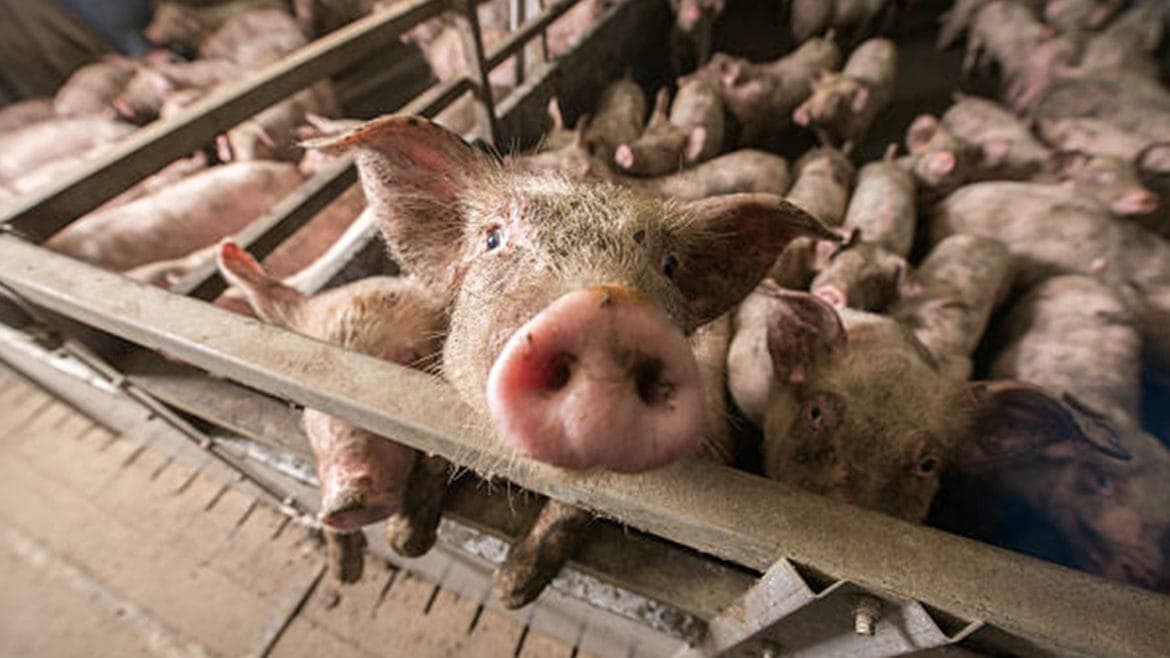
Here’s the opportunity: If we stop packing animals into crowded, confined areas — to be slaughtered for protein or parts — and if we stop cutting down and endangering their habitat, we can avoid infectious, animal-borne diseases like COVID-19, SARS, the swine flu, and more. (For these reasons, and more, Goldman Sachs now says livestock commodities are looking as ‘precarious as oil’ and U.S. Senators Elizabeth Warren and Cory Booker are calling for a ban on factory farms.)

That’s right. No more lockdowns. No more makeshift morgues. No more market crashes.

It’s that simple. If we want to save human lives and prevent mass casualties from COVID-like catastrophes, all we have to do is rethink and reconfigure our relationship with the animal world.

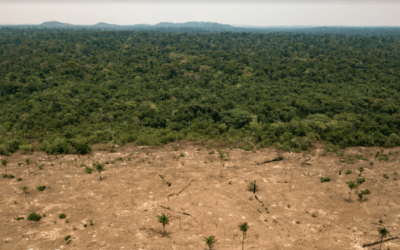
Now that social distancing is a common practice among most populations, to prevent the transmission of the virus, that’s now what animals need to be able to do, too. But in nature. We’ve already altered 75 percent of their land habitat and two-thirds of their marine habitat. That has to stop, now.

A failure to do so — or worse, by locking them up in factory farms in Waco, Texas, and wet markets in Wuhan, China — makes it all the more likely that another deadly pathogen, which should’ve stayed in nature, gets passed to humans.

While presidents and governors will prefer to emphasize that the next deadly virus is controllable primarily through better detection, monitoring and quick response — which is, of course, essential, too — the only real way to truly safeguard society is to stop the industrial and factory farming of animals.

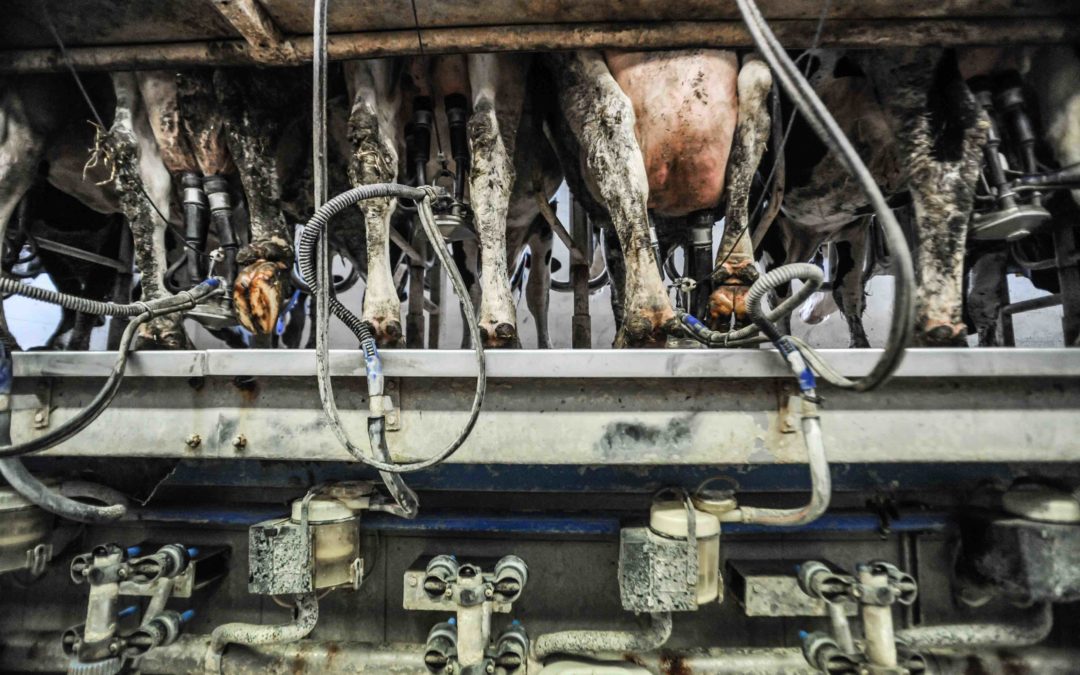
Here’s how bad it’s become: globally, concentrated animal feeding operations — or CAFOs — account for 72 percent of the poultry we consume, 42 percent of eggs, and 55 percent of pork production. In the United States, over 50,000 facilities classify as CAFOs, with another 250,000 industrial-scale facilities just below that classification.

How many animals are confined in these crowded and virus-friendly conditions? In the U.S., that’s 9 billion chickens, 250 million turkeys, 113 million pigs, and 33 million cows — annually.

That’s almost 10 billion ways to start a virus — in just one year in the U.S. alone. And we know that America’s pigs, as just one example, here — most of which are farmed in industrial facilities without fresh air or sunlight — can kill thousands of Americans with a simple swine-flu virus. Over 12,000 Americans died from H1N1 in 2009 — and remember that was from factory farms in the United States.

Seemingly, no federal guidelines are governing how these animals are used and abused. And many U.S. states are trying to punish those who speak out against these cruel factory farms, which is why Animal Legal Defense Fund, and others, are providing these animals fair representation in court. It’s good someone is. A failure to protect these animals results in a failure to protect our health.

Compounding these health concerns, of course, is industrial animal farming’s heavy use of antibiotics, which ends up leaving humans — who consumed antibiotic-laden animal products — all the more vulnerable to bacteria during a pandemic. The result of all of this? People are more susceptible to attack from a diseased, factory-farmed animal.

And if health reasons weren’t sufficient to win the hearts and minds, perhaps economics will. Industrial animal farming is the least efficient and most expensive way to provide protein to humans. It’s two-three times as valuable as plant-based proteins and incredibly inefficient use of cropland, grains, and water for animal consumption (akin to have multiple middle-managers in a supply chain). Turn those crops into direct plant-protein providers for humans — a much more efficient plant-to-mouth supply chain — and we could easily, and nutritiously feed our growing population — as many as 10 billion by 2050.

That’s the opportunity here. And sure, we could also talk about all of the environmental problems associated with industrial animal farming, which include toxic waste, dangerous and deadly pesticide use, and excessive and exorbitant greenhouse gas emissions that come from animal products. Beef protein’s carbon footprint, for example, is 150 times as high as the same amount of plant protein. But if that hasn’t yet motivated people to switch off their factory-farmed animal food, perhaps the prospect of another pandemic will.

All of this seems way too risky to continue. And until we leave this practice behind, putting animals in unhealthy, crowded and immune-compromised positions — as we are doing globally with our factory farms, wet markets, and more — will continue to put us in similarly immune-compromised positions and kill tens of thousands, perhaps even hundreds of thousands of people, each time these pandemics pop up. It’s time to do better. It’s time to save human lives. It’s time to shut down industrial animal farming.

Michael Honda is a former Member of Congress Honda now serves on the board of local Silicon Valley startups and is working on the legislative campaign to repeal the Alien Enemy Act of 1798. Michael Shank is a former congressional staffer and adjunct faculty at New York University’s Center for Global Affairs.

China continues reforms in wake of coronavirus crisis: confirms dogs are pets not meat; Wuhan, Beijing ban eating wildlife

 June 04, 2020
HSUS:

In recent months, China has made rapid progress toward quashing its infamous wildlife and dog meat trades. Last week, we got more good news on this front: China officially confirmed that dogs are pets and are not livestock for eating; and Wuhan, where the novel coronavirus is believed to have originated, prohibited residents from consuming all wildlife. ​

The declaration that dogs are companions and not livestock, first proposed in April, comes just weeks ahead of the Yulin dog meat festival, which begins June 21st, and where thousands of dogs and cats are killed for their meat each year. We hope this new development will lead to authorities in Yulin reining in—and even putting a complete stop to—this terrible event.

We also hope the declaration will lead China to act swiftly to end the dog and cat meat trade wherever it exists in the nation. Most people in China do not eat dog and cat meat, and animals who end up in this trade are often stolen pets who meet a gruesome end.

Unfortunately, the final livestock list issued by China’s Ministry of Agriculture and Rural Affairs does include some wild animals, including foxes, raccoon dogs and mink, who suffer immensely in the fur trade. Keeping these animals in close, confined conditions has been known to increase the risk of zoonotic disease spread. We call on China to reconsider this decision and ensure that all wild animals are kept off the livestock list, and to ban the fur trade as well, if it truly wants to rebrand itself as a nation that cares about global human health and animal welfare.

Wuhan’s ban on eating wild animals now brings up to four the total number of Chinese cities that have announced similar bans. In April, the city of Shenzhen first banned the eating of wildlife and included dogs and cats in its ban. Last week, the city announced a free program for microchipping all of the city’s 220,000 dogs to encourage responsible pet ownership and stop the stealing of dogs for the meat trade. Also last month, the city of Zhuhai adopted a ban on wildlife and dog and meat consumption and the nation’s capital city, Beijing, banned the eating of wildlife.

But while the bans in these other cities are permanent, the ban in Wuhan will only be in place for five years. We are calling on Wuhan to make its ban permanent, because science and history have shown that these markets present great health risk to humans and they need to be closed down in China and elsewhere around the globe where they exist.

We also urge China, which announced a temporary nationwide ban on wildlife consumption in February, to make that ban permanent.

Last month we reported that several provinces in mainland China, including Hunan and Jiangxi, are offering wildlife farmers a buy-out to move away from breeding wild animals for food and transition to alternative livelihoods such as growing fruit, vegetables, tea plants or herbs for traditional Chinese medicine. This plan is similar to the one we have implemented in South Korea, where we have been successfully transitioning farmers out of the dog meat trade and into more humane livelihoods for six years now.

The developments in China are being accelerated by the coronavirus crisis, but they are truly heartening for our Humane Society International team which, along with local partners on the ground, has been sowing the seeds for this transformation in attitudes and practice for years now. We have contributed to public education, met with government officials, assisted with the rescue of dogs and cats bound for slaughter, and brought global attention to China’s dog meat trade by focusing media attention on events like Yulin where companion animals suffer so terribly each year. We have also shone the spotlight on the wildlife trade, which has led to some species of wild animals, including pangolins and tigers, being pushed to the brink of extinction.

The coronavirus pandemic has shown us that treating animals cruelly can result in disaster for humans, and there hasn’t been a better time to recognize the harm these practices cause and to root them out. The momentum in China shows signs of growing even stronger: at the just concluded annual session of the National People’s Congress, delegates to the national legislature submitted several proposals to outlaw animal cruelty, shut down the wildlife trade, outlaw dog meat trade, ban the online transmission of animal cruelty images and videos and end animal performances. All of this is very promising, and we applaud the nation for moving forward on this important path that will benefit both its people and its animals for generations to come.

The post China continues reforms in wake of coronavirus crisis: confirms dogs are pets not meat; Wuhan, Beijing ban eating wildlife appeared first on A Humane World.

Related Stories

SHARE THIS ARTICLE

Moral consideration for animals


I WOULD like to gravitate our concerns towards a video that recently went viral, showing a helpless kitten being crushed over and over again by an adult woman for her entertainment/fetish.Also, we have news on 11 cats being ruthlessly poisoned to death over Hari Raya Aidilfitri at the Apartment Seri Lily Bukit Beruntung.

Animal cruelty is real and pervasive. It happens to all different types of animals and in every corner of the world. It is also preventable and unnecessary.

A composed ecosystem is made up of all living organisms. Within this system, all things have their rightful place and warrant the essential consideration and regard for that place and balance.

In the words of Albert Schweitzer, the Alsatian polymath (1875-1965): “We must fight against the spirit of unconscious cruelty with which we treat the animals. Animals suffer as much as we do.

“True humanity does not allow us to impose such sufferings on them. It is our duty to make the whole world recognise it. Until we extend our circle of compassion to all living things, humanity will not find peace.”

Animals are entitled to the possession of their own existence and that their most basic interests – such as the need to avoid suffering – should be afforded the same consideration as similar interests of human beings.

Therefore, it is prejudicial to oppose the suffering of humans while accepting the suffering of animals as simply a fact of life.

By respecting animal rights and having consideration for animal welfare, we also support ecological balance.

However, many animals endure heinous cruelties as people do not recognise that animals have rights, let alone the importance of having those rights.

As sentient beings, animals have the right to live a life free of agony and torment. Just because we are at the top of the food chain, it does not mean that we, humans, are the only ones with rights nor do we have the right to take animal rights away.

Animals couldn’t possibly speak for themselves and for that reason we have the responsibility to protect them. Safeguarding them is something we should take pride in.

It is important to view animals as having an intrinsic value separate from any value they have to humans and are worthy of moral consideration.

In his book Animal Liberation, Peter Singer says the fundamental dictum of equality does not prescribe equal or identical treatment; it demands equal consideration.

Animals are neither inanimate nor automata objects. They have the faculty to suffer in a similar manner and to the same degree that humans do.

Every action that we take which would impede with their needs and welfare, we are ethically obligated to take into account their ability to experience maternal love, fear, frustration, pain, pleasure and also depression.

Animals also have the faculty to exhibit empathy toward humans and other animals in a myriad of ways, particularly reassuring, mourning and even rescuing each other from harm at their own expense.

It is important to acknowledge that empathy in animals stretches across species and continents. This is not just sanguine thinking.

Research has disclosed that illuminating kids to be compassionate to animals can guide them to become good-natured and more heedful in their interactions with other humans.

Additionally, it helps them be more respectful and valuable to society. Francis of Assisi said: “If you have men who will exclude any of God’s creatures from the shelter of compassion and pity, you will have men who will deal likewise with their fellow men”.

Animals are sentient beings and sentience is the only thing that matters when discussing those to whom we should give moral consideration.

In the words of Mohandas Ghandi: “The greatness of a nation and its moral progress can be judged by the way its animals are treated”.

Therefore, as a civilised society, we must count animals as worthy of moral consideration and ethical treatment. The question is not can they reason, nor can they talk, but can they suffer? – May 30, 2020.

* Suzianah Nhazzla Ismail reads The Malaysian Insight.

* This is the opinion of the writer or publication and does not necessarily represent the views of The Malaysian Insight.

ANIMAL RIGHTS GROUP TARGETING IOWA PIG FARMERS DEPOPULATING HERDS

DIRECT ACTION EVERYWHERE IS TRYING TO CAPTURE VIDEO ON FARMS, WARNS CSIF.

The Coalition to Support Iowa’s Farmers (CSIF) sent an urgent message to pork producers today, warning of animal welfare activists taking videos of hogs being euthanized on farms.

Direct Action Everywhere (DXE) has members on the ground in Iowa, says CSIF, and all farms and processing plants should be on high alert that they may be targeted in an attempt to capture video footage and cause a disruption to normal business activity.

Livestock farmers must be vigilant in monitoring the security of farms at all times, for the safety of people and livestock.

“Most people think they will never be the target, but no one can assume they are safe,” says CSIF executive director Brian Waddingham. “There are many preventive measures you can take to protect your farm and your livestock.”  For a complete list of ways to keep your farm out of the crosshairs, click here.

If you find a suspicious vehicle near your farm or discover criminals on your property, do not try to apprehend them, says Waddingham. Contact local law enforcement.

This is an extreme animal rights group that is taking advantage of a heart-wrenching, crisis situation some livestock farmers are faced with to advance their own agenda – which is to eliminate animal agriculture, he says.

For additional suggestions on preventive measures you can take to reduce your risk, as well as suggestions of what to do if you are the victim of a criminal act, visit our website.

On Pandemics, Pork Chops and Chicken Nuggets

I’ve wasted too much time lately combing the news for an answer to a crucial question about pandemics like Covid-19: Are they inevitable?

Newscasters and the scientists, doctors and politicians they interview rarely venture beyond daily counts of the stricken to explain why we have pandemics. I suspect it’s because the answer is harder to stomach than the horror of the pandemic itself.

Animals humans raise for food are typically the intermediary hosts of viruses between the wildlife in which they arise – e.g. bats and wild birds – and humans. Consequently, pandemics are a price we pay for eating animals and otherwise using them.

Comedian and political commentator Bill Maher came close to getting it right during the pithy New Rules segment of his April 10 show when arguing for naming Covid-19 the Chinese virus because it seemingly jumped to humans in China’s “wet markets” where live fish, poultry and mammals – including exotics like bats, raccoon dogs and civet cats – are slaughtered on site to satisfy the palate of some Chinese for fresh and exotic meats.

Maher was correct that Chinese wet markets might be culpable for a number of lethal human virus outbreaks, including SARS coronavirus in 2003 and H7N9 Avian flu in 2013.

However, Maher’s initial foray into the origin of pandemics overlooked the uncomfortable fact that Americans’ insatiable taste for animal meat was at the root of other killer virus outbreaks. The H1N1 swine flu of 2009 emerged from a pig confinement operation in North Carolina and was a mutated descendant of a swine flu virus that sprang from U.S. factory farms in 1998. And, even though Chinese chicken farms are credited with the deadly H5N1 bird flu outbreak of 1997 (which killed 60 percent of infected humans), just five years ago a similar bird flu broke out in U.S farms, prompting the slaughter of tens of millions of chickens and turkeys.

Recall also that the 1918 Spanish flu that killed over 50 million people worldwide sprang from farms in Kansas, possibly via pigs or sheep, before transmitting around the world via WWI U.S. soldiers.

To his credit, Maher subsequently course-corrected in an April 24 New Rules segment, proffering that “factory farming is just as despicable as a wet market and just as problematic for our health” and “torturing animals is what got us into this mess.”

U.S. factory farms provide 99% of Americans’ meat, dairy and eggs and are ideal breeding grounds for infectious diseases because of the crowded (and unspeakably inhumane) conditions in which animals are kept. Hence, an overwhelming preponderance of medically important antimicrobials sold nationally are used in food-producing animals.

A hard to swallow truth: Factory farms are America’s cultural equivalent of China’s wet markets.

Many virus pandemics have much to do with society’s dietary choices. Plants do indeed get viruses, but genetic studies provide no evidence that plant viruses are causative agents of disease in humans. A pandemic from eating lentils and broccoli seems highly unlikely.

Humans readily accept the suffering animals endure to satisfy our appetite for meat, and pandemics are just one of the painful costs to us. Others include cardiovascular disease, diabetes, antibiotic resistance, global warming, rainforest destruction and aquifer depletion.

For those who believe that only meat can provide adequate protein to fuel our brains and bodies, consider that Socrates was vegetarian and Patrik Baboumian, dubbed “strongest man on earth,” is vegan.

An athletics documentary available on Netflix, The Game Changers, is an eye-opening starter for doubters that a plant-based diet can sustain optimal health.

Historically, epidemics and pandemics have led to important advances in public health, like widespread understanding of the germ theory, improved sanitation, penicillin and vaccinations. What will Americans learn from Covid-19?

Will we rethink the decades-long erosion of the social safety net, including lack of universal healthcare and opposition to guaranteeing all workers a living wage? Will we reconsider the true value to society of so-called “unskilled” workers, like supermarket checkers, who put themselves at risk now every time they show up for work? And what does it say about our priorities that meat factories are being forced to continue to operate despite high rates of Covid-19 infections among the workers?

Both history and science tell us that, unless we do something different, the next pandemic is somewhere just around the corner. This is driven home by study findings just published in April of six new coronaviruses discovered in Myanmar bats.

My hope is that the global heartache and societal disruptions from Covid-19 will spur a conversation that reaches deeper than blaming pandemics on wet markets and factory farming, but rather confronts humanity with the very real connection between pandemics and eating animals.

Why I’m An Animal Rights Activist When There Is So Much Human Suffering In The World

COVID-19 and animal laws

 Daniel Dylan

Thursday, May 14, 2020 @ 3:10 PM | By Daniel Dylan

https://www.thelawyersdaily.ca/articles/19053/covid-19-and-animal-laws-daniel-dylan?category=opinion
Daniel Dylan

It is of urgent importance and necessity — as we are all now of course doing — to stem the ravaging tide of COVID-19 transmissions and the unimaginable death toll witnessed both locally and globally that COVID-19 has caused. Part of this effort involves taking measures such as quarantining, restricting travel, self-isolating, social distancing, practising impeccable hand and face hygiene and funding emerging scientific and medical research to develop therapeutic treatments and vaccines.

With the exception of vaccines, these are mostly short-term measures (if they can be called that, as we do not know how long this pandemic will last), but among the most profound long-term measures we can take to improve our own and non-human animal lives and welfare is to stop consuming non-human animals as food.

While there are ethical reasons for not eating non-human animals and practising veganism (which will be dealt with in article two), the overwhelming health and environmental benefits a vegan diet can reap to prevent further coronavirus transmissions in the future is one of the simplest long-term measures anyone can take. Moreover, doing so would likely pave the way for better than the already weak non-human animal laws in Canada.

As is commonly known, COVID-19 is a zoonotic disease, which means it is a coronavirus that originated in non-human animals and eventually migrated to human animals. Bats are a common carrier of coronaviruses, for example, and pangolins, the most trafficked species in the world, also tend to act as intermediaries for coronavirus transmissions.

Although over 500 different coronavirus strains were discovered in the last 10 years, it is unclear to scientists, ecologists and epidemiologists where exactly COVID-19 emerged, but there appears to be a general consensus that sometime in November 2019, COVID-19 saw significant transmission from non-human animals to human animals in a wildlife market in Wuhan, China.

On Feb. 11, for various reasons owing to geographic, species and demographic neutrality and simplicity, the World Health Organization (WHO) labelled that particular strain of coronavirus “COVID-19.” In fact, in 2015, the WHO published a list of emerging diseases (mostly derived from non-human animals) that were deemed likely to cause epidemics; however, COVID-19 was not among them. I am not faulting the WHO for not including COVID-19 on that list; only pointing out that emerging diseases and their origins are generally known and monitored among the global human animal health community.

Nevertheless, what COVID-19 and some of the other viruses that were included on that list have in common is that they often originate in public and private food markets in which live or recently slaughtered wild non-human animals are purveyed. In fact, United Nations Food and Agriculture Organization suggested that over 70 per cent of new human diseases in recent decades originated in non-human animals and has only been accelerated by human animals’ quest for more non-human animal sourced food.

The WHO, the U.S.’s Centers for Disease Control and Prevention and the Public Health Agency of Canada historically have, for numerous years, issued similar warnings about potential pandemics based on the dietetic consumption of non-human animals.

The Canadian Food Inspection Agency (CFIA), the federal body responsible for regulating the safety of non-human animals and their byproducts for human animal consumption in Canada, has also authorized certain countries to import meat into Canada. CFIA writes on its website that during the COVID-19 pandemic it is “taking action to preserve the integrity of Canada’s food safety system, while safeguarding its animal and plant resource base.” It is not clear what this means.

In totality, CFIA’s greatest efforts are typically devoted to ensuring that non-human animals are fit for human animal consumption and the agency does little else to protect the daily lives and welfare of non-human animals themselves. In all fairness, however, it is not explicitly within CFIA’s mandate to do so.

Above all else, however, it is the demand for “meat” that fuels supply — locally and globally. Simply put, if the demand were to decrease or even disappear, an absence of supply would naturally follow. Surely then the possibility of future pandemics would decrease.

Not consuming foreign non-human animals, however, exists in the larger context of domestic non-human animal food consumption. Canada is one of the largest producers and exporters of dead cow meat (“beef” is a euphemism) in the world, for example. According to the Canadian Cattlemen’s Association, the body that represents Canadian “beef” producers, Canada produces approximately 1.3 million tonnes of dead cow meat annually and in 2018 exported $2.75 billion worth or 398,580 tonnes of dead cow meat, representing 38 per cent of domestic slaughter. The remaining 901,420 tonnes were consumed by Canadians.

If foot-and-mouth disease, the Walkerton E. coli outbreaks and even the H1N1 and SARS viruses are indications, given these numbers, the possibility of pathogen and virus transmission exists in domestic contexts despite whatever regulatory precautions CFIA might take.

As more information about COVID-19, the devastating effects it is having, and other infectious diseases and the possibility of future epidemics or pandemics emerge, it will be interesting to see if Canadians will either become vegan or at least demand improved laws respecting the treatment and importation of non-human animals into Canada. Doing so would likely pave the way for better than the already weak non-human animal laws in Canada, which I will explore in part two.

This is part one of a two-part series.

Daniel Dylan is an assistant professor at the Bora Laskin Faculty of Law, Lakehead University, in Thunder Bay, Ont. He teaches animal law, contract law, evidence law, intellectual property law and Indigenous knowledge governance.

Interested in writing for us? To learn more about how you can add your voice to The Lawyer’s Daily, contact Analysis Editor Yvette Trancoso-Barrett at Yvette.Trancoso-barrett@lexisnexis.ca or call 905-415-5811.

COVID-19 Exposes Flaws in Animal Protein Production


Latest Coverage

Join Our Newsletter

Sentient Today sifts through what’s out there to find the facts, figures, and hidden treasures about animals, science, and the environment. If you’re an idea seeker, generally curious, or like to learn novel things then this is the newsletter for you.


Featured Articles