Unfortunately the Bear Hunter Got Away

http://www.opposingviews.com/i/society/animal-rights/minnesota-hunter-mauled-black-bear-after-shooting-it

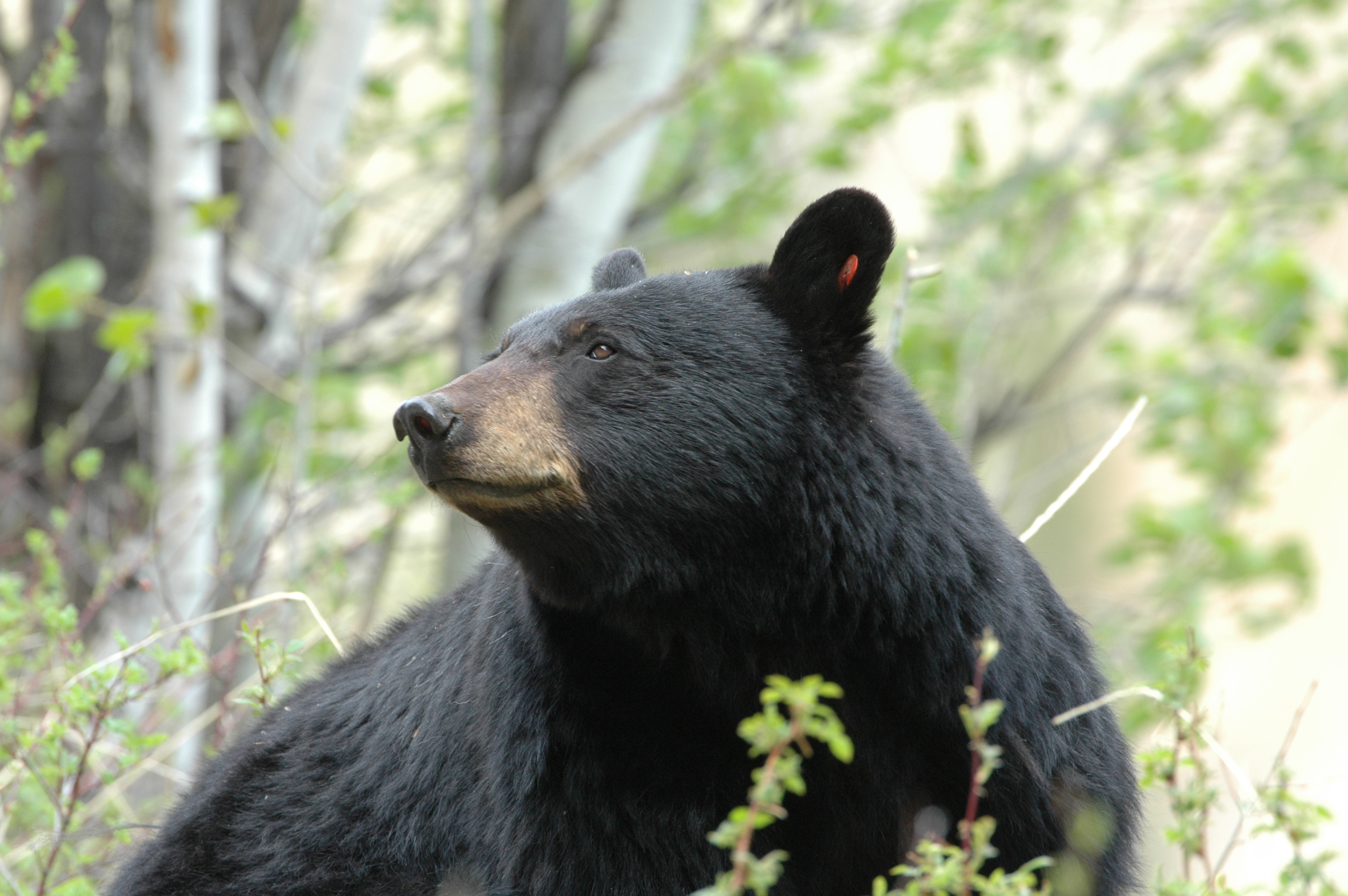
Black Bear Mauls Hunter Who Shot It

article image

A Minnesota hunter was mauled by an enormous black bear on Saturday morning after shooting it with a bow and arrow.

The unnamed man was hunting in dense woodland near Duxbury on Friday night when he shot the 525-pound bear. Fearing the bear’s meat would spoil in the day-time heat, the hunter and his friends waited four hours before following the animal’s blood trail.

The group tracked the bear for several miles in the darkness until they found it lying on the ground early Saturday morning. Suddenly, it charged and attacked the man who had shot it, who screamed before stabbing the animal 20 times with a hunting knife.

“I heard him screaming – felt like 10 minutes, but was probably two minutes,” Craig Lindstrom, a fellow hunter, said. “He kept stabbing it and it was pounding on him, a quarter of a ton – a 525-pound bear pounding on him.”

Using first-aid skills he had learned as a Chicago City firefighter, Lindstrom led his friend half a mile out of the woods and called the Pine County Sheriff’s Office.

“I thought he was dead 10 to 15 times,” Lindstrom said. “He would fall down and he told us about telling his parents, his fiancée, his kids – tell them I love them.”

The hunter suffered two broken arms along with wounds to his face, jaw, stomach and legs. He is currently at the North Memorial Medical Center and in stable condition.

The bear eventually died around 50 yards from where it was stabbed, and was dragged out of the woods by the remaining hunters.

Despite the brutal attack, Lindstrom and his friends said they won’t hesitate to hunt again in the future. Lindstrom hoped that his friend would recover in time for deer hunting season.

– See more at: http://www.opposingviews.com/i/society/animal-rights/minnesota-hunter-mauled-black-bear-after-shooting-it#sthash.0Jujcb8h.haFmSQlb.dpuf

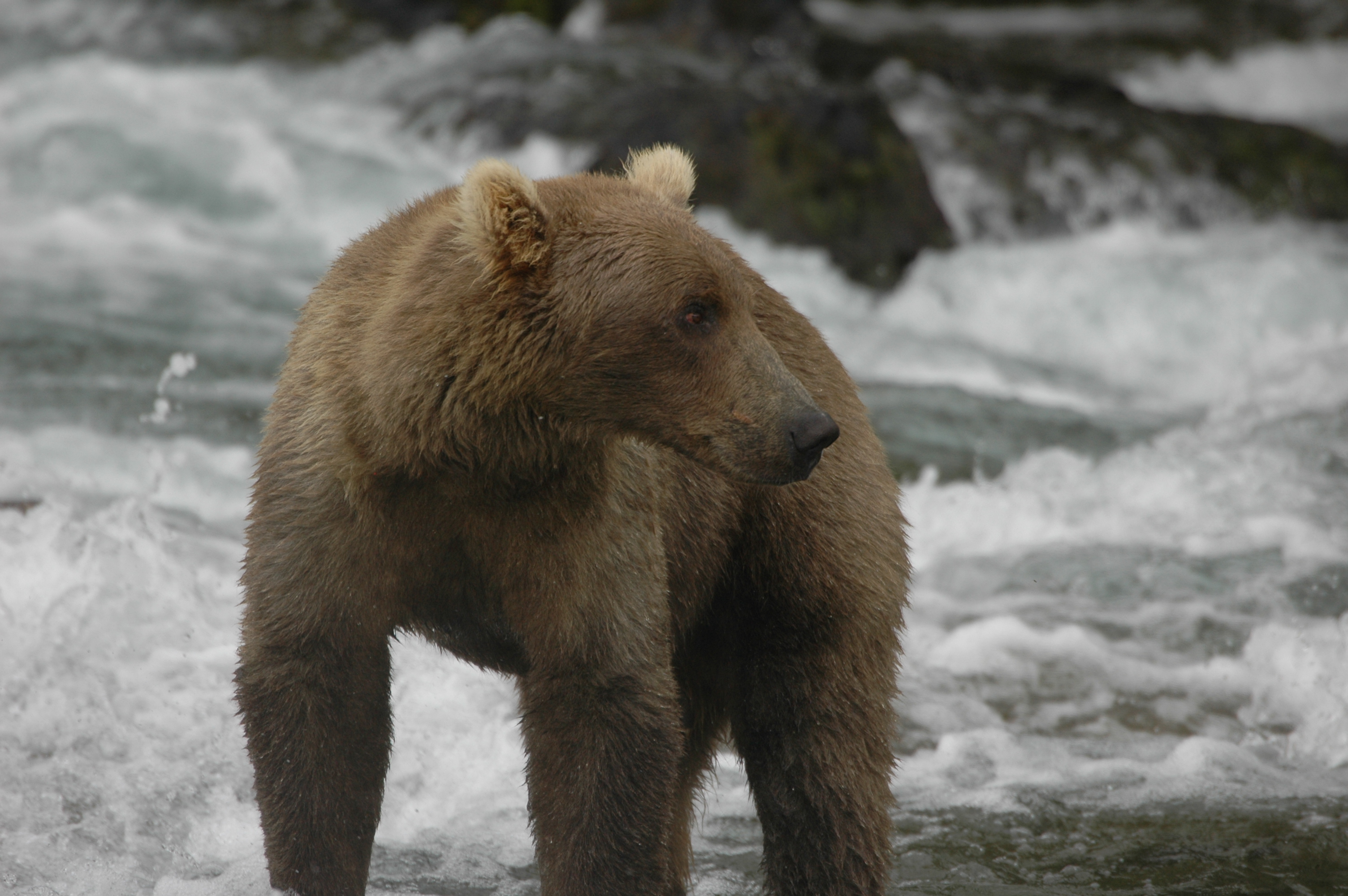
Grizzly involved in fatal attack on hunter will stay in K-Country with cub

http://www.calgaryherald.com/Grizzly+involved+fatal+attack+hunter+will+stay+Country+with/10196069/story.html

By Colette Derworiz, Calgary Herald September 11, 2014

Grizzly involved in fatal attack on hunter will stay in K-Country with cub

Richard Cross was killed by a grizzly bear in Kananaskis Country on the weekend. Officials have decided against destroying the bear responsible for his death, ruling it a defensive attack.

Photograph by: Facebook photo , Calgary Herald

A grizzly bear that killed a sheep hunter in Kananaskis Country on the weekend will be left in the area with her cub, after it was ruled a defensive attack.

On the weekend, Calgarian Rick Cross was walking alone along the Picklejar Creek trail when he was attacked and killed by the bear.

“It was definitely a defensive attack, not a predatory one,” said Glenn Naylor, district conservation officer with Kananaskis Country. “That was the main decision-making factor, but we have to look at all of the evidence and all possible scenarios first.

“The evidence clearly points to the fact that he out of the blue encountered this situation and the chain of events that happened pretty quickly.”

Cross was hunting for big horn sheep Saturday, but didn’t return home that night as expected. His family reported him missing to police Sunday morning and a search began immediately.

Officers found his backpack and rifle Sunday, but had to call off the search as darkness fell and bears were still in the area. They found his remains not far from his belongings a day later.

Naylor said the evidence shows that the bear responded defensively, both because of its cub and a freshly killed deer carcass in the area.

“It attacked Mr. Cross and the result was tragic. He was killed,” he said. “After he was no longer a threat, the bear left him alone. He wasn’t touched again.”

That led biologists with both Alberta Parks and Alberta Environment and Sustainable Resource Development to rule it a defensive attack.

“That was the conclusion that was arrived at by everyone,” he said, noting other options would have been to capture and relocate the bear, or destroy it.

Naylor said provincial officials have met with the Cross family about their decision to leave it alone.

“They were appreciative of all of our efforts,” he said. “They had no problem with the result.”

Kim Titchener, program director at Bow Valley WildSmart, said it’s the decision she expected.

“They have a great reputation for doing what’s right for wildlife and what’s right for public safety,” she said. “That bear isn’t a threat. She was doing what bears do.”

The Picklejar area will remain closed until the bear and her cub are finished feeding on the deer carcass.

cderworiz@calgaryherald.com

Black bear released into wild after PAWS rehab

http://www.komonews.com/news/local/Hungry-Bear-Gets-Taste-Of-The-Wild-273117731.html

MONROE, Wash. – An underweight black bear that was rehabilitated after living off a Redmond family’s bird feeder was released into the wild Thursday afternoon.

The Albertson’s in Monroe served as the meeting spot for a caravan into the Cascades where the bear was released. She let out a growl, which wildlife agents say is a good sound as it shows the bear is still afraid of people even after 3 months in captivity.

In June, officers used a doughnut to lure the 1-year-old bear when they realized she was underweight, and brought her to PAWS for rehabilitation.

“She came in somewhere around 45 pounds when she should have been way up close to 100 pounds,” PAWS Director Jennifer Convy said.

Naturalists reintroduced the bear to her native diet of skunk cabbage and berries, and discovered she doesn’t like radishes or watermelon.

Fish and Wildlife officers drove 60 miles from the PAWS office in Lynnwood into a remote mountainous area along the Cascades.

Officers fired a non-lethal bean bag shot at the animal and shouted, “Get out of here bear!” They say it’s their tough love way of teaching her to stay away from people.

Less than eight seconds after the trap opened the bear had vanished into the wild.

It cost PAWS roughly $3,000 to feed and care for the bear. The organization is holding its annual Big Paws Walk Fundraiser September 6, 2014 at Marymoor Park, which helps raise money for the rehabilitation of wild animals.

Photo Copyright Jim Robertson

Photo Copyright Jim Robertson

Feds to Consider Translocating Bears to North Cascades National Park

biologicaldivesity.org

August 21, 2014

Contact: Noah Greenwald,

One Month After Center Files Petition to Expand Grizzly Bear Recovery Feds Take Action

WASHINGTON— The National Park Service this week took an important step toward recovering grizzly bears in the North Cascades in Washington state. The agency says it is beginning a three-year process to analyze options for boosting grizzly bear populations in the area, including the possibility of translocating bears and developing a viable population.

“We’re happy to see the Park Service begin the long-overdue conversation about bringing grizzly bears back to the North Cascades,” said Noah Greenwald, endangered species director with the Center for Biological Diversity. “Grizzlies have lost more than 95 percent of their historic habitat in the lower 48 states so we welcome any step that brings them closer to returning to some of their ancestral homes.”

In June, the Center petitioned the U.S. Fish and Wildlife Service to begin returning grizzly bears to vast swaths of the American West. The petition identified more than 110,000 square miles of potential grizzly bear habitat, including parts of Washington, California, Colorado, New Mexico, Arizona and Colorado.

Today, there are roughly 1,500-1,800 grizzly bears in the continental United States, most of them in and around Yellowstone and Glacier national parks. The grizzly populations remain separated from each other, which impedes genetic exchange and limits their ability to expand into new areas.

The Northern Cascades ecosystem includes about 9,800 square miles in the United States and 3,800 square miles in Canada. A grizzly bear has not been spotted on the U.S. side since 2010.

“The Northern Cascades has the potential to host a viable grizzly bear population,” Greenwald said. “The same could be said for many spots scattered throughout the West. If grizzly bears are ultimately going to have a thriving, healthy population no longer threatened by extinction, they’ve got to be given a chance to return to some of the places they were driven out of years ago.”

The Park Service says it will develop its “environmental impact statement” for grizzly bears in the North Cascades in conjunction with the Fish and Wildlife Service.

Photo Copyright Jim Robertson

Photo Copyright Jim Robertson

Stop the Blood Sport of Bear Hunting

Photo Copyright Jim Robertson

Photo Copyright Jim Robertson

Those who respect wildlife get tired of seeing smiling “hunters” posing with a weapon in one hand and holding up the head of a majestic bear with the other. In death, the bear shows more dignity than its cowardly killer.

Lynn Rogers, Ph.D., the leading black bear biologist in North America, concluded that black bears are extremely timid and pose little risk to anyone. Attacks by a black bear are so rare as to be almost nonexistent. A person is about 180 times more likely to be killed by a bee than a black bear and 160,000 times more likely to die in a traffic accident.

The New Jersey Fish and Wildlife agency propagates game species for its hunter constituents. It runs a blood “sport” killing business under the fraudulent cover of “conservation.”

Killing a black bear is a cowardly act. It’s killing for nothing more than sick kicks and “trophy” bragging rights.

Most bears are already starting hibernation and are defenseless. “Hunters” are even allowed to use bait.

Killing a black bear mom leaves her cubs to die of starvation. Don’t worry, the agency encourages “hunters” to shoot cubs, too. It’s an obscene and senseless act, and a reflection of the worst of human nature. If bears could shoot back, there wouldn’t be a hunter in the woods.

Please politely ask Gov. Chris Christie to cancel the bear hunt that begins Dec. 8. Email constituent.relations@gov.state.nj.us; write Office of the Governor, P.O. Box 001, Trenton, NJ 08625; call (609) 292-6000; or fax (609) 292-5212.

SILVIE POMICTER

Voice Of The Animals

President/Humane Educator

Chinchilla, Pa.

http://www.courierpostonline.com/story/opinion/readers/2014/08/19/letter-stop-blood-sport-bear-hunting/14316969/


Grizzly bear killed in Idaho livestock incident

http://www.bozemandailychronicle.com/news/wildlife/article_5162bf36-218b-11e4-b95e-001a4bcf887a.html?utm_source=sitetoprelated&utm_medium=desktop&utm_campaign=bt

LAURA LUNDQUIST, Chronicle Staff Writer The Bozeman Daily Chronicle | 2 Comments

Wardens killed a male grizzly bear Sunday in another livestock-related incident along Montana’s southwestern border.

Workers had reported the death of cattle on a ranch that is part of Idaho’s Harriman State Park west of Island Park Reservoir and Yellowstone National Park and just south of the Montana border.

The ranch is also around 30 miles from the U.S. Experimental Sheep Station Range Reserve and summer grazing pastures in the Centennial Mountains, where other grizzly bears have been killed for preying on sheep.

Idaho Fish & Game spokesman Gregg Losinski, who also works with the Interagency Grizzly Bear Committee, said the cattle depredations had been ongoing, and it appeared that a bear was responsible.

So IFG contacted U.S. Department of Agriculture Wildlife Services employees who snared and killed the bear, which turned out to be a male approximately 9 years old.

Losinski said the bear was eliminated because it had learned to prey preferentially on livestock.

This is the fourth grizzly bear that Wildlife Services has killed this year because of cattle depredation. Two others were killed in Wyoming, and one was killed in May near Tom Miner Creek north of Gardiner, according to data gathered by the Interagency Grizzly Bear Study Team.

Ten grizzly bear deaths have been recorded this year, with three being natural and four human-caused that are under investigation.

But that’s fewer deaths by this time of year than in 2013. By August of that year, 14 bears had died, eight of which were killed for preying on livestock.

“We’re happy that fewer bears have been killed due to depredation this year,” Losinski said. “Now we’re getting ready for hunting season, which is another time when bears are killed because of run-ins with hunters.”

In 2013, hunters were responsible for four of the 29 total grizzly bear deaths.

Grizzly bears are still protected by the Endangered Species Act and killing one without authorization is illegal.

Photo Copyright Jim Robertson

Photo Copyright Jim Robertson

More bears dying in Rockies

Photo Copyright Jim Robertson

Photo Copyright Jim Robertson

By Colette Derworiz, Calgary Herald August 6, 2014

It’s been another challenging couple of weeks for bears in the Rockies.

In the past week, wildlife officials confirmed grizzly No. 138 lost her second cub. A tagged grizzly bear, No. 144, was spending time in Harvie Heights, a community on the boundary with Banff National Park.

And two black bears were hit on the highways in the national parks on the weekend, but it’s unknown whether either bear survived.

“It’s been a really tough year for roadside bears,” said Brianna Burley, human/wildlife conflict specialist with Banff, Yoho and Kootenay national parks.

So far, there have been 15 black bears hit on the highways — with at least seven of those bears dying from their injuries. An eighth black bear was hit and killed on the railway tracks.

In late July, a grizzly bear was also struck and killed by a vehicle on Highway 93 N.

The bear, No. 149, was struck around Hector viewpoint on July 21, but was only found a few days later after a mortality signal on its GPS collar went off.

“It looked like it had died from the impact,” said Burley, noting it was a young male bear they had been keeping a close eye on since the July long weekend when they kept it safe from traffic on the Trans-Canada Highway. “It’s so disappointing.”

Similarly, wildlife officials were disappointed to see that No. 138 — a female bear who emerged from her den around the Lake Louise ski hill — was without either of her two cubs late last week when she showed up near the townsite.

She had lost one of her cubs in mid-July due to predation. It’s believed a similar fate struck the second cub.

“We have our assumptions again that she got tangled up with the big males,” said Burley. “We’re not totally sure what happened.”

Another tagged bear from Banff National Park, No. 144, kept wildlife officials busy as it ate berries around the community of Harvie Heights, just outside of the national park boundary.

Provincial officials said the three-and-a-half year old male started making its way back west on Tuesday morning.

“He packed up his bags and moved to Banff,” said Dave Dickson, a Fish and Wildlife officer in Canmore.

Bear biologist Jay Honeyman said they will continue to monitor the bear with their counterparts within Banff National Park.

“We don’t want him in the residential area,” he said, noting they were able to haze the bear out of the area.

All of the collared bears are part of a joint project between Parks Canada and Canadian Pacific to come up with ways to reduce grizzly bear mortalities.

cderworiz@calgaryherald.com

© Copyright (c) The Calgary Herald


http://www.calgaryherald.com/news/calgary/More+bears+dying+Rockies

Orphaned bear cub escapes wildfire with badly burned paws

Photo Copyright Jim Robertson

Photo Copyright Jim Robertson

By Published: Aug 4, 2014

WENATCHEE, Wash. — The newest victim from the Carlton Complex Fire is a black bear cub. Methow Valley homeowner Steve Love says his dog was barking and horse was prancing and snorting to sound an alarm. That’s when he first spotted the 6-month old cub hobbling up his driveway.

He could tell the cub was seriously injured but when he first approached, she made menacing sounds and he backed away. He was eventually able to toss her apricots from a tree and get her some water.

“Later in the evening, she was lying down making pitiful whimpering noises,” Love said. “I got about six feet away, sat down and talked to it in a soothing way, telling it things would be okay. It seemed to make it feel better. It stopped making the noises.”

The next day, a Fish and Wildlife Police Officer was able to capture the cub and transport her to Wenatchee. That’s where state biologist Rich Beausoleil picked up her care.

“They’re severe,” Beausoleil said of her wounds. “All four paws were 3rd degree burns. She has some burns to her face and arms and chest. Those were relatively minor and I think that will grow back. It’s the four feet we’re worried about.”

Dr. Randy Hein, an East Wenatchee veterinarian donated time and medicine. Beausoleil fed her a concoction of yogurt and dog food while seeking out long term help. He says he started with Sally Maughan of Idaho Black Bear Rehabilitation who pointed him towards Lake Tahoe Wildlife Care.

In 2008, the center rehabilitated a cub nicknamed “Lil Smokey” who suffered burns in a California wildfire. They agreed to take cub, which they’ve named Cinder, but there was the challenge of getting her there.

http://www.komonews.com/news/local/Orphaned-bear-cub-escapes-wildfire-with-badly-burned-paws-269849701.html

Comment: Grizzly bears more useful alive than dead

Grizzly photo Copyright Jim Robertson

Grizzly photo Copyright Jim Robertson

Chris Genovali / Times Colonist
July 17, 2014

One can only conclude that Naomi Yamamoto, provincial minister of tourism and small business, was poorly briefed with regard to the grizzly bear hunt after reading about her recent speech on Saltspring Island.

Having B.C.’s tourism minister put forth the notion that the proliferation of oilsands pipelines and oil tankers, along with the escalation of a host of other industrial-scale resource extraction activities, would somehow be compatible with a robust tourism industry based on the natural beauty of the province is dubious. But for Yamamoto to suggest that bear viewing is compatible with the trophy-killing of bears, and then disproportionately claim that the grizzly hunt is a chief economic driver for the province, is inexplicably out of touch.

Contrary to Yamamoto’s assertions, there is no ecological, ethical or economic justification for continuing to trophy-kill B.C.’s grizzly bears.

The ecological argument is clear — killing bears for “management” purposes is unnecessary and scientifically unsound. Although attempts are made to dress up B.C.’s motivations in the trappings of “sound science,” the province is clearly driven by an anachronistic ideology that is disconcertingly fixated on killing as a legitimate and necessary tool of wildlife management.

Paul Paquet, senior scientist at Raincoast Conservation Foundation, large carnivore expert and co-author of a 2013 published peer-reviewed paper on B.C. bear management, states: “We analyzed only some of the uncertainty associated with grizzly management and found it was likely contributing to widespread overkills. I’m not sure how the government defines sound science, but an approach that carelessly leads to widespread overkills is less than scientifically credible.”

The ethical argument is clear — gratuitous killing for recreation is unacceptable and immoral. Polling shows that nine out of 10 British Columbians agree, from rural residents (including many hunters) to city dwellers.

In their 2009 publication The Ethics of Hunting, Michael Nelson and Kelly Millenbah state that if wildlife managers began “to take philosophy and ethics more seriously, both as a realm of expertise that can be acquired and as a critical dimension of wildlife conservation, many elements of wildlife conservation and management would look different.”

During her Saltspring appearance, Yamamoto attempted to downplay widespread public concern about the grizzly hunt by stating: “it’s not like a bear gets killed every day.”

Given that an average of 300 grizzlies and 3,900 black bears (according to the B.C. Wildlife Federation) are killed for trophies in B.C. annually, the minister’s statement is not only flippant, but callous to the disturbing amount of carnage inflicted on bears in this province every year for the most trivial of reasons — recreational trophy hunting.

The economic argument is clear — recent research by the Centre for Responsible Travel at Stanford University says that bear-viewing supports 10 times more employment, tourist spending and government revenue than trophy hunting in B.C.’s vast Great Bear Rainforest.

Notably, the CREST Stanford study suggests the revenue generated by fees and licences affiliated with the trophy killing of grizzlies fails to cover the cost of the province’s management of the hunt. As a result, B.C. taxpayers, most of whom oppose the hunt according to poll after poll, are in essence being forced to subsidize the trophy killing of grizzlies.

For Yamamoto to suggest that banning the grizzly bear hunt would jeopardize the province’s ability to “generate the extra revenue to pay for health care, education and all those things that people are demanding” is astoundingly off-base.

The 2014 CREST Stanford study reaffirms what Coastal First Nations, the eco-tourism industry and conservation groups like Raincoast have been pointing out for years — keeping grizzly bears alive generates significantly greater economic benefits than killing them via trophy hunting.

In 2003, Raincoast and the Centre for Integral Economics released the report Crossroads: Economics, Policy, and the Future of Grizzly Bears in British Columbia, which compared revenues generated by grizzly viewing versus grizzly hunting.

Even more than a decade ago, when the bear-viewing sector of the ecotourism industry was in its nascent stage, viewing grizzlies was bringing in about twice the annual revenue as grizzly hunting.

Our analysis showed that in the long term, it makes more economic sense to shoot grizzly bears with cameras than to shoot them with guns. Over the course of a grizzly’s life, the bear can be viewed and photographed hundreds of times, generating tremendous economic wealth for B.C.

However, a grizzly bear can only be shot and killed once.

Chris Genovali is executive director of the Raincoast Conservation Foundation.

– See more at: http://www.timescolonist.com/opinion/op-ed/comment-grizzly-bears-more-useful-alive-than-dead-1.1209390#sthash.o2fie8k1.dpuf

In Ted’s Own Words

Spring bearseason has kickedoff to a blazing start with hunters all across North America killing black bears & griz in record numbers! This is my spring QB blackie from 2013. Our SUNRIZE SAFARIS 517-750-9060 books hunters all over the world at the best damn outfits there is. If you’ve never hunted your own rugsteaks ya oughtta git krackin! KillerFUN & powerful perfect conservation. That’s why there are more bears in NA now than ever in recorded history. Bow, gun, ballpeen hammer, Bowie knife, heavy sox with an 8ball! Don’t matter! Let’s killem!! CMON!!
Photo: Spring bearseason has kickedoff to a blazing start with hunters all across North America killing black bears & griz in record numbers! This is my spring QB blackie from 2013. Our SUNRIZE SAFARIS 517-750-9060 books hunters all over the world at the best damn outfits there is. If you've never hunted your own rugsteaks ya oughtta git krackin! KillerFUN & powerful perfect conservation. That's why there are more bears in NA now than ever in recorded history. Bow, gun, ballpeen hammer, Bowie knife, heavy sox with an 8ball! Don't matter! Let's killem!! CMON!!