Feds Move to Strip Endangered Species Protections From Yellowstone Grizzlies in 2014

March 27, 2014 by Louisa Willcox,

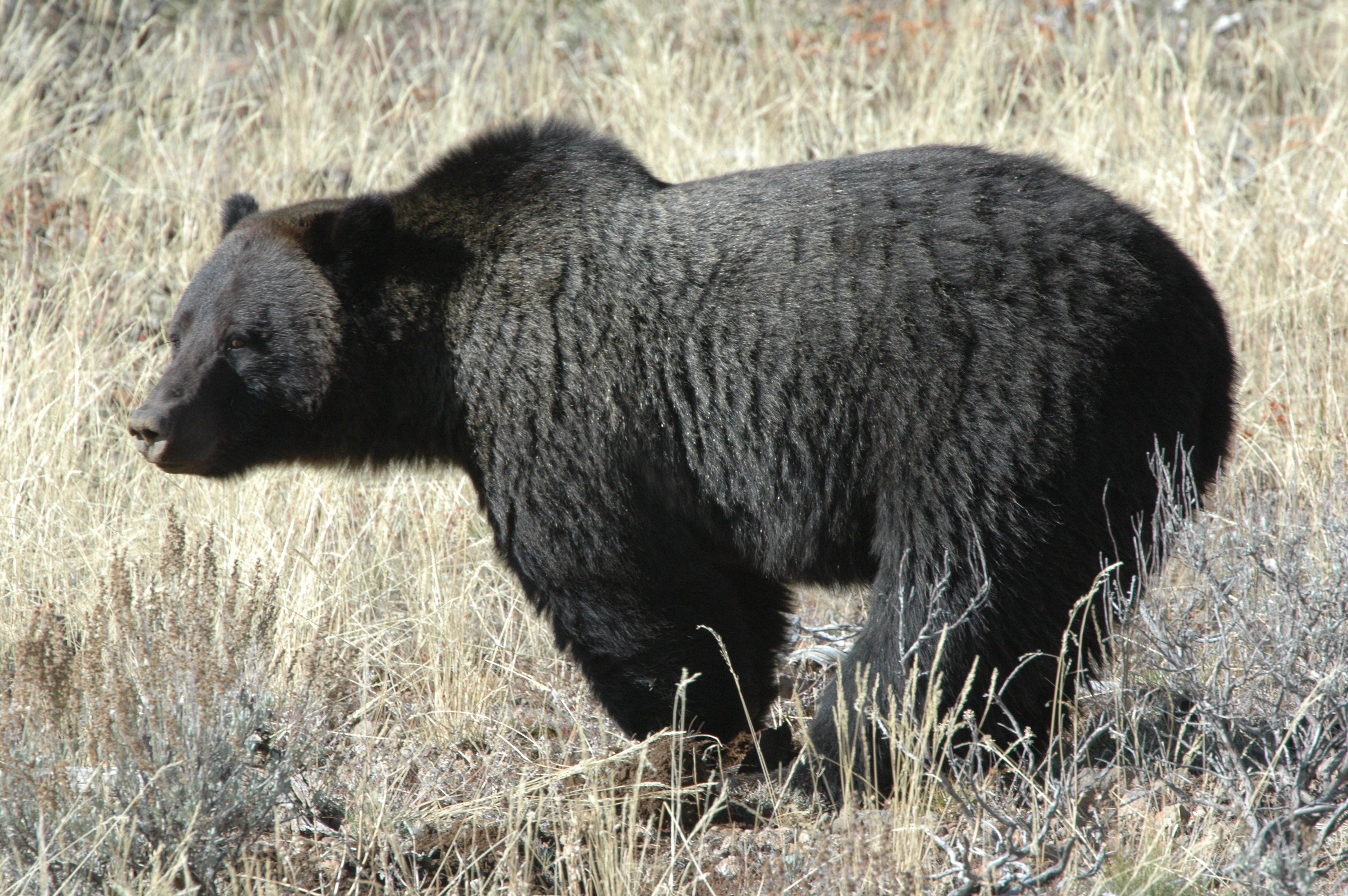
LIVINGSTON, Mt.— The U.S. Fish and Wildlife Service announced plans on Wednesday to strip Endangered Species Act protections from Yellowstone’s iconic grizzly bears later this year. The agency will release a proposed rule removing federal protections for the bears by the end of this year, and following a public-comment period will make a final decision, said Chris Servheen, grizzly bear recovery coordinator for the Service. The move, announced at a meeting of grizzly bear managers in Jackson, Wyo., responds to a major push by Idaho, Montana and Wyoming to take over management of bears and enact sport hunts, much as they have with wolves.

“The science is clear — it’s simply way too soon to pull the plug on grizzly bear recovery,” said Louisa Willcox, a longtime advocate for grizzly bears and Northern Rockies representative of the Center for Biological Diversity. “With the lowest reproductive rate of any North American mammal, vanishing food sources and increased human-caused mortality, Yellowstone’s bears can’t withstand hunts led by states that are openly hostile to our few remaining large carnivores.”
Photo Copyright Jim Robertson

Photo Copyright Jim Robertson

The proposal comes at a time when key grizzly bear food sources in the heart of the Yellowstone ecosystem have been collapsing and grizzly mortality rates have been increasing. The dramatic decline of whitebark pine and Yellowstone cutthroat trout has prompted bears to eat more meat, such as big game gut piles and livestock, resulting in increases rates of conflict with humans and grizzly bear mortality. Drought and climate change will exacerbate these problems.

A 2009 interagency report recommended more than 70 ways to reduce conflicts, including requiring hunters to carry bear pepper spray, which is proven to be much more effective than a gun in repelling a charging bear. Other recommendations included improved grazing practices, rapid removal of hunted big game from the field and increased law enforcement.

“Unfortunately the government did not incorporate these recommendations in their policies and practices,” said Willcox. “Instead of delisting grizzlies, the government should take these practical steps to reduce conflicts and the high levels of grizzly bear mortality since 2007. It’s clear that current efforts to educate the public on how to avoid conflicts are not working.”

Yellowstone’s bears have long been isolated from other bear populations, forcing the government to keep them on permanent life support by trucking bears in to avoid inbreeding. This highlights the fact that, as a result of excessive killing and habitat destruction, grizzly bears occupy only about 1 percent of their former range in the lower 48 states. And in five of the seven remaining grizzly bear recovery zones, bears have either been exterminated or are perilously close to extinction.

“Without the protection of the Endangered Species Act, grizzly bears would not likely have survived in Yellowstone,” said Willcox, “and with the unraveling of their ecosystem, there’s no doubt they still need the federal safety net in the years to come.”

A new federal study suggests the grizzly population may have been declining by an average of 4 percent per year since 2008. A second independent analysis found that the agency’s population estimate for bears may be based on flawed assumptions that inflated total population numbers.

“The feds are bending to political pressure from the states rather than providing grizzly bears the additional breathing room they need to compensate for climate change and the loss of key foods,” said Willcox. “Now is not the time for the feds to walk away from Yellowstone grizzly bears and leave their fate up to three states that want to hunt them instead of save them from extinction.”

Grizzly bears are especially important as a measure of the health of the lands where they live. Where grizzly bears are healthy, so are an array of other species, from bighorn sheep to raptors.

The Center for Biological Diversity is a national, nonprofit conservation organization with more than 675,000 members and online activists dedicated to the protection of endangered species and wild places.

http://www.biologicaldiversity.org/news/press_releases/2014/grizzly-bear-03-27-2014.html
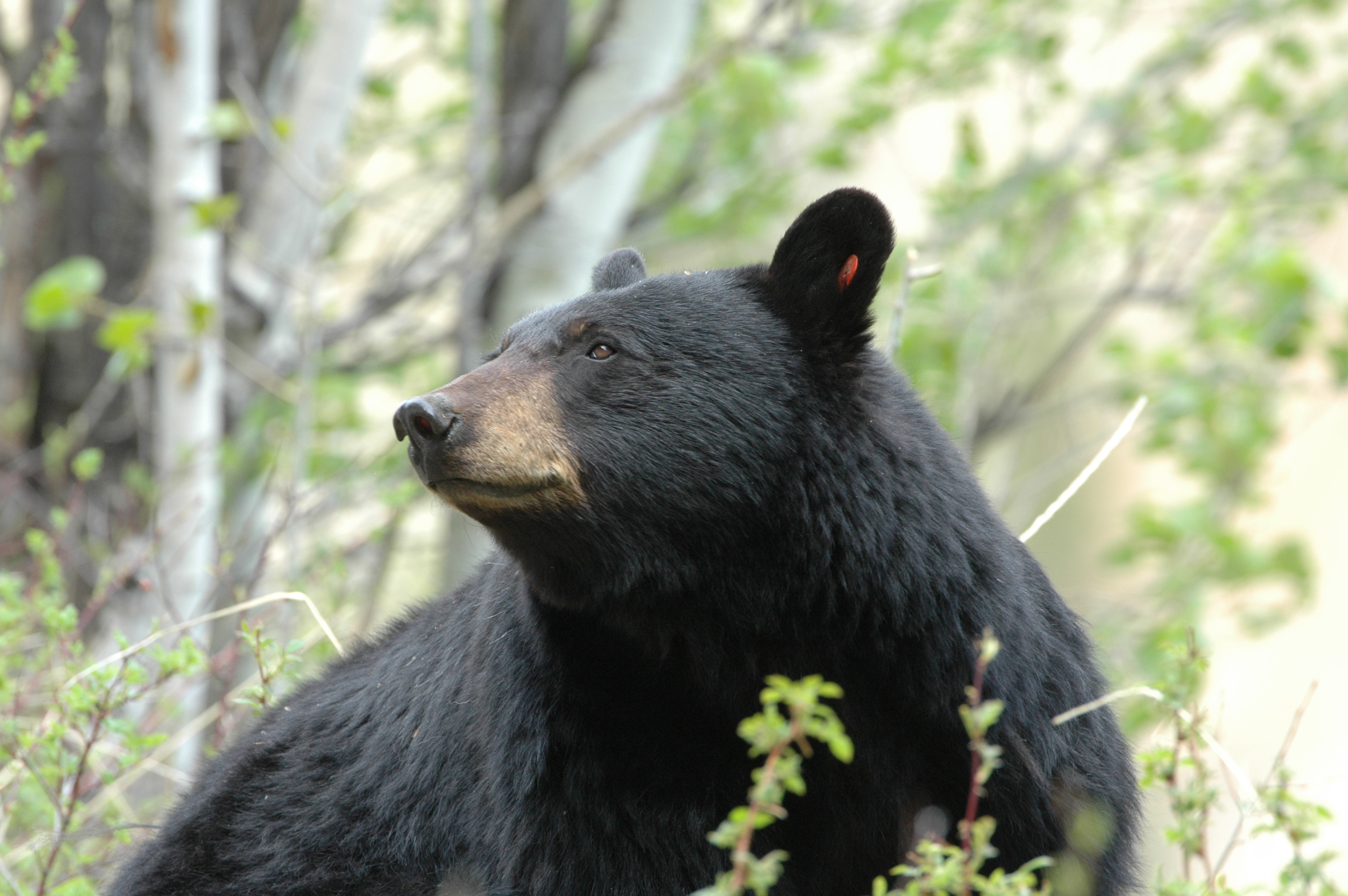
Montana black bear hunting season opens April 15

http://www.ktvq.com/news/montana-black-bear-hunting-season-opens-april-15/

HELENA – Montana’s spring black bear hunting season opens April 15.

Hunters can buy black bear hunting licenses online at Montana Fish, Wildlife and Parks license providers, or print a paper license application and mail it in to FWP. Licenses issued through the mail may take two weeks to process.

Spring black bear hunters should purchase their license by April 14. Black bear hunting licenses purchased after April 14 may not be used until 24 hours after purchase. Black bear hunters are limited to one black bear license a year.

All black bear hunters must successfully complete FWP’s bear identification test before purchasing a black bear license. Take the bear identification test online at the agency’s website.

Complete the training and test, and then present the printed on-line certificate to purchase a license. The training and test can also be obtained on paper, with a mail-in answer card, at FWP regional offices.

Photo Copyright Jim Robertson

Photo Copyright Jim Robertson

Ethyl the grizzly wandering all around northern Idaho, western Montana

http://missoulian.com/news/state-and-regional/ethyl-the-grizzly-wandering-all-around-northern-idaho-western-montana/article_2aeba658-ad53-11e3-89f1-0019bb2963f4.html?print=true&cid=print

BY DAVID COLE COEUR D’ALENE PRESS

COEUR D’ALENE, Idaho (AP) – The 20-year-old female grizzly Ethyl has become a seeker, a wanderer.

The Montana bear hasn’t been acting her age, and fortunately researchers – with a tracking collar – have been able to document her impressive journey from her home state to North Idaho. They lost track of her exact location in late December, but starting next month they expect to pick up her signal again.

They’re anxious to know where she ended up for hibernation, and where she’ll venture next.

Ethyl first came to the attention of wildlife scientists and researchers through her DNA, said Wayne Wakkinen, a senior wildlife research biologist for the Idaho Department of Fish and Game in Bonners Ferry.

In 2004, a sample of Ethyl’s hair was collected around the South Fork of the Flathead River near Kalispell.

In September 2006, she was first captured after making herself at home in an apple orchard near Lake Blaine east of Kalispell.

She wasn’t threatening people at the orchard, but there are homes around and she was moved and released for her safety and the public’s. Better safe than sorry.

She wore a radio collar for the next six years, hung around her home range and stayed out of trouble, Wakkinen said.

In September 2012, she was picked up after finding her way to another apple orchard near Lake Blaine.

This time, in a bigger move, she was released east of the Hungry Horse Reservoir, with scientists hoping to break her habit of hitting up apple orchards in the fall.

The idea was to give her some quality country to roam around in and stay out of people’s fruit.

Since then she has done some roaming – lots of it, covering thousands of square miles.

*****

In fact, in March of last year, Ethyl was spotted near the mouth of the Blackfoot River east of Missoula.

Throughout last summer she was north of Missoula. In mid-October, she made her way to the Rattlesnake on the north end of the city, and then journeyed west of town to the Nine Mile area west of Missoula.

Her tracking collar was “on the fritz” at this point, but still working enough, sending out some signals of her location, he said.

By the middle of November she had reached North Idaho and the upper reaches of the Coeur d’Alene River to the area of the Magee backcountry airstrip.

On Nov. 24, her tracking collar slipped into battery saving mode and stopped sending signals.

Still, scientists like Wakkinen could track her from the air with a receiver.

“I located her once, straight north of the Shoshone County Airport,” which is in Smelterville, Wakkinen said. She was on Thomas Hill, he said.

That was early December, when she should have been hibernating.

A week later she had moved east toward Osburn, and was hanging out in the upper end of Twomile Creek to the north of Interstate 90.

“Then we just had a bunch of crummy weather and couldn’t fly,” he said.

Though it was well into December, there were indications she still had not settled in for her winter sleep.

Instead, credible reports of her location came in based on sightings, he said.

She had ventured to the south side of I-90, and into the St. Joe River drainage. She was likely somewhere near Avery, he said.

“We don’t know if she denned up there,” he said.

Biologists won’t receive her definite location until April. That is when her tracking collar wakes up from its battery saving mode and her location is transmitted to researchers in Montana. Her collar is due to drop off in October.

Jason Kirchner, a spokesman for the Idaho Panhandle National Forests, said if Ethyl is in the St. Joe Ranger District in the Avery area, she is far outside where Forest Service biologists would expect to find a grizzly.

“Most grizzly we would expect to find would be north of Lake Pend Oreille or the Pend Oreille River,” Kirchner said.

Wakkinen is eager to learn where she has gone and ended up.

A typical female grizzly her age has a range of 60 to 100 square miles, he said.

“She has far exceeded that,” he said. “She’s moving through thousands of square miles.”

Last year was a great huckleberry year, he said, and that might help explain her endurance.

“She was able to keep laying on the calories,” he said.

Regardless, it’s just not normal grizzly bear behavior.

“It’s darn unusual, not unheard of, but certainly unusual,” he said.

Wakkinen said Ethyl’s final move by scientists from the orchard to the east side of Hungry Horse completely took her out of her home range.

“She has just been wandering around ever since,” he said.

*****

She enjoyed the familiarity of her home range for 18 years. She had been tracked for a significant portion of that time period.

She has been quiet while in North Idaho.

While she was around the Silver Valley she behaved well, Wakkinen said.

“She stayed up high and out of trouble as far as we knew,” he said.

He and others were monitoring if she dropped down into any of the towns.

“We did know she was headed this way” last fall, Kellogg Police Chief David Wuolle said. “It’s nothing for me to be alarmed about until it shows up in town.”

There was a rumor she was hibernating near Kellogg High School, which turned out to be false. Closest she got, he heard, was Graham Mountain north of town.

“Which as the crow flies isn’t really that far away,” Wuolle said.

As a lifelong resident of the Silver Valley, he said word gets around from time to time that a grizzly wanders through. But with Ethyl, he’s impressed with just how far she has traveled.

“It kind of makes you wonder what’s on her mind,” he said.

Photo Copyright Jim Robertson

Photo Copyright Jim Robertson

The bear facts; What’s a bunch of starving cubs when there are votes to be had?

Bear

http://www.chroniclejournal.com/content/news/local/2014/02/22/bear-facts-what%E2%80%99s-bunch-starving-cubs-when-there-are-votes-be-had

Saturday, February 22, 2014 – 08:00
in Columns

Commentary
By Barry Kent MacKay
Re Bear Hunt Needs An Economic Angle — editorial, Feb. 11:
Because Kathleen Wynne was a bit of an outsider — Ontario’s first female and openly gay premier — I had hoped that transparency and citizen democracy would benefit, and policy would derive from logic and compassion. I was wrong.
Prior to 1999, in addition to a fall hunt, it was legal in Ontario to hunt black bears in the spring. Bait, often sweet pastry and fats, would be placed in front of blinds or tree stands — and the bears, ravenous from months in their dens without food, would approach. They were easy targets. Although many local hunters opposed the practice, they usually remained silent because it did bring money into the more remote, northern areas.
Hunters were only supposed to shoot males, but too often they shot females.
The Ministry of Natural Resources (MNR) estimated, from the number of females shot, that more than 270 cubs were orphaned each spring. Cubs are dependent on their mothers; so, when orphaned, they tend to die from predation or slowly starve to death. The few who survived were brought to wildlife rehabbers — but most simply died, lost in the bush.
Concerned citizens were able to convince the Ontario government to end the spring hunt. But, the fall hunt was extended, and the overall number of bears killed by hunters was nearly the same as before.
The Ontario Federation of Anglers and Hunters (OFAH) was outraged, and started a massive campaign of bear reporting. In 2003, a Nuisance Bear Review Committee recommended that the MNR take a lead role in responding to “nuisance” bear reports, including threats to human safety. Thus, the MNR’s Bear Wise program was born.
Although the program was successful, OFAH continues to claim it was not. And while there was, on average, no increase in conflicts between humans and bears, attacks on humans by bears, or the size of the bear population, OFAH and others somehow argued that all three increased. The campaign also pushed a very emotive button among people in Northern and central Ontario, suggesting that the government was more responsive to the concerns of the larger population living in the more urbanized south (where bears are rare or absent, but votes are numerous).
In 2008, then-Minister of Natural Resources, Donna Cansfield, wisely ordered an assessment of Bear Wise. Published in January 2009, the assessment presented dozens of suggestions on how it could improve. The next year, then Premier McGuinty removed Cansfield as the minister.
In May 2012, McGuinty quietly, and without consultation, conducted a massive scale-back of the Bear Wise program. Then, in October, he abruptly quit, handing leadership of the party, thus the province, to Kathleen Wynne.
And what did she do? We were promised a better, more open, and transparent government. But instead, the premier began the onerous task of dismantling many of Ontario’s environmental protection laws including the Endangered Species Act, the Planning Act, the Bear Wise Program and re-introducing the spring bear hunt.
Apart from the sad fact that people seem to believe there are more bears and more conflicts (neither contentions supported by the MNR’s own research), there is simply no way that shooting bears attracted to baits in the bush will mean that the same bear that might concern humans later on is the one shot. Shooting, itself, creates the risk of wounding bears, who can become aggressive. Bears tend to avoid humans, and the moms will not attack if their cubs are approached. But, availability of human food conditions bears to search for such foods — ironically exacerbating the problems that concern people.
Now, in the winter, female black bears are in their dens. They are not truly hibernating, but their metabolism has slowed, and they will soon give birth to tiny cubs. Smelling bait, the females will move in, but will tell their cubs to hide. If a mother bear is lucky, she’ll be recognized as a female, and spared; but she may well be shot, and then her cubs are doomed.
And why? Kathleen Wynne may think that, by making it a “test” and restricting the spring hunt to several communities, she will not arouse too much criticism from compassionate voters (while placating those northerners angry at cancellation of the spring hunt back in 1999). What are a few hundred starving baby cubs when there are votes to be had?

Barry Kent MacKay is a founding director of Animal Alliance of Canada and Canadian senior program associate with Born Free U.S.A., a non-profit animal advocacy based in Washington, D.C.

Petition: Stop the legal slaughter of Polar Bears by trophy hunters

1975210_217349905127731_192938778_n

https://www.change.org/petitions/the-canadian-government-stop-the-legal-slaughter-of-polar-bears-by-trophy-hunters

Animal First! (www.animalfirst.org)

Petition by

Animal First! (www.animalfirst.org)

Polar Bears are some of the most majestic and beautiful animals in the world. The global population estimate is between 20 000 and 22 000. This classifies the Polar Bear as ‘threatened.’ Polar Bears are threatened by pollution High levels of chemicals and PCBs. Another threat is global warming. Without ice Polar Bears are unable to reach their prey.

But the most immediate threat is hunting. Over 1000 polar bears are hunted annually! This prevents the Polar Bear population from increasing to a healthier number. Canada is the only nation in the world that allows Polar Bear hunting by non-natives and non-citizens. (Polar Bears also live in Alaska, Russia, Greenland, & Norway) Canada sells polar bear hunting licenses to trophy hunters. The main problem with this is that 60% of Polar Bears reside in Canada.

The Canadian government are paying hunters for Polar Bear hides! The government pre-pays hunters for the hides of bears shot in this subsistence hunt, and then sells the hides at auction for up to $11,000 (which also goes to the hunter), it blurs the line between a subsistence hunt and a commercial hunt.

Polar Bears are protected under national law and international treaty, so Canada’s Polar Bears can only be harvested by Inuit hunters for subsistence, OR by trophy hunters guided by Inuit.

The major threat for Polar Bears in Canada is the commercial hunt. Canada is the ONLY nation in the world that allows Polar Bear hunting by non-natives and non-citizens trophy hunters. Why? The answer is easy: MONEY! Pure greed for profit! Canada charges 750 Canadian dollars per Bear!

Allowing hunting by non-natives and non-citizens and selling hunting licenses to trophy hunters creates a bloody business where radical hunters sell hunting tours to Canada and kill Polar Bears. The hunt of one male Polar Bear is offered for 35.000 $ and as we know there are enough rich people who book these tours to get their trophy! There is also an increase in polar bear skin sales!

By booking one of these horrifying tours, the trophy hunters are allowed to go to 5 or 6 day hunting trips in which they chase polar bears with several dogs and after a long chase, when the Polar Bear is exhausted from running, he stops to finally try to make the dogs that are surrounding him go away, at which point the hunter gets closer and shoots several arrows (!!!) until he is finally dead. This means pure torture for the Polar Bear. Cruelty on animals can not be worse than this.

Tell the Canadian government to stop the legal slaughter of one of the highest endangered species in the world. We are horrified and shocked that you sell the life of one of the most majestic and beautiful animals in the world to hunting tour operators like:

http://polarbearhunting.net/ or http://52safari.com/

The irresponsible killing of this threatened species for pure trophy hunting as well as commercial trade in polar bear products must be stopped — now! Before it’s too late!

We need a lot of signatures to put pressure on the Canadian Government! So please share this petition to as many people as possible.

To:
Environment Canada
THE CANADIAN GOVERNMENT
Ministry of Agriculture
Environment Canada Inquiry Centre
Environment Canada National Office
Species at Risk Public Registry
Fisheries and Oceans Canada
Minister of the Environment, Peter Kent
Canadian Wildlife Service Environment Canada

Dear [Decision Maker],

Dear Stephen Harper,

I have learned that Canada is the only nation in the world that still allows Polar Bears to be killed by trophy hunters and for the commercial trade in their skins. Canada sells Polar Bear hunting licenses to non-natives and non-citizens trophy hunters. That creates a bloody business where radical hunters sell hunting tours to Canada and kill Polar…

Read More and sign the petition: https://www.change.org/petitions/the-canadian-government-stop-the-legal-slaughter-of-polar-bears-by-trophy-hunters

The economics and ethics of trophy hunting

BY JUDITH LAVOIE, MARCH 2014, FOCUS ONLINE
Studies call into question BC Liberals’ plans to expand bear hunting.
The magic of watching black bears overturning rocks and scooping up crabs on a Tofino beach, the once-in-a-lifetime excitement of seeing a Spirit Bear near Klemtu or witnessing the awe-inspiring power of grizzlies feeding on salmon in the Great Bear Rainforest are vignettes of BC that both tourists and residents carry close to their hearts.
So it is not surprising that a study by the Center for Responsible Travel at Stanford University in Washington concludes that live bears are worth more in cold, hard cash than dead bears. Not surprising, that is, to anyone except BC’s provincial government.
Instead of boosting the profitable business of bear viewing, the government is looking at extending the length of the spring black bear hunt and is re-opening the grizzly hunt in three areas of the Kootenays and one in the Cariboo—all formerly closed because of over-hunting.
Another indication of where provincial sympathies lie came during the first week of the spring sitting of the Legislature, when government introduced changes to the Wildlife Act—changes that will allow corporations, not just individuals, to hold guide outfitting areas, making it easier for a group of people to jointly purchase territories and reducing liability for individual owners. Assistant guides will no longer have to be licensed, allowing guide outfitters more flexibility during peak periods, something the industry says will reduce red tape.
Forests, Lands and Natural Resource Operations Minister Steve Thomson said in the Legislature, “Proposed amendments to the Wildlife Act will help provide the guide outfitting industry, an industry that generates $116 million in economic activity each year, with additional business certainty.”
What he didn’t note is that bear viewing is far more lucrative for BC. In 2012, the Center for Responsible Travel found that bear viewing in the Great Bear Rainforest generated 12 times more in visitor spending than bear hunting and 11 times more in direct revenue for the BC government than bear hunting by guide outfitters—$7.3 million for bear viewing and $660,500 for non-resident and resident hunting combined. As for jobs, bear-viewing companies in the Great Bear are estimated to seasonally employ 510 people while guide outfitters generate only 11 jobs.
Despite such statistics and a growing antipathy to allowing well-heeled hunters to slaughter top predators for the sake of a rug on the floor or head on the wall (a 2013 poll found 88 per cent of BC residents opposed trophy hunting, up from 73 per cent in 2008), the government seems determined to expand the hunt.
Russ Markel of Outer Shores Expeditions, a company that takes tourists to wild areas of BC’s coast on a wooden schooner, feels trophy hunting adversely affects bear tourism, so expanding hunting could adversely affect his—and government—revenues. Markel can’t keep up with the demand for trips now, but an incident near Bella Coola last May left tourists shaken. “It was a horrible situation. People used the area for bear viewing and so the bears got used to it and then some random guy with a rifle turned up and a bear was killed,” he said.
The Guide Outfitters Association of BC, however, states: “Guide outfitting and wildlife viewing have co-existed for two decades and can continue to do so…It is important we separate the emotion from the science.”
But the science is not settled and there is long-standing controversy over the accuracy of population estimates and veracity of kill numbers.
Grizzly bears are listed federally as a species of special concern. Yet in BC, between 2001 and 2011, out of an estimated population of 15,000 bears, more than 3500 animals were killed, including 1200 females, according to a Raincoast Conservation Foundation study. More than 2800 of those animals, including 900 females, were killed by trophy hunters. Others were killed by poachers, accidents or conservation officers.
A Ministry of Forests, Lands and Natural Resource Operations spokesman said in an email that the decision to re-open hunts is based on the best available science and is focused on areas where increasing grizzly populations can sustain a conservative hunt. A recent peer-reviewed study, co-authored by two provincial wildlife biologists, re-affirmed that grizzly populations are being sustainably managed.
But Raincoast Conservation senior scientist Paul Paquet scoffs at such claims. “Regional kill rates for sub-populations that are being hunted are much higher and not sustainable,” said Paquet, who co-authored a paper showing that, over the last decade, kills frequently exceeded targets.
As for black bears, the province estimates there are 120,000 to 160,000 black bears in BC and the harvest in 2012 was 3876—a number based on a sample survey of hunters—which is well below the sustainability level, said the ministry spokesman.
Raincoast Conservation executive director Chris Genovali questions the numbers and said kill numbers could be much higher. “They shouldn’t be considering extending the season when they have no reliable or accurate estimate of the number of black bears in BC. That’s disturbing,” he said.
NDP environment critic Spencer Chandra Herbert is also uncomfortable with government numbers. “Government does not have the evidence to back up what it’s doing because it has cut about 25 percent of the folks who would be out counting bears, looking at habitat issues, and enforcing poaching laws,” he said. But Chandra Herbert stopped short of committing the NDP to ending the trophy hunt. “We would actually do the science,” he said.
Growing awareness of the trophy hunt is fuelled by media pictures of slain bears and anyone picking up a hunting magazine is bombarded by images of jubilant hunters trying to make the animal they have just blown out of existence appear lifelike.
Barb Murray of Bears Matter, a group spearheading a petition asking the province to end the hunt, said, “We have wealthy people from the US and China coming to BC to kill our biggest and best.”
As pressure mounts for a close look at the ethics and rationale of trophy hunting, many question government’s insistence on continuing and expanding the hunt. Is it a leftover from the Liberal’s 2001 decision to immediately scrap an NDP-imposed moratorium on grizzly hunting or pressure from interest groups?
“Given widespread public disapproval for this ethically and culturally unacceptable trophy hunt, current provincial management of grizzlies seems to be driven more by bad political science than good biological science,” said Genovali.
Change may lie in the hands of First Nations. In 2012, Coastal First Nations banned trophy hunting in the territories of nine member nations—an area covering most of the Great Bear Rainforest—but the province continues to claim jurisdiction.
Heiltsuk tribal councillor Jess Housty hopes the recent economic study will bring change. “Last fall we learned the science used to justify the bear hunt is deeply flawed. Now we see the economics are completely backwards,” she said.
Coastal First Nations are trying to educate hunters, including approaching them in the field. “If the Coastal First Nations’ Bears Forever campaign has taught trophy hunters anything, I hope it’s that 9 out of 10 British Columbians support the Nations on the front line and that their unethical and unsustainable practice of killing bears for sport will no longer happen in the shadows,” Housty said.
The First Nations campaign complements Raincoast Conservation’s effort to buy up guide-outfitting licences, which, so far, has eliminated trophy hunting in about 30,000 square kilometres of the BC coast.
Another tactic is pressure on other countries. In 2004, after intense lobbying from NGOs, the European Union banned importation of grizzly bear parts and the ban stands today, despite challenges by the federal and provincial governments.
Meanwhile, Barb Murray of Bears Matter is pinning her hopes on local pressure. “The senseless killing of grizzly bears is morally indefensible and has no place in modern wildlife management practices and policies. Killing these magnificent creatures for sport and bragging rights does not, in any way, contribute to the conservation of the species or increased safety for humans,” says the petition going to Premier Christy Clark.
http://www.focusonline.ca/?q=node/691

Photo Copyright Jim Robertson

Photo Copyright Jim Robertson

Stop Ontario’s Spring Bear Hunt

Stop Ontario’s Spring Bear Hunt – Action Needed!
URGENT!  Please send Sign-On letter!
Orphaned bear cub
Take action now!

Dear Friends of Wildlife

Premier Kathleen Wynne’s decision to allow a Spring Bear Hunt in Ontario will result in the death of hundreds of small bear cubs just like this one.

Attracting hungry adult bears with food bait when they are coming out of a long hibernation and easily shot by a hunter hiding in a nearby tree blind is a cowardly act made worse by the small dependent cubs that are left to die a slow death of starvation.  Sometimes hounds are used to track and tree bears for hunters to shoot. Wounded bears fall to the ground where the hounds attack them. Hounds may also attack cubs that are stranded on the ground without their mothers.

You and I can make a difference in stopping this morally-indefensible hunt. If you live in Ontario:    

  • Add your name to the Sign-On letter. Even if you have signed other petitions or sent a letter, please send this one as it will go to all Ontario MPP’s, sending a strong message that there is province-wide opposition to a Spring Bear Hunt.
  • Make the letter your own by changing the subject line, first paragraph or adjusting the order of others.
  • Second, send a response to the Environmental Bill of Rights (EBR) consultation. The comment can be as brief as saying you are ‘strongly opposed on moral grounds to hunting bears in the spring when they are caring for very young dependent cubs’ or you can add a different point or two taken from the Sign-On letter. Click here to view the EBR posting or go directly to the comment page.

Please forward this to family and friends who share your love of wildlife and use social media to get the word out, particularly among young people, because we know they care.

Ontario Wildlife Coalition

Conservationists worried about impending bear hunt

VANCOUVER — The Globe and Mail, Sunday, Feb. 23 2014, 10:20 PM EST

The way professional wildlife photographer John Marriott sees it, the British Columbia government has just hung a target on Big Momma, a grizzly bear so huge – and so photogenic – that he calls her “a photo tour superstar.”

The female grizzly, who has silver-tipped dark brown fur and a perpetual pout that almost got her named Sad Face, lives in one of four wildlife management units the B.C.

Photo of bears in the wild Copyright Jim Robertson

Photo of bears in the wild Copyright Jim Robertson

government is planning to reopen to bear hunting this year. Mr. Marriott fears the big bear – a top attraction for the photography safaris he leads in the Chilcotin Mountains in the Cariboo – will be tracked down by a trophy hunter once the area is reopened.

More Related to this Story

· Mark Hume Ecogroups hope to oust bear-hunting guides from rainforest

http://www.theglobeandmail.com/news/british-columbia/grizzly-bear-kill-limits-being-broken-across-bc-study-says/article15301716/

Grizzly bear kill limits being broken across B.C., study says

MARK HUME

VANCOUVER — The Globe and Mail

Published Wednesday, Nov. 06 2013

The B.C. government has long justified its controversial grizzly bear hunt by saying it’s based on sound science.

But new research by a team of biologists from three universities has found the kill limits are being exceeded in many areas of B.C. – up to 70 per cent of the time – because of unpredictable factors, such as bears getting killed in collisions with vehicles, or being shot by ranchers who don’t report the incidents.

“The bottom line is human-caused mortality from all sources, 85 per cent of which is hunting, is consistently over target. These overkills are frequent and they are geographically widespread,” said Chris Darimont, a conservation scientist at the University of Victoria, one of several authors on the study.

He said by allowing too many bears to be killed, the government is “playing Russian roulette” with B.C.’s vulnerable grizzly bears, because the population in some regions could easily get knocked down to a level from which it couldn’t recover.

“If I was managing bears I wouldn’t manage them this way if I wanted to have them here in the future,” said Dr. Darimont, who called for a more precautionary approach.

The B.C. government’s support for a trophy grizzly bear hunt has been under attack from environmental groups, and in 2004 the European Union banned the import of grizzly bear trophies from B.C., saying the hunt was not environmentally sound.

But the government has worked with an independent panel of grizzly bear scientists to set harvest limits intended to ensure the sustainability of bear populations. Under the strategy, the province is divided into more than 50 sub-zones, or grizzly bear population units, where the harvest levels vary, depending on the number of bears in the area, the estimated productivity of the population and the known number of bear mortalities.

“It’s very complex but we noted they didn’t incorporate all the dimensions of uncertainty in setting those limits,” Dr. Darimont said.

“You need to know a few things if you want to allocate how many bears will be killed,” he said. “You need to know how many bears there are … and for most of the province there are no on-the-ground estimates … you also need to know … how fast do bear populations grow and therefore how much can we skim off the top?”

To further complicate the picture, he said, the government needs to know the level of unreported mortalities, where bears are shot by people who don’t report the kills.

“Those are the three pieces of information the ministry needs to calculate the [harvest] limits,” Dr. Darimont said. “But any one of those things has tremendous uncertainty around them. How many bears are there? Who knows? How fast can they reproduce? Who knows? What’s the true level of unreported mortality? Who knows?”

By studying all the grizzly bear data available over about an eight-year period, the researchers from UVic, Simon Fraser University and the University of British Columbia developed simulations based on a range of population and mortality estimates. Using the provincial estimates, they found overkills in 19 per cent of the population units. But that number climbed when they factored in the range of uncertainty.

“We did the audit again and found that not in 19 per cent of cases, but closer to 70 per cent of cases, there were likely overkills,” Dr. Darimont said.

Kyle Artelle, a PhD student at SFU and lead author on the paper, said if the government wants to keep the level of risk of overkilling fairly low, it will have to eliminate hunting in about one-third of the population units.

In addition to their university affiliations, Dr. Darimont and Mr. Artelle both work for the Raincoast Conservation Foundation, a non-profit which 10 years ago took the provincial government to court to get grizzly bear mortality data released. That data was the basis for the study.

Ontario rejects Barker call on spring bear hunt

By Keith Leslie, The Canadian Press
TORONTO – TV personality and animal rights activist Bob Barker tried but failed Tuesday to convince the Ontario government not to bring back the spring bear hunt, which the province cancelled in 1999.

                                “I feel deep concern about any animal mistreatment any place in the world, and this is in one of my favourite places, Canada, and I want to try to do something about it to protect these bear cubs,” Barker said in an interview from his home in Hollywood, Calif.

Barker, who last year helped fund the transportation of several elephants from the Toronto Zoo to a refuge in the United States, said it’s “barbaric” to let cubs starve to death after their mothers are lured from the den by bait and then killed by hunters.

“You don’t have to be a rocket scientist to realize you’re murdering every cub,” he said. “I urge every Canadian who knows anything about this to step up to the plate and take a swing for the cubs.”

Ontario Natural Resources Minister David Orazietti disputed Barker’s claims about cubs being left to starve to death during a spring bear hunt.

“I have a ton of respect for Mr. Bob Barker, but I’m not sure where he’s getting his facts on this issue, and that’s not in fact the case at all,” he said.

Ontario plans a pilot project with a limited hunt in eight of 95 wildlife areas this spring to see if it will reduce the number of emergency calls and instances where police are forced to shoot nuisance bears, added Orazietti.

“I’m not sure if Mr. Barker is aware that eight other provinces in Canada and all territories have full provincewide or territory-wide spring bear hunts,” he said. “This is a much smaller, targeted approach to deal with really what’s become a public safety issue.”

The Ontario hunt will be non-profit and limited to local hunters.

Barker called the spring bear hunt “unethical” and “legislated cruelty” that has nothing to do with science, and said it doesn’t matter that Ontario is trying only a small scale pilot project.

“Whether it’s an experiment or it’s going to last for 30 years, it is just totally unacceptable in today’s society,” he said. “I just can’t understand how they can possibly do this.”

Zoocheck Canada said there was no scientific rationale for the return of the spring bear hunt, and called the public safety argument “flawed.” The animal protection charity said research shows that bear-human interactions are closely linked to variation in natural food sources, not to actual bear population numbers.

The Ontario Federation of Anglers and Hunters urged the public to make sure “big city animal rights extremists” don’t derail the pilot project for a spring bear hunt.

“While the partial reinstatement of a hunt is a positive step, we believe that all of bear country deserves to experience the benefits of a spring hunt,” the group said in a statement.

Barker urged the province to explore other options such as laws to stop people from leaving food or garbage where bears can get at it, but Orazietti said Ontario had spent $35 million on alternative approaches to nuisance bears without great success.

“We’ve had over 50 resolutions from municipalities wanting to opt in to this pilot program, and that certainly speaks to the sense of urgency that communities have in northern Ontario in terms of dealing with this,” he said.

Orazietti said public safety was his main concern, and gave alarming examples like one northern community where a 400-pound brown bear wandered the streets on Halloween as kids walked about with bags full of candy.

“We have young kids in schools who can’t go out for recess because bears are in their playground,” he said. “Teachers are wearing bear whistles to call the students back into the safety of the school.”

Orazietti said it’s “too early to say” if the spring bear hunt in Ontario would be expanded next year, and will depend on the results of the pilot project.

“I think the most important thing we need to do now is to ensure that the proposed pilot project has the desired effect, including a reduced number of 911 calls,” he said.

http://www.northumberlandnews.com/news-story/4383746-ont-rejects-barker-call-on-spring-bear-hunt/

Banff bears use highway crossings to find mates


Photo copyright Jim Robertson

Photo copyright Jim Robertson


METRONEWS, By Staff The Canadian Press, February 18, 2014

BANFF, Alta. – Why did the bear cross the road?

A new study suggests that at least one reason bears in Banff National Park are crossing the Trans-Canada Highway is to find mates — vindication for a series of wildlife crossings installed by Parks Canada on the busy route to try to keep bears on either side of it genetically linked.

“It is clear that male and female individuals using crossings structures are successfully migrating, breeding and moving genes across the roadway,” says the paper published Tuesday in the Proceedings of the Royal Society, Britain’s national science academy.

The Trans-Canada Highway cuts through the heart of Banff National Park. For decades, scientists have been concerned that Canada’s busiest east-west road link was isolating grizzly and black bear populations on either side of it — especially after high wire fences were built along the road to reduce wildlife traffic deaths. So between 1982 and 1997, more than two dozen underground and overhead crossings were built to allow wildlife to move north-south.

In 2006, University of Montana ecologist Mike Sawaya began a three-year research project to see if the crossings were working. After analyzing DNA from nearly 10,000 hair samples collected from strategically placed strips of barbed wire, Sawaya has concluded that they are. Last summer, he published research proving that bears were using the crossings. His latest paper suggests they’re crossing for more than a patch of tasty berries. “We found enough movement and migration across the highway to infer that, yes, the crossing structures are allowing the transfer of genes.”

Sawaya said that grizzlies on either side of the road had been slowly becoming more genetically distinct from each other, although the effect wasn’t pronounced in black bears. DNA analysis of the hair samples shows that the two ursine neighbourhoods are gradually coming back together again. “The grizzly bear population was fragmented and we’re starting to see it be restored,” said Sawaya. “If the crossings continue to work the way they are, I think we’re going to see the dissolution of that genetic structure over time.”

The research team even documented how individual bears — both black and grizzly — were able to mate with a number of different females and wound up with offspring on both sides of the highway. Previous research conducted in California had suggested the only animals that use crossings are juveniles too young to breed. Sawaya found that wasn’t true. Almost half the black bears and more than one-quarter of the grizzlies that crossed were successful breeders. In fact, males who crossed most often seemed to be the ones with the most offspring.

And Sawaya said it’s probable that the crossings are being used by other animals such as wolves, lynx or cougars for the same purposes. “Certainly, you can draw more conclusions about other carnivores and other species that have similar characteristics. This is very indicative of how these crossing structures would perform for other large mammals.”

It’s good news for wildlife managers looking for ways to mitigate the effects of roads through wilderness.

Parks Canada now has a total of 44 Trans-Canada crossings in Banff, almost one every two kilometres. The solution was expensive — the overpasses cost about $1 million each — but Parks Canada carnivore specialist Jesse Whittington said they were worth it. “For the first couple years, they didn’t look like they worked very well,” he said. “Over time, grizzly bears have learned to use them on a regular basis.”

Whittington said the model has already been used in the U.S. for pronghorn antelope. “There are people looking to Banff from all over the globe to see how well these crossings are performing,” Sawaya said. “At the time, no one really knew they worked. They just assumed intuitively that they would … and it’s comforting to find that, yes, they are working as they were originally intended.”

— By Bob Weber in Edmonton

http://metronews.ca/news/canada/945896/banff-bears-use-highway-crossings-to-find-mates/