Exposing the Big Game

Forget Hunters' Feeble Rationalizations and Trust Your Gut Feelings: Making Sport of Killing Is Not Healthy Human Behavior

Exposing the Big Game

Grizzly Bears Are Now the Victims of the Trump Administration’s Climate Denialism

http://www.slate.com/articles/health_and_science/science/2017/06/we_can_t_trust_this_administration_s_climate_decisions.html

We can’t trust this administration to make science-based decisions.

A female Grizzly bear exits Pelican Creek October 8, 2012 in the Yellowstone National Park in Wyoming
A female grizzly bear exits Pelican Creek on Oct. 8, 2012, in Yellowstone National Park.

Karen Bleier/AFP/GettyImages

Interior Secretary Ryan Zinke announced Thursday that the Yellowstone grizzly bear will no longer be listed as protected under the Endangered Species Act. The grizzly’s population has rebounded and it now “stands as one of America’s great conservation successes,” he crowed.

A species being removed from the ESA is rare and, in normal circumstances, should be celebrated. It means that a population has recovered enough to no longer require extra protections, which should be considered a good thing. And the grizzly bear has: When the species was listed in the 1970s, it was estimated that a mere 150 existed. Today, there are about 700 individuals.

This decision, however, seems unlikely to be met with applause. As the New York Times reports, environmental organizations are already lining up to sue to stop it. And 125 Native American tribes have banded together to oppose the delisting because they weren’t consulted in the decision-making. Also, any good feelings animal lovers get from the words “conservation success story” are likely to be squashed by the fact that the delisting means the bears could now be hunted. People really don’t like it when charismatic megafauna get killed.

Should the grizzly bear be delisted—or this just yet another awful environmental move by the Trump administration, divorced from science and decency? One political litmus test is to check what the Obama administration thought of the grizzly bear’s fate. In March 2016, Dan Ashe, then the director of the U.S. Fish and Wildlife Service, defended the delisting. And the recovery numbers do look strong (700 sure sounds small, but Yellowstone grizzlies are a top-of-the-food-chain predator living in a small land mass—what matters more is the populations’ stability, not its size).

But scientists have dramatically different opinions about how to read those numbers. Luke Whelan over at Wired has a good rundown of how the two sides of the debate see the issue. One school of thought says that because the bears’ populations have plateaued, that means they’ve hit the carrying capacity, or the number of animals the habitat can sustain, and are in good shape. Under this logic, delisting makes sense. The counterargument suggests that the carrying capacity is lower than it should be because its habitat and food sources have changed since the bear was listed in the ’70s, primarily due to climate change—which means that the bear needs to stay protected. In fact, most of the environmental groups planning to sue over the move basically want to keep the bear listed because of the threat climate change will increasingly pose. And climate change does pose a threat—warmer temperatures are causing white pine beetles to move further and further into grizzly habitat, killing pine trees and hurting a critical food source.

Who’s right? It’s hard to say definitively—it depends on how you read the science, and how you think the ESA should be applied based on that science. Arguing that climate change is going to pose a threat to an animal and therefore warrants (somewhat) proactive listing is a tough sell—honestly, on a long enough scale, climate change and the cascading food chain and habitat problems could justify listing most animals on the ESA. That would be an interesting precedent to set. It’s also unclear how ESA protection could help address the pine beetle problem. The ESA has limited resources and offers limited protections—indeed, many conservationists think it is actually most successful when wielded as a stick to inspire (or coerce) proactive solutions before a species requires listing, rather than as a real way to solve environmental problems. And through that lens, it’s clear that what the grizzly bear really needs is for climate change to be taken seriously, and minimized. The ESA can’t force that—it’s not equipped to.

When the government is this bad at accepting basic truths, it makes it hard to have faith that their decisions are good ones—even decisions that seem positive or reasonable. It also creates a world in which we have to fight to keep species listed on the ESA because we know we’re not going to do much else to stop climate change from screwing them over in the long run. It is exhausting and demoralizing to live in a world like this.

Human hunting influences adaptation in bear cub parenting

https://phys.org/news/2018-03-human-cub-parenting.htm l

March 27, 2018, Norwegian University of Life Sciences
brown bear
Credit: CC0 Public Domain

The Anthropocene is characterized by human impacts extending to all corners of the globe. New research shows that it effects the relationship between mothers and cubs of the Scandinavian brown bear. Human hunting has changed the characteristics of mother bears’ behavior to their cubs.

“Generally, the cubs have followed their mother for a year and a half,” says Professor Jon Swenson from the Norwegian University of Life Sciences (NMBU). “Only rarely have we observed them to follow her for two and a half years.”

This has now changed. Today, more cubs stay with their  an additional year, as opposed to 15 to 20 years ago. “Man is now an evolutionary force in the lives of the ,” Swenson says.

The Scandinavian brown bear is one of the world’s most monitored animal populations. Norwegian and Swedish researchers have followed them closely since 1984. “The Scandinavian brown bear project is one of the world’s two longest research projects on bears,” Swenson says, who has been attached to the project almost since its very beginning.

“We have followed over 500 bears, many from birth to death.”

The number of bears shot in Sweden has increased steadily during this period. From 2010 to 2014, Swedish hunters shot about 300 bears each year.

In the vast majority of countries that allow bear hunting, there is a ban on hunting family groups.”A single female in Sweden is four times more likely to be shot as one with a cub,” Swenson says.

As long as a female has cubs, she is safe. This hunting pressure has resulted in a change in the proportion of females that keep their cubs for 1.5 years in relation to those that keep them for 2.5 years. In the period from 2005 to 2015, the number of females keeping their cubs for an additional year has increased from 7% to 36%. The individuals themselves do not alter their strategies. They portray either one behavior or the other, and this trait seems fixed.

“This basically means that we are shooting more of those females that only keep their cubs for a year.”

One compensates for the other

The new female strategy involves both advantages and disadvantages. Females who keep the cubs longer live safer lives, but on the other hand, they reproduce less often. This reduces their total number of offspring throughout their lives.

“In an evolutionary perspective, this would not be beneficial,” Swenson comments. “The animals with the most offspring [are the most successful].”

However, the researchers’ results show that the increased lifespan of the females largely counteracts the reduced birth rate. “This is especially true in areas of high  pressure. There the  that keep their cubs the extra year have the greatest advantage.”

 Explore further: Mama bears use human shields to protect cubs: study

More information: Joanie Van de Walle et al, Hunting regulation favors slow life histories in a large carnivore, Nature Communications (2018). DOI: 10.1038/s41467-018-03506-3

Read more at: https://phys.org/news/2018-03-human-cub-parenting.html#jCp

VICTORY UPDATE: Shoot Down the Connecticut Bear Trophy Hunt Bill


http://www.all-creatures.org/cash/alerts-20180307.html

March 15, 2018 – 

Connecticut’s black bears are safe thanks to Friends of Animals and our supporters. On Wednesday, a bear trophy hunt bill was shot down by the Environment Committee of the General Assembly 21 to 8.

“FoA is relieved that common sense and truth prevailed among those legislators on the Environment Committee…” said FoA President Priscilla Feral. Thank you to everyone who helped keep CT’s bears safe!

ORIGINAL ALERT:

March 7, 2018

ACTION!

Find and contact your Connecticut state senators and representatives at (860) 240- 0100 or use this ONLINE DIRECTORY to make direct contact and tell them to OPPOSE the CT Bear Trophy Hunt Bill.

AND

Contact the state Environment Committee’s Co-Chair Craig Miner at 860 240-8860 and co-chairs Senator Ted Kennedy and Rep. Mike Demicco and tell them Connecticut won’t tolerate a blood-soaked, shoot-first approach to bear management, especially at a time when gun violence in this country is an epidemic.

This bill would allow black bear hunting in Connecticut for the first time since the 1800s. But what legislators who support the bill, including a committee co-chair with ties to the gun lobby, don’t want you to know is that you should fear hunters, not black bears.

Hunters in CT killed 10 people and injured 114 in hunting accidents between 1982-2016

Number of people killed by bears? Zero.

Supporters of the bill are also trying to manipulate the public and stir up fear in the state. But here’s the real bear facts:

  • Black bears are not overpopulated. Every sighting of a bear doesn’t mean it’s a different bear. There’s just a paltry 200 bears in the Northwest corner, according to a UCONN study and the state has a capacity for about 2,000 bears, according to DEEP’s own reports.
  • Scientific studies show there is actually a weak correlation between the population of bears and bear attacks. Bear-human conflict is more closely correlated with human behavior. Black bears are shy, according to state bear biologists and are habituated into problematic behavior by humans. What DEEP (Department of Energy & ENvironmental Protection) should be telling you is that in March you should bring in your bird feeders, use bear-resistant cans, avoid feeding the bears, clean your outdoor grills, carry bear spray and use bear bells when hiking.
  • No matter how much supporters of the bill and the dwindling hunting markets fear, shooting bears will not teach the ones who aren’t slaughtered not to be opportunistic feeders.
  • DEEP already has a bear management program and last year it only reported 5 nuisance bears.

Don’t let Connecticut’s bears get caught in the cross-fire of NRA interests who are exaggerating numbers to manipulate the public with fear so hunters, who represent just 1 percent of the state’s population, can slaughter bears to use as rugs and mount them.

The NRA and the Safari Club Are Gunning for Grizzlies

The gun lobby and big-game hunters are teaming up to get the bears off the endangered species list. But that’s just a first step toward stealing public land.

About 40 years ago, my friend the author Edward Abbey gave me a National Rifle Association (NRA) sticker to paste on the back window of my pickup. After all, he’d been an NRA member for years and we both were hunters who supported gun rights and owned a number of firearms.

I never got around to putting that sticker on. In the rambling decades between then and now, Ed’s and my attitude toward guns didn’t change much. My feelings about the NRA, however, have chilled considerably.

Increasingly, the NRA has become the big boy who thinks he can run over anyone and dominate partisan issues—they are widely criticized by environmentalists and Democrats as bullies. And the issues are no longer just those of the Second Amendment, though gun rights remain a primary test of political loyalty. As reported in The New York Times last fall, the NRA is now focused on immigration, race, health care.

The NRA is also actively trying to influence wildlife and wilderness issues, which happens to be my center of interest. Last spring the NRA, welded at the hip with Safari Club International (a privileged group of mostly wealthy hunters dedicated to killing large and rare animals), backed a successful bill to permit extreme killing methods of wolves and grizzlies on national wildlife refuges in Alaska, including the gunning down of animals from planes and slaughtering wolf pups and bear cubs in their birthing dens.

These two lobbying groups oppose protecting the severely endangered California condors, which biologists believe are sickened and killed by poisonous lead bullet fragments left in the hunter-felled game animals that the scavenging birds eat. Yet the NRA and the Safari Club pooh-poohed the notion that ingesting lead fragments threatens condors and claimed instead that their human members “will be impaired if they are no longer able to shoot lead bullets.”

Similarly, the NRA and Safari Club recently supported a controversial trophy hunt for elephants in Zimbabwe, coinciding with the Trump administration’s decision to overturn an Obama-era ban on elephant trophies. Managed trophy hunting “would not have an adverse effect on the species,” the groups said, “but can further efforts to conserve the species in the wild.” The U.S. Fish and Wildlife Service’s decision to allow the import of elephant trophies was praised by both groups but drew harsh criticism from animal-rights advocates on all sides of the political spectrum.

 At this writing, the House Committee on Natural Resources passed H.R. 3668, the Sportsmen’s Heritage and Recreational Enhancement (SHARE) Act. Democrats Abroad said, “(SHARE) is a nightmare for human life, wildlife, and public lands. The bill is chock-full of anti-wildlife, anti-Endangered Species Act, and anti-public lands provisions that would undermine wildlife conservation and put imperiled species in greater danger.” Of course, the NRA got an easy-to-buy gun silencer deal stuck into this shithouse of a bill.

So, it was no surprise when the NRA and Safari Club asked to intervene in a lawsuit over the fate of Yellowstone National Park’s grizzly bear population. Their intent is to support the federal decision to remove the bears’ Endangered Species Act protections and allow trophy hunting of Yellowstone’s grizzlies.

Five NRA and Safari Club members said, in affidavits submitted by their attorneys, that hunting grizzlies would help the region’s economy, allow states to better manage the animals, and improve public safety. These five outfitters and big game hunters claim their interests would be harmed if they could not have the opportunity to hunt Yellowstone’s grizzlies.

The core argument is public safety: that hunting bears will make people safer by instilling in grizzlies a fear of humans. These groups claim that Yellowstone’s grizzlies have become too aggressive, and that a fear of people would make bears shy and more subordinate, thus benefiting public safety. The unexamined assumption is that bears learn by being shot at.

The success of the NRA and SCI’s argument, assuming the NRA and Safari Club are allowed to fully make their case in court, will depend on what the judges make of the scientific plausibility of the “shy” bear theory, and the bear-expertise credibility of the five witnesses who filed declarations.

I disagree strongly with the NRA and SCI’s contention that there is any credible evidence whatsoever that hunting makes grizzlies shy, wary of humans, and therefore less aggressive and safer around humans.

And there is legitimate doubt that trophy grizzly hunting around Yellowstone is, in truth, good for the economy, and or that the state management is more effective than federal oversight when it comes to endangered species like the grizzly bear.

Finally, I question the grizzly-expertise of the five men who submitted affidavits to the court. The shy bear argument, which I’ve been hearing in Montana bars for 50 years, is good-old-boy folklore. These men are no doubt competent backcountry professionals, but I do not believe that trophy hunting— especially the guided type characteristic of Safari Club hunting—makes one an “expert” on grizzly bears. My own encounters with wild bears have made me believe that, in fact, the opposite is true: The key to safely dealing with wild grizzlies is behaving non-aggressively.

Does Hunting Make Bears Fear Humans?                                                    

Grizzly bear biologist David Mattson, who worked for two decades with the federal Yellowstone Grizzly Bear Study Team, recently wrote an article in the Grizzly Times saying he had undertaken a “thorough review of the evidence (or lack thereof),” and found “no empirical support for this proposition. There is essentially no evidence that a sport hunt instills fear in grizzlies. The proposition also defies logic and everything that we otherwise know about grizzly bears. If nothing else, how can a dead bear learn anything?”

Mattson goes on to point out that there has been no research on the American grizzly and hunting: “Another important point to make up front is that we know virtually nothing about the behavioral and motivational responses of bears to hunting, certainly little that is grounded in research. The closest we come is a study out of Scandinavia showing that hunted brown bears increased their nighttime activity, with little obvious relevance to whether humans were thereby safer.”

What most bear expertsl agree on is that American brown bears are genetically inclined to deal aggressively with perceived threats; this is evolved behavior, presumably learned on the treeless periglacial of the Arctic during the Late Pleistocene, by mothers defending their cubs from many larger, now-extinct predators.

So the NRA and Safari Club theory that hunting—as a perceived threat—thereby installs fear in bears is counterintuitive. Mattson believes the reverse may be true, that “grizzlies can become less reactive to people, not as a result of heightened fear, but rather as a result of the opposite. These fundamentals alone call into question the logic of using hunting to increase human safety.”

My own 50 years of experience with Yellowstone’s wild grizzlies supports Mattson’s position.

Before 1968, I didn’t know squat about grizzly bears, despite having spent a summer in Alaska. Fresh home from two tours as a Green Beret medic in Vietnam, I had gone to Yellowstone to camp out and heal from a malaria attack. There, quite accidentally, I ran into a whole bunch of bears.

Here is one of my earliest encounters, from the preface of Grizzly Years:

“The big bear stopped thirty feet in front of me. I slowly worked my hand into my bag and gradually pulled out the Magnum. I peered down the gun barrel into the dull red eyes of the huge grizzly. He gnashed his jaws and lowered his ears. The hair on his hump stood up. We stared at each other for what might have been seconds but felt like hours. I knew once again that I was not going to pull the trigger. My shooting days were over. I lowered the pistol. The giant bear flicked his ears and looked off to the side. I took a step backward and turned my head towards the trees. I felt something pass between us. The grizzly slowly turned away from me with grace and dignity and swung into the timber at the end of the meadow. I caught myself breathing heavily again, the flush of blood hot on my face. I felt my life had been touched by enormous power and mystery.”

That was the last time I carried a firearm into grizzly country. I found you didn’t need them. I believe to this day that a gun will get you into more trouble than it will get you out of in bear habitat.

But inexperience continued to land me in the briar patch. In my early years, I got too close to grizzlies, over a hundred encounters where both the bear and myself noticed each other. I say “too close” because my intent was to not have the bears know I was around; in those situations, I stood my ground and the grizzlies usually—but not always—ran away.

Far more dangerously, I got charged by grizzlies a few dozen times, about half of them were serious encounters: typically mothers with cubs or yearlings, often from nearby daybeds where they were sleeping out the middle of days. This is the source of almost all human mauling by bears (carcasses are also dangerous); attacks are by mothers near or on daybeds where you can get too close and carelessly invade the space she feels she needs for her cub’s safety. The sow only cares for her cub’s safety. As long as you are perceived to be a threat, she will continue to charge and if you do anything stupid, like run or try to climb a tree, she may start chewing on you. If you fight back, the mother griz will keep attacking you until you are no longer seen as a threat to her young. You could die.

The advice to “play dead” during a grizzly attack is sound. Many a victim of a mauling saved his or her life by ceasing to resist the attack, by relaxing. Tough advice but it works. Remember, the mother grizzly isn’t there to hurt or kill you, just to make sure her cub is safe.

More than a dozen different sow grizzlies have aggressively charged me. (None completed her charge; no wild bear has ever touched me.) A few mother grizzlies started the charge, then quickly veered off and ran away without breaking stride. More often, charging bears came directly at me, and then skidded to a stop. One sow grizzly stopped so close (probably six feet) she appeared to lean forward and sniff my pant leg.

During the course of all these grizzly charges, my behavior was as non-aggressive as possible: I stood my ground without moving a muscle or blinking an eye; I looked off to the side (a frontal orientation can be confrontational to a grizzly). I also held my arms off to the side (to make yourself look bigger?) and talked softly to the bear, hoping to present no threat whatsoever to her cubs. It’s worked every time—so far.

“The time for these ceremonial executions is over. We lost our authenticity somewhere in the colonial past. We don’t need a Yellowstone grizzly hunt.”

My most recent encounter with a mother grizzly was last June, when my daughter and I were sheltering behind a Buick-sized huge boulder on a high butte in Yellowstone. It was our last hike together before I walked her down the aisle later that summer. It was a blustery, windy day; we couldn’t hear a thing. All of a sudden, the look on my daughter’s face changed and I followed her gaze. There, some 50 feet away, a mother grizzly and her yearling cub were coming over the top of the hillside.

We all saw each other at the same time. The mother bear quickly reared onto her hind legs, smacked her lips, slobbered, and looked all around. I whispered to Laurel, “Don’t move.” We never moved an inch. Eventually, after a few minutes, the bear calmed down. Then, the bears slowly walked past us and sat down on the edge of a cliff 30 feet away, where the mother began nursing the cub. This went on for about five minutes. The sow grizzly appeared to graze (it could have been displacement behavior, where the nervous mom just pretended to feed) along the lip of the cliff and the cub started to approach us, not unlike a curious puppy, coming way too close, maybe within 15 to 20 feet. I stopped his advance by flipping my palm, a gesture I made up in the moment, not knowing if it would work. Laurel quietly recorded a short piece of video on her phone. In the distance, I could hear the bellows and roars of a mating pair of grizzlies far below, indicating the female in front of us had likely retreated to this high ground to keep her cub away from aggressive male bears who sometimes kill them.

This moment was saturated with wild trust, and sharing it with Laurel etched it forever in my memory. Such intimate encounters with grizzlies are rare with inland bears, like the grizzlies in Glacier and Yellowstone parks, but it does happen along salmon streams in places like Alaska and British Columbia, where a mother grizzly once left her three cubs sitting next to me on the bank of the Nakinaw River while she went fishing, caught a salmon, and brought it back to her waiting cubs. The popular thinking on this is that bear mothers trust humans because male grizzlies tend to avoid us.

This spectrum of grizzly behavior hints at a deeper social structure than bears have previously been given credit for. All wild bears in a region appear to know each other and where they rank in a larger social hierarchy. Wild grizzlies are capable of responding to non-aggressive human behavior in surprising ways; we need to give them a chance. The simplistic notion that hunting and shooting grizzlies makes the bears fear humans is flat wrong. Probably David Mattson is right and the opposite is true.

Will Hunting Yellowstone’s Grizzly Bears Help the Region’s Economy?                                                      

There are a number of economic studies analyzing tourism in and around Yellowstone, revealing who spends the most money and why. The National Park Service informs us through its surveys that most Yellowstone visitors list viewing wildlife, especially grizzlies and wolves, as the primary reason for their visits. Mountain West News reported in August 2017 that “Yellowstone Park tourists spent (last year) an estimated $680 million in gateway communities in Montana and Wyoming.”

By contrast, proposed resident grizzly bear hunting licenses in Wyoming would cost $600 per season. It doesn’t sound like much of a comparison except for the small consolation that trophy bear hunters, like Safari Club members, tend to be well heeled and book the most expensive lodges.

Will the States Be Better than the Feds at Managing Bears?

The NRA and Safari Club’s argument that the states of Wyoming, Montana, and Idaho are better fit than the feds to manage trophy animals is disingenuous. It has nothing to do with wildlife management competency, and everything to do with their larger political agenda.

The first objective of these two trophy hunting groups is to kill grizzlies, and the states—especially Wyoming—will help them achieve this goal in record time. (In my own state, the Montana Department of Fish, Wildlife, and Parks has decided to put off a trophy grizzly hunt for 2018.)

My specific distrust of turning brown bear management over to the states arises from how notoriously slow the departments have been to investigate and prosecute obvious cases of poaching, protecting illegal killers who—when caught—claim they felt threatened in some way—the “self-defense” argument. Subsequent prosecution is slack or non-existent. To justify this lax enforcement, the state game managers say that if they prosecute poaching too aggressively, their sources of information about bear-mortality reporting will dry up. Still, if delisting survives its legal challenges and a hunting season is opened, illegal killing of grizzlies will become much easier (with or without a license) and will loom as the primary threat to Yellowstone’s entire bear population.

Far more transparent and important, I think, is the issue of public lands. The NRA and the Safari Club have not bothered to intervene in this regional hunting squabble because they believe the local state game departments of Wyoming, Montana, and Idaho will better manage the region’s critters than would a federal agency.

I believe these national groups have become involved with the fate of grizzlies in order to serve a broader agenda: converting public land to private ownership. To put it bluntly, stealing the land that belongs to all of us and delivering it to the private sector for financial exploitation. They would auction off the vast wild lands of the Bureau of Land Management, national forests, and wildlife refuges, and open national monuments and even the national parks to resource extraction.

All public lands are threatened by this so-called “states rights” movement.: It’s not just the Yellowstone ecosystem and Bear’s Ears mesas that are imperiled, but also the underlying philosophy and concepts that made these places possible in the first place. The Wilderness, Endangered Species, and Antiquities acts are all under siege. The NRA and Safari Club agendas on wildlife and wilderness issues at their core are driven by the desire to dismantle our wild heritage.

The Problem with Grizzly Bear Experts

In the early ’80s, I served as an expert witness on grizzly bears for Glacier National Park in federal court. The judge asked me and the other expert witness how many (defined as different bears per day) grizzlies we had seen in our lives, and because I had watched grizzly bears at Yellowstone’s garbage dumps and at salmon streams as well as in berry patches and meadows, my answer was over a thousand. Does that make me an expert? Maybe for the purposes of that particular court, but otherwise I have my doubts. At the time, I let it go, not questioning the court’s opinion. But what teaches a person the most about grizzly behavior? Probably watching wild bears go about their natural business, without disturbing the animal’s activity? Nature is a great classroom. Salmon streams are good, but you can also learn a great deal by watching bears in meadows and berry patches. My own early education was slow, hampered by greenness and bear-illiteracy.

I’ve spent time with Yellowstone’s grizzlies each year for the past five decades, beginning in 1968. The first 15 years were the most intense, during which time I filmed bears full-time in the Yellowstone and Glacier National Park ecosystems. Typically, I’d spend the first six weeks of spring in Yellowstone, and then come back for October. The rest of the season, I filmed in Glacier and worked seasonal jobs for the park service.

Much of the time, I worked alone, lugging my heavy 16mm camera gear around in a backpack, camping in the backcountry for stretches of up to a couple weeks at a time.

The goal was to film wild grizzlies close up but not so close the bears would be spooked by the camera noise; I wanted to capture natural grizzly behavior without the bears becoming aware of my presence. Of course, I didn’t always succeed.

My strategy for finding grizzlies in Yellowstone was split between two general approaches: I could go out into good spring habitat, find a set of fresh bear tracks and follow them to where the grizzly was feeding. Sometimes, this took days of tracking to catch up with the bear. Compared with today, grizzlies were scarce in Yellowstone during the ’70s—something everyone agrees on.

The other, more efficient strategy was to set up on a hill or promontory where bears were likely to come by and just wait. It helped if there were winter-killed elk or bison carcasses nearby.

Using such methods, spread over three decades, I managed to sneak up on at least 200 unsuspecting grizzlies in and around Yellowstone and Glacier parks, to distances within about one hundred yards. Most of those approached were captured on film, which is now archived at Texas Tech.

Here I want to say something  about hunting. I don’t think dispatching brown bears with a weapon capable of bringing down a B-52 is very challenging. Because I could have shot any of those bears, I have always suspected grizzlies are easy to hunt. Easy, say, compared to black bears, who are spooky forest creatures and a test for a fair chase (no baits or dogs) hunter. Grizzlies, by contrast, are open country animals and their dominance at the top of the food chain means they don’t automatically run away.

But does tracking down a wild griz with a camera equate with trophy hunting? Absolutely not, as any Safari Club International member would point out. Why? I didn’t pull the trigger. There was no kill. Without the kill, there is no authentic hunt.

Here is a crucial distinction between me and trophy hunters. I don’t hunt predators. I wouldn’t shoot a bear for a cool million. I am not one of them.

Trophy Hunting

How do you justify killing an innocent animal of exceptional carriage that you don’t intend to eat and who poses no threat to you? A few trophy hunters try to answer this question; most see no problem, they kill the big grizzly or the lion with a huge mane just because they can. There are arguments: money for permits and licenses can be spent on conservation. You may trophy hunt because it runs in the family. Or because male archetypes like Teddy Roosevelt did it.

When we think of trophy hunters, the photo of Donald Trump Jr. holding a freshly severed elephant tail may come to mind, but I recognize a few other types, often deeply skilled in ways of the wild and dedicated to a fair chase. The ones I know tend to be bow hunters. These people are probably the exception: They know why they are out there and are grounded in their own ethic.

Of those Safari Club members who have shown any curiosity at all about their deadly sport, it’s probably fair to say the bulk have drawn their killer philosophies from mid-20th century sources, especially a little book called Meditations on Hunting, written in 1942 by Spanish philosopher José Ortega y Gasset, which is quoted so often in the literature of trophy hunting that it has assumed near-religious status.

Ortega tells us death is essential because without it there is no authentic hunting. In short, one does not hunt in order to kill; on the contrary, one kills in order to have hunted.

For Ortega’s privileged sportsman, the animal’s death is a “sign” that the hunt was “authentic” and “real.” This European view of killing and the hunt owes nothing to the roughly 300 thousand years of Homo sapiens wildlife experience: After all, we evolved our own human intelligence chasing animals all through the Pleistocene, in habitats whose remnants today we call the wilderness.

Throw in some colonial dominion over the beasts, a little Hemingway, and you find a tremendous amount of masculine bullshit in consideration of what constitutes an “authentic” experience in outdoor blood sports. Ortega celebrates the “exemplary moral spirit of the sporting hunter” who hunts for “diversion.” He looks down on the “utilitarian” hunter, like “Paleolithic man,” and “the poacher of any epoch” or individuals like myself who hunt for food.

For the record, I do hunt, mostly game birds and the occasional deer. I eat what I kill and have many guns. I don’t hunt predators on principal or trophy-sized animals (for practical and culinary reasons). Each year as I grow older, I find myself backing off a bit. But there is a legitimate debate in the bedrock question: Why do we hunt or, more specifically, why trophy hunt?

David Mattson has his suspicions: “Those who promote hunting as a means of increasing human safety are probably using the argument simply as cover for getting rid of grizzly bears that they see as an inconvenience or an affront to their personal ideologies… or promote hunting primarily as a means of inflating a shriveled ego through killing something as powerful as a grizzly bear.” Mattson continues, “Perhaps those promoting the sport hunting of grizzlies are doing so out of a visceral place of fear and a derivative need to dominate and subjugate anything that subjectively threatens them.”

Despite a few female members, groups like the Safari Club are rooted in masculine institutions of patriarchy and clanship. Within the fraternal organization, intense competition abounds. If your buddy bags a huge kudu or leopard head, you’d better get a bigger one. This deadly rivalry about who gets the best  trophy is regarded as either the purest form of sport, as seen by Safari Club, or one of the worst contests of our society, as viewed by people like myself. The payoff or price of the kill, in either case, is pretty much as Mattson suggests: a boost in the frail male ego.

My own feeling is that the time for these ceremonial executions is over. We lost our authenticity somewhere in the colonial past. We don’t need a Yellowstone grizzly hunt.

The man holding the cut-off elephant tail may take exception to Mattson’s musings, but we are decades down the road from the faded photos of TR’s rhino in 1909 or Hemingway’s lion shot in 1934. The year 2018 finds us much deeper into the climate change game than anyone wants to talk about and also smack dab in the early-middle of the 6th Great Extinction. These often endangered and expendable trophy creatures could use a break from recreational killing.

The first critters to go in a great extinction tend to be the big ones, especially the large rare mammals favored by trophy hunters. This endangered species list does not exclude two-legged primates; the hot winds of change are coming for us all.

https://www.thedailybeast.com/the-nra-and-the-safari-club-are-gunning-for-grizzlies?source=twitter&via=mobile

Hunters in CT killed 10 people and injured 114 in hunting accidents between 1982-2016

Shoot Down the CT Bear Trophy Hunt Bill
https://friendsofanimals.org/news/shoot-down-the-ct-bear-trophy-hunt-bill/

Friends of Animals is gearing up to kill a bill that would allow black bear hunting in Connecticut for the first time since the 1800s. But what legislators who support the bill, including a committee co-chair with ties to the gun lobby, don’t want you to know is that you should fear hunters, not black bears.

Hunters in CT killed 10 people and injured 114 in hunting accidents between 1982-2016

Number of people killed by bears? Zero.

Supports of the bill are also trying to manipulate the public and stir up fear in the state. But here’s the real bear facts:

Black bears are not overpopulated. Every sighting of a bear doesn’t mean it’s a different bear. There’s just a paltry 200 bears in the Northwest corner, according to a UCONN study and the state has a capacity for about 2,000 bears, according to DEEP’s own reports.

Scientific studies show there is actually a weak correlation between the population of bears and bear attacks. Bear-human conflict is more closely correlated with human behavior. Black bears are shy, according to state bear biologists and are habituated into problematic behavior by humans. What DEEP should be telling you is that in March you should bring in your bird feeders, use bear-resistant cans, avoid feeding the bears, clean your outdoor grills, carry bear spray and use bear bells when hiking.

No matter how much supporters of the bill and the dwindling hunting markets fear, shooting bears will not teach the ones who aren’t slaughtered not to be opportunistic feeders.

DEEP already has a bear management program and last year it only reported 5 nuisance bears.

Don’t let Connecticut’s bears get caught in the cross-fire of NRA interests who are exaggerating numbers to manipulate the public with fear so hunters, who represent just 1 percent of the state’s population, can slaughter bears to use as rugs and mount them.

FoA members in Connecticut should contact the state Environment Committee’s Co-Chair Craig Miner at 860 240-8860 and co-chairs  Senator Ted Kennedy and Rep. Mike Demicco and tell them Connecticut won’t tolerate a blood-soaked, shoot-first approach to bear management, especially at a time when gun violence in this country is an epidemic.

Also call your state senators and representatives at 860 240- 0100 or use this online directory.  <https://www.cga.ct.gov/asp/menu/cgafindleg.asp

Old ammunition found in bears

http://svalbardposten.no/english/old-ammunition-found-in-bears/19.8555

Two polar bears killed last summer were both shot with a shotgun earlier.

Tekst:
Line Nagell Ylvisåker

Publisert:
26.05.2017

Se bildet større

Old ammunition was discovered in a two-year-old bear killed by a Russian researcher at Forelandet. The researcher was fined 15,000 kroner. FOTO: The Governor of Svalbard, Facsimile: Svalbardposten

A female polar bear was shot last June at Austfjordnes. An autopsy revealed shotgun ammunition in her body. Two months later another female bear was shot by Russian researchers at Forlandet. It also had been hit by such ammunition.

“There was ammunition that was encapsulated in the fat and the meat of the bears,” said Knut Fossum, environmental director for The Governor of Svalbard. “It was obvious that this had not happened when they were killed. Our interpretation of it is both of the bears were previously shot with pellets.”

Fossum said he believes it was done to scare the bears.

“We take a serious view of the findings and remind people that it is associated with criminal liability to harm polar bears,” he said.

Many shotgun pellets
The governor did not receive any reports of shotguns being used against polar bears despite a requirement people do so.

“Whether it’s customary or some perception that pellets are good for intimidation, it’s not right,” Fossum said. “It’s not a legal intimidation method or something we in any way accept.”

He said he does not know specifically how much ammunition was in the bears.

“But there were obviously many shotgun pellets in both,” he said.

Shotguns are short-range weapons and pellets spread out widely. Pellets were found in several places in both bears.

“Based on the amount of pellets they can’t have been shot at a very long range,” Fossum said.

Inflammation found
Fossum said he isn’t aware of any previous incidents where polar bears were found with shotgun ammunition in them.

Is he concerned there may be more bears that have been hit?

“It’s only speculation, but when we have two cases in a short period of time there is reason to remind people that this is neither lawful nor desirable to scare bears with pellets,” he said.

Pellets were found in connections between skin and muscle tissue in both bears.

“In several places inflammation was found around where the pellets had entered,” Fossum said.

Were the bears in pain?

“It is hard to say,” Fossum said. “It is also difficult to say whether the behavior of the bears was characterized by the fact that they were previously shot. But it is clear that the chance of inflicting serious injuries upon the bears with shotgun ammunition is quite large. That can go beyond the survival of the bear and affect the safety of others who encounter it.”

Pain and irritation

Torill Mørk, a veterinarian at the Veterinary Institute in Tromsø, was not present when the autopsy on the bears occurred. But speaking generally, she said she does not believe the shotgun pellets in the bears greatly affected them since they only went through the skin.

“But there will be pain and irritation,” she said. “It will probably hurt for a while, but how bad I cannot answer.”

If the pellets penetrated deeper, or hit an eye or joint, they might do more harm.

“Usually there will probably not be that much damage to such a big and powerful animal, but it depends on how they are hit,” Mørk said. “We had a case here with a reindeer that was killed with an air rifle. There the bullet had entered between two ribs and into the chest cavity.”

The veterinarian said the ammunition was in the bears for a long time, but can’t offer a specific duration.

“It could be anything from weeks to months,” she said.

How to intimidate bears

The governor recommends using a signal pistol to scare bears and a rifle for protection in life-threatening situations.

“A rifle is considered the most effective and safe instrument for self-defense against bears,” Fossum said.

A Federal Court Could Save Yellowstone’s Grizzlies From the Trump Administration

http://www.truth-out.org/news/item/43181-a-federal-court-could-save-yellowstone-s-grizzlies-from-the-trump-administration

Wednesday, January 10, 2018    By Mike Ludwig

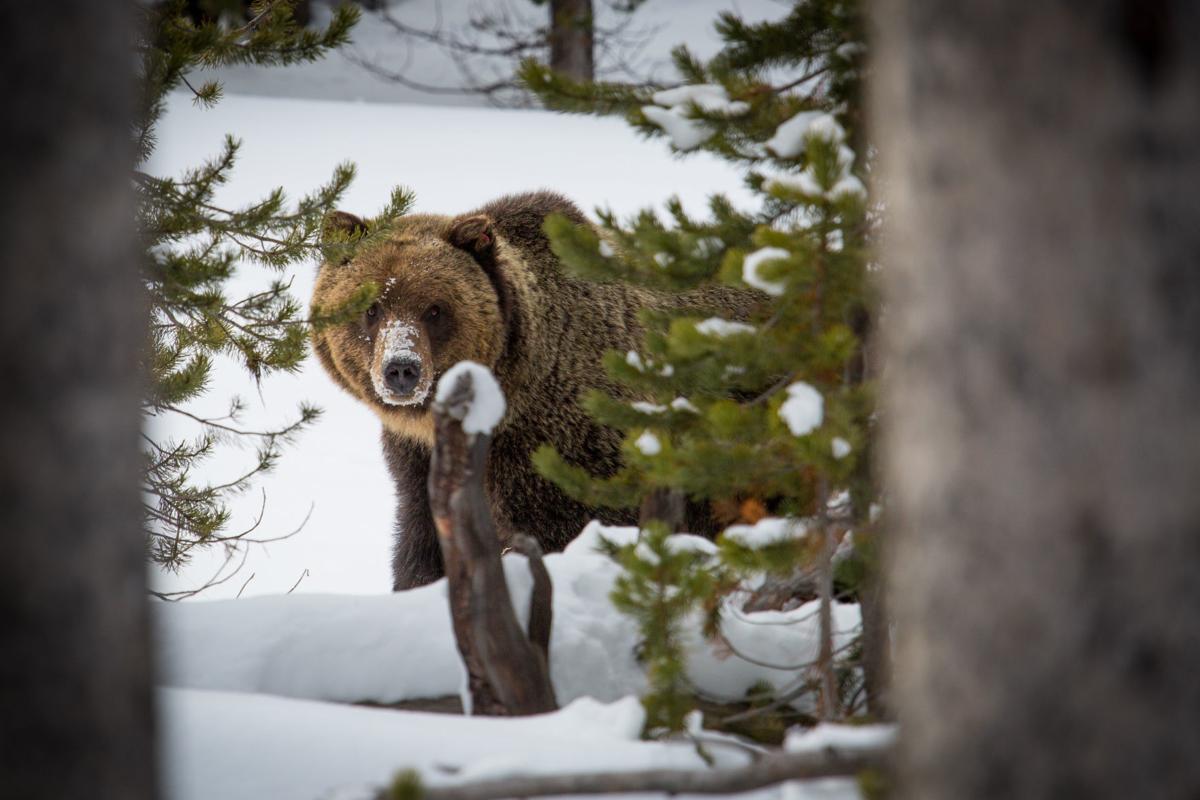
A grizzly bear and cubs play in Yellowstone National Park in Wyoming, on June 3, 2017. (Photo: Wolverine 9 5)A grizzly bear and cubs play in Yellowstone National Park in Wyoming, on June 3, 2017. (Photo: Wolverine 9 5)
The Northern Cheyenne Tribe and a coalition of environmental groups are asking a federal court in Montana to throw out the Trump administration’s decision to remove grizzly bears in and around Yellowstone National Park from the endangered species list — a move that has paved the way for trophy hunts of the iconic animals.

Delisting the Yellowstone bears opened the door for Montana, Idaho and Wyoming to allow grizzly bear hunting on vast areas of land.

Grizzly bears in the lower 48 states are endangered and qualify for special federal protection. However, last year, the US Fish and Wildlife Service finalized a rule that carved out the bear population in the Yellowstone region and removed it from the endangered species list. Interior Secretary Ryan Zinke, a Trump appointee who oversees the wildlife agency, personally announced the change in June 2017.

Delisting the Yellowstone bears opened the door for Montana, Idaho and Wyoming to allow grizzly bear hunting on vast areas of land outside of the national park system, and Wyoming officials are already making plans to propose grizzly bear hunts later this year.

“We’re not anti-hunting, but we are certainly not excited about trophy hunting of grizzly bears in one of the last few places where they continue to exist,” said Timothy Preso, an attorney with Earthjustice who filed the legal request, in an interview with Truthout.

“Nobody needs a grizzly bear in the freezer to get through the winter.” — Timothy Preso, Earthjustice

Preso said some hunters in the region hunt elk and other large game for food, but grizzly bears are likely to be hunted as trophies. Yellowstone grizzlies are much more valuable as icons that draw tourists to the region and as “ambassadors of wildness,” as Preso put it, than as trophies in a big-game hunter’s private collection.

“Nobody needs a grizzly bear in the freezer to get through the winter,” Preso said.

A number of environmental groups and nine Native tribes sued Zinke and the Interior Department last year for removing the Yellowstone grizzly bears from the endangered species list, a designation that has helped protect their habitat from logging and oil and gas development. Zinke is aggressively working to lift restrictions on development and fossil fuel extraction on public lands.

US Fish and Wildlife is now reviewing its decision to delist the Yellowstone grizzlies and is asking for public comment in light of a recent court ruling that returned federal protections to wolves in the Great Lakes region. Officials have left the rule delisting the bears in effect while they reconsider it, allowing state game wardens to move ahead with hunting plans.

Preso said the move by US Fish and Wildlife to reconsider the decision without withdrawing it altogether is unusual. His coalition is asking a federal judge in Missoula to restore the endangered species protection to the Yellowstone grizzly bears while federal wildlife officials complete a review of their delisting decision, which they have promised to do by March 31.

Taking some Yellowstone grizzlies out of the gene pool could put the entire population at risk.

“The Yellowstone region’s grizzlies deserve better than to be subjected to trophy hunting based on a half-baked government decision,” Preso said in a statement.

The environmental coalition argues that US Fish and Wildlife’s effort to review its own rulemaking is proof that the agency “did not complete its homework” before removing Yellowstone grizzly bears from the endangered species list. For example, conservationists say officials must research how delisting could impact the total population of endangered grizzly bears across the West.

Grizzly bears have made a comeback in the Yellowstone region, where the population has grown from 136 when the bears were originally listed as endangered in 1975 to about 690 today, according to the National Park Service. However, environmentalists warn that grizzlies across the rest of the lower 48 states have not done as well, and taking some Yellowstone grizzlies out of the gene pool could put the entire population at risk.

Noah Greenwald, endangered species director at the Center for Biological Diversity, said grizzly bears occupy less than 5 percent of their former range in the lower 48 states, so they clearly have not recovered.

“Attempting to delist the Yellowstone bears and expose them to trophy hunting without considering grizzlies’ poor status overall is simply ludicrous,” Greenwald said in a statement.

Hunting is not allowed in Yellowstone and Grand Tetons National Parks, but it is allowed outside the park boundaries, where wildlife is managed by state agencies in Wyoming, Montana and Idaho. Wyoming officials are currently considering public input on a management plan for bears that would potentially include hunting within federal limits, according to local reports.

As predator populations slowly recover from deforestation and loss of habitat caused by human development, their territory increasingly butts up against ours. In 2016, wildlife managers captured 39 grizzly bears in Wyoming to resolve “conflicts” with humans, according to a state report. These “conflicts” typically involved bears killing livestock, eating pet food or foraging in someone’s garbage. Twenty-two of the captured bears were killed, often for having a history of “conflicts” with people and their property.

Montana won’t recommend Yellowstone grizzly hunting this year

Grizzly bear (copy)

Grizzly bears were protected from hunting for mover 40 years while listed as threatened under the Endangered Species Act.

Public Domain/Neal Herbert via NPS

Not this year.

Montana Fish, Wildlife and Parks announced Thursday that it won’t ask the Montana Fish and Wildlife Commission to approve a hunting season for the recently delisted Yellowstone grizzly bears this year.

The bears were protected from hunting for more than 40 years while they were listed as threatened under the Endangered Species Act. Those protections were lifted in 2017, which opened the door for a potential hunting season. 

In a news release, FWP director Martha Williams said the decision is meant to reinforce the state’s commitment to the grizzly bear’s long-term survival.

“Holding off on hunting for now, I believe, will help demonstrate our commitment to long-term recovery and at the same time allow us the science-based management flexibility we need,” Williams said.

FWP will make the recommendation to its governing board at its next meeting Feb. 15.

The announcement comes weeks after Wyoming Game and Fish gained permission from its governing board to draw up grizzly bear hunting regulations, the first time since the 1970s that either state has had the legal authority to do so.

Removing Endangered Species Act protections for the bears gave more management responsibility to the states of Idaho, Wyoming and Montana. Prior to the delisting, each state had to create a framework for a potential hunting season, which was included in the final conservation strategy.

Part of the strategy is meant to limit the number of bears that are killed by humans. It created a level of “discretionary mortality” based on a population estimate. An agreement lined out before delisting split the allowable bear deaths between the three states.

The official government estimate puts the Yellowstone grizzly population at about 700 bears. Greg Lemon, a spokesman for FWP, said the allowable deaths for the three states was calculated to be 17.

Wyoming gets most of the allowable deaths, with the numbers this year being 10 males and 1 female. Idaho’s allowance is one female. Montana’s allowable mortality is 0.9 females and 5.8 males.

Montana will still retain its portion of allowable deaths, meaning the numbers for the other two states would remain the same whether the state decides to hunt bears or not.

FWP cited the ongoing legal challenge to the delisting as another reason it didn’t want to propose a hunting season.

At least five separate lawsuits over the delisting were filed by environmental groups and Native American tribes. They argue the bears shouldn’t have been removed from the list because the animals still face threats from climate change and shifts in their diets that result in more human-bear conflict.

First Nations hunters to be exempt from B.C. grizzly ban

https://www.theglobeandmail.com/news/british-columbia/bc-ends-grizzly-bear-hunt-calls-it-no-longer-socially-acceptable/article37367514/

The Globe and Mail

A sub adult grizzly bear chases down a salmon near Klemtu, B.C., on Aug. 29, 2015.

JOHN LEHMANN/THE GLOBE AND MAIL

British Columbia is banning grizzly-bear hunting with the lone exception of First Nations hunters, who will be allowed to hunt the bears for food, social, or ceremonial reasons. The policy drew praise from B.C. environmentalists and threats of legal action from hunters.

The province’s environment and forests ministers announced the ban on Monday, saying they were acting on the basis of a program of consultation with stakeholder groups, the public and First Nations, most of whom recommended a ban to protect the bears.

“It’s no longer socially acceptable to the vast majority of British Columbians to hunt grizzly bears,” said Doug Donaldson, the Minister of Forests, Lands and Natural Resources. The government estimates there are about 15,000 grizzlies in the province.

The move follows, and effectively expands, an August commitment to end the trophy hunting of grizzly bears and stop all hunting of grizzly bears in the Great Bear Rainforest.

Mr. Donaldson told a news conference he did not expect that the continuing First Nations hunt would kill many bears, suggesting there are less than 100 hunters who use bears for food. He said about 250 bears were killed a year by resident and non-resident hunters.

Grand Chief Stewart Phillip of the Union of British Columbia Indian Chiefs said he welcomed the ban because he supported an end to the “barbaric practice” of hunting the animals. He said few members of the First Nations community are involved in hunting the bears.

In response to a question from The Globe and Mail, the forests ministry said First Nations guides would not be able to facilitate access to grizzly bears for non-native hunters.

Mr. Donaldson said the government would look at transition measures for businesses affected by the ban, including easing businesses into the effort to observe grizzlies as opposed to hunting them, but provided no further details.

Joe Foy of the Wilderness Committee environmental group called the measure “tremendous news” that sets a global example. “This is worldwide news,” Mr. Foy told reporters after the government announcement, declaring British Columbia one of the world’s great hopes to hold onto the species.

“Some nations still allow trophy hunting for big beautiful creatures. This is a word out to the world that says times are changing and changing because so many creatures are on the decline. We’ve got to start to look out for them, not kill them for fun.”

However, Mark Werner, vice-president of the Guide Outfitters Association of B.C., whose members are involved in hunting grizzlies, cougars, wolves and other animals, said from Kamloops that the New Democratic government has abandoned rural British Columbia with the ban – a move he said will affect hundreds of jobs.

“This isn’t done. We know where they stand. We’re looking at legal options,” he said. “This will end up in the courts.”

Scott Ellis, executive director of the outfitters association, said he expected the government move will negatively affect about 100 B.C. family businesses.

Provincial Environment Minister George Heyman said the ban will be enforced by conservation officers, although he acknowledged they are “understaffed” and the issue of resources is being assessed as part of the process leading to the next provincial budget in February. “I won’t preshadow the federal budget, but we’ll be happy to talk about it at that time,” Mr. Heyman said.

In remarks addressed to hunters, Mr. Donaldson said the NDP knows hunting is important to many British Columbians. “This is not the thin edge of the wedge,” he said. “This is a specific species, an iconic species.”

Existing penalties for illegally killing grizzly bears will be applied under the new status quo. Under the Wildlife Act, tickets are $345. In what the ministry described in a statement as more extreme cases, a first conviction in court can lead to a fine of up to $100,000 or a one-year jail sentence.

__________________________________________

Also: Breaking news: British Columbia strengthens ban on trophy hunting of grizzly bears

by Wayne Pacelle,
December 18, 2017 

Today, British Columbia’s New Democratic Party government delivered on its campaign promise and more by announcing a provincial ban on trophy hunting of grizzly bears, even if the hunters involved claim they eat the meat of the animal. The NDP, in cooperation with the Green Party, ousted the Liberals in elections earlier this year, gaining a one-seat majority and promising to usher in a new series of policies, including some concerning animal protection.

The original declaration from the NDP to ban grizzly bear trophy hunting, but not meat hunting, won widespread praise, but it was viewed as having a questionable and unenforceable loophole. The government opened up a comment period, and the response was overwhelming: ban all grizzly bear hunting, because it’s essentially all for trophy hunting purposes even if someone chokes down some grizzly bear meat on pretense. Ecologist and scientist David Suzuki – along with a number of hunters on hunting forums – panned the idea that anyone hunts grizzly bears for meat, given the abundance of hooved animals in the wilds of British Columbia.

Under the prior Liberal government, B.C. had become the world’s grizzly-bear-hunting hub, with trophy hunters killing 250 of the great bears a year there, even within renowned provincial parks and protected areas and, most brazenly, in the Great Bear Rainforest, where Coastal First Nations have vehemently opposed trophy hunting of bears.

This is a signature win for animal protection groups (including Humane Society International/Canada, which worked for this outcome). Polling revealed that opponents of the practice include an overwhelming majority of residents of rural communities with strong hunting traditions. All of this is an emphatic reminder to the U.S. government and to our northern Rockies states not to proceed with a trophy hunt for grizzly bears in the Greater Yellowstone ecosystem, which may be enabled with the recent delisting of bears there from the ranks of threatened and endangered species.

It’s not just a moral issue, it’s also an economic one. Each year, thousands flock to B.C.’s lush forests to participate in grizzly-bear-viewing expeditions. The bear-viewing industry brings in 12 times more direct revenue to the province than trophy hunting. There are millions of people throughout North America and the world who’d pay handsomely for an opportunity to see grizzlies in the wild, while very few people wish to slay these bears as a head-hunting exercise. The economic potential of an industry built around bear watching is vast, while the killing industry is small and receding and also a threat to the larger wildlife-watching enterprise.

https://blog.humanesociety.org/wayne/2017/12/breaking-news-british-columbia-strengthens-ban-trophy-hunting-grizzly-bears.html


Delisted grizzlies being reviewed

  • By Mike Koshmrl Jackson Hole Daily

Federal wildlife managers are looking into whether a court ruling jeopardizes the legality of Wyoming, Montana and Idaho’s oversight of Yellowstone-area grizzly bears.

The review of the Greater Yellowstone Ecosystem’s grizzlies traces to a July court ruling that found the U.S. Fish and Wildlife Service erred in not assessing how “delisting” Great Lakes states’ wolves affects the canines in the rest of their historic range.

The agency took the same approach when it revoked Endangered Species Act protections for grizzlies this summer, delisting an isolated cluster of about 700 bears called a “distinct population segment.” But the bureaucrats did not have the luxury of reviewing the appeals court’s opinion, which kept wolves in Minnesota, Wisconsin and Michigan under federal control.

“What happened is we put the [grizzly] rule out on June 30th, and then the opinion came out about a week later,” said Hilary Cooley, Fish and Wildlife’s grizzly bear recovery coordinator.

“We had not received that opinion,” she said, “so this is new information for us that we need to consider. We’re taking a close look at it.”

The public is being asked to weigh in, with comments due by Jan. 5.

The process does not mean the final grizzly delisting rule is being opened again, Cooley said.

“I want to be clear: The rule is final, and it stands, and bears are delisted,” she said. “To say any more right now is pretty premature.”

Fish and Wildlife plans to make a decision on the matter by March 31. It’s unlikely the outcome would flip management of the region’s bears back to the federal agency.

“I don’t anticipate remanding the rule,” Cooley said.

Wildlife activists view the review as a dodge from complying with legal precedent.

“It seems like a pretty lame attempt to fix some fatal flaws that the Fish and Wildlife Service is now acknowledging exist in that rule,” said Andrea Santarsiere, a Center for Biological Diversity attorney in Victor, Idaho. “The fact is that they’re taking this unprecedented step of collecting public comment on a rule that’s already issued.”

Independent of the Fish and Wildlife review, the courts will also determine whether the Yellowstone grizzly rule jibes with the law. Environmental activists, Native American tribes and other parties filed at least six lawsuits after grizzlies became a state-managed species, and the complaints weren’t filed until after the wolf ruling was issued.

Fish and Wildlife initiated the public review “in part” to cover its legal bases, Cooley said.

“The lawsuit’s key on this issue, and it’s information we did not have when we put the rule out,” she said. “But it’s also due diligence.”

The court that decided the Great Lakes wolves case found that Fish and Wildlife improperly “brushed off” the substantial loss of wolves’ historical range as “irrelevant to the species’ endangered or threatened status.” But the panel of judges did find that the general approach of delisting an isolated population complied with federal law. The analysis and execution, they found, is what was illegal.

The 515-page delisting rule for Yellowstone grizzlies mentions the Northern Continental Divide population — in the nearest grizzly recovery area, approximately 70 miles away — 48 times. The smaller and more distant Cabinet/Yaak, Selkirk and North Cascades populations are mentioned between six and eight times each. Federal managers and the courts will soon decide whether the analysis behind those numbers does the job.