AMSTERDAM (Reuters) – Dutch specialty chemicals company DSM is expecting strong demand for its feed additive which limits the amount of methane burped into the air by cows, its contribution to the global fight against climate change.
Methane has a much larger effect on global warming than carbon dioxide (CO2) and reducing methane emissions could buy time to confront the much bigger challenge of cutting the amount of CO2 released into the atmosphere.
“We see a lot of demand already, from food producers and farmers”, DSM’s Clean Cow program director Mark van Nieuwland told Reuters in an interview, even though the launch of the additive, Bovaer, is still more than a year away.
“Large (food) companies have clear climate targets, and they need farms to change to meet those. Also consumers are increasing pressure on farmers and many farmers themselves want to limit emissions.”
Swiss KitKat and Nescafe maker Nestle this month said it wanted to reduce greenhouse gas emissions to zero by 2050, while French dairy maker Danone has said it wants to halve its CO2 emissions by 2030.
Cows constantly burp up the powerful greenhouse gas methane but DSM says including Bovaer in a cow’s diet could cut these emissions by at least 30%.
“Giving this to only three cows will have the same effect as taking one car off the road”, Van Nieuwland said.
DSM expects to launch Bovaer in Europe either late next year or in early 2021. It is currently waiting for authorization from the European Union to label it as an environmentally beneficial product.
ADVERTISEMENT
The company estimates that Bovaer has a potential global market value of 1 to 2 billion euros and aims to expand into other markets soon after the European launch.
DSM has made a profitable switch from bulk chemicals to sustainable food ingredients and materials, growing sales of animal feed products to around 30% of its 9 billion euros ($9.8 billion) in total sales last year.
“We have to deal with methane in the next 5 to 10 years if we want to limit the rise in temperatures to 1.5 degrees”, Van Nieuwland said.
Bovaer cuts methane emissions when mixed into a cow’s feed by inhibiting an enzyme in the digestion process which normally causes the release of the gas.
After ten years of research the Dutch company says it has dozens of global peer reviewed studies backing its claims and showing no effect on the health of cows or the milk they deliver.
DSM on Monday said it had teamed up with Dutch scientists and animal feed producers to measure the effects of Bovaer in different dosages and different diets.
The trial will run from November until February 2020, and the results are expected to be applicable throughout Europe, DSM said.
“This can have a real impact and we want to make it as big as possible”, Van Nieuwland said. “The faster we move, the better.”
A new U.N. report claims we must follow its strict meat-eating guidelines or face certain climate change doom. ClimateDepot.com executive editor Marc Morano reacts.
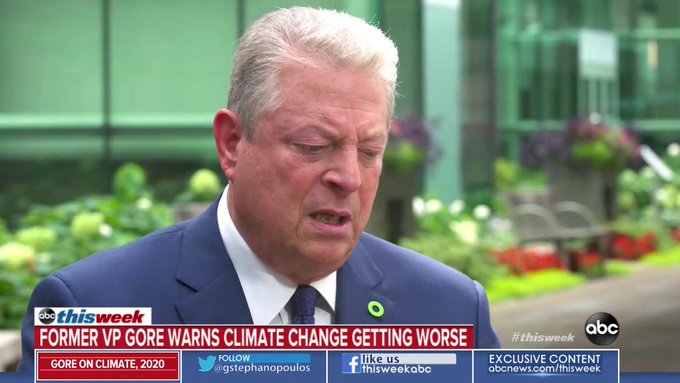
Former Vice President Al Gore said his predictions from 2006 about climate change over the next ten years have come true and claimed part of the damage has been irreversible.
“You said back in 2006 that the world would reach the point of no return if drastic measures weren’t taken to reduce greenhouse gases by 2016. Is it already too late?” ABC News’ Jonathan Karl asked during “This Week with George Stephanopolous” on Sunday.
“Well, some changes, unfortunately, have already been locked in place,” Gore replied. “Sea level increases are going to continue no matter what we do now. But, we can prevent much larger sea level increases — much more rapid increases in temperatures. The heat wave was in Europe. Now, it’s in the Arctic, and we’re seeing huge melting of the ice there.”
Gore, who wrote and starred in the 2006 climate documentary “An Inconvenient Truth,” expressed optimism about minimizing the damage, however, and praised the field of Democrats aiming to unseat President Trump in 2020 for making the environment a central issue in many of their campaigns.
“So, the warnings of the scientists 10 years ago, 20 years ago, 30 years ago, unfortunately, were accurate,” he said. “Here’s the good news… In the Democratic contest for the presidential nomination this year, virtually all of the candidates are agreed that this is either the top issue or one of the top two issues.”
ABC News Politics
✔@ABCPolitics
Al Gore tells @jonkarl that climate change is “getting worse faster than we are mobilizing to solve it,” but the “good news” is that “we now have an upsurge in climate activism at the grassroots in all 50 states … and in every country in the world” https://abcn.ws/2ZTfVUF
“There’s both bad news and good news. The problem’s getting worse faster than we are mobilizing to solve it,” Gore added.
“However, there’s also good news. We now have an upsurge in climate activism at the grassroots in all 50 states here in this country, and in every country in the world.”
Well, that’s not entirely true or altogether accurate. I’m not really the type who goes around hating myself or each and every member of the species homo Sapiens I happen to meet. I just hate what said species is has done (and is still doing) to the planet and I hope that the Earth can survive in spite of us. If She does, it will have been a close call. The life-ways of our species has warmed up the atmosphere in ways unmatched since the last mass extinction. And at a pace unrivaled.
But then, the Earth has made it through at least five other mass extinctions and lived to tell the tale. What’s really going to be sad is how many amazing non-human beings that will end up having to go along with us when we, the out-of-control, evolved-beyond-our-own-good yet ethically-underevolved carnivorous-hominid species, goes.
Being a human being myself, the only way I can live with myself is by not taking part in most of the actions that define people these days:
Number one, I never reproduced. (Making love to a woman for mutual pleasure is not the same as going through the motions and hoping to impregnate someone to bring another human into this critically overcrowded world.)
Secondly, for the past two decades I’ve refused to take part in animal-eating of any kind. No mammal meat nor fish nor fowl—nothing that had a heartbeat. As it turns out, it’s been the best way to live for climate-health as well.
Even while living in the heart of a “sportsman’s paradise” I didn’t fall prey to the lure of murdering Bambi for my dinner.
Years before I’d even heard of global warming or the notion of a climate crisis, I lived in the mountains miles beyond power and basically, learned to live without it. For 20 years, I was never tempted to run a generator and join the “modern world.” I could have done it, but where would it have gotten me. (I still don’t own a cell phone, in part to protest all those cell towers going up everywhere).
No one was even talking about climate change back then so, for those decades at least, I was able to live in my own little world like so many still do today.
Anyway, it helps me to know that my carbon footprint isn’t as gargantuan as it would be if I’d have lived in the “real world” for all those years. It makes me wonder, though, how those bigfoots can live with themselves.
The first ocean-specific report by a prestigious international panel underscores the urgency of taking action now to reduce carbon emissions and limit global warming.
The effects of climate change are bad, and they’re getting worse — especially when it comes to the world’s oceans.
But if unprecedented action is taken soon to reduce planet-warming emissions, it will greatly ease some of the worst impacts and make adaptation less painful.
Ehukai Beach clouds during winter 2018 ocean sea level rise.
Cory Lum/Civil Beat
“The open sea, the Arctic, the Antarctic and the high mountains may seem far away to many people,” said Hoesung Lee, IPCC chair, in a statement Wednesday. “But we depend on them and are influenced by them directly and indirectly in many ways — for weather and climate, for food and water, for energy, trade, transport, recreation and tourism, for health and wellbeing, for culture and identity.”
If people prevent the planet from warming more than 2 degrees Celsius (3.6 degrees Fahrenheit) above pre-industrial levels by 2100 — as world leaders agreed to in Paris in 2015 — the effects of climate change will still threaten livelihoods, alter ecosystems and disrupt weather patterns. But it won’t be nearly as bad as a warmer world.
The latest report says marine heatwaves, for instance, will be 20 times more frequent at 2 C. But it could be 50 times more frequent if greenhouse gas emissions continue to increase.
Marine heatwaves don’t just affect the oceans, though the warmer waters are also putting corals in peril and reducing the abundance of certain fish. They are also making it hotter on land.
In July, firefighters on Maui were responding to their first big wildfire of the season — about 9,000 acres — when they realized the equipment they set out with to tackle the blaze wasn’t going to do the job as it had for similar fires in years past, according to University of Hawaii wildland fire researcher Clay Trauernicht.
That’s because it was so hot out that it had driven the humidity down to a point where the grasses were so crispy that the fire behaved differently, burning up the fuels faster and shifting directions less predictably, he said.
Marine heatwave
Trauernicht said his biggest takeaway from the IPCC report was the “ginormous” difference between cutting greenhouse gas emissions or continuing to burn fossil fuels when it comes to the severity of the impacts of climate change.
“Whatever extent we can reduce this, we’ve got to do it,” he said.
The report cites marine heatwaves as just one of the impacts of climate change. Scientists project stronger hurricanes, faster eroding coastlines, hotter summers, more flooding, increased sea level rise, more extreme weather and less productive fisheries.
The rate of sea level rise is increasing primarily because glaciers and ice sheets in polar and mountain areas are melting faster than expected. It’s also rising faster because the ocean is expanding as it gets warmer, the report says.
Sea levels rose globally about a half foot last century. Now they’re rising more than twice as fast and getting faster. Sea level could rise 1 to 2 feet by 2100 even if global warming is limited to well below 2 C, but it could rise 2 to 3.6 feet if greenhouse gas emissions continue to escalate.
That’s a big deal for Hawaii, where most of the state’s 1.4 million residents live close to the coast and it’s also where major infrastructure is located. The tourism industry that the overall economy depends on also depends on the coastal environment.
“We are in a critical set of years for the entire history of humanity,” University of Hawaii climate researcher Chip Fletcher said. “But we can never give up. We can never stop. It’s always going to be a crisis until we decarbonize.”
Sea level rise will also increase the frequency of extreme events during high tides and intense storms, the report cautions. With any degree of additional warming, the report says events that happened once per century will happen every year by 2050, heightening the risk for low-lying coastal cities like Honolulu and small islands like those in the northwestern reaches of the Hawaiian Archipelago.
East Island, about 600 miles northwest of Oahu, almost entirely disappeared after an unprecedented hurricane passed over it last year. It was the primary nesting ground for the bulk of the threatened Hawaiian green sea turtle population and a sizable chunk of critically endangered Hawaiian monk seals.
Sea level rise, increasing faster due to climate change, has accelerated erosion in Hawaii, such as Sunset Beach on the north shore of Oahu.
Anthony Quintano/Civil Beat
The IPCC has a reputation for being conservative because it requires 100% agreement, Fletcher said. That tends to water down its reports, compared to peer-reviewed literature that offers the latest science.
But knowing this is the voice of the scientific community speaking is important, he said.
It’s a sentiment shared by Josh Stanbro, who heads Honolulu’s climate change office. He said the IPCC offers an important “rear view mirror approach” whereas the Honolulu climate commission’s appointed members, which include Fletcher, are looking out the front window.
“If there’s anything heartening in this it’s that we have really smart sharp local climate change commissioners giving us good information, making projections and looking at cutting-edge research,” he said.
Still, Stanbro found some aspects of the report to be unnerving. He is concerned about how it leaves as an “x factor” the impact of methane gas that may be released when permafrost thaws. And he was taken aback by how the report underscores how small island nations are exposed to the impacts of climate change.
“We know that as island people,” he said. “But it’s a little unnerving to see that in plain sight where world leaders are saying we’re the canaries in the coal mine.”
Members of the working groups who developed the report said it arms communities and governments with the information they need to act.
It highlights the urgency of “timely, ambitious, coordinated and enduring action,” Ko Barrett, vice chair of the IPCC, told reporters.
Hawaii agencies are among those looking to it for guidance.
Scott Glenn, who heads the state Office of Environmental Quality Control, said he is interested in how it affects baseline assumptions that agencies are making, such as maps showing sea level rise exposure areas.
“With climate change, it’s affecting so many parameters at the same time that it becomes very hard,” he said. “How do you translate that into something like design or engineering if you know there’s this science coming out with these big uncertainty brackets around it?”
IPCC working group members said that reducing carbon emissions enough to matter will require a global effort across all sectors.
“We will only be able to keep global warming to well below 2 C above pre-industrial levels if we effect unprecedented transitions in all aspects of society, including energy, land and ecosystems, urban and infrastructure as well as industry,” Debra Roberts, an IPCC working group co-chair, said in a statement.
Frankly, she is skeptical. KENA BETANCUR/AFP/Getty Images
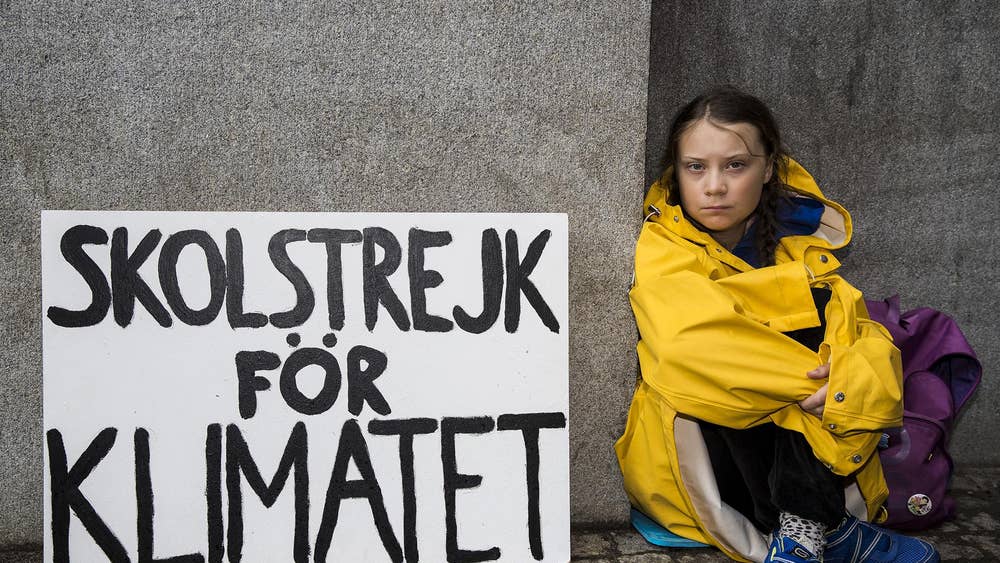
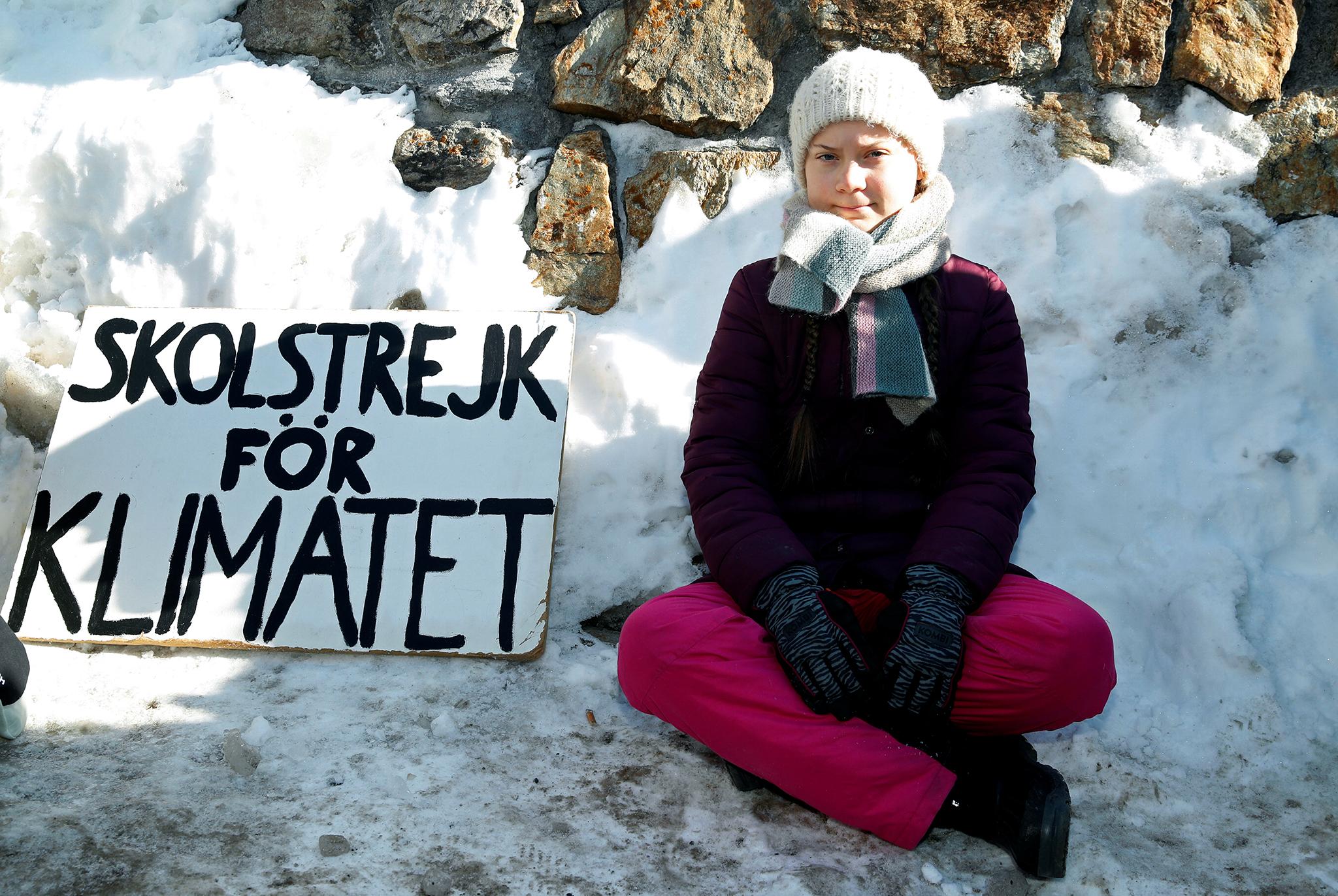
To her considerable and growing list of accomplishments, 16-year-old Swedish climate activist Greta Thunberg can now add another mark of distinction: She has been attacked by the troll-in-chief.
On Monday night, in response to Thunberg’s coruscating, impassioned speech to the UN, President Trump tweeted sarcastically, “[s]he seems like a very happy young girl looking forward to a bright and wonderful future. So nice to see!” (Thunberg promptly edited her Twitter bio to read: “A very happy young girl looking forward to a bright and wonderful future.”)
Trump’s sneering attack came amid a torrent of often misogynist and ableist abuse hurled at Thunberg since the speech, with conservatives attacking her demeanor, her looks, her mental health (she has autism), and above all her autonomy, claiming she is “brainwashed” or a victim of child abuse. Several have compared her speeches to Nazi propaganda.
“She’s ignorant, maniacal and is being mercilessly manipulated by adult climate bedwetters funded by Putin,” ranted C-list climate denier Steve Milloy, somehow fitting all the mutually contradictory stereotypes about powerful women into his pea brain at once.
John Ocasio-Nolte@NolteNC
I can’t tell if Greta needs a spanking or a psychological intervention…
What’s remarkable about this is not that the right-wing slime machine has gone to work against a new progressive threat. That’s what it was made for. What’s remarkable is how ineffective it’s been, how little it has affected Thunberg and her extraordinary influence.
The right-wing tabloid Daily Wire has published some of the vilest stuff about Thunberg. But when it sent Michael Knowles to Fox News to say Thunberg is a “mentally ill Swedish child who is being exploited by her parents and by the international left,” Fox took the rare step of apologizing to viewers and saying it would no longer book Knowles.
On a female-led Fox show, the lone male guest (“Buck Sexton,” I kid you not) went after Thunberg and was promptly scolded by the hosts for “kid bashing.” Up in Canada, Maxime Bernier of the far-right People’s Party of Canada was forced to apologize for calling Thunberg “mentally unstable.”
These moments of accountability on the right are rare, of course — there are dozens, hundreds more examples of attacks far uglier than this that have brought no pushback at all. But they help illustrate that Thunberg has the rare ability to tap into something human, something that, at least sporadically, can break through the media filter pushing the public into partisan camps.
As for Thunberg, her reaction to her attackers remains as bemused and clinical as ever:
I honestly don’t understand why adults would choose to spend their time mocking and threatening teenagers and children for promoting science, when they could do something good instead. I guess they must simply feel so threatened by us. ->
Even against the nuttiness of current events, Thunberg’s story is remarkable, in both human and political terms, as David Wallace-Wells masterfully captures in his recent New York magazine piece. He taps into the heady sense of a movement exploding but also offers a clear glimpse of the intently focused, achingly vulnerable teenager who finds herself at its white-hot center. Everyone should read it.
Here I just want to dwell on one theme of that piece, namely the unlikely confluence of personal history and characteristics that have made Thunberg so politically potent and so resistant to the right wing’s familiar smears.
It’s important to note, as she frequently does, that Thunberg has not single-handedly created this movement. She stands on the shoulders of generations of activists before and alongside her, many of them people of color, who are, to say the least, less likely to be adopted as icons by Westerners. (Check out this great thread on other young climate activists.)
But she has proven extraordinarily potent in crystallizing and focusing what has been a somewhat diffuse activist energy. She has brought a directness and simplicity to the movement that has been lacking. Her influence is growing, even as the right ramps up its barrage, and it is driving them out of their minds.
Greta avoids the trap of recommending specific policies
Across the world, businesses, scientific institutions, investors, and governments are effectively unanimous in recognizing the urgent need for action on climate change. The science has made it inescapably clear that business as usual leads to disaster. Many debates remain over the best path forward, but the basic case for action has become unassailable.
And so for the most part, opponents of action — generally far-right coalitions fueled by a mix of fossil-fuel cronyism and populist ethnonationalism — don’t assail it. They do everything they can to distract from it.
That almost always involves attacking the messengers (“Al Gore has a big house”) and their proposed solutions (“the Green New Deal will take away your hamburgers”). The scientists are after grant money; the activists are undercover socialists; the leaders are hypocrites; the marchers litter. Casting doubt on the motives and authenticity of people fighting for progressive causes is the right’s primary political tool, with efforts now led out of the White House.
For climate scientists and advocates, it’s a familiar trap. Any political program sufficient to address climate change at scale is, almost by definition, going to be radical, which allows the right to dismiss it as “far left.” The go-to attack on the climate movement is that it’s a “watermelon,” green on the outside and socialist red on the inside — that climate change is just a cover story for the political program.
Thunberg has sidestepped attacks on her motives by almost entirely refraining from endorsing specific political reforms or policies. “I can’t really speak up about things like [politics],” she told Wallace-Wells, “no one would take me seriously.”
Her insistence on this point was illustrated when she submitted the IPCC’s report on limiting warming to 1.5 degrees Celsius in lieu of testifying to the House. Attached was a short letter that said: “I am submitting this report as my testimony because I don’t want you to listen to me. I want you to listen to the scientists. And I want you to unite behind the science. And then I want you to take action.” She refuses to allow her opinions to become the focus.
United Nations
✔@UN
“The eyes of all future generations are upon you. And if you choose to fail us, I say we will never forgive you.”
Coming from almost any adult, this strategy would be vulnerable. Adults have political worldviews and very few have the discipline to keep them entirely hidden. But Thunberg is, in her own words, an “uneducated teenager.” She’s 16 years old! She can’t be expected to know what actions government agencies need to take and she doesn’t pretend to.
She just drags the focus back, again and again, to the subject grown-ups want to avoid: the need for immediate action and their longstanding failure to take any.
(The right has been circulating a picture of Thunberg with her parents in matching “antifascist all-star” T-shirts, claiming that it exposes her far-left politics. Ponder for a moment what it says about the right that it considers opposition to fascism politically compromising.)
Attempts to personally smear Greta have backfired
Right-wing media’s first instinct is to smear the messenger, to find some behavior on which to hang a charge of hypocrisy or some venal motive that allegedly undercuts moral authority. They have done it to everyone who has stuck their head up on climate change (beginning, famously, with Al Gore) for many decades now, snooping through stolen emails, filing lawsuits, and ruining careers.
But this is where Thunberg’s autism has proven, as she has put it, a kind of superpower. She has Asperger syndrome, an autism spectrum disorder that makes her indifferent, often blind, to social cues and incentives as well as inclined to focus intently on a single subject, a tendency Thunberg says is exacerbated by obsessive-compulsive disorder.
As Wallace-Wells notes, Thunberg fell into a depression when she was younger, after she learned about climate change, and spent a few friendless years eating and speaking little, barely motivated to leave the house. In her own words, her climate activism gave her a sense of focus and meaning that helped lift her out of depression.
(I’m far from the first to draw a connection between Thunberg’s autism, her authenticity, and her effectiveness. Steve Silberman wrote about it here on Vox; Naomi Klein and Liza Featherstone, among others, have made the point. Indeed, Thunberg herself has made it.)
In characteristically vile fashion, the right in both Europe and the US has attempted to use Thunberg’s mental health against her, but the attempt has largely backfired. For one thing, it is virtually impossible to watch her speak for any length of time and maintain a good-faith belief that she is responding to social pressure from adults. She is manifestly authentic, direct in a way unique among public figures, no more subject to flattery than to coercion.
ET Panache
✔@ETPanache
Greta Thunberg submitted a climate report during the House Foreign Affairs subcommittee hearing, along with the testimony of three other youth climate change advocates | https://tinyurl.com/y2yprgoz
Witness Thunberg’s utterly indifferent reaction to the plaudits lavished on her by congressional Democrats. “Please save your praise,” she said. “We don’t want it. Don’t invite us here to tell us how inspiring we are without doing anything about it. It doesn’t lead to anything.”
She’s not intimidated or dazzled by social hierarchy. She just drags the focus, again and again, back to her fixation, what the grown-ups don’t want to talk about: the need for immediate action and their long-standing failure to take any.
However the right tries to twist it, her personal story remains perfectly relatable. She’s a child who found out that the world she was born into is sliding headlong into crisis and suffering, and nobody’s doing much of anything about it. It depressed her. And it eventually motivated her to act.
The question is not why she was depressed and driven to action but why more children aren’t.
When Greta disregards social cues, it sends a social cue
The reason is simple: social cues. Children don’t see the adults around them acting like climate change is a crisis, so they don’t either. For most people, those social signals and affiliations — the building blocks of identity — are much more significant than “the facts” as conveyed by distant, disinterested authorities.
But, in part through their indifference to social cues, people with autism have a unique capacity to face the facts clearly. And the facts about climate change are fucking terrifying.
This, I think, helps explain why Thunberg has inspired so many people, especially so many young people: There’s a kind of courage in ignoring the pervasive social pressure to calm down about climate change. She takes the facts seriously, even when very few adults are modeling how to do so, even when it’s uncomfortable or inconvenient for those around her. She’s vegan, she won’t fly, and she’s devoting her young life to prodding adults into action; the default right-wing accusations of hypocrisy and duplicity simply don’t stick.
The right has established a social environment in which speaking up on climate change leads to bullying and shaming, but those tactics just don’t seem to work on Thunberg. And without them, the right has nothing to fall back on (not one of the hundreds of attacks launched at her has the courage to directly dispute the IPCC report she submitted).
In ignoring social cues, Thunberg has become one: A signal to other young people around the world that, yes, this really is an emergency, and yes, they really can and should speak up.
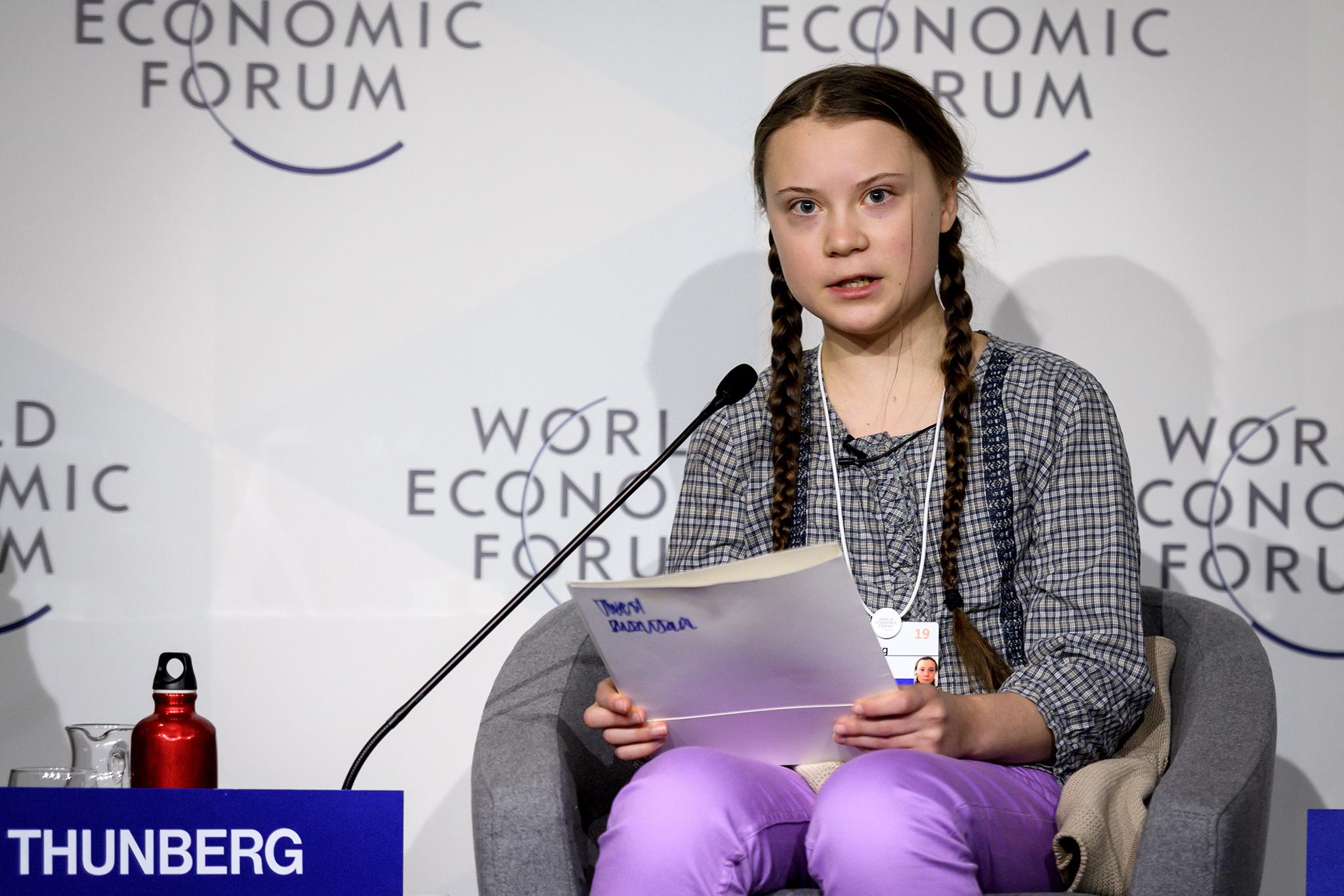
Making more Gretas. Photo credit should read TIMOTHY A. CLARY/AFP/Getty Images
Greta’s power will be in making more Gretas
So far, Thunberg has played her game expertly — mostly by being almost entirely oblivious to the other games being played around her — and I hope she does this as long as possible. I hope she continues to refrain from policy recommendations, live a low-carbon life, and drag the spotlight back to science. She has pulled off something like a political miracle, and I don’t want it to end any more than anybody else.
But the thing is, as much as Thunberg might now seem like a transparent lens, directing focus at climate science without the distractions of personal baggage, she is in fact a human being, one 16-year-old girl, and she cannot remain forever in the strange social position where she finds herself. Sooner or later, she’ll do something, join something, or say something that forces her out of the improbably apolitical space she now occupies — and the public tends to be unforgiving of females who disappoint their expectations, even young white ones. No human being can survive the full intensity of the right-wing smear machine undamaged.
If Thunberg is to have a meaningful long-term effect, it can’t be through staying in the spotlight. It must come from others adopting some of her focus, determination, and courage, learning to disregard the social pressures that suppress their fear and anger and prevent them from speaking up, connecting, and finding hope in one another. It will come from others, especially those in positions of power, listening to her and treating the threat to her generation’s future as a crisis.
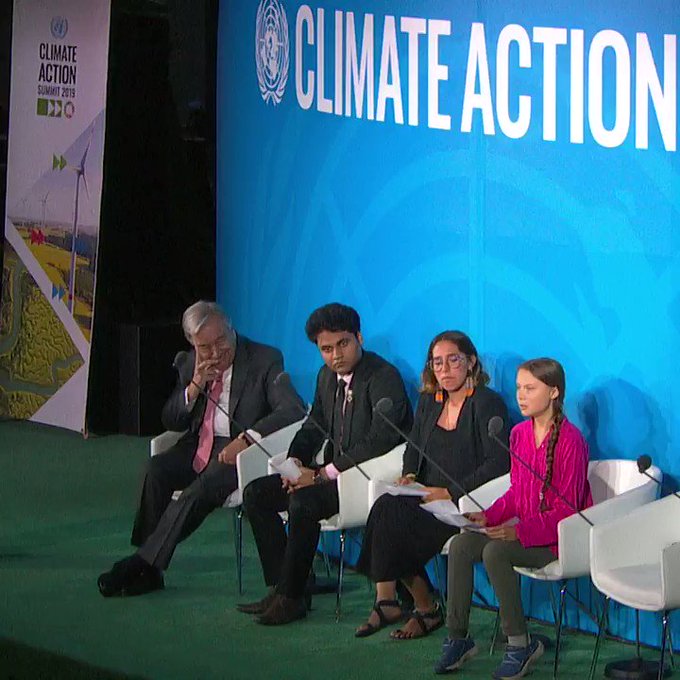
President Donald Trump mocked 16-year-old climate activist Greta Thunberg on Twitter late Monday.
Posting a fatalistic statement the Swedish teen had made earlier Monday at the United Nations’ special meeting on climate change, Trump tweeted: “She seems like a very happy young girl looking forward to a bright and wonderful future. So nice to see!“
Trump briefly attended the Climate Action Summit in New York but left after 14 minutes. The president has consistently expressed skepticism about the notion of man-made climate change, and his administration has declined to make the issue any sort of priority.
Thunberg acknowledged Trump’s tweet on Tuesday, changing her Twitter biography to read, “A very happy young girl looking forward to a bright and wonderful future.”
Thunberg has developed an international following for her persistent efforts to get the international community to combat climate change, particularly winning support among young people. Trump’s tweet contained one of her quotes from her U.N. remarks Monday: ”People are suffering, people are dying, entire ecosystems are collapsing. We are in the beginning of a mass extinction and all you can talk about is money and fairytales of eternal economic growth.”
Thunberg did not mention Trump or any other leaders by name in her remarks, but she did scold the world’s leaders.
“You are failing us,” she said to the assembled leaders. “But the young people are starting to understand your betrayal. The eyes of all future generations are upon you. And if you choose to fail us, I say: We will never forgive you.“
Last Wednesday, Thunberg addressed a congressional committee in Washington. “I want you to listen to the scientists,” she said. “And I want you to unite behind the science. And then I want you to take real action.”
Trump was not alone Monday in mocking Thunberg. On Fox News, Michael Knowles referred to Thunberg as “a mentally ill Swedish child who is being exploited by her parents and by the international left,” then doubled down and called her “mentally ill” a second time. The network subsequently apologized for his remarks.
A clip showing climate activist Greta Thunberg giving Donald Trump an ice-cold glare has gone viral, just after the Swedish 16-year-old told the United Nations that the leaders of the generations before hers had stolen her childhood and her dreams.
The video of Ms Thunberg shows her standing in the United Nations lobby in New York, just as Mr Trump arrived.
Cameras captured the moment in which the 16-year-old’s expression changes from a slight curiosity to what looks like steely anger as the American president walked by.
Ms Thunberg had just delivered a speech to the United Nations in which she called for urgent action on climate change.
“How dare you continue to look away, and come here saying that you are doing enough, when the politics and solutions needed are still nowhere in sight,” she told the United Nations.
Greta Thunberg inspires climate activists everywhere: in pictures
Show all 12
She continued: “You say you ‘hear’ us and that you understand the urgency. But no matter how sad and angry I am, I don’t want to believe that. Because if you fully understood the situation and still kept on failing to act, then you would be evil. And I refuse to believe that.”
Mr Trump, for his part, has challenged the idea that climate change — which is supported by the vast majority in the scientific community, of which the American is not a member — exists, and has openly mocked the idea, on one occasion suggesting it was a Chinese hoax.
Since taking office, Mr Trump has overseen an expansive effort to destroy his predecessor’s policies aimed at slowing the rate of climate change, including by easing up on restrictions for greenhouse gas emissions and bringing up new oil and gas leases.
Protesters in Washington urge lawmakers to fight climate change; Ellison Barber reports from Washington.
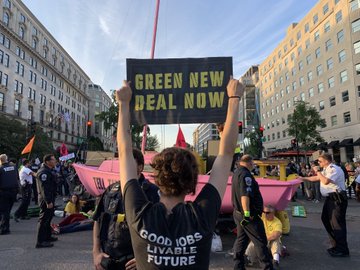
Climate activists demonstrating to coincide with the 2019 U.N. Climate Action Summit blocked intersections and snarled morning-commute traffic across Washington, D.C., Monday morning as they called on officials to take action on global warming.
The group, called “Shut Down D.C.,” has planned a week of activities to bring attention to climate change and convince national and international leaders to act. Monday’s continuation of the “Global Climate Strike” follows worldwide climate protests on Friday, including a demonstration in New York City led by Swedish teenager Greta Thunberg.
“Parents, workers, college students, and everyone who is concerned about the climate crisis will skip work and school and put off their other responsibilities to take action on the climate crisis,” the organization says on its website.
But the demonstrations across D.C. Monday morning also angered the city’s commuters as the scattered marches caused gridlock and detours. District of Columbia police reported making more than two-dozen arrests as of Monday afternoon.
A D.C. blogger posted one photo of a mass of cars halted behind a line of protesters a few blocks northwest of Mount Vernon Square. The same blogger also tweeted a picture of a literal dumpster fire on Massachusetts Ave.
At another protest site, police were using a saw to cut protesters out of chains attached to a painted boat.
Pat Ward
✔@WardDPatrick
·
The scene at 16th & K NW as climate change protesters block the intersection
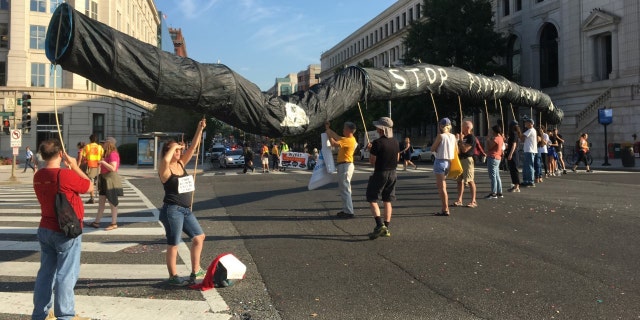
Another group of about 30 protesters blocked an intersection near Union Station, holding up a large mock pipeline that read “stop pipelines now.” Police stopped traffic about a block in each direction and were moving vehicles around the area demonstrators had occupied.
Police are using a saw to separate the links protesters have attached themselves to the boat with. They’ve given those people flame-resistant blankets for the sparks. And ear protection. #ShutDownDC
The “Shut Down D.C.” protesters read testimonials from anti-pipeline activists in Oregon before chanting, “Hey-hey! Ho-ho! LNG has got to go.” LNG is an acronym for liquified natural gas.
Protesters also adapted the famous song “When The Saints Go Marching In” for their purposes.
Sept. 23, 2019: Protesters hoist up a fake pipeline near Union Station in Washington, D.C. (Tyler Olson/Fox News)
“Oh how I’d love to live in that future — when the frackers go to jail,” they sang.
While some passersby seemed to back the “Shut Down D.C.” demonstrators, others were not so supportive. One woman walking by yelled at the demonstrators that there was a handicapped woman walking down the street because they’d blocked traffic. The protesters responded by saying people were dying because of the climate crisis.
Shut Down DC@ShutDown_DC
Still holding:
*Logan Circle
*Massachusetts Ave and Capitol North West
*Independence Ave and 12th Street
*Dupont Circle
*Maryland Ave and 12th Street
*Independence Ave and 7th Street
*K Street and 16th Street
*14th Street and Independence Ave#ShutDownDC
“You tell that to the woman walking with the cane up the street,” the woman shot back.
At approximately 9:45 a.m., the Twitter account purporting to represent the “Shut Down D.C.” group claimed they were still blocking traffic at eight locations across the city, including Logan Circle and Dupont Circle.
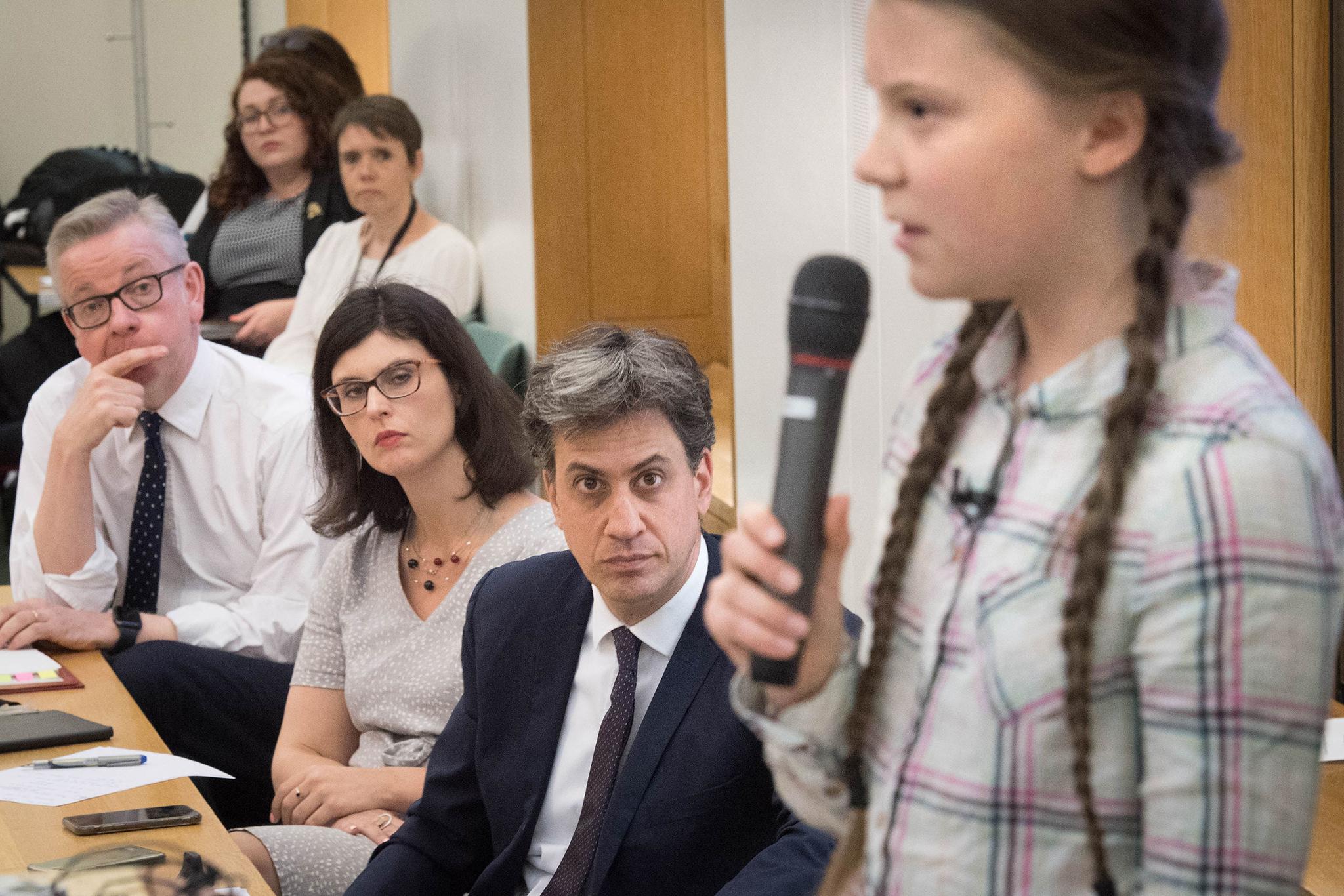
WASHINGTON, DC – SEPTEMBER 17: Greta Thunberg, the 16-year-old climate change activist from Sweden, casts a wary eye on Sen. Edward Markey during a Senate Climate Change Task Force meeting on Capitol Hill. (Photo by Mark Wilson/Getty Images)
GETTY IMAGES
Greta Thunberg’s rebuke of Congress last week took no prisoners and showed no favor to heroes of the left who have styled themselves friends of the environment.
Though Thunberg did not utter the words “Green New Deal,” she characterized partisan efforts that envision an idealized future as unhelpful dreams, and her criticism culminated in these words:
“No matter how political the background to this crisis may be, we must not allow this to continue to be a partisan political question. The climate and ecological crisis is beyond party politics. And our main enemy right now is not our political opponents. Our main enemy now is physics. And we can not make ‘deals’ with physics.”
The Achilles’ Heel of the Green New Deal is that it deploys the climate crisis as a liberal cause, which ensures conservative opposition.
The climate crisis is a universal cause.
Conservatives need a way to get on board. It’s difficult for them to support a policy that evokes the New Deal. And conservative opposition will relegate the Green New Deal to the realm of fantasy at least until a cataclysm arrives like the one that inspired the original New Deal.
To explain Greta’s sudden, global impact, people have begun speaking of her superpowers. One might be that at 16 she understands political reality better than some who have spent their lives in politics.
PROMOTED
Best Labor Day Sales 2019: Shop Deals on Home, Tech, Fashion and More
UNICEF USA BRANDVOICE
Ebola Crisis In DRC Declared A Public Health Emergency
UNICEF USA BRANDVOICE
Family-Friendly Policies: A Winning Investment For Children And Society
Massachusetts Sen. Edward Markey has been in Congress more than 40 years, often leading the climate charge there, if we can call it a charge. Markey is one of the good guys on climate, by all accounts, one of the best. I’ll long remember the night he and I walked out of the Copenhagen Climate Conference at the same moment and strolled together toward the bus stop. How nice, I thought, Markey is taking the bus. But halfway there a long black limousine sidled up to the curb and Markey climbed in. You see, he’s no Greta.
Maybe that mixture of partisan fantasy and convenient compromise explains why Markey, climate’s champion in Congress, hasn’t gotten the job done. It is perhaps why even in a Democratically-controlled Congress, with a Democratic president, the Waxman-Markey Bill failed. His Green New Deal may get us no closer.
Greta:
“Wherever I go I seem to be surrounded by fairytales. Business leaders, elected officials all across the political spectrum spending their time making up and telling bedtime stories that soothe us, that make us go back to sleep. These are ‘feel-good’ stories about how we are going to fix everything. How wonderful everything is going to be when we have ‘solved’ everything. But the problem we are facing is not that we lack the ability to dream, or to imagine a better world. The problem now is that we need to wake up. It’s time to face the reality, the facts, the science. And the science doesn’t mainly speak of ‘great opportunities to create the society we always wanted’. It tells of unspoken human sufferings, which will get worse and worse the longer we delay action – unless we start to act now. And yes, of course a sustainable transformed world will include lots of new benefits. But you have to understand. This is not primarily an opportunity to create new green jobs, new businesses or green economic growth. This is above all an emergency, and not just any emergency. This is the biggest crisis humanity has ever faced.”
Greta can’t remember the last time we learned this lesson about partisanship, because she hadn’t been born yet. But Markey must remember it.
The Republican Party used to support climate action. We owe our participation in the Paris Agreement not just to Barack Obama, who committed us to it, but to George H.W. Bush, who ratified the treaty that created the United Nations Framework on Climate Change.
But when Al Gore ran for president in 2000, climate change became a partisan issue, and the climate denialism that had been lurking in damp, self-interested corners of the culture went mainstream in the Republican Party. What better way to discredit the candidate they called “Ozone.”
Before long, Republicans could scarcely admit that science was true without being ousted from office by the Tea Party. And now denialism is personified in the Commander in Chief.
That’s what partisan politics gets you.
So Greta resists the temptation to side with the friendlies. It was Obama who told Greta, over a fistbump last week, “You and me, we’re a team.” And though Greta went along with that, she didn’t change her message.
Moments later, speaking to Obama’s Capitol Hill allies, including Markey, she said, “I know you’re trying, but just not hard enough.”
To me, Greta’s most important superpower is her integrity. She’s not going to take a limo back to the hotel. She’s not going to compromise for convenience. She’s not going to compromise for feel-good friends or would-be allies. She’s not going to seduce us with utopian palliatives. She’s going to keep telling the truth.
She sailed here just to insist that we read and heed the science.
Integrity secures her a place in the history of activism. For a quality so simple, so straightforward, she appears in the company of lions of non-violence, endurance and compassion—Gandhi and King, Mandela, Mother Theresa and Tenzin Gyatso—this prescient Swedish teen with an uncompromising call for us to hear the unvarnished truth.
But she doesn’t want our praise. She wants us to take real action. Let’s do.
US Representative Alexandria Ocasio-Cortez, Democrat of New York, and US Senator Ed Markey (R), Democrat of Massachusetts, speak during a press conference to announce Green New Deal legislation to promote clean energy programs outside the US Capitol
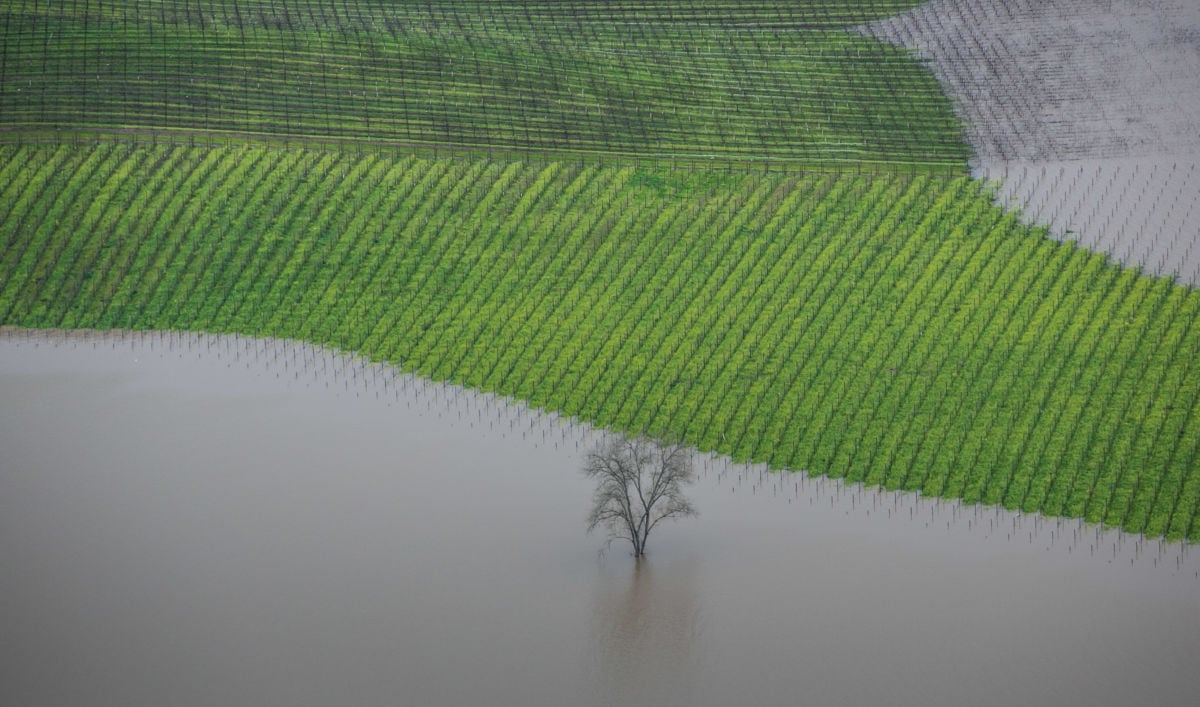
Vineyards and farmland along the Russian River near Healdsburg, California, are inundated by widespread flooding following days of torrential rain as viewed on January 11, 2017.GEORGE ROSE / GETTY IMAGES
Climate change action plans often call for less fossil fuel usage, reduced carbon dioxide emissions and a shift toward renewable energy sources. But one area that hasn’t received the broader attention it deserves is industrial farming.
The latest report released by the Intergovernmental Panel on Climate Change (IPCC) determined that the turning over of more and more land to commercial agriculture has resulted in increasing net greenhouse gas emissions, the loss of natural ecosystems and declining biodiversity. And so, “sustainable land management can contribute to reducing the negative impacts of multiple stressors, including climate change,” the report finds.
This IPCC offering followed on the heels of the National Academies of Sciences study into negative emissions technologies and carbon sequestration, which also found that efforts to store more carbon in agricultural soils generally have “large positive side benefits,” including increased productivity, water holding capacity and yield stability.
According to the Environmental Protection Agency (EPA), agriculture accounts for 9 percent of national greenhouse gas emissions, though others argue that number should be larger when taking into account the “food system” as a whole. But the broader role agriculture plays in driving climate change is complex. Soils can hold about three times more carbon than the atmosphere, for example, and intensive industrial farming has led to massive amounts of carbon loss from the world’s agricultural soils. How much untapped potential is there beneath our feet?
The pathway toward more sustainable farming practices, however, is one littered with all sorts of cultural, political and economic obstacles. On top of that, there’s one very powerful political force actively stymieing efforts toward that end, and that’s the agribusiness behemoth, which spends more on lobbying than even the defense sector.
Lara Bryant, deputy director of water and agriculture within the Nature Program at the Natural Resources Defense Council, told Truthout the voices of those leading the regenerative farming movement are not being heard by lawmakers in Congress.
“And that includes lawmakers in all parties,” she said.
How the Farm Bureau Pushes Destruction Practices
At the vanguard of the agribusiness political armament is the American Farm Bureau Federation, the single largest farm lobby in the nation and the self-described “voice of agriculture.” The Farm Bureau makes clear its stance on climate change, opposing regulatory measures that corral mainstream public and political support — cap-and-trade provisions, for example, or laws requiring agricultural entities to report their greenhouse gas emissions.
The Farm Bureau uses its political clout to actively shape climate change policy, closely aligning itself with the fossil fuel industry, in which it has extensive investments. The Farm Bureau played a vital role in quashing a comprehensive energy and climate bill — one that would have capped climate emissions — early in President Obama’s tenure, for example, and vehemently opposed his Clean Power Plan.
In 2001, the U.S. pulled out of the Kyoto agreement, which attempted to set internationally binding emissions reductions targets. “The Farm Bureau was absolutely critical in derailing Kyoto,” Stuart Eizenstat, President Clinton’s chief U.S. negotiator on the Kyoto Protocol, told InsideClimate News.
The many-tentacled Farm Bureau also throws its weight behind the Department of Agriculture’s crop insurance program, a safety net for farmers during market fluctuations, and for those who have lost crops through things like drought and flooding. Critics argue that the program performs a necessary function but offers few incentives for farmers to abandon the intensive farming practices that are exacerbating global warming.
The crop insurance program, said Bryant, is “reliant on yield” and on having a “history on your land of growing a certain crop” so that only a small number of crops receive the bulk of the subsidies for crop production. This offers farmers little reason to invest in crop diversity, an integral component of sustainable farming, said Bryant. “Farmers might feel trapped on growing the same things over and over again like a factory,” she added.
Seth Watkins, a regenerative farmer in Iowa who raises livestock alongside hay and corn crops for feed, believes the program incentivizes farmers to cultivate land as intensively as possible, including wetlands and highly erodible lands unsuited for farming. Indeed, as much as one-third of Iowan farmland that is used for corn and soybean is unprofitable, a recent study finds. “We need to take a giant step back and ask ourselves, ‘why are we doing this?’” Watkins said. “Why are we trying to raise cops on these hills where the only profit comes from this federal crop revenue? Our grandparents wouldn’t have done it.”
More broadly, in its resistance to a regulatory approach to fighting climate change, the Farm Bureau is ideologically aligned with the current administration, which actively suppresses climate change science in a number of ways.
“A Movement With Growing Power on Its Own”
The movement toward more sustainable agriculture is a daunting proposition, further complicated by a farming landscape shaped by increasing land commodification, agribusiness mega-mergers, and flatlining public funding of agricultural research and development.
A recent Environmental Defense Fund analysis of family farm budgets from across the Midwest finds that conservation practices can drive economic value, but at the same time, farming margins remain relatively slim. Indeed, in his book, Eating Tomorrow, environmental writer Timothy Wise describes the situation in Iowa, where an increasing amount of land appears to be owned by non-farmers, including Wall Street investors. “I can’t say I get it,” he writes. “The farmland prices sure look and smell like a bubble waiting to burst, and the returns are terrible, and unlikely to be made better by smart-ass city managers.”
On top of that, mergers like that between Monsanto and Bayer “send a very loud message that we haven’t been able to figure out a way to have any new innovation that helps people,” said Watkins. “We haven’t figured out a way to really come up with something to revolutionize the industry, so instead, we just merge our two companies to keep a bigger share of the profit.”
Consolidation isn’t confined to crop production — rather, it has given rise to factory farming, and Concentrated Animal Feeding Operations. Just four companies accounted for 85 percent of the nation’s beef packing industry in 2015, for example. But as the Coller FAIRR Protein Producer Index has discovered, companies like these are largely failing in their responsibilities to tackle climate change.
The index ranks 60 of the world’s largest global meat, dairy and fish producers in terms of risk factors like use of antibiotics, deforestation and greenhouse gas emissions. According to the index, only one in four meat, fish and dairy producers measures its greenhouse gas emissions, and none of the 50 meat and dairy companies examined have a deforestation policy. This, despite the livestock industry being the largest driver of habitat loss worldwide.
All of which explains why Bryant believes lawmakers need to hear a wider array of voices outside those of the politically powerful agribusiness sector. “When I go and listen to the farmer conferences, the farmers are getting word out to each other, and that’s happening independent of Washington and the USDA,” she told Truthout. “It’s a movement with growing power on its own.”
Internationally, initiatives like 4 per 1000 and Soil4Climiate are geared toward governments and a wide coalition of organizations in an effort to broaden the impact of restorative farming. In the U.S., what’s striking is the diversity of approaches undertaken. Brown’s Ranch in North Dakota, for example, employs a variety of “holistic” farming practices. Meanwhile, just over the state border in South Dakota, buffalo ranchers are tackling desertification of the Great Plains. Their efforts are having an impact.
And yet, Bryant added, “If that movement had more help from USDA, from lawmakers in Congress; if more farmers were able to hear how these [other] farmers are making things work, and if more consumers knew… how to make better choices in the food that they purchase, I think we would see a much bigger change.”
This story is part of Covering Climate Now, a global collaboration of more than 220 news outlets to strengthen coverage of the climate story.








/cdn.vox-cdn.com/uploads/chorus_image/image/65325705/1170487570.jpg.0.jpg)



:no_upscale()/cdn.vox-cdn.com/uploads/chorus_asset/file/19234041/1169849395.jpg.jpg)











 Exposing the Big Game