The White House booked a room so Trump could attend a gathering in the same building as the UN climate summit.JABIN BOTSFORD / THE WASHINGTON POST VIA GETTY IMAGES
Donald Trump is set to attend the United Nations headquarters during Monday’s key summit on the climate crisis – but will be there to take part in a meeting on religious freedom instead.
A senior UN official confirmed to the Guardian that the White House has booked one of the large conference rooms in the New York headquarters on Monday so that the president can address a gathering on religious freedom.
The move is likely to be seen as a blatant snub to the UN climate summit, to be held in the same building on the same day. Leaders from around the world, including the UK prime minister, Boris Johnson; France’s president, Emmanuel Macron; and India’s prime minister, Narendra Modi, are expected at the summit as part of a major UN push to heighten the response to the escalating climate crisis.
“No one was really expecting the president to come to the climate summit,” the official said. It’s understood that senior UN staff have realistic expectations of Trump and do not expect him to engage on the climate crisis, even for a summit held in his home town. Trump has vowed the US will withdraw from the landmark Paris climate agreement.
“He’ll clog up the whole system,” said Mary Robinson, former Irish president and ex-UN high commissioner for human rights. “He won’t go to the climate summit and he wants the distraction factor, I suppose.”
Even if Trump were to attend it is unlikely he would have been called to the podium to speak. Representatives from about 60 countries are expected to address the UN on Monday on the further commitments they are making to slash greenhouse gas emissions and deal with the flooding, storms and other impacts of global heating.
The speakers will outline “only the best plans, only the most committed leaders will be on the stage”, according to Luis Alfonso de Alba, the UN’s special envoy for the climate summit.
Still, Trump’s presence in the UN building, at a time when climate protests swept around the world on Friday, will prove provocative. “Not participating and yet showing up at the building is throwing down a gauntlet,” said David Waskow, director of the International Climate Initiative at the World Resources Institute.
“It’s most importantly a snub to the young people pleading for action on climate change. Donald Trump has made very clear internationally and domestically he has no interest in the science or this issue. It’s up to the rest of the world to get on with its business.”
The Guardian has contacted the White House for comment.
A farmer named Haladu grooms shoots to become new trees in a Farmer Managed Natural Regeneration zone in Gangara, a village in the Republic of Niger’s Maradi Region.TONY RINAUDO / FOOD SECURITY AND NATIONAL RESOURCES TEAM, WORLD VISION AUSTRALIA
Reading these headlines, I’m tossed back to the late ’60s when our culture was gripped by what I came to call the “scarcity scare,” as Paul Ehrlich’s ThePopulation Bomb exploded into public consciousness spewing images of mounting hunger.
Really? Areour unstoppable numbers dooming us? I had to know.
Obsessed with a desire to share this discovery, in 1971 I wrote Diet for a Small Planet to expose and help transform our scarcity-creating food system.
Yet today, we seem not to have learned.
The world now produces more than enough food for each of us — 2,900 calories a day, roughly a third more than in 1961. And that’s just with the “leftovers” — with what remains after a third of the world’s cropland goes into feeding livestock, a practice that shrinks the calories available to us.
This summer, the UN’s Food and Agriculture Organization revamped its hunger counts. To its “severe” food insecurity estimate of 821 million, it added a category “moderate food insecurity,” and it reported that 2 billion of us — one-quarter of humanity — are food insecure. We’re either lacking calories we need or we’re unsure about our continued access to enough; or we’re forced to reduce the quality and/or quantity we eat just to “get by.”
Intensifying the crisis is a related global trend: Calories and nutrition are parting ways as corporate, processed food floods the planet. Even two decades ago in rural India, I saw along the roadway whole groves of Eucalyptus trees whose trunks were painted with huge Pepsi ads.
One result of this disconnect between eating enough calories and getting the nutrients we need is that more than a fifth of young children worldwide experience stunted growth, a condition bringing life-long harms; and a third of us suffer from anemia, doubling the risk of maternal death and, in infants, associated with ongoing mental and psychomotor impairment.
That’s where a narrow focus on increasing food production, reinforced by the “scarcity scare,” has helped take us.
Now, nearly half a century since my own life-altering aha moment, the UN’s new Intergovernmental Panel on Climate Change (IPCC) report, “Climate Change and Land,” has triggered another frenzy of worry about our food supply.
Running over 1,500 pages, the report itself offers vital understanding of how the climate crisis threatens our food supply and quality; and, at the same time, how farming, eating and food waste contribute between 25 percent and 30 percent of total greenhouse gas emissions. (Livestock alone, I learned elsewhere, contribute 14.5 percent of such emissions globally.) The report also helpfully identifies ways that reworking our food system can become part of the solution to climate change.
You’d think I’d be thrilled that a key takeaway in this new report is that cutting back on grain-fed meat would trim greenhouse gas emissions as well as lessen pressure on our food supply. After all, wasn’t the latter the whole point of my book, Diet for a Small Planet?
Well, no … and yes.
First, the “no.”
In my first book I sought to awaken readers to the destructive and inefficient channeling of so much land and water into livestock.
Inefficient? Yes, very. As Americans, we imagine our farming as the best — the most modern and efficient. Yet, in large measure because of our meat-centered diets, as well as so much corn going to agrofuel, it feeds fewer people per acre than does Indian or Chinese agriculture.
Most important, I wanted my readers to see how the rules of our political and economic system were twisted to serve a minority, undermining food security.
So, for me, choosing a plant-and-planet-centered diet became an act of rebel reason. I’d reframed the hunger crisis: Its root is not scarcity of food but scarcity of democracy. And I wanted my daily choices to reject the illogic of our anti-democracy system.
On many levels, we still do not see this core truth.
The IPCC report, for example, lays out five scenarios, two of which could eliminate malnutrition by 2050. Among the necessary ingredients to get us there it mentions “high income and reduced inequalities, effective land-use regulation, less resource intensive consumption [i.e. less grain-fed animal food], including food produced in low-GHG emission systems and lower food waste.”
Together, taking such steps constitute an about-face on multiple fronts — one that’s conceivable only in a democracy where public policies serve what our constitution’s preamble calls the “general welfare.” By democracy I mean both the small “d” variety that includes community and worker empowerment; and I mean the formal, capital “D” variety, i.e., government accountable to citizens.
First, consider the “small d” variety and climate solutions. Perhaps the most dramatic success story for me — and missing in the IPCC report — is the work of poor but empowered farmers cooperating to transform their lives and confront climate change in Niger, the world’s poorest country, which is mostly desert.
In just a few decades, Niger’s farmers have rehabilitated 12.5 million acres by managing the natural regeneration of 200 million trees that sequester carbon, improve soil fertility, often double crop yields, as well as provide livestock fodder and firewood — all ensuring food security for 2.5 million people.
Niger’s progress — led by small farmers together making and enforcing rules — has been celebrated as perhaps the largest regreening transformation in all of Africa. Now, many other nations are interested in adapting the approach; and related farming breakthroughs are arising in India and elsewhere.
And, now to capital “D” democracy essential for governments to face the climate emergency and end needless hunger.
Democratic government is under attack in much of the world, and here in the U.S. to a degree unprecedented in my lifetime. But something else feels new: a growing citizens’ Democracy Movement focusing on remaking the anti-democratic rules and norms that brought our nation to climate-denier status and even wider dysfunction.
In Daring Democracy, Adam Eichen and I share stories of this movement that has changed our lives and is achieving vital breakthroughs, sadly missing from the headlines. In the 2018 midterm elections alone, many who’d never been politically engaged helped pass key democracy reforms in nine states, eight cities and one county — ranging from those addressing gerrymandering to protecting voting rights. For me, the future of our precious Earth depends on more and more of us jumping in to achieve such system-correctives to what can accurately be called “privately held government.”
But, now to my “yes” — to why I’m psyched that the IPCC report emphasizes choosing plant-and-planet-centered diets and how my democracy obsession relates to what I put into my mouth.
Consciously eating what is good for my body, for others, and for our planet is a choice that changes me — daily. It keeps me in a relational world, reminding me that the only choice I don’t have is whether to change the world. I know that every act and inaction send out ripples. Someone is always watching.
I often think of it this way: Making positive daily choices based in consciousness of connection doesn’t “change the world,” but the process changes me. I become more convincing to myself, so maybe I become more convincing to others: a stronger agent in the collective struggle to change the world. Just this morning, a stranger approached me to tell me that my first book had started her on a “new path.” Who knows, but I can hope her experience has been similar to mine.
I want a world where we all can experience such power. And in working for a fairer, inclusive democracy, we are enabling more and more of us to have this satisfaction: that of making choices that are both good for us and the planet.
So, yes, I’m psyched that the IPCC report includes plant-and-planet-centered diets as part of the solution, and we need not let fear trap us into another regressive scarcity scare that obscures the roots of the crisis in anti-democratic economic and political rules.
Instead, we can work to ensure that personal choices we can make to align with nature fortify our determination to dig still deeper, aware that fighting for real democracy is fighting for tackling climate change and the end of hunger.
This story is part of Covering Climate Now, a global collaboration of more than 220 news outlets to strengthen coverage of the climate story.
OVER THE NORWEGIAN SEA, Norway(Reuters) – Banking hard over the whitecaps off the west coast of Norway, the jetliner flying Dominika Pasternak and her fellow scientists descends so sharply that it seems for a moment as if the crew is about to ditch them all in the drink.
But the pilot, an unflappable veteran of Britain’s Royal Air Force, conveys a done-this-a-thousand-times confidence as the aircraft levels off at a nerve-shredding 50 feet above the Norwegian Sea.
“Three, two, one,” he advises over the intercom. “Now!”
And so begins the work of this giant airborne laboratory – a four-engine, 112-seat passenger plane stripped out and refitted with sensors that suck in air samples for analysis in real time.
Although they squint through the cabin windows as the plane makes its pass, Pasternak, 23, and her colleagues are chasing a quarry they will never actually see: methane, an invisible gas that poses a growing risk to the Earth’s climate.
When the United Nations hosts a summit in New York on Monday to try to shore up the 2015 Paris Agreement to curb global warming, calls to cut emissions will focus on a more familiar greenhouse gas – the carbon dioxide produced by burning fossil fuels.
But methane, another carbon-based compound, is emerging as a wild card in the climate-change equation. If CO2 has a warming effect akin to wrapping the planet in a sheet, the less-understood methane is more like a wool blanket.
Emitted from sources such as thawing permafrost, tropical wetlands, livestock, landfills and the spidery exoskeleton of oil and gas infrastructure girdling the planet, methane has been responsible for about a quarter of manmade global warming thus far, some models calculate.
For more than a decade, scientists have been documenting a mysterious rise in levels of methane in the atmosphere. And it’s getting worse: Earlier this year, data from the U.S. National Oceanic and Atmospheric Administration showed that the rate of the increase surged by 50% in the 2013-2018 period compared with the preceding five years.
But the very urgency of the methane threat is also, paradoxically, what gives some scientists hope. Because methane is acting like a foot on the accelerator for climate change, then rapidly reducing the amount leaking from oil and gas facilities could, at least in theory, ease the pressure on the environment. That could buy time to confront the much bigger challenge of cutting emissions of CO2.
In the United States, environmental groups have sought to bring methane emissions down by pushing the growing fracking industry to take more stringent measures against leaks of the gas. But last month, the Trump administration proposed rolling back Obama-era regulations to curb methane emissions, saying the move would save companies money and remove red tape.
As the clock ticks, a network of researchers the world over is racing to find out why global methane levels are increasing so fast – and what can be done to stem the flow.
Here in the Arctic Circle, which is warming three times faster than the global average, Reuters accompanied three women in their 20s as they hunted for clues. Working separately but with the same goal, these researchers have staked their claim on a place where some of the most dramatic climate changes are starkly visible, and the biggest dangers may await.
ADVERTISEMENT
In their painstaking, sometimes solitary work, the young scientists wrestle with the intellectual challenges posed by the methane riddle. But for all three women, their work in the Arctic connects them to something deeper than science: a return to childhood joys of the natural world, and a powerful sense of purpose.
Pasternak, wearing a white T-shirt bearing the words “Climate: The Fight of Our Lives” and a stylized image of the Earth engulfed in flames, is clear-eyed about the stakes.
“I think it’s terrifying how much we are changing our planet, and how little is really done to counteract it,” she says. “We are guessing, but the more measurements we actually have, the better we can understand what’s going on.”
THE HUNT BEGINS
As the jet races over the waves, Pasternak’s gaze flickers between the cabin window and her laptop, which displays a rolling graph of data recorded by the plane’s instruments.
The clipped voice of the pilot, laconic as ever, crackles over her headset, “I can see rigs on the left.”
Pasternak, a Polish PhD student in atmospheric chemistry at Britain’s University of York, focuses on the target: a cluster of oil rigs rising from the sea like fortresses, their squat legs supporting imposing superstructures of derricks, helipads and cranes.
Operated by the Natural Environment Research Council, a British government science funding agency, the flight is one of a series of sorties that Pasternak and colleagues from several universities conducted in late July and early August from Kiruna, an iron mining town in the Lapland region of northern Sweden.
The plane moves in a deliberate path, passing back and forth at different altitudes to build up a profile of the atmosphere downwind of the rigs below. Securely strapped in against the G-force at low altitudes, Pasternak and the other researchers confer over headsets and monitor the readings scrolling across their screens for any sign of a spike in methane levels. Their concentration is palpable, chatter kept to a minimum in the rigours of low-level flight.
But after hours of methodically surveying the rigs, there is no sign of the kind of methane cloud they detected billowing from another platform the day before.
Frustratingly for Pasternak, the aircraft also narrowly missed a giant supertanker, its bright red hull bulging with domes used to store liquefied natural gas.
“They unfortunately got out of our range now, which is a shame,” says Pasternak, who had hoped to take a methane reading near the vessel. “They are hard to catch because they are very specialized ships.”
For Pasternak, the flight is more than a research trip: It’s the realization of a childhood dream. Growing up on a hillside outside the city of Krakow, she would awake to see a layer of pollution settled over the city like a shroud, then brave the smog to go to school in the valley below. Escaping to the pristine Bieszczady Mountains for horse-riding summer camps or to the old-growth Białowieża Forest, Pasternak promised herself she would find a way to protect the environment by pursuing a career in science.
FILE PHOTO: Methane bubbles are seen in an area of marshland at a research post at Stordalen Mire near Abisko, Sweden, August 1, 2019. REUTERS/Hannah McKay
As the plane makes its way back to its temporary base in a hangar in Kiruna, she is sober about the uncertainties.
“Not many people paid attention to methane until quite recently,” she says. “We don’t know enough about it to be able to tell how dangerous it is, but we suspect it’s very dangerous.”
TIPPING POINT
Although the Italian inventor Alessandro Volta is better known for designing an electric battery, he is also credited as the first scientist to identify methane, or CH4. Collecting gas seeping from the marshes on Lake Maggiore in 1776, he later showed the gas could be ignited with a spark.
More recently, scientists have quantified methane’s potency as a greenhouse gas. Although it is much less prevalent in the atmosphere than CO2, the scientists found, it can generate more than 80 times more warming – molecule for molecule – than CO2 in the 20 years it takes to dissipate.
Today, there is broad agreement on the trend showing a surge in methane levels, but there is far less consensus on why it’s happening. Although oil and gas facilities are the leading industrial source of methane, scientists believe that growing amounts of the gas seeping from tropical wetlands in Africa and South America could be the biggest single driver of the current methane surge.
As the burning of fossil fuels pushes global temperatures higher, methane-spewing microbes in fast-warming soils near the equator are going into overdrive, causing the wetlands to emit more of the gas. These emissions in turn feed more warming, in a vicious circle. Climate scientists call such loops “positive feedbacks” – although their effects are anything but.
In the long term, the Arctic could be just as dangerous. As the permafrost thaws, dormant microbes find themselves immersed in the perfect warm, wet conditions to begin producing methane in climate-altering quantities, just like their tropical cousins.
“The methane is then going to mix around the world multiple times,” says Ruth Varner, director of the Earth Systems Research Center at the University of New Hampshire, who runs a long-term methane study. “What happens in the Arctic doesn’t stay in the Arctic.”
A LONELY VIGIL
In winter darkness, meters of snow cover Stordalen Mire, a spongy patch of Swedish peatland about an hour’s drive from Kiruna Airport. The ice on a nearby lake is so thick you can confidently scoot across it on a snowmobile.
But in summer, the snowpack recedes to slithers on distant peaks, wispy heads of cottongrass peek through the soil, and the sun rarely sets. On such a day, Kathryn Bennett, 22, can be found pulling the oars of a rowboat.
On the shore, bogs lie in wait for anyone who strays too casually from a precarious series of walkways made from planks.
“I have fallen in clear to the waist,” says Bennett, a postgraduate student in earth sciences from Medway, Massachusetts, and a member of the methane research program at the University of New Hampshire. Although she laughs, her expression suggests the dunking was amusing only in retrospect.
ADVERTISEMENT
If Pasternak is serving in the air wing of the methane army, then Bennett is one of the grunts – picking her way across the bogland day after day and kneeling at the water’s muddy edge, where tiny bubbles of methane burp periodically from a surface with a texture like used coffee grounds. Syringe in hand, she extracts samples of gas accumulating in floating, foam-reinforced funnels, which she will later test to determine how much methane they contain.
A few locals pass by in the distance picking cloudberries, and a dragonfly zips in jagged loops over the brackish water. Bennett keeps half an eye out for antlers, having been startled and delighted to see a couple of moose cooling off in the marsh two days before.
“It’s so wild out here, you never know what you’re going to run into,” says Bennett, who traces her love for the outdoors to a childhood growing up camping and catching frogs.
Even to a first-time visitor, something about the landscape at Stordalen doesn’t look right. The walkways have subsided in places as the ground has given way, meaning Bennett’s footfalls sometimes splash in the stagnant water – which she says has crept a little higher than during her fieldwork the previous summer.
The slumping is a sign that the underlying layer of permafrost that once kept the ground rock solid has started to thaw. On drier patches of ground, long, narrow cracks have appeared. In the marshland, new ponds have formed.
Researchers in other parts of the Arctic are witnessing similar changes. A team from the University of Alaska Fairbanks reported earlier this year how amazed they had been to find millennia-old permafrost in Canada thawing 70 years earlier than models had predicted, leaving depressions resembling those at Stordalen.
“If this continues to happen, we can’t turn it off,” Bennett says, her concern suddenly audible in her voice as she pauses by one of the bogs. “You can’t just flip a switch and switch to an electric car or solar panels. You can’t just stop the permafrost from thawing, because it’s already begun, which we see very clearly in places like this.
“Then it becomes: ‘Well, what can we do?’ As scientists, what we can do is just try and understand this system and make better predictions about how it’s going to change in the future.”
Although she draws some comfort from the contribution she’s making to understanding methane’s role in climate change, she’s also keenly aware that even by flying to Sweden from the United States, she’s adding to the emissions that cause it.
“Seeing really dramatic changes like this makes me think a lot harder about the individual choices that I make and think about how can we get other people to care,” she says, nearing the end of a nine-week stint in Lapland. “It hurts me to think that I fly all the way over here to study this, but then it’s so important to tell people this story, to understand, and tell people about what’s happening here.”
A CLIMATE “LEVER”
Climate scientists say the world must rapidly wean itself off its dependence on fossil fuels to stand a chance of averting the worst effects of rising temperatures. In the United States, oil companies argue that they can support a wider transition to renewable energy by providing natural gas from the fracking industry as a “bridging” fuel. Gas has already displaced much of the country’s coal-fired power generation, which produced more CO2.
But studies suggest that about 2-3% of natural gas escapes as methane during production, storage and transport – exerting significant short-term warming.
Alex Turner studies methane as a postdoctoral fellow in atmospheric chemistry at the University of California, Berkeley. Because methane is such a fast-acting, relatively short-lived warming agent, cutting leaks of the gas would have a quick impact on the climate system, Turner argues. That might help prevent runaway climate change from kicking in before the world has managed to control CO2 emissions – by far the biggest driver of long-term global warming.
Slideshow (24 Images)
“Of the greenhouse gases, methane is a really big lever on near-term climate change,” Turner says. “Large fractions of emissions tend to come from a small number of sources, and if you can find those sources that emit a lot of methane, you might be able to make a huge dent in the total emissions.”
In 2012, a network of governments, scientific institutes, businesses and civil society groups founded the Climate & Clean Air Coalition to curb emissions of powerful, short-lived pollutants such as methane. Since then, the U.N.-backed network has funded research around the world, including Pasternak’s flight this summer.
Some big oil companies say they’re taking the problem seriously. Under pressure from activists and investors to show it is doing more to tackle emissions, British oil major BP Plc just announced plans to use cameras, drones and robots to try to detect and prevent methane leaks at facilities around the world, for example.
“We are wanting to do continuous measurements and monitoring in all our future big projects,” says Gordon Birrell, a chief operating officer at BP.
But some smaller drilling companies say they lack the resources that the majors can bring to bear on the methane problem.
“There are certainly countries and firms that are very resistant, but the issue has started to gain real momentum, almost from a standing start just a few years ago,” says David McCabe, a senior scientist at the Clean Air Task Force, a U.S. advocacy group. “It’s a case of trying to speed that up.”
FIGHT FOR SURVIVAL
Clad in a khaki shirt and shorts like an old-school explorer, Nina Lindstrom Friggens sets off through the dwarf willow shrubs clinging to a lakeside near the northern Swedish village of Abisko. Her mission: to understand how the hidden lives of trees will influence the future of the climate.
Kneeling at the base of a mountain birch, a stunted tree adapted to survive the Arctic’s incessant cold and wind, she flicks open a saw-toothed pocketknife and begins to dig.
Delicately, she lifts a lattice of roots between forefinger and thumb and uses the knife tip to point out minute white sheaths that have formed over the finest filaments: fungi that live symbiotically with trees under the soil.
The 26-year-old Danish-British ecologist has always been fascinated by Arctic landscapes, in part thanks to her childhood love of Philip Pullman novels set in frozen Norse fantasy worlds. Unlike Pasternak and Bennett, who are methane hunters to the core, Lindstrom Friggens works on a broader carbon canvas, working to piece together the interplay between soil, ice and vegetation that will determine how quickly greenhouse gases seep from these northern lands.
The fungi she studies form a biological version of the internet – what scientists have nicknamed a “wood-wide-web” – that allows trees to swap chemical signals and nutrients. As the Arctic has warmed, it has also increasingly turned from white to green, as saplings gain a foothold in the depressions left as the permafrost thaws.
That’s good news in terms of methane, because tree-covered land is likely to emit less of the gas, says Lindstrom Friggens, a PhD student in plant-soil ecology at Scotland’s University of Stirling. But there’s a big catch: The expanding root networks help to rapidly decompose ancient subsoil stores of carbon into vast quantities of CO2, setting new feedback loops in train.
How quickly thawing permafrost could push the Arctic’s production of methane into overdrive is still a subject of speculation. But the impact of warming on the region was made vividly clear earlier this month, when scientists jolted Swedes by announcing that the south peak of Kebnekaise, the large mountain not far from where Lindstrom Friggens was conducting her research, had been dethroned as the country’s highest peak.
ADVERTISEMENT
The glacier on the summit, which generations of Swedish schoolchildren have considered a permanent, majestic fixture of Scandinavia’s natural heritage, melted so much that it is now lower than the mountain’s ice-free northern peak.
Reflecting on the prospect of far greater climate impacts, Lindstrom Friggens finds solace in nature’s ability to endure.
“I quite like that it’s bleak and it’s rough; there’s a beauty in that somewhere – that struggle to survive in an environment which is throwing everything at you all the time,” she says.
A seagull glides low over the lake, and the immense landscape of water, sky and rock feels almost unfathomably old. A raw life force seems to hum inaudibly in the Arctic silence as Lindstrom Friggens reaches a path leading back to the research station that is her temporary home, where she will watch the endless summer days start to shorten.
“There’s so much life, yet it’s so harsh to survive here,” she says. “But it perseveres.”
Bremerhaven, Germany — Three hundred scientists have been training in sub-zero temperatures in preparation for the trip of a lifetime. They will spend months trapped in sea ice, as part of a year long Arctic expedition, called MOSAiC, studying the effects of climate change. The expedition sets off from Norway on September 20.
“We are looking at creating a whole picture of what the Arctic is going to do in the coming years,” said Alison Fong, who heads up MOSAiC’s ecosystems research team.
Polar bears are a major concern, and she might have to swap her microscope for a rifle scope.
“All of our scientists are trained in polar bear safety, which includes carrying a rifle for protection. When we work in remote sites on the ice, we will take small electrical fences with us and personnel carrying rifles and flare guns and other types of safety equipment,” Fong said.
Home base is a German icebreaker, the Polarstern. It will be fitted with scientific equipment, turning it into a floating laboratory.
The Polarstern will serve as home base for scientists studying climate change in the Arctic. CBS NEWS
What happens in the Arctic doesn’t stay in the Arctic. It’s generally considered an early warning system for the impact of climate change, and scientists are hoping the expedition on this ship will raise their understanding of it to a whole new level.
Getting a taste of what lies ahead, the scientists practiced using a remotely controlled device which measures light through the ice, and drilling through the core to assess ice thickness.
The Arctic is warming faster than anywhere else on Earth but scientists have never been able to conduct research in the remote northern parts of it during winter. Now they will attempt an unprecedented scientific mission. The crew will sail close to the North Pole, cut the engine and wait for water to freeze around the vessel. They will then simply drift with the ice flow.
“You have seen that in the U.S. at the beginning of this year when the snowstorms and blizzards went down to Florida — that is all driven by climate change in the Arctic, and we need to understand that to understand how our extreme weather in the future will look like,” said Markus Rex, the expedition leader.
Scientists will brave the Arctic in order to study the effects of climate change. CBS NEWS
Mental fortitude during this mission is a formidable challenge. The scientists are bracing themselves for long periods of total isolation and complete darkness. In the winter months they will never see daylight. But freezing yourself in ice is worth it, they believe, if it helps save humanity from the extreme consequences of a warming world.
CBS News, along with more than 250 news outlets worldwide, is participating in the Covering Climate Now project, a joint initiative founded by the Columbia Journalism Review and The Nation magazine. CBS News, the only broadcast network, is devoting this week to covering climate change, leading up to the United Nations Climate Action Summit in New York on September 23.
The world is drifting steadily toward a climate catastrophe. For many of us, that’s been clear for a few years or maybe a decade or even a few decades.
But others have known that a reckoning was coming for much longer. A Swedish scientist first calculated in 1896 that adding carbon dioxide to the atmosphere could lead to warmer global temperatures. By the 1930s, scientists were measuring the increase, and in the late 1960s, they had documented the impact of melting ice in Antarctica. By 1977, Exxon-Mobil had recognized its own role in the warming of the ocean, the polar ice melt and the rising sea level.
For obvious reasons, Exxon-Mobil launched a massive public disinformation campaign to muddy the science and downplay the danger. But in retrospect, it needn’t have bothered. Because even after the facts became incontestably clear, the world did shockingly little to protect itself. In the first 17 years after the Kyoto protocol committed its signatories to reducing greenhouse gas emissions, global emissions continued to rise. Decades of studied ignorance, political cowardice, cynical denialism and irresponsible dithering have allowed the problem to grow deeper and immeasurably harder to solve.
But today, we are at an important turning point. The changing climate is no longer an abstract threat lurking in our distant future — it is upon us. We feel it. We see it. In our longer and deeper droughts and our more brutal hurricanes and raging, hyper-destructive wildfires. And with that comes a new urgency, and a new opportunity, to act.
Climate change is now simply impossible to ignore. The temperature reached a record-breaking 90 degrees in Anchorage this summer and an unprecedented 108 degrees in Paris. We can watch glaciers melting and collapsing on the web; ice losses in Antarctica have tripled since 2012 so that sea levels are rising faster today than at any time in the last quarter-century. Human migration patterns are already changing in Africa and Latin America as extreme weather events disrupt crop patterns, harm harvests and force farmers off their land, sending climate refugees to Europe and the United States.
It’s often difficult to attribute specific events to climate change but, clearly, strange things are happening. In India, entire cities are running out of water, thanks, scientists say, to a dangerous combination of mismanagement and climate change. In Syria, the civil war that has killed hundreds of thousands of people and displaced more than 11 million is believed by many scientists to have been sparked at least in part by climate-related drought and warming. Closer to home, two invasive, non-native mosquito species that have the potential to transmit viruses, including dengue, Zika and yellow fever have recently been found in several California cities.
According to NASA, 18 of the 19 warmest years ever recorded have occurred since 2000. The last five years have been the hottest since record-keeping began in 1880. July set an all-time record.
Here’s another reason we’re at a turning point (at least in the United States): An election is coming.
For three years, Americans have been living under the willfully blind, anti-scientific, business-coddling rule of President Trump, who has stubbornly chosen climate denial over rationality. We now have an opportunity to resoundingly reject his policies by voting him out of office, along with congressional Republicans who enable him. There are plenty of reasons to fight for Trump’s defeat in November 2020, but his deeply irresponsible climate policies — including moving to pull the U.S. out of the Paris climate agreement, roll back Barack Obama’s emission limits on coal-fired plants, rescind rules governing methane emissions and relax national fuel emission standards — are among the strongest.
It is late — terribly late — for action, but with some luck, perhaps it is not too late to avoid some of the worst impacts of climate change. In nations across the world, people finally recognize climate change as a top or very serious threat, according to the Pew Research Center. In the U.S., even Republican voters — and especially younger ones — are waking up to the realities and dangers of a warming planet.
Fewer and fewer people today doubt the overwhelming scientific evidence: By burning fossil fuels for energy, humans have added so much carbon (and other greenhouse gases) to the atmosphere that we are changing nature itself, imperiling the delicate interdependence among species and putting our own survival at risk. Scientists say with certainty that we must radically transform how we make and use energy within a decade if we are to have any chance of mitigating the damage.
There are plenty of reasons to fight for Trump’s defeat in November 2020, but his deeply irresponsible climate policies … are among the strongest.
But figuring out what must be done at this late stage is complicated. There are a wide range of emissions sources and many ways to approach them, ranging from the microsteps that can be taken by individuals — Do you have to take that car trip? That airline flight? — to the much more important macro-policies that must be adopted by nations.
Globally, 25% of greenhouse gas emissions today comes from burning fossil fuels to create heat and electricity, mostly for residential and commercial buildings; another 23% is the result of burning fuel for industrial uses. And 14% comes from transportation.
All that burning of carbon fuels needs to end; yet unless policies and politics change dramatically, it won’t end. Even in this time of heightened clarity, two-thirds of new passenger vehicles bought in the U.S. last year were gas-guzzling pickup trucks and SUVs. Those SUVs will be on the road an average of eight years, and the pickups for more than 13 years, as the time to address the climate problem slips away. Blame for this falls not just on consumers, but also on the manufacturers and the government, which has done too little to disincentivize the driving of gas-powered cars.
In the years since Kyoto, the world has undertaken significant efforts to ratchet down energy consumption, curtail coal burning (the dirtiest of the fossil fuels) and turn to renewable energy sources, yet overall emissions have increased. Today there are 7.7 billion people on the planet — twice as many as 50 years ago — and more people means more demand for power, especially in fast-growing countries such as India and China. Last year saw a global acceleration of emissions, as total carbon levels in the atmosphere reached 414.8 parts per million in May, the highest recorded in 3 million years. The richer human society becomes, it seems, the more we poison the world.
At this point, the mission is no longer to avert or reverse climate change, but to mitigate its worst effects (by continuing to reduce emissions and slow warming) and to adapt to others. Adaptation might mean retreating from coastal developments as the seas rise or elevating roads and installing flooding pumps (as the city of Miami is already doing), or creating carbon sinks to remove carbon dioxide from the atmosphere, all while continuing to try to curtail further emissions.
None of this is cheap or easy, but neither is the alternative. 2017 ranks as the costliest year for severe weather events and climate disasters worldwide; in the U.S. there was more than $300 billion in cumulative damage, according to the National Oceanic and Atmospheric Administration. Obviously, the cost of dealing with inundated coastal areas — home to as many as 650 million people, or 8% of the world’s population — will be extraordinarily high. And that’s only one of the dangers on the horizon. We can expect people to be displaced by drought, river flooding, hurricanes and typhoons. Parts of the world can expect more food shortages, which some experts believe will lead in turn to political instability, civil unrest and mass migration. The U.S. military rightly refers to climate change as a “threat multiplier.”
Fighting the rise in temperature and sea levels will be tough. Our democracy doesn’t encourage politicians to take bold stances; our economic system doesn’t encourage companies to sacrifice profits for the common good. And we humans are understandably disinclined to live differently or to make sacrifices. But we must stop dawdling and forge ahead if we are to protect ourselves and our planet.
This is Part 1 of a three-part series on climate change.
2019 could feature some of the most extreme weather in 20 years. And yes, climate change is a major catalyst.
The UN says that the climate crisis is the greatest threat ever to human rights.
Why are hurricanes getting stronger? Three reasons.
British farmers say we don’t need to stop consuming beef to address the climate crisis.
And more…
2019 has not been a good weather year — and that’s an understatement. It could be one of the most disastrous in 20 years before we move into 2020. According to the Internal Displacement Monitoring Center in Geneva, extreme weather events displaced a record 7 million people globally during the first six months of this year.
There was Cyclone Fani in May in Bangladesh and India (3.4 million evacuated), and Cyclone Idai in southern Africa in March, which killed more than 1,000. There was flooding in Iran in March and April that affected 90% of the country, and massive flooding throughout the US Midwest and South in the first half of the year.
Alexandra Bilak, director of the Internal Displacement Monitoring Center, told the New York Times:
With the impact of climate change, in the future these types of hazards are expected to become more intense. Countries that are affected repeatedly like the Bahamas need to prepare for similar, if not worsening, trends.
And we’re not done yet, as we’re still in storm season. “The monitoring center estimates that the number of disaster-related displacements may grow to 22 million by the end of the year.”
Michelle Bachelet, the UN high commissioner for human rights, addressed climate change in her opening statement on September 9 during the global update at the 42nd session of the Human Rights Council.
She made five major points that she thinks should guide the world in climate action:
Climate change undermines rights, development, and peace.
Effective climate action requires broad and meaningful participation.
We must better protect those who defend the environment.
Those most affected are leading the way.
Business will be crucial to climate action.
Bachelet said, “the world has never seen a threat to human rights of this scope.” Her entire speech can be read here.
As we’re at the height of storm season, the Environmental Defense Fund spells out very clearly and simply how climate change makes hurricanes more destructive on their website. In a nutshell:
More evaporation fuels storms. Evaporation intensifies as temperatures rise, thus increasing the water vapor pulled into the storms.
Sea level rise makes storm surges worse. As ice melts due to warmer ocean water, higher seas result in higher surges.
Storm-related flooding is on the rise. Intense single-day rain events are increasing.
And for those of you who prefer visual learning, Vox made this video in 2017 that explains how climate change makes hurricanes worse:
The British National Farmers’ Union says that farming can become climate neutral by 2040 without cutting out beef consumption. Agriculture causes about 10% of carbon emissions in the UK. (Farmers say they want to combat climate change; they work outside, and it affects their crops.) Their plan? Here’s a paraphrase from the Guardian:
Offsetting half of farming emissions “by growing willow, miscanthus grass, and other energy crops to use in bioenergy with carbon capture and storage power plants.”
Doubling of wind, solar, and biomethane energy on farms.
Storing more carbon in soils, peatlands, woodlands, and hedgerows offsets another fifth of agricultural emissions.
Cut one-quarter of farming emissions by raising animals and growing crops more efficiently. This includes feed additives to cut methane in animals, gene editing to improve crops and livestock, and controlled-release fertilizers.
Germany is planning to spend up to €75 billion ($83 billion) by 2030 to combat climate change, according to a proposal from the Transport Ministry.
Germany’s governing coalition parties will meet Friday to discuss measures targeting the transportation sector to ensure the country meets its 2030 goals to combat climate change.
Proposals call for tax breaks and subsidies to bolster electric car purchases, the construction of new cycle paths, improving public transportation, promoting alternative fuels, and overhauling the railway network, among other measures, to tackle the destabilization of Earth’s climate system.
The German government is expected to present a program by September 20.
Eight US states have banned single-use plastic bags. (That’s California, Connecticut, Delaware, Hawaii, Maine, New York, Oregon, and Vermont.) Cities who have bans as well are Boston, Chicago, Los Angeles, San Francisco, and Seattle. And on Sunday, September 15, Anchorage, Alaska, will be joining them.
Anchorage retailers will no longer be allowed to hand out plastic bags to customers. This also includes biodegradable bags, because the Alaskan city-states that they don’t biodegrade well in their climate.
“Sellers may provide non-plastic bags, such as paper, at a minimum cost of $0.10 per bag up to a maximum of $0.50 per trans action,” according to the Municipality of Anchorage’s website. Produce and meat bags have unfortunately escaped the ban. Weirdly, so has plastic bags for newspapers or an unfinished bottle of wine. (People, finish your wine and skip the bag.)
The Alaskan city is rightly pushing reusable bags. But while the single-use ban is welcome, perhaps it could have been a bit more stringent.
Commissioners are made up of world leaders in such sectors as government, business and NGOs, from Bill Gates to Ban-ki Moon to Paris mayor Anne Hidalgo and Kristalina Georgieva, CEO of the World Bank.
The 5 areas the commission recommends we invest in are:
Strengthening early warning systems
Making new infrastructure resilient
Improving dryland agriculture crop production
Protecting mangroves
Making water resources management more resilient
The commission states that if these five areas were implemented, total net benefits would be worth $7.1 trillion. The commission recommends paying for it with public sector, private sector, and international financial support in developing countries.
For those of you who are educators and want and/or need to teach their students about climate change, Yale Climate Connections provides a handy list of nine climate-change books to use. (Or hey, maybe you just want to learn more about it yourself.) You can peruse the list of nine by reading their article, but here are three books to start with:
Swedish activist Greta Thunberg, 16, attends a protest outside the White House on Friday. She launched the Friday school strikes last year, and since then, her notoriety has steadily grown. She is known for speaking in clear and powerful terms about why people — particularly young people — must pay attention to Earth’s climate.
Mhari Shaw/NPR
Greta Thunberg led a protest at the White House on Friday. But she wasn’t looking to go inside — “I don’t want to meet with people who don’t accept the science,” she says.
The young Swedish activist joined a large crowd of protesters who had gathered outside, calling for immediate action to help the environment and reverse an alarming warming trend in average global temperatures.
She says her message for President Trump is the same thing she tells other politicians: Listen to science, and take responsibility.
Thunberg, 16, arrived in the U.S. last week after sailing across the Atlantic to avoid the carbon emissions from jet travel. She plans to spend nearly a week in Washington, D.C. — but she doesn’t plan to meet with anyone from the Trump administration during that time.
“I haven’t been invited to do that yet. And honestly I don’t want to do that,” Thunberg tells NPR’s Ailsa Chang. If people in the White House who reject climate change want to change their minds, she says, they should rely on scientists and professionals to do that.
But Thunberg also believes the U.S. has an “incredibly important” role to play in fighting climate change.
“You are such a big country,” she says. “In Sweden, when we demand politicians to do something, they say, ‘It doesn’t matter what we do — because just look at the U.S.’
“I think you have an enormous responsibility” to lead climate efforts, she adds. “You have a moral responsibility to do that.”
Thunberg is known for promoting school strikes among students concerned by climate change. On Aug. 20, 2018, she skipped school to protest by herself outside Sweden’s parliament.
Her notoriety has grown steadily, thanks to the clear terms in which she speaks about why people — particularly young people — must pay attention to Earth’s climate. She gave a TED Talk about the issue last November; one month later, she made a powerfulspeech at a U.N. climate change conference in Poland.
Greta Thunberg has now inspired student protests in dozens of countries — and in the U.S., she plans to lead protests ahead of the U.N. Climate Action Summit next week in New York City.
Mhari Shaw/NPR
“You are not mature enough to tell it like it is. Even that burden, you leave to us children,” Thunberg, who was then 15, told the grownups at the conference, in a video that’s been watched millions of times online.
Asked when she became so passionate about climate change, Thunberg says it started before she was 10 years old, during a school lesson that, as she recalls, made the entire class very sad.
“We saw these horrifying pictures of plastic in the oceans and floodings and so on, and everyone was very moved by that. But then it just seemed like everyone went back to normal,” Thunberg says. “And I couldn’t go back to normal because those pictures were stuck in my head. And I couldn’t just go on knowing that this was happening around the world.”
She began researching the issue, reading about climate science and asking questions. Her sense of activism grew gradually — and at a time when she says she was dealing with depression. At the time, Thunberg was 11.
“How I got back from that depression was by telling myself I can do so much good with my life instead of just being depressed,” she says.
She became an activist, attending marches and talking to people inside the environmental movement. When the pace seemed too slow, she hit on the idea of a school strike, and a new movement was born. But Thunberg is quick to note that much work remains to be done.
Greta Thunberg says she wants people to use the power of their votes to elect leaders who will work to reduce carbon emissions and slow global warming.
Mhari Shaw/NPR
“Even though this movement has become huge and there have been millions of children and young people who have been school striking for the climate,” Thunberg says, “the emission curve is still not reducing … and of course that is all that matters.”
In the past, Thunberg also has spoken about being diagnosed with Asperger syndrome — and how that has helped her.
“My diagnosis helps me helps me see things a bit more clearly sometimes,” she says. “When everyone else seems to just compromise and have this double moral that’s, ‘Yeah. That’s very important, but also I can’t do that right now and I’m too lazy and so on.’
“But I can’t really do that.”
Thunberg continues, “I want to walk the talk, and to practice as I preach. So that is what I’m trying to do. Because if I am focused on something and if I know something and if I decide to do something, then I go all in. And it seems like others are not doing that right now. So yeah, it has definitely helped me.”
Thunberg has now been nominated for the Nobel Peace Prize. In the U.S., she plans to lead protests ahead of next week’s U.N. Climate Action Summit in New York City. Her arrival in Washington helped kick off that plan.
“Protect our future!” young demonstrators chanted as they marched across the grass north of the White House. One girl held a sign reading, “Make Earth Cool Again.”
The only things that seemed to slow Thunberg were the many admirers and journalists that thronged around her on the sidewalks around the White House. The crowd was repeatedly asked to move back, and the diminutive Thunberg was able to inch along, pausing occasionally to acknowledge a question or comment from passers-by.
“Thank you, Greta!” several onlookers shouted. Another yelled out, “We’re all here for you — and the climate!”
After the protesters marched around the White House to the lower portion of the Ellipse, Thunberg delivered a short speech, speaking through a megaphone to tell the crowd she’s grateful for their support and proud of them for coming to the march.
“This is very overwhelming,” Thunberg said, noting the large turnout.
.@NYCSchools will be sharing guidance with parents, educators and students on how students will be able to participate in next Friday’s events in the next few days. #ClimateStrikehttps://twitter.com/nycmayor/status/1172186264075984896 …
“Never give up,” she told the protesters, adding, “See you next week, on Sept. 20.”
The international protest that’s planned for next Friday will likely be large. New York City’s public school system recently announced that it will excuse the absences of any students who participate in the climate strike.
“Students will need parental consent,” the school system said, adding, “Younger students can only leave school with a parent.”
And if students elsewhere need an excused-absence note, Amnesty International Secretary General Kumi Naidoo has written a letter to more than 30,000 schools, urging them to allow their students to join the climate strikes.
Thunberg says that along with boosting people’s awareness of the dangers of climate change, she wants them to use their voting power to elect leaders who will work to reduce carbon emissions and slow global warming.
When asked what her parents think of her activism and the demands on her time, Thunberg says, “Of course they are concerned that I am doing all this and and that I am not going to school.”
The young activist adds, “I think they also see that I am happier now than I was before, because I’m doing something meaningful.”
She’s taking a gap year away from school to focus on her burgeoning youth movement.
Noting her parents’ concerns about living a very public life and being out of school, Thunberg says, “I think they support me in at least some way. They know that what I am doing is morally right.”
Natural gas can travel over 1,000 miles from the well to end use. During that long journey, gas has many opportunities to escape into the atmosphere.
The EPA on Aug. 29 unveiled a proposal to rescind regulations to limit methane emissions from the oil and gas industry. Critics said the rollback will worsen climate change and air quality. Reaction from energy companies varied, with some arguing the limits are unnecessary while others supported the federal regulations.
1. Once natural gas is extracted from the ground, how do the methane and other gases get into the atmosphere?
The U.S. natural gas infrastructure includes a million miles of pipes and millions of valves, fittings, tanks, compressors and other components that operate 24 hours per day, 7 days per week, to deliver natural gas to your home. Natural gas can travel over 1,000 miles from the well to end use. During that long journey, gas has many opportunities to escape into the atmosphere. This includes unwanted leaks from faulty components as well as intentional venting of gas from devices that use the high-pressure gas to open and close valves.
In addition, the compressors that are required to increase the pressure and pump the gas through the network are powered by internal combustion engines that burn natural gas; the exhaust of those engines includes unburned methane. Since the natural gas delivered to your home is 85% to 95% methane, natural gas leaks are predominantly methane. While methane poses the greatest threat to the climate because of its greenhouse gas potency, the other hydrocarbons present in the natural gas can degrade regional air quality and harm human health.
2. Why has it been difficult to determine the extent, or the rate, of methane emissions?
Because the natural gas infrastructure is so vast, it is not possible to measure every leak from every faulty valve or fitting. Indeed, we don’t even have accurate estimates of the total number of valves and fittings. The best way to estimate the total amount of methane emissions from the natural gas infrastructure is to perform as many measurements as possible from as many different types of components as possible. The reason that one has to perform hundreds or even thousands of measurements from each type of equipment is so that you can capture the high-emitting sources (the so-called super-emitters), which are low in number but their emissions are so high that they can account for 50% to 80% of the total emissions.
By making thousands of measurements, along with compiling our best estimates of the inventory of all of the types of equipment in the U.S. natural gas infrastructure, it is possible to estimate the total emissions from all U.S. natural gas operations with a reasonable degree of certainty, which we currently estimate to be 2.3%. That is, 2.3% of the natural gas that travels through pipelines is released into the air. We estimate that quantity of natural gas emissions represents a loss in revenue of over $1 billion per year for the industry, and it has the equivalent greenhouse gas impact as the annual tailpipe emissions from 70 million passenger cars.
3. What would the Obama-era regulations have required oil and gas companies to do?
The Obama-era regulations were put in place in 2016 to set emissions limits for methane from a variety of sources in the oil and gas industry. The 2016 regulations built upon previous regulations put in place in 2012 for emissions of volatile organic hydrocarbons (VOCs), which are nonmethane hydrocarbon gases produced by oil and gas operations. The companies that had installed controls for VOC emissions sources were not required to install any new controls because reduction in VOC emissions also reduce methane emissions.
The 2016 rule also included additional sources that were not previously covered in 2012, including hydraulically fractured oil wells, some of which can contain a large amount of gas along with oil; pneumatic devices at well sites and gas processing plants; and compressors and pneumatic controllers at transmission and storage facilities.
The 2016 rule required operators to periodically detect and repair methane leaks at new and modified facilities; older facilities that have not been significantly modified are not covered by the rule.
4. How do scientists determine whether natural gas is better for climate change than burning coal?
Methane is a highly potent greenhouse gas, with more than 80 times the climate warming impact of carbon dioxide over the first 20 years after it is released. Studies show that if methane leaked at a rate of greater than 3%, there would be no immediate climate benefits from retiring coal-fired power plants in favor of natural gas power plants. The good news is that a 2.3% leak rate suggests that natural gas power plants are slightly more beneficial to the climate in comparison to coal-fired power plants. However, the results of our studies also showed that power plants could show more substantial benefit to the climate if the industry reduced the total methane leakage rate to 1%, which many of our industry partners believe to be achievable.
In addition, natural gas power plants can change output more quickly than large coal plants, supporting the integration of variable renewable sources, such as wind and solar power. Industry, and some environmental groups, see natural gas as a “bridge fuel” that helps with the integration of renewable energy into electricity systems.
However, there is one additional, clear difference between coal and natural gas power plants. For coal plants, almost all of the climate impact is due to burning the coal, while for natural gas, the climate impact is a combination of combustion and methane emissions – both leaks and venting. Changing how coal burns is very difficult. Reducing natural gas leakage is a very real possibility.
5. Why were some oil and gas companies supportive of the tighter regulations on methane emissions?
The EPA estimates that the proposed new amendments would save the oil and gas industry $17 to $19 million per year. While this may sound like a lot of money, it pales in comparison to the economic value to be gained by minimizing leakage. We estimate that reducing methane emissions from 2.3% to 1% would result in an annual revenue of over a half billion dollars per year, which is more than 30 times the estimated savings from rolling back the regulations. Many oil and gas companies recognize this fact, and they also recognize that regulations are needed to ensure that all companies are held to the same standard.
Our experience working closely with over 20 industry partners has shown that industry can provide leadership in sharing best operational practices, developing comprehensive leak detection and repair programs, piloting these new technologies and constructively engaging with the regulatory process. Our experience in Colorado, which has developed some of the nation’s strictest methane emissions regulations, also strongly suggests that government regulations are needed to ensure that best practices become standard practices.
In the end, we believe the Trump administration’s efforts to roll back regulations, without regard to their efficacy, not only will worsen climate change but also will affect the health and safety of U.S. citizens and undercut the natural gas industry’s efforts to produce and promote natural gas as a clean fossil fuel – a fossil fuel that integrates well with renewable sources.
Anthony J. Marchese is an associate dean for academic and student affairs, Walter Scott, Jr. College of Engineering; director of the Engines and Energy Conversion Laboratory; and professor in the Department of Mechanical Engineering and Energy Institute Affiliate Faculty, Colorado State University.Dan Zimmerle is a senior research associate at the Energy Institute, Colorado State University.
Elizabeth Weise, USA TODAYPublished 6:00 a.m. ET Sept. 9, 2019 | Updated 1:34 p.m. ET Sept. 9, 2019
A new climate report, Volume II of the National Climate Assessment, says that the effects of global warming are intensifying and getting costlier. USA TODAY
Instead, utilities and energy companies are continuing to invest heavily in carbon-polluting natural gas. An exclusive analysis by USA TODAY finds that across the United States there are as many as 177 natural gas power plants currently planned, under construction or announced. There are close to 2,000 now in service.
All that natural gas is “a ticking time bomb for our planet,” says Michael Brune, president of the Sierra Club. “If we are to prevent runaway climate change, these new plants can’t be built.”
It also doesn’t make financial sense, according to an analysis by the Rocky Mountain Institute, a Colorado-based think tank that focuses on energy and resource efficiency. By the time most of these power plants are slated to open their doors, the electricity they’ll provide will cost more to produce than clean energy alternatives.
By 2023, the U.S. Energy Information Administration estimates the average cost of producing a megawatt hour of electricity will be $40.20 for a large-scale natural gas plants. Solar installations will be $2.60 cheaper and wind turbines will be $3.60 cheaper.
Catastrophic effects ahead unless we make changes
The world needs to reduce its carbon emissions rapidly – by 50% within the next decade – or face the prospect of a global temperature rise of more than 2.7 degrees within decades, said Michael Mann, a professor of atmospheric sciences at Pennsylvania State University.
That’s enough warming to kill off the coral reefs, melt large parts of the ice sheets, inundate coastal cities and to yield what Mann calls “nearly perpetual extreme weather events.”
“By any definition, that would be catastrophic,” he said.
We’re seeing the start of it now. There’s strong data to suggest that global warming is already causing changes in the jet stream and other weather systems. That can cause hurricanes to slow down and wreak devastation in single areas for longer, said Marshall Shepherd, director of the atmospheric sciences program at the University of Georgia.
“With Dorian, we saw it stall over the Bahamas. We saw that with Harvey in Houston and Florence in the Carolinas,” he said.
More gas = more carbon dioxide
Adding dozens of new natural gas plants in the coming decades is going in the exact opposite direction of what we need, clean energy advocates say.
“If the current pipeline of gas plants were to get built, it would make decarbonizing the power sector by 2050 nearly impossible,” said Joe Daniel, a senior energy analyst with the Union of Concerned Scientists, a nonprofit based in Cambridge, Massachusetts.
An analysis by the Rocky Mountain Institute published Monday looked at 88 gas-fired power plants scheduled to begin operation by 2025. They would emit 100 million tons of carbon dioxide a year – equivalent to 5% of current annual emissions from the U.S. power sector.
The institute calculated the cost of producing a megawatt-hour of electricity of a clean energy portfolio in each state that would provide the same level of power reliability as a gas plant. It determined that building clean energy alternatives would cost less than 90% of the proposed 88 plants.
It would also save customers over $29 billion in their utility bills, said Mark Dyson, an electricity markets analyst who co-authored the Rocky Mountain Institute paper.
Get the News Alerts newsletter in your inbox.
Get alerted to the latest stories to stay on top of the news.
Delivery: Varies
Your Email
“If you look at how things pencil out, we’re at a tipping point,” he said. “Here’s evidence that the switch from gas to clean energy makes economic sense and is compatible with utility companies’ need for reliability.”
More power plants coming to a state near you
USA TODAY compiled its own list of 177 planned and proposed natural gas plants through August, using data from S&P Global Market Intelligence, which tracks power plants that have been officially announced, and the Sierra Club, which tracks proposed plants.
Of those, 152 have a scheduled opening date of between 2019 and 2033, though only 130 have specific locations chosen. An additional 25 are part of companies’ long-term planning processes and don’t have estimated opening dates yet.
The plants are a mix of large-scale installations meant to provide lots of electricity much of the day and smaller plants used for short periods when demand for energy is particularly high.
Texas has the most proposed plants, with 26. Next is Pennsylvania with 24, North Carolina with 12, Florida with 10, California with nine and Montana with eight.
Not all will be built. Power companies are required to estimate future needs and plan as much as 15 years out, and this list includes plants which the companies may eventually decide they don’t need.
But the numbers show that greenhouse gas-producing natural gas is still on the table for many power producers, despite warnings that the energy sector needs to be quickly moving away from carbon-producing power sources.
Another concern raised by clean energy advocates is that once built, natural gas plants typically have a 30-year lifespan. Many of these plants will end up as “stranded assets,” unused because they’re too expensive to run, while consumers will still be on the hook for the cost of the construction, said Daniel.
It’s also true that power companies are building out solar and wind generation. Over the next two years, clean energy is expected to be the fastest-growing source of U.S. electricity generation, according to the U.S. Energy Information Administration.
Even so, that will only bring the share of wind and solar in the United States electricity market to slightly under 11%.
By 2020, EIA expects natural gas will make up about 36% of U.S. electricity generation. In comparison, coal is at 23%, nuclear at 20% and hydroelectric at 7%.
Why are we still building natural gas plants?
If natural gas plants contribute to global warming and most of them are going to be more expensive, why are so many still on the drawing board? The reasons are varied.
Energy companies say gas is more reliable than renewables and cheaper and less carbon polluting than the coal it often replaces.
But renewable energy advocates say the incentives for utilities and energy producers aren’t always in line with those of consumers.
For regulated utilities, one of the easiest ways to make money is to invest capital in large building projects, such as natural gas plants. Regulators allow utilities to set rates so that they get a return on invested capital of about 10%, Dyson said. That gives energy companies an incentive to build as much as possible.
In contrast, utilities that procure wind and solar power via commonly available purchase contracts earn no returns for these projects.
“There’s a perverse incentive for some utilities to build as big as they can, rather than to build as smart as they can,” said Ben Inskeep, an analyst with EQ Research, a clean energy policy consulting firm in Cary, North Carolina.
Companies also focus on reliability. Duke Energy, a power company based in Charlotte, North Carolina, has more than 7 million customers. As it transitions away from coal, it has embraced natural gas, announcing last week that it was considering as many as five new gas plants.
Today 5% of Duke Energy Carolinas’ electricity comes from solar, a percentage it plans to increase to between 8% and 13% by 2034, according to its most recent filing with state regulators. The state has almost no wind energy because of laws restricting the placement of wind turbines.
“We know our customers and communities want cleaner energy, and we’re doing our part to deliver that,” said spokeswoman Erin Culbert.
But she emphasized that Duke doesn’t believe solar and wind can be cost-effective and reliable enough to meet all its customers’ energy needs.
“Continued use of natural gas is key to our ability to speed up coal retirements, and its flexibility helps complement and balance the growing renewables on our system,” she said.
Government regulators favor gas
Another hurdle for renewable energy, some supporters say, is a combination of state-level rate-setting requirements and regional market rules that have led to a compensation structure for companies that favors coal and natural gas.
Who sets those rules depends on where the plant is.
In states where retail utilities own their own power generation facilities, the rates are approved by public utility commissions. Commissioners are typically appointed by state governors.
The process is less clear in the Midwest, Northeast, Mid-Atlantic, California, and Texas, where utilities buy and sell their power through organized markets run by regional transmission organizations.
These are run by boards that by law must be independent. They are typically composed of people from the business and energy world and are chosen by complex systems. In some cases they are voted on by existing board members.
The boards set the rules, which are then approved by the Federal Energy Regulatory Commission.
Ultimately these commissions and boards are supposed to decide what’s cost-effective for both the companies and ratepayers, said Scott Hempling, an adviser to regulators, law professor at Georgetown University in Washington, D.C., and author of two books on public utility law and regulation.
“A utility’s preference for profit is neither surprising nor wrong. But it’s not the utility’s job to balance its self-interest against the customers’ interest. It’s the job of regulators to constrain the private profit impulse with public interest principles,” he said.
It’s not news that there is bias towards profit, which can disadvantage customers. “The question is why it’s allowed to persist,” he said.
There are signs that what clean energy advocates have called an automatic rubber stamp for natural gas is beginning to change.
In April, the Indiana Utility Regulatory Commission denied a permit for a southern Indiana utility named Vectren South to build a $780 million natural gas plant. The regulators weren’t convinced the utility had chosen the best option to ensure its customers weren’t in danger of being “saddled with an uneconomic investment” in the future, it said.
In Michigan last year, local utility DTE won a bruising battle to build a 1,100 megawatt natural gas plant that will open in 2022 and cost nearly $1 billion. Critics complained the projections DTE used to make its case to regulators made wind and solar look less attractive.
The three members of the Michigan Public Service Commission, who are appointed by the governor, ended up approving the project. But the board’s 136-page opinion was not complimentary toward the utility, noting it was “concerned” about the constraints DTE built into the models it used to estimate whether renewable energy would be a viable alternative.
Some utilities choose clean energy
Not every utility company is ignoring warnings about the planet’s health, or customers’ pocketbooks.
Michigan utility Consumers Energy decided last year not to build new natural gas plants and instead focus on a combination of energy efficiency, renewable energy and batteries, which it says will be cheaper for customers.
The company, which has more than 4 million customers, plans to use 90% clean energy by 2040, said Brandon Hofmeister, senior vice president for governmental, regulatory and public affairs.
When the utility was putting together its existing energy plan, it took a new approach, balancing the cost to consumers and to the Earth.
“Honestly, there was some pushback. There were several pretty tense meetings,” Hofmeister said. “You’d hear someone ask in a meeting, ‘Is that really the right thing to do for Michigan and the planet?’”
A similar story played out in Indiana, one of the nation’s top 10 coal-producing states. A few years ago, Northern Indiana Public Service Company, based in Merrillville, Indiana, was getting ready to retire its old, expensive coal-fired power plants. An analysis in 2016 said they should be replaced with natural gas plants.
To be on the safe side, Joe Hamrock, president and CEO, checked again last year.
“We knew this is moving pretty fast and we needed to take a new look. A 30-year bet on a gas plant is a long time,” he said.
When his team sat down to look at the 90 project proposals that had come in, the answer came as a shock – natural gas wasn’t even in the picture anymore.
“The surprise was how dramatically the renewables and storage proposals beat natural gas,” Hamrock said. “I couldn’t have predicted this five years ago.”
The company is now set to retire all its coal-fired power plants, which produce 65% of its electricity today, and replace them all with renewables. In nine years, it expects to get 65% of its electricity from renewables and 25% from natural gas.
What will U.S. energy look like in the future?
Electricity generators counter that it’s impossible to get entirely away from natural gas because solar and wind are intermittent. When it comes time to turn on the lights, consumers can’t wait for the sun to come up or the wind to blow.
“We believe that natural gas has a role in a clean future because we believe it will be needed to balance out renewables,” said Emily Fisher, general counsel for the Edison Electric Institute in Washington, D.C. EEI is the trade association that represents investor-owned electric utilities in the United States.
“But we’ve also got to make sure the power supply stays affordable and reliable,” she said.
Electricity generators have a point, say energy analysts who aren’t necessarily in the pro-renewable camp. But those same analysts suggest a lot less natural gas is needed than we’re using today.
“The cheapest way to reduce carbon is to replace coal with a combination of renewables and as little natural gas as you can get by with to keep the lights on,” said Arne Olson, a senior partner with Energy and Environmental Economics, a San Francisco-based energy consulting firm that works with multiple states to craft energy plans.
That makes getting to the goals of the Paris Agreement on climate change – cutting greenhouse gas emissions at least 26% below 2005 levels by 2025 – not quite so daunting. The United States initially pledged to join the agreement but President Donald Trumpsaid in 2017 that the nation would not uphold the deal.
In fact, the electric industry is already undergoing a major restructuring. Largely because of the rapid rise of cheap natural gas, coal went from producing almost 45% of U.S. electricity in 2010 to a predicted 23% next year, according to EIA data.
The energy sector has shown it can move quickly when the prices are right, said Dyson of the Rocky Mountain Institute. And, he said, it’s imperative that a similar shift happen now with natural gas – and fast.
“Constructing these gas plants is incompatible with a low carbon future,” he said.


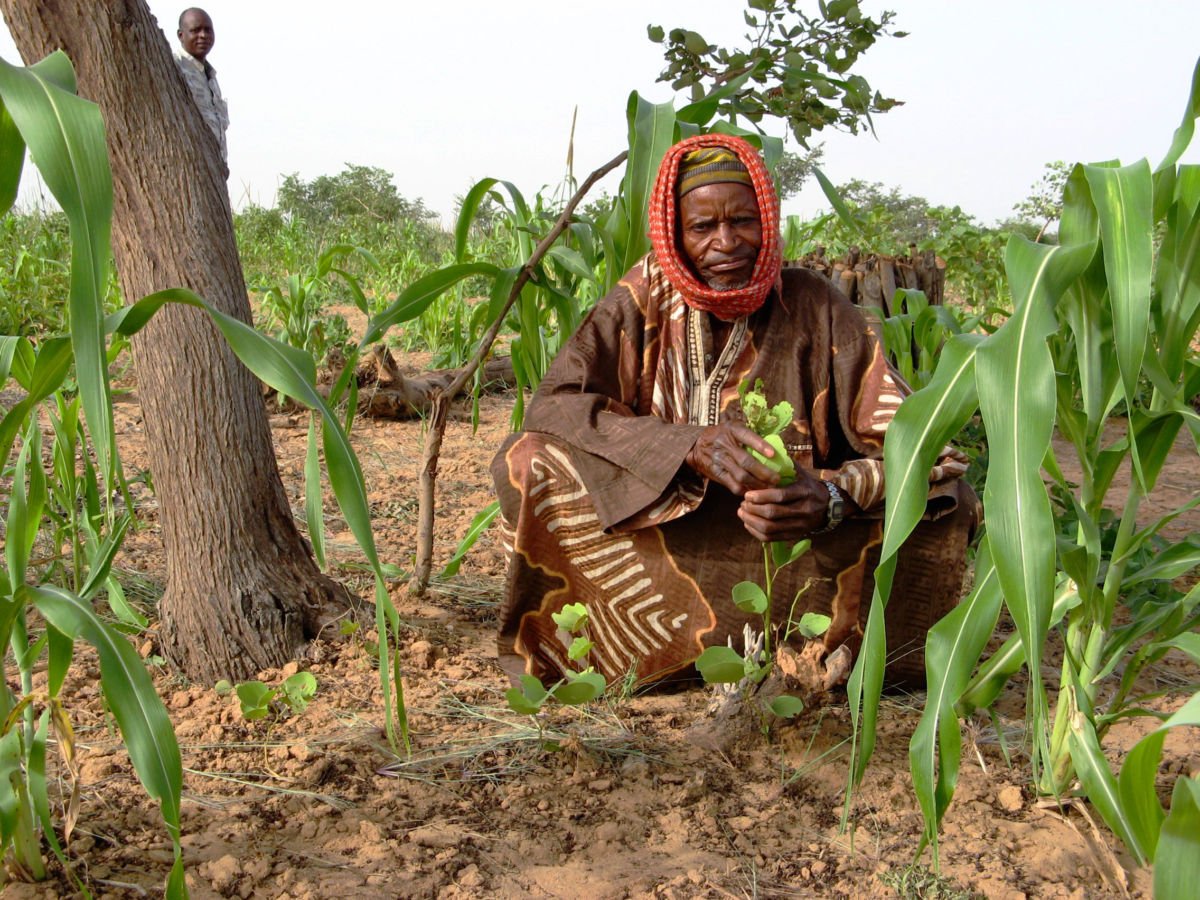
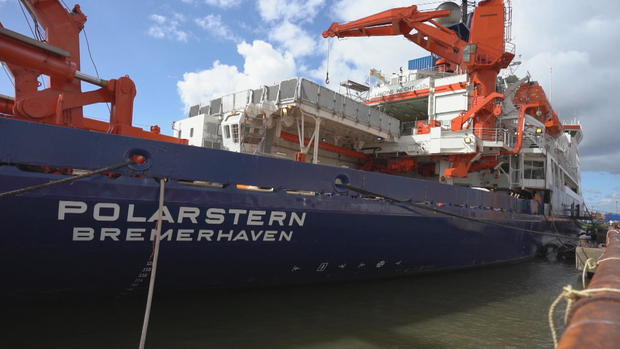




 Exposing the Big Game