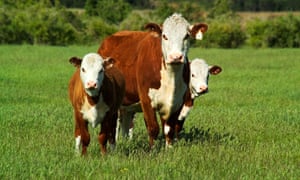
Hereford beef cattle. The IPCC report says meat consumption should be cut to reduce methane emissions. Photograph: Australian Scenics/Getty Images
Attempts to solve the climate crisis by cutting carbon emissions from only cars, factories and power plants are doomed to failure, scientists will warn this week.
A leaked draft of a report on climate change and land use, which is now being debated in Geneva by the Intergovernmental Panel on Climate Change (IPCC), states that it will be impossible to keep global temperatures at safe levels unless there is also a transformation in the way the world produces food and manages land.
Humans now exploit 72% of the planet’s ice-free surface to feed, clothe and support Earth’s growing population, the report warns. At the same time, agriculture, forestry and other land use produces almost a quarter of greenhouse gas emissions.
In addition, about half of all emissions of methane, one of the most potent greenhouse gases, come from cattle and rice fields, while deforestation and the removal of peat lands cause further significant levels of carbon emissions. The impact of intensive agriculture – which has helped the world’s population soar from 1.9 billion a century ago to 7.7 billion – has also increased soil erosion and reduced amounts of organic material in the ground.
In future these problems are likely to get worse. “Climate change exacerbates land degradation through increases in rainfall intensity, flooding, drought frequency and severity, heat stress, wind, sea-level rise and wave action,” the report states.
It is a bleak analysis of the dangers ahead and comes when rising greenhouse gas emissions have made news after triggering a range of severe meteorological events. These include news that:
• Arctic sea-ice coverage reached near record lows for July;
• The heatwaves that hit Europe last month were between 1.5C and 3C higher because of climate change;
• Global temperatures for July were 1.2C above pre-industrial levels for the month.
This last figure is particularly alarming, as the IPCC has warned that rises greater than 1.5C risk triggering climatic destabilisation while those higher than 2C make such events even more likely. “We are now getting very close to some dangerous tipping points in the behaviour of the climate – but as this latest leaked report of the IPCC’s work reveals, it is going to be very difficult to achieve the cuts we need to make to prevent that happening,” said Bob Ward, policy director at the Grantham Research Institute on Climate Change and the Environment.
The new IPCC report emphasises that land will have to be managed more sustainably so that it releases much less carbon than at present. Peat lands will need to be restored by halting drainage schemes; meat consumption will have to be cut to reduce methane production; while food waste will have to be reduced.
Among the measures put forward by the report is the proposal of a major shift towards vegetarian and vegan diets. “The consumption of healthy and sustainable diets, such as those based on coarse grains, pulses and vegetables, and nuts and seeds … presents major opportunities for reducing greenhouse gas emissions,” the report states.
There also needs to be a big change in how land is used, it adds. Policies need to include “improved access to markets, empowering women farmers, expanding access to agricultural services and strengthening land tenure security”, it states. “Early warning systems for weather, crop yields, and seasonal climate events are also critical.”
The chances of politicians and scientists achieving these goals are uncertain, however. Nations are scheduled to meet in late 2020, probably in the UK, at a key conference where delegates will plant how to achieve effective zero-carbon emission policies over the next few decades.
The US, the second largest emitter of greenhouse gases, will have just had its presidential elections. A new Democrat incumbent would likely be sympathetic to moves to control global heating. Re-election of Donald Trump, who has called climate change “a hoax”, would put a very different, far gloomier perspective on hopes of achieving a consensus.
BERLIN, Germany, July 23, 2019 (ENS) – Climate change can threaten species and extinctions can impact ecosystem health, so it is of vital importance to assess how animals respond to changing environmental conditions, and whether these shifts enable the persistence of populations in the long run.
To answer these questions an international team of 64 researchers led by Viktoriia Radchuk, Alexandre Courtiol and Stephanie Kramer-Schadt from the Leibniz Institute for Zoo and Wildlife Research (Leibniz-IZW) evaluated more than 10,000 published scientific studies.
European Pied Flycatcher in Switzerland. This species usually adapts well to environmental changes, Aug. 9, 2018, (Photo by Aaron Maizlish)
They concluded that although animals do commonly respond to climate change, for example by shifting the timing of breeding, such responses are in general insufficient to cope with the rapid pace of rising temperatures and sometimes go in wrong directions.
Their findings are published in the scientific journal “Nature Communications.”
Co-author Thomas Reed, a senior lecturer at University College Cork, Ireland, explains, “These results were obtained by comparing the observed response to climate change with the one expected if a population would be able to adjust their traits so to track the climate change perfectly.”
In wildlife, the most commonly observed response to climate change is an alteration in the timing of biological events such as hibernation, reproduction or migration.
Changes in body size, body mass or other morphological traits have also been associated with climate change, but, as confirmed by this study, show no systematic pattern.
The researchers extracted relevant information from the scientific literature to relate changes in climate over the years to possible changes in both types of traits.
Next, they evaluated whether observed trait changes were associated with higher survival or an increased number of offspring.
Lead author Victoriia Radchuk of the Leibniz Institute for Zoo and Wildlife Research (Photo courtesy Victoriia Radchuk via LinkedIn)
“Our research focused on birds because complete data on other groups were scarce,” says lead author Radchuk. “We demonstrate that in temperate regions, the rising temperatures are associated with the shift of the timing of biological events to earlier dates.”
Co-author Steven Beissinger, a professor at the University of California, Berkeley, said, “This suggests that species could stay in their warming habitat, as long as they change fast enough to cope with climate change.”
Senior author Alexandre Courtiol said, “This is unlikely to be the case because even populations undergoing adaptive change do so at a pace that does not guarantee their persistence.”
Even more worrisome is the fact that the data analyzed included predominantly common and abundant species such as the great tit, Parus major, the European pied flycatcher, Ficedula hypoleuca,or the common magpie, Pica pica, which are known to cope with climate change relatively well.
“Adaptive responses among rare or endangered species remain to be analyzed. We fear that the forecasts of population persistence for such species of conservation concern will be even more pessimistic,” concludes Stephanie Kramer-Schadt, who heads the Department of Ecological Dynamics at Leibniz-IZW.
The scientists hope that their analysis and the assembled datasets will stimulate research on the resilience of animal populations in the face of global change and contribute to a better predictive framework to assist future conservation management actions.
New research suggests the global warming effect will triple by 2050 as air travel increases.
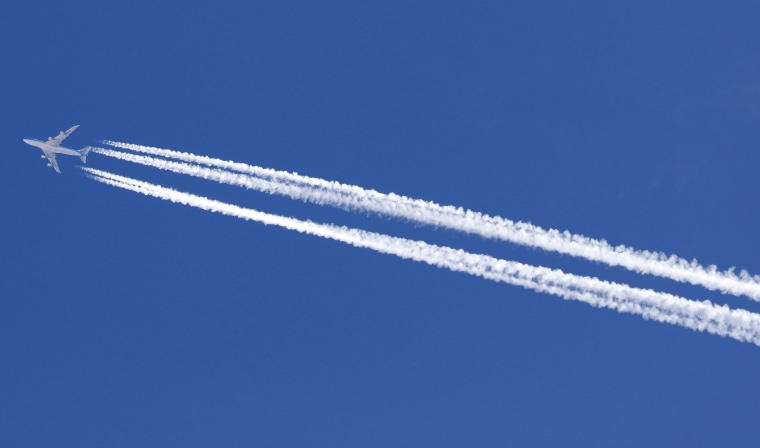
Contrails from a KLM Royal Dutch Airlines Boeing 747 jetliner flying high over Las Vegas on Feb. 27, 2019.Larry MacDougal / AP file
By Jeremy Hsu
Despite conspiracy theories about so-called chemtrails, there’s no evidence that the white plumes seen trailing from high-flying airplanes are part of a secret government program to spray toxic chemicals into the atmosphere for mass sterilization or mind control.
But contrails do pose a threat. Scientists say they contribute to climate change by trapping heat that radiates upward from Earth’s surface. A new study published in the journal Atmospheric Chemistry and Physics suggests that the global warming effect will triple by 2050 as air travel grows in popularity and new technology enables planes to reach the higher cruising altitudes where contrails tend to form.
“Given the forecast for the increase in air traffic, which is very large, this contrail effect will increase even more than the carbon dioxide impact,” says study co-author Ulrike Burkhardt, an atmospheric physicist at the German Aerospace Center’s (DLR) Institute of Atmospheric Physics. “And so it will remain the largest aviation impact on the climate,” outpacing the contribution to warming from the carbon dioxide and other greenhouse gases in airplane exhaust.
The warming effect from contrails already represented the largest contributor to aviation’s climate impact back in 2005, when aviation accounted for 5 percent of the human impact on climate. That’s less than the overall contribution from automobiles and other ground vehicles, but aviation’s impact will likely increase given the growing air traffic.
To make their projections about the rising threat posed by contrails, Burkhardt and his colleagues ran several simulations to study the impact of increased air traffic, overall climate change and how greater aircraft engine efficiency combined with alternative fuels could curb the formation of contrails.
Critics of the research caution that the simulations could overstate the threat, though they agree that policymakers should take steps to address the climate impact of contrails regardless of the unknowns — steps that could include changing jet fuel blends or rerouting aircraft flight paths.
Cloudy with a chance of warming
Scientists have been trying to understand contrails since World War II, when massive air raids over Europe filled the skies with the now-familiar white lines. But there’s still considerable uncertainty about them.
One issue is that just 10 percent of flights create contrails. The icy plumes form when water vapor in the air gathers and condenses on soot particles in aircraft engine exhaust. But they tend to form only at high altitudes — five miles or higher above the planet’s surface, where temperatures of minus 40 degrees Fahrenheit are common.
Airplane traffic, of course, plays a key role in the impact of contrails. North America and Europe have the most commercial flights, so contrails there are common. Flights close to polar regions tend to produce only thin, hazy contrails because the dry air there lacks sufficient moisture to form significant ice crystals; flights over tropical regions tend to produce contrails only rarely because of the warmer atmospheric temperatures.
“Some days there aren’t contrails forming, some days they’re short-lived, and other days they’re long-lasting and soon covering the whole sky,” Burkhardt says.
Many contrails last just a few minutes before the frozen water turns back into vapor and the plumes dissipate. Others persist in the atmosphere for more than 10 minutes, and some spread out to become cirrus clouds.
These persistent contrails are believed to have a more significant effect on global temperatures.
Another complication is that contrails can have both the heat-trapping warming effect and a separate cooling effect by reflecting light from the sun back into space. For example, contrails at night tend to have a warming effect, because they mainly trap heat coming from the Earth without reflecting any incoming sunlight.
The new research may overstate the climate-warming effect of contrails by treating them all like heat-trapping cirrus clouds, says Judith Rosenow, an aeronautical meteorologist at the Dresden University of Technology in Germany, who was not involved in the study.
“The impact of contrails on global warming is often reduced to a warming effect, derived from global estimations, where contrails are considered as homogeneous, infinitely extended cirrus cloud layer,” Rosenow says. “This assumption doesn’t do justice to the true character of contrails.”
Making future flight plans
Satellite images have proven to be a useful tool for studying contrail patterns from commercial flights. But the images often lack the detail researchers need to distinguish contrails from clouds or, in crowded skies, tell where one airplane’s contrails end and another’s begins.
Another way scientists study contrails is by having chase planes fly behind a test aircraft and measure the amount of soot being produced by its engines. Using these flights, researchers have been testing whether contrails can be reduced by switching jets to biofuels made from plants, fat, oil and grease rather than the standard kerosene-based jet fuel that has long been the mainstay of commercial aviation.
“We’re interested in reducing greenhouse gas emissions, but a nice secondary benefit is the reduction in soot particles,” Rich Moore, a physical scientist at the NASA Langley Research Center in Virginia, said.
During their recent study, Burkhardt and her colleague Lisa Bock at the German Aerospace Center ran a simulation that found biofuel blends for jet fuel could reduce the estimated warming effect of contrails by 14 percent through 2050. But that alone would not be enough to offset the climate impact.
Another idea involves rerouting flights so that they avoid “ice supersaturated” regions where contrails are most likely to form — a challenge when such regions frequently change in size, shape and location. The tradeoff is that taking extra time to fly around those regions could also burn more jet fuel and raise aircraft CO2 emissions, which Rosenow says would be counterproductive to the goal of reducing aviation’s climate impact.
Regulators might consider adding extra fees that discourage airlines from planning flight paths with a higher chance of creating contrails that have a warming effect, such as night flights over the ocean, Rosenow says. France already plans to curb aviation’s climate impact by applying an “ecotax” on almost all air travel starting in 2020. Similar efforts could make the biggest difference in North American and European skies where most commercial flights take place.
“Let’s do something for those regions where the major part of air traffic is anyway,” Burkhardt says. “That would be good enough for a start.”
Over the past decade, we have seen the media place blame for our changing climate on cattle. Scientific evidence does not support this claim though for cattle in the United States.
Cattle produce a lot of methane gas, primarily through enteric fermentation and fermentation of their manure. Methane is a powerful greenhouse gas that, along with nitrous oxide, carbon dioxide and some other compounds in the atmosphere, create a blanket around our planet. This is good; without this atmospheric blanket, the earth would be too cold for us to survive. The current problem is that concentrations of these gases in the atmosphere are increasing, which is thickening our blanket.
Greenhouse gases and the atmosphere
The methane that cattle produce is part of a natural carbon cycle that has been happening since the beginning of life on our planet. Through photosynthesis, carbon dioxide is extracted from the atmosphere and fixed as carbohydrates in plant material. Cattle consume and digest these carbohydrates, where some of the carbon is transformed to carbon dioxide and methane gases that are respired back to the atmosphere. This methane is oxidized in the atmosphere through a series of reactions, transforming that carbon back to where it started as carbon dioxide in the atmosphere.
In contrast, when we burn fossil fuels, we are taking carbon that has been stored in the earth since pre-historic times and converting it to “new” carbon dioxide released to the atmosphere. For every gallon of fuel consumed, about 20 pounds of carbon dioxide are created and released to the atmosphere. We are releasing this gas more rapidly than it can be absorbed in our oceans and soils. Thus, we are observing a rather rapid increase in atmospheric carbon dioxide concentration, and the effect of this change will be with us for 1000s of years. Whereas cattle are part of a natural cycle with short-term impact, burning of fossil fuels has a more permanent impact.
Cattle numbers and greenhouse gas emissions
We must also consider the number of cattle and their productivity. Cattle numbers in the United States have been stable or declining for many years. Beef cow numbers peaked in 1975, and the current number is similar to that maintained in the early 1960s. Dairy cow numbers are the lowest they have been in over 100 years.
We also have to consider that modern cattle are getting larger and more productive. They consume more feed and produce more methane per animal, but they are also more efficient producing more meat or milk per unit of feed consumed. Considering cattle numbers and these increases in productivity and efficiency, methane emission from cattle in the United States has not increased over the past 50 years.
This is recent history; what if we look further back? Ruminant wildlife were prevalent in North America before European settlement. Although there are not accurate numbers for the buffalo, elk, deer, and other ruminants on the continent at that time, estimates are available. Based upon those estimates, these animals produced methane in the range of 50% less to 25% more than the current population of cattle, other farm ruminants and wildlife. This indicates that cattle today are not contributing a substantial increase in the methane emissions from U.S. lands compared to pre-settlement times.
So what might be increasing methane concentration in the atmosphere? Global cattle numbers are increasing. Methane is also released during the extraction, refining, and transport of fossil fuels. This methane also oxidizes in the atmosphere to form carbon dioxide, but this is not part of a natural cycle. Like the combustion of fuels, this removes carbon stored in the earth to create new carbon dioxide in the atmosphere with very long-term effects.
Can cattle be part of the solution?
The fact remains that cattle produce a lot of methane. This methane is essentially wasted energy escaping the rumen. Reducing this waste by increasing the efficiency of the rumen may provide a substantial benefit by producing more meat or milk with less feed consumed. Dietary changes can reduce enteric methane production, and feed supplements are being explored to improve feed efficiency and reduce emissions.
Depending upon the cost of dietary changes and supplements, these interventions may provide economic benefit to the producer. In addition, there is the possibility of claiming carbon credits for this reduction. Companies and other institutions desiring to reduce their carbon footprint may be willing to pay cattle producers to use these mitigation practices. This is largely in the future for now.
So, although cattle in the United States are not causing an increase in global warming and related climate change, they may become part of the solution. Reducing any source of greenhouse gas emission will benefit our planet.
A common guillemot (Uria aalge) brings a sprat to feed to its chick. The laying dates of this species were followed for 19 consecutive years on the Isle of May, off the coast of southeast Scotland. According to a new paper in Nature Communications, many birds are adapting to climate change — but probably not fast enough.
Michael P. Harris
Viktoriia Radchuk, an evolutionary ecologist at Berlin’s Leibniz Institute for Zoo and Wildlife Research, wanted to know how animals were responding to climate change.
So she scoured the results of more than 10,000 animal studies — on species from frogs to snakes, from insects to birds to mammals — looking for information on how changing environments were affecting animal behavior. Based on the available data, she decided to focus on birds in the Northern Hemisphere.
As detailed in a new paper in Nature Communications, Radchuk and her co-authors found that many birds are adapting to climate change — but probably not fast enough. “Which means, on average, these species are at risk of extinction,” she says.
The data focused on common and abundant bird species, such as tits, song sparrows and magpies (which are also the most well documented in studies). They showed that some bird populations are breeding, laying eggs and migrating earlier, which makes them better prepared for earlier onsets of spring — a significant effect of climate change.
Radchuk explains that when temperatures warm, plants flower earlier, and insects also develop earlier.
Enlarge this image
An adult red-billed gull (Larus novaehollandiae scopulinus) with a chick. The birds are part of a 54-year study on New Zealand’s Kaikoura Peninsula.
Deborah A. Mills
“For many birds, insects are their food source, which means that birds [should] time their egg laying to correspond to the peak of prey abundance,” she says, so their chicks have lots of food. Some birds have been shifting to earlier dates.
“We’ve known for a long time that global climate change is happening. We’ve known for a long time that animals are changing in response to this. But what we really haven’t known is how well the animals are keeping up with the selection,” says Melissa Bowlin, an ecologist at the University of Michigan-Dearborn who was not involved with the study.
The paper, which is largely based on studies from the past 30 years, comes to a stark conclusion: “The temperature is changing so fast that evolution isn’t able to keep up,” Bowlin says.
The abundance of the species in the studies is evidence that they are already better able to adapt to changing environments, says Radchuk. “So we would expect that the species that are rare and in danger already — from habitat fragmentation or invasive species or any other environmental change — would be even more sensitive to climate change.”
Bridget Stutchbury, a field biologist and ornithologist at York University in Toronto, is hopeful because birds have shown resilience in the past.
“At least for birds, many of the studies are done on species that are relatively short-lived, and they reproduce very easily,” she says. “Those traits allow them to adapt and respond quickly to changes.”
Stutchbury points to the bald eagle, whose U.S. population in the lower 48 states declined to 417 pairs in the 1960s but then rebounded to nearly 10,000 in the mid-2000s, after the federal government banned DDT and helped protect their habitat. “They can recover very quickly if we can put the environment back on track for them,” she says.
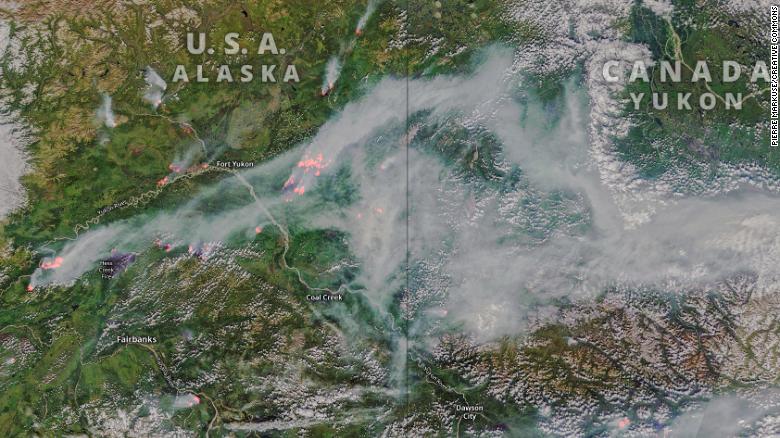
Wildfire smoke is spreading from Alaska across parts of Canada.
Story highlights
The wildfires come as the planet is on track to experience the hottest July on record
Wildfires contribute to global warming by releasing carbon dioxide into the atmosphere
(CNN)More than 100 intense wildfires have ravaged the Arctic since June, with scientists describing the blazes as “unprecedented.”
New satellite images show huge clouds of smoke billowing across uninhabited land in Greenland, Siberia and parts of Alaska.
The wildfires come after the planet experienced the hottest June on record and is on track to experience the hottest July on record, as heatwaves sweep across Europe and the United States.
Content by Invesco QQQ
Investing in Greater Possibilities Together: Inspiring a Community Through Fashion
13-year-old entrepreneur Trey Brown is using his powerful and positive presence on social media to market his up-and-coming clothing line, SPERGO.
Since the start of June, Copernicus Atmosphere Monitoring Service (CAMS), which provides data about atmospheric composition and emissions, has tracked more than 100 intense wildfires in the Arctic Circle.
Pierre Markuse, a satellite photography expert, said the region has experienced fires in the past, but never this many.
Satellite images show smoke billowing across Greenland and Alaska as wildfires ravage the region.
Temperatures in the Arctic are rising at a faster rate than the global average, providing the right conditions for wildfires to spread, according to Mark Parrington, a senior scientist at CAMS.
“The number and intensity of wildfires in the Arctic Circle is unusual and unprecedented,” Parrington told CNN.
“They are concerning as they are occurring in a very remote part of the world, and in an environment that many people would consider to be pristine,” he said.
Play Video
See how Europe is dealing with an extreme heatwave01:34
The average June temperature in Siberia, where the fires are raging, was almost 10 degrees higher than the long-term average between 1981–2010, Dr Claudia Volosciuk, a scientist with the World Meteorological Organization (WMO) told CNN.
Parrington said there seemed to be more wildfires due to local heatwaves in Siberia, Canada and Alaska.
The fires themselves contribute to the climate crisis by releasing carbon dioxide into the atmosphere.
They emitted an estimated 100 megatons of carbon dioxide (CO2) into the atmosphere between 1 June and 21 July, almost the equivalent of Belgium’s carbon output in 2017, according to CAMS.
Volosciuk said wildfires are also exacerbating global warming by releasing pollutants into the atmosphere.
“When particles of smoke land on snow and ice, [they] cause the ice to absorb sunlight that it would otherwise reflect, and thereby accelerate the warming in the Arctic,” she said.
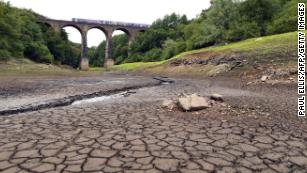
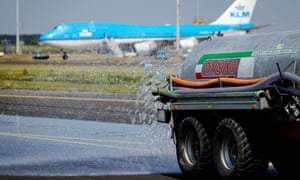
Water is sprayed on a taxiway at Schiphol airport in Amsterdam during extreme heat. Photograph: Robin van Lonkhuijsen/AFP/Getty Images
The Netherlands and Belgium have recorded their highest ever temperatures as the second extreme heatwave in consecutive months to be linked by scientists to the climate emergency advances across the continent.
The Dutch meteorological service, KNMI, said the temperature reached 39.1C(102F) at Gilze-Rijen airbase near the southern city of Tilburg on Wednesday afternoon, exceeding the previous high of 38.6C set in August 1944.
In Belgium, the temperature in Kleine-Brogel hit 38.9C, fractionally higher than the previous record of 38.8C set in June 1947. Forecasters said temperatures could climb further on Wednesday and again on Thursday.
“The most extreme heat will build from central and northern France into Belgium, the Netherlands and far-western Germany into Thursday,” said Eric Leister of the forecasting group AccuWeather, with new all-time highs also possible in Germany and Luxembourg.
After several cities in France broke previous temperature records on Tuesday, including Bordeaux, which hit 41.2C, the national weather service, Météo France, said Paris was likely to beat its all-time high of 40.4C, set in July 1947, with 42C on Thursday.
City records in Amsterdam and Brussels are also expected to fall. Cities are particularly vulnerable in heatwaves because of a phenomenon known as the urban heat island effect, in which concrete buildings and asphalt roads absorb heat during the day and emit it again at night, preventing the city from cooling.
The latest heatwave, caused by an “omega block” – a high-pressure pattern that blocks and diverts the jet stream, allowing a mass of hot air to flow up from northern Africa and the Iberian peninsula – follows a similar extreme weather event last month that made it the hottest June on record.
Quick guide
What is causing Europe’s heatwaves?
Show
The highest ever June temperatures were recorded in the Czech Republic, Slovakia, Austria, Andorra, Luxembourg, Poland and Germany, while France registered an all-time record high of 45.9C in the southern commune of Gallargues-le-Montueux.
Clare Nullis, a World Meteorological Organization spokeswoman, said the heatwaves bore the “hallmark of climate change”. The extreme events were “becoming more frequent, they’re starting earlier and they’re becoming more intense”, she said. “It’s not a problem that’s going to go away.”
The 26-28 June heatwave in France was 4C hotter than a June heatwave would have been in 1900, according to World Weather Attribution, a new international programme helping the scientific community to analyse the possible influence of climate change on extreme weather events.
A study published earlier this year by the Swiss Federal Institute of Technology in Zürich said the summer heatwave across northern Europe last year would have been “statistically impossible” without climate change driven by human activity.
Rail passengers in Paris are given bottled water as temperatures on the city’s transport network soar. Photograph: Dominique Faget/AFP/Getty Images
KNMI has issued a code orange extreme temperature warning for everywhere except the offshore Wadden Islands and implemented its “national heat emergency” plan, while Belgium has taken the unprecedented step of placing the entire country on a code red warning.
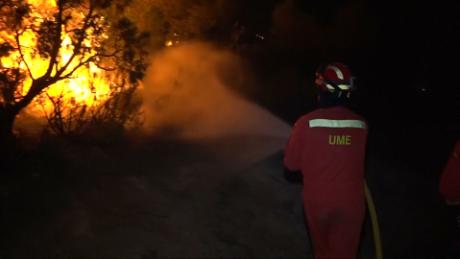
Spain has also declared a red alert in the Zaragoza region, where the worst wildfires in 20 years took place last month. The EU’s Copernicus Emergency Management Service warned of an “extreme danger” of further forest fires in France and Spain on Thursday, with a high or very high threat level in Portugal, Italy, Belgium and Germany.
Twenty French départements were also placed on red alert. Agnès Buzyn, the health minister, said: “Nobody is immune in the face of such extreme temperatures. There are risks even if you are not particularly vulnerable.” Britain’s Met Office issued similar advice and said the UK all-time high of 38.5C, recorded in Faversham, Kent, in August 2003, could also be exceeded on Thursday.
Local authorities in France have placed restrictions on water usage in 73 of the country’s 96 départements following dramatic falls in ground and river water levels. “It’s tricky but under control, but we need to be very vigilant,” said the junior environment minister, Emmanuelle Wargon.
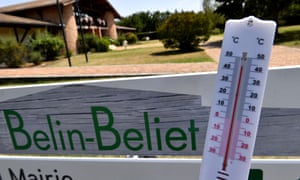
A thermometer shows the temperature outside the town hall of Belin-Béliet in south-western France. Photograph: Georges Gobet/AFP/Getty Images
The French energy company EDF said it was shutting down two reactors at its Golfech nuclear power plant in the southern Tarn-et-Garonne region in order to limit the heating of water used to keep the reactors cool.
Scientists have said such heatwaves are closely linked to the climate emergency and will be many times more likely over the coming decades.
Last month, the Potsdam Institute for Climate Impact Research said Europe’s five hottest summers since 1500 had all occurred in the 21st century – in 2018, 2010, 2003, 2016 and 2002.
Monthly records were now falling five times as often as they would in a stable climate, the institute said, adding that this was “a consequence of global warming caused by the increasing greenhouse gases from burning coal, oil and gas”.
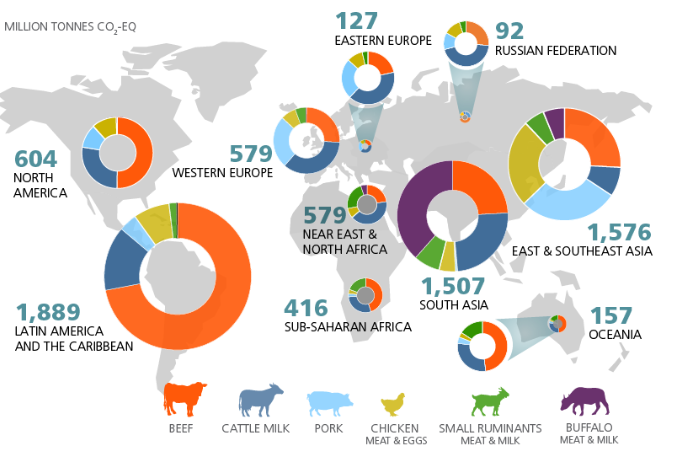
Belching bovines are a primary culprit when it comes to greenhouse gas emissions. Farmed livestock are responsible for 14.5% of all emissions related to human activity, and cows make up by far the largest proportion of that.
Although vegan diets are on the rise in countries like the UK and US, and meat alternatives are increasingly available, cattle farming is still widespread.
Image: FAO
So attention has turned to putting a cork in the volume of methane cows produce, by targeting their gut microbes.
Researchers looked at more than 1,000 cows on farms throughout Europe, and found they had a large proportion of their gut bacteria in common. By inoculating calves with targeted probiotics, the scientists suggest the mix of microbes could be altered, and the volume of methane produced limited. By eliminating the worst-offending gut bacteria, emissions could be cut in half, they say.
Livestock production around the world.
Image: FAO
Environmentally friendly cows?
The researchers say the gas-causing bacteria in cows’ digestive systems are linked to their genetic make-up. Longer-term, this could mean some of the most problematic microbes could potentially be eliminated by selective breeding.
Previous studies have suggested mixing seaweed into cattle feed could also be a way to cut the volume of methane produced. And it might also help cows grow bigger and stronger. However, there are still questions about how this might work in reality: growing seaweed on the scale necessary is likely to be problematicand environmentally damaging in itself.
Failure to mitigate the effects of climate change is one of the primary threats facing the planet, according to the World Economic Forum’s Global Risks Report. And methane is one of the biggest causes of the problem, after the more commonly discussed carbon dioxide.
Given the pure number of cows in the world, farmed for beef and milk, intrepid scientists have spent a lot of time investigating their burps and belches.
But unfortunately, it would seem these aren’t the only bovine emissions we need to concern ourselves with – cattle urine is also a climate offender. It releases nitrous oxide, another harmful gas, particularly in poor-quality pastures, new research has demonstrated.
The entire food system needs to change, researchers say. Image: By nima hatami on Unsplash
To feed 9 billion people by 2050, and keep planet Earth from overheating, will mean massive and radical food changes – and not just in the way food is grown.
To contain global temperatures to no more than 2 °C above the average for most of human history will require humanity to change its diet, contain its appetite and reform the entire system of food production and distribution.
This is the verdict of the latest study of the challenge set in Paris in 2015, when 195 nations promised to limit global warming – driven by profligate use of fossil fuels and by the conversion of forest, grassland and wetlands into commercial use – to “well below” 2 °C by 2100.
Researchers report in the journal Sustainability that they looked at 160 studies and analyses of global agriculture and food systems and most closely at the world’s smallholders and markets that sustain as many as 2.5 billion people, mostly in the developing world.
Agriculture, together with forestry and changes in land use, accounts for a quarter of all the carbon dioxide, methane and oxides of nitrogen that fuel global warming.
Just on its own, the action of growing grain, fruit and vegetables or feeding grazing animals accounts for no more than 12% of global warming, but a third of all the food that leaves the farm gate is wasted before it arrives on the supper table.
The researchers see reductions in food loss as a “big opportunity” that will benefit farmers and consumers as well as reduce emissions. A more challenging problem is to change global appetites: the meat and dairy business accounts for about 18% of all human-triggered emissions, counting the clearance of forests and the impact of changes in the way land is used to feed the demand for meat, milk, butter and cheese.
“This means reducing emissions by stopping deforestation, decreasing food loss and waste, reducing supply chain emissions and rethinking human diets, if we really want to get on track to that target.”
“The global health benefits from climate policy could reach trillions of dollars annually, but will importantly depend on the air quality policies that nations adopt independently of climate change,” they write in the journal Nature Communications.
And Mark Budolfson of the University of Vermont, one of the authors, said: “We show the climate conversation doesn’t need to be about the current generation investing in the further future. By making smart investments in climate action, we can save lives now through improved air quality and health.”
This article was originally published byHakai Magazine and is republished here with permission.
Walking the icy flanks of Mount Baker — an active volcano in Washington State and one of the highest peaks in the Cascade Range — is probably one of most untainted wilderness experiences. And yet, it feels profoundly unnatural to me as I trudge up an oblique sheet of ice with crampons lashed to my boots and an ice axe hefty enough to clobber a mountain goat or a yeti gripped tightly in one hand. When I stop to fumble with my backpack and readjust my borrowed, baggy rain pants, which are failing to keep moisture from penetrating the innermost layers of my clothing, Mauri Pelto, the glaciologist who has brought me here, offers me a reprieve. “As we head into this icefall, you have to let me know,” he says quietly. “Maybe it’s just not the place for you.”
I have been asking myself this — whether this field of ice, known as the Easton Glacier, is the place for me — since the evening before, when I tried to navigate what Pelto had described as an easy jaunt to his camp more than a kilometer up a stream channel only to find myself stumbling across an obstacle course of mud, boulders, dense clusters of alder saplings, and glacial till. When I finally located his crew’s two tents well after nightfall (which, on an early August evening, arrived just before 9:00 p.m.), Pelto called out casually from inside one of them without disengaging from his sleeping bag: “Welcome to camp.” Then this morning, when we set out in the rain and I saw the glowing blue and gray leviathan of the Easton Glacier looming through the clouds, doubts churned in my stomach.
A high mountain glacier, in its frigid, deadly enormity, doesn’t feel much like a landscape meant for humans. In the European Alps, medieval myths held that glaciers carried curses and incarcerated the frozen souls of the damned. And yet, on a grand scale, where glaciers and humans coexist, our lives are entwined in ways we rarely realize. During the last ice age, the glaciers of Alaska locked up so much water that the seas lowered enough to create a land bridge to Siberia and perhaps allowed the earliest passage of humans into North America. Glaciers have carved out many of our mountain ranges, scoured out plains and prairies, and birthed rivers and lakes. Today, in many parts of the world, mountain glaciers preside over vast empires of fresh water that reach from the highest peaks to the coast: they dictate the flow of water downslope and influence the seasonal pulse of rivers and fish and the temperature and chemistry of streams and estuaries. They supply water for drinking, irrigation, and hydropower dams. But as the world gets warmer, glaciers’ influence in many regions is waning.
Pelto, a professor at Nichols College in Massachusetts, has been traveling to the northwest United States to document the behavior of glaciers every year for the past 35 years, witnessing their decline and fall, and this is why he regards the otherworldly scene before us with a kind of nonchalance. All morning, he has pointed out where the glacier used to be — in the 1990s, an area presently marked by the bit of precocious vegetation that has begun to colonize; then the early 2000s, a space now mostly comprised of bare rock and mud; then 2009, when his daughter, Jill, first came here with him as a teenager. She strides cheerfully behind him now, along with two graduate students from Maine — Mariama Dryak and Erin McConnell. Both are similarly sanguine, even though McConnell is wearing crampons that barely fit her boots, tied on precariously with some extra straps repurposed from her backpack. Through wind and rain, we have ascended a slope covered in glassy ice so hard we have had to stomp the crampons in just to get a foothold. Still, the women are unflappable and curious, lobbing questions at Pelto and at each other, and noticing formations and debris in the ice — from the geological bands left by meltstreams to a bit of tire tread and some pistachio shells presumably deposited months ago by incautious snowmobilers.
For scientists ascending the Easton Glacier in the Cascade Range of Washington State, it takes proper equipment and a sense of adventure. From left: Mariama Dryak, Erin McConnell, and Jill Pelto.
Photo by Madeline Ostrander
Ahead of us lies the icefall. Despite similar etymological origins, this unearthly terrain looks no more like a waterfall than a lunar crater resembles a river gulch. The icefall is instead a steep landscape of toothy crevasses gaping through 10 meters or more of ice thickness. I forge on, gasping and crunching across granular ice pebbles that look like glass fragments, lagging behind the others. I am quite certain that I don’t belong here, but I am too stubborn to turn back.
TO THE FIRST PEOPLES OF NORTHWEST NORTH AMERICA, the high realm of glaciers held spiritual significance. One might visit such a place seeking knowledge or guidance. “Places uncontaminated by other humans are where you found the strongest spiritual help,” recalled the late Vi Hilbert, an elder of the Upper Skagit Indian Tribe, in a 1996 interview.
But when Mauri Pelto began his work in the North Cascades — the upper section of the spine of mountains that stretches from Northern California to British Columbia — glaciers weren’t getting much scientific attention. His own obsession with them grew from his love of snow. Pelto was an avid winter athlete and considered trying out for the US Ski Team in 1983, after finishing his studies at Michigan Technological University. But two years previously, he had joined a research trip to the Taku Glacier in southeast Alaska. He was drawn to the massive icy body, fascinated by how dynamic it seemed to be — moving, pulsing, circulating air and water, almost like a living creature. And as he considered his career options, he realized he could always keep skiing. But if he wanted to spend more time in the company of glaciers, he would need to study science.
Glaciologist Mauri Pelto, hiking the Easton Glacier.
Photo by Madeline Ostrander
At the time, glaciology was an obscure scientific niche, and you could probably gather up all its experts and adherents from around the world and fit them into a single lecture hall. In 1983, he attended a meeting of the International Glaciological Society at Northwestern University outside Chicago. The gathering held a sense of urgency: glaciers were entering a period of trouble, upheaval, and loss that would likely affect their well-being for centuries if not millennia. Their role in the world could rapidly diminish as global warming robbed them of size and vitality. There was much about glaciers that the scientists wanted to account for, measure, study, and understand before the ice began to transform dramatically. The US Geological Survey (USGS) had collected some long-term glacier data, starting in 1958 with the South Cascade Glacier, about 130 kilometers northeast of Seattle, Washington. In 1964, UNESCO called for countries to conduct global research on water, and in response, Canada began an inventory of its glaciers and set up long-term monitoring projects at the Place Glacier (140 kilometers north of Vancouver, British Columbia) and the Peyto Glacier in Banff National Park in the Rockies and a number of other shorter-term glacier studies. But the approach on both sides of the border was piecemeal. By the 1980s, the USGS only kept tabs on about one glacier per major mountain range. In the United States, the National Academy of Sciences called on researchers to follow multiple glaciers in a single mountain range. But the Reagan administration was cutting budgets for a number of scientific and environmental agencies, the USGS included, and it seemed hard to imagine who would be able to follow such a recommendation.
Pelto — though still in his early 20s and then a novice at conducting science in the field — figured he could be the one. He enrolled in a graduate program at the University of Maine, but he wanted to study a place where glaciers lived in close proximity to people. So he chose as his research subject the North Cascades — even though they lay on the opposite end of the continent — because they held sway over the lives of at least several million people in their domain.
He developed a 50-year plan that would carry him all the way to a late retirement. He visited 120 glaciers in the Cascade Range and chose 10 that would receive an annual, in-person checkup. About 40 others would receive visit at least once every five years, and he would follow them remotely via aerial photography and, from the 1980s onward, satellite imagery. At the beginning, he recruited long-time mountaineers to serve on his field crews — mostly men who’d been climbing since the 1940s, including some famous characters like Bill Prater, who, with his brother Gene, invented the modern metal snowshoe to replace the old, impractical wood-and-bamboo variety. (The Easton is the launch point for one of the main climbing routes up Mount Baker, and many mountaineers have traversed it.) He collected the mountaineer’s photographs and stories, and then began to build up his own record. “It’s not just the data set,” he says. “You spend a long enough time working on anything … you develop an innate sense of what is impacting [it].”
In this illustration, Jill Pelto depicts herself measuring crevasse depth as she hikes a glacier.
Illustration by Jill Pelto
In the 1980s, the USGS thought glaciers might behave differently under warmer conditions based on the microclimates around them. But Pelto soon realized glaciers were responding in unison to climate change. “They’re all suffering,” he says.
Three decades later, the idea that glaciers are vanishing, that they are harbingers of climate change, is now well known. Six of the 120 Cascade glaciers Pelto originally surveyed have perished, including four of those he surveys by satellite imagery and two of the 10 he chose for his initial field study (which he’s since replaced with two glaciers that are still alive). When the regime of glaciers fully comes to a close — when rain and sun dominate over ice and snow — this will spell trouble for the rivers and coasts below. Few people have yet reckoned with the consequences.
IF YOU HAVE ONLY EVER GLIMPSED A GLACIER FROM AFAR, it would be easy to think of it as a large but inert smear of snow. Three years ago, I gazed at the Exit Glacier in Seward, Alaska, from a partially paved trail — an experience akin to seeing a polar bear at the zoo, so well-contained that it lost all sense of wildness or danger. So I had not imagined how ferocious the Easton would feel — angular, massive, thrumming with meltwater. We begin the day at about 1,700 meters elevation, and Pelto says we’ll stop at about 2,000 meters. But the glacier rises well above this for another 800 meters. In total, the Easton stretches about four kilometers in length and three square kilometers in area, or roughly the size of 160 Manhattan city blocks. The terrain has a primordial quality, accentuated by the pale cyan light that emanates from the ice surface. The oldest ice dates to Mount Baker’s last eruption about 6,700 years ago.
We encounter a few other creatures on the ice. They appear suddenly, like apparitions. Grosbeaks flit past us. I spot a frozen green fly of unknown origin. (Jill tells me wind can carry insects long distances up the mountain, and spiders can find themselves accidentally airborne over a glacier, propelled upward by the electrical charge differential between the ground and the atmosphere.) Then, in a shin-deep, blue pit in the snow, we find an assembly of a few hundred ice worms, each slender, inky, wriggling, and about the length of my knuckles — Mesenchytraeus solifugus, a species occurring only on coastal glaciers including the Cascade Range, the Coast Mountains of British Columbia, and mountains along coastal Alaska.
Easton’s icy world shifts and creaks, and the babble of water fills the air, sounding like a bass drum as it hits the ice, and a soprano rush and gurgle as it races along. Below the surface, the meltwater forms channels and tubes called moulins, then emerges at what are called supraglacial streams. At one such stream, Pelto and the crew pause, first to fill their water bottles. “That’s the good stuff,” Dryak exclaims, and everyone drinks deeply for several minutes. Then they measure the velocity of the same stream. Pelto tromps a few meters uphill and pours a bottle of biodegradable fluorescent green dye into the water, and McConnell pulls out a stopwatch and records how long it takes for the dye to pass below. This is not a typical glacier measurement, but Pelto feels that one might glean new information about glacier behavior by paying attention to such streams and how they evolve, mature, and change shape and speed.
The day is full of such acts of measurement, in metric and imperial depending on the instrument. Pelto carries a nine-foot steel pole, notched with foot and inch markings for gauging depth, and stops at miscellaneous locations to tap it into the snow like a fence post. The pole also has a second function—as a crevasse finder. As we enter the icefall, he taps the pole into a flat, smooth layer of snow and it drops easily, tracking nothing solid, slipping into emptiness beneath. We wend through a labyrinth of crevasses — some making wide, visible slashes across the ice, others hidden — and whenever we need to cross snow, Pelto has us walk single file as he probes the ground with his pole.
The most common way to check the health of a glacier is to calculate mass balance — an icy accounting of profits and losses — by taking field measurements of the snowdepth and the height of the glacier and combining it with a range of data from satellites and weather records to estimate the gains and losses of ice and snow. Pelto is also a collector of miscellaneous observations and data — the way some people collect curios or colorful stones — with the idea that they may at some point allow him or other scientists to learn or create something. On another glacier, he counts goats every year, though he has no zoological background. Jill, in similar spirit, has taken it upon herself to measure crevasse depth, and she perches at the edges of some of the most fearsome-looking cavities and unspools a plumb line into each. She asks us to take bets on how deep each crevasse is. Most are around 10 or 12 meters. A healthy glacier has many deep crevasses, says Pelto, the way a healthy brain has many folds.
But the ultimate goal — to create a detailed portrait of the Easton, its behavior, its past, its future — is not theoretical. Across from us, through cloud and fog, appears another white shape — the Deming Glacier, which feeds water into a hydroelectric dam that powers the approximately 90,000-person coastal city of Bellingham, Washington, mid-way between Seattle and Vancouver, British Columbia. Pelto doesn’t visit the Deming because it is so steep it’s almost inaccessible. But the Easton is a stand in, and they are both shrinking.
THE WORST MOMENT for Mauri Pelto’s glaciers so far came in 2015. A winter of sparse snow followed by a record hot summer robbed the glaciers of more ice and snow than any other season in the past 50 years. (The same season churned up the largest fires on record in Washington state and filled Seattle skies with acrid smoke.) That season, Pelto became emotional with each glacier visit. “The glaciers just looked naked. Only two of the glaciers had any snow at all on them,” he remembers. “You just had a sense—these things are going to lose so much this year. They’re never going to get it back.”
It was also a glimpse of things to come: “2015 was a perfect year that we use as a surrogate for what we think the future might be,” says Oliver Grah, the water resources program manager for the Nooksack Indian Tribe, an indigenous community whose administrative headquarters lie along the Nooksack River, halfway between Bellingham, at the river’s mouth, and Mount Baker, whose glaciers feed the river.
Easton Glacier in 1912.
Photo by E. D. Welsh
Easton Glacier in 2012.
Photo by John Scurlock/Jagged Ridge Imaging
The name Nooksack derives from a place name meaning “always bracken fern roots.” According to the community’s oral histories, the Nooksack have always lived in this watershed. Anthropological and archaeological research documents the Nooksack people’s presence from the upper elevations of Mount Baker to the river’s mouth at Bellingham Bay and northward across the U.S.-Canada border. They were only officially recognized by the US government in 1973 and currently have about 2,000 enrolled members and a modest set of offices across from some railroad tracks in the rural, unincorporated town of Deming. But they employ 15 natural resource scientists and research technicians and run an ongoing glacier hydrology research program.
Grah — who is not a tribal member but has worked for the tribe since 2011 — monitors water and streamflow along the Nooksack River, which has three forks. The middle and north forks are fed by four and 12 glaciers respectively, but the warmer south fork receives almost no glacial meltwater. The north can be as much as 5 ˚C colder than the south. Nine species of Pacific salmonids, including trout, migrate up these streambeds, but, because of the glaciers, the middle and north forks offer a safer, cooler refuge for chinook and chum in hot summer months. The salmon are paramount to Nooksack culture and diet, and the tribe has a federally protected legal right to fish in this watershed based on an 18th-century treaty.
The glaciers supply the cool water that keeps the fish healthy. When Grah and Pelto met in 2012, both saw the potential for collaborating. Two years later, the tribe began assisting Pelto with some of his research costs — via grants from the US Environmental Protection Agency and the US Bureau of Indian Affairs — in exchange for help setting up their own program to study glacier outflow. Grah and some of his colleagues trekked 11 kilometers into the wilderness on foot to set up and then regularly check a gage at the base of the Sholes Glacier, which flows into the north fork. In August 2015, they noticed that there was slightly more water coming from the glacier as the intense heat melted more ice, but also, as the glacier’s retreat laid bare the earth beneath it, more sediment and dirt filling the streams below.
The last couple of summers have been some of the hottest in the Cascade Range. The terminus, or lowest point, of the Easton Glacier — where the researchers are standing — continues to melt and recede. From left: Jill Pelto, Mauri Pelto, Mariama Dryak, and Erin McConnell.
Photo by Madeline Ostrander
The streamflow increase was temporary. Pelto says the outflow produced by glaciers in the Cascades peaked in the 1990s and has been, on average, declining ever since. If the glaciers shrink enough, the amount of water they offer to the region’s rivers could drop to a trickle. The heat and erosion could be long-term problems. Salmon need clear water to see the insects and larvae they eat, and they can’t stand temperatures much higher than 20 ˚C. “It’s summers like this that are killing us for coho,” says Ned Currence, a fish biologist and Grah’s colleague at the tribal headquarters.
On a late-summer day in 2018, I visit a spot on the south fork at the edge of farmland where Currence and another fish biologist, Treva Coe, oversee the construction of a logjam. Stacked at the edge of the stream channel is a pile of wood — logs and fallen trees, many of them with a massive root ball still attached. The logjam’s ultimate destination, a spot several meters farther into the water, is demarcated by white sandbags where a crew of mostly tribal members is seining fish to make way for the wood. The fish will eventually be allowed to swim into the cool hiding places the logjam is meant to provide: the tribe has installed more than 200 of these throughout all three tributaries and is also replanting trees along the water’s edge to create shade.
But will it be enough if summer days are regularly like this one? The air is over 30 ˚C and the sun glares — so hot that Coe insists on yanking off a pair of heavy khaki waders and boots and, with meek apologies, dipping into the river for a swim midway through our interview.
It may be hard to replace the cooling power of high mountain glaciers.
As we conclude our expedition up the Easton, I follow Pelto and his crew to a high, flat bench of snow that gets progressively deeper, from one and a half to three and a half meters at the top. The upper zone of the glacier is colder than the lower, simply because of the elevation difference, so it retains more snow. It is known as the accumulation zone. It is like the glacier’s mouth and stomach, taking in sustenance that supports the entire body of ice.
Because glaciers like this are so large, high, and dynamic, Pelto thinks some claims about their hasty demise may be exaggerated, particularly the estimate that Glacier National Park (the U.S. park not the Canadian one) will lose all of its 26 remaining eponymous ice bodies in just over a decade.
“People always ask, ‘How soon is it going to disappear? They’re melting so fast,’” he says. He points to a deep crevasse ahead of us. “But then you see how thick the ice is at a place like this. And then we’re nowhere near the thickest place of the ice.”
In this illustration, Jill Pelto depicts herself measuring crevasse depth as she hikes a glacier.
Illustration by Jill Pelto
Whether glaciers vanish altogether or not, he insists, misses the point. Glaciers are not simply curiosities or aesthetic objects, not things we should regard with mere sentimental interest. As they lose their foothold and prominence in places like this, we will feel the effects downstream, more powerfully than most people realize. But because glaciers are usually out of sight or far above us, we have failed to appreciate them. Even today, few models of climate change or hydrology adequately account for the role of glaciers. Their losses will be felt regionally and globally: mountain glacier melt makes a substantial contribution to sea level rise.
Much of the Pelto family is now involved in telling the story of glaciers. Jill has become a well-known artist and has created a series of vivid watercolors depicting various aspects of climate change, including the loss of glacial ice. Pelto’s son, Ben, is pursuing a Ph.D. in glaciology at the University of Northern British Columbia. And for the past decade, Pelto has kept a blog called From a Glacier’s Perspective, now hosted by the American Geophysical Union, which offers observations about the world’s glaciers, including those he studies, albeit in relatively technical language. In 2017, a period of higher-than-normal snowfall followed by a record hot and parched summer, Pelto reported that his glaciers retreated an average of 12 meters at their bases. In March 2018, on his blog, he recounted the story of the annual monitoring of Easton Glacier since 1990. He has taken more than 5,000 measurements of its snow depth and melt in those nearly three decades, and the Easton has shed a quarter of its ice volume, slowed its movements, and lost crevasses. It is, in other words, slowly wasting away.
“There’s a lot of different stories,” he says. “The glaciers are suffering. I can tell that one glacier at a time. Each person cares about this certain glacier in their backyard.” But I wonder how many people consider them when they are distant and shrouded in cloud. And this may be Pelto’s true contribution — year after year, to document and try to make clear how much life and complexity is part of the high mountains.
We descend from the snow basin back toward camp. The researchers will stay on to take more measurements the next day, but I repack my belongings and prepare to head downslope alone. Pelto gives me directions to follow a ridge above the streambed that offers easier passage. In daylight, the return journey is a like a walk through time-lapse photography — the picture of glacial influence and retreat in just a few kilometers. A field of rocks and mud turns to grasses and marshes. A waterfall and then a roaring stream burst from the hillside. Seedlings and then larger saplings appear, then dense clumps of alders. As I hike down along a trail, the trees rise until they become tall, old-growth cedars and firs. Between here and the coast are hundreds of square kilometers of forests and fish and animals, patches of farmland, rural towns, and urban areas.
Glaciers, our benefactors, helped forge and feed these places for millennia. As they retreat, it will be no small thing to learn how to manage without them.




 Print
Print









 Exposing the Big Game