The concept of a carbon budget is dead simple: figure out how much CO2 humanity can pump into the atmosphere without pushing Earth’s surface temperature beyond a dangerous threshold
The concept of a carbon budget is dead simple: figure out how much CO2 humanity can pump into the atmosphere without pushing Earth’s surface temperature beyond a dangerous threshold (AFP Photo/PATRIK STOLLARZ)
More
Paris (AFP) – The concept of a carbon budget is dead simple: figure out how much CO2 humanity can pump into the atmosphere without pushing Earth’s surface temperature beyond a dangerous threshold.
The 2015 Paris climate treaty enjoins the world to set that bar at “well below” two degrees Celsius (3.6 Fahrenheit) in order to avoid an upsurge in killer heatwaves, droughts and superstorms made more destructive by rising seas.
Last year, the UN’s climate science body concluded this already hard-to-reach goal may not be ambitious enough.
Only a 1.5C cap above pre-industrial levels, for example, could prevent the total loss of coral reefs that anchor a quarter of marine life and coastal communities around the globe, the Intergovernmental Panel on Climate Change (IPCC) said in a landmark report.
But calculating exactly how much CO2 — produced mainly by burning fossil fuels but also deforestation — we can emit without busting through either of these limits has been deceptively hard to calculate.
Indeed, scientific estimates over the last few years have differed sharply, sometimes by a factor of two or three.
“The unexplained variations between published estimates have resulted in a lot of confusion,” Joeri Rogelj, a lecturer at Imperial College London, told AFP.
To help clear up that muddle, Rogelj and colleagues set out to solve the carbon budget puzzle — or at least make sure that everyone is reading from the same page.
This seemingly academic exercise, published Wednesday in the journal Nature, has huge real-world repercussions.
“The trillion-dollar question is how much of a carbon budget do we have left?”, Rogelj said.
– Wild cards –
About 580 billion tonnes, or gigatonnes (Gt), of CO2, if we’re willing to settle for a 50 percent chance of capping global warming at 1.5C, according to the October IPCC report, for which Rogelj was a coordinating lead author.
At current CO2 emission rates — 2018 saw a record 41.5 Gt — that budget would be exhausted in less than 14 years.
The CO2 allowance for a coin-toss chance of holding the rise in Earth’s temperature to 2C is more generous, about 1,500 Gt, and would last roughly 36 years.
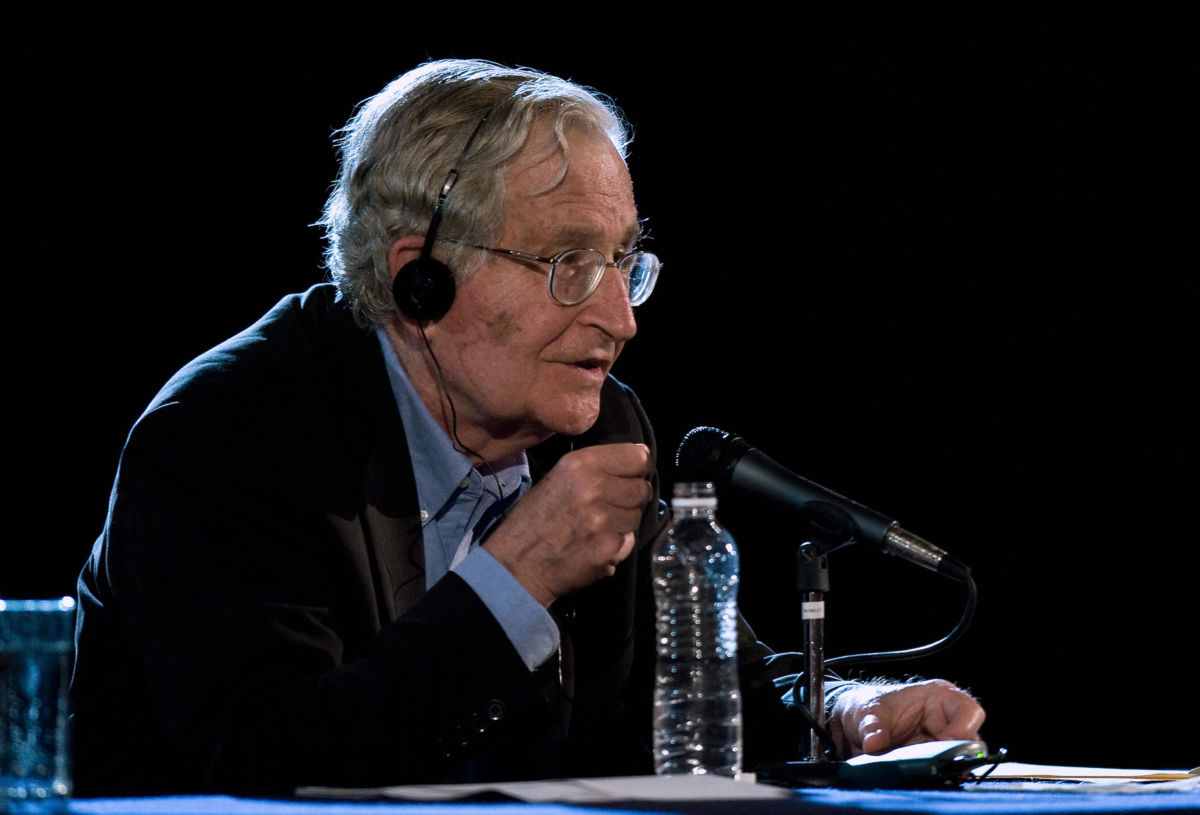
U.S. linguist, philosopher and political activist Noam Chomsky delivers a talk at the National Autonomous University of Mexico on September 21, 2009, in Mexico City.RONALDO SCHEMIDT / AFP / GETTY IMAGES
We live in dangerous times — no doubt about it. How did we get to such a state of affairs where democracy itself is in a very fragile condition and the future of human civilization itself at stake? In this interview, renowned thinker, Emeritus Professor of Linguistics at MIT and Laureate Professor of Linguistics at the University of Arizona Noam Chomsky, sheds light on the state of the world and the condition of the only superpower left in the global arena.
C.J. Polychroniou: Noam, looking at the current state of the world, I think it is not an exaggeration at all to say that we live in ominously dangerous times — and not simply in a period of great global complexity, confusion and uncertainty, which, after all, has been the “normal” state of the global political condition in the modem era. I believe, in fact, that we are in the midst of a whirlpool of events and developments that are eroding our capacity to manage human affairs in a way that is conducive to the attainment of a political and economic order based on stability, justice and sustainability. Indeed, the contemporary world is fraught, in my own mind at least, with perils and challenges that will test severely humanity’s ability to maintain a steady course toward anything resembling a civilized life.
How did we get to such a state of affairs, with tremendous economic inequalities and the resurgence of the irrational in political affairs on the one hand, and an uncanny capacity, on the other, to look away from the existential crises such as global warming and nuclear weapons which will surely destroy civilized life as we know it if we continue with “business as usual”?
Noam Chomsky: How indeed.
The question of how we got to this state of affairs is truly vast in scope, requiring not just inquiry into the origin and nature of social and cultural institutions but also into depths of human psychology that are barely understood. We can, however, take a much more modest stab at the questions, asking about certain highly consequential decisions that could have been made differently, and about specific cases where we can identify some of the roots of looking away.
The history of nuclear weapons provides some striking cases. One critical decision was in 1944, when Germany was out of the war and it was clear that the only target was Japan. One cannot really say that a decision was made to proceed nevertheless to create devices that could devastate Japan even more thoroughly, and in the longer term threaten to destroy us as well. It seems that the question never seriously arose, apart from such isolated figures as Joseph Rotblat — who was later barred reentry to the U.S.
Another critical decision that was not made was in the early 1950s. At the time, there were still no long-range delivery systems for nuclear weapons (ICBMs). It might have been possible to reach an agreement with Russia to bar their development. That was a plausible surmise at the time, and release of Russian archives makes it seem an even more likely prospect. Remarkably, there is no trace of any consideration of pursuing steps to bar the only weapons systems that would pose a lethal threat to the U.S., so we learn from McGeorge Bundy’s standard work on the history of nuclear weapons, with access to the highest-level sources. Perhaps still more remarkably, there has, to my knowledge, been no voiced interest in this astonishing fact.
It is easy to go on. The result is 75 years of living under the threat of virtually total destruction, particularly since the successful development of thermonuclear weapons by 1953 — in this case a decision, rather than lack of one. And as the record shows all too graphically, it is a virtual miracle that we have survived the nuclear age thus far.
That raises your question of why we look away. I do not understand it, and never have. The question has been on my mind almost constantly since that grim day in August 1945 when we heard the news that an atom bomb had wiped out Hiroshima, with hideous casualties. Apart from the terrible tragedy itself, it was at once clear that human intelligence had devised the means to destroy us all — not quite yet, but there could be little doubt that once the genie was out of the bottle, technological developments would carry the threat to the end. I was then a junior counselor in a summer camp. The news was broadcast in the morning. Everyone listened — and then went off to the planned activity — a baseball game, swimming, whatever was scheduled. I couldn’t believe it. I was so shocked I just took off into the woods and sat by myself for several hours. I still can’t believe it, or understand how that has persisted even as more has been learned about the threats. The same sentiments have been voiced by others, recently by William Perry [former defense secretary], who has ample experience on the inside. He reports that he is doubly terrified: by the growing risk of terrible catastrophe, and the failure to be terrified by it.
It was not known in 1945, but the world was then entering into a new geological epoch, the Anthropocene, in which human activity is having a severe impact on the environment that sustains life. Warnings about the potential threat of global warming date back to a 1958 paper by Hans Suess and Roger Revelle, and by the 1970s, concerns were deeply troubling to climate scientists. ExxonMobil scientists were in the forefront of spelling out the severe dangers. That is the background for a crucial decision by ExxonMobil management in 1989, after (and perhaps because) James Hansen had brought the grave threat to public attention. In 1989, management decided to lead the denialist campaign.
That continues to the present. ExxonMobil now proudly declares that it intends to extract and sell all of the 25 billion barrels in its current reserves, while continuing to seek new sources.
Executives are surely aware that this is virtually a death-knell for organized human society in any form that we know, but evidently it doesn’t matter. Looking away with a vengeance.
The suicidal impulses of the fossil fuel industry have been strongly supported by Republican administrations, by now, under Trump, leaving the U.S. in splendid isolation internationally in not only refusing to participate in international efforts to address this existential threat but in devoting major efforts to accelerate the race to disaster.
It is hard to find proper words to describe what is happening — and the limited attention it receives.
This again raises your question of how we can look away. For ExxonMobil, the explanation is simple enough: The logic of the capitalist market rules — what Joseph Stiglitz 25 years ago called the “religion” that markets know best. The same reasoning extends beyond, for example to the major banks that are pouring funds into fossil fuel extraction, including the most dangerous, like Canadian tar sands, surely in full awareness of the consequences.
CEOs face a choice: They can seek to maximize profit and market share, and (consciously) labor to undermine the prospects for life on earth; or they can refuse to do so, and be removed and replaced by someone who will. The problems are not just individual; they are institutional, hence much deeper and harder to overcome.
Something similar holds for media. In the best newspapers there are regular articles by the finest journalists applauding the fracking revolution and the opening of new areas for exploitation, driving the U.S. well ahead of Saudi Arabia in the race to destroy human civilization. Sometimes there are a few words about environmental effects: fracking in Wyoming may harm the water supplies for ranchers. But scarcely if ever is there a word on the effect on the planet — which is, surely, well understood by authors and editors.
In this case, I suppose the explanation is professionalism. The ethics of the profession requires “objectivity”: reporting accurately what is going on “within the beltway” and in executive suites, and keeping to the assigned story. To add a word about the lethal broader impact would be “bias,” reserved for the opinion pages.
There are countless illustrations, but I think something deeper may be involved, something related to the “religion” that Stiglitz criticized. Worship of markets has many effects. One we see in the origins of the reigning neoliberal faiths. Their origin is in post-World War I Vienna, after the collapse of the trading system within the Hapsburg empire. Ludwig von Mises and his associates fashioned the basic doctrines that were quickly labeled “neoliberalism,” based on the principle of “sound economics”: markets know best, no interference with them is tolerable.
There are immediate consequences. One is that labor unions, which interfere with flexibility of labor markets, must be destroyed, along with social democratic measures. Mises openly welcomed the crushing of the vibrant Austrian unions and social democracy by state violence in 1928, laying the groundwork for Austrian fascism. Which Mises welcomed as well. He became economic consultant to the proto-fascist Austrian Chancellor Engelbert Dollfuss, and in his major work Liberalism, explained that “It cannot be denied that Fascism and similar movements aiming at the establishment of dictatorships are full of the best intentions and that their intervention has, for the moment, saved European civilization. The merit that Fascism has thereby won for itself will live on eternally in history.”
These themes resonate through the modern neoliberal era. The U.S. has an unusually violent labor history, but the attack on unions gained new force under Reagan with the onset of the neoliberal era. As the business press reported, employers were effectively informed that labor laws would not be enforced, and the U.S. became the only industrial society apart from Apartheid South Africa to tolerate not just scabs, but even “permanent replacement workers.” Neoliberal globalization, precarity of employment, and other devices carry the process of destroying organized labor further.
These developments form a core part of the efforts to realize the Thatcherite dictum that “there is no society,” only atomized individuals, who face the forces of “sound economics” alone — becoming what Marx called “a sack of potatoes” in his condemnation of the policies of the authoritarian rulers of mid-19th century Europe.
A sack of potatoes cannot react in any sensible way even to existential crises. Lacking the very bases of deliberative democracy, such as functioning labor unions and other organizations, people have little choice beyond “looking away.” What can they hope to do? As Mises memorably explained, echoed by Milton Friedman and others, political democracy is superfluous — indeed an impediment to sound economics: “free competition does all that is needed” in markets that function without interference.
The pathology is not new, but can become more severe under supportive social and economic institutions and practices.
Yet, only a couple of decades ago, there was wild celebration among liberal and conservative elites alike about the “end of history,” but, even today, there are some who claim that we have made great progress and that the world is better today than it has ever been in the past. Obviously, “the end of history” thesis was something of a Hegelian illusion by staunch defenders of the global capitalist order, but what about the optimism expressed by the likes of Steven Pinker regarding the present? And how can we square the fact that this liberal optimism is not reflected by any stretch in the politico-ideological currents and trends that are in motion today both inside western nations but also around the world?
The celebrations were mostly farcical, and have been quietly shelved. On the “great progress,” there is serious work. The best I know is Robert Gordon’s compelling study of the rise and fall of American growth, which extends beyond the U.S. though with some modifications. Gordon observes that there was virtually no economic growth for millennia until 1770. Then came a period of slow growth for another century, and then a “special century” from 1870 to 1970, with important inventions ranging from indoor plumbing to electrical grids and transportation, which radically changed human life, with significant progress by many measures.
Since the 1970s the picture is much more mixed. The basis for the contemporary high-tech economy was established in the last decades of the special century, mainly through public investment, adapted to the market in the years that followed. There is currently rapid innovation in frills — new apps for iPhones, etc. — but nothing like the fundamental achievements of the special century. And in the U.S., there has been stagnation or decline in real wages for non-supervisory workers and in recent years, increased death rates among working-class, working-age whites, called “deaths of despair” by the economists who have documented these startling facts, Anne Case and Angus Deaton.
There is more to say about other societies. There are numerous complexities of major significance that disappear in unanalyzed statistical tables.
Realism, crystallized intellectually by Niccolò Machiavelli in The Prince,has been the guiding principle of nation-states behind their conduct of international relations from the beginning of the modem era, while idealism and morality have been seen as values best left to individuals. Is political realism driving us to the edge of the cliff? And, if so, what should replace the behavioral stance of governments in the 21st century?
The two major doctrines of International Relations Theory are Realism and Idealism. Each has their advocates, but it’s true that the Realists have dominated: the world’s a tough place, an anarchic system, and states maneuver to establish power and security, making coalitions, offshore balancing, etc.
I think we can put aside Idealism — though it has its advocates, including, curiously, one of the founders and leading figures of the modern tough-minded Realist school, Hans Morgenthau. In his 1960 work, The Purpose of American Politics, Morgenthau argued that the U.S., unlike other societies, has a “transcendent purpose”: establishing peace and freedom at home and indeed everywhere. A serious scholar, Morgenthau recognized that the historical record is radically inconsistent with the “transcendent purpose” of America, but he advised that we should not be misled by the apparent inconsistency. In his words, we should not “confound the abuse of reality with reality itself.” Reality is the unachieved “national purpose” revealed by “the evidence of history as our minds reflect it.” What actually happened is merely the “abuse of reality.” To confound abuse of reality with reality is akin to “the error of atheism, which denies the validity of religion on similar grounds.”
For the most part, however, realists adhere to Realism, without sentimentality. We might ask, however, how realistic Realism is. With a few exceptions — Kenneth Waltz for one — realists tend to ignore the roots of policy in the structure of domestic power, in which, of course, the corporate system is overwhelmingly dominant. This is not the place to review the matter, but I think it can be shown that much is lost by this stance. That’s true even of the core notion of Realism: security. True, states seek security, but for whom? For the general population? For the systems of power represented by the architects of policy? Such questions cannot be casually put aside.
The two existential crises we have discussed are a case in point. Does the government policy of maximization of the use of fossil fuels contribute to the security of the population? Or of ExxonMobil and its brethren. Does the current military posture of the U.S. — dismantling the INF Treatyinstead of negotiating disputes over violations, rushing ahead with hypersonic weapons instead of seeking to bar these insane weapons systems by treaty, and much else — contribute to the security of the population? Or to the component of the corporate manufacturing system in which the U.S. enjoys comparative advantage: destruction. Similar questions arise constantly.
What should replace the prevailing stance is government of, by and for the people, highlighting their concerns and needs.
The advent of globalization has been interpreted frequently enough in the recent past as leading to the erosion of the nation-state. Today, however, it is globalization that is being challenged, first and foremost by the resurgence of nationalism. Is there a case to be made in defense of globalization? And, by extension, is all nationalism bad and dangerous?
Globalization is neither good nor bad in itself. It depends how it is implemented. Enhancing opportunities for ideas, innovations, aesthetic contributions to disseminate freely is a welcome form of globalization, as well as opportunities for people to circulate freely. The WTO system, designed to set working people in competition with one another while protecting investor rights with an exorbitant patent regime and other devices, is a form of globalization that has many harmful consequences that would be avoided in authentic trade agreements designed along different lines — and it should be borne in mind that much of the substance of the “free trade agreements” is not about free trade or even trade in any meaningful sense.
Same with nationalism. In the hands of the Nazis, it was extremely dangerous. If it is a form of bonding and mutual support within some community it can be a valuable part of human life.
The current resurgence of nationalism is in large part a reaction to the harsh consequences of neoliberal globalization, with special features such as the erosion of democracy in Europe by transfer of decision-making to the unelected Troika with the northern banks looking over their shoulders. And it can and does take quite ugly forms — the worst, perhaps, the reaction to the so-called “refugee crisis” — more accurately termed a moral crisis of the West, as Pope Francis has indicated.
But none of this is inherent in globalization or nationalism.
In your critiques of U.S. foreign policy, you often refer to the United States as the world’s biggest terrorist state. Is there something unique about the United States as an imperial state? And is U.S. imperialism still alive and kicking?
The U.S. is unique in many respects. That includes the opening words of the Declaration of Independence, “We the People,” a revolutionary idea, however flawed in execution. It is also a rare country that has been at war almost without a break from its first moment. One of the motives for the American Revolution was to eliminate the barrier to expansion into “Indian country” imposed by the British. With that overcome, the new nation set forth on wars against the Indian nations that inhabited what became the national territory; wars of “extermination,” as the most prominent figures recognized, notably John Quincy Adams, the architect of Manifest Destiny. Meanwhile half of Mexico was conquered in what General U.S. Grant, later president, called one of the most “wicked wars” in history.
There is no need to review record of interventions, subversion and violence, particularly since World War II, which established the U.S. in a position of global dominance with no historical precedent. The record includes the worst crime of the postwar period, the assault on Indochina, and the worst crime of this millennium, the invasion of Iraq.
Like most terms of political discourse, “imperialism” is a contested notion. Whatever term we want to use, the U.S. is alone in having hundreds of military bases and troops operating over much of the world. It is also unique in its willingness and ability to impose brutal sanctions designed to punish the people of states designated as enemies. And its market power and dominance of the international financial system provide these sanctions with extraterritorial reach, compelling even powerful states to join in, however unwillingly.
The most dramatic case is Cuba, where U.S. sanctions are strongly opposed by the entire world, to no avail. The vote against these sanctions was 189-2, U.S. and Israel, in the latest UNGA [United Nations General Assembly] condemnation. The sanctions have been in place for almost 60 years, harshly punishing Cubans for what the State Department called “successful defiance” of the U.S. Trump’s sanctions on Venezuela have turned a humanitarian crisis into a catastrophe, according to the leading economist of the opposition, Francisco Rodriguez. His sanctions on Iran are quite explicitly designed to destroy the economy and punish the population.
This is no innovation. Clinton’s sanctions on Iraq (joined by Blair) were so destructive that each of the distinguished international diplomats who administered the “oil for food” program resigned in protest, charging that the sanctions were “genocidal.” The second, Hans-Christof von Sponeck, published a detailed and incisive book about the impact of the sanctions (A Different Kind of War). It has been under a virtual ban. Too revealing, perhaps.
The brutal sanctions punished the population and devastated the society, but strengthened the tyrant, compelling people to rely on his rationing system for survival, possibly saving him from overthrow from within, as happened to a string of similar figures. That’s quite standard. The same is reportedly true in Iran today.
It could be argued that the sanctions violate the Geneva Conventions, which condemn “collective punishment” as a war crime, but legalistic shenanigans can get around that.
The U.S. no longer has the capacity it once did to overthrow governments at will or to invade other countries, but it has ample means of coercion and domination, call it “imperialism” or not.
Why is the United States the only major country in the world displaying consistently an aversion to international human rights treaties, which include, among many others, the Convention on the Elimination of all Forms of Discrimination Against Women (CEDAW)?
The U.S. almost never ratifies international conventions, and in the few cases where it does, it is with reservations that exclude the U.S. That’s even true of the Genocide Convention, which the U.S. finally did ratify after many years, exempting itself. The issue arose in 1999, when Yugoslavia brought a charge of war crimes to the ICJ [International Court of Justice] against NATO. One of the charges was “genocide.” The U.S. therefore rejected World Court jurisdiction on the grounds that it was not subject to the Genocide Convention, and the Court agreed — agreeing, in effect, that the U.S. is entitled to carry out genocide with impunity.
It might be noted that the U.S. is currently alone (along with China and Taiwan) in rejecting a World Court decision, namely, the 1986 Court judgment ordering the U.S. to terminate its “unlawful use of force” against Nicaragua and to pay substantial reparations. Washington’s rejection of the Court decision was applauded by the liberal media on the grounds that the Court was a “hostile forum” (New York Times), so its decisions don’t matter. A few years earlier the Court had been a stern arbiter of Justice when it ruled in favor of the U.S. in a case against Iran.
The U.S. also has laws authorizing the executive to use force to “rescue” any American brought to the Hague — sometimes called in Europe “the Hague Invasion Act.” Recently it revoked the visa of the Chief Prosecutor of the ICC [International Criminal Court] for daring to consider inquiring into U.S. actions in Afghanistan. It goes on.
Why? It’s called “power,” and a population that tolerates it — and for the most part probably doesn’t even know about it.
Since the Nuremberg trials between 1945-49, the world has witnessed many war crimes and crimes against humanity that have gone unpunished, and interestingly enough, some of the big powers (U.S., China and Russia) have refused to support the International Criminal Court which, among others things, can prosecute individuals for war crimes. In that context, does the power to hold leaders responsible for unjust wars, crimes against humanity, and crimes of aggression hold promise in the international order of today?
That depends on whether states will accept jurisdiction. Sometimes they do. The NATO powers (except for the U.S.) accepted ICJ jurisdiction in the Yugoslavia case, for example — presumably because they took for granted that the Court would never accept the Yugoslavian pleas, even when they were valid, as in the case of the targeted destruction of a TV station, killing 16 journalists. In the more free and democratic states, populations could, in principle, decide that their governments should obey international law, but that is a matter of raising the level of civilization.
John Bolton and other ultranationalists, and many others, argue that the U.S. must not abandon its sovereignty to international institutions and international law. They are therefore arguing that U.S. leaders should violate the Constitution, which declares that valid treaties are the supreme law of the land. That includes in particular the UN Charter, the foundation of modern international law, established under U.S. auspices.
Would you ever go on vacation to the North Pole? Unless you like subzero temperatures and Nordic-ski treks, probably not. But if you lived 56 million years ago, you might answer differently. Back then, you would have enjoyed balmy temperatures and a lush green landscape (although you would have had to watch out for crocodiles). That’s because the world was in the middle of an extreme period of global warming called the Paleo-Eocene Thermal Maximum, when the Earth was so hot that even the poles reached nearly tropical temperatures.
But was the planet ever as hot as it is today, when every month the globe seems to be breaking one high-temperature record after another?
It turns out that the Earth has gone through periods of extreme warming more than once. The poles have frozen and thawed and frozen again. Now, the Earth is heating up again. Even so, today’s climate change is a different beast, and it’s clearly not just part of some larger natural cycle, Stuart Sutherland, a paleontologist at the University of British Columbia, told Live Science. [How Often Do Ice Ages Happen?]
Earth’s climate does naturally oscillate — over tens of thousands of years, its rotations around the sun slowly change, leading to variations in everything from seasons to sunlight. Partially as a result of these oscillations, Earth goes through glacial periods (better known as ice ages) and warmer interglacial periods.
But to create a massive warming event, like the Paleo-Eocene Thermal Maximum, it takes more than a change in the tilt of Earth’s axis, or the shape of its path around the sun. Extreme warming events always involve the same invisible culprit, one we’re all too familiar with today: a massive dose of carbon dioxide, or CO2.
This greenhouse gas was almost certainly responsible for the Paleo-Eocene Thermal Maximum. But how did CO2 concentrations get so high without humans around? Scientists aren’t absolutely sure, said Sébastien Castelltort, a geologist at the University of Geneva. Their best guess is that volcanoes spewed carbon dioxide into the atmosphere, trapping heat, and perhaps melting frozen pockets of methane, a greenhouse gas more potent than CO2 that had been long sequestered under the ocean. Just because extreme warming events spurred by greenhouse gases have happened before, doesn’t mean these events are harmless. Take, for instance, the Permian-Triassic extinction event, which struck a few million years before dinosaurs arose on the planet. If the word “extinction” isn’t enough of a clue, here’s a spoiler: it was an absolute disaster for Earth and everything on it.
This warming event, which occurred 252 million years ago, was so extreme that Sutherland calls it the “poster child for the runaway greenhouse effect.” This warming event, which was also caused by volcanic activity (in this case, the eruption of a volcanic region called the Siberian Traps), triggered climate chaos and widespread death.
“Imagine extreme drought, plants dying, the Saharah spreading throughout the continent,” Sutherland told Live Science.
Temperatures rose 18 degrees Fahrenheit (10 degrees Celsius). (This is compared with the 2.1 F (1.2 C) rise in temperature we’ve seen since humans began burning fossil fuels). Around 95% of marine life and 70% of terrestrial life went extinct.
“It was just too hot and unpleasant for creatures to live,” Sutherland said.
It’s uncertain how high greenhouse gas concentrations were during the Permian-Triassic extinction event, but they likely were far higher than they are today. Some models suggest they grew as high as 3,500 parts per million (ppm). (For perspective, today’s carbon dioxide concentrations hover a little over 400 ppm — but that’s still considered high).
But it’s the rate of change in CO2 concentrations that makes today’s situation so unprecedented. During the Permian Triassic extinction event, it took thousands of years for temperatures to rise as high as they did — according to some studies, as many as 150,000 years. During the Paleo-Eocene Thermal Maximum, considered an extremely rapid case of warming, temperatures took 10,000 to 20,000 years to reach their height.
Today’s warming has taken only 150 years.
That is the biggest difference between today’s climate change and past climatic highs. It’s also what makes the consequences of current climate change so difficult to predict, Castelltort said. The concern isn’t just “but the planet is warming.” The concern is that we don’t know how rapid is too rapid for life to adjust, he said. Based on past warming events, no experts could possibly say that the current rate of warming won’t have dramatic consequences, he said. “We just don’t know how dramatic,” he added.
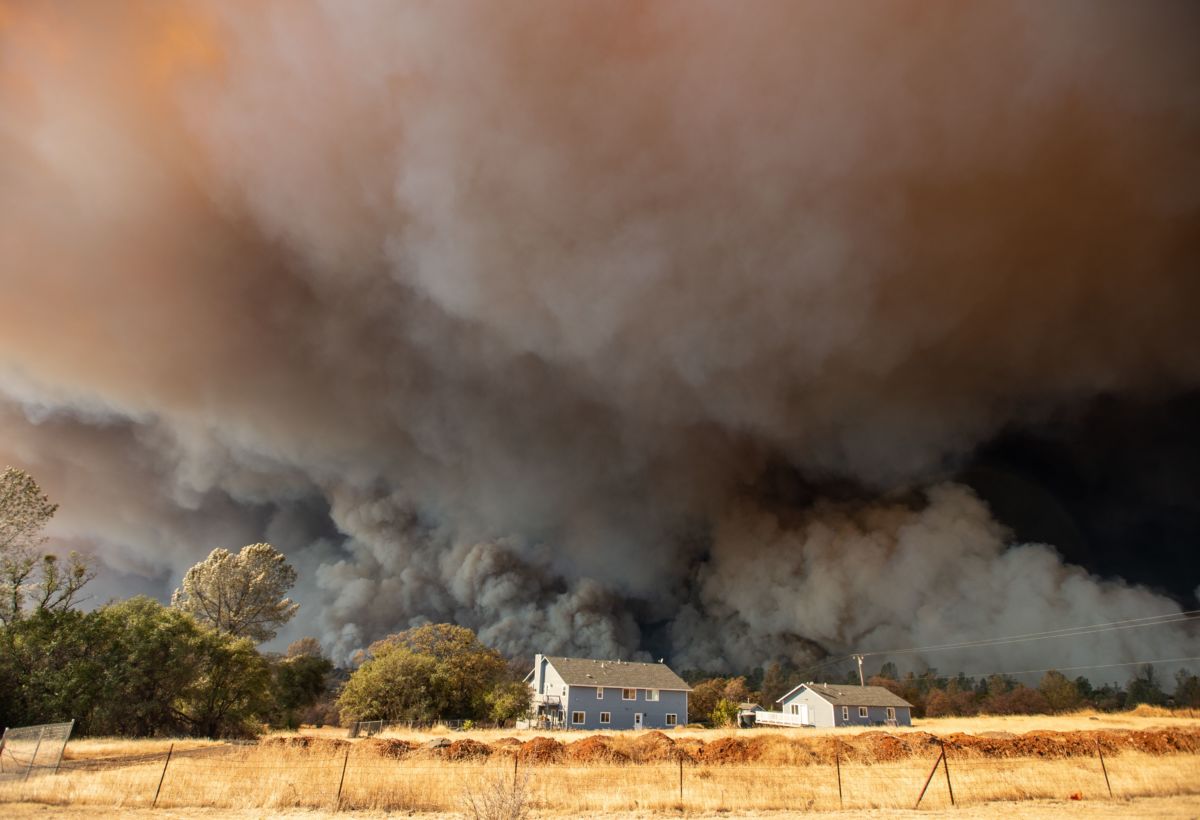
A home is overshadowed by towering smoke plumes as the Camp Fire races through the town of Paradise, California, on November 8, 2018.JOSH EDELSON / AFP / GETTY IMAGES
You can’t accuse Grace Stahre of not working to turn climate change around. She’s fought the fossil fuel industry in court, on the streets, in kayaks and on social media. She has rallied to stop new coal terminals and helped pass a moratorium on new gas pipeline infrastructure. And she has lobbied for investment in renewable energy in Seattle, Washington, the city she calls home.
Stahre knew an increase in wildfires for the Pacific Northwest was predicted as a major consequence of climate change 20 years ago. What she didn’t know is how quickly wildfires would bring catastrophic climate change to her doorstep.
Summers used to be what drew people to live in this pocket of North America, with its alpine wilderness, high country trails with hidden lakes, rugged coastlines and beaches full of high-tide treasures.
In 2018, summer wildfires blanketed the state and region again, getting an early start from fires in eastern Washington, British Columbia, Oregon and California. A total of 1,874 fires were reported in Washington State, according to Janet Pearce, a spokesperson for the Washington State Department of Natural Resources. For several days, Seattle’s air quality was worse than Beijing’s. A third of August had unhealthy air quality, and half the month was thick with smoky haze. Only five days were reported “good” by the Puget Sound Clean Air Agency.
Smoke contains particulate matter — toxic chemicals from burning homes and structures. Fine particulates can remain in the atmosphere for up to two weeks depending on the weather. Large particulate matter can be coughed up. But particulate matter that is less than 2.5 micrometers in diameter goes deep into the lungs. People are impacted differently depending on their immune system and sensitivity. For children with developing lungs, people who exercise hard outdoors, and those with respiratory illness, asthma or chronic obstructive pulmonary disease, a single exposure can be lethal.
For the last two summers, Stahre kept her children indoors when air quality was unhealthy. “Being able to breathe,” she says, “is one of the most precious aspects of life, and I want my children to be able to breathe their entire lives and take a full breath and not have to think that their parents were irresponsible for keeping them around wildfire smoke year after year.”
The Stahre family originally considered turning their home into a fortress against wildfire smoke, unhealthy air and extreme heat. But fully adapting one’s home for a changing climate comes at a steep price. Quotes for an air filtration system and heat pump ranged between $30,000 and $40,000. Instead the family is going to “wait and watch” and install a filter on the ducted part of their home, while researching standalone filtration options for other rooms.
What they’re doing is called “climate adaptation,” says Nate Matthews-Trigg, a health researcher with Washington Physicians for Social Responsibility. “Climate adaptation in the climate change and health field,” he says, “are ways people can change their behavior or their local environment to reduce the impacts of climate change.”
Climate Adaptation and Climate (In)Equity
Research shows creating clean air spaces is an adaptation people should take if they can, says Matthews-Trigg. It can be as simple as setting up a room in the house with an air purifier to reduce airborne particulate pollution, as the Stahre family is doing.
The majority of advice being promoted by health departments does not come with subsidies or financial aid and the measures proposed by local authorities — such as the 300 fans with filters that the Puget Sound Clean Air Agency plans to distribute to “highly impacted communities” who face chronic or economic barriers to mitigating the effects of unhealthy air quality on their lives — come nowhere close to protecting the most vulnerable residents from the chronic effects of unhealthy air.
Kurtis Robinson, a wild land firefighter and president of the Spokane chapter of the NAACP in Eastern Washington, says if you look at “air quality dynamics,” the lack of access to resources is front and center for communities of color, impoverished and underserved communities: “They’re already dealing with a lack of affordable housing, the long-term effects of redlining and racial covenants.”
To address the disparity, the state needs to enact what Robinson calls “distinct action” to ensure resources are “readily available” for all. “Number 1 is moving the resources to make air conditioning, air filtration and retrofitting affordable across the board,” Robinson told Truthout. Climate adaptation with retrofits and clean air spaces for all becomes a “human right not a right of privilege,” he added.
At the same time, it’s a heavy lift to get the conversation to a point where legislatures and government embrace the reality of climate change and the need for equitable climate action. Inertia is baked into the system, says Robinson. In the case of catastrophic climate change, it will take an elevated sense of urgency to address the swiftly moving train of wildfires, drought, sea level rise and hurricanes.
Environmental and forest sciences professor at the University of Washington, Phillip S. Levin, told Truthout that Black, Latino and Native American communities nationwide face 60 percent greater vulnerability during wildfires compared to other communities. Levin says metal roofs are often recommended for those that live in areas prone to wildfires, because they can withstand fire. However, he acknowledges that these aren’t an option for many homeowners or those who rent, because “if we don’t consider the social, economic and political context in which fires occur, then we won’t necessarily allocate our resources to the most vulnerable.”
How Quickly Will Washington Adapt to the Wildfire Climate Crisis?
Most of the messaging about wildfire smoke from Washington’s Department of Health and local health partners urge individual behavior changes. “Get inside, close windows, make sure indoor air is clean, reduce physical activity.” Fliers show who is most sensitive: babies and children; people over age 65; people with health conditions like asthma, chronic obstructive pulmonary disease or emphysema; and pregnant people. Pamphlets advise going somewhere with clean air or air conditioning if your own home can’t provide it: a library, mall, community center or neighbor’s house. The Washington Smoke Blog, a collaboration between county and federal agencies and local tribes, shares information for Washington communities affected by wildfire smoke.
Julie Fox, an epidemiologist with the state Department of Health, admits “this puts a lot of burden on the public to think about how to change their daily activity and living space to reduce smoke exposure.” Asked if the department thinks summer wildfires are the new norm, Fox says, “What I’m hearing is we might not have reached the new norm yet. Things could get worse.”
As for masks, they don’t work for everyone, especially children and people with health conditions, say health professionals. The public has shown a lot of interest in specialized masks like N95 and N100, which are common in hospitals and certain workplace settings, says Meredith Li-Vollmer, a risk communication specialist with Public Health Seattle and King County. But there’s limited research on whether they work outside occupational settings. In fact, there’s some evidence that for certain health conditions, “masks can actually make it worse for people to breathe because you have to breathe through a filter,” says Li-Vollmer.
Family physician Kristen Knox, who has barricaded herself inside during the last two summer wildfire seasons because of her own asthma, says that what she hears from her patients is they’re fearful.
While children and those with respiratory illness are most at risk from smoke, Knox warns, “We’re all at risk.” Even “driving isn’t a safe thing to do unless you can recycle the air in the car and it’s air conditioned and filtered,” she adds. She recommends HEPA filters that can be attached to the dashboard or in the space between the seats.
Clean Air Facilities in City-Owned Buildings and Community Centers
The City of Seattle, for its part, recognizes wildfires as an emerging threat of climate change, and plans to retrofit all city buildings over time. Two community centers in the city’s international district and Rainier Beach neighborhoods, both home to low-income communities and communities of color, will be open as “cleaner air facilities” beginning in July. The city is also upgrading filtration in three buildings at the Seattle Center. Each building will have an air filtration system to reduce pollutants. Around 12 percent of Seattle’s residents have income below the poverty level. This means the three Seattle Center and community center buildings have the capacity to hold between 7.3 percent and 10.6 percent of the below-poverty population and 0.8 percent to 1.2 percent of the entire Seattle population. Of course, such stopgap measures are not enough when air becomes so unhealthy it becomes impossible to breathe for sensitive populations and challenging for everyone else. Julia Reed, a senior policy adviser in the mayor’s office, says if the smoke situation intensifies, the city will respond as it does to any other natural disaster, and may open city buildings as 24-hour shelters.
A Drought Emergency and Record-Breaking Heat
A drought emergency was declared for much of Washington in May by the governor. Low snowpack left many areas of the state with lower-than-normal water reserves. A hot, dry spring absorbed much of the snow that did accumulate. Seattle broke heat records in May with three days of 83-degree temperatures in a row, and again in June with several days of 90 degrees or more. The state capital, Olympia, reached 87 degrees, one degree higher than its previous 1989 record. Much of Eastern Washington saw temperatures in the mid-90s for several weeks in June.
Due to the efforts of Hilary Franz, the commissioner of public lands, the legislature allocated $50 million for fire suppression and prevention. Pearce said the amount would have been “unheard of in the past.” The money will be used to hire 30 more wild land firefighters in addition to 44 the state already has, and to combat forest health issues.
Katharine Hayhoe, the director of the Climate Science Center at Texas Tech University, remarked in 2018 that “climate change loads the diceagainst us by taking naturally occurring weather events and amplifying them.” In an interview with The Guardian, she said, “Wildfires in the western U.S. now burn nearly twice the area they would without climate change.”
Youth Climate Strikers at City Hall Underscore Urgency of Crisis
On Friday, June 21, youth climate strikers stood outside Seattle City Hall, chanting, “When the air we breathe is under attack, what we do? Stand up. Fight back!” They held signs that read, “Our Planet Is on Fire. Smoke Knows No Borders.”
Lydia Ringer, a youth organizer with the #FridaysforFuture climate change campaign, says the ongoing Friday strikes are necessary because “we need to act now. It’s our futures that are on the line.” Ringer wants the state to wean itself from fossil fuels within 10 years. Her mother, a first responder, was in Paradise, California, last summer helping the community cope after devastating wildfires. “She flies all over the country dealing with fires,” says Ringer, “and she’s only going to be dealing with them more and more as climate change intensifies.”
Large wildfires burn more than twice the area in the United States as they did in 1970, with the average wildfire season 78 days longer, according to a report by the Center for Climate and Energy Solutions, an independent nonprofit focused on solutions to climate change. Projections show “an average 1 degree Celsius temperature increase would increase the median burned area per year as much as 600 per cent in some types of forests,” the report concludes.
Climate change has been the focus of Governor Inslee’s presidential campaign. His request for a climate debate during the 2020 presidential campaign season was rejected by the Democratic National Committee. He recently released the fourth piece of his climate change policy, Freedom from Fossil Fuels. In it he outlined plans to transition the U.S. economy off fossil fuels, hold polluters accountable, and end corporate welfare.
Meanwhile, Stahre says she’ll continue to press the state and city for more rapid climate action. She believes Washington should declare a climate emergency, not just a drought emergency, and invest whatever it takes to get off of fossil fuels and reverse the decades of warming baked into the system. She knows another summer season of wildfires is not only likely for 2019, but for 2020 and beyond. By July 10, the state had already responded to 900 fires, according to Pearce with the state department of natural resources.
“This is life on the West Coast because we failed to act,” Stahre says, “and this will be our life for the foreseeable future unless we come up with some incredible technology that allows us to pinpoint those wildfires and nip ’em in the bud like we’ve never been able to before. But that’s not something I see on the horizon right now.”
This story is part of Degrees Of Change, a series that explores the problem of climate change and how we as a planet are adapting to it. Tell us how you or your community are responding to climate change here.
A quarter of the world’s greenhouse gas emissions come from putting food on the table. From the fossil fuels used to produce fertilizers, to the methane burps of cows, to the jet fuel used to deliver your fresh asparagus, eating is one of the most planet-warming things we do.
And as climate change gets worse, we’re seeing more flooding rains, more heat waves, and more droughts—indicating that this problem in part created by our eating habits is turning round to endanger the future of food.
Science writer Amanda Little examines that future in her new book The Fate of Food: What We’ll Eat in a Bigger, Hotter, Smarter World, and explores innovative ways that farmers are adapting too, from aerial farms and aquaculture to robotic weed pickers. The message is clear: There might be a way out of this, if we rethink how we put food on the table. Read an excerpt from The Fate of Food.
We’ll also be examining the solutions to our carbon-hungry food chain. Stefano Carpin of the University of California Merced is designing a smarter way to water crops, by surveying fields with drones to figure out where to water, and then sending in fleets of robots to send squirts of water from irrigation tubes. He’s currently designing the system for California’s warming vineyards.
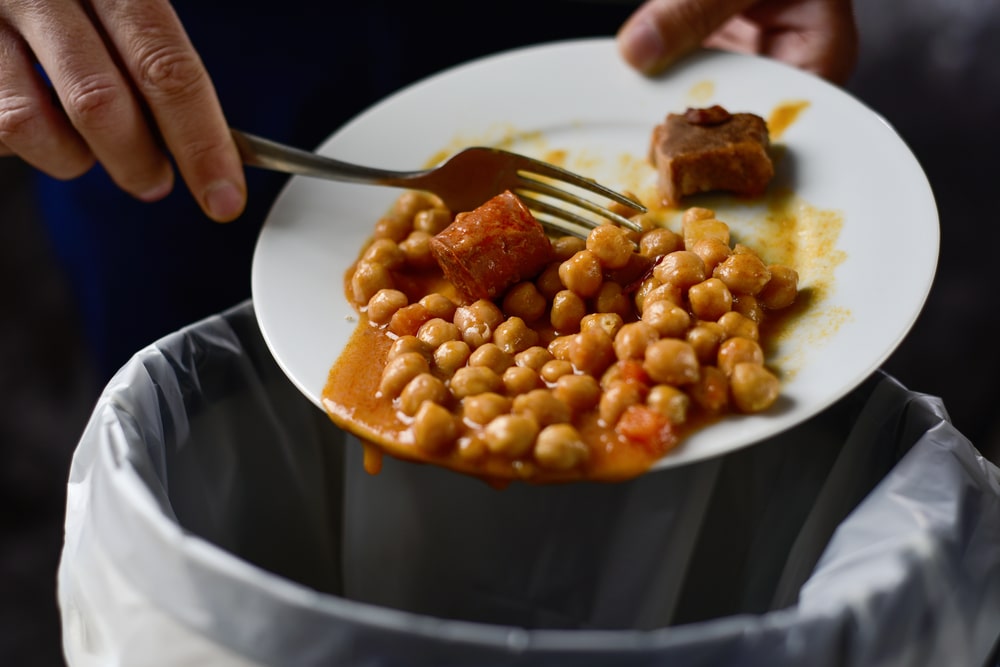
Food waste is another significant problem—40% of food goes wasted in this country. Julie Goddard of Cornell University is designing smart packaging that can keep foods fresh, all without the addition of preservatives, which consumers increasingly prefer to avoid. We’ll talk about all those solutions and more in this chapter of Degrees of Change.
Q&A With Amanda Little On Eating Smarter
David Church in Jacksonville, Florida: What about plant-based meat alternatives? They’re highly processed. I think that would take up a lot of resources.
Amanda Little: Beyond Meat, which is a leading brand in plant-based proteins, runs its pea proteins through a simple process of heating cooling and pressure to create this fibrous structure. So it does take processing, but it’s more sustainable and humane than conventional meats. A University of Michigan study compared the production of Beyond Burger to a ¼ lb US beef burger. It took 99 percent less water, 93 percent less land, and about half the energy. According to the study, the production of a Beyond Burger emits 90 percent fewer greenhouse gas emissions.
Ed Whitehouse in Mount Pleasant, Michigan: What is the time frame for lab-grown meat be rolled out and affordable?
The timeframe generally ranges from “a couple years” to “five to ten years.” The startup Finless Foods, a producer of cultured tuna, said they’ll have a product ready for market in 2020, but then shifted to: “we’re not giving public timelines anymore.” Another producer of lab-grown sausage has said they’ll have a market-ready product by 2021 and the Israeli startup Future Meat Technologies has referenced roughly the same timeframe. The biggest brand in cell-based meat, Memphis Meats, has been careful not to give a rollout date — they say they want to achieve optimal quality as well as cost. The cost of cultured meats has come down dramatically the recent years, but it’s still in the hundreds of dollars per pound. There’s little doubt that with economies of scale, cell-based meats will be cost-competitive with, or cheaper than, conventional meats, it’s just a question of when.
1. How much does our food choices impact climate change vs. other life style choices like flying?
2. Is it better to eat imported meat substitutes than locally produced meat?
3. Can food be climate positive (e.g. better than neutral)?
Amanda Little: Many of us meat-eaters generate more planet-warming emissions from eating than we do from driving or flying. Broadly, food production accounts for about a fifth of total greenhouse gas emissions annually. Upshot: agriculture contributes more than any other sector, including energy and transportation, to climate change.
There have been claims that you can produce a “climate-positive” hamburger, but the data is vague and the farming practices behind such burgers are very rarely implemented. But there great strategies for climate-positive progress in agriculture, that range from better fertilizer management (chemical fertilizers evaporate into the air, producing nitrous oxide, a potent greenhouse gas) to reforesting unused or poorly used pasture and farmland. See this excellent report by The Nature Conservancy, “Natural Climate Solutions.”
1. What is the relative environmental impact of different levels of animal product elimination? (Just beef, beef + pork, beef + pork + chicken, pescatarian, vegetarian, vegan)
Amanda Little: Let’s compare beef to fossil fuels: if you give up one 5-ounce steak and eat beans instead, that’s the equivalent of saving about 2/3 of a gallon of gas. More excellent deets [in this Washington Postarticle] Yet another fascinating WaPo piece by Tamar Haspel offers a calorie-for-calorie analysis of the carbon impact of veggies vs. meats. Broccoli, for example, has a higher carbon cost per calorie than chicken and pork. Haspel says: “Beef and lamb are still way worse than anything. Substituting chicken or pork for beef is, from a carbon perspective, almost as good as substituting a plant food.”
2. Are there any veggies that are surprisingly bad for the environment? Are there any veggies with env impact similar to an animal product?
3. Which favorite beverage is the best/worst for the environment: beer, wine, coffee, tea?
Amanda Little (question 2): Yes. Asparagus! If it requires jet fuel. And many other air-freighted vegetables and fruits. Check out this National Geographic piece: “The Surprisingly Big Carbon Shadow Cast By Slender Asparagus” which gives a breakdown of fruit and veggie carbon costs.
The biggest change you can make, according to Little, is to reduce your consumption of beef and lamb. Whether you count by the kilo or the calorie, those two food products result in the highest carbon emissions.
The second thing you can do is identify, observe, and begin to address the amount of food waste in your home. In her book, Little talks to Darby Hoover of the Natural Resources Defense Council, who worked on the NRDC’s Wasted report on food waste. Hoover says: “Food waste is riddled with unexpected contradictions, and one of them is that healthier diets tend to be the most wasteful diets.” A recent study in the journal PLOS ONE came to the same conclusion—and that’s because healthy, fresh foods are also the most likely to perish. So unless you have a plan to use that crate of strawberries or the two pound bag of specialty lettuces, don’t buy it. Little provided these practical tips for wasting less:
When produce begins to wilt, use it for soups and blended drinks
Freeze fruits and vegetables if you can’t eat them all before spoiling
Buy more frozen fruits and vegetables if fresh produce tends to go wasted in your house
Why can’t we seem to care about the climate crisis?02:12
(CNN)There are plenty of ominous indicators of the consequences of climate change, but few are more worrying to scientists than the ice sheets of Antarctica at our planet’s southern pole.
These ice sheets have been melting for quite some time, and it doesn’t take a degree in physics to understand the risk there. As the ice melts it flows into the ocean, causing sea levels to rise. And rising sea levels are obviously a huge problem.
Don’t believe these climate change lies02:35
Now, new NASA-funded research published in the journal PNAS reveals a concerning complication. Scientists from the Georgia Institute of Technology, NASA Jet Propulsion Laboratory and the University of Washington ran hundreds of simulations to predict how one large ice sheet, Thwaites Glacier, could degrade over the next 50 to 800 years.
The results showed the glacier was more in danger of becoming unstable that previously thought.
Content by The All-New Silverado
From Forge To Film
Kenneth Spivey didn’t want to just experience movie magic—he wanted to make it. Now, he’s a prop maker seeing his creations on the big screen.
The Thwaites Glacier.
Small changes could lead to a watershed moment
“Unstable” here means something very specific. An “instability” in an ice sheet essentially makes it a frozen, ticking time bomb. The area of the glacier behind where it cantilevers over the water is eaten away, which can cause the glacier’s ice to break off and flow faster out to sea and add to rising sea levels.
What’s more ominous, the research finds, is that once this instability is triggered it’s hard, if not impossible, to stop.
“If you trigger this instability, you don’t need to continue to force the ice sheet by cranking up temperatures. It will keep going by itself, and that’s the worry,” lead author Alexander Robel said in a release.
In other words, even if climate change was magically reversed, it wouldn’t necessarily stop the dangerous and rapid rise in sea levels that could be triggered by unstable ice sheets.
Play Video
How climate change will impact your region01:57
The ‘worst-case’ scenario
Robel, an assistant professor at Georgia Tech’s School of Earth and Atmospheric Sciences, says the “worst-case scenario” could be a rise of two or three feet from the Thwaites glacier alone.
While Robel suggests engineers and planners start building future critical infrastructure farther away from the sea-level line, you don’t need to pack up your coastal homes like it’s high tide yet. This potential acceleration of sea level rise could come into full effect 200 to 600 years from now.
This seemslike a long time from now, because we will all be dead by then. But the Earth and its future generations hopefully won’t be, and climate scientists want to keep it that way.
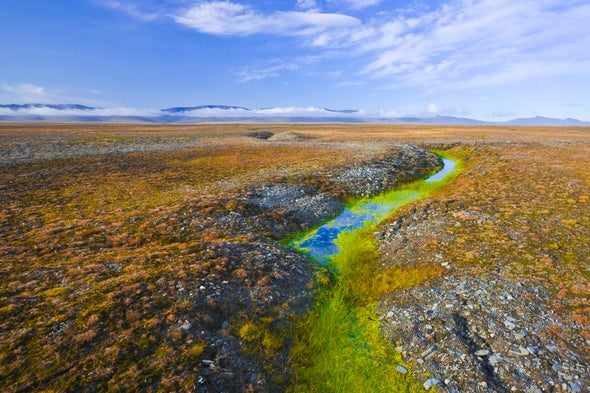
As temperatures rise in the rapidly warming Arctic, scientists are growing more and more concerned about the region’s permafrost—the carbon-rich, frozen soil that covers much of the landscape. As permafrost warms up and begins to thaw out, microbes in the soil may release large quantities of both climate-warming carbon dioxide and methane into the atmosphere, potentially worsening the effects of climate change.
Researchers are carefully monitoring the natural emissions from permafrost in the Arctic. And in recent years, they’ve also begun designing their own experiments aimed at investigating the way the frozen soil might react to future climate change.
They’re finding that even a little bit of warming may cause permafrost to release significantly higher levels of greenhouse gases into the air.
New results from one of these studies, published yesterday in Proceedings of the National Academy of Sciences, suggest that the microbe communities are the key. Warming can alter the types of organisms that live and thrive in the frozen soil, favoring microbes that tend to produce more methane and carbon dioxide.
The new study relied on experiments from a special research site in Alaska, where scientists have designed a way to manipulate the natural landscape to investigate the effects of rising temperatures. They’ve built special fences that allow snow to pile up deeper on the ground, forming a kind of insulation and causing the permafrost below the surface to warm up. Permafrost at the experimental sites was around a degree Celsius warmer than nearby sites that hadn’t been insulated.
The research site—known as the Carbon in Permafrost Experimental Heating Project—provides a unique opportunity to simulate the effects of future climate change. In a laboratory setting, it might be more difficult to exactly reconstruct the natural landscape, making scientists less sure of their results.
For the new study, the researchers conducted special forms of genetic sequencing to determine how microbe communities changed in the warmer plots. The shifts were apparent after less than five years of elevated temperatures.
In shallower layers of the soil, they found an increase in microbes that produce more carbon dioxide. And in deeper layers, they found an increase in microbes that produce larger amounts of methane, an even more potent greenhouse gas. At the same time, methane emissions from the experimental sites also increased.
The methane-producing microbes are a particular concern, the researchers note. Both carbon dioxide and methane have a warming effect on the climate—but if a greater proportion of the soil’s greenhouse gas emissions shift to methane, the stronger of the two gases, then the permafrost’s effect on the climate could be even more powerful than scientists currently anticipate.
The study provides experimental support for scientists’ ongoing fears about thawing permafrost. Throughout the Arctic, researchers are finding that large swaths of frozen soil are steadily heating up, sometimes faster than scientists had previously predicted.
The research also underscores a growing scientific interest in the links between climate change and the world’s tiniest organisms.
Just last month, a group of more than 30 scientists jointly published a statement warning of the many ways that climate change may affect microbe communities, and the ways that microbes may in turn affect the progression of global warming.
In addition to permafrost, they pointed to changes in microbe communities that affect the ocean’s carbon uptake and the marine food web, lead to algae blooms, alter the growth of vegetation, influence agricultural production, and contribute to the spread of infectious diseases.
The statement “documents the central role and global importance of microorganisms in climate change biology,” the authors write. “It also puts humanity on notice that the impact of climate change will depend heavily on responses of microorganisms, which are essential for achieving an environmentally sustainable future.”
Reprinted from Climatewire with permission from E&E News. E&E provides daily coverage of essential energy and environmental news at www.eenews.net.
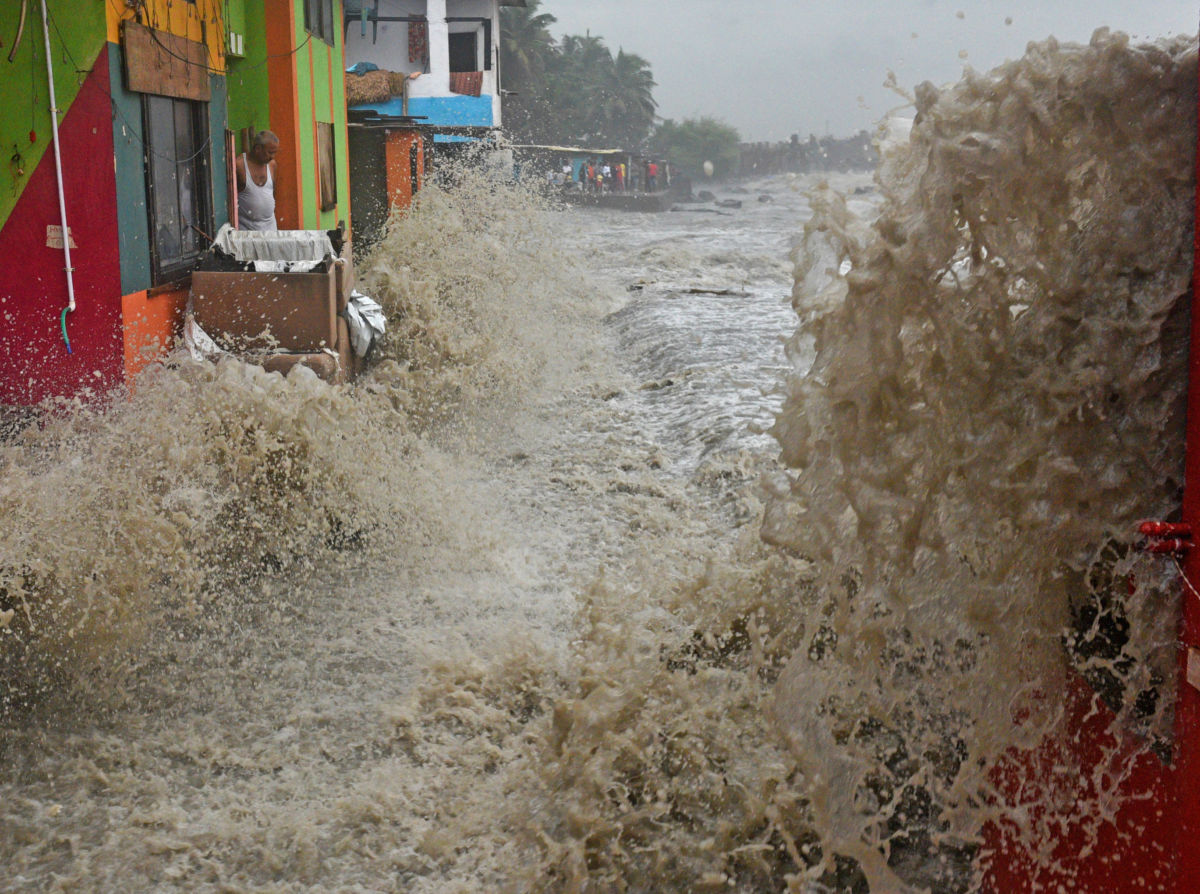
High tide brings sea waves to the slum of the Bandstand Promenade in the Bandra neighborhood of Mumbai, India, on June 12, 2019.SATYABRATA TRIPATHY / HINDUSTAN TIMES VIA GETTY IMAGES
A “staggering” new warning from a top United Nations official that climate crisis-related disasters are now occurring at the rate of one per week, with developing nations disproportionately at risk, provoked calls for immediate global action to combat the human-caused climate emergency.
The warning came in an interview with The Guardian, which reportedSunday:
Catastrophes such as cyclones Idai and Kenneth in Mozambique and the drought afflicting India make headlines around the world. But large numbers of “lower impact events” that are causing death, displacement, and suffering are occurring much faster than predicted, said Mami Mizutori, the U.N. secretary-general’s special representative on disaster risk reduction. “This is not about the future, this is about today.”
This means that adapting to the climate crisis could no longer be seen as a long-term problem, but one that needed investment now, she said. “People need to talk more about adaptation and resilience.”
“We talk about a climate emergency and a climate crisis, but if we cannot confront this [issue of adapting to the effects] we will not survive,” Mizutori added. “We need to look at the risks of not investing in resilience.”
Wolfgang Cramer @wolfgangcramer
“The most vulnerable people are the poor, women, children, the elderly, the disabled and displaced” https://gu.com/p/bnynz/stw
One climate crisis disaster happening every week, UN warns
Developing countries must prepare now for profound impact, disaster representative says
theguardian.com
25 people are talking about this
The estimated annual cost of climate-related disasters is $520 billion, the newspaper noted, “while the additional cost of building infrastructure that is resistant to the effects of global heating is only about 3 percent, or $2.7 trillion in total over the next 20 years.”
“This is not a lot of money [in the context of infrastructure spending], but investors have not been doing enough,” said Mizutori. “Resilience needs to become a commodity that people will pay for.”
Mizutori said that improving the systems that warn the public of severe weather and expanding awareness of which places and people are most vulnerable could help prevent lower impact disasters. She noted that while urgent work is needed to prepare the developing world, richer countries are also experiencing the consequences of global heating — including devastating wildfires and dangerous heatwaves.
The adaption measures Mizutori called for include raising — and enforcing — infrastructure standards to make houses and businesses, roads and railways, and energy and water systems more capable of withstanding the impacts of the warming world, which scientists warn will increasing mean more frequent and intense extreme weather events. She also highlighted the potential of “nature-based solutions.”
Peter Strachan — a professor and expert on energy policy, environmental management, and energy transitions at the U.K.’s Robert Gordon University — called the report “staggering” and alerted several environmental and climate advocacy groups on Twitter.
Prof Peter Strachan@ProfStrachan
One #ClimateCrisis disaster happening every week, UN warns
Sharing The Guardian’s article on Twitter, the U.S.-based youth-led Sunrise Movement declared: “This is an emergency. We need political leadership that acts like it.”
Sunrise Movement
✔@sunrisemvmt
One climate crisis-fueled disaster every week.
That means every week, tens of thousands of people are losing their lives or livelihoods.
“This is why it’s so offensive to talk about climate impacting ‘our children/grandchildren,’” tweeted War on Want executive director Asad Rehman, referencing a common talking point among U.S., European, and U.N. leaders. “Do people of global South facing disaster every week not deserve the right to life? The answer from rich countries and those who call for net zero by 2050 is a big No.”
Trump announced plans to slash the size of Bears Ears national monument in Utah. Photograph: Andrew Cullen/Reuters
Donald Trump is set to hail his administration’s “environmental leadership” on Monday in a speech in which he is expected to declare the US a world leader on the issue.
But since taking office two and a half years ago, the US president has been at the helm of an administration that has pursued numerous cuts in environmental protections and last year saw a rise in greenhouse gases of 3.4% – the biggest rise in emissions since 2010.
He has also regularly publicly aired his doubts over the existence of climate change – previously calling it a “hoax”, suggesting that the climate could “change back again” and falsely claiming it was a phenomenon invented by China.
A report by the State Energy and Environmental Impact Center at New York University’s school of law published in March said the Trump administration had “set its sights on watering down or outright repealing a half-dozen health and environmental rules critical to the health and welfare of all Americans as well as the planet”.
Here are five of the biggest environmental setbacks under Trump:
1) Departure from the Paris climate agreement
In June 2017, less than five months after his inauguration, Trump announced his plan to pull the US out of the Paris climate agreement. He told an audience outside the White House: “I was elected to represent the citizens of Pittsburgh, not Paris”. He claimed the agreement, signed by the US and nearly 200 countries in 2015, promising to cut greenhouse gas emissions to keep global heating below 2C, unfairly disadvantaged the US and negatively impacted jobs and factories.
2) Shrinking national monuments and animal protections
Trump attracted broad criticism in December 2017 when he announced plans to slash the size of two national monuments in Utah. Bears Ears was cut from 1.5m acres to 228,784 acres and Grand Staircase-Escalante almost halved from approximately 2m acres to 1,006,341 acres – marking the biggest elimination of public lands protection in America’s history. In August 2018 officials announced plans to allow more mining on the land and to sell some of it off – despite previously vowing not to. The following month, the administration announced plans to remove key provisions from the Endangered Species Act – prompting conservationists to warn it could put vulnerable plant and animal species in more danger.
Emissions spew from a coal-fired generating station in Newburg, Maryland, on 10 October 2017. Photograph: Mark Wilson/Getty Images
3) Rollback of the Clean Power Plan
Advertisement
The Environmental Protection Agency is in the process of finalizing plans to dismantle the Clean Power Plan, an Obama-era rule intended to cut emissions from power plants and encourage them to move towards natural gas and renewable power. The regulations, which were announced in 2015 and had the backing of hundreds of businesses, were billed at the time as the “biggest step that any single president has made to curb the carbon pollution that is fueling climate change”.
4) Cuts to clean water protections
The Trump administration plans to remove protections from thousands of America’s streams and millions of acres of wetlands, which is feared will harm wildlife and enable pollution to enter drinking water. Under the proposal, fewer waterways would require permits to pollute – including agricultural runoff and industry waste. Currently, protected waterways provide drinking water to approximately 117 million people.
5) More methane
In September 2018, the Trump administration announced its plans to repeal rules that aim to restrict methane leaks on public and tribal lands. The Obama administration tried to cut leaks by forcing oil and gas companies to capture methane (a key gas involved in global heating), update technology and arrange to monitor leaked gas. But the Department of the Interior has branded the rule “flawed” and “unnecessarily burdensome on the private sector”.
A blistering heatwave prompted Germany to impose speed restrictions on usually limit-free stretches of its high-speed motorways Wednesday, the latest sign of extreme weather events ruffling Europe’s largest economy.
State authorities are reducing speeds to as low as 100 kilometers per hour (62 miles per hour) on some stretches because of fears that the unusually high temperatures could create potentially deadly cracks on Autobahn surfaces, a highways agency spokesman said. Temperatures in Germany on Wednesday could surpass a June high of 38.2 degrees Celsius (101 Fahrenheit), according to the country’s DWD weather service. The all-time record of 40.3 degrees, set in July 2015, could also fall.
Meteorologists blame climate change for sending a blast of air from the Sahara desert into Western Europe. The sweltering heat echoes a sustained drought in 2018 across Germany that halted shipping on the Rhine River, hampered power generation, sparked forest fires and forced the country to import grain for the first time in 24 years. Rising temperatures are making violent convective storms more likely, mirroring a trend in the U.S. Midwest.
Changes to the jet stream, which would normally blow in cooler weather from the Atlantic Ocean, are contributing to “the build-up of hot and dry conditions over the continent, sometimes turning a few sunny days into dangerous heatwaves,” said Dim Coumou, a climatologist at the Vrije Universiteit Amsterdam.
Health Risks
The early summer heat has already sparked wildfires outside Berlin. In Paris, volunteers distributed water to homeless people after the French government closed schools and activated a contingency plan to protect residents. The Red Cross warned that excessive heat could cause dizziness, convulsions and hallucinations, especially for older people. Electricity prices across the continent surged on expectations Europeans would turn on fans and air conditioning units to keep cool.
Europe’s heat in June — part of a string of extraordinary weather patterns including temperatures of more than 50 degrees in India that killed over 180 people — is the latest reminder of the tangible effects of climate change.
With those risks harder to ignore, environmental concerns have rocketed up the political agenda. Support for Germany’s Green Party has eclipsed Chancellor Angela Merkel’s Christian Democrats to become the country’s strongest party in some recent polls.
Coal Conflict
Political tensions are high. Over the weekend, German police forcibly removed protesters who stormed an open-pit coal mine owned by German utility RWE AG, Europe’s biggest corporate emitter of carbon dioxide. Demonstrators blocked railroads used to carry the fuel to nearby power plants over what they see as the slow pace of Germany’s plans to exit coal.
“Nothing less than our future is at stake,” said Nike Malhaus, spokeswoman for protest group Ende Gelaende. “We are taking the coal phaseout into our own hands, because the government is failing to protect the climate.”
The heatwave is the second to hit Europe this year after a similar weather pattern pushed temperatures above 20 degrees for several days in February, sparking wildfires in northern England and the Alps.
Temperatures in Switzerland are about 10 degrees warmer than normal for this time of year, according to data compiled by Bloomberg. The high temperatures means glaciers will likely shrink further, increasing the likelihood that the Rhine will again be too shallow for shipping later this year, according to Switzerland’s federal weather agency.
No Carriages
Meanwhile, Europeans are adapting to this week’s heat in ways large and small. Brussels has suspended horse-and-carriage rides for tourists. The decision was taken out of respect for the animals’ welfare, said Fabian Maingain, the Belgian city’s chief for economic affairs, told Le Soir newspaper. Similar decisions have been taken by Antwerp and Ostend.
In Hemer — a town about 35 kilometers (22 miles) southwest of Dortmund — a man on Saturday took off his clothes in a supermarket’s frozen-food department to escape the heat that is predicted to peak on Wednesday. After customers alerted staff, he grabbed a banana and a can of beer before attempting to flee the store, local police said on Twitter.











 Exposing the Big Game