Exposing the Big Game

Forget Hunters' Feeble Rationalizations and Trust Your Gut Feelings: Making Sport of Killing Is Not Healthy Human Behavior

Exposing the Big Game

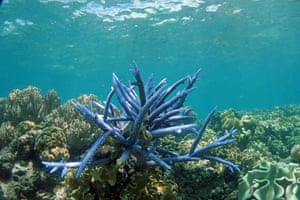
The Coming Ecosystem Collapse Is Already Here for Coral

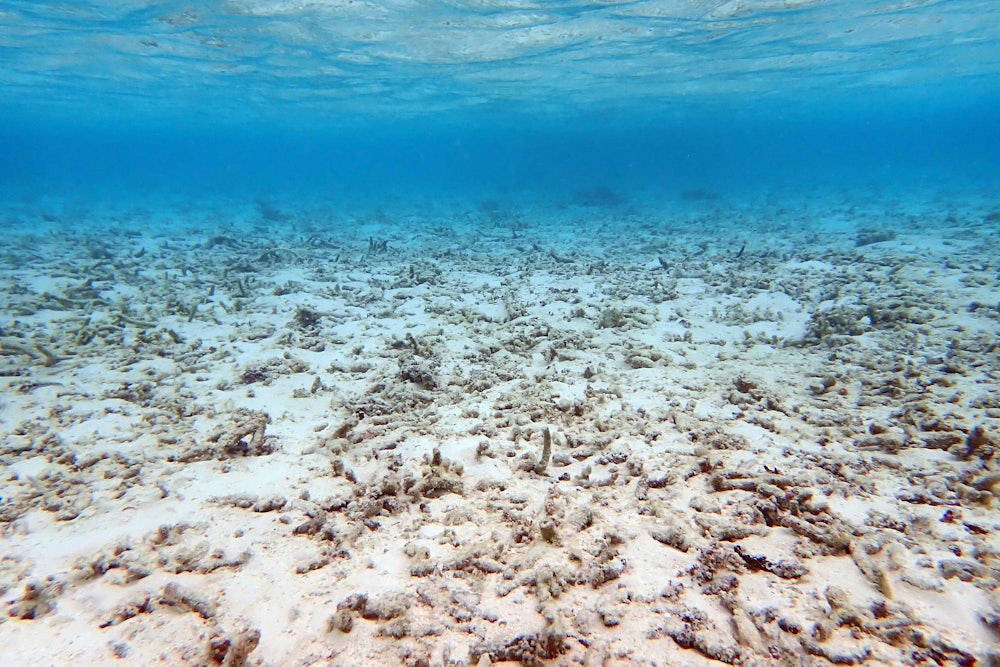
Dead coral in the Maldives (Carl Court/Getty Images)

Conservationists are waging an expensive fight of diminishing returns to save reefs and those who depend on them.

UN climate summit postponed until 2021 because of COVID-19


(Photo: UN via MGN Online)

LONDON (AP) — This year’s United Nations global climate summit is being postponed because of the coronavirus pandemic, host country Britain said Wednesday,

The U.K. government said the meeting, due to take place in Glasgow, Scotland, in November, will now be held next year at a date still to be determined.

The government said in a statement that “in light of the ongoing, worldwide effects of COVID-19, holding an ambitious, inclusive COP26 in November 2020 is no longer possible.” The meeting is formally known as the 26th Conference of the Parties.

The decision was made by the United Nations Framework Convention on Climate Change, Britain and Italy, which had been due to host some preparatory events.

Scottish First Minister Nicola Sturgeon tweeted that it was a “disappointing decision, but absolutely the right one as we all focus on the fight against #coronavirus.”

Glasgow’s SEC Arena, which had been due to host the event, has been named as the site of a temporary hospital for COVID-19 patients.

Prime Minister Boris Johnson has made tackling climate change a priority, but Britain’s tenure at the helm of the conference got off to a bumpy start even before the coronavirus pandemic. In January, Johnson fired Claire O’Neill, a former British government minister appointed last year to head the event, and replaced her with Business Secretary Alok Sharma.

“We will continue working tirelessly with our partners to deliver the ambition needed to tackle the climate crisis and I look forward to agreeing a new date for the conference,” Sharma said Wednesday.

Patricia Espinosa, who heads the U.N. climate office, said the new coronavirus “is the most urgent threat facing humanity today, but we cannot forget that climate change is the biggest threat facing humanity over the long term.”

U.N. Secretary-General Antonio Guterres stresses that safeguarding lives “is our foremost priority” but countries must step up action on climate change especially as they recover from the COVID-19 pandemic, U.N. spokesman Stephane Dujarric said.

“Countries must work to protect the health of people, and the planet has never been more at risk,” the U.N. chief’s spokesman said. “Solidarity and greater ambition is needed now more than ever to transition to a sustainable, resilient low carbon economy that limits global warming to 1.5 degrees Celsius (2.7 degrees Fahrenheit).”

The meeting in Glasgow would have been held five years after the 2015 Paris climate accord was agreed. Countries that signed the landmark agreement are still expected to provide an update on their efforts to reduce greenhouse gas emissions driving global warming.

In the Paris Agreement, countries agreed to limit global warming to 2 degrees Celsius (3.6 degrees Fahrenheit) and do their best to keep it below 1.5 degrees C (2.7 degrees Fahrenheit) by the end of the century, compared with pre-industrial times.

President Donald Trump has triggered the United States’s withdrawal from the Paris accord, a move that formally comes into force in November. His Democratic rivals have said they would rejoin if elected.

Environmental campaigners said postponing this year’s U.N. talks was the right move.

“It doesn’t make sense to bring people from every country together in the middle of a pandemic,” said Mohamed Adow, a longtime participant at U.N. climate meetings who heads the think tank Power Shift Africa.

Adow said postponing the conference mustn’t stop countries from taking action to curb global warming, though, and suggested plans to revive economies after the pandemic ends should avoid propping up the kinds of industries that contribute to climate change.

“Economies in the rich north must not be kick-started with dirty investment that will lead to climate suffering in the global south,” he said.

Environment officials are planning to hold a lower-level meeting online at the end of April.

Rescuing the Great Barrier Reef: how much can be saved, and how can we do it?

As global heating makes coral bleaching a regular event, scientists are urgently seeking ways to help the world’s biggest reef survive

Zoe Richards diving off Lizard Island
 Zoe Richards has seen great changes in the corals off Lizard Island since she started monitoring them in 2011. Photograph: Mike Emslie

When coral scientist Dr Zoe Richards left the Great Barrier Reef’s Lizard Island in late January, she was feeling optimistic.

Richards is a taxonomist. Since 2011 she has recorded and monitored 245 coral species at 14 locations around the island’s research station, about 270km north of Cairns.

In 2017 she saw “mass destruction of the reef”. Back-to-back mass bleaching in 2016 and 2017, and cyclones in 2014 and 2015, had wreaked havoc.

But in January, she saw thousands of new colonies of fast-growing Acropora corals that had “claimed the space” left by dead and degraded corals. In a three-year window without spiralling heat or churning cyclones, some corals were in an adolescent bloom – not mature enough to spawn, but getting close.

“It was an incredible recovery,” says Richards, of Curtin University. “But I knew if it was hit again, it would be trouble – and that’s exactly what happened.”

In 2020, mass bleaching returned to Lizard Island – perhaps not as badly as in previous years – but enough, says Richards, to turn the clock back on the recovery she had seen.

Zoe Richards@ZoeR_Coral

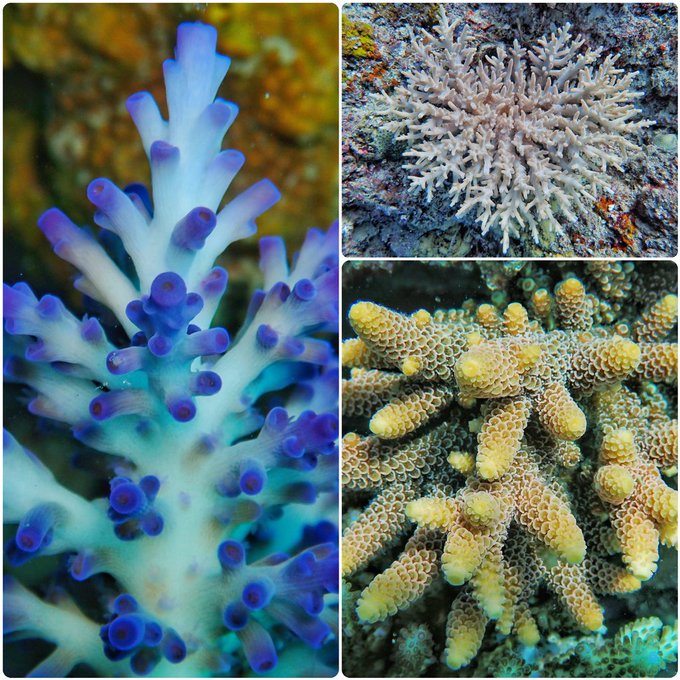
Day 1 of coral biodiversity re-surveys @ Lizard I, GBR. After 2 cyclones & 2 bleaching events in a decade, it’s great to see a range of healthy young Acropora colonies fighting back!
A. echinata (blue), A. speciosa (pink) & A. spathulata (orange)

View image on Twitter
See Zoe Richards’s other Tweets

This summer has delivered a third mass bleaching for the reef in just five years. The back-to-back bleaching of 2016 and 2017 was mostly confined to the northern and central sections.

When bleaching is mild, corals can and do recover, although it can make them more susceptible to disease. But severe bleaching can kill corals. Estimates are that the 2016 bleaching killed about 29% of the reef’s shallow water corals and the 2017 event took another 19%.

Some scientists are now concerned global heating may have reached a point where tropical reefs bleach almost every year.

What this means for the reef in the coming decades is an area of live research and debate among scientists.

Can we fix it?

Scientists Guardian Australia spoke to say the reef’s fortunes hang on the answers to two questions.

The first is whether governments around the world will make deeper cuts to greenhouse gas emissions than they have already agreed and, if so, how close they will get to keeping global heating to 1.5C.

A second is whether efforts to first identify and then deploy a swathe of potential measures that could reduce the impact of rising temperatures will be successful.

What seems clear is that without some human intervention, the magic of the world’s greatest coral reef system will be lost.

Prof Peter Mumby, professor of coral reef ecology at the University of Queensland, is the chief scientist at the Great Barrier Reef Foundation – the once-small not-for-profit that was awarded a controversial $443m government grant in 2018.

He said the 2020 bleaching “is giving us greater pause, given it seems we can see quite frequent coral bleaching events earlier than people had previously expected”.

Mumby says bleaching events have been “patchy”, and the fact that some areas have escaped “means there’s an opportunity for management”.

What keeps the reef functioning as a single ecosystem is the way each reef connects to another through the way corals reproduce. They all either spawn, or produce larvae, that can float in the water column and settle on nearby reefs.

Mumby and colleagues have identified about 100 reefs along the GBR that are well spread, well connected to other reefs by ocean currents, and tend to experience cooler temperatures.

He says making sure those reefs stay as healthy as possible – in particular by managing outbreaks of the coral-eating crown of thorns starfish – could be crucial in keeping the wider reef viable.

The reef’s unrivalled size and diversity – almost 4,000 reefs, cays and islands stretching for more than 2,000 kilometres – gives it extra resilience, he says.

Climate change is still the reef’s biggest threat and society will need to focus on tackling it, “but there needs to be a way to adapt to how we manage reefs so that they can roll with the punches – we have to do both those things”.

The Australian Institute of Marine Sciences (AIMS) has produced an as-yet unpublished study, sent to the federal government, that reviews more than 160 different interventions that have been suggested for the reef, identifying about 40 that could be worth further study.

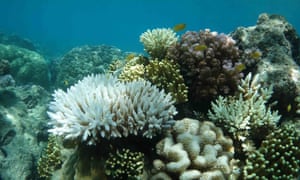
Heat-stressed corals off Lizard Island in February 2020
Pinterest
 Heat-stressed corals off Lizard Island in February 2020. Photograph: Dr Lyle Vail, Director of the Australian Museum’s Lizard Island Research Station

Dr Lina Bay, a principal research scientists at AIMS, says one promising area of study is what’s known as “assisted gene flow”, where the spawn of corals with better tolerance for heat could be captured and then dispersed.

“Not all corals are created equal,” she says. “Some have a higher stress tolerance than others. Over many years we’ve shown that the variation in bleaching tolerance is hereditable – it gets passed from parents to offspring.”

She says these differences can exist even among the same species, meaning those corals can be selectively grown in a lab setting to promote more heat tolerance.

AIMS scientist Dr Neal Cantin has just finished a three-year experiment with one fast-growing coral species called Pocillopora acuta, which behaves like a weed by filling in the gaps when less hardy corals die off.

Starting with 90 parent specimens taken from three different parts of the Great Barrier Reef, Cantin and colleagues grew 7,500 offspring and then subjected them to rising levels of CO2 and temperatures of up to 2C warming.

Even at high temperatures, some of these corals survived, and they were able to tolerate higher levels of heat as the experiment went on.

Having a street-fighting weedy coral like this is important, says Cantin. Dead areas of coral reefs tend to get covered in algae, but Cantin says a weedy coral that can compete with the algae can then make room for slower-growing corals to also grow.

“The whole goal of a lot of these interventions is to work with species that can be successful on their own. We won’t be able to work with 600 species of corals, but we could probably work with 20 that fill the functional roles of a healthy reef community.

“You can’t deny bleaching events are becoming more frequent and more severe and they’re impacting across a bigger area than before. We can just document that demise, or we can learn from it and have some corals for future generations.”

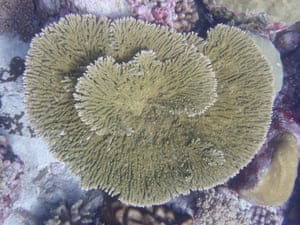
An unbleached specimen of Acropora clathrata on the Great Barrier Reef
Pinterest
 An unbleached specimen of Acropora clathrata on the Great Barrier Reef. Photograph: Zoe Richards

“It’s these silent extinctions that go on,” she says.

“The entire reef is operating like one big meta population with sub-populations that are connected to each other. If you successively take out nodes in that population, sooner or later you will end up with parts that don’t connect. It will be fragmented into subsets that will continue to erode in terms of diversity. It’s degradation of the [coral] community at a very large scale.”

‘At 3C, you basically have nothing’

Prof Ove Hoegh-Guldberg, of the University of Queensland, has done pioneering work on the study of coral bleaching going back to the mid-1980s.

He remembers Lizard Island as a “picture perfect” place to do research on corals in the late 80s, when his research there found rising temperatures caused corals to lose their “symbionts” – the algae that lives in the coral and gives them much of their nutrients and colour.

The Great Barrier Reef’s first major mass bleaching event happened in 1998. There was another in 2002, and again in 2016, 2017 and 2020.

Hoegh-Guldberg says: “We knew there was a temperature effect, and we knew that temperatures were going up. At the end of the 90s, I could put those two things together.”

The year after the reef’s first mass bleaching, Hoegh-Guldberg took climate models to forecast that if greenhouse gas emissions kept growing then, by 2020, “the average bleaching event is likely to be similar or greater than the 1998 event”.

As 2020 approached, the models showed reefs across the northern, central and southern regions would see between eight and 10 bleaching events per decade.

“I wished I’d been wrong” he says. “I think I said at the time that I’d have egg on my face if I was wrong. But there’s no egg on my face.”

Corals at Lizard Island
Pinterest
 Corals at Lizard Island had been showing signs of recovery before this year’s bleaching. Photograph: Dr Lyle Vail, Director of the Australian Museum’s Lizard Island Research Station

Hoegh-Guldberg says manually replanting corals is uneconomic at scale but there’s merit in helping the dispersal of coral larvae, pointing to a technique being developed by a scientist at Southern Cross University that captures millions of larvae in floating pools.

But he says the main game is keeping global heating down.

“Let’s say we get to 1.5C and then we can stabilise – that’s really the last call for reefs. Corals will come back and there will be winners and losers, but you’ll have a functional reef that supports fisheries and tourism.”

The problem is that right now, government pledges under the Paris agreement are enough to raise temperatures by 3C – not 1.5C.

“At 2C all the reef-building corals have plummeted and instead you are looking at the dominance of other organisms like algae. At 3C you basically have nothing.

“I’m fearful that in the next 10 years we will see the loss of coral across the planet at phenomenal rates,” he says. “That’s what keeps me up at night.”

While we fixate on coronavirus, Earth is hurtling towards a catastrophe worse than the dinosaur extinction

in the history of our planet, increasing amounts of carbon dioxide in the atmosphere have caused extreme global warming, prompting the majority of species on Earth to die out.

In the past, these events were triggered by a huge volcanic eruption or asteroid impact. Now, Earth is heading for another mass extinction – and human activity is to blame.

I am an Earth and Paleo-climate scientist and have researched the relationships between asteroid impacts, volcanism, climate changes and mass extinctions of species.


Read more: Here’s what the coronavirus pandemic can teach us about tackling climate change


My research suggests the current growth rate of carbon dioxide emissions is faster than those which triggered two previous mass extinctions, including the event that wiped out the dinosaurs.

The world’s gaze may be focused on COVID-19 right now. But the risks to nature from human-made global warming – and the imperative to act – remain clear.

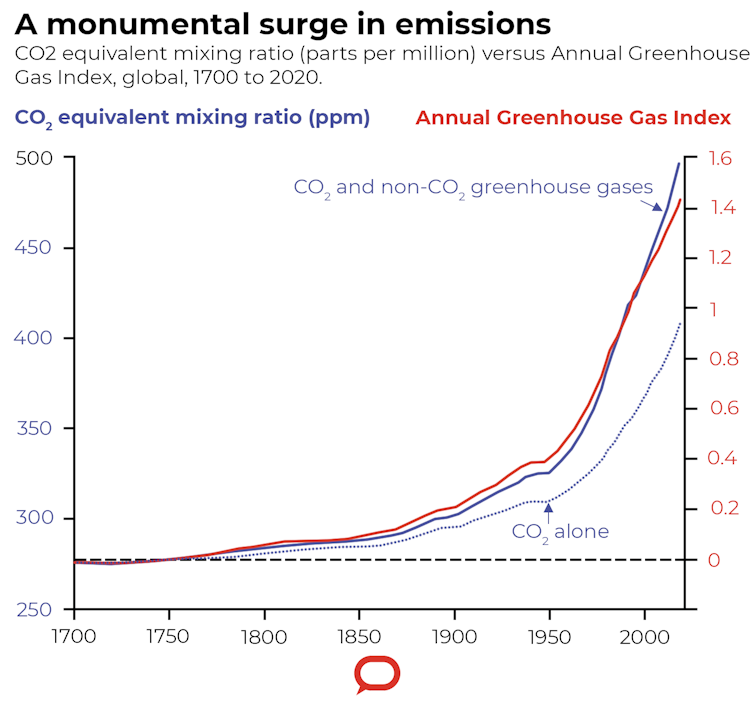
The current rate of CO2 emissions is a major event in the recorded history of Earth. EPA

Past mass extinctions

Many species can adapt to slow, or even moderate, environmental changes. But Earth’s history shows that extreme shifts in the climate can cause many species to become extinct.

For example, about 66 million years ago an asteroid hit Earth. The subsequent smashed rocks and widespread fires released massive amounts of carbon dioxide over about 10,000 years. Global temperatures soared, sea levels rose and oceans became acidic. About 80% of species, including the dinosaurs, were wiped out.

And about 55 million years ago, global temperatures spiked again, over 100,000 years or so. The cause of this event, known as the Paleocene-Eocene Thermal Maximum, is not entirely clear. One theory, known as the “methane burp” hypothesis, posits that a massive volcanic eruption triggered the sudden release of methane from ocean sediments, making oceans more acidic and killing off many species.

So is life on Earth now headed for the same fate?

Comparing greenhouse gas levels

Before industrial times began at the end of the 18th century, carbon dioxide in the atmosphere sat at around 300 parts per million. This means that for every one million molecules of gas in the atmosphere, 300 were carbon dioxide.

In February this year, atmospheric carbon dioxide reached 414.1 parts per million. Total greenhouse gas level – carbon dioxide, methane and nitrous oxide combined – reached almost 500 parts per million of carbon dioxide-equivalent

Author provided/The ConversationCC BY-ND

Carbon dioxide is now pouring into the atmosphere at a rate of two to three parts per million each year.

Using carbon records stored in fossils and organic matter, I have determined that current carbon emissions constitute an extreme event in the recorded history of Earth.

My research has demonstrated that annual carbon dioxide emissions are now faster than after both the asteroid impact that eradicated the dinosaurs (about 0.18 parts per million CO2 per year), and the thermal maximum 55 million years ago (about 0.11 parts per million CO2 per year).

An asteroid wiped out the dinosaurs 66 million years ago. Shutterstock

The next mass extinction has begun

Current atmospheric concentrations of carbon dioxide are not yet at the levels seen 55 million and 65 million years ago. But the massive influx of carbon dioxide means the climate is changing faster than many plant and animal species can adapt.

A major United Nations report released last year warned around one million animal and plant species were threatened with extinction. Climate change was listed as one of five key drivers.

The report said the distributions of 47% of land-based flightless mammals, and almost 25% of threatened birds, may already have been negatively affected by climate change.


Read more: Curious Kids: What effect did the asteroid that wiped out the dinosaurs have on plants and trees?


Many researchers fear the climate system is approaching a tipping point – a threshold beyond which rapid and irreversible changes will occur. This will create a cascade of devastating effects.

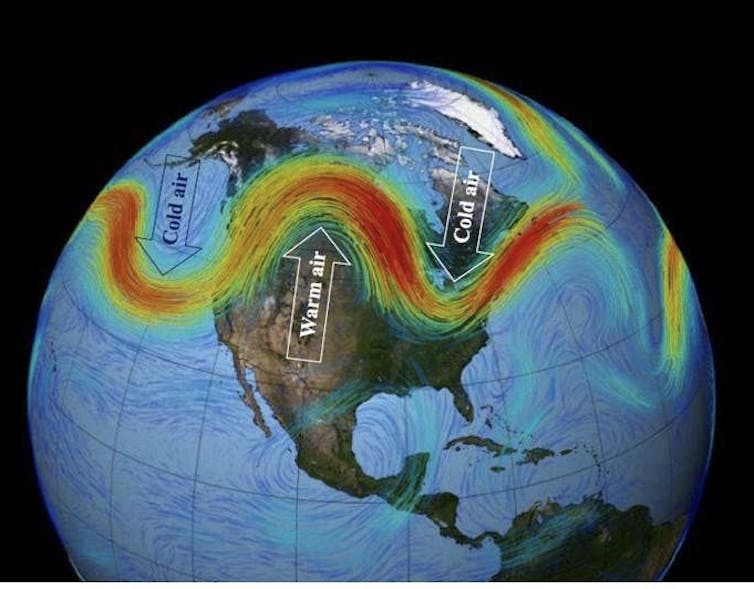
There are already signs tipping points have been reached. For example, rising Arctic temperatures have led to major ice melt, and weakened the Arctic jet stream – a powerful band of westerly winds.

A diagram showing the weakening Arctic jet stream, and subsequent movements of warm and cold air. NASA

This allows north-moving warm air to cross the polar boundary, and cold fronts emanating from the poles to intrude south into Siberia, Europe and Canada.

A shift in climate zones is also causing the tropics to expand and migrate toward the poles, at a rate of about 56 to 111 kilometres per decade. The tracks of tropical and extra-tropical cyclones are likewise shifting toward the poles. Australia is highly vulnerable to this shift.

Uncharted future climate territory

Research released in 2016 showed just what a massive impact humans are having on the planet. It said while the Earth might naturally have entered the next ice age in about 20,000 years’ time, the heating produced by carbon dioxide would result in a period of super-tropical conditions, delaying the next ice age to about 50,000 years from now.

During this period, chaotic high-energy stormy conditions would prevail over much of the Earth. My research suggests humans are likely to survive best in sub-polar regions and sheltered mountain valleys, where cooler conditions would allow flora and fauna to persist.

Earth’s next mass extinction is avoidable – if carbon dioxide emissions are dramatically curbed and we develop and deploy technologies to remove carbon dioxide from the atmosphere. But on the current trajectory, human activity threatens to make large parts of the Earth uninhabitable – a planetary tragedy of our own making.


Read more: Anatomy of a heatwave: how Antarctica recorded a 20.75°C day last month

‘Probably the worst year in a century’: the environmental toll of 2019

The annual Australia’s Environment report finds last year’s heat and drought caused unprecedented damage

The sun glows red during the ACT bushfires
 The sun glows red during the ACT bushfires, one of the events that contributed to a disastrous 2019 for the environment in Australia. Photograph: Mike Bowers/The Guardian

Record heat and drought across Australia delivered the worst environmental conditions across the country since at least 2000, with river flows, tree cover and wildlife being hit on an “unprecedented scale”, according to a new report.

The index of environmental conditions in Australia scored 2019 at 0.8 out of 10 – the worst result across all the years analysed from 2000.

The year delivered unprecedented bushfiresrecord heat, very low soil moisture, low vegetation growth and 40 additions to the threatened species list.

The report’s lead author, Prof Albert van Dijk of the Australian National University’s Fenner school of environment and society, told Guardian Australia 2019 was “probably the worst in a century or more” for the environment.

“This is not the new normal – this is just getting worse and worse,” he said, adding that 2019 had seen a “continuing descent into an ever more dismal future. You start to see ecosystems fall apart and then struggle to recover before the next major disturbance.”

The Australia’s Environment report scored environmental conditions across seven indicators – inundation, streamflow, vegetation growth, leaf area, soil protection, tree cover and the number of hot days.

Across all years analysed, 2005 was the next worst year, impacted by the millennium drought. The year 2010 was the best; it was also one of Australia’s wettest on record.

Van Dijk said the cause of the impacts for 2019 were global heating as well as natural variability in Australia’s climate. The number of days above 35C was 36% higher than the previous 19 years.

The population had continued to grow and the country’s greenhouse gas emissions had remained high, the report said.

Greenhouse gas emissions per person were 11% below the 2000-18 average, but remained among the highest in the world because of high energy use per person and the burning of coal for electricity.

Findings were underpinned by about 1m gigabytes of data, including satellite data that only became available from 2000, as well as field data and on-the-ground surveys.

Reviewing biodiversity impacts, the report highlighted the number of spectacled flying foxes – one of many species vulnerable to heat stress – had dropped to 47,000 from an average of 100,000 before 2016.

The numbers of threatened species had risen by 36% since 2000, the report said.

River flows were 43% below the 2000-18 average, causing water storages to drop and mass fish deaths in the Murray-Darling Basin, and wetland environments had also seen record-low inundation.

River flows were above average around the coast of northern Queensland, around Karratha in Western Australia and at Strahan in Tasmania’s west.

The protection of soils by vegetation and moisture was “extremely poor”, causing dust storms. The average soil moisture was also lowest since at least 2000 and farming productivity had been hit.

The Great Barrier Reef, which has just experienced its third mass bleaching event in five years, had escaped bleaching in 2019 but its condition remained poor.

World heritage-listed Gondwana rainforests, the Blue Mountains, alpine regions, eastern Gippsland and Kangaroo Island had all been badly hit by bushfires.

A co-author of the report, Dr Marta Yebra, said: “Our data clearly shows that the combination of dry forests and hot weather made for an especially explosive mixture.”

All the findings and data from the report, now in its fifth year, can be viewed on a website and interactive map.

The ‘climate doomers’ preparing for society to fall apart

Rachel Ingrams
Presentational white space

An article by a British professor that predicts the imminent collapse of society, as a result of climate change, has been downloaded over half a million times. Many mainstream climate scientists totally reject his claims, but his followers are already preparing for the worst.

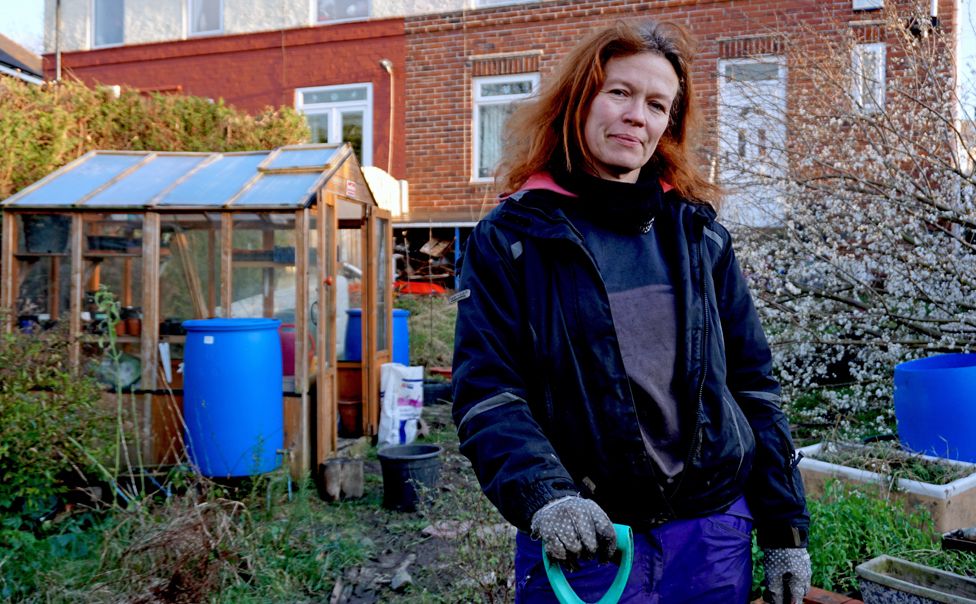
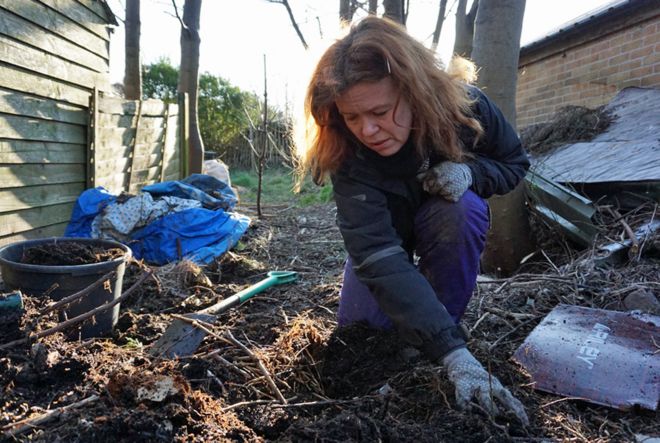
As the last light of the late-winter sunset illuminates her suburban back garden, Rachel Ingrams is looking at the sky and pondering how long we have left.

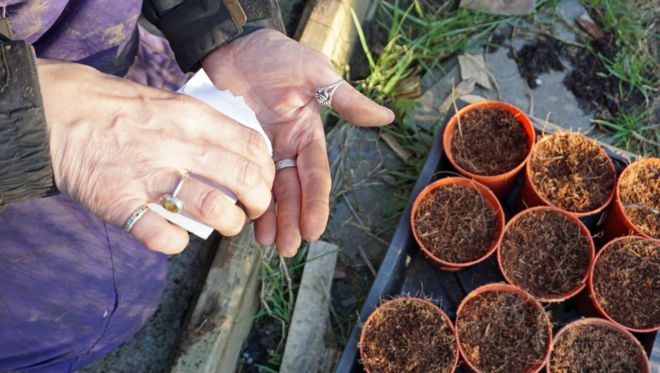
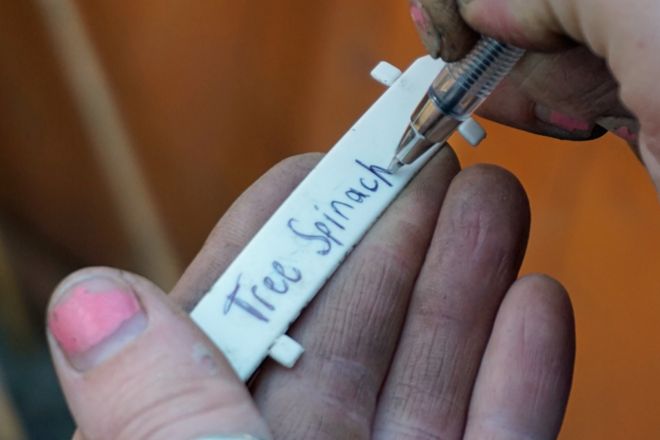
Her hands shielded from the gusts of February air by a well-worn pair of gardening gloves, Rachel carefully places tree spinach and scarlet pimpernel seeds into brown plastic pots.

Over the past year, Rachel, 45, has invested in a greenhouse and four bright blue water butts, and started building a raised vegetable patch out of planks of wood. It’s all part of an effort to rewild her garden and become as close to self-sufficient as she can, while society continues to function.

Within the next five to 10 years, she says, climate change is going to cause it to fall apart. “I don’t see things lasting any longer than that.”

Rachel planting seeds

So every evening, after picking up her children from school and returning to their former council house, she spends about two hours working outside.

“I find the more I do it, the less anxious I am,” she says. “It’s better than just sitting in the living room looking at the news and thinking, ‘Oh God, climate change is happening, what do we do?'”

Rachel is unsure about how much to tell her three daughters. “I don’t say to them that in five years we won’t be here,” she tells me. “But they do accept that food will be difficult to find.”

Every six weeks, she takes her two youngest daughters on an 450-mile round trip from their home in Sheffield to an organic farm in South Wales, where they learn how to forage for food. It’s vital for them to learn “skills we’ll be able to use in the natural world when all our systems have broken down,” she says.

Rachel's daughter

“I don’t think what they’re learning in school is the right stuff any more, given what we’re facing. They need to be learning permaculture [self-sufficient agriculture] and other stuff, ancient stuff that we’ve forgotten how to do. We just go to Tesco.”

But she’s not at all confident her efforts will make much difference, in the long run. “I don’t think we can save the human race,” she says, “but hopefully we can leave the planet with some organic life.”

Short presentational grey line

Around a year ago, a video of a talk by a British professor called Jem Bendell appeared on Rachel’s Twitter feed.

“As soon as I saw it, everything seemed to make sense in a terrifying way,” Rachel says.

“It felt like a bolt from the blue: ‘We’re all going to die.’ I felt it in my bones that we are at the beginning of the end.”

Tree spinach label

Bendell, a professor in sustainable leadership at the University of Cumbria, is the author of an academic article, Deep Adaptation: A Map for Navigating Climate Tragedy, which has become the closest thing to a manifesto for a generation of self-described “climate doomers”.

In it, he argues that it is too late for us to avoid “the inevitability of societal collapse” caused by climate change. Instead, we are facing a “near-term” breakdown of civilisation – near-term meaning within about a decade.

The paper was rejected for publication by a peer-reviewed journal, whose reviewers said its language was “not appropriate for an academic article”.

It is certainly unconventional, with its disturbing descriptions of what’s to come. “You won’t know whether to stay or go. You will fear being violently killed before starving to death,” Bendell writes.

After the journal’s rejection, in July 2018 Bendell self-published the 34-page article online.

It soon went viral. It has now been downloaded over half a million times, translated into a dozen languages, and sparked a global movement with thousands of followers – called Deep Adaptation, because Bendell calls on people to adapt their lifestyle to cope with the harsh conditions in his vision of the future.

But Bendell’s stark predictions have been dismissed by prominent climate scientists.

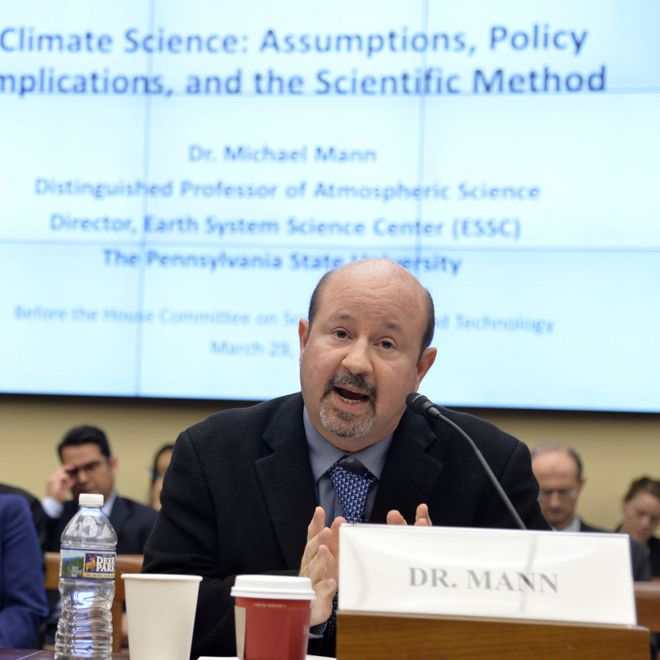
Prof Michael Mann, one of the world’s most renowned, describes Bendell’s paper as “pseudo-scientific nonsense”.

Michael MannImage copyrightALAMY

“To me, the Bendell paper is a perfect storm of misguidedness and wrongheadedness,” Mann says. “It is wrong on the science and its impacts. There is no credible evidence that we face ‘inevitable near-term collapse’.”

What’s more, Mann claims, Bendell’s “doomist framing” is “disabling” and will “lead us down the very same path of inaction as outright climate change denial. Fossil fuel interests love this framing.” Bendell is, he says, “a poster child for the dangerous new strain of crypto-denialism”.

Myles Allen, professor of Geosystem Science at the University of Oxford, is just as critical.

“Predictions of societal collapse in the next few years as a result of climate change seem very far-fetched,” he tells me.

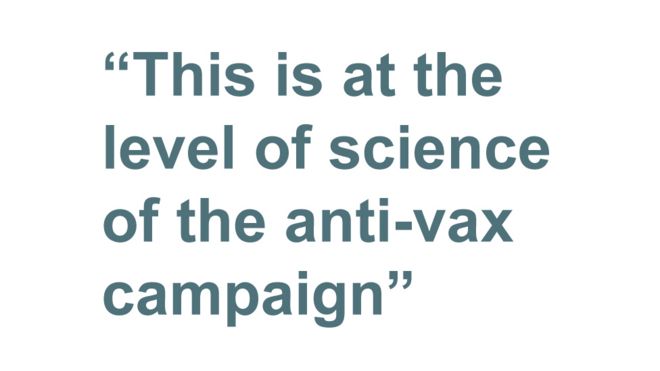
Quotebox: This is at the level of science of the anti-vax campaign

“So far, the system’s responded to greenhouse gas emissions almost exactly as predicted. So to say it’s about to change and become much worse is speculation.

“Honestly this kind of material is at the level of science of the anti-vax campaign.”

Allen agrees with Mann that the paper’s pessimism is liable to make people feel powerless. “Lots of people are using this kind of catastrophism to argue that there’s no point in reducing emissions,” he says.

Bendell rejects the scientists’ claims and says people have been inspired by his paper to demand radical government measures to tackle climate change.

“I hope Michael Mann gets to meet some more climate activists on the streets, so he can meet the new breed of fearless people taking peaceful direct action after being moved by uncompromising assessments of our situation,” he says. “Many of the leaders of Extinction Rebellion read my paper and quit their jobs to go full time to try to reduce harm and save what we can.”

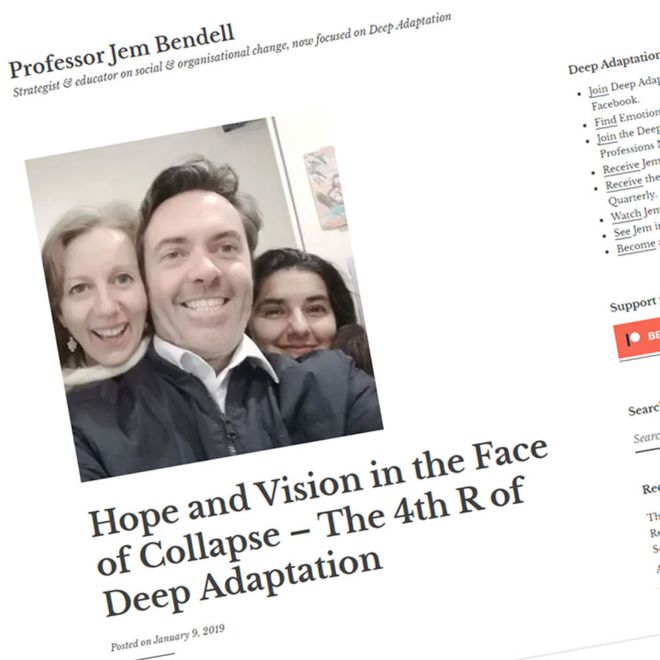
Jem Bendell's website

Other climate scientists say they have more time for Bendell.

“With global emissions continuing to rise, and no signs that the Paris targets will be respected, Jem Bendell has some justification in taking the strong position that it is already too late and we’d better prepare to deal with the collapse of the globalised economic system,” says Prof Will Steffen, from Australia’s Climate Change Council.

“Jem may, in fact, be ‘ahead of the game’ in warning us about what we might need to prepare for.”

He adds that there is a “credible risk” that even a 2C rise in global average temperatures above pre-industrial levels could initiate a “a tipping cascade… taking our climate system out of our control and on to a Hothouse Earth state”.

“I can’t say for sure that Jem Bendell is right… but we certainly can’t rule it out.”

Short presentational grey line

In its bleak forecasts and direct language, Bendell’s paper has had an electrifying effect on many who have read it. Almost 10,000 people have joined a “Positive Deep Adaptation” Facebook group and about 3,000 are members of an online forum.

Here, the movement’s followers exchange ideas about how they can adapt their lives, businesses and communities in accordance with Deep Adaptation doctrine.

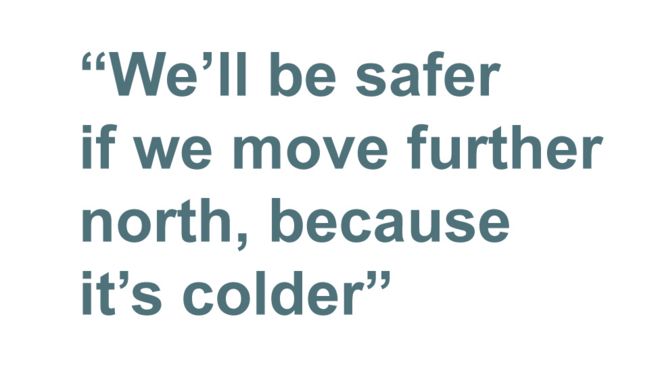
Quotebox: We'll be safer if we move further north, because it's colder

In the paper, Bendell proposes a “Deep Adaptation Agenda” – a conceptual roadmap for how to cope with the economic, political and environmental shocks he believes are coming our way.

He urges people to think about the aspects of our current way of life we will be able to hold on to and those we will have to let go of, referring to these two ideas as Resilience and Relinquishment.

He also talks about a third R, Restoration, which refers to old skills and habits that we will have to bring back. For some, such as Rachel, “restoration” means rewilding their gardens and local neighbourhoods, learning foraging skills and imagining how to survive in a world without electricity.

For others it’s about leaving the city or heavily populated areas of the country and heading for the hills.

Lionel Kirbyshire, a 60-year-old former chemicals engineer, says he began getting deeply worried about the climate a few years ago. He read, among other things, some of the writings of Guy MacPherson, a controversial American scientist unaffiliated to Deep Adaptation, who predicts humans will be extinct by 2030.

His head was soon “boiling with all this information that no-one wants to know”.

“There was a moment about a year ago when it hit me and I thought, ‘We’re in big trouble,'” he says. “When you look at the whole picture it’s terrifying. I think we’ve got 10 years, but we’ll be lucky to make it.”

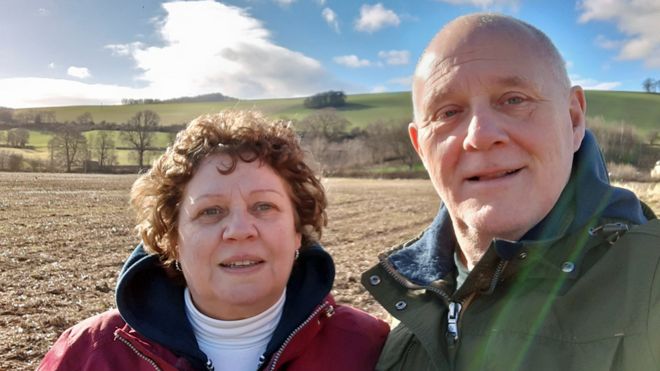
Lionel and his wife, JillImage copyrightLIONEL KIRBYSHIRE
Image captionLionel and Jill Kirbyshire, enjoying the wide open spaces of Fife

A few months after reading the Deep Adaptation paper, Lionel and his wife, Jill, decided to move north. They sold their house in densely populated Bedfordshire and relocated to a three-bedroom terraced house in the small town of Cupar, Fife.

“In the back of my mind, [I think] when the crunch comes, there’ll be a lot of people in a small area and it’s going to be mayhem – and we’ll be safer if we move further north because it’s colder.”

They expect their grown-up children will join them in the coming years. In the meantime Lionel is investing in some growing boxes, in order to create raised vegetable beds in his garden, a foraging manual and water purification tablets.

“We’re not stockpiling food but as the years go on I can’t see us having much left.”

Books about self-sufficiency, foraging etc
Image captionSome of Rachel Ingrams’ books about foraging and self-sufficiency

Another Deep Adaptation follower, who didn’t want his name to be published, told me he was planning to relocate from the South-East to the Welsh countryside.

“The basic things we’ll need will be food, water and shelter,” he says.

He plans to live off-grid, either joining an existing eco-community or “going it alone” with like-minded friends in a house clad with straw bales for insulation.

“Deep Adaptation isn’t a bunker mentality of doing it yourself. You want a mix of people with different skills,” he says.

But he also says he has been taking crossbow lessons, “because you never know”.

“It seems like a pretty useful weapon to have around to protect ourselves. I’d hate the thought I’d ever have to use it but the thought of standing by and not being able to protect the ones I love is pretty horrifying.”

Short presentational grey line

Jem Bendell says Deep Adaptation advocates non-violence. Its online platforms ban members from discussing “fascistic or violent approaches to the situation”.

Though it didn’t appear in Bendell’s first paper he later added a fourth R, Reconciliation, which is all about living in peace. And when I finally get through to him, after two months of unreturned emails and conversations with his colleagues in the Deep Adaptation “core team”, he puts a big emphasis on love.

“People are rising up in love in response to their despair and fear,” he tells me. “[Deep Adaptation] seems to have reached people in all walks of life, at least in the West – heads of banks, UN agencies, European Commission divisions, political parties, religious leaders…”

His message, he says, is one of “putting love and truth first”.

At present, the professor’s followers often feel that their truth they believe in is ignored and dismissed by the rest of society.

Lionel says that among people he meets “no-one wants to talk about it”.

He’s joined several online groups – with names like Near-Term Human Extinction Support Group and Collapse Chronicles – where he can share his despair.

“Sometimes I say that I’m feeling quite low and someone will say they’re feeling the same,” he tells me. “So you know you’re not in it alone.”

Rachel tells me that she also sometimes feels isolated. Her attempts to get her neighbours to collaborate in a community compost heap have mostly fallen on deaf ears, so she turns to Deep Adaptation’s online forums to find support.

Rachel Ingrams gardening

“It’s much easier when you have a group to face the tragedy unfolding before us. If I am feeling anxious, hopeless or full of grief I can go on there and tell them how I’m feeling.

“There are 9,000 people all over the world, so you can post on there in the middle of the night and get support. I post ideas about my compost bin and get lots of messages back with people being encouraging.”

However, she thinks there will be a day when the electricity is cut off, so she is learning to recite poems by heart, in case she finds herself alone, with no internet or possessions.

“At least I’ll have something to carry with me.”

Study: Climate impact of butter 3.5 times greater than plant-based spreads


https://www.businessgreen.com/news/4012376/study-climate-impact-butter-times-plant-spreads

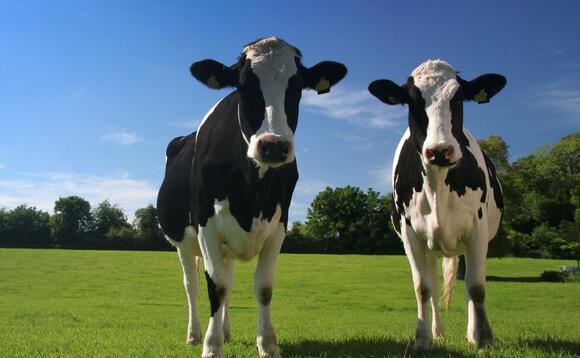
The climate impact of butter is higher in large part due cow's methane-heavy farts
The climate impact of butter is higher in large part due cow’s methane-heavy farts

Cow’s methane-heavy burps and farts blamed for CO2 associated with butter in study commissioned by margarine maker Upfield

The climate impact of consumer diets has yet again fallen under the spotlight, after research this week concluded butter is 3.5 times more harmful to the environment on average than margarine and plant-based spreads, due in large part to cows’ methane emissions.

The study was commissioned by global margarine maker Upfield – responsible for plant-based brands including Flora, Rama and Blue Band – in another sign of how firms are seeking to promote the climate credentials of their products to increasingly eco-conscious consumers.

It asked scientists to carry out a large-scale life cycle assessment looking at the production, transport, sale, and use of 212 plant-based spreads and margarines sold across 21 European and North American markets, and then compare their greenhouse gas emissions to the impact of 21 dairy butters.

The results found the average CO2 impact for every kilogram of plant-based spread and margarine produced was around 3.3kg, compared to 12.1kg of CO2 equivalent for dairy-based products, making emissions from butter around 3.5 times higher.

The bulk of emissions associated with butter occur during milk production, according to the study, which found enteric emissions from cows – aka methane from burping and farting – made up 39 per cent of greenhouse gases from dairy-based spreads.

It means that just one 250g of butter results in the equivalent of 1kg of cow emissions, the study estimated, with methane a particularly potent greenhouse gas which is around 80 times more powerful than CO2 at trapping heat, and responsible for around a quarter of global warming.

Every one of the 212 plant-based spreads analysed fared much better in the study in terms of carbon impact, with associated emissions ranging from less than 1kg to almost 7kg, whereas butter products generated between over 8kg to nearly 17kg of CO2 for every kilogram produced.

Beyond emissions too, the life cycle assessment – the largest of its type to date, according to Upfield – concluded that margarines and plant-based spreads consistently had lower impacts than butter in terms of climate, water and land.

Cattle feed production including cow burps, farts, and manure management “contributed significantly to climate change impacts, with a higher impact than most other factors”, the study found. Some farming groups have argued that new diet supplements and other technologies can serve to curb methane emissions from cattle, but the industry is still regarded as a large and growing source of emissions.

Sally Smith, head of sustainability at Upfield, said the study highlighted the need for a “fundamental transformation of our food system” in order to tackle climate change, arguing that people in western countries needed to cut down on their meat and dairy intake.

She also argued it was important for firms to help consumers to understand the impact of their food choices on the planet. “It is our responsibility as a forward-thinking company to understand and act to address the impact of our plant-based products on the environment,” said Smith. “A shift to regenerative agricultural practices will be key for both arable and dairy farmers. Robust lifecycle assessments help ensure that our approach is data driven and grounded on the latest scientific evidence.”

Coronavirus: Space images reveal drastic fall in pollution over China as factories closed

‘This is the first time I have seen such a dramatic drop-off over such a wide area for a specific event,’ says Nasa scientist

Satellite images show a dramatic drop in pollution over China after the coronavirus outbreak shut down swathes of the country’s industry and travel.

US space agency Nasa said the change was at least partly related to the economic slowdown caused by efforts to contain the virus.

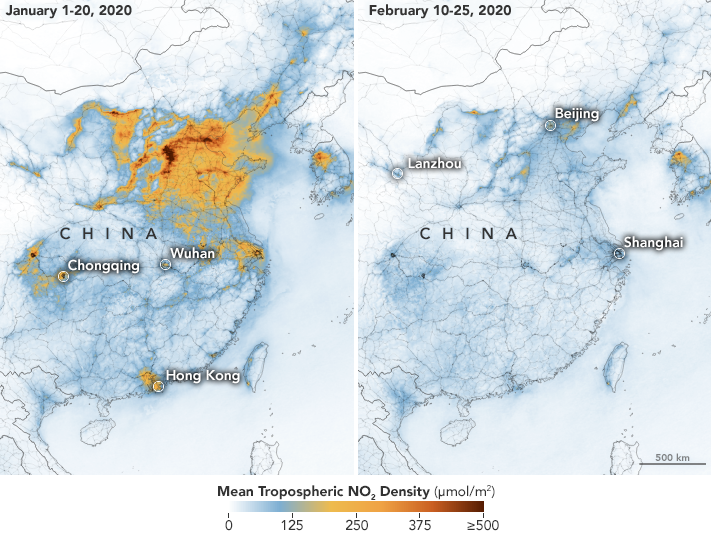
Nasa maps show how levels of nitrogen dioxide, a toxic gas from vehicles, power plants and factories, plummeted after the mass quarantine, compared with before.

Scientists have previously found the coronavirus wiped out at least a quarter of China’s emissions of damaging greenhouse gases in just two weeks in mid-February.

Closing industrial plants and asking people to stop at home has led to sharp drops in the burning of fossil fuels — a key cause of the climate crisis — in the world’s largest greenhouse gas producer.

Pollution levels in January contrast with those in February (Nasa)

China, where the outbreak began, has nearly 80,000 cases of coronavirus, by far the largest number of any country, with nearly 2,900 deaths.

Nasa’s maps compare pollution levels between the first three weeks of the year and 10-25 February.

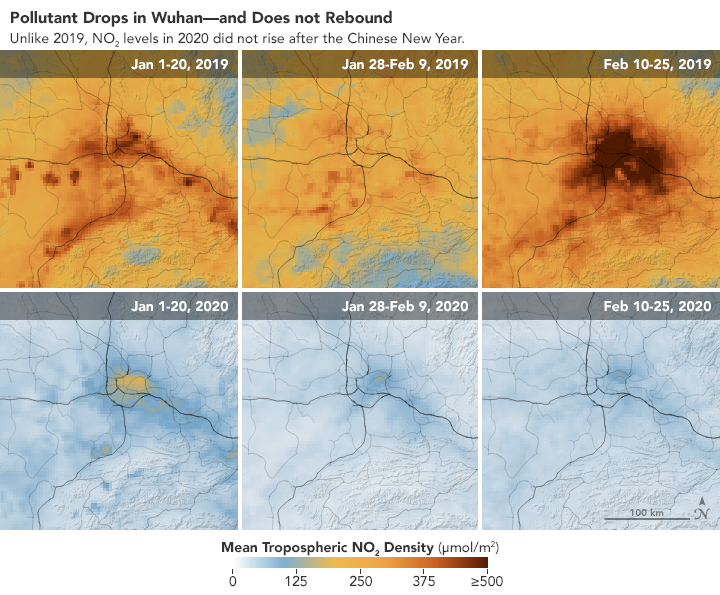
The space agency’s scientists said the fall in pollution was first apparent near Wuhan, the source of the outbreak, but eventually spread across the country.

“This is the first time I have seen such a dramatic drop-off over such a wide area for a specific event,” said Fei Liu, an air quality researcher at Nasa’s Goddard Space Flight Centre.

She said she had seen a decline in nitrogen dioxide levels during the economic recession of 2008 but said that decrease was more gradual.

This year, pollution levels did not rise again after Chinese new year, unlike last year (Nasa)


Editorial: No, a trillion more trees and baby-step oil company reforms won’t fix global warming

Antarctica

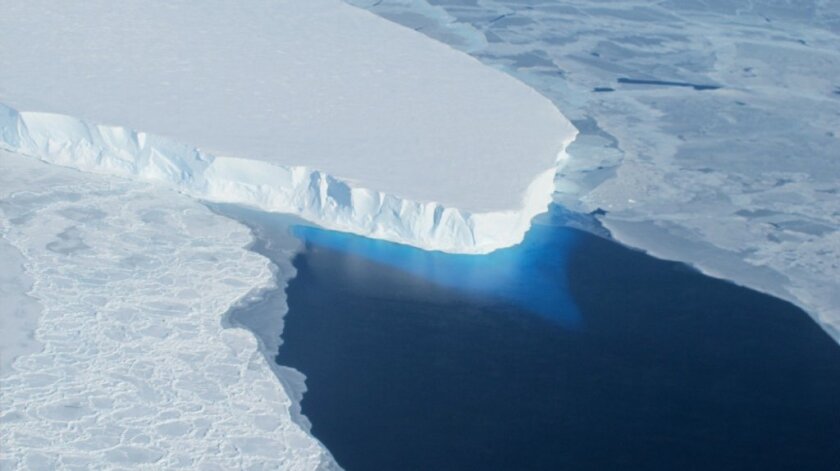
A major ice sheet in western Antarctica is melting, and its collapse is predicted to raise the global sea level significantly.
(AFP photo / NASA / Handout)

Scientists at an Antarctic research station recently recorded a one-day air temperature of just under 70 degrees, a balmy afternoon in a region of the world unaccustomed to them. In fact, as far as researchers can tell, it has never been that warm in Antarctica before. The record was set against an increasingly scary global backdrop of rising temperatures and seas; more powerful storms, droughts and floods; a reduced Arctic ice cap, and accelerated melting and movement of glaciers around the globe — including Antarctica.

The culprit behind this crisis is the nearly 200 years that humans have spent burning fossil fuels — primarily coal and oil — for energy. So it was mildly heartening to see that BP, the London-based oil and gas giant, has promised to achieve “net-zero emissions” for its operations by 2050. That doesn’t mean BP is getting out of the oil-and-gas business. Rather, the corporation pledged to eliminate some emissions from its drilling, processing and business operations, and to compensate for others through investments in green technologies, reforestation projects and similar offset strategies. The announcement followed earlier pledges by such European-based oil companies as Royal Dutch Shell, Total and Equino to reduce emissions from their operations, though the BP pledge goes further.

None, of course, goes far enough. And new BP CEO Bernard Looney acknowledged the corporation had not settled on a strategy to achieve its net-zero emissions goal. Those details will come in September.

But at least the goal was set, which is far more than has been done by American-based oil companies like ExxonMobil and Chevron, which have acknowledged the role of greenhouse gas emissions in propelling climate change but have done little to address their contribution. Both are part of the corporate-driven Oil and Gas Climate Initiative, whose stated purpose is to reduce “our collective methane emissions by more than one-third” by essentially stopping leaks and moving the captured methane to where it could be burned.

Of course, baby steps by a handful of oil and gas companies aren’t going to do much to combat overall emissions. Similarly, the Trillion Trees Initiative, which President Trump touted in his State of the Union address, won’t do an awful lot, either. In fact, it’s one of those fig-leaf solutions that offers a pretense of significant action against global warming while ignoring the most pressing problem — the burning of fossil fuels in the first place.

Which is not to suggest that reforestation is a bad idea; in fact, continued forest clearing in the Amazon is exacerbating global warming and must stop. Because forests store carbon, restoring them could help capture and slow the accretion of carbon in the atmosphere, where it traps heat. One study found that the Earth’s ecosystems could handle an additional 25% of forests above what it holds now (though increased droughts and desertification related to climate change could whittle away at that), compensating for about 20 years of human-produced carbon. So large-scale reforestation falls in the category of “couldn’t hurt.”

Nevertheless, far, far more needs to be done, beginning with converting our global reliance on energy from fossil fuels to renewables as fast as is humanly possible. The best way to reduce carbon in the atmosphere is to not put it there in the first place.

So in that regard, the danger of the Trillion Trees Initiative is that pro-oil business conservatives will wave it around as a solution to global warming. But that’s like someone hoping to lose a lot of weight by taking daily walks while still eating the same calorie-rich foods.

The nation, and the world, need sober and aggressive policy changes if we are to stand any chance of mitigating the worst effects of global warming. Despite heightened awareness and national pledges under the 2015 Paris Agreement to try to limit global warming to 1.5 degrees Celsius (2.7 degrees Fahrenheit) above pre-industrial levels, global carbon emissions continue to rise. It will be expensive to adapt to the new climate reality and to fundamentally change the way humankind produces and uses energy, but it must be done before the supposedly most intelligent of the animal species manages through greed and willful ignorance to propel the collapse of global ecosystems.

How to reduce your food’s carbon footprint, in 2 charts–The answer is not “eat local.”

A shopkeeper surveys fresh fruit and vegetables at a food market in Istanbul.
 Tim Graham/Getty Images

“Eat local.” It’s a recommendation you’ve probably heard before. Environmental advocates and even the United Nations have hyped a “locavore” diet as a way to reduce your carbon footprint and help the climate. The basic idea is that more transportation leads to more emissions, so you want to reduce the distance your food has to travel to get to you.

And certainly, if you can eat local, that’s great. But it’s not the most effective way to reduce your food’s carbon footprint.

The website Our World in Data recently explained, with some great charts, why your focus should really be elsewhere.

“Eating locally would only have a significant impact if transport was responsible for a large share of food’s final carbon footprint. For most foods, this is not the case,” writes Hannah Ritchie. “Emissions from transportation make up a very small amount of the emissions from food and what you eat is far more important than where your food traveled from.”

Take a look at the chart below, which examines 29 different food products, from beef to nuts, and breaks down how much greenhouse gas emissions each stage in the supply chain is responsible for. The data comes from the biggest meta-analysis of worldwide food systems we’ve got so far, published in Science in 2018.

Our World in Data

As you can see, the share of emissions from transport (shown in red) is generally pretty tiny; the distance our food travels to get to us actually accounts for less than 10 percent of most food products’ carbon footprint. Processes on farms (shown in brown) and changes in land use (shown in green) typically account for much more of the emissions from our food.

Translation: What you eat is much more important than whether your food is local.

So, next time you find yourself trying to choose between a couple of different dinner options — local prawns versus non-local fish, let’s say — remember that from an emissions standpoint, the fish is the better choice even though it comes from farther away.

It can be hard to know which products in your grocery store are air-freighted, since they’re almost never labeled as such. But a good rule of thumb is to avoid fresh fruits and vegetables that have a short shelf-life and that come from far away (check the label for their country of origin). Berries, green beans, and asparagus are examples of foods that are often air-freighted. Locally sourced berries, green beans, and asparagus, though, have a low carbon footprint.

What about “sustainable meat” versus plant-based foods?

At this point, you might be wondering where plant-based foods fit into all this. With so many grocery stores and restaurants now selling Beyond Meat and Impossible Foods, it’s reasonable to wonder about the carbon footprint of products made from protein sources other than meat.

Some have argued that you can have a lower footprint if you eat beef or lamb sourced from low-impact producers than if you switch to plant-based alternatives. But the evidence suggests that’s just not true.

“Plant-based foods emit fewer greenhouse gases than meat and dairy, regardless of how they are produced,” Ritchie writes.

Here’s another chart, which shows that less meat is nearly always better than sustainable meat when it comes to reducing your carbon footprint. The data comes from the same 2018 meta-analysis mentioned above, which considered the food systems in 119 countries.

Our World in Data

As you can see, beef and lamb are way over on one extreme in terms of the amount of emissions they produce. By contrast, plant-based protein sources like tofu, beans, peas, and nuts have a very low carbon footprint.

“This is certainly true when you compare average emissions. But it’s still true when you compare the extremes: there’s not much overlap in emissions between the worst producers of plant proteins, and the best producers of meat and dairy,” Ritchie notes.

Translation: Eating plant-based food is almost always going to be better for the environment than eating even the most sustainable meat.

That said, it’s worth noting that some types of meat are much harsher on the environment than others. Replacing beef or lamb with chicken or pork — again, regardless of where you get the products from — is an effective way to reduce your carbon footprint.

This is all coming strictly from an emissions standpoint, mind you. It doesn’t take into account animal welfare. Perhaps you think the welfare of animals like pigs, which show signs of high intelligence, is an important consideration here; if so, you might think it’s a bad idea to substitute pork for other types of meat. And we have to slaughter about 200 chickens to get the same amount of meat we’d get from one cow, which raises environmental as well as animal welfare concerns.

There are multiple factors to consider when making food choices, and your final decision may shake out differently depending on how you weight each of them.