IN-DEPTH: Can we grow enough food to feed us all in a changing climate? And can New Zealand thrive as a dairy exporter without worsening climate change? Eloise Gibson spoke to IPCC food security and farming experts and found them surprisingly upbeat.
If we’re honest, the question on New Zealanders’ lips at a meeting of top scientists in Christchurch before Easter was a variation of that Kiwi classic: what do you think of New Zealand?
Newsroom specifically wanted to know what the experts thought of New Zealand’s prospects of thriving as a meat and dairy-exporting nation, in a future where people eat less meat and milk.
We talked through the issues with five experts, whose readiness to answer suggested we were not the first to raise it since they reached our shores.
As the rest of New Zealand prepared to gorge on marshmallow and chocolate eggs, they were here with more than a hundred other agriculture and climate scientists considering the much less sweet task of how to feed the world without worsening climate change.
It’s the second meeting of the 120 researchers, who are now about a quarter of the way through drafting the Intergovernmental Panel on Climate Change Special Report on Climate Change and Land.
The report, scheduled for August 2019, will cover desertification, land degradation, food security, sustainable land management and greenhouse gas emissions.
The authors can’t discuss in any detail what the final tome will say, but they can talk about their own research.
Based on their research in climate modelling, food security and farming methods, all of them agreed that eating and farming patterns need to change a lot if we’re to feed more people in our new and altered climate. That means raising fewer livestock and sharing the meat and milk we still eat more fairly between nations.
Right now, people in rich countries over-consume, despite the hefty climate impact of their livestock-heavy habits, says Pete Smith, a climate change and soil professor at the University of Aberdeen. “We can’t have nine or ten billion people consuming the way people do in the Western world,” he says. “But that’s not to say we don’t still have livestock in the system, we certainly do. But we can’t continue at the rate we are,” he says. “Although consumption has to come down, there are still going to be global markets.”
To supply those, choosier markets, New Zealand’s milk and meat must be not only carbon-neutral but meet other standards of human health (including responsible antibiotic use) and not polluting the environment, he says.
Our products must be very good, because they’ll be expensive. A changing climate will raise food prices across the board, but it may hit animal products worse by forcing countries to include the true environmental costs of growing food, our experts said. Still, New Zealand shouldn’t be afraid to boost its price tags.
BEYOND CUTTING COW BURPS
Holding the pre-Easter IPCC meeting in Christchurch signaled global recognition of what most Kiwis know already – that, among developed nations, our greenhouse gas emissions are uniquely skewed towards farming.
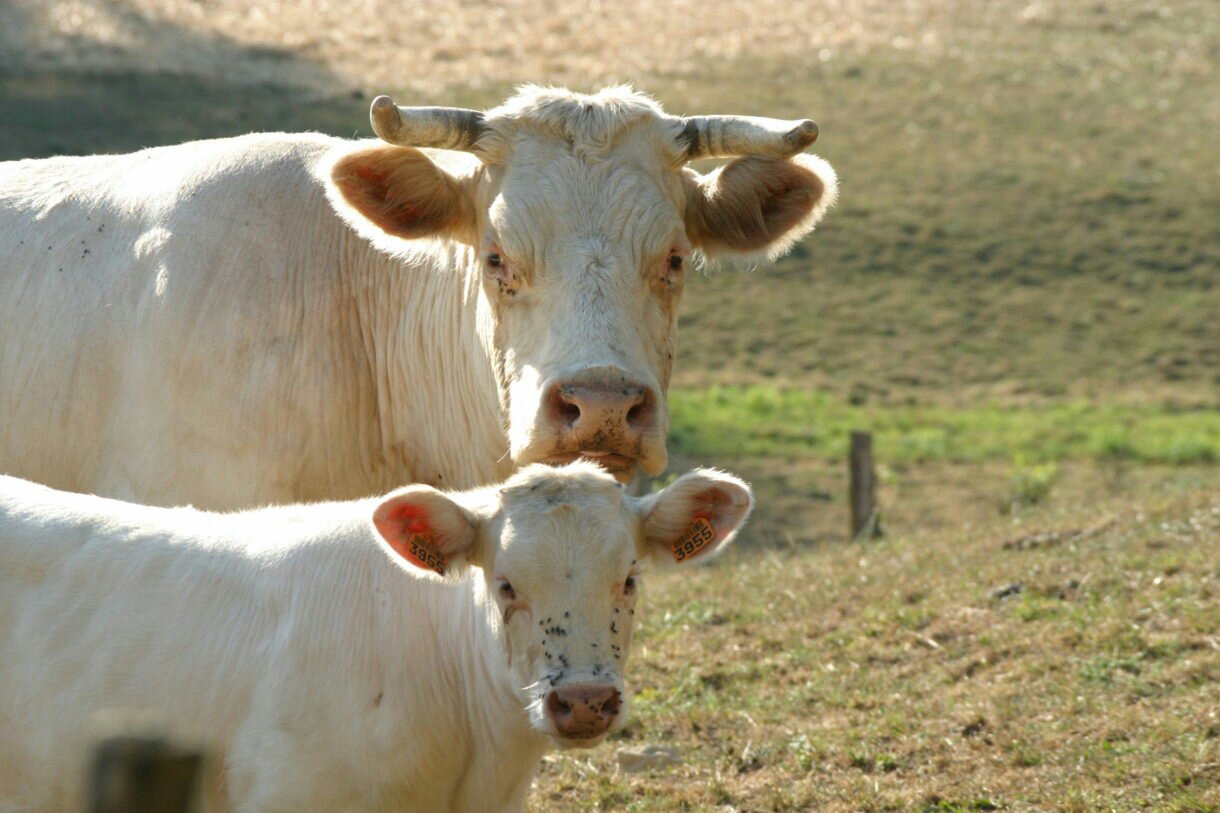
Our problem is mostly cows, with their methane-laced burps and gas-producing urine, both of which New Zealand spends millions trying to solve.
But when these researchers talk about the climate costs of food growing; they’re looking much wider than reducing cow burps.
They’re discussing wholesale changes to the food system. “This is first time really that the IPCC has tackled food, as opposed to agriculture, in a big way,” says Tim Benton, who studies food security in his job as Dean of Strategic Research Initiatives at the University of Leeds. “I’m really hoping that, for the first time, people will start to pay attention to the impact our food systems have on climate and the impact climate has on our food systems.”
Globally, agriculture ranks second only to fossil fuels as a source of greenhouse gases.
Smith, from the University of Aberdeen, lists the numbers: “Direct emissions from crops and livestock are about 14 or so percent of global emissions, if you include deforestation it’s 24 percent, and if you add things like transport for moving food around and the embedded emissions in the agri-chemicals, you’re probably talking 30 per cent,” he says. “We can’t meet the Paris targets without it.”
Farming faces a circular problem. Growing food creates a lot of greenhouse gases, and greenhouse gas is threatening the world’s food-producing capability. “If we don’t tackle climate change, the impacts on the food system will be such that there’s no guarantee we could feed 11 billion people at the end of the century,” says Benton.
Even cows are not immune. “Dairy cows really do not like warmer temperatures, it decreases milk production and fertility,” says Cynthia Rosenzweig, a senior climate scientist at the NASA Goddard Institute for Space Studies.
Rosenzweig founded a project called AgMIP, which collates and improves the models researchers use to project climate change’s impact on farming, as well as farmers’ options for adapting. “We add climate models, crop and livestock production, and economists to bring in the demand side from consumers,” she says.
“When we do these rigorous multi-model projections, what we find is that in the mid- and high- latitudes, things could get better for some decades, as those regions warm. But in the lower latitudes, where primarily the developing countries are, food production is projected to decrease. When we take these results and feed them into the economic models, we find that, overall, globally, there’s a decline in production and an increase in food prices,” says Rosenzweig. “We look at the 2020s, 2050s and 2080s and it basically gets progressively worse. It just gets hotter and we get more heavy rainfalls and more droughts, all of which affect agriculture.”
AgMIP used its models to test whether adaptation methods, like planting heat- or drought-tolerant varieties, changing crops, or increasing irrigation or fertilizer could make up for lower yields from climate change in various regions of the world. The answer was usually no, even assuming farm technology keeps improving. “Mostly when you look at different regions the adaptation can compensate for some of the climate effects but not all,” says Rosenzweig. “That means we need mitigation.”
Mitigation, Rosenzweig, Smith and Benton each explained, has to include rearing less livestock, especially our burping cows. “We need to think about what we’re eating and how much. Because large-scale animal production, especially industrial animal production, has a very large carbon footprint,” says Rosenzweig.
None of them suggests everybody goes vegan, because most of us will not, they say.
“It’s just unrealistic to think that everybody is going to give up meat tomorrow,” says Rosenzweig. “So we need to realise there’s probably a pathway of healthy diets that is not no meat at all, but reduced meat consumption.”
Dairy has a lower greenhouse footprint than beef, but it remains considerably higher-emitting than producing vegetable products. Still, no-one expects a quick switch. “New Zealand has an important livestock sector and I don’t think these people are about to start growing carrots tomorrow. It’s about finding pathways to sustainable production,” says Rosenzweig.
Benton agrees. “On an existential basis, I don’t think any country needs to be particularly worried, because we’re talking about changes over a number of years,” he says. “If you look back 30 years, our agricultural industry was very different to what it is today and in 30 years’ time it will be different again.”
Major change is certainly needed, says Benton. Trade rules, subsidies and other policies serve many people too much low-nutrient food, artificially cheaply, he says. “$590 billion dollars around the world is spent on agricultural subsidies that largely support the eight major crops that make up the bulk of our food, and those crops are pretty low in nutrition – rice, maize, soya, sugar, palm oil…,” he says. “Food is easily available, it’s cheap, it’s economically rational to over-consume and throw it away. Increasingly, influential bodies like the UN are coming to the conclusion that our food system’s not working.”
The savings to health and the environment could counterbalance any cost of producing nutritious food more cleanly, says Benton. For example, he says, by 2025 the cost of treating Type 2 diabetes alone is projected to be higher than the economic value in GDP generated by producing all food. “When you consider malnutrition in all its forms through to obesity, cardiovascular disease and various cancers that come from eating the wrong sort of food, about half the world’s population are not a healthy weight,” he says. “We’ve got to the point where we have a super-abundance of food but…calories are really cheap and nutrition is not,” says Benton. “It doesn’t make any sense that the price of food doesn’t reflect the cost of growing food or the healthcare costs caused by food,” he says. “In the long-run, if your crop has an impact on, say, water, that cost needs to be somehow internalized. If food wasn’t subsidized by the environment and health systems, it would be more expensive and then people wouldn’t be able to waste so much and eat so much.”
Benton knows that rising costs will raise an inevitable question, which is, what about poor people, who are already under-nourished? That can be dealt with in other ways, he says.
“[UK] research has found that subsidizing the cost of food through unsustainability amplifies costs so much in the long-run that the correct thing to do is support the poor so they can afford to buy food, it doesn’t make sense to support food systems as a whole to support the poorest in society,” he says.
Another hope is that growing a greater diversity of crops, with less waste, will help build resilience to climate change in countries where sufficient food is hard to come by. But Rosenzweig warns of the need to go slowly, to avoid hurting food supplies. Unlike Benton, she doesn’t believe the world’s mega-food-producers are likely to go anywhere or be pushed out by artisan farmers. But, she says, the giants will get more sustainable, as will medium and small producers. Rosenzweig and Benton agree that food is going to cost more, and that people will eat less livestock products.
“For producing countries like you and Brazil that raises the question of…what you would lose from people buying less produce,” says Benton. “In the long-run, my feeling is that the economics of food production will change so that producing less is still profitable. In the long-run, the food system has to become more transparent and that should make it easier for people to say, ‘I value food that is very healthy or high animal welfare’…and it will be easier to find,” says Benton. “The digital revolution will allow you to visit a farm virtually from anywhere in the world and say ‘I like what that farmer is doing.’”
MARKETING TACTICS
That leaves the question of what people will enjoy sufficiently to spend a small fortune on it.
Smith, from the University of Aberdeen, doesn’t accept the argument sometimes made on behalf of the United States’ feedlot industry (and supported by a few prominent U.S. agricultural scientists) that feedlot meat and dairy is preferable to pasture farming, because of its greater greenhouse efficiency. It’s true, if somewhat counter-intuitive, that products, especially meat, from cows fed grain in feedlots are typically lower in greenhouse gases.
But that’s not the whole story, says Smith. “The feedlot systems need to get their food from somewhere and about 30 per cent of all crops grown on the planet go into livestock feed,” he says. “The more feedlot systems you have, the more land you need to produce those crops. And while it’s true that the greenhouse gas per unit of product is lower for those feedlot systems, that’s as a result of forcing the animal up to slaughter weight much quicker so they’ve had less chance to emit methane. Climate change is not the only game in town, and the over-use of growth hormones and antibiotics [needed to fatten animals faster] is not accepted in many countries,” says Smith.
Annette Cowie, a principal research scientist at the New South Wales Department of Primary Industries, believes that there will always be a place for livestock that can forage for food, such as grass, that people can’t eat, on land where crops can’t grow.
Ruminants like cows have this unique ability. Cowie also sees huge potential for new technologies such as biochar, which can trap emissions in the soil, though she is wary of overblowing the advances farms could make.
But, as Smith explains, New Zealand doesn’t need to eliminate cow burps to claim to be cleaner. He puts only a little store in gas-squashing technologies, like the methane-inhibiting feed supplements New Zealanders are working on, because they’ll never reduce emissions to zero. “The only way is to offset emissions by planting more trees or creating carbon sinks. In the future, you might say, ‘for this litre of milk we made this many greenhouse gases but we’ve created a forest offsetting it domestically’,” says Smith. “You’ve got a great climate, great soil for producing pasture,” he says. “It’s not perfect, at the moment you’ve got over-fertilization and other stuff, but if you can get those issues addressed…New Zealand could be putting its stuff on the international market as the most environmentally-benign dairy products there are,” he says.
Long-term, we shouldn’t be afraid to have fewer cows, producing less, says Smith. “The push toward productivity has not necessarily moved us in the right direction on other measures,” he says. “One of the big issues is, we currently don’t pay farmers enough, and we’ve come to expect very low food prices. When you’re not squeezing every last litre of milk out of the land by over-fertilizing, you can step back and accept maybe 5 percent less milk for a massive environmental benefit,” says Smith. “We, as a society, might decide to pay farmers the difference.”
NEW WORKING ENVIRONMENT
Such a move would be a mighty relief to the farmers Mark Howden works in Australia, where he’s the director of the Climate Change Institute at Australian National University. In a food system that favours maximum production and reliability, climate change is already proving a major headache, he says. Some Australian farmers are doing it tough, though not in every location, says Howden. “What farmers are seeing now in terms of changes in rainfall is different depending where you are. Some farmers are having to, say, move out of wheat farming and into mixed farming with livestock that can handle the dry conditions. “Their options are shrinking and they’re feeling significantly stressed,” he says. “And what farmers are seeing now is very much in line with the projections for the future.”
Meanwhile, at supermarkets: “The demand is for very reliable foodstuffs, with no variation in quality, so the supermarkets can employ their marketing strategies,” he says. “Both of those things are challenged with the increased variability and extremes of climate that we’re already seeing and that will increase in future, so the pressure from the value chain is in the opposite direction to the pressure from climate. That increases stress on farmers,” says Howden.
One tactic that’s already been employed by a few Australian farmers is “hedging” their climate risk by buying farms in at least two different micro-climates. “They can have more than one farm in different regions, so in New Zealand maybe you’d have one in the South Island and one in the North, so it’s unlikely both will be affected in the same way and you can buffer your supply system.” Another strategy is educating consumers “about why there is variability in produce and the importance of seasonal cooking, and that just because an apple has a spot on it, doesn’t mean it’s not okay,” says Howden.
One of the biggest things that Howden recommends that farmers do to reduce stress might not come easily. It involves changing farmers’ minds, not their farming systems. Howden says his work shows it is easier to cope with changes when farmers accept that climate change is happening. “In Australia, farmers are about four times more likely than the average Australian to say they don’t believe in climate change [the figures are 32 per cent versus 7 percent]. Yet when you actually look at what farmers are doing, the vast majority are changing their practices to adjust to a changing climate. There’s a discrepancy between what they’re saying and what they’re doing, and those sorts of discrepancies actually cause stress in their own right,” says Howden. “It stops effective strategic decision-making, because if you’re thinking this is just a few bad years, you’re expecting it to get cooler and wetter again. What we find is that those who take climate change seriously have lower stress levels, because they are empowered to take action.”
When Howden talks to farmers about adapting, their approaches change over the course of a few meetings. “Often they are initially focused on the technical options, so, say, they’re still growing wheat but different varieties. But after a few discussions on climate change, where they end up is that the important thing is having much better strategic business capability and the ability to juggle trade-offs,” he says.
Rosenzweig, the impact modeler, sums up those trade-offs and farmers’ tricky conundrum. “The challenges for agriculture everywhere are to simultaneously be reducing their emissions of greenhouse gases and be adapting to a changing climate,” she says. To do it, they will need our help, and that includes changing our diets. “That’s why there’s a role for people changing what we eat. Because as we go from 6 or 7 billion people to 9 or 10 billion, how are we actually going to do that?” she says.


 Sea ice floats near the coast of West Antarctica as seen from a window of a NASA Operation IceBridge airplane on October 27, 2016, in-flight over Antarctica. (Photo: Mario Tama / Getty Images)



 Exposing the Big Game