Exposing the Big Game

Forget Hunters' Feeble Rationalizations and Trust Your Gut Feelings: Making Sport of Killing Is Not Healthy Human Behavior

Exposing the Big Game

Red-state Utah embraces plan to tackle climate crisis in surprising shift

Utah aims to reduce emissions over air quality concerns as other red states are also starting to tackle global heating

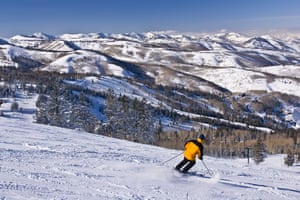
A skier in Park City, Utah. The majority of the population lives in mountain valleys where in winter, temperature inversions can trap air pollutants.
 A skier in Park City, Utah. The majority of the population lives in mountain valleys where in winter, temperature inversions can trap air pollutants. Photograph: Alamy Stock Photo

In a move to protect its ski slopes and growing economy, Utah – one of the reddest states in the nation – has just created a long-term plan to address the climate crisis.

“If we don’t think about Utah’s long-term future, who will?” Republican state house speaker Brad Wilson said at a recent focus group to discuss the proposals.

At the request of the Republican-dominated state legislature, a University of Utah economic thinktank produced the plan to reduce emissions affecting both the local air quality and the global climate.

But now the perspectives of some state lawmakers – and of Holst, who spent most of his career in the oil and gas industry – have shifted.

“The economist Adam Smith talked about an invisible hand that guides the economy, and in this particular case, the cost of renewable energy, whether it’s wind or solar, has gone down so rapidly and made itself so market efficient versus fossil fuels, that there is a change, and the change can’t be ignored,” Holst said. “So now is the opportunity for a state like Utah which is rich in both renewables as well as fossil fuels to embrace that change and get out ahead of it.”

Other red states and municipalities are slowly starting to address global heating. After banning the words “climate change” from state environmental agencies, Florida now has a chief resilience officer tasked with preparing for sea level rise. After a year of disastrous flooding, Nebraska lawmakers advanced a bill to develop a climate change plan for a full legislative debate.

Utah prides itself on being business friendly – and it has a rapidly growing tech sector concerned about environmental issues, as well as booming tourist economy that revolves around the ski industry and public lands.

The Utah plan, known as the Utah Roadmap, began, like a number of recent environmental initiatives, with young people clamoring for action. High school students drafted a resolution that recognized the impacts of the climate crisis and encouraged emissions reductions, and persuaded two Republican lawmakers to sponsor it. Environmental advocates say it was the first measure of its kind to pass in a red state. The legislature followed up with state money for experts to provide policy recommendations.
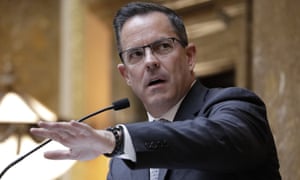
State house speaker Brad Wilson: ‘If we don’t think about Utah’s long-term future, who will?’
Pinterest
 State house speaker Brad Wilson: ‘If we don’t think about Utah’s long-term future, who will?’ Photograph: Rick Bowmer/AP

Another factor that has primed Utah leaders to address the climate crisis is the state’s unique air quality issues. The majority of the population lives in mountain valleys where in winter, temperature inversions can trap air pollutants, often reaching levels that impact health, particularly among children and the elderly.

“It cuts across political lines. [Clean air] is not a partisan issue in our state,” said Utah speaker Wilson. He said there is not the same kind of consensus on climate change in the legislature, but “there is absolutely overlap between air quality concerns we have and reducing greenhouse gas emissions”.

Natalie Gochnour, the head of the economic policy institute that drafted the Utah Roadmap, said its proponents managed to turn a hyper-partisan issue into a shared priority by emphasizing the local impacts of the climate crisis. Research suggests that framing policy around economic benefits and sustainability allows local leaders to respond to climate change without getting caught up in political divisions.

“That tends to pull some of the politics out of it – not for everybody – but for many. I think enough to create momentum on Capitol Hill,” Gochnour said.

Clean air concerns are also the reason officials are pushing Utah gas refineries to produce cleaner gasoline, and when the Trump administration announced plans to roll back clean car standards, Utah’s bipartisan clean air caucus held a press conference urging Congress to resist the move.

Holst, the roadmap project lead, acknowledged that blue coastal states have taken the initiative on ameliorating climate change, but he sees potential for Utah. “Is there an opportunity for a red state to take a leadership role? We believe that there is. And by composing a road map, by encouraging our legislative leaders to embrace this, we believe that there can be a change, and that Utah will be willing to take a leadership role,” he said.

Utah’s per capita carbon emissions are higher than most states, in part because it’s nearly twice as reliant on coal, but utilities serving Utah customers plan to close many of their coal power plants by 2030, converting to wind, solar, natural gas, and possibly hydrogen. Republican state lawmaker Melissa Garff Ballard has an ambitious plan to make Utah a source of hydrogen power serving the western US.

Among the Utah Roadmap’s top priorities is to reduce CO2 emissions by half over the next decade – a challenge for a state with a growing population. The plan suggests focusing on energy-efficient buildings and clean transportation options. It recommends expanding Utah’s network of charging stations, incentivizing the purchase of electric vehicles, and involving auto dealers in strategies to increase the zero-emissions vehicle supply.

“What I’m interested in is a viable future for the state of Utah,” Republican state representative Stephen Handy said. “There are still a number of Utah legislators who don’t want to look at the science that’s very obvious on climate change, but we’ve come a long way.”

  • This article was amended on 19 February 2020 to clarify Brad Wilson’s comments on clean air.

Polar bears in Baffin Bay skinnier, having fewer cubs due to less sea ice


NEWS RELEASE 

UNIVERSITY OF WASHINGTON

Polar bears are spending more time on land than they did in the 1990s due to reduced sea ice, new University of Washington-led research shows. Bears in Baffin Bay are getting thinner and adult females are having fewer cubs than when sea ice was more available.

The new study, recently published in Ecological Applications, includes satellite tracking and visual monitoring of polar bears in the 1990s compared with more recent years.

“Climate-induced changes in the Arctic are clearly affecting polar bears,” said lead author Kristin Laidre, a UW associate professor of aquatic and fishery sciences. “They are an icon of climate change, but they’re also an early indicator of climate change because they are so dependent on sea ice.”

The international research team focused on a subpopulation of polar bears around Baffin Bay, the large expanse of ocean between northeastern Canada and Greenland. The team tracked adult female polar bears’ movements and assessed litter sizes and the general health of this subpopulation between the 1990s and the period from 2009 to 2015.

Polar bears’ movements generally follow the annual growth and retreat of sea ice. In early fall, when sea ice is at its minimum, these bears end up on Baffin Island, on the west side of the bay. They wait on land until winter when they can venture out again onto the sea ice.

When Baffin Bay is covered in ice, the bears use the solid surface as a platform for hunting seals, their preferred prey, to travel and even to create snow dens for their young.

“These bears inhabit a seasonal ice zone, meaning the sea ice clears out completely in summer and it’s open water,” Laidre said. “Bears in this area give us a good basis for understanding the implications of sea ice loss.”

Satellite tags that tracked the bears’ movements show that polar bears spent an average of 30 more days on land in recent years compared to in the 1990s. The average in the 1990s was 60 days, generally between late August and mid-October, compared with 90 days spent on land in the 2000s. That’s because Baffin Bay sea ice retreats earlier in the summer and the edge is closer to shore, with more recent summers having more open water.

“When the bears are on land, they don’t hunt seals and instead rely on fat stores,” said Laidre. “They have the ability to fast for extended periods, but over time they get thinner.”

To assess the females’ health, the researchers quantified the condition of bears by assessing their level of fatness after sedating them, or inspecting them visually from the air. Researchers classified fatness on a scale of 1 to 5. The results showed the bears’ body condition was linked with sea ice availability in the current and previous year — following years with more open water, the polar bears were thinner.

The body condition of the mothers and sea ice availability also affected how many cubs were born in a litter. The researchers found larger litter sizes when the mothers were in a good body condition and when spring breakup occurred later in the year — meaning bears had more time on the sea ice in spring to find food.

The authors also used mathematical models to forecast the future of the Baffin Bay polar bears. The models took into account the relationship between sea ice availability and the bears’ body fat and variable litter sizes. The normal litter size may decrease within the next three polar bear generations, they found, mainly due to a projected continuing sea ice decline during that 37-year period.

“We show that two-cub litters — usually the norm for a healthy adult female — are likely to disappear in Baffin Bay in the next few decades if sea ice loss continues,” Laidre said. “This has not been documented before.”

Laidre studies how climate change is affecting polar bears and other marine mammals in the Arctic. She led a 2016 study showing that polar bears across the Arctic have less access to sea ice than they did 40 years ago, meaning less access to their main food source and their preferred den sites. The new study uses direct observations to link the loss of sea ice to the bears’ health and reproductive success.

“This work just adds to the growing body of evidence that loss of sea ice has serious, long-term conservation concerns for this species,” Laidre said. “Only human action on climate change can do anything to turn this around.”

###

Co-authors of the study are Eric Regehr and Harry Stern at the UW; Stephen Atkinson and Markus Dyck at the Government of Nunavut in Canada; Erik Born at the Greenland Institute of Natural Resources; Øystein Wiig at the Natural History Museum in Norway; and Nicholas Lunn of Environment and Climate Change Canada. Main funders of the research include NASA and the governments of Nunavut, Canada, Greenland, Denmark and the United States.

For more information, contact Laidre at 206-616-9030 or klaidre@uw.edu.


NASA Flights Detect Millions of Arctic Methane Hotspots

Thermokarst lake in Alaska
The image shows a thermokarst lake in Alaska. Thermokarst lakes form in the Arctic when permafrost thaws. Credit: NASA/JPL-Caltech
› Larger view

Knowing where emissions are happening and what’s causing them brings us a step closer to being able to forecast the region’s impact on global climate.


The Arctic is one of the fastest warming places on the planet. As temperatures rise, the perpetually frozen layer of soil, called permafrost, begins to thaw, releasing methane and other greenhouse gases into the atmosphere. These methane emissions can accelerate future warming – but to understand to what extent, we need to know how much methane may be emitted, when and what environmental factors may influence its release.

That’s a tricky feat. The Arctic spans thousands of miles, many of them inaccessible to humans. This inaccessibility has limited most ground-based observations to places with existing infrastructure – a mere fraction of the vast and varied Arctic terrain. Moreover, satellite observations are not detailed enough for scientists to identify key patterns and smaller-scale environmental influences on methane concentrations.

In a new study, scientists with NASA’s Arctic Boreal Vulnerability Experiment (ABoVE), found a way to bridge that gap. In 2017, they used planes equipped with the Airborne Visible Infrared Imaging Spectrometer – Next Generation (AVIRIS – NG), a highly specialized instrument, to fly over some 20,000 square miles (30,000 square kilometers) of the Arctic landscape in the hope of detecting methane hotspots. The instrument did not disappoint.

“We consider hotspots to be areas showing an excess of 3,000 parts per million of methane between the airborne sensor and the ground,” said lead author Clayton Elder of NASA’s Jet Propulsion Laboratory in Pasadena, California. “And we detected 2 million of these hotspots over the land that we covered.”

The paper, titled “Airborne Mapping Reveals Emergent Power Law of Arctic Methane Emissions,” was published Feb. 10 in Geophysical Research Letters.

Within the dataset, the team also discovered a pattern: On average, the methane hotspots were mostly concentrated within about 44 yards (40 meters) of standing bodies of water, like lakes and streams. After the 44-yard mark, the presence of hotspots gradually became sparser, and at about 330 yards (300 meters) from the water source, they dropped off almost completely.

The scientists working on this study don’t have a complete answer as to why 44 yards is the “magic number” for the whole survey region yet, but additional studies they’ve conducted on the ground provide some insight.

“After two years of ground field studies that began in 2018 at an Alaskan lake site with a methane hotspot, we found abrupt thawing of the permafrost right underneath the hotspot,” said Elder. “It’s that additional contribution of permafrost carbon – carbon that’s been frozen for thousands of years – that’s essentially contributing food for the microbes to chew up and turn into methane as the permafrost continues to thaw.”

Scientists are just scratching the surface of what is possible with the new data, but their first observations are valuable. Being able to identify the likely causes of the distribution of methane hotspots, for example, will help them to more accurately calculate this greenhouse gas’s emissions across areas where we don’t have observations. This new knowledge will improve how Arctic land models represent methane dynamics and therefore our ability to forecast the region’s impact on global climate and global climate change impacts on the Arctic.

Elder says the study is also a technological breakthrough.

“AVIRIS-NG has been used in previous methane surveys, but those surveys focused on human-caused emissions in populated areas and areas with major infrastructure known to produce emissions,” he said. “Our study marks the first time the instrument has been used to find hotspots where the locations of possible permafrost-related emissions are far less understood.”

More information on ABoVE can be found here:

https://above.nasa.gov/

Iceberg twice the size of Washington, D.C., breaks off Pine Island glacier in Antarctica

Doyle Rice

USA TODAY
The Pine Island glacier spawned an iceberg over 115 square miles that quickly shattered into pieces. This image from space shows the freshly broken bergs.

  • The Pine Island glacier “is one the fastest-retreating glaciers in Antarctica.”
  • Over the past 8 years, the Pine Island glacier is losing about 58 billion tons of ice per year.
  • This “reveals the dramatic pace at which climate is redefining the face of Antarctica.”

An iceberg twice the size of Washington, D.C., has broken off the Pine Island glacier in Antarctica, scientists reported this week.

“The Pine Island glacier recently spawned an iceberg over (115 square miles) that very quickly shattered into pieces,” the European Space Agency (ESA) said in a statement.

The Pine Island glacier “is one of the fastest-retreating glaciers in Antarctica,” according to NASA. The glacier and the nearby Thwaites glacier together contain “enough vulnerable ice to raise global sea level by 1.2 meters (4 feet),” NASA said.

“What you are looking at is both terrifying and beautiful,” Mark Drinkwater, head of the Earth and Mission Sciences Division at the ESA, told CNN. “It is clear from these images (that the Pine Island glacier) is responding to climate change dramatically.”

The glacier has been losing large chunks of ice over the past three decades. While large calving events like this one used to take place at Pine Island glacier every four to six years, they’re now a nearly annual occurrence, The Washington Post said.

More from Antarctica:It was nearly 65 degrees in Antarctica, which may be the warmest day ever recorded there

“Its floating ice front, which has an average thickness of approximately 500 meters (1,640 feet), has experienced a series of calving events over the past 30 years, some of which have abruptly changed the shape and position of the ice front,” the ESA said.

Over the past eight years, the Pine Island glacier is losing about 58 billion tons of ice a year, according to a study in the Proceedings of the National Academy of Sciences.

“The Copernicus twin Sentinel-1 all-weather satellites have established a porthole through which the public can watch events like this unfold in remote regions around the world,” Drinkwater said in a news release.

“What is unsettling is that the daily data stream reveals the dramatic pace at which climate is redefining the face of Antarctica,” he said.

There’s a ‘doomsday glacier’:Warm water discovered beneath Antarctica’s ‘doomsday’ glacier, scientists say

The climate apocalypse is coming. To prepare for it, we need to admit that we can’t prevent it

By Jonathan Franzen

September 8, 2019

Illustration by Leonardo Santamaria

“There is infinite hope,” Kafka tells us, “only not for us.” This is a fittingly mystical epigram from a writer whose characters strive for ostensibly reachable goals and, tragically or amusingly, never manage to get any closer to them. But it seems to me, in our rapidly darkening world, that the converse of Kafka’s quip is equally true: There is no hope, except for us.

I’m talking, of course, about climate change. The struggle to rein in global carbon emissions and keep the planet from melting down has the feel of Kafka’s fiction. The goal has been clear for thirty years, and despite earnest efforts we’ve made essentially no progress toward reaching it. Today, the scientific evidence verges on irrefutable. If you’re younger than sixty, you have a good chance of witnessing the radical destabilization of life on earth—massive crop failures, apocalyptic fires, imploding economies, epic flooding, hundreds of millions of refugees fleeing regions made uninhabitable by extreme heat or permanent drought. If you’re under thirty, you’re all but guaranteed to witness it.

If you care about the planet, and about the people and animals who live on it, there are two ways to think about this. You can keep on hoping that catastrophe is preventable, and feel ever more frustrated or enraged by the world’s inaction. Or you can accept that disaster is coming, and begin to rethink what it means to have hope.

Even at this late date, expressions of unrealistic hope continue to abound. Hardly a day seems to pass without my reading that it’s time to “roll up our sleeves” and “save the planet”; that the problem of climate change can be “solved” if we summon the collective will. Although this message was probably still true in 1988, when the science became fully clear, we’ve emitted as much atmospheric carbon in the past thirty years as we did in the previous two centuries of industrialization. The facts have changed, but somehow the message stays the same.

Psychologically, this denial makes sense. Despite the outrageous fact that I’ll soon be dead forever, I live in the present, not the future. Given a choice between an alarming abstraction (death) and the reassuring evidence of my senses (breakfast!), my mind prefers to focus on the latter. The planet, too, is still marvelously intact, still basically normal—seasons changing, another election year coming, new comedies on Netflix—and its impending collapse is even harder to wrap my mind around than death. Other kinds of apocalypse, whether religious or thermonuclear or asteroidal, at least have the binary neatness of dying: one moment the world is there, the next moment it’s gone forever. Climate apocalypse, by contrast, is messy. It will take the form of increasingly severe crises compounding chaotically until civilization begins to fray. Things will get very bad, but maybe not too soon, and maybe not for everyone. Maybe not for me.

Some of the denial, however, is more willful. The evil of the Republican Party’s position on climate science is well known, but denial is entrenched in progressive politics, too, or at least in its rhetoric. The Green New Deal, the blueprint for some of the most substantial proposals put forth on the issue, is still framed as our last chance to avert catastrophe and save the planet, by way of gargantuan renewable-energy projects. Many of the groups that support those proposals deploy the language of “stopping” climate change, or imply that there’s still time to prevent it. Unlike the political right, the left prides itself on listening to climate scientists, who do indeed allow that catastrophe is theoretically avertable. But not everyone seems to be listening carefully. The stress falls on the word theoretically.

Our atmosphere and oceans can absorb only so much heat before climate change, intensified by various feedback loops, spins completely out of control. The consensus among scientists and policy-makers is that we’ll pass this point of no return if the global mean temperature rises by more than two degrees Celsius (maybe a little more, but also maybe a little less). The I.P.C.C.—the Intergovernmental Panel on Climate Change—tells us that, to limit the rise to less than two degrees, we not only need to reverse the trend of the past three decades. We need to approach zero net emissions, globally, in the next three decades.

This is, to say the least, a tall order. It also assumes that you trust the I.P.C.C.’s calculations. New research, described last month in Scientific American, demonstrates that climate scientists, far from exaggerating the threat of climate change, have underestimated its pace and severity. To project the rise in the global mean temperature, scientists rely on complicated atmospheric modelling. They take a host of variables and run them through supercomputers to generate, say, ten thousand different simulations for the coming century, in order to make a “best” prediction of the rise in temperature. When a scientist predicts a rise of two degrees Celsius, she’s merely naming a number about which she’s very confident: the rise will be at least two degrees. The rise might, in fact, be far higher.

As a non-scientist, I do my own kind of modelling. I run various future scenarios through my brain, apply the constraints of human psychology and political reality, take note of the relentless rise in global energy consumption (thus far, the carbon savings provided by renewable energy have been more than offset by consumer demand), and count the scenarios in which collective action averts catastrophe. The scenarios, which I draw from the prescriptions of policy-makers and activists, share certain necessary conditions.

The first condition is that every one of the world’s major polluting countries institute draconian conservation measures, shut down much of its energy and transportation infrastructure, and completely retool its economy. According to a recent paper in Nature, the carbon emissions from existing global infrastructure, if operated through its normal lifetime, will exceed our entire emissions “allowance”—the further gigatons of carbon that can be released without crossing the threshold of catastrophe. (This estimate does not include the thousands of new energy and transportation projects already planned or under construction.) To stay within that allowance, a top-down intervention needs to happen not only in every country but throughout every country. Making New York City a green utopia will not avail if Texans keep pumping oil and driving pickup trucks.

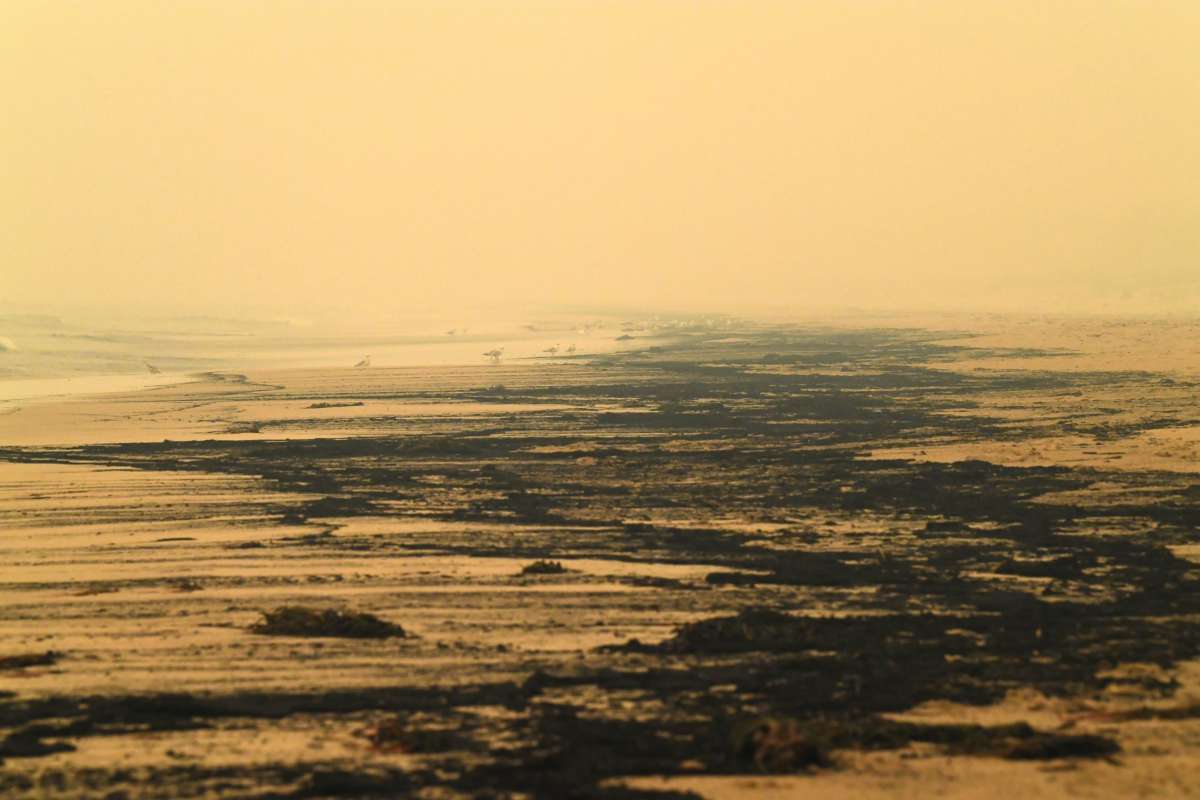
Australia’s Marine Animals Are the Fires’ Unseen Victims

As wildfires ravage Australia’s land and forests, so far killing an estimated one billion terrestrial animals, researchers worry marine and freshwater species will become invisible victims.

More than 17.1 million hectares of land have burned across the country, with the worst fires currently raging in New South Wales and Victoria, states in the nation’s southeast, according to Australia’s Department of the Environment and Energy (DEE). Adrian Meder, a marine campaigner at the Australian Marine Conservation Society (AMCS), says these fires are leaving behind a huge number of charred plants and a massive amount of ash.

Though Australia is in the midst of a massive drought, when the rain inevitably returns—as it already has in some regions—this organic matter will rush into rivers and flow into coastal lakes, estuaries, and seagrass and seaweed beds.

The free-flowing silt will get into fish’s gills and block sunlight that seagrass and seaweed beds need for photosynthesis, efectively strangling them. “It’s essentially like putting a shade cloth all over the entire system,” says Leonardo Guida, a shark campaigner with AMCS.

The slurry of potassium, phosphorus, and nitrogen will se alga in the water to bloom. The algae will consume the oxygen in the water, suffocating species that rely on it.

The fires have also torched many forests near the coast, destroying plants that filter silt and excess nutrients. The ecosystems are adapted to the low nutrient flows from the land, Meder explains. But “these fires have effectively clear-felled areas on a scale that hasn’t been seen before.”

Many commercial aquatic species, such as flathead, snapper, prawns, and various shellfish, begin their lives in coastal lakes and seagrass and seaweed beds. These coastal habitats are also spawning areas for species, including seahorses, and their degradation could send ripples throughout the larger ecosystem, the researchers say.

Some of these effects are already being felt. In southern New South Wales and Victoria and on Kangaroo Island, the fires are causing problems for fisheries and aquaculture, according to DEE.

When the rain began in the Central Coast region of New South Wales, members of the Darkinjung, a local Aboriginal land council, set up barriers to keep the deluge of silt- and ash-filled water out of the region’s rivers, lakes, and estuaries. According to Kelvin Johnson, a senior land management officer with the Darkinjung, they have already seen some dead fish in nearby rivers.

The wildfires and their aftermath have caused and could continue to cause cultural damage as well, Johnson says.

Australia’s Indigenous peoples, Johnson says, use sacred songlines—a complex mix of celestial references, songs, oral history, and physical and cultural landmarks—to navigate terrestrial and aquatic routes. Though it’s too early to know the extent of the damage, Johnson says if the fires harm oysters, crustaceans, flathead, or mullet, that would mark a loss of these cultural touchstones.

Last week, Australia’s federal government announced an AU $50-million (US $35-million) recovery fund (part of its AU $2-billion bushfire fund) to restore and protect damaged ecosystems and wildlife. But there has been no funding dedicated to marine and aquatic areas, Guida says. DEE notes that some of those funds may go to emergency interventions, such as erosion control, to stem sediment flows into aquatic ecosystems.

The ocean and the coast need dedicated help, Guida says. Though the devastation on land is much more visible, the health of the ocean and the land are intrinsically tied together.

A Red Flag Warning has been put into effect for Central and Eastern Montana.

GREAT FALLS – A Red Flag Warning has been into effect for Central and Eastern Montana.

The Red Flag Warning went into effect around 3 am with expected wind gusts of at least 75 miles per hour.

The warning will last over the next two days and during this span, areas with little to no snow cover will be at an increased risk of being able to catch a spark.

“We have to talk about fire danger in the middle of Winter here with these Chinook wind events but it’s definitely not something that happens every year that’s for sure,” said Francis Kredensor, Meteorologist, National Weather Service Great Falls.

This week we already saw a 22-acre grass fire start-up and the strong winds will also be putting high profile vehicles at risk when traveling on highways.

If you are traveling this weekend remember to take extra precautions so you can avoid any unnecessary risks.

A couple of easy things to remember for this weekend is to avoid doing any burning during the strong winds, prepare an emergency kit should a fire spark in your area and prepare a family communications plan in case of an emergency.

You can find links to the Weather Service and the Red Flag Warning here.

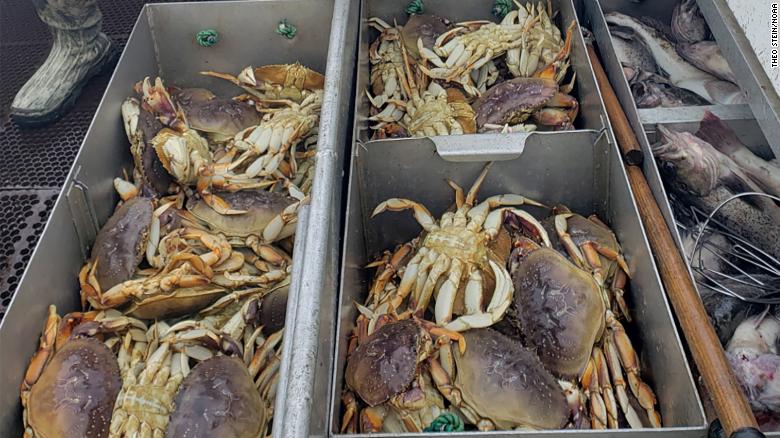
The Pacific Ocean is so acidic that it’s dissolving Dungeness crabs’ shells


The Pacific Ocean is acidifying at such a rate that Dungeness crabs, some of the most valuable crustaceans in the Pacific Northwest, are suffering partially dissolved shells and damage to their sensory organs, a new study found.

(CNN)The Pacific Ocean is becoming more acidic, and the cash-crabs that live in its coastal waters are some of its first inhabitants to feel its effects.

The Dungeness crab is vital to commercial fisheries in the Pacific Northwest, but lower pH levels in its habitat are dissolving parts of its shell and damaging its sensory organs, a new study found.
Their injuries could impact coastal economies and forebode the obstacles in a changing sea. And while the results aren’t unexpected, the study’s authors said the damage to the crabs is

premature: The acidity wasn’t predicted to damage the crabs this quickly.

“If the crabs are affected already, we really need to make sure we pay much more attention to various components of the food chain before it is too late,” said study lead author Nina Bednarsek, a senior scientist with the Southern California Coastal Water Research Project.
The findings were published this month in the journal Science of the Total Environment and funded by the National Oceanic and Atmospheric Administration (NOAA). The agency studies ocean acidification and how changing pH levels are impacting coasts.

How the ocean acidifies

The ocean is acidifying because it’s absorbing more carbon dioxide from the atmosphere, which lowers pH levels in the water.
Ocean acidification changes the coasts, releasing excess nutrient that can create algae blooms and increasing sea temperatures and salinity, according to NOAA.
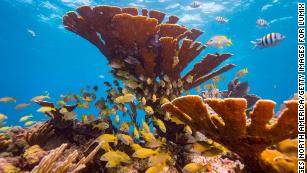
But for crustaceans and coral that rely on carbonate ions, which are less abundant in more acidic waters, to build their shells and coral skeletons, it becomes more difficult to build strong shells.
It’s not just crabs, either: Oysters, clams and plankton all rely on the same carbonate ions to strengthen themselves. And humans and sea creatures alike rely on them — some for food, others for economic security.

How it hurts the crabs

The acidification corroded the young shells of Dungeness crab larvae, which could impair their ability to deter predators and regulate their buoyancy in the water, the researchers said.
The crab larvae that showed signs that their shells were dissolving were smaller than the other larvae, too. This could cause developmental delays that could mess with their rate of maturation.
The tiny hair-like structures crabs use to navigate their environments were damaged by the low pH levels, too — something scientists had never seen before. Crabs without these mechanoreceptors could move more slowly and have difficulty swimming and searching for food.
“We found dissolution impacts to the crab larvae that were not expected to occur until much later in this century,” said Richard Feely, study co-author and NOAA senior scientist.

What’s next

It’s not clear if the same forces could negatively impact adult Dungeness crabs, a question that requires more research. But with the obstacles a crab larvae faces in its early development, it’s got less of a chance to survive to adulthood.
As for the acidifying ocean, NOAA proposes two methods of attack: Reducing our overall carbon footprint to reduce the carbon dioxide absorbed by the sea, or teach wildlife and the people who rely on it to adapt to how the sea will change.
NOAA works with local fishery manages and policy makers on conservation efforts — and researchers hope their findings might be enough to convince them to take immediate action.

Climate change: What could be wiped out by temperature rise

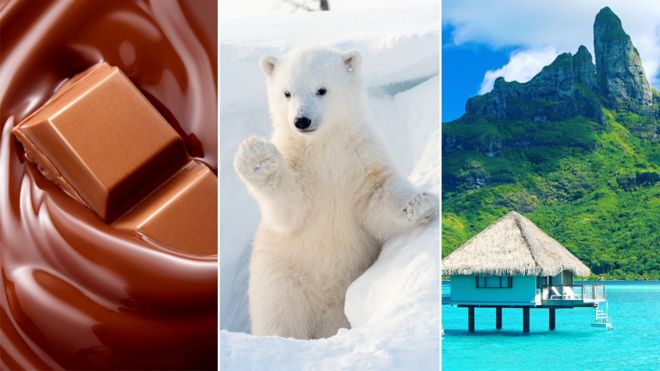
Chocolate, a polar bear and a South Pacific islandImage copyrightGETTY IMAGES

Scientists have described the serious concept of “Hothouse Earth”.

An international team of researchers suggest that global warming will have severe consequences for the planet.

They paint a picture of boiling hot climates and towering seas in years to come if temperatures rise by just 2C.

That means it could turn some of the planet’s natural forces – that currently protect us – into our enemies.

Dr Sarah Cornell is an environmental scientist and one of the researchers behind the report for the Stockholm Resilience Centre.

She’s described some of the big changes which could happen with a 2C temperature rise – which is the globally accepted amount, according to the Paris climate agreement.

Chocolate is under threat

Cacao pods growing on a tree in IndonesiaImage copyrightGETTY IMAGES
Image captionCacao pods, from which we get cacao beans for making chocolate, grow in countries around the equator

This is something that is very close to Dr Cornell’s (and everyone else’s) heart.

“Chocolate is just one example of a globally important crop that grows in warm and humid climates,” she says.

But global warming doesn’t mean that there will be more places to grow cacao beans – in fact, it’s the opposite.

A rise in global temperatures causes weather systems to be unpredictable and inconsistent, which would put cacao growing at risk.

“It is about the really intricate pattern of temperature, water flow, light intensity, the nutrients already available in the soil,” says Dr Cornell.

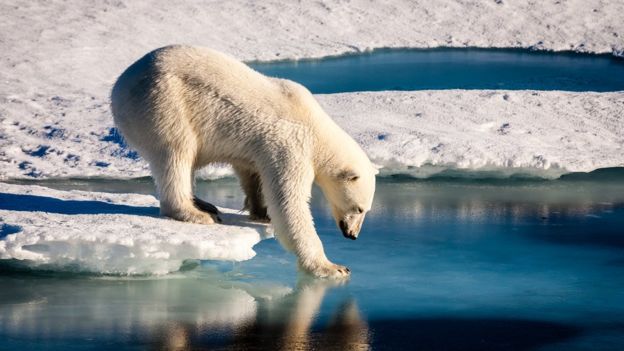
The Arctic could melt

A polar bearImage copyrightGETTY IMAGES

Ice in the areas around the North Pole could melt completely, says Dr Cornell.

But it’s not just the animals living there which are under threat.

“When you melt the Arctic, you’re changing the way that the whole Earth works,” she says.

“You’re changing ice that reflects heat back into space into dark seawater that absorbs incoming solar radiation.”

So it’s a vicious circle – the less ice there is to reflect heat away from the Earth, the more global warming accelerates.

Entire nations might have to move

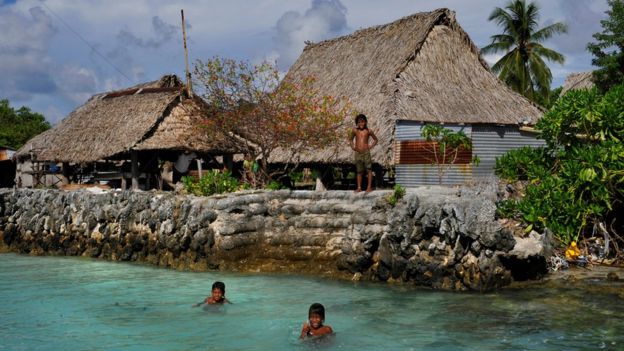
Tebunginako on the Island of Abaiang, KiribatiImage copyrightGETTY IMAGES
Image captionThis village in Kiribati, in the Pacific Ocean, had to relocate because of rising sea levels

How can you be a country if you don’t have any land?

Melting ice means rising sea levels – which could put low-lying island nations, such as the Maldives, under the sea.

“It will have all kinds of social consequences because the people who live in these low-lying areas will have to go somewhere,” says Dr Cornell.

“There are already lots of discussions with people in low-lying Pacific islands talking with Australia and New Zealand about where they can live, and how they can have nationhood while renting land from another country.”

Unpredictable rain

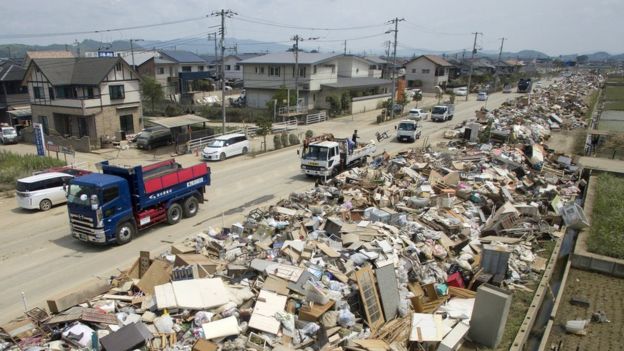
The aftermath of floods in JapanImage copyrightEPA
Image captionRecent floods in Japan left hundreds of people dead and millions had to evacuate their homes

Combine rising temperatures with other human activity such as deforestation, and you have drastic effects on the water cycle.

“When you change landscapes, you change where water can flow,” says Dr Cornell.

“When you warm the planet and are simultaneously changing the landscape, you’re changing the water cycle… in a much less predictable way than it was before.”

Extreme changes to the water cycle can lead to severe floods – and severe droughts.

How a tree frog affects a whole ecosystem

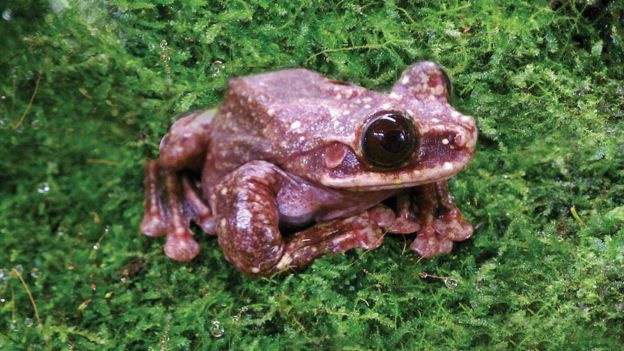
Toughie the frogImage copyrightATLANTA BOTANICAL GARDEN
Image captionToughie the frog was originally from a forest in Panama

Two years ago, a little brown treefrog called Toughie died in Atlanta, USA, at the age of 12.

He was the last known living Rabbs’ fringe-limbed treefrog to exist.

Toughie’s story is a symbol of the rate of extinction that is being caused as a result of climate change.

The extinction of a species even as small as a frog has consequences which we don’t yet fully understand.

“We could lose treefrogs, and that doesn’t sound important but it’s vitally important because it’s what we lose with it,” says Dr Cornell.

“When we’re killing species, we probably won’t know in advance what the consequences are.

“But we already know that we’re making ecosystems much more vulnerable”.

‘Blatant manipulation’: Trump administration exploited wildfire science to promote logging

Revealed: emails show Trump and appointees tried to craft a narrative that forest protection efforts are responsible for wildfires

A massive smoke plume, powered by strong winds, rises above the the Woolsey fire on 9 November 2018 in Malibu, California.
 A massive smoke plume, powered by strong winds, rises above the the Woolsey fire on 9 November 2018 in Malibu, California. Photograph: David McNew/Getty Images

Political appointees at the interior department have sought to play up climate pollution from California wildfires while downplaying emissions from fossil fuels as a way of promoting more logging in the nation’s forests, internal emails obtained by the Guardian reveal.

The messaging plan was crafted in support of Donald Trump’s pro-industry arguments for harvesting more timber in California, which he says would thin forests and prevent fires – a point experts refute.

The emails show officials seeking to estimate the carbon emissions from devastating 2018 fires in California so they could compare them to the carbon footprint of the state’s electricity sector and then publish statements encouraging cutting down trees.

The records offer a look behind the scenes at how Trump and his appointees have tried to craft a narrative that forest protection efforts are responsible for wildfires, including in California, even as science shows fires are becoming more intense largely because of climate change.

James Reilly, a former petroleum geologist and astronaut who is the director of the US Geological Survey, in a series of emails in 2018 asked scientists to “gin up” emissions figures for him. He also said the numbers would make a “decent sound bite”, and acknowledged that wildfire emissions estimates could vary based on what kind of trees were burning but picked the ones that he said would make “a good story”.

Scientists who reviewed the exchanges said that at best Reilly used unfortunate language and the department cherry-picked data to help achieve their pro-industry policy goals; at worst he and others exploited a disaster and manipulated the data.

A trail through the Tongass national forest, where Trump proposed allowing logging.
Pinterest
 A trail through the Tongass national forest, where Trump proposed allowing logging. Photograph: Rafe Hanson

The emails add to concerns that the Trump administration is doing industry’s bidding rather than pursuing the public interest. Across agencies, top positions are filled by former lobbyists, and dozens of investigative reports have revealed agencies working closely with major industries to ease pollution, public health and safety regulations.

A USGS spokesperson said Reilly’s emails were “intended to instruct the subject matter expert to do the calculations as quickly as possible based on the best available data at the time and provide results in clear understandable language that the Secretary could use to effectively communicate to a variety of audiences.” The agency added that it “stands by the integrity of its sience”

When forests burn, they do emit greenhouse gases. But one expert said the numbers the interior department put forth are significant overestimates. They say logging wouldn’t necessarily help prevent or lessen wildfires. On the contrary, logging could negate the ability of forests to absorb carbon dioxide humans are emitting at record rates.

Chad Hanson, a California-based forest ecologist who co-founded the John Muir Project and a lawyer who has opposed logging after fires, called the strategizing revealed in the emails a “blatant political manipulation of science”.

Mark Harmon, a professor emeritus at Oregon State University’s College of Forestry, said while it’s normal for the department to want to quantify emissions from fires, it’s unclear whether they began the process with a particular figure in mind.

He said the resulting quotes from top officials and press releases from the department are “about what you would expect from agencies trying to justify actions they already decided to take with minimal analysis”.

Harmon added that “the effect of logging on fires is highly variable,” depending on how it is done and the weather conditions.

Not long after the interior department came up with its carbon emission estimates from the 2018 California wildfires, Trump issued an executive order instructing federal land managers to significantly increase the amount of timber they harvest. This fall, he also proposed allowing logging in Alaska’s Tongass national forest, the largest intact temperate rainforest in North America.

Trump has also tweeted multiple times about wildfires, saying they are caused by bad land management or environmental laws that make water unavailable.

Monica Turner, a fire ecology scientist at the University of Wisconsin-Madison, said “it is climate that is responsible for the size and severity of these fires”.

An Interior department spokesperson said the department’s role is to follow the laws and use the best science and that it continues “to work to best understand and address the impacts of an ever-changing climate.”

Agency officials started emphasizing wildfire emissions data as a talking point as early as August 2018.

In an email chain that month, Reilly was asked by interior’s former deputy chief of staff Downey Magallanes to sign off on a statement that fires in 2018 had emitted 95.6m tons of CO2.

“Interesting statistics,” Reilly responded, noting that emissions would vary based on the types of trees on the land. “…We assumed woodlands mix since we don’t currently have details on the overall land cover types involved. Any variance to the fuel type will still leave it in the range to make the comparison, however. I’ll use this one if you don’t object. Makes a good story.”

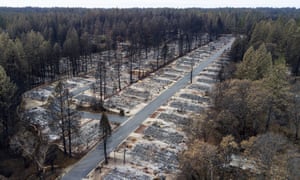
Homes leveled by the Camp fire at the Ridgewood Mobile Home Park retirement community in Paradise, California.
Pinterest
 Homes leveled by the Camp fire at the Ridgewood Mobile Home Park retirement community in Paradise, California. Photograph: Noah Berger/AP

Reilly, who was confirmed to his position in April 2018, later asked career scientists at the agency for updated numbers, according to documents obtained under the Freedom of Information Act.

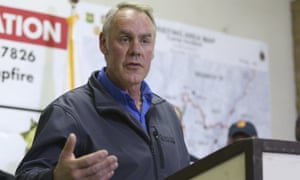
“I need to get a number for total CO2 releases for the recent CA fires and a comparison against emissions for all energy in US … Tasker from the boss; back to me ASAP,” he said on 10 October 2018. His boss at the time was the former interior secretary Ryan Zinke.

The job fell to Doug Beard, the director of the National Climate Adaptation Science Center, and Bradley Reed, an associate program coordinator in the Geographic Analysis and Monitoring Program, who responded with numbers from his team that afternoon.

In November 2018, Reilly once again asked for the same estimates of carbon dioxide generated by two devastating fires that fall in California – the Camp and Woolsey fires.

“The Secretary likes to have this kind of information when he speaks with the media,” Reilly said in a 16 November email to David Applegate, the associate director for natural hazards.

Applegate directed Beard to get the numbers, and Reilly chimed in, asking Beard: “Can you have [the scientists] gin up an estimate on the total CO2 equivalent releases are so far for the current 2 fires in CA?” He said he wanted to compare the figures to the carbon pollution caused by transportation in California.

“That would make a decent sound bite the Sec could use to put some perspective on it,” said Reilly.

Just a week earlier, the ferocious Camp fire had destroyed Paradise, California, killing dozens and becoming the deadliest wildfire in the state’s history. The scenes detailed were horrific.

Conservatives have insisted that the wildfires are happening because environmentalists have overzealously encouraged the conservation of forests. Trump has battled with California – the face of the American progressive movement he opposes – over a multitude of other issues, including the state’s longstanding climate policy of requiring new cars to go farther on less fuel.

The new emails show communications staffers and political appointees using government scientists as foot soldiers in those battles.

‘There’s too much dead and dying timber in the forest, which fuels these catastrophic fires,’ Zinke said.
Pinterest
 ‘There’s too much dead and dying timber in the forest, which fuels these catastrophic fires,’ Zinke said. Photograph: Rich Pedroncelli/AP

Now, under the leadership of the former lobbyist David Bernhardt, the agency has sought to remove consideration of climate change from many of its decisions, while expanding oil and gas drilling on federal land. Multiple whistleblowers have accused the department of stifling climate science.

Bernhardt in a May 2019 hearing told lawmakers there are no laws obligating him to combat climate change.

After Reilly asked his staff to calculate the wildfire emissions numbers in November, an interior spokeswoman emailed him asking for the same information so she could put out a statement from Zinke. A few days later, the agency published a press release on Zinke’s behalf, with the title “New Analysis Shows 2018 California Wildfires Emitted as Much Carbon Dioxide as an Entire Year’s Worth of Electricity.”

“There’s too much dead and dying timber in the forest, which fuels these catastrophic fires,” Zinke said. “Proper management of our forests, to include small prescribed burns, mechanical thinning, and other techniques, will improve forest health and reduce the risk of wildfires, while also helping curb the carbon emissions.”

Hanson, the forest and fire ecologist, said that in addition to using the government data for political purposes, the department numbers overstated the carbon emissions from forest fires while downplaying emissions from fossil fuels.

He said that the carbon emissions numbers generated by USGS and released to the public were an “overestimate” that “can’t be squared with empirical data” from field studies of post-wildfire burn sites in California. Other scientists the Guardian spoke with did not dispute the government’s data, but did find fault with the way it was presented to the public.

“The comparison of fire to electrical emissions [in California] was not explained or justified”, said Harmon, the Oregon State University scientist. “Picking other sectors would have left an entirely different image in the reader’s mind…If the comparison had been made nationally it would have been found that fire related emissions of carbon dioxide were equivalent to 1.7% of fossil fuel related emissions. So it is hard to escape the conclusion that some cherry picking was going on.”

Jayson O’Neill, the deputy director of the Western Values Project, said the emails are another example of the administration “trying to find ways to tell a story to achieve industry goals”.

“As wildfire experts have repeatedly explained, you can’t log or even ‘rake’ our way out of this mess,” O’Neill said. “The Trump administration and the interior department are pushing mystical theories that are false in order to justify gutting public land protections to advance their pro-industry and lobbyist dominated agenda.”