Hundreds of dogs dead in Alabama fire

(WVTM/NBC News) Hundreds of dogs and other animals were killed when fire swept through a building in Cullman County, Alabama Tuesday morning.

Officials say the fire quickly spread through a chicken house near West Point around 7:30 a.m., killing dogs, ducks and show chickens.

Animal Control officials say the chicken house was being used as a dog breeding facility.

Neighbor Stan Barbee witnessed the fire.

“There were like seven or eight explosions, and the first two just went up in flames and went fast,” Barbee says.

Some of the dogs killed were Pomeranians, Dachshunds, Cocker Spaniels and English bulldogs.

The owner of the property was reportedly able to save at least 50 dogs from the blaze. Several of them suffered burns and are being treated by a veterinarian.

Read more: http://bit.ly/2X1wCM2

Dog Saved By Workers On Oil Rig, 135 Miles Off Thai Coast

The rescued dog appeared to be growing stronger on the oil rig before he made his journey back to shore.

Vitisak Payalaw

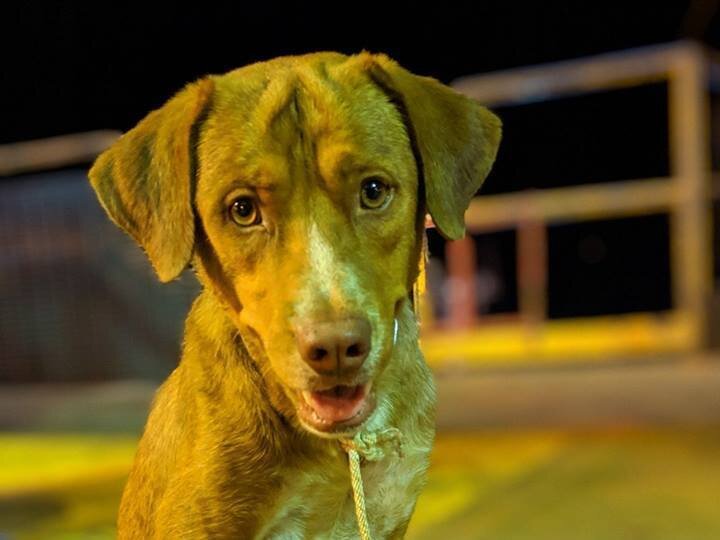
Workers on an oil rig about 135 miles offshore from southern Thailand noticed something stunning in the water: a dog.

The animal swam toward the rig’s platform on Friday and clung to it as team members tried to figure out how to save him, Vitisak Payalaw, an offshore planner for Chevron Thailand Exploration & Production, told NPR.

Video that Payalaw posted on Facebook shows the shivering animal partially submerged in water, staring up at the workers.

Payalaw said he and three members of his team spent 15 minutes working to secure the dog with a rope and pull him up to safety. They were racing against time, he said, because the seas were becoming rougher.

The oil rig workers used a rope to pull the dog to safety.

Vitisak Payalaw

In the first photos Payalaw posted, the dog looks exhausted — “especially on his eyes” — and despondent. Workers provided him with water and pieces of meat on the deck of the rig, and they set up a kennel for him indoors.

They named him Boonrod, Payalaw added, a word that means “he has done good karma and that helps him to survive.”

It’s not clear how the dog ended up so many miles offshore. Payalaw declined to speculate, simply saying it is still a mystery. The Bangkok Post said the pup is “believed to have fallen from a fishing trawler.”

Boonrod appeared to be steadily growing stronger, after eating and napping. After a day and a half, he looked happy and alert — and he was clearly popular with the oil rig team.

Boonrod poses with oil rig workers in the Gulf of Thailand.

Vitisak Payalaw

The pup has now been transferred to land, arriving in Thailand’s Songkhla province on Monday morning to receive veterinary care coordinated by the rescue group Watchdog Thailand. According to The Associated Press, the group has declared him “in good shape.”

Photos posted by the organization showed a triumphant-looking Boonrod being greeted by rescue group workers and veterinarians. They placed a fetching bright yellow floral wreath around his neck as Boonrod flashed a bright smile.

The dog was later shown receiving a bath, playing with admirers and eating treats.

Boonrod’s streak of good luck seems set to continue. Payalaw says he’s going to be working on the rig until the end of April, but when he gets back to shore, he plans to adopt the dog.

A tale of three dogs

Coyotes, dingoes and wolves are all dogs, as intelligent and loyal as our familiars. Our treatment of them is unconscionable

Brandon Keim

is a science, nature and technology writer whose work has appeared in The AtlanticWIREDNational Geographic NewsScientific American Mind and the Guardian, among others. He divides his time between Bangor, Maine and Washington DC.

4,200 words

Edited by Brigid Hains

Drinking her coffee one sunny winter morning, Pamela Karaz looked out the window of her home in upstate New York and saw a coyote walking up the driveway. It was an uncommon sight – coyotes tend to be secretive – but what happened next was even more surprising. The coyote marked a tree with his scent, strolled across her yard, sniffed at a few tracks and then noticed a bright blue plush toy Karaz had bought a few days earlier for Bristol, her golden retriever.

Bristol had left the toy outside, as was her habit. Now the coyote sniffed it, picked it up in his mouth, dropped it, picked it up again. Then the coyote started to have fun. ‘He tossed it up in the air. It fell down. He picked it up again and bucked around,’ Karaz said. ‘At no point do I ever think he thought it was prey. He wasn’t trying to tear it apart. He was literally playing with it, like a dog.’ This went on for about 10 minutes before the coyote trotted away with the toy still in his mouth.

Karaz is a wildlife photographer, and the photos she took had a moment of internet fame. They resonated: a fierce wild animal, behaving like a pet! Or, as Karaz noted, like a dog. Which of course coyotes are, albeit dogs who embody the very complicated relationship of humanity to canines.

Some dogs exist inside the circle of human domesticity: beloved companions and friends, respected and often pampered. They sleep in our homes, sometimes in our beds. We buy them plush toys. Other dogs live outside, free and independent. They possess the essential cognitive and emotional faculties as our dogs; domestication has introduced refinements, but the raw material was already there. They have personalities, memories, love their pups, and are devoted to their packs. Every so often, they play with toys we don’t bring inside.

They’re also treated arbitrarily: sometimes respected, sometimes ignored, and frequently persecuted with extreme prejudice if not outright cruelty. It’s a dissonant state of affairs, and one that sometimes makes me wonder about the future of wild dogs. Not about whether they’ll survive through this century and beyond, but what sort of lives they’ll lead. Whether they’ll thrive or live on our margins, fearful and broken, a perpetually abused canine underclass.

Karaz, who considers her dogs to be family, is a coyote advocate. To her, they’re just wild dogs trying to survive. But if she’d wanted to kill that coyote and had a hunting licence, she could have. For $22, or $100 for out-of-state residents, people can kill as many coyotes as they want for six months a year in nearly all of New York state – which, compared with most parts of the United States, is quite restrictive. In many states, coyotes can be killed year-round, day or night, in just about any way: poisoned, lured into range with electronic calls that mimic their voices, chased from planes, shot with semi-automatic assault weapons or sniper rifles. They live in killing fields.

Coyote-killing is different from hunting deer, elk or so-called game birds, traditions that are steeped in an ethos of stewardship, provision and even fairness. It’s killing for fun. YouTube abounds with videos that revel in the death of a coyote; in many parts of the western US, so-called coyote derbies are common, documented in photographs of stacked bodies – the kinds of photos we associate with the rapaciousness of the 19th-century frontier.

The advocacy group Project Coyote in northern California estimates that 500,000 coyotes are killed every year in the US, roughly one-fifth by the federal government for the purpose of reducing harm to livestock (the effectiveness of which is scientifically debatable) and the rest for their fur, to increase populations of prey animals we’d prefer to shoot ourselves, or simply for pleasure. ‘Think of a 35-pound dog, lying on the couch, and people doting on it,’ said the ecologist Shelley Alexander, leader of the Canid Conservation Science Lab at the University of Calgary in Canada. ‘But coyotes, some people enjoy killing, even torturing. And they’re the same animal.’

For Alexander, this disparity challenges the fundamentals of conservation – not just the obvious institutions and organisations, but the mindset guiding human concern with the natural world. A few small advocacy groups and the Humane Society, which is powerful but generally viewed as an animal welfare organisation, raise objections to the cruelty of coyote killing. But mainstream conservationists tend to be silent on it or, in the case of governmental wildlife agencies, actively support it. Even among those who don’t like it, says Alexander, wanton killing is tolerated because coyotes reproduce quickly. Their populations are not threatened. It’s populations and species rather than individuals that are the focus of wildlife management for conservation.

In cities and suburbs across the US, coyotes have been greeted with unease and fascination, symbols of wild nature in unexpected places

That animals have inner lives, a fact made abundantly clear by cognitive science and animal behaviour research, is not considered in these calculations. Nor are the ethical considerations that naturally follow from those insights. Which isn’t to say conservationists don’t care about animals as thinking, feeling individuals – many do – but those concerns are considered separately. Individual lives matter only when there’s few of them, and coyotes are in no danger of extinction.

Quite the opposite. Indeed, coyotes respond to persecution by increasing their breeding rates. Kill some, and soon there’s more than before, though survivors endure the pain of loss and upheaval. ‘These are animals who are intelligent, have unique personalities and family lives,’ said Kevin Bixby, executive director of the Southwest Environmental Center in New Mexico. ‘Individuals are not just automatons. One coyote is not necessarily replaceable.’

In the past few decades, coyotes have taken up residence in cities and suburbs across the US. There, they’ve been greeted with both unease and fascination, symbols of wild nature in unexpected places. I’m sometimes uncomfortable with that characterisation: coyotes might be symbolic, but they’re also, like Karaz said, just dogs trying to survive. Of more importance is a little-asked question: what sort of lives are urban coyotes leading?

I put the question to Alexander. It depends where they are, she said. Some live peacefully amid lots of green space. Many live in constant fear and stress. They’re harassed by people and our dogs, hit by cars, spooked by strange noises, and end up eating garbage. Yet Stan Gehrt, an ecologist at Ohio State University who studies the Chicago area’s booming coyote population, offered a different view. Suburbs, he said, are great life for coyotes. Even downtown, where there’s traffic, human disturbance and other hardships, Chicago’s coyotes are in excellent health.

‘All of it is much better than unprotected rural areas,’ said Gehrt, ‘where they will be shot and killed.’ Not long ago, Chicago’s city council passed an ordinance forbidding animal control officers from harming coyotes unless they had a track record of threatening or attacking people. It’s the opposite of the traditional approach, and suggests that cities could become oases of peace and security for creatures persecuted in more rural areas.

As for Karaz’s coyote, he trotted away with the toy in his mouth. She hasn’t seen him again, but her own dogs still have a habit of leaving their toys outside. Occasionally, she finds them in the woods nearby.

Shortly after his arrival at the Evelyn Downs cattle station in South Australia, on a routine patrol of the nearly 900-square-mile property, the ecologist Adam O’Neill encountered a pack of dingoes. Roughly a dozen of the tawny, medium-sized dogs were tearing a dead calf to pieces: five feeding on the body, and the rest skulking nearby, fighting for their turn. Watching the scene, O’Neill considered whether to shoot them. After all, though he and his fellow ecologist Arian Wallach were at Evelyn Downs to study its natural communities, they were also tasked with managing its cattle.

Before becoming a scientist, O’Neill had made his living as a professional hunter, hired by Australian landowners to kill invasive and unwanted animals. He knew how to use his gun. He was also tired of killing, which is why he’d become an ecologist. Reflecting on the cruelty often shown to animals in that part of the world, O’Neill used his rifle’s scope to examine one of the dingoes. The dog, he thought, looked desperate.

It’s an impression that might once have been denounced as anthropomorphic. In a few shrinking circles, it might still be. Who’s to say whether an animal is desperate? Yet to anyone who’s known a dog well it won’t seem implausible at all, and the Evelyn Downs dingoes likely had good reason.

In Australia, killing dingoes is a basic part of livestock management. Between poisoning, shooting and fencing, there are few places where dingoes are left alone. The constant assault disrupts pack relationships and atomises families, leaving behind what O’Neill would describe as ‘young, unruly, displaced refugees… just a bunch of poor lost souls living in a world of turmoil’. He lowered his gun.

Apart from being compassionate, it was also a sensible research decision. The ubiquity of dingo persecution has made it difficult to appreciate their natural behaviours and roles. Even when present, they’re often not functioning in stable packs. O’Neill and Wallach were especially interested in understanding the ecology of a landscape with healthy dingoes, and even hoped to show that a successful cattle operation might be run without killing them.

In the months following O’Neill’s mercy, the dingoes found their level. They formed packs, established territories and stopped killing calves, instead focusing their attentions on wild prey. O’Neill regularly encountered their tracks, but only rarely saw them in the flesh. ‘When they’re socially stable, they virtually disappear from sight,’ he said. ‘I’ve noticed this throughout the whole of my working life.’

O’Neill attributes it to the development of a local canine culture, with lessons passed down between generations: don’t mess with the two-legs and their property. In healthy families, he said, ‘they are invariably well-behaved. I guess what it all comes down to is mutual respect. We respect their right to keep breathing, and they respect our rights as owners of resources in a shared landscape.’

Which might again seem like anthropomorphism. People don’t usually think about animals possessing such sophisticated value systems. Yet dingoes, like other wild dogs, routinely navigate complex social scenarios, and animal culture is a burgeoning area of research. Customs taught to offspring and shared between groups can shape local behaviour in important ways. What O’Neill suggests is at least a plausible hypothesis. And dingoes living in stable packs, learning their landscapes and passing hunting lessons between generations would certainly have less need for the risky pickings offered by livestock.

The Evelyn Downs dingoes soon assumed their natural position as apex predators, a term for creatures who live at the top of food chains, eating other animals but not themselves being eaten. It’s a role they’ve played for the past several thousand years, and – along with hunting and habitat management by the continent’s indigenous inhabitants – one that shaped Australia’s thriving pre-colonial communities of life.

As a rule, apex predators are the bosses of nature’s regulatory system, promoting ecological richness and stability by suppressing irruptions of prey and smaller predators. ‘They allow the number and variety of species occupying any given area to be higher,’ said Wallach, now a research fellow at the University of Technology Sydney and co-founder with O’Neill of the Dingo for Biodiversity Project. ‘In a nutshell, large predators make the world green.’

As a conservation strategy, killing foxes and cats has caused extraordinary suffering while failing in its aim of reducing their populations

In their uninterrupted presence, ecologies gravitate towards what once would have been called balance, but is better understood as dynamic equilibrium: nothing gets out of control. There are many examples. Eliminating mountain lions from a landscape, for example, can lead to dramatically increased deer populations, which in turn means a loss of streamside vegetation and declines in aquatic life. After sea otters were hunted to near-extinction off North America’s western coast, exploding sea-urchin populations devoured the great kelp beds that formed aquatic forest ecosystems; when otters returned, so did the kelp and the life they supported. And at Evelyn Downs, the presence of dingoes regulated, among many other creatures, foxes and cats.

That observation – also described in other studies elsewhere on the continent – is especially relevant in light of the country’s ongoing ecological turmoil. Australia has the world’s highest mammalian extinction rate; dozens of native species are declining or endangered, a fact blamed in part on an onslaught of foxes and cats, which were introduced by European colonists and found rich pickings among creatures unprepared by evolution to withstand their predations.

‘Having dingoes is a great and very practical way to effectively control the smaller predators,’ said Mike Letnic, a conservation biologist at the University of New South Wales whose own research traces many of Australia’s ecological problems to the absence of dingoes. More dingoes means more of the species now declining so precipitously – more bilbies and rock wallabies and kowari, more malleefowl and painted dragons – and more stable populations of species such as kangaroo and emu that are prone to overpopulation remedied by controversial extermination campaigns.

Until now, the conservation approach to feral predators has been to focus on killing foxes and cats, a strategy that’s caused extraordinary suffering while failing miserably in its aim of reducing their populations. Wallach considers this ethically reprehensibleecologically senseless and a terrible way of getting people to respect the natural world. She identifies as a compassionate conservationist: part of a small but growing movement in conservation to promote biodiversity while respecting animals as individuals.

‘Dingoes will do a better job of it than we’ll ever do,’ said Letnic of their biodiversity-protecting ways. Yet they’re not allowed to do that job. Not only are dingoes killed by the livestock industry, says Wallach, but also as a form of environmental management, either as a favour to sheep and cattle pastoralists or inadvertently, with poisons intended for the animals they would otherwise keep under control.

Killing, say Letnic and Wallach, offers an easy and misleading out. Meanwhile, the Australian government announced last year its intent of killing 2 million wild cats in the next several years. Ecologists recently began trials of a trap designed to spray poison onto cats, who will then lick it off their fur and die after days of seizures and vomiting. Somehow this is preferable to simply allowing wild dogs to live. It continues to be easier to kill than to coexist.

Whereas most coyotes and dingoes live and die in anonymity, many wolves are known as individuals – tracked by scientists, even named and followed by a fascinated, often adoring public.

There’s OR-4, the alpha male of Oregon’s Imnaha pack, who was killed this spring after, old and sick, he turned to hunting livestock. Or his son, OR-7, whose 1,000-mile walkabout made him the first known wolf in nearly a century to visit California. He eventually returned north, met a mate and sired a litter of pups – a much happier story than that of Echo, the first wolf seen in the Grand Canyon in more than 70 years, who was shot in late 2014 by a hunter who supposedly mistook her for a coyote.

Most emblematic of all, though, are the wolves of Yellowstone National Park. Canine celebrities since their mid-1990s reintroduction, their histories are as detailed and dramatic as Nordic sagas, but have taken a tragic turn over the past several years as hunting groups and western state wildlife agencies lobbied to remove gray wolves from the federal list of endangered species. Many of Yellowstone’s wolves have been shot and killed after stepping outside the park’s boundaries; they literally cross from one world into another, from a place where their lives are respected to one where they are not.

That dynamic captures tensions surrounding wolves throughout much of the US. Nearly a century after being almost completely exterminated, protection under the Endangered Species Act has allowed their numbers to rise again. The rise is relative – there are still just a few thousand in the continental US, occupying a small fraction of their historical range – but their species-level existence is not quite so precarious. Across the western and upper midwestern states, people are now fighting over what to do with them.

The nitty-gritty of wildlife agency proposals, court decisions and voter referenda are confusing to trace, but certain themes are universal. From one point of view, the lives of individual wolves have value, and should not be taken except to prevent otherwise unavoidable human harm. From another, individual wolves are members of populations that might annually be reduced without eliminating them altogether. And others would be happy to see the entire wolf population reduced. Wolves who previously were protected are now being killed for fun, or for reasons poorly supported by fact.

Killing wolves to prevent attacks on livestock, for example, doesn’t seem to work very well. It makes sense if individuals misbehave, as in the case of OR-4, but quota-based killing with no regard for which wolves are being targeted is likely to backfire: packs are destabilised, territorial fights ensue, and livestock attacks tend to rise. The social fabric is torn. And in places where wolves are killed to enhance populations of deer or elk, there are usually better alternatives available.

Take the case of 527, a famed Yellowstone wolf shot by a man who said he wanted to help elk. Many hunters blamed wolves for dramatic regional elk declines over the past two decades; the real culprits, though, turned out to be a loss of summer habitat and a change in predation by grizzly bears, who’d turned to elk after non-native trout released by fishermen into Lake Yellowstone outcompeted native fish on whom the bears had feasted. Wolves made a convenient scapegoat. Ditto in Idaho and British Columbia, where killing wolves is largely a distraction from more important habitat issues.

Again and again, research shows that rationales for state-sanctioned wolf hunts are flimsy. Yet that science, say wolf advocates, is ignored or applied inconsistently. This was a recurring frustration at a Humane Society-organised carnivore research conference I attended last year: having expected that the best available science would be used to guide decisions, researchers and advocates find that it’s not.

A deeper issue was evident too: one that gets at the very fundaments of how human society interacts with the non-human world. Almost invariably, government wildlife agencies are funded by sales of licences for hunting, fishing and trapping, and are strongly biased towards the treatment of wild animals as resources to be managed for human consumption. Many wolf advocates argue that such agencies, especially at the state level, can’t be trusted to be fair or – crucially – democratic.

That arrangement is the foundation of what’s known as the North American Model of Wildlife Conservation, codified early in the 20th century following the precipitous decline of now-common animals such as white-tailed deer, bison and elk, and focused on managing predator populations in order to maximise hunters’ favoured species. In many ways, that model has been successful, yet it’s also showing its age. Hunting is less popular than it once was; at the same time, there’s an ever-swelling number of people who care about animal welfare. At present, they’re largely excluded from wildlife management. At best, their views might be entertained by officials, but rarely are they shared.

As noted in ‘Predators and the Public Trust’ (2015), an article published in the journal Biological Reviews by researchers critical of the North American model, government wildlife agencies tend to see those who advocate for animal welfare as a threat to their work. And indeed, those values do challenge the treatment of animals as a resource – yet they also mean that those agencies no longer represent the public they’re supposed to serve, but just one interest group.

Rather than thinking of wolves as belonging to us, we might think of them as citizens of their own wild nation

To the authors of that Biological Reviews paper, including the ecologist Adrian Treves of the University of Wisconsin-Madison and the environmental scientist Jeremy Bruskotter of the Ohio State University, recreational wolf hunting violates the bedrock legal principle that wildlife belongs to everyone, not just a few people who would claim them. The Yellowstone wolves have embodied this literally. Inside the park, they belong to every American; outside it they belong to people who would hunt them. And that, in turn, is a microcosm of the passage of wolves from federal endangered-species protection to state-level management.

There are complications to this view that wildlife is a matter of public trust and shared ownership. There’s a case to be made that, so long as wolves are not completely eliminated, hunting them is compatible with the public trust: it’s not individual animals who belong to everyone, the argument goes, but populations and species across time. From the other end of the spectrum, animal rights advocates object to the idea that animals might be owned by anybody apart from themselves. As Sue Donaldson and Will Kymlicka arguein Zoopolis: A Political Theory of Animal Rights (2011), the logic guiding our treatment of wild animals is broadly that of colonialism – or perhaps even slavery. We do with them as we please, regarding them as subject entirely to the human realm. Rather than thinking of wolves as belonging to us, we might think of them as citizens of their own wild nation.

In practical terms, though, Zoopolis and ‘Predators and the Public Trust’ end up in the same place: calling for political institutions and processes to include people who speak for animal welfare and interests. For every hunter on a state wildlife commission there should be someone who argues on behalf of the animals. Rather than starting with a stacked deck, the full range of both science and ethics would be considered.

If this sounds radical, it’s not. Something similar is already happening in California, where the state’s five-person Fish and Game commission now includes two who don’t hunt. Contrary to some fears, many types of hunting do continue in the state – but practices that are socially unpopular and offer no ecological benefit, such as coyote derbies and bobcat trapping, have been banned. Wolves remain protected as endangered.

But California is a progressive state. Such an arrangement will not come so easily elsewhere, especially in relation to wolves. ‘The 21-year old controversy over wolf restoration in the West is not really about wolves,’ wrote Ralph Maughan, the founder of the Greater Yellowstone Coalition conservation group, in an op-ed published this spring in the Idaho State Journal. ‘It has become another “values” contest.’

Anti-wolf sentiment is frequently intertwined with conservative politics, gun rights, rural disenfranchisement and a distrust of government. Which could help to explain why research on non-lethal prevention of wolf/livestock conflicts hasn’t found much traction among ranchers. It also hints at a troubling possibility: Maughan speculates that regional ecologies might eventually be shaped as much by political as by natural features, producing red state/blue state distributions of wildlife.

Yet there’s reason for optimism, too. The Wood River Wolf Project, an Idaho-sited collaboration of ranchers, wildlife officials and conservationists working to show how wolves and livestock can coexist, has been successful. Though it’s usually the methods, such as guard dogs, range riders and remotely monitored packs, that get the headlines, the project’s success is as much about people and relationships.

‘You start small and build from there,’ said Suzanne Stone, a wolf restoration officer with the advocacy group Defenders of Wildlife. ‘It takes time. Being able to sit down and have a cup of coffee.’ Which applies to democracy generally, and is its saving grace. Whatever our disagreements in principle with strangers, we can often sit down and figure out something in good faith with neighbours. And if political representation of animal interests might not yet be practical everywhere, for every species, it might at least start with wolves, coyotes and dingoes.

After all, to speak on their behalf reflects both the spirit of democracy and the inescapability of animal intelligence, especially among these close cousins of humankind’s best friends. To treat them so differently from the dogs we love is hypocritical. It sets a bad example – one that makes it a little easier to stigmatise and mistreat fellow human beings. As the ethicist William Lynn argues: ‘Wolves are not just good for ecosystem health. They are critical to the moral health of a society.’

Police arrest pet owner who killed dog hunter in China

  • Tribune Desk
  • Published at 11:45 AM January 21, 2018
  • Last updated at 12:33 PM January 21, 2018
Police arrest pet owner who killed dog hunter in China
Screenshot of the CCTV still posted taken from Asia Wire via Metro. It shows the assailant shooting the dog and leaving

The pet owner is now being questioned by police

Police arrested the pet owner who reportedly killed a dog hunter at Yangzhou in Jiangsu province of China.

The dog hunter has allegedly killed the detainee’s dog with poison dart.

The pet owner chased and slammed the assailant “into a brick wall [of a shop] with his car” when he discovered his dying dog.

Meanwhile, the deceased is accused of killing half a dozen dogs using the darts, according to the Metro.

CCTV footage, which was shared online, reveals the dog hunter on his scooter shooting a dog with the dart gun and leaving.

Yangzhou city police confirmed that the man died at the scene.

The pet owner is now being questioned, they added.

The owner’s family have reportedly claimed that he got “the pedals confused as he was driving and did not intend to ram the suspected dog thief with his car.”

In December last year, eight gang members were reportedly arrested after 200,000 dogs were poisoned. The vendors hunted dogs and traded dog meat in restaurants, reports The Telegraph.

The dart, which instantly kills dogs, contains a large dose of muscle relaxant suxamethonium which could harm people who ate the dog meat.

https://www.google.com/url?hl=en&q=https://www.google.com/url?rct%3Dj%26sa%3Dt%26url%3Dhttps://www.dhakatribune.com/world/2018/01/21/police-arrests-pet-owner-rammed-dog-killer-china/%26ct%3Dga%26cd%3DCAEYCCoUMTA5OTA3MDI5OTM0Mzg2MTgwMjEyGmQzNWFhYmI2YmE2MTljMmU6Y29tOmVuOlVT%26usg%3DAFQjCNHxwFzAvNQJL9tpYbZsBRVizI8CjQ&source=gmail&ust=1525369361273000&usg=AFQjCNH0a3BAIqg07env3bmDE0t-DWGkgA

Can Dogs and Cats Be Vegan? Science Weighs In

Treats and kibble made with fungus offer high protein from plant-based foods, but nov t all pets may be able to make the switch.

Quick, name one thing soy sauce, miso, and sake all have in common. If you said, They’re delicious, you’re not wrong. But the real answer is koji.

The common name of the fungus Aspergillus oryzae, koji is a microorganism at the heart of many traditional Asian flavors and foods. It’s also the key ingredient in a new kind of pet food announced today that its creator hopes could change the future of how animal feeds are produced.

Koji is normally cultured directly on grains like rice, which supply the starches the fungus needs to proliferate. Wild Earth co-founder Ryan Bethencourt says they put the koji straight into a beet sugar-based solution. After extraction, they press it like tofu, then slice and bake it into a final product that’s like a cheese cracker in taste and flavor.

The end goal, says Bethencourt, is to create an environmentally friendly, high-quality food for pets that’s vegan and tasty. The company plans to release their first product—a pet treat—by June, with a kibble-based food available later in 2018.

 VIEW IMAGES

Bags of Wild Earth pet treats.

PHOTOGRAPH COURTESY OF WILD EARTH

Though it’s not the first commercial vegan pet food on the market, their new koji-based product would no doubt appeal to the masses of humans who have already adopted a meat-free lifestyle: The overall market for plant-based foods that directly replace meat is already valued at $4.9 billion, and a recent analysis indicates that sales grew by 8.1 percent in 2017. (Find out how a tick bite could make you allergic to meat.)

The idea to use koji as a way to enter the plant-based pet food sector came from company co-founder Ron Shigeta, a third-generation Japanese-American and serial koji grower.

“Ron always has these kojis he’s growing everywhere, and we started to think: Could we use koji as the primary protein product rather than something just to add flavor?” Bethencourt says.

An analysis of their early koji solids showed that they were around 50 percent protein; a steak, by comparison, is around 30 percent. For fat, fiber, and other nutrients, the company plans to mix in vegetables such as pumpkin, sweet potato, buckwheat, and potato flour.

DIETARY CHOICES

Even if koji is a quality source of protein, is it right for both dogs and cats?

Despite the growing desire by Americans to provide their pets with high quality, high protein food, no official definition exists for “high protein” for animal feeds. So veterinary nutritionist Amy Farcas follows a few rule-of-thumb guidelines: For dogs, a low-protein diet consists of 10 to 15 percent of daily calories from protein, while a typical diet is anywhere from 20 to 35 percent. Anything above 35 percent could be considered a high-protein diet.

“It’s a little arbitrary,” Farcas says. “For healthy dogs, there’s no upper limit of protein intake, meaning that as long as they also meet their dietary fat requirements, dogs can do well on a high-protein diet.”

Zach Ruiter, a Toronto-based documentary filmmaker, says his 13-year-old wirehair fox terrier, Alvie, already thrives on a mainly homemade vegan diet. He says he’d give koji a shot; Alvie loves tofu, so it wouldn’t be a stretch.

“It would be interesting to see if there are any studies done to look at health and life expectancy with various diets,” Ruiter says. “What are the overall health impacts of a vegan diet for dogs?”

Bethencourt says his company hopes to help answer that question. “It’s something we don’t have data for right now, but as you’ve seen with vegan athletes, we think that a non-meat diet will be beneficial to the animals as well, perhaps surprisingly so.”

As for fungus in Fluffy’s future, koji alone isn’t quite right for cats: as obligate carnivores, they need to eat meat to get nutrients like taurine and arachidonic acid. But “cats certainly can tolerate a certain amount of plant material in their diet, though they do have higher requirements for protein or fat than dogs or humans,” Farcas adds.

Bethencourt says his company is in the process of developing a lab-grown, meat-based cat food—made of cultured mouse cells. (Scientists have also been able to grow milk in a lab—here’s how.)

THE COST OF KIBBLE

In addition to being more humane, such products aim to lower the environmental impacts of feeding the world’s domestic pets. In the U.S., people share their households with 47.1 million cats and 60.2 million dogs, according to the 2017-2018 National Pet Owners Survey.

Those figures, and the proliferation of “premium” pet foods, prompted UCLA geographer Gregory Okin to crunch some numbers about pet food production and consumption.

In a study published last year, Okin estimated that in the United States alone, dogs and cats eat an equivalent number of calories as 62 million Americans, or a fifth of the population. Because most of those calories come from animal products, they’re more resource-intensive to produce.

“Even though animal byproducts may not be expensive, rendering them is a high-temperature process,” Okin says. He notes that the next step, kibble production, could also be energy intensive, as the formulas are squeezed through high-temperature extruders that sterilize the pet food as it’s made.

“Maybe if [koji] is made in a highly energy-intensive way, and using certain materials, it’s possible that it’s no better than meat in terms of environmental impact,” Okin says. But the product needs to come to market with a scaled-up production process before anyone can do a real comparison.

PROTEIN FOR PEOPLE?

Koji could also be a useful solution for challenging dietary circumstances among people, Bethencourt notes. For example, the fungus-based protein could be suitable in developing countries where food spoilage is a real concern, or for use as non-perishable, high-quality food sources for remotely deployed soldiers.

Okin says conventional dog food could already meet those needs, given its protein content, but he muses on the potential for koji as a more palatable alternative.

“If there’s a takeaway here, why aren’t we taking this stuff and thinking about how to feed it to humans?” he asks. “There are people all over the world who need protein. Here you’ve got this shelf-stable, long-lived potential emergency food. You could use it for people. Or you could feed it to dogs.”

PETA honors ‘Hero Dog’ who was shot while protecting owner during burglary

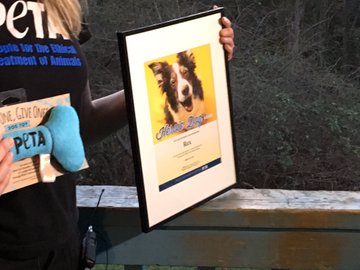
The German Shepherd ‘Rex’ who was shot three times while protecting his owner from a burglary at their home in Des Moines last month was honored by PETA on Tuesday, March 6, 2018. (Photo: KOMO News)

AA

DES MOINES, Wash. – The German Shepherd who was shot three times while protecting his owner from a burglary at their home in Des Moines last month was honored by PETA on Tuesday.

The dog named Rex was given the agency’s Heroic Dog Award for, “going above and beyond at great personal risk to protect his beloved family,” according to PETA.

Rex was also reunited with Des Moines Police Department Animal Control Officer Jan Magnuson, who helped save his life.

“It makes me feel good that a lot of people care for my dog,” said his 16-year-old Javier Mercado.

View image on TwitterView image on Twitter

PETA presents Rex with hero dog award. Rex was shot protecting his family during an armed home invasion. He is expected to make a full recovery

Mercado was home alone when someone broke into their home on February 21. He called 911 and hid in a closet while Rex ran after the burglars to defend his home.

His family said Rex was shot three times at the burglars got away.

Animal Control Officer Magnuson then rushed Rex to an emergency veterinary hospital.

After undergoing surgery, he’s now recovering at home.

“Rex is happy. I’m happy,” said Mercado. “He looks good to me, he’s running, jumping, playing.”

But, Rex still has about two more months of recovery until he’ll be ready for his daily walks again.

“I’m very happy just to see how much support our family and Rex, especially has been getting,” said Mercado’s mother, Julia Cadena.

Along with the award, Rex received a get well care package from PETA full of treats and toys.

PETA is also offering a $5,000 reward to find the burglars who shot Rex.

Anyone with information is asked to call the Des Moines Police Department at 206-878-3301.

Gofundme account has raised more than $62,000 towards Rex’s veterinary bills.

Olympic Figure Skater Spends Free Time Saving Korean Dogs

https://www.thedodo.com/close-to-home/figure-skater-meagan-duhamel-rescues-dogs

She just won gold in the Winter Olympics — but she’s doing something even more special with her downtime ❤️️

PUBLISHED ON 02/14/2018
Figure skater Meagan Duhamel with dog Moo-tae
https://www.instagram.com/p/BbwtrWyF_59/embed/captioned/?cr=1&v=8&wp=631#%7B%22ci%22%3A0%2C%22os%22%3A2906.5000000000005%7D
Meagan Duhamel with adopted Korean dog
Rescued dachshund Moo-tae
Meagan Duhamel with rescued dogs Moo-tae and Dae-gong
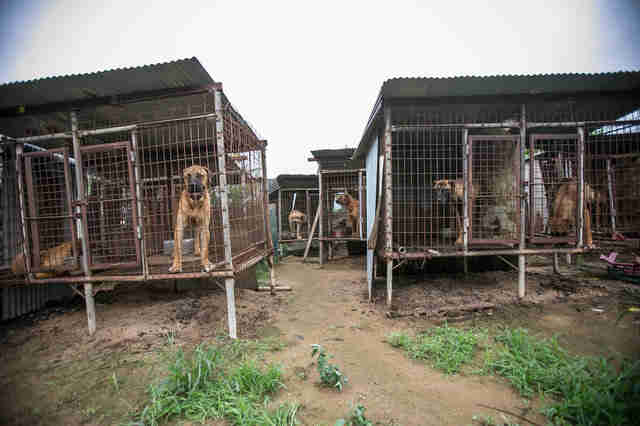
The dog meat farm in Yesan, South Korea
Jindo dogs at dog meat farm in South Korea
Dogs from the meat trade
Moo-tae and dog brother Theo

Winter Olympics shines spotlight on dog meat trade in South Korea


by MARTIN ROGERS  |  USA TODAY SPORTS

 
2.5 million dogs are bred each year in South Korea for human consumption.
Combating the dog meat trade in Korea
2.5 million dogs are bred each year in South Korea for human consumption.
USA TODAY SPORTS

PYEONGCHANG, South Korea – As the Winter Olympics approach this week, figure skater Meagan Duhamel still shudders to think the dog she rescued from South Korea might have ended up on someone’s dinner plate.

Duhamel, a Canadian, is a contender with Eric Radford in the pairs competition and heads to Pyeongchang in search of gold, as well as another dog that she can save from slaughter.

Nami Kim, a prominent campaigner based outside Seoul,

Nami Kim, a prominent campaigner based outside Seoul, has sent more than 1,200 rescued dogs to the United States through her Save Korean Dogs program.
NAMI KIM

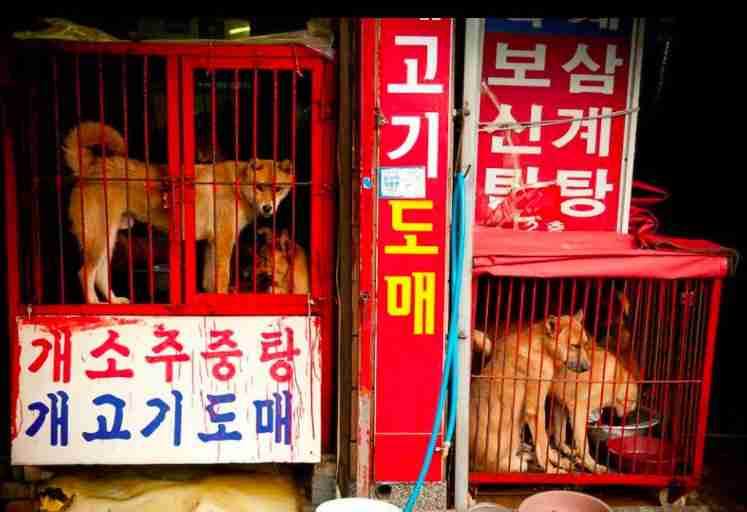
Eating dog meat is common and legal in Korea, as well as many parts of Asia, and is mainly eaten by older people. Dotted around the country are thousands of restaurants serving “gaegogi” dishes that, according to folklore, have strengthening and medicinal properties.

“It is just sad because when the world is watching the Olympics little is known or spoken about the (Korean dog meat trade),” Duhamel told USA TODAY Sports. ”There are hundreds of dog meat farms tucked away and nobody is talking about this. The buzz will be about the Olympics.”

More: Go behind the scenes at the 2018 Winter Olympics Athletes Village

More: Lindsey Vonn’s Olympic dreams driven by need for speed

According to The Associated Press, restaurants “nearly in the shadow of the Olympic Stadium” are still selling dog meat meals. According to the Humane Society International, around 2.5 million Korean dogs are killed for their meat each year.

The Korean government, realizing the issue is sensitive for foreigners, has offered money to restaurants if they stop serving dog meat during the Games and has requested that signs advertising the meals be covered up or removed.

“This is an Olympics story,” Marc Ching, a Bay Area activist who founded the Animal Hope and Wellness Foundation, said. “I am half Korean. Koreans are very proud of hosting the Olympics. Why this has to be tied to the Olympics is that the government itself is actually paying to hide this from the world. Maybe if … they just said ‘this is part of our culture,’ it would be different.”

In this photo from December, dog meat menus that explained

In this photo from December, dog meat menus that explained the dishes in English, Chinese and Japanese, are seen at Young Hoon Restaurant in Pyeongchang.
AHN YOUNG-JOON, AP

Animal rights activists claim that dogs, as well as cats, in the meat trade are subjected to horrific conditions and insist nothing is being done to end the practice. That is despite Korean President Moon Jae-in being a dog lover who recently adopted a pet saved from a dog meat farm. Campaigners are determined to use the Olympics to raise awareness and hope that support from athletes and international pressure may spark a change in legislation.

However, it is a difficult subject and, perhaps understandably, some athletes prefer not to speak out about something that is both culturally sensitive and controversial.

More: Vomiting illness spreads at Winter Olympics

More: Go behind the scenes at the Athletes Village

“Every country and every culture has different traditions and we are always respectful of those,” American ice dance skater Alex Shibutani said. “I can’t speak too much because I’m just not familiar with their culture.”

According to Ching, the issue is less about the consumption of dog meat, and more about the stomach-turning practices that are used to slaughter the animals.

“In Korea they usually put a noose around the dog’s neck and take them out back, hang them and beat them,” Ching said. “Another method is they just smash their head open. Sometimes they do electrocution. They shock them and burn them or de-fur them. With electrocution many times they are still alive. It is terrible.”

In many parts of Asia, dogs are often tortured and beaten before they are killed as it is believed that the adrenaline makes the meat more tender. Korean farmers defend their right to keep dogs packed in cages and to treat them as any other animal being raised for human consumption.

“How can we sell (them) when we’re training and communicating with them individually?” Kim Sang-young, president of the Korean Dog Farmers Association told the Hankyoreh news site. “They’re just livestock. We raise them with affection so they don’t suffer, but the purpose is different.”

On Monday, USA TODAY Sports sent a message requesting comment to the official press office email account of the Pyeongchang organizing committee and to Nancy Park, spokesperson and director of international media relations for the 2018 Olympic organizing committee.

USA TODAY Sports received a reply from the news desk of the organizing committee, with its “official statement on dog meat consumption.”

The statement read: “We are aware of the international concern around the consumption of dog meat in Korea. This is a matter which the government should address. We hope that this issue will not impact on the delivery or reputation of the Games and the province and we will support the work of the province and government on this topic as needed. Also, dog meat will not be served at any Games venue.”

Ben, a rescue from South Korea, was fostered by the

Ben, a rescue from South Korea, was fostered by the Peck family in Irvine, Calif.
LANA CHUNG PECK

Pets stolen for meat

Nami Kim, a prominent campaigner based outside Seoul, has sent more than 1,200 rescued dogs to the United States through her Save Korean Dogs program. Several have been fostered by a family in Irvine, Calif., Lana Chung Peck, her husband Kevin and their two young children.

Chung Peck said that the mental scars of mistreatment run deep. When the dogs first arrive they are often unaccustomed to positive human interaction. That was the case with their current foster, a Jindo named Julie.

“She would be frightened of anything in front of her,” Chung Peck said. “Any human, any dog, any sudden movement.”

“At first the dogs who come are almost feral,” Kevin Peck added. “They don’t want to walk, don’t want to be touched. But within weeks they are almost like a puppy.”

Four years ago, dog protection became a major issue during the Winter Olympics, with the plight of the strays of Sochi touching the hearts of visitors. Gus Kenworthy, a slopestyle silver medalist in freestyle skiing, rescued several animals. So did members of the United States hockey team. Kenworthy did not respond to a request for comment for this story.

The Korean dog farming industry tries to draw a distinction between dogs as pets and dogs as food, but Ching says some dogs that end up in restaurants are stolen from family homes. Ching has rescued dogs from slaughterhouses and found microchips embedded in them.

He also highlighted the enduring popularity of “gaesoju,” a potion manufactured by boiling a dog whole, in a pot mixed with herbs. Ching says that because the dog’s intestines are not removed, fecal matter remains inside them. He and Nami Kim also say that dogs are kept in such poor conditions that many of them are dying and terribly sick.

“It takes a truly disgusting mind to treat dogs in this way,” renowned dog trainer and author Tamar Geller, who trained Oprah Winfrey’s pets, said. “Receiving such cruelty is not just a torture of a dog’s body but also its mental state. Some of these animals know nothing but fear from the start to the end of their lives.”

Olympics highlight issue

Internationally, the issue of Korean dog meat has not been widely publicized. The Olympics, however, has a habit of bringing things to the fore.

“It’s an industry that – even in Korea – the vast majority of the population is against,” actress and animal rights campaigner Pamela Anderson said via email. “Removing the signs is great but I’d like to see them remove the restaurants altogether. If you’re visiting Korea for the Olympics, they do have some great vegan restaurants.”

Duhamel, meanwhile, is focused on trying to achieve her Olympic ambition but hopes that her stance will encourage more people to adopt. Olympic visitors may also be able to volunteer to transport dogs back to North America, such as Duhamel is doing with Toronto-based Free Korean Dogs.

At first she thought her current dog’s name Mootae, had some symbolic significance as he had been rescued by a Buddhist monk. In actual fact, Mootae just means “not big.”

The issue, for those who care about it, is anything but small. Duhamel is deeply conscious of Korea’s cultural differences, even though “it is so removed from our reality.”

But eventually the matter bothered her so much that she decided to take action. And whether she wins gold or not, she will be taking something precious back home.

View|9 Photos
Olympic flame begins journey from Greece to South Korea for 2018 Games


Originally Published 5:15 a.m. PST Feb. 7, 2018

Updated 7:08 a.m. PST Feb. 7, 2018

Deaths of Dogs – and Why It’s Not Cute

by Barry Kent MacKay
02 Dec 2016 12:26 PM PST

Polar Bear and Dog <http://www.bornfreeusa.org/images/blogs/canadianblog/polarbeardog_sm.jpg> © David de Meulles / YouTube

Finally, the same internet that has continually shown a video that has utterly charmed millions (but sickened me) has exposed the truth… although, I suspect that many will miss that and go on mindlessly grinning at the original images.

I’ll explain all of that in a moment. First, let me say that, as someone increasingly concerned about the fates of wild and domestic animals—working with dedicated professional colleagues sharing the value I put on all life, human and animal—I can never understand why people seem to think an animal’s “worth” is relative to how much he or she acts like humans, or unlike how the animal’s own nature dictates.

Polar bears are predatory. So, when videos emerged on the internet some time ago showing a bear seeming to play with a sled dog, I immediately wrote to a polar bear biologist. The expert told me that he knew all about it, including how many dogs have been killed by being left chained outside, helpless, in a region that is well-visited by polar bears.

“We’ve tried to tell that to people for years,” I was told.

The video does not show that part of the story.

The bear, overwhelmingly powerful, is in no hurry to make a kill. The animal first examines the unsuspecting dog, and that is the part the video shows: sniffing and petting only. It’s been viewed more than four million times. What the viewers don’t see is that the bear then chose another dog, possibly one of those on short leashes in the background, and killed and ate that one.

It’s intolerable enough to leave dogs tied up overnight without shelter as a roadside attraction at the Mile 5 Sanctuary near Churchill, Manitoba. But, feeding polar bears to attract them to the site makes it worse.

The owner of the property, Mike Ladoon, explained what happened by <http://www.cbc.ca/news/canada/manitoba/polar-bear-dog-video-churchill-manitoba-1.3855128> telling CBC news, “That was the only day we didn’t feed the [expletive] bears, the only night we didn’t put anything out.”

But, it’s not just the dogs. Churchill is a community full of men, women, and children trying to live within the range of the bears. By acclimatizing the bears to human activity and teaching them that humans provide food, the risk of an attack by a bear on a human increases—and so does the chance that the bear, having no fear, will be shot.

It’s a delicate balance between living with the huge predators, benefiting from the presence of the bears as a tourist attraction (as thousands of people go there to see them), and protecting life, limb, and property of the people.

Charges have been laid against Ladoon, both for interfering with the bears and for his treatment of the dogs. Let’s hope the word gets out to those still smiling at the misleading video, not understanding how wrong it all is.
10615414_311553309030149_2346944286901096966_n

End the Iditarod

http://www.all-creatures.org/alert/alert-20150209.html
Action Alert from All-Creatures.org

FROM

SledDogma.org
February 2015

ACTION

Iditarod season is upon us again – March 7, 2015

Go here and Write to Iditarod sponsors and supporters

INFORMATION / TALKING POINTS

Sled Dogma: Reality Bites believes that a tethering ban on a federal level is necessary to significantly improve conditions for the sled dogs associated with commercial mushing. Currently commercial sled dog operations are exempt from federal regulations under a “working dog” exclusion.

Please watch Dream an Iditarod Dream (with links to other videos). This video shows the living conditions of the Iditarod “participants” when they’re not “racing”.

See for yourself the conditions in which commercial sled dogs in Alaska are forced to live. These animals are located on a property deep in the woods with no residence on site — they are left alone to fend for themselves without any human supervision besides a daily distribution of food and water.

sled dogs

sled dogs

sled dogs

In the fall in Alaska, Iditarod “training” begins:

sled dogs
“Trainer” in ATV…

sled dogs
One way to transport dogs to “race” venues

For more information, images and videos, visit I Hurt A Dog.com and SledDogma.org


Return to Action Alerts