Exposing the Big Game

Forget Hunters' Feeble Rationalizations and Trust Your Gut Feelings: Making Sport of Killing Is Not Healthy Human Behavior

Exposing the Big Game

Unprecedented Conservation Efforts Keep Greater Sage-grouse Off Endangered Species List

http://www.audubon.org/news/unprecedented-conservation-efforts-keep-greater-sage-grouse-endangered-species

Today the U.S. Fish and Wildlife Service announced that the Greater Sage-grouse, an iconic bird of the American West, does not warrant listing under the Endangered Species Act.

Conservationists, ranchers, politicians, and industry have been on edge for months in anticipation of the decision, which was announced just days before a court-ordered September 30 deadline. The possibility of a listing had sparked fears of huge economic losses in the sage-grouse’s expansive habitat out West, as it would have restricted energy development, livestock grazing, and residential construction. States and federal agencies that control public lands have scrambled to create updated sage-grouse recovery plans in order to avert a listing. And many conservationists worried that a formal listing could undermine the serious—and pioneering—voluntary efforts taken to protect the bird’s sagebrush habitat in recent years.

Indeed, Secretary of the Interior Sally Jewell confirmed in a video released on Twitter this morning that a major factor in the determination was the cooperative efforts of federal agencies, states, private landowners, industry, and green groups to safeguard the chubby, chicken-sized bird. That includes the Bureau of Land Management’s 14 new sage-grouse recovery plans—consolidated from 98 distinct land use plans, all of which were officially formalized today—that will conserve 35 million acres of federal lands across 10 states.  In total, the collective plans to protect the bird “significantly reduced threats to the Greater Sage-grouse across 90 percent of the species’ breeding habitat,” enabling the organization to conclude that the bird did not warrant listing, FWS stated in their release announcing the decision.

“This is truly a historic effort—one that represents extraordinary collaboration across the American West,” Jewell said in FWS’s statement. “It demonstrates that the Endangered Species Act is an effective and flexible tool and a critical catalyst for conservation—ensuring that future generations can enjoy the diversity of wildlife that we do today.”

“This is a new lease on life for the Greater Sage-grouse and the entire sagebrush ecosystem,” said National Audubon Society President and CEO David Yarnold. “Unprecedented cooperation by private landowners, states, and the federal government has created a framework for conservation at a scale unique in the world.”

When FWS first announced that the bird would be considered for a federal listing in 2010, regional conservation efforts had already been underway. “This is exactly what Audubon has been working toward for 10 years,” says Brian Rutledge, VP and Central Flyway policy advisor for Audubon. Rutledge and his team helped create a science-based approach to sage-grouse protections that significantly reduces disturbance in core habitat—an approach that’s been adopted in state and federal plans alike. “This is the kind of cooperation the Endangered Species Act was designed to encourage,” he says. “It wasn’t intended to list everything under the sun; it was to motivate conservation before listing became necessary.”

Photo: Daly Edmunds

The Enormous Effort to Stave Off a Listing

The sagebrush steppe is an old-growth forest in miniature, with some species of the fragrant shrubs living for more than a century. Development has cut the habitat to half its historical size, and today it spans 173 million acres across 11 states. The sage-grouse is inextricably linked to this sagebrush ecosystem: The plants provide cover from raptors and other predators, serve as shelter for nesting birds in the summer, and supply the grouse’s sole source of food in the winter—in fact, the birds actually gain weight eating the leaves during the harsh winter months. But as the habitat has shrunk, the birds’ numbers have plummeted, from millions a century ago to between 200,000 and 500,000 today. (Scientists count males at leks, or mating grounds, to extrapolate a rough population estimate; obtaining an exact count is impossible because the birds are essentially invisible in the vast sagebrush sea.)

A sunset view on the sagebrush-covered top of Pinedale Mesa and the magnificent Wind River Range. Sublette County, Wyoming. Photo: Dave Showalter

The Greater Sage-grouse is an indicator species of the health of this entire ecosystem. The desire to keep the bird off the list—and stave off the many restrictions that come with a threatened or endangered status—has generated a rare show of cooperation from those interested in using the habitat for drilling, ranching, or other economic endeavors. In consultation with conservation groups and government agencies, they have made ambitious commitments to protect enough space for the bird while still permitting some development. Today’s announcement is a ratification that the approach is working. “We’re seeing landscape-scale conservation like we’ve never seen before,” says Audubon’s Rutledge.

Related: A History of Audubon and the Greater Sage-grouse

See a timeline of Audubon’s involvement in this critical conservation issue.

Rutledge helped create a Wyoming sage-grouse management plan that allows sage-grouse and industry to co-exist. The state is home to 37 percent of the sage-grouse population, and is also a major producer of coal, natural gas, and beef—all of which rely on the same sagebrush habitat. Under Wyoming’s plan, surface disturbance—from roads to wind turbines to gas wells—in areas critical to sage-grouse are limited to a maximum of 5 percent per square mile. Since Wyoming adopted the scheme in 2010, it has successfully protected 15 million acres of sagebrush habitat. Following this success, other states put similar plans in place, thus reducing threats to birds on tens of millions of acres while still allowing for development.

More: http://www.audubon.org/news/unprecedented-conservation-efforts-keep-greater-sage-grouse-endangered-species

Despite extinction crisis, hunters push to kill wolves and sandhill cranes

 by Patricia Randolph

As humanity hurtles toward catastrophe, our legislators turn a blind eye to reality and continue to pander to forces of destruction and death. Instead of caring for the fragile life of this earth, legislators like state Sen. Tom Tiffany and U.S. Sens. Tammy Baldwin and Ron Johnson continue to ignore the science of the Endangered Species Act, pushing to kill our endangered wolves.

And the hunters want to kill cranes. They apparently are bored with killing other wildlife. Maybe they want a wolf with a crane in his mouth to hang on their walls.

It is not that difficult to connect the dots between the status quo and certain trajectory toward an unlivable and desolate home planet. The skies are emptying, as are woods and oceans — not through any natural force, but only by the violence of man. Chris Hedges writes in his recent “Reign of Idiots”: “Europeans and Americans have spent five centuries conquering, plundering, exploiting and polluting the earth in the name of human progress. … They believed that this orgy of blood and gold would never end, and they still believe it.”

Tiffany held yet another wolf hate conference, in early April, that was completely skewed to myth, lies, and fearmongering. He should be reminded that Richard Thiel, retired DNR wolf biologist, said on Wisconsin Public Radio, “I have worked with wolves in Wisconsin for 30 years. I have pushed them off of deer carcasses and had them walk right up to me. I never felt the need to carry a firearm and I never did.” Tiffany has been informed that only 2/10ths of 1 percent of livestock deaths can be attributed to wolves, whereas 90 percent of pre-slaughterhouse death is due to horrific farm conditions.

Yet Tiffany, Baldwin, Johnson and many other Republicans are bloodthirsty in pursuit of wolf-hater votes.

The Center for Biological Diversity describes the acceleration of extinction: “Because the rate of change in our biosphere is increasing, and because every species’ extinction potentially leads to the extinction of others bound to that species in a complex ecological web, numbers of extinctions are likely to snowball in the coming decades as ecosystems unravel.”

Yesterday, May 6, the DNR held a Wisconsin hunter education convention “on the future of hunter education with statewide experts in the field of hunter recruitment, retention, and reintroducing people of all ages to the outdoors and hunting.” For years, the DNR has offered $5 licenses to entice new hunters and trappers, especially targeting women and children, to bolster its power base of hunters and trappers.

The DNR has recruited and trained another 10,000 trappers over the past five years, deregulated lead shot and weapons and massively extended and liberalized seasons, shooting ranges, and access to public lands. It is paying for private land access. It is permitting the use of dogs to chase our wildlife without mercy or licenses, anytime, anywhere, with little or no oversight. It is paying $2,500, from the Endangered Species Fund, for each dog killed by wolves or bears defending themselves and their young.

In 2015-16 the DNR’s self-reported survey documented 284,395 wild animals crushed in traps throughout the state. Prices were down in that time period, with prices ranging from 71 cents for possums to $75 for bobcat skins. The total monetary value comes out to $1,258,651 or $4.42 per wild animal killed. Trappers are the only citizens who can destroy unlimited wild animals for profit, indiscriminately, and self-report.

Nonhunters have zero say.

If the 4.4 million voting-eligible citizens each put in 29 cents, we could buy back our 284,395 innocent wildlife and save them from such suffering and needless death. We are not given the option. Only death has a price tag and license.

The Center for Biological Diversity warns, “(C)onserving local populations is the only way to ensure genetic diversity critical for a species’ long-term survival.” That means wolves, bears, bobcats, beavers, coyotes, and all wild life.

As Chris Hedges writes in “Reign of Idiots”: “There is a familiar checklist for extinction. We are ticking off every item on it.”

WSU wolf researcher appears to be partly cleared of misconduct

http://www.spokesman.com/blogs/outdoors/2017/may/04/wsu-wolf-researcher-appears-be-partly-cleared-misconduct/
Robert Wielgus is director of the Large Carnivore Conservation Laboratory at Washington State University.   (Kay Morris)
Robert Wielgus is director of the Large Carnivore Conservation Laboratory at Washington State University. (Kay Morris)

WILDLIFE — A professor who filed a complaint alleging his employer, Washington State University, has retaliated against him for making remarks critical of a cattle rancher and the state’s killing of a wolf pack appears to have been cleared of accusations by the university that he misused state resources by using his WSU email for lobbying activities.

Robert Wielgus filed a complaint about his treatment by the university last week.

Other news stories related to the wolf researcher’s work and opinions include:

Here’s the latest from Shanon Quinn of the Moscow-Pullman Daily News via AP:

While professor Wielgus was not mentioned by name, an internal audit report included in today’s WSU Board of Regents meeting packet appears to have cleared Wielgus of the accusation. The report, however, states investigators did discover evidence that his use of email may have been a misuse of state resources in “regard to the content of the messaging and repeated recommendations from management to use private resources related to the activity in questions.”

In his April 27 complaint, Wielgus alleged the university seriously damaged his academic career through the unwarranted use of suppression, condemnation and reprisal after he told the Seattle Times and other media outlets that rancher Len McIrvin intentionally released his livestock directly on top of a wolf den site, leading to cattle loss and the state responding by eliminating the pack. He later repeated the accusations to the Wolf Advisory Group in March.

Wielgus alleged the investigations into lobbying and improper use of state resources were “erroneous and arguably malicious.”

The WSU report findings did not mention Wielgus by name, but his attorney, Adam Carlesco of Public Employees for Environmental Responsibility, said the item appeared to be Wielgus’ case.

According to a document from the Washington State Executive Ethics Board, uses of email are restricted for state employees, with misuse defined as conducting an outside business; engaging in political or campaign activities; advertising or selling products; solicitation on behalf of other persons unless approved by the agency head; and illegal or inappropriate activities, including harassment.

Carlesco said he takes issue with the charge of misuse of state resources.

“Dr. Wielgus sent over a single email containing data concerning wolf depredation … to the Washington Wolf Advisory Group, a group that he has been professionally involved with for 4 years, on a subject matter where he was appointed by the WA Legislature as the primary researcher through WSU,” Carlesco wrote in an email to the Daily News.

Carlesco said the email contained a recommendation from a rancher to the Washington Department of Fish and Wildlife on how to avoid conflict between wolves and livestock.

“He included a blatant disclaimer that his comments did not represent WSU and got approval from the Dean of the College of Agriculture and the school’s media affairs office to send out the message,” Carlesco wrote.

He wrote it was not until after the email was sent that Wielgus was instructed by the university to use his personal email address for such matters.

“We have the email chain showing as much,” he said.

Justices deny review of case challenging polar bear habitat

The Supreme Court on Monday refused to hear a challenge to the U.S. Fish and Wildlife Service’s decision to designate 187,000 square miles of Alaska’s coast and waters a critical habitat for the threatened polar bear.

Oil and gas trade associations, several Alaska Native corporations and villages, and the state of Alaska claimed the habitat designation was unjustifiably large. They also claimed the designation would do nothing to help conserve the polar bear.

The Supreme Court’s refusal to hear the case leaves in place a 9th Circuit Court of Appeals ruling upholding the designation.

The court gave no explanation for its decision not to hear the cases.

Battle over landmark law already raging out of public eye

https://www.eenews.net/stories/1060053165

With most of Washington focused on fights over government funding, Obamacare and Russian meddling, a few congressional aides and outside advocates are quietly preparing for what could be an epic battle over the Endangered Species Act.

The contentious conservation law was protected by President Obama’s veto from Republican efforts to ease restrictions on farmers, energy companies and developers.

But with Republicans now controlling Capitol Hill and the White House for the first time since 2004, the endangered species law — which hasn’t been significantly updated since 1988 — appears vulnerable.

On one side of the fight are staffers for House Natural Resources Chairman Rob Bishop (R-Utah), who said last year that he wants to repeal and replace the law (E&E Daily, Dec. 9, 2016).

But in the 115th Congress, Bishop is instead focused on narrow sections of the ESA that Republicans and industry groups find problematic.

His first hearing this year centered on a provision requiring input from the Fish and Wildlife Service or National Marine Fisheries Service — agencies that jointly administer the ESA — on government-approved or -funded projects that could “jeopardize the continued existence of any endangered species or threatened species, or result in the destruction or adverse modification of [critical] habitat of such species”(E&E Daily, March 29).

The hearing was held by the increasingly important Subcommittee on Oversight and Investigations, a panel Bishop created after winning the Natural Resources gavel two years ago (E&E Daily, Jan. 14, 2015).

Led since January by Rep. Raúl Labrador (R-Idaho), Oversight has seven full-time GOP staffers — more than any other Natural Resources subcommittee, according to data from LegiStorm, a congressional staff tracking service.

Oversight staff director Rob Gordon, a veteran of the Hill’s periodic ESA fights, and counsel Megan Olmstead, a relative newcomer, will provide Republican lawmakers with most of the legislative ammunition they need. They and many other staffers featured in this story were not made available for interviews.

Gordon, who spent seven years at the conservative Heritage Foundation before returning to the Natural Resources panel when Bishop took over, also served as the Trump transition team’s advisor on regulatory reform (E&E Daily, Jan. 22, 2015). He has been working for decades to overhaul the law.

At the time, Gordon was the executive director of the National Wilderness Institute. The Vanderbilt University graduate left the oil industry-funded environmental group in 2004 to support the failed ESA reform efforts of former Resources Chairman Richard Pombo (R-Calif.).

Olmstead is working closely with Gordon on the committee’s reform efforts. After graduating a decade ago from the University of Portland, a Catholic school in Oregon, she bounced between Capitol Hill, the Idaho governor’s office and the University of Notre Dame’s law school before ending up with Natural Resources in September 2015, her profile on the social networking site LinkedIn shows. In law school, she studied the gray wolf’s status under the ESA.

Senate players

Across the Capitol, staffers for Senate Environment and Public Works Chairman John Barrasso (R-Wyo.) are also formulating an overhaul strategy.

So far, Barrasso has held one hearing that sought to build bipartisan consensus for ESA reform and marked up a bill that he introduced with ranking member Tom Carper (D-Del.) that would revive and bolster several wildlife protection programs and launch annual innovation prizes for endangered species management and other conservation challenges (Greenwire, April 5).

Matt Leggett, the committee’s deputy chief counsel, and Andrew Harding, who took his first Hill job as counsel in September 2016, are two of Barrasso’s lead ESA reformers.

Leggett began working for the chairman in 2012 as policy counsel for the Senate Republican Policy Committee, which Barrasso then led. The University of Virginia and Vanderbilt University Law School graduate also worked in corporate law and served on the House Agriculture Committee and in the offices of Rep. Tim Murphy (R-Pa.) and former Sen. Jesse Helms (R-N.C.). As an intern, Leggett worked with Robert Spencer, when he was U.S. attorney for the Eastern District of Virginia, and Erskine Bowles, when he was chief of staff to President Clinton.

Soon after joining the committee, Harding helped get last year’s water infrastructure bill (S. 612) passed into law. He is now mainly focusing on wildlife and oceans policies.

Harding previously worked for corporate law firms, President George W. Bush’s Energy secretaries and USA Synthetic Fuel Corp., a bankrupt coal liquefaction company. He earned his bachelor’s degree at Washington and Lee University and graduated from the University of Virginia School of Law, according to LinkedIn.

The counselors’ efforts are overseen by staff director Richard Russell, who earned a bachelor’s degree in biology at Yale University, and deputy staff director Brian Clifford, who has worked for Barrasso in a variety of roles over the past decade.

Any reform legislation Barrasso’s team produces will need to secure the votes of at least eight Democrats on the Senate floor to beat a filibuster. Their first challenge, however, will be winning over Mary Frances Repko, Carper’s deputy staff director.

“If you have dealt with the environment, if you have dealt with energy, or if you have dealt with the history of the Senate and the House on energy legislation and environmental legislation over the last 20 years, you know Mary Frances Repko,” House Minority Whip Steny Hoyer said in a January floor speech honoring her for a decade of service in his office. The Maryland Democrat also noted she had worked closely with Minority Leader Nancy Pelosi (D-Calif.) on “fighting partisan anti-environment riders.”

Repko headed to the Senate Environment and Public Works Committee the following month, the committee she staffed from 2003 until 2007, when she left to join Hoyer. She has also served on the staffs of Sen. Maria Cantwell (D-Wash.) and former Sen. Russ Feingold (D-Wis.).

Prior to coming to the Hill, Repko worked on water issues for the World Wildlife Fund, a conservation group, and the Great Lakes Commission. The native of East Lansing, Mich., earned her bachelor’s degree at Johns Hopkins University and a master’s from the University of Michigan School of Natural Resources and Environment.

Outside voices

Republicans’ push for an ESA overhaul is likely to draw support from the Western Governors’ Association.

Under the leadership of Wyoming Gov. Matt Mead (R) in 2016, the conservative-leaning organization began advocating for ESA changes. At the same time, WGA endorsed a policy position urging Congress to reauthorize the law and this year convinced the National Governors Association to adopt a similar resolution (E&E News PM, March).

While Mead is no longer WGA chairman, policy adviser David Willms is still leading a series of meetings with a broad coalition of participants that aim to produce a specific set of recommendations that could make the ESA work better.

“We took some of the ideas that came out of that first year and have made them the subject of work sessions during the second year of this initiative,” Willms said in a phone interview from Cheyenne, Wyo., which he, his wife and two young daughters call home.

The sessions will wrap up in May, and the WGA hopes to have a list of fixes ready to promote by midsummer.

“Whether that is a set of recommendations that is taken to the Fish and Wildlife Service for regulatory changes, whether it includes recommended statutory changes, policy changes — all of that is to be determined,” he said. “But that’s what we’re moving towards, is seeing if there are places where there is consensus.”

The recommendations are being put together by representatives from state and federal government as well as groups representing sportsmen, environmentalists and the energy, lumber and agriculture industries. But Willms, who has also served in the Wyoming attorney general’s office and worked in private practice, declined to say exactly who is involved at this point.

One unlikely participant: the conservation group Defenders of Wildlife.

“I certainly believe fundamentally that the Endangered Species Act could work better,” said Jamie Rappaport Clark, the president and CEO of Defenders. “And if there are ways to work better, we want to help that effort.”

But if a GOP reform bill emerges, Rappaport Clark — who often works seven days a week and uses a treadmill desk when she’s in the office — is ready to lead the fight against it.

“I don’t see a reform effort strengthening the law” in this Congress, she said. “I can only see a reform effort that will undermine and weaken the law’s ability to achieve its purposes.”

Rappaport Clark, an avid equestrian who lives in Virginia horse country with her husband and teenage son, is already working to educate Democratic senators about the damage that Defenders fears Republicans could do to vulnerable species and habitats. She is also attempting to rally other more broadly focused conservation groups, which are busy fighting to prevent the rollback of climate protection regulations and other environmental policies.

Her pitch is that the ESA is essentially the law of last resort for the environment.

“When the Clean Water Act fails, when the land laws fail, the Endangered Species Act will save enough,” she said. “We’re not going to allow extinction.”

That should be enough to mobilize the progressive community of Democratic lawmakers, environmentalists, minority groups, labor unions, religious groups and human rights organizations, Rappaport Clark reasoned.

“If — maybe I should say, when — the Endangered Species Act is truly under an assault, I have every expectation that folks will be there with us,” she said, before tapping her desk for good measure. “Knock on wood, please. They’d better be.”

Border Wall May Negatively Affect 111 Endangered Species

http://www.wildlifelandtrust.org/news/press-releases/border-wall-may-negatively-2017.html
Ben Callison, president of the Humane Society Wildlife Land Trust

No matter where you stand on the issue of the border wall between the United States and Mexico, we can all agree that the deleterious harms a border wall could have on wildlife is not getting the attention it should. Barriers currently cut across roughly 40 percent of the nearly 2,000-mile long border. The Secure Fence Act of 2006 precipitated the addition of a variety of fencing types, concrete vehicle barriers and sensors.

Researchers found that where barriers are already in place, wildlife is impaired. Impacts include disrupting their migration patterns and limiting the dispersal of populations, which promotes inbreeding between subpopulations of a species.  The U.S. Fish and Wildlife Service predicts a wall may negatively affect 111 endangered species, such as jaguars, ocelots, jaguarundi and Mexican wolves, and 108 migratory bird species, including sparrows, warblers and hummingbirds. Four wildlife refuges, such as Lower Rio Grande Valley, Buenos Aires and Santa Ana National Wildlife Refuges, and fish hatcheries could all be negatively impacted.

These protected species and all animals should be able to access food, water and safe habitat. Walls and fences already in place are destroying the habitat connectivity that wild animals depend upon to fulfill these basic needs. Essential migratory routes may span from country to country, as a means for animals to access appropriate habitats in different seasons. A herd of bison, for example, is known to visit a pond on Mexico’s side of a barrier—as it is the only year-round water in the area—and cross into the U.S. to feed on native grasses.

The ability to roam is important since access to mates and a healthy-sized population maintains genetic diversity. Walls and fences prevent animals from following natural migration patterns and divide healthy-sized populations, leading to inbreeding and a loss of genetic diversity. Resulting mutations can eventually weaken species, making them more vulnerable to diseases and disasters such as floods, fires and climate change.

North America’s cat species are among the species most imperiled by current and future barriers. Any hope for jaguars to repatriate part of their former U.S. range depends upon any remaining jaguars in the U.S. having access to jaguars in Mexico. Few ocelots still reside in the U.S., and a fence separates them from a larger, more genetically diverse population in Mexico. Jaguarundis have been protected in the U.S. since 1976, but the last known individual died on a Texas road in 1986. A population south of the border is the only hope for this species to again flourish in its former U.S. range.

Only around 100 Mexican gray wolves remain north of the border and a few dozen south of the border. Passing across the border is essential for the two populations to maintain genetic diversity. The ferruginous pygmy owl depends upon mating between populations in Arizona and Mexico, but only flies as high as 4.5 feet. The proposed height for a new wall would be impassable for many species.

Much is at stake for wildlife as well as the integrity and health of habitats situated on the borderlands. If it is decided that the expansion of the wall must happen, wildlife biologists and others must be consulted to guide the process so that any foreseeable harms to wildlife are minimal and habitat connectivity is preserved and restored wherever feasible. We need to explore creative options such as designing wildlife crossings, leaving gaps in barriers for small animals, and having removal barriers to allow for migration or breeding seasons.

When constructing national policy, there are many important issues facing decision makers, but we should take the needs of animals and conservation into account as well. Congress and President Nixon did as much in enacting the Endangered Species Act in 1973. “We abuse land because we regard it as a commodity belonging to us,” wrote Aldo Leopold. “When we see land as a community to which we belong, we may begin to use it with love and respect.”

Where’d the animals go? GOP targets landmark Endangered Species Act for big changes

http://www.salon.com/2017/01/17/gop-targets-landmark-endangered-species-act-for-big-changes/

Republicans say the act hinders drilling, logging and other activities

SKIP TO COMMENTS

TOPICS: CONGRESS, ENDANGERED SPECIES, ENDANGERED SPECIES ACT, FROM THE WIRES, REPUBLICANS, , ,

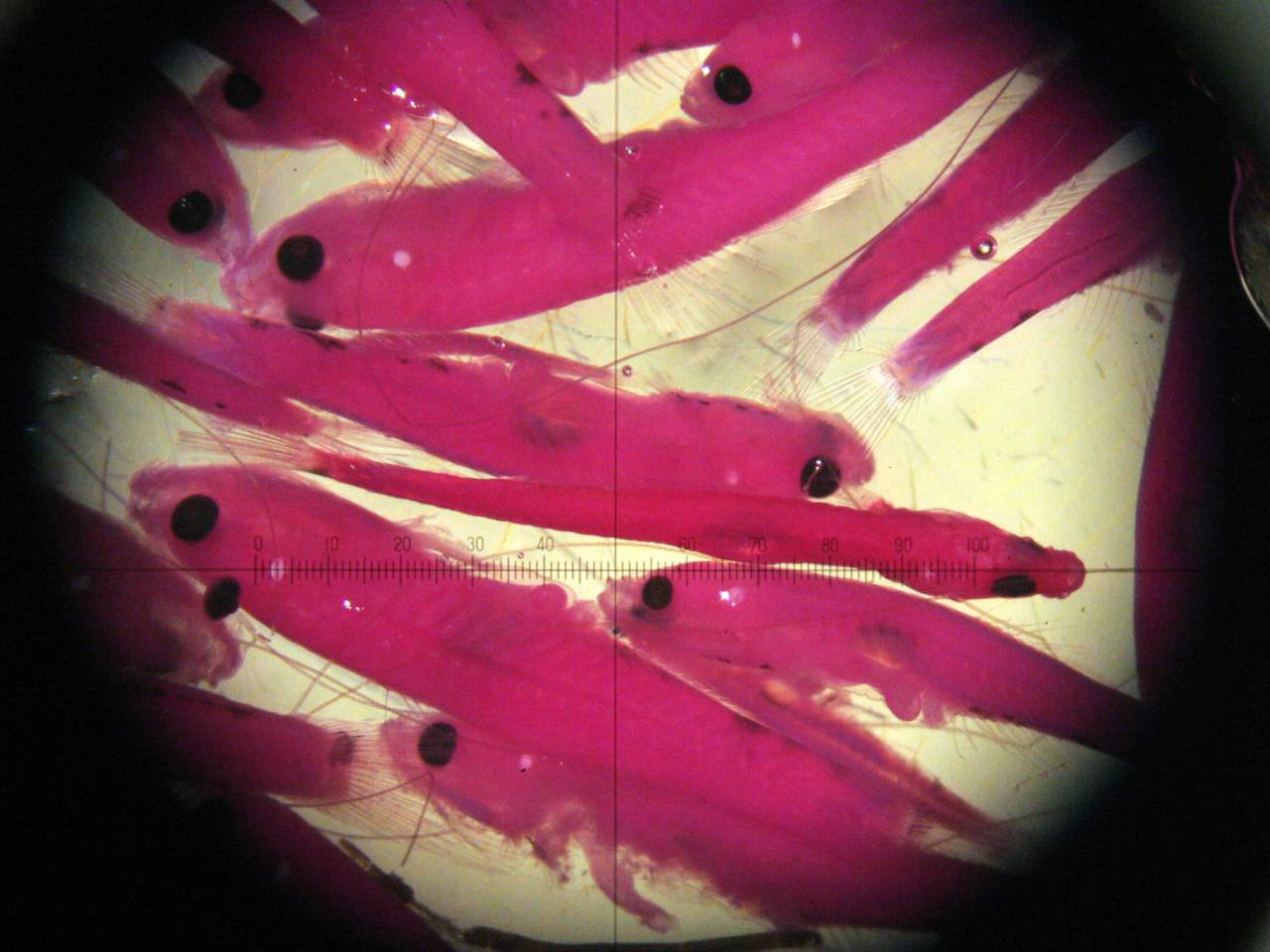
Where'd the animals go? GOP targets landmark Endangered Species Act for big changesFILE – In this July 25, 2005, file photo, tiny fish, including delta smelt, caught in the Sacramento-San Joaquin River Delta, are seen through a microscope at a California Department of Fish and Game laboratory in Stockton, Calif. In control of Congress and soon the White House, Republicans are readying plans to roll back the influence of the Endangered Species Act, one of the government’s most powerful conservation tools, after decades of complaints that it hinders drilling, logging and other activities. (AP Photo/Rich Pedroncelli, File)(Credit: AP)

BILLINGS, Mont. — In control of Congress and soon the White House, Republicans are readying plans to roll back the influence of the Endangered Species Act, one of the government’s most powerful conservation tools, after decades of complaints that it hinders drilling, logging and other activities.

Over the past eight years, GOP lawmakers sponsored dozens of measures aimed at curtailing the landmark law or putting species such as gray wolves and sage grouse out of its reach. Almost all were blocked by Democrats and the White House or lawsuits from environmentalists.

Now, with the ascension of President-elect Donald Trump, Republicans see an opportunity to advance broad changes to a law they contend has been exploited by wildlife advocates to block economic development.

“It has never been used for the rehabilitation of species. It’s been used for control of the land,” said House Natural Resources Committee Chairman Rob Bishop. “We’ve missed the entire purpose of the Endangered Species Act. It has been hijacked.”

Bishop said he “would love to invalidate” the law and would need other lawmakers’ cooperation.

The 1973 act was ushered though Congress nearly unanimously, in part to stave off extinction of the national symbol, the bald eagle. Eagle populations have since rebounded, and the birds were taken off the threatened and endangered list in 2007.

In the eagles’ place, another emblematic species — the wolf — has emerged as a prime example of what critics say is wrong with the current law: seemingly endless litigation that offers federal protection for species long after government biologists conclude that they have recovered.

Wolf attacks on livestock have provoked hostility against the law, which keeps the animals off-limits to hunting in most states. Other species have attracted similar ire — Canada lynx for halting logging projects, the lesser prairie chicken for impeding oil and gas development and salmon for blocking efforts to reallocate water in California.

Reforms proposed by Republicans include placing limits on lawsuits that have been used to maintain protections for some species and force decisions on others, as well as adopting a cap on how many species can be protected and giving states a greater say in the process.

Wildlife advocates are bracing for changes that could make it harder to add species to the protected list and to usher them through to recovery. Dozens are due for decisions this year, including the Pacific walrus and the North American wolverine, two victims of potential habitat loss due to climate change.

“Any species that gets in the way of a congressional initiative or some kind of development will be clearly at risk,” said Jamie Rappaport Clark, president of Defenders of Wildlife and a former Fish and Wildlife Service director under President Bill Clinton. “The political lineup is as unfavorable to the Endangered Species Act as I can remember.”

More than 1,600 plants and animals in the U.S. are now shielded by the law. Hundreds more are under consideration for protections. Republicans complain that fewer than 70 have recovered and had protections lifted.

Continued: http://www.salon.com/2017/01/17/gop-targets-landmark-endangered-species-act-for-big-changes/


SAVE THE ENDANGERED SPECIES ACT FROM EXTINCTION

Earthjustice
The Endangered Species Act is one of the strongest, most effective wildlife protection laws in the world. It was passed with overwhelming bipartisan support more than 40 years ago to provide a legal safety net for wildlife, fish and plant species that are in danger of extinction. Now this Congress—which is shaping up to be the most anti-wildlife Congress we have ever seen—wants to slash the Endangered Species Act, threatening the very existence of the imperiled wildlife and ecosystems the Act protects.

We cannot allow this bedrock environmental law to be undermined by lawmakers who are in the pocket of polluting industries. Tell your representative to stand up for the Endangered Species Act now!

Biologists warn that our planet is facing a sixth wave of mass extinction. The Endangered Species Act, which has prevented 99 percent of the species under its care from vanishing, is precisely the kind of effective tool we need today. It has revived the bald eagle, the American alligator, the California condor and many others.

Yet anti-environment interests in the House and Senate are currently orchestrating some of the most serious threats ever posed to the Endangered Species Act. Some of the legislative proposals put specific imperiled wildlife species on the chopping block, while others attack core provisions of the Endangered Species Act itself.

House Natural Resources Chairman Rob Bishop (R-UT) has said he wants to “repeal and replace” the Endangered Species Act. Others are supporting legislative proposals that would make it harder for the U.S. Fish and Wildlife Service to resolve Endangered Species Act lawsuits.

Take action now to ensure this landmark law is not weakened by political attacks.

During the previous (114th) Congress, anti-wildlife representatives authored more than 100 bills and amendments to undermine the Endangered Species Act. Similar legislative attacks are already being introduced in the current (115th) Congress. These proposals would put imperiled species at greater risk by:

  • Establishing arbitrary land boundaries where species protections would not apply
  • Imposing limitations on the ability of citizens to help enforce the Endangered Species Act
  • Undermining the use of science under the Endangered Species Act
  • Declaring open season on individual species, including wolves and sage grouse, by blocking federal protections or denying existing protections

If anti-environment members of Congress get their way, the Endangered Species Act’s vital protections will be cast aside. Tell your congressional representatives and senators to oppose any legislation that hurts imperiled wildlife!

Earthjustice and supporters like you have been fighting to stop political attacks on the Endangered Species Act for decades. We can’t do it without you—we need your help to defend this important law.

TAKE ACTION! Don’t let anti-environment members of Congress cast aside the Endangered Species Act’s vital protections.
TAKE ACTION


The Endangered Species Act is one of the strongest, most effective wildlife protection laws in the world. It was passed with overwhelming bipartisan support more than 40 years ago to provide a legal safety net for wildlife, fish and plant species that are in danger of extinction. Now this Congress—which is shaping up to be the most anti-wildlife Congress we have ever seen—wants to slash the Endangered Species Act, threatening the very existence of the imperiled wildlife and ecosystems the Act protects.
Biologists warn that our planet is facing a sixth wave of mass extinction. The Endangered Species Act, which has prevented 99 percent of the species under its care from vanishing, is precisely the kind of effective tool we need today. It has revived the bald eagle, the American alligator, the California condor and many others.
Yet anti-environment interests in the House and Senate are currently orchestrating some of the most serious threats ever posed to the Endangered Species Act. Some of the legislative proposals put specific imperiled wildlife species on the chopping block, while others attack core provisions of the Endangered Species Act itself.
House Natural Resources Chairman Rob Bishop (R-UT) has said he wants to “repeal and replace” the Endangered Species Act. Others are supporting legislative proposals that would make it harder for the U.S. Fish and Wildlife Service to resolve Endangered Species Act lawsuits.
During the previous (114th) Congress, anti-wildlife representatives authored more than 100 bills and amendments to undermine the Endangered Species Act. Similar legislative attacks are already being introduced in the current (115th) Congress. These proposals would put imperiled species at greater risk by:
  • Establishing arbitrary land boundaries where species protections would not apply
  • Imposing limitations on the ability of citizens to help enforce the Endangered Species Act
  • Undermining the use of science under the Endangered Species Act
  • Declaring open season on individual species, including wolves and sage grouse, by blocking federal protections or denying existing protections
If anti-environment members of Congress get their way, the Endangered Species Act’s vital protections will be cast aside. Tell your congressional representatives and senators to oppose any legislation that hurts imperiled wildlife!
Earthjustice and supporters like you have been fighting to stop political attacks on the Endangered Species Act for decades. We can’t do it without you—we need your help to defend this important law.
Mother Grizzly Bear with cub feeding on clamps. Katmai National Park, Alaska (Andre Anita/Shutterstock)
The Endangered Species Act has prevented 99 percent of the species under its care from going extinct.

Demand that your elected officials oppose all efforts to weaken the Endangered Species Act now.

Bill Would Allow Killing Of Bears And Wolves Again On Alaska Wildlife Refuges

Why Destroy What We Most Need?

http://www.bornfreeusa.org/weblog_canada.php?p=5980&more=1

by Barry Kent MacKay,
Senior Program Associate

Born Free USA’s Canadian Representative

Published 02/17/17

Wolf© Wisconsin Department of
Natural Resources

When I was young, the world’s wealthiest man was reportedly Aristotle Onassis (1906-1975), who “earned” staggering wealth partly from owning shipping lines, from whaling, and from getting a start in business by selling tobacco. Like most billionaires, he ultimately had diverse business interests. The great whales whose deaths generated such fortunes are largely gone, but their destruction certainly contributed to his and others’ fortunes (and to the employment of sailors and whalers).

But now, far more than whales are at risk. There’s a growing number of American species that require protection—protection that was provided, until now, by the Endangered Species Act. Some legislators seem to think that making money is more important than protecting the environment, although nothing could be less true.

In fact, all wealth springs from the natural environment. From the steel of ships, trains, and aircraft, to the fossil fuels that drive them, to tobacco and whales, we see the products of nature: of natural geological and biological processes accessed through the technological innovation and the physical endeavors of workers. They transfer the raw produce of the planet into wealth that tends to accumulate up the economic pyramid to those at the top.

Taking any wealth without regard for the wolves, pupfish, bald eagles, jaguars, and other species that are rare, threatened, or endangered comes at costs that are shared by everyone. We all, more or less, equally need fresh water, productive oceans, and clean air to breathe. We also need our fellow plants and animals. However, they are in rapid decline now that we are changing the planet hundreds of times faster than in primal times.

And now, in 2017, I worry that the American government may dismantle the Environmental Protection Agency: an agency that protects not only Americans, but Canadians, too (as well as the migrating wildlife that doesn’t recognize human-imposed borders).

Yes, workers at the economic pyramid’s broad base may benefit in the short term—but we can’t eat, drink, or breathe money. We must focus on protecting the natural environment that makes this planet so rich.