Exposing the Big Game

Forget Hunters' Feeble Rationalizations and Trust Your Gut Feelings: Making Sport of Killing Is Not Healthy Human Behavior

Exposing the Big Game

Ancient humans hunted monkeys for tens of thousands of years

Early Sri Lankans turned the bones of the monkeys and squirrels they hunted into these projectile points.

N. AMANO

https://www.sciencemag.org/news/2019/02/ancient-humans-hunted-monkeys-tens-thousands-years

If you picture early humans dining, you likely imagine them sitting down to a barbecue of mammoth, aurochs, and giant elk meat. But in the rainforests of Sri Lanka, where our ancestors ventured about 45,000 years ago, people hunted more modest fare, primarily monkeys and tree squirrels. Then they turned the bones of these animals into projectiles to hunt more of them. The practice continued for tens of thousands of years, making this the longest known record of humans hunting other primates, archaeologists report today.

Many scientists believed such forests lacked the resources for early humans to successfully settle. Instead, our ancestors apparently quickly adapted to this and other challenging environments (such as high elevations and deserts), in part by figuring out how to reliably hunt difficult-to-catch prey.

To conduct the research, archaeologist Patrick Roberts of the Max Planck Institute for the Science of Human History (SHH) in Jena, Germany, and colleagues analyzed animal bones recovered from Sri Lanka’s Fa Hien Cave in Kalutara during excavations from 2009 and 2012. Materials and artifacts including charcoal, faunal remains, shell beads, and bone and stone tools indicate people occupied the site from about 45,000 to 4000 years ago.

The scientists analyzed almost 14,500 animal bones and teeth from four periods of occupation and found that gazelle-size mammals were the most common. Monkeys (primarily macaques and purple-faced langurs, the latter of which inhabit the tallest trees, reaching some 45 meters) and tree squirrels made up more than 70% of the identified remains, which also included otters, fish, reptiles, and birds. Fewer than 4% of the bones came from deer, pigs, and bovids, such as buffalo. Many bones bore cut marks from butchery and had been burned, signs that humans processed them for meat.

Early humans settled in this Sri Lankan cave 45,000 years ago.

O. WEDAGE

The archaeologists also uncovered numerous microliths (minutely shaped stone tools), whose purpose is as yet unknown, but were likely used for hunting. In addition, they identified some three dozen finished or partially completed bone projectile points. These ancient humans were using “bones from the hunted monkeys to hunt more monkeys,” says study co-author Noel Amano, an archaeologist at SHH.

Finally, the remains reveal that the early Sri Lankans were sustainable hunters, primarily targeting adult animals, the scientists report today in Nature Communications. “They hunted these animals for nearly 40,000 years, without driving any to extinction,” Roberts says. “So they must have had sophisticated knowledge of monkey life cycles and an understanding of how to use resources wisely.”

The findings support the idea that, as humans spread across the world, they had to shift from hunting large, roaming animals like mammoth and bison to smaller prey that “could withstand a higher rate of predation,” says archaeologist Robin Dennell at the University of Sheffield in the United Kingdom, who was not involved in the study.

These ancient humans probably already knew how to hunt more agile and elusive game, says Steve Kuhn, an archaeologist at the University of Arizona in Tucson. People had started to hunt small animals in Eurasia about the same time they first entered Sri Lanka, he notes, and so likely arrived with these skills.

Kuhn also cautions that the early Sri Lankans might not have been such wise resource managers; more likely the human populations were small and “didn’t make much of an impact.” They hunted more monkeys and squirrels and fewer deer or pigs, he thinks, simply because the smaller animals were likely more abundant. Like those of us who don’t have time to shop and cook, and so grab a burger, these early people may have simply hunted and dined on the animals that were most readily available.

Millennials Are Killing Animals (and Now It’s a Trend)

Plus, creepy Colonel Sanders bearskin rugs have arrived

Shutterstock

Finally, something millennials aren’t killing: hunting

The number of hunters in America has been on the decline since the ‘80s, but that trend is reversing thanks in part to…millennials! That’s right, the generation responsible for killing cableAmerican cheese, and breastaurants is also killing wild geese and deer — but instead of mounting antlers on their walls, they’re looking to hunting their own wild game as a source of sustainable, local meat for dishes like goose pho and beaver-tail lardo.

This Colonel Sanders bearskin rug really ties the room together

KFC’s latest marketing stunt involves Colonel Sanders faux-bearskin rugs, just in time for an ultra-creepy Valentine’s Day rendezvous in front of the fire. Tragically, this terrifying piece of home decor isn’t available for purchase, but you can win one on Reddit.

KFC

Eating too many hot dogs is linked to mania, study finds


https://www.seattlepi.com/science/article/hot-dog-mania-episode-beef-jerky-johns-hopkins-13086597.php?utm_source=newsarticle&utm_medium=toppicks&utm_campaign=cps

Updated 

According to a new study, beef jerky, hot dogs, and other cured meats may contribute to mental health disorder, mania.

Media: Buzz 60

Watch out, Joey Chestnut.

A new study by scientists at Johns Hopkins School of Medicine has linked eating too many hot dogs and salamis with the onset of mania.

ALSORuth Bader Ginsburg issues controversial ruling that hot dogs are sandwiches

The study, published Wednesday in Molecular Psychiatry, found that the nitrates present in processed and cured meats like hot dogs, salami. bacon and beef jerky may contribute to mania, a high-energy mood state that can manifest as part of bipolar disorder or, more rarely, schizoaffective disorder.

In order to qualify as a manic episode, a mood disruption must last a week or more and go along with some combination of decreased need for sleep, inflated grandiosity, a surge in talkativeness, racing thoughts, heightened distractibility and agitation, and excessive involvement in risky pleasure-seeking activities like sex and spending money, according to the Diagnostic and Statistical Manual of Mental Disorders.

Healing the Earth Holistically

Our planet is sick–you can call it a biodiversity crisis, the Sixth Mass Extinction, or the un-weaving of the great web of life–and its getting sicker by the minute. That’s why a holistic approach to healing this once vibrant and thriving heavenly body is the only sure way to save her.

While environmentalism usually addresses stand-alone issues (like what color to paint the town so the bats aren’t kept awake), it seems “conservation” isn’t called into play these days until a species of plant or animal is on its last legs.

For example, the re-introduction of locally nearly extinct grizzly bears to Washington’s North Cascades—hailed by the Secretary of the Interior Ryan Zinke as a “conservation success story”—is practically a too-little-too-late band-aid sort of tactic employed long after destructive human activities like hunting, trapping and even poisoning have pretty much wiped them out, and subsequent human expansion has gobbled up their habitat.

I hate to tell Secretary Zinke, but “conservation” is something you should do before a species is down to its last estimated or imagined 10 individuals. Admittedly, I did come across some enormous tracks and scat in an avalanche chute in a trail-less valley within the heart of the North Cascades that, having not seen its maker, I attributed to either Bigfoot or a grizzly bear. But that was over 35 years ago, and I haven’t heard of too many sightings of either of them since then.

Single-issue actions and single-species, feel-good fixes only address small parts of the much bigger picture—first we need to curb the expansion of the one species at the root of all the Earth’s most pressing problems—namely, us.

Undeniably, Homo sapiens would have to go by the way-side for all the other life here on this planet to once again flourish, but that seems a small price to pay for finally putting things right and atoning for the many trespasses of the past. If humans are anywhere near as smart as they see themselves (or make themselves out to be), they’ll act now to right these countless wrongs and simply decline to reproduce, thereby eventually eliminating the one species that currently has this place so off-kilter and out of whack. With our species bowing out of the competitive breeding picture, it will take only a few lifetimes before the Earth is back on track to claim once again her living crown of glory.

Oh, I know it ain’t gonna happen, since humans will never willingly relinquish the Earth to its rightful owners. You’re more likely to see Bigfoot and a grizzly bear on unicycles juggling leprechauns, but we can always have pipe-dreams, can’t we?

Enjoy your ignorance people, because when we finally snap out of it, it’s going to be a rude awakening.

In Defense of Our Misanthropy

There’s a difference between hate and disdain. It may be subtle, but not imperceptible. The word “hate” conjures up images of one wanting to see someone or something die a slow, painful death; but you can disdain something and simply want it to go away and leave others alone.

After learning of the works of the late natural history author John A. Livingston through a comment from reader Rosemary Lowe to my 2013 blog post entitled, “The Roots of My Misanthropy,” I finally found a used copy of the out of print book, One Cosmic Instant: Man’s Fleeting Supremacy.

From the opening pages, I was taken aback by how much Livingston’s attitude towards mankind reflected my own. Here’s a quote from one of his chapters on evolution:

“To regard the present condition—a monoculture of one dominant species of large mammal—as the inevitable result of a ‘master plan’ is to reveal ignorance and insensitivity. Like other hyper-specializations, the arrogant human brain will eventually be dealt with.”

In some circles, Livingston might be regarded as a touch misanthropic (or worse), but it’s clear to me that his disdain for humanity stems from a deep love for non-human nature. The problem with people pigeonholing essential words like misanthropy is they tend to oversimplify it as an unfounded hate, rather than a justifiable disdain.

In my earlier post, “The Roots of My Misanthropy,” (one of several on the subject) I stated:

“My misanthropy is not aimed at individuals per se, but at an entire misguided species of animal with an arrogance so all-consuming that it views itself as separate—and above—the rest of the animal kingdom.”

(While at the same time destroying habitats, sparking a mass extinction and changing the very climate that once made this a wondrous planet—ultimately to render it uninhabitable.)

“It’s not like humans can’t afford a little resentment once in a while, there are entire religions built specifically on the worship of mankind and its father figure—the maker made in the image of man. But sometimes someone needs to step back and see this species in perspective…

“Ever since hominids first climbed down out of the trees and started clubbing their fellow animals, humanoids have been on a mission to claim the planet as their own. No other species could ever live up to man’s over-inflated self-image; therefore they became meat. Or, if not meat, a servant or slave in one way or another.  If their flesh isn’t considered tasty, they’re put to use as beasts of burden, held captive for amusement, or as literal guinea pigs to test drugs and torturous procedures for the perpetual prolongation of human life. Those who don’t prove themselves useful are deemed ‘pests’ and slated for eradication.”

And on this same topic, guest-blogger for “Those Vegan Hedonists: A Veganism, Spirituality, and Philosophy Blog,” Kimberly Steele wrote, “If there is an afterlife for me, it will be the ecstasy for a brief second before my brain dies of never having to come back to our doomed planet or our stupid race; an instant of knowing I loved my fellow animals and lived every day like I meant it.”

To further prove that I’m not just a hateful curmudgeon, here’s what I blogged on August 14, 2014 in a post entitled,  “Save the Earth, Pray for a Pandemic”:

“I don’t mean to sound like some hateful misanthrope who wants to see humanity suffer for all its crimes against the environment. Rather, my misanthropy stems from a profound love of nature and a will to save non-humans from the cruelty and exploitation they’re routinely subjected to by the one species fully capable of causing a mass extinction. Indeed, the species Homo sapiens is currently in the process of putting an end to the most biologically diverse period the Earth has ever known—the Age of Mammals, a class which the human race must reluctantly finds itself included in.

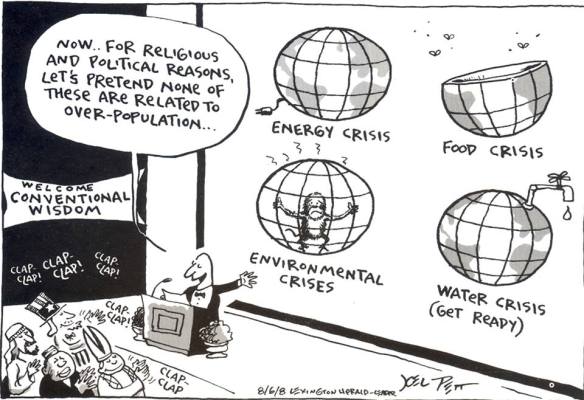
“Being nothing more than mere mammals themselves, humans are ultimately at the mercy of Mother Nature’s self-preserving tactics. And what better way to reign in an errant child than with a major global pandemic that takes down only humans? Let’s face it; humans are never going to reverse the ill-effects of climate change willingly. Oh, world leaders sometimes give it lip service, but they almost never mention the parallel scourge of overpopulation. It seems it’s hard to be “green” and keep 7,185,322,300 (as of this writing) people fed, clothed, sheltered and transported in the manner they’re currently accustomed to.

“If people want to come out of this alive, they’re going to have to make some serious lifestyle changes. That means no more oil-dependent cars, trains, jet airplanes, no more Walmarts full of plastic trinkets built with coal power in Chinese factories, then sent overseas in gargantuan container ships. No offshore oil wells, no fracking, no tar sands pipelines; no freeways, no commuter traffic, no immensely-popular sporting events selling factory-farmed hot dogs by the billions. No people by the billions, for that matter. No more breeding until humans have figured out how to live alongside the rest of the Earth’s inhabitants without wiping them out or making slaves out of them.

“No more! Starting right now! No false-starts or baby steps. Time to change or be changed!

“It’s not just the politicians who lack the will to do what it will take to soften the blow of climate change. But while humans debate their role in causing relatively dependable weather systems to go topsy-turvy worldwide, Nature is poised to unleash a pandemic or two from her bag of tricks and take care of the human problem herself. I’m not talking about Ebola, that’s too slow and nasty.

“When Nature gets serious, I’m hoping it’ll be quick and painless for all.  By the time humans know what hit ‘em, there’ll be no one left to test the experimental vaccine on the animals, who’ll be too busy inheriting the Earth anyway.”

Hate or disdain, who but an optimist could see the upside of a major pandemic after all?

00-intro

Man: “The aim and climax of the whole creation”?

In countering the notion that man is “the aim and climax of the whole creation,” John A. Livingston wrote in his book, One Cosmic Instant; Man’s Fleeting Supremacy:

“Anyone who has spent the greater part of a lifetime enjoying and attempting to understand and preserve wild nature will have had the experience of witnessing his own species drift lower and lower on his personal scale of perfection. All the magnificence and nobility of our creativity cannot begin to compensate me for what my species has cost me. Shakespeare cannot compensate me for toxic pesticides, Bach cannot compensate me for Hiroshima, nor Michelangelo for the [loss of the] blue whale. Jesus Christ cannot compensate me for the brutal imposition of human power over non-human nature. Yet, the total destruction of blue Earth may well precede any diminishment of human pride.

“Misanthropy is probably the inevitable (or at least occasional) companion of the man who values unspoiled nature, natural systems, and their individual components.”

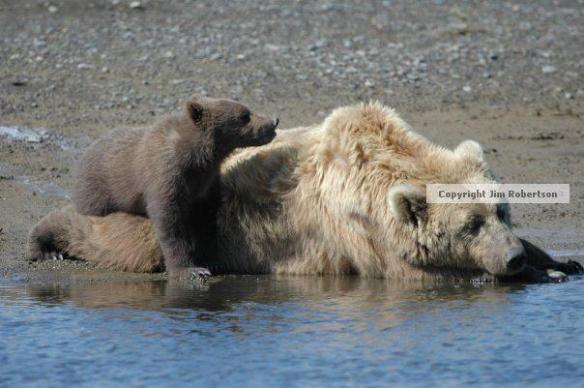
Wildlife Photography ©Jim Robertson

Wildlife Photography ©Jim Robertson

Man’s Fleeting Supremacy

10805570_795331970508849_1663368468143849002_n

I recently learned about author John A. Livingston, whose pioneering 1970s era environmental works are steeped in a misanthropy that reflects my own feelings on the scourge of humanity. I just acquired a used hard-back copy of his book, One Cosmic Instant: Man’s Fleeting Supremacy, and found myself in agreement with his attitude from the get-go, starting with Chapter One:

“The non-human world is important to the bird watcher. Its relative importance grows, in inverse relationship with an inevitable misanthropy. One’s disillusionment with society’s treatment of non-human nature is built on a body of evidence which is conspicuous on every hand…

“…if for no other reason than his own survival, man must soon adopt an ethic toward the environment. ‘The environment’ encompasses all non-human elements in the one and only home we have on Earth. However, it will be some time before we are able to enunciate, much less promulgate, an environmental ethic because, fundamentally, the ethic runs contrary to our cultural tradition.

“Ethics have been associated with man-to-man or man-to-society. They have not been concerned with man’s relationships to the non-human. Most moral philosophers have not acknowledged that man might have at least some ethical responsibility to the non-human. Perhaps this is because we cannot conceive of having any ethical responsibility to that which is not capable of reciprocating. Ethics, morals, fitness and propriety of behavior—these are human attributes. They do not exist, so far as we’ve been able to determine, in the non-human world. (That this may be a mere problem in communication does not seem to have occurred to us.) Since ethics do not exist in the non-human world, there is no need to apply them to that world. Our attitude toward the non-human world is not immoral: it is amoral.”

Humans: Overall, Not Favorably Impressive So Far

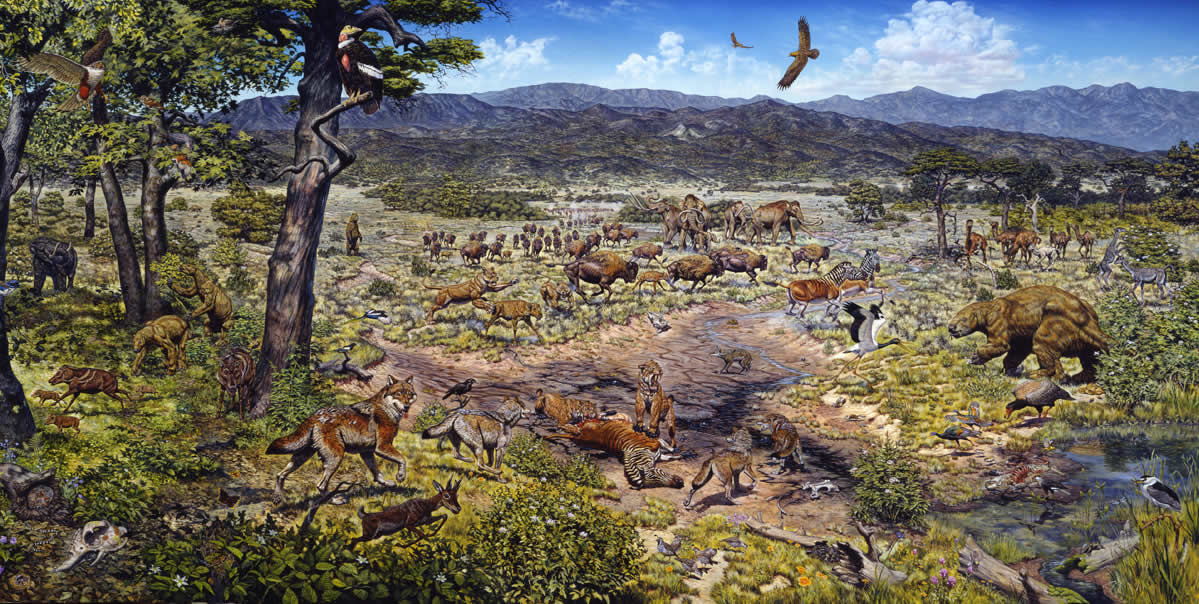
The human species is surely impressed with itself. Even the name they chose to classify themselves—Homo sapiens (Latin for “wise man”)—suggests it. Undoubtedly, there must have been some thought involved in the process of mushrooming from a simple tree-dwelling leaf eater in one small corner of the planet, to becoming the scariest big game hunter to rule the Earth.

 UGH

(Carrying a torch)

                               “I’ll use this fire stick to chase that group of peacefully grazing, gregarious gazelles toward that cliff over there, and you guys try to spear as many as you can”

THAG

(Carrying a spear)

                                           “Good thinking, Ugh.”

Scenes like this played themselves out over and over as the species spread out and burgeoned to 7.2 billion. Now the technology of the killingest of creatures has advanced to the point that a single hunter, dressed in camouflage and drenched in another animal’s urine to con his victim as much as possible, can bring down the mightiest moose or tallest giraffe with the slightest squeeze of a trigger.

And still the species grows exponentially and continues to claim every last habitat.

It was impressive when man built the first rocket and took a walk on the moon. However, the rockets they build to blow their enemies sky-high (while irradiating the land and sea) more clearly typify the species’ overall achievements to date. But lately it seems that nuclear annihilation won’t get to see its day; anthropogenic climate change and a man-made extinction spasm are now higher on the agenda.

Perhaps the human, the only creature capable of destroying the Earth, should have been named Homo horribilus mactabilis (Latin for “horrible, dreadful, fearful; deadly, lethal man”).

What would really be impressive is if people were to drop their steak knives (and other weapons of mass destruction) en masse and make peace with this amazing planet and all of its inhabitants. The potential is there, but do they still have the will to learn?

1527138_271312873037188_1829199472_n