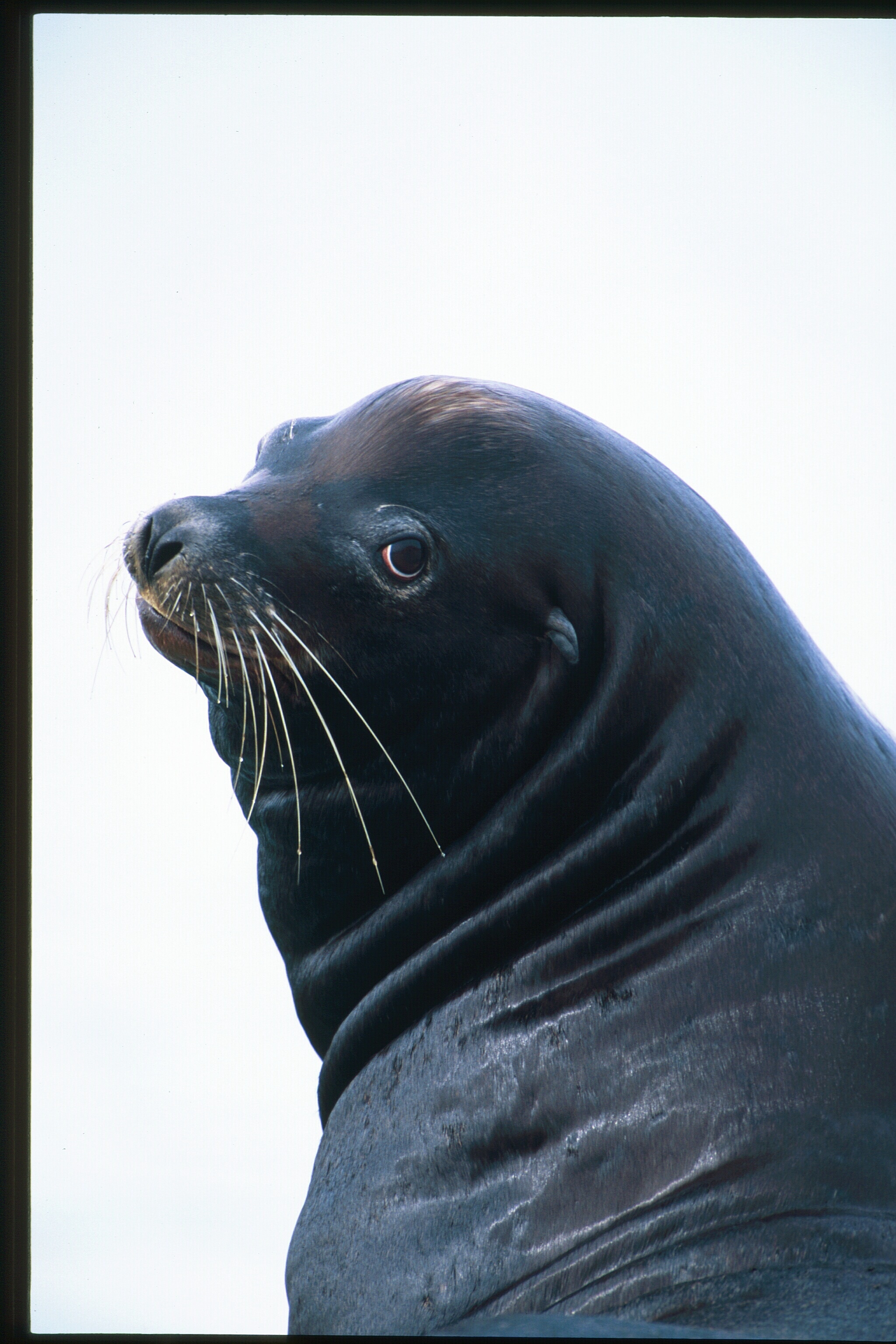
NOAA removes the eastern Steller sea lion from the Endangered Species Act list, Oct. 2012

[This situation mirrors the removal of wolves from the ESA list. The attitude is, “It’s all here for humans, all other predators need not apply. Go away and find your own resources.”]…

http://alaskafisheries.noaa.gov/newsreleases/2013/easternssl102313.htm

NOAA removes the eastern Steller sea lion from the Endangered Species Act list

After public input and careful scientific review, NOAA Fisheries has found that the

Wildlife Photography ©Jim Robertson. All Rights Reserved

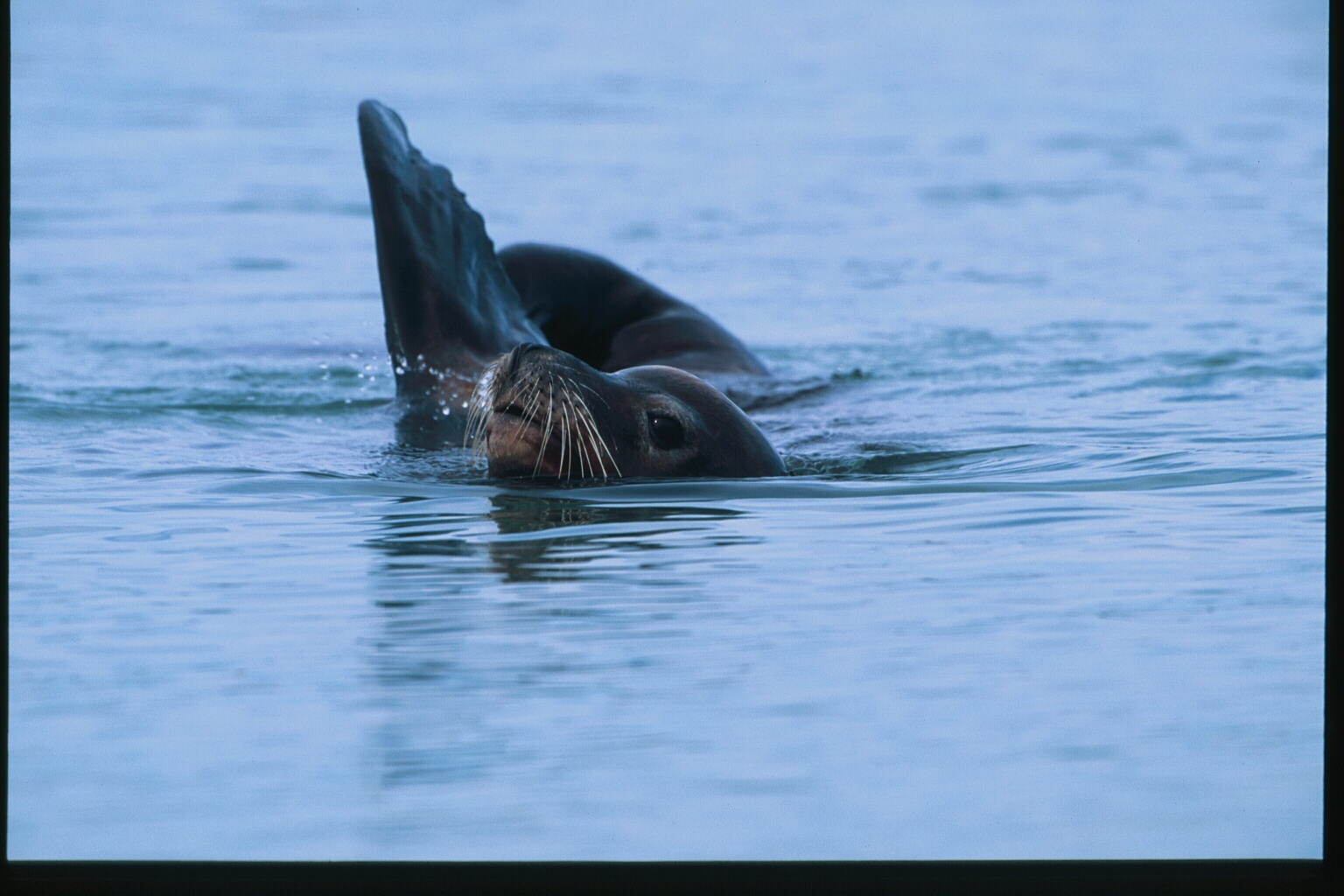
Wildlife Photography ©Jim Robertson. All Rights Reserved

eastern distinct population segment of Steller sea lions has recovered and can be removed from the list of threatened species under the Endangered Species Act. This is the first species NOAA has delisted due to recovery since the eastern North Pacific gray whale was taken off the list of threatened and endangered species in 1994.

“We’re delighted to see the recovery of the eastern population of Steller sea lions,” said Jim Balsiger, Administrator of NOAA Fisheries’ Alaska Region. “We’ll be working with the states and other partners to monitor this population to ensure its continued health.”

NOAA has concluded delisting is warranted because the species has met the recovery criteria outlined in its 2008 recovery plan and no longer meets the definition of a threatened or endangered species under the act. A threatened species is one that is likely to become endangered within the foreseeable future throughout all or a significant portion of its range. An endangered species is one that is in danger of extinction throughout all or a significant portion of its range.

The best available scientific information indicates the eastern Steller sea lion has increased from an estimated 18,040 animals in 1979 to an estimated 70,174 in 2010, the most recent year for which data are available. Eastern Steller sea lions will continue to be protected under provisions of the Marine Mammal Protection Act.

Steller sea lions were first listed as a threatened species under the ESA in 1990. In 1997, NOAA scientists recognized two distinct population segments of Steller sea lions: a western and an eastern segment. The eastern segment includes Steller sea lions from Cape Suckling, Alaska, south to California’s Channel Islands. The western population segment remains classified as endangered. NOAA is not proposing any changes to the status of the western Steller sea lion.

On June 29, 2010, NOAA Fisheries provided notice that it was initiating a status review of the eastern Steller sea lion and requested public comment. During the comment period, NOAA Fisheries received two petitions to delist the eastern Steller sea lion: one from the states of Washington and Oregon; and one from the State of Alaska.

On April 18, 2012, NOAA released a draft status review, which underwent independent peer review and proposed to remove eastern sea lions from the list of endangered and threatened wildlife. NOAA requested, received, and considered 1,144 public comments during the 60-day comment period.

With the delisting, federal agencies proposing actions that may affect the eastern Steller sea lions are no longer required to consult with NOAA Fisheries under section 7 of the ESA. However, NOAA Fisheries will continue to monitor the effects of proposed projects on the eastern population to ensure existing measures under the MMPA provide protection necessary to maintain recovered status.

NOAA Fisheries is proceeding carefully to ensure the eastern population segment remains strong. Working with affected states and other partners, NOAA has developed a post-delisting monitoring plan for this population. As a precautionary measure, the plan will be in effect for 10 years–twice the five year time requirement under the ESA. If implemented as intended, this plan takes the important steps necessary to maintain the recovered status of the eastern Steller sea lion.

The delisting of the eastern Steller sea lion will take effect 30 days after publication of the final rule in the Federal Register.

NOAA’s mission is to understand and predict changes in the Earth’s environment, from the depths of the ocean to the surface of the sun, and to conserve and manage our coastal and marine resources. Join us on Facebook, Twitter and our other social media channels at http://www.noaa.gov/socialmedia.

To learn more about NOAA Fisheries in Alaska, visit alaskafisheries.noaa.gov or www.afsc.noaa.gov.

Let Outdated Attitudes Go Extinct

Text and Wildlife Photography ©Jim Robertson. All Rights Reserved

Text and Wildlife Photography ©Jim Robertson. All Rights Reserved

Some viewpoints need to go extinct, and the hate-speak espoused by Capt. Ron Malast in his opinion piece, “Let Steller sea lions go extinct,” is at the top of the list. So, the Steller sea lion population is starting to re-grow a little after the commercial seal trade, ruthless bounties and constant shooting as “competition” drove them, and just about every other pinniped species, to the brink of extinction.

The eastern pacific population of Steller sea lions may be up to 70,000 individuals now, but the human population of 7.2 billion grows by 350,000 per day. Let that sink in for a minute… 350,000 PER DAY!

350,000 is also the total number of all other great apes alive today—every chimpanzee, bonobo, gorilla and orangutan—combined. Why is that significant? Because scientifically speaking, that’s all we humans really are—just another species of ape, somewhere between chimps and gorillas. Homo sapiens share 98% of our DNA with Pan troglodytes, the chimpanzees.

But while seals and sea lions were evolving into self-sufficient sea mammals, adapting to pelagic life by perfecting the art of holding their breath for up to a half an hour and diving to depths of 600’ or more, human-types were busy developing a profoundly narcissistic sense of entitlement that took root early in Man’s prehistory. This feeling of privilege flourished as our species spread out and usurped every other species’ habitats and resources. From the mightiest bison of the plains to the flattest fish at the bottom of the ocean, we claimed the top of every food chain we could sink our teeth into.

The anthropogenic mass extinction following close on the heels of human’s surging population explosion already saw the end of the Steller sea cow and the Caribbean seal, both hunted to extinction in centuries past. Glibly calling for the extinction of wolves or Steller sea lions to snuff out the competition summons back an outdated attitude that should have long since been dead and buried.

Oregon Officials Execute Fifteen Sea Lions at the Bonneville Dam

May 15, 2014

Dozens More Could be Killed in 2014

[Just a few days ago, the sport fishing season was extended for an entire month.]

http://www.seashepherd.org/commentary-and-editorials/2014/05/15/oregon-officials-execute-fifteen-sea-lions-at-the-bonneville-dam-651

Commentary By Sandy McElhaney, Sea Shepherd Conservation Society

The once “mighty” Columbia River is now a toxic chemical soupThe once “mighty” Columbia River is now a toxic chemical soup
Photo: Sea Shepherd / Sandy McElhaney
April 2014 was a record-setting month at the Bonneville Dam. On April 30th, 17,972 salmon passed through the Dam’s fish ladders. This was the third-highest single-day fish count at the Dam since 2002. With current projections of a salmon run size of 185,000, state officials are now adding days to the sport fishery season. There is, however, a catch. If you want to sport fish for salmon on the Columbia River, you must be human. If you are a California sea lion caught fishing near the Bonneville Dam, you will be killed.

April 2014 also has the dishonorable distinction of being the deadliest month on record for California sea lions along the Columbia River. On three consecutive Tuesdays, state workers mercilessly killed twelve sea lions because they had the audacity to eat salmon near the Bonneville Dam. The killing spree began on Tuesday, April 15. On that date, six sea lions were executed. One week later, on April 22, state workers lethally injected three more sea lions. On April 29, three more lives were extinguished. Sadly, the month of May began just as ominously as April ended, with another three sea lions killed on the first day of the month, bringing the death toll for the year up to 15 — so far. Authorization from the federal government to the states of Oregon, Washington and Idaho, allows these states to put to death as many as 92 sea lions annually through 2016, simply for eating salmon near the Bonneville Dam.

The kill notices are posted on the Oregon Department of Fish & Wildlife (ODFW) website. The first notice of 2014 read simply, “Six California sea lions, on the list for removal, were trapped and euthanized at Bonneville Dam today.” That was it. Just 17 dispassionate words were used to sum up the tragic and senseless end to the lives of six individuals who were once a vital part of the ecosystem of the Columbia River. A mandated report from the state of Oregon to the National Marine Fisheries Service (NMFS is the federal entity that authorized the killings in 2012) further stated that “various biological samples were collected for examination and the remaining materials were disposed of in accordance with applicable laws and regulations.” If the sea lion executioners are still following the same practices used when they killed their first victim (branded by Oregon as C265) in 2009, then the skeletons of these poor animals will be articulated and used for research and their flesh sent off to Darling International Rendering Plant in Tacoma, Washington, where they could eventually become fertilizer.

Five of the sea lions killed on April 15 were among those “championed” by Sea Shepherd supporters in 2013 so they could be remembered by name as unique individuals, instead of being known only by the hideous brands on their backs. Their names and their champions are as follows:

Number Champion Name
C027 Frances Holtman Oceanus
C028 Graziella Garri Proteus
C035 Stephan Oelgardt Thery
U254 Brian Lochlaer Barack Obama
U262 Elke Simmons Ahimsa

RIP U84RIP U84
Photo: Sea Shepherd / Be Bosworth-Cooper
Also killed was U84, who died nameless, but whose image was forever captured on film by Dam Guardian Be Bosworth-Cooper at the Port of Astoria. Several of the now slain animals were branded at the Port in 2013. This charming waterfront town was made famous by the 1985 movie, “The Goonies,” but today it is best known for its ongoing cruelty to sea lions. Tourists and other visitors to the Port are often alarmed to see workers from ODFW “haze” resting sea lions with nowhere to go off of the “goondocks”. Periodically, sea lions are trapped in cages and forcibly branded with hot irons. Sea Shepherd’s Dam Guardians documented this barbaric practice on multiple occasions in 2012 and 2013. Our footage shows state employee Matthew Tennis standing on, kicking and setting sea lions on fire. These findings were shared with NMFS and Sea Shepherd was informed in writing by the agency that Tennis would henceforth be supervised when capturing and “marking” (branding) sea lions.

An update posted to the ODFW website dated Tuesday April 22 reported, “Seven California sea lions were trapped. Three were on the list for removal and were euthanized. Four were branded and released.” The three sea lions killed were those branded with the numbers C020 (“Dewey,” championed by Allison Cabellon), C029 (“Rocky,” championed by Benjamin Bell), and C930 (“Cesare,” championed by Selena Rhodes Scofield). Three more sea lions were reported to have been euthanized on Tuesday, April 29: C033, U267 and U312. On May 1, the state killed sea lions C031, U264 and B409.

Conveniently, the six sea lions killed on April 29 and May 1 were added to the official NOAA-authorized “hit list” on April 28, 2014, along with five others who are now literally marked for death. Sea lion U312 was killed because he was “observed at the dam on 7 days in 2014 with 2 documented salmonids consumed.” News of his death comes as an especially harsh emotional blow to Sea Shepherd’s Dam Guardians, who witnessed and documented his cruel branding by Oregon state workers in Astoria on March 24, 2013.

The ODFW website talks about California sea lion “management” and “restoring the balance between predators and salmon”. The most recent report from the Army Corps of Engineers claims that California sea lions have consumed 222 salmon at the Bonneville Dam since January; meanwhile, The Seattle Times reported that recreational anglers had landed and kept 9,358 Chinook from March 1-April 14. The state’s concept of “management” is, at best, draconian; at worst it is a display of total ignorance of the real problems in the Columbia River, and the efforts by real conservationists who care deeply about preserving the river, the salmon and the sea lions.

With our history of defending, conserving and protecting marine wildlife and habitats spanning 37 years, Sea Shepherd knows that the real predators are not the sea lions. The real predators are the people who have desecrated one of our nation’s great and beautiful rivers by flushing it with 92 contaminants which have been found in Columbia River fish, including polychlorinated biphenyls (PCBs), dioxins, furans, arsenic, dieldrin, mercury, and DDE – a breakdown product of DDT. The Oregon Environmental Council has classified the Columbia River as being on “Red Alert,” meaning it has serious water quality problems, including toxins that are dangerous to both human and aquatic health. A 2012 study by the Columbia Riverkeepers found PCB concentrations in fish to be 27,000% above levels considered by the EPA to be safe for unrestricted human consumption. So while ODFW is wasting your taxpayer dollars to brand, haze and kill sea lions, the salmon are still swimming in a cesspool of cancer-causing poisons.

As a cancer survivor, I would encourage anyone I care about to avoid consuming toxic fish from the Columbia, and as a Sea Shepherd Dam Guardian I encourage everyone to call upon the governors of Oregon and Washington to immediately redirect their efforts away from killing sea lions and toward restoring the health of the water – before it’s too late.

Oregon Governor John Kitzhaber
State Capitol Building
900 Court Street Salem, OR  97301
phone: (503) 378-4582 begin_of_the_skype_highlighting (503) 378-4582 FREE  end_of_the_skype_highlighting
fax:  (503) 378-6827
Internet: Request Assistance
Facebook: John Kitzhaber
twitter: @govkitz

Washington Governor Jay Inslee
Office of the Governor
PO Box 40002
Olympia, WA  98504-0002
phone: (360) 902-4111 begin_of_the_skype_highlighting (360) 902-4111 FREE  end_of_the_skype_highlighting
fax:  360-753-4110
Internet: Contact Gov. Inslee
Facebook: Governer Inslee
twitter: @govInslee

Our friends at the Humane Society of the United States, who have long championed the Columbia River sea lions in court, have letters for you to send to the governors at this link: Humane Society – Six Sea Lions Killed at Bonneville Dam

Our friends at the Sea Lion Defense Brigade are leading the ground campaign along the Columbia this season. To join them on the ground, please contact: sealiondefensebrigade@gmail.com. The Sea Lion Defense Brigade is asking concerned citizens to contact NOAA and to urge the agency to cancel the states’ authorization to kill sea lions. Up to 77 more sea lions could be killed in 2014. Please contact NOAA using the contact information below and ask them to grant clemency to these marine mammals who simply eat salmon to survive:

Donna Wieting
Director, Office of Protected Resources
NOAA
Phone 301 713-2332 begin_of_the_skype_highlighting 301 713-2332 FREE  end_of_the_skype_highlighting
Fax 301 427-2520
Email: donna.wieting@noaa.gov
1315 East-West Highway
Silver Spring MD 20910

Something Serious to Protest

On Friday, May 4, my wife and I stopped at the East Moring Basin on the Columbia River in Astoria, Oregon, to see the sea lions who spend the daytime hours hauled out on one of the floating docks there. It’s always a treat to watch their antics and to hear the raucous roaring of competitive bulls mouthing off to anyone who might try to wriggle in and crowd their personal space. As expected we heard bellowing as soon as we arrived, but this time the sea lions had something serious to protest: an unfortunate herd-mate had been trapped and was being held down tightly and tormented by a group of strange and menacing two-leggers wearing orange raingear, one of whom pulled out a hot iron and repeatedly branded the restrained sea lion. As the victim struggled, acrid smoke from his burning flesh drifted for a hundred yards across the harbor.

The searing pain of the branding may have been temporary, but now the sea lion is branded in the figurative sense of the word as well, and his troubles are just beginning. With the numbers viciously burned onto the animal’s back, the Oregon Department of Fish and Wildlife thus has a clever way to recognize him. Later, they will decide whether or not to add him to their annual hit list of 92 sea lions they plan to kill if they reach the man-made dam that impedes the ancient migration route of spawning salmon.

It speaks volumes about the trusting nature of sea lions that they are willing to return to Astoria year after year. Since its establishment in 1811 as a hub for the booming, bloody fur trade, Astoria has been the scene of countless crimes against marine animals, including sea lions, who were killed along the Oregon coast by the thousands—exclusively for lamp oil.

Image

Charles M. Scammon—whaler, sealer, mariner and infamous discoverer and exploiter of the gray whale birthing lagoons in Baja California—devoted a chapter to sea lions in his book, The Marine Mammals of the Northwestern Coast of North America: Together with an account of the American Whale-Fishery. He begins that chapter with the lines, “Among the numerous species of marine mammalia found upon the Pacific coast of North America, none excite more interest than the sea lion;” Scammon goes on to describe an average day in the life of the pitiless sealers, and the last day ever for a group of sea lions. “On the south coast of Santa Barbara Island was a plateau, elevated less than a hundred feet above the sea, stretching to the brink of a cliff that overhung the shore, and a narrow gorge leading up from the beach, through which the animals crawled to their favorite resting-place. Several unsuccessful attempts had been made to take them; but, at last, a fresh breeze commenced blowing directly from the shore, and prevented their scenting the hunters, who landed some distance from the rookery, then cautiously advanced, and suddenly, yelling and flourishing muskets, clubs, and lances, rushed up within a few yards of them, while the pleading creatures, with lolling tongues and glaring eyes, were quite overcome with dismay, and remained nearly motionless. At last, two overgrown males broke through the line formed by the men, but they paid the penalty with their lives before reaching the water. A few moments passed, when all hands moved slowly toward the rookery, which had slowly retreated. This maneuver is called “turning them” and, when once accomplished, the disheartened creatures appear to abandon all hope of escape, and resign themselves to their fate. The herd at that time numbered 75, which were soon dispatched by shooting the largest ones, and clubbing and lancing the others, save for one young sea lion, which they spared to ascertain whether it would make any resistance by being driven over the hills beyond. The poor creature only moved along through the prickly pears that covered the ground, when compelled by his cruel pursuers; and, at last, with an imploring look and writhing in pain, it held out its fin-like arms, which were pierced with thorns, in such a manner as to touch the sympathy of the barbarous sealers who put the sufferer out of its misery with the stroke of a heavy club.”

Scammon ends his chapter with the prediction that the Pacific Coast sea lions “…will soon be exterminated by the deadly shot of the rifle, or driven away to less accessible haunts.” Today the few sea lions who have managed to hold on are again under attack, this time for the crime of daring to survive despite industrial scale over-fishing depleting their only food source.

Seal/Sea Lion Killers Are Guilty of Hate Crimes

(Note: The following was based on an earlier post I wrote on December 18, 2012, entitled Wolf Hunters Are Guilty of Hate Crimes. The wolf hunting and the seal/sea lion killing situations are so similar that about all I had to do was substitute the words seal/sea lions for wolf.)


It occurs to me that the killing of seal and sea lions by those who detest them qualifies as a hate crime. By definition, a hate crime is: A crime, usually violent, motivated by prejudice or intolerance toward a member of a social group.

Well, you don’t get a much more social group than a herd of sea lions—and you don’t find any greater prejudice or intolerance than among those who hate the seal family.

In addition to charges of pre-meditated murder and kidnapping, the person or persons who ran over the mother seal and left with her newborn pup in Ocean Park, WA, should be charged with committing hate crimes.

The same goes for the people who have been hatefully killing sea lions up at Bonneville Dam.

10177328_858615524154229_3705218634339822816_n

No More Mr. Nice Guy

I sent this letter to the editor to the Daily Astorian, over a week ago, a few days before the seal was run over on a nearby beach, but they don’t seem inclined to print it  I guess I shouldn’t have taken the nice guy approach. To tell the truth, I don’t care if their tourist trade goes under, the town dries up and blows away for good…

Dear Editor,

It seems there are a lot of reasons people can dream up to hate the wildlife their area is blessed with—especially if they already have their minds made up to be intolerant. Lately we’ve been reading a lot in the news about the sea lions in Astoria and the elk in Gearhart. If residents there would decide to accept their animal neighbors, they would find that the draw of watchable wildlife is worth any perceived problems that might come from having a few animals around.

Here’s part of a comment I read from a fellow wildlife photographer about the sea lions: “We talked to several people in nearby shops who expressed such hatred for the animals and spewed such misinformation, I swore I’d never return to Astoria. I realize not everyone who lives there shares these sentiments, but you’d think the citizens would understand (or care) what a wretched image this creates for their town.”

But there have been signs of tolerance recently in this paper, on both the sea lion and elk fronts. The article “Sea lion sanctuary a proven possibility” informs us that a haul out built specifically for sea lions would benefit both the animals and the town’s tourist trade. Meanwhile, in the poll “Elk: Love them or let them leave?” the most popular solution by far was simply, “better signage.” Clearly, in cases, the old adage, “live and let live” is in the best interest for all and is the right thing to do.

littleboyc09


At Least I Leaned From My Mistakes

My uncle (god rest his soul) used to be a skipper on a charter fishing boat. He fished for salmon off the Columbia River bar (among the roughest waters in the world). It was from him that I first heard the attitude that natural predators like cougars “serve no earthly purpose.”

Being the young, environmentally-minded wildlife advocate that I was, I strongly disagreed with his viewpoint on many occasions. But, being respectful of my relatives, especially my elders, I never gave him a hard time for his outdated thinking.

A lot of good that did me. Now that I’m an uncle, my young nephew shows me nothing of the respect I gave my uncle. Although he’s three generations removed from my uncle’s era, some of my nephew’s thinking is as outdated as that of any other commercial fisherman I have known (and there have been all too many). Apparently he’s been following this blog, but like other animal exploiters who try to comment, he neglected to read the “About” page, which would have informed him that anti-animal comments would not be approved.

But here are few extracts from comments he tried to leave today: “… what exactly is the solution? Stop eating cows all together, stop allowing them to breed, and make them go extinct?” or “…get off your high horse. [again, remember that this is his uncle he’s talking to] Saying that veal exists because of the dairy industry is a logical fallacy akin to: crime exists because of the existence of police officers. Veal exists because people want to eat veal. Do you honestly think that if we got rid of all dairy consumption tomorrow, no one would be able to buy veal?! On the flip side, if no one on earth was willing to buy veal, do you think that ranchers would still produce it?!”

I’m not sure what point he was trying to get across with that comment, but his clincher was: “If we were all to stop fishing tomorrow then a lot of sea lions would die.”

I might not have been a perfect example for my nephew over the years, but at least I try to learn from my mistakes.

Text and Wildlife Photography © Jim Robertson

Text and Wildlife Photography © Jim Robertson


500 Sport Fishermen At Bonneville Dam, Only 38 Sea Lions

From Sea Lion Defense Brigade:
Bonneville Dam – The Army Corps of Engineers reports they have viewed 38 California Sea Lions in the area. Today there are an estimated 500 fishermen on the surrounding banks.

It is obvious which species is overfishing. Yet, scapegoating continues and fishermen are actively hazing Sea Lions by throwing large rocks at their heads! While documenting this cruelty, 2 SLDB female observers were threatened with bodily harm.

There is no government agency checking fishing licenses or regulating catch limits today. The Oregon Department of Fish and Wildlife can employee 6 workers to brand and KILL Sea Lions with tax payers money but can’t check fishing limits?!

Humans have many food options, Sea Lions do not!

Until the states of Washington and Oregon take responsibility for the real causes of the salmon decline and stop politically scapegoating Sea Lions, BOYCOTT COLUMBIA RIVER SALMON! See More

Photo: Bonneville Dam - The Army Corps of Engineers reports they have viewed 38 California Sea Lions in the area. Today there are an estimated 500 fishermen on the surrounding banks.

It is obvious which species is overfishing. Yet, scapegoating continues and fishermen are actively hazing Sea Lions by throwing large rocks at their heads! While documenting this cruelty, 2 SLDB female observers were threatened with bodily harm.

There is no government agency checking fishing licenses or regulating catch limits today. The Oregon Department of Fish and Wildlife can employee 6 workers to brand and KILL Sea Lions with tax payers money but can't check fishing limits?! 

Humans have many food options, Sea Lions do not! 

Until the states of Washington and Oregon take responsibility for the real causes of the salmon decline and stop politically scapegoating Sea Lions, BOYCOTT COLUMBIA RIVER SALMON!

Killed for Eating Fish

Sea Lion Photo Copyright Jim Robertson

Sea Lion Photo Copyright Jim Robertson

Dear Jim,

12 California sea lions have already been killed this year along the Columbia River. 80 more could meet the same fate throughout 2014, simply for doing what comes naturally to them.

Sea lions eat around one percent of the total salmon run each year, while commercial, recreational, and tribal fishermen are entitled to harvest up to 17 percent of these fish. Yet sea lions are being painfully branded and killed in the name of conservation.

Please send a note to Governor Inslee to let him know that this lethal program is unacceptable and should be called off immediately.

Thank you for taking action.
Wayne Pacelle
Wayne Pacelle, President & CEO

Intolerance to the Extreme: Mother Seal Intentionally Run Over on Beach

A mother harbor seal, who had recently given birth, was found dead on the beach north of the Ocean Park beach approach last week, thought to have been a victim of an intentional vehicular killing.

A mother harbor seal, who had recently given birth, was found dead on the beach north of the Ocean Park beach approach last week, thought to have been a victim of an intentional vehicular killing.

Photo by SUZY WHITTEY / Chinook Observer

[Who would do a thing like this? Chances are good that it was a local commercial fishermen. Intolerant of seals and sea lions feeding on “Their” fish, they make sport of shooting those animals at sea. Why not run them over when you see one beached?]

Related :  https://exposingthebiggame.wordpress.com/2012/06/18/compassion-for-all-not-just-the-endangered/ Also: https://exposingthebiggame.wordpress.com/2014/04/28/when-humans-are-gone-wholl-be-around-to-brand-the-sea-lions/  And: https://exposingthebiggame.wordpress.com/2014/04/26/take-the-pledge-boycott-columbia-river-salmon/ As well as: https://exposingthebiggame.wordpress.com/2014/05/01/california-animal-rights-groups-offer-10000-reward-for-pelican-slasher/

Feds investigate wildlife hit-and-run: Newborn seal pup missing after mom run over near dunes

Comments

OCEAN PARK — Only 24 hours after observers enjoyed the rare experience of witnessing a harbor seal pup’s birth on a Peninsula beach, wildlife enforcement officers were investigating the mother’s death and the pup’s disappearance.

So far, no one knows who the driver was who struck and killed the mother or whether the killing was intentional. There are no clues about the fate of the newborn pup.

On Saturday, April 19, a handful of biologists and volunteers who monitor local marine mammals started getting calls about an unusual event: A pregnant harbor seal had settled in near the dune grass about a quarter mile north of the Ocean Park beach approach. She appeared to be close to giving birth. Though harbor seals are common, they usually give birth at sea.

“We’ve not in the Long Beach area really seen the females come up, give birth and stay with their pups. It was really a neat thing to see. It was just one of those things where you just thought the public would really enjoy seeing the process,” said Dr. Debbie Duffield, a marine biologist at Portland State University. Duffield is part of the Marine Stranding Network, a partnership with the Seaside Aquarium that monitors marine mammals that come ashore in northern Oregon and Southwest Washington.

Volunteer posts warning signsWhen he learned about the pregnant seal,

Ocean Park wildlife rescuer Herb McClintock staked out a perimeter with the cautionary signs he keeps in his truck for just such occasions.

A retiree, McClintock has been rescuing injured marine birds for about 16 years and often spends as much as eight hours a day searching Peninsula beaches for injured wildlife. Duffield immediately asked him to keep an eye on the seal.

“I don’t know — you see these little birds on the beach and you feel sorry for them. You can’t just leave them there — the eagles get to them,” McClintock said of the ailing shorebirds he regularly delivers to the Wildlife Center of the North Coast in Astoria. Marine mammals are less common, McClintock said in a phone interview on Monday morning, but he encounters several every summer season. When that happens, he notifies various authorities and advocacy groups, including the stranding network.

After posting his warning signs on Saturday afternoon, McClintock checked in on the seal periodically, and updated Duffield and Chandler. On Sunday evening, everything was in order.

“The little pup was all snuggled up to her and she was fine,” McClintock recalled.

But by the time he returned around 7:30 the following morning, someone driving what appeared to have been a double-tired truck had mowed through the soft sand where the mother lay, severing her tail. Though she was still alive, she was bleeding profusely, and it was evident to McClintock that she was suffering terribly.

Her baby was gone.”It was a nasty thing. It was kind of the worst thing I’ve ever seen,” McClintock said.

“I got kind of mad. Whoever ran over her had actually driven within about a foot of my signs.

“Federal authorities open investigationMcClintock alerted Dr. Duffield, who in turn contacted Kevin Mitchell, a special agent with the federal NOAA office in Astoria. Mitchell came in short order and poured plaster casts of the tire tracks,

But several hours passed before another officer was able to come to euthanize the seal, McClintock said.

In the meantime, McClintock and others looked around for clues about the pup’s disappearance. They came up empty-handed.”I talked to both of the officers and they said that they don’t think the pup would leave its mother,” McClintock said, adding that he feels certain the pup was far enough from the water line that it couldn’t have been swept out to sea by a wave. Duffield said that they haven’t ruled out the possibility that the mother was intentionally attacked, or that someone took the seal pup after hitting the mother.

“This looked like a deliberate and awful attack on the animal that was very poorly done — it didn’t even kill the animal. It feels like it’s gone beyond what’s OK. If it was deliberate, it reflects an attitude on the beach that is downright scary,” Duffield said.

Due to their tendency to compete with fishermen for prized fish, there can be a callous cultural attitude toward seals and sea lions in fishing communities, Duffield said.”You get fishermen who have their catch sampled by sea lions. It ruins what they’re doing and therefore costs them,” Duffield said, “… There’s a perception that there’s too many of them, that we’re not managing them properly and that they’re stealing livelihoods.

“Monday afternoon, NOAA Special Agent Karl Hellberg said he and his colleagues could not discuss the open investigation.

“But we do take [such incidents] seriously,” Hellberg said.

“We don’t know what happened to the pup. Whether something took it or another animal — a bird of prey took it — we sure would like to know.” While he had too little information to reach any conclusion’s about the driver’s intentions, Hellburg said it is uncommon, in his experience, for someone to hit an animal with a car.”I’ve never seen an animal run over like that before,” Hellberg said. “Honestly, it’s hard to say whether it was by accident or on purpose. With someone down there at night, did they think it a piece of driftwood, or did they intentionally see it?”

Lack of enforcement

McClintock feels strongly that a lack of traffic enforcement on the beaches also contributed to the seals’ demise.

Officially, the beach falls under the jurisdiction of the Washington State Patrol. Cars are supposed to stay out of the dunes, and obey a 25 miles per hour speed-limit. But people who cruise the beach know that enforcement is thin during off-peak hours, and have little fear of actually getting fined for breaking the rules.

During his many long hours patrolling the beach, McClintock says he’s often seen reckless driving behavior, such as plowing through the water in an attempt to frighten the gulls.

In December 2012, a truck mowed through a flock of small shorebirds called dunlins. McClintock responded to the incident. He picked up 92 little bodies — almost enough to fill a five-gallon bucket.

Over recent years, there have been several similar incidents.”Guys with those big jacked-up four-wheel-drives are up there in the soft sand squirreling around and cutting cookies. Some of those people are just idiots,” McClintock said, “It’s a wonder somebody hasn’t gotten run over out there. Little kids? They don’t look — they just run.”      Source: http://www.bluemountaineagle.com/feds-investigate-wildlife-hit-and-run-publish2_ap_6a604b12eea4507925eb514afedfc6b9#sthash.XTIy3Rck.dpuf