Hundreds of snow geese expected to have been killed by avian flu in Saskatchewan

Social Sharing

Dead birds have been found along the Trans-Canada Highway

Fiona Odlum · CBC News · Posted: May 20, 2022 5:36 PM CT | Last Updated: May 20

Snow geese pass through central Saskatchewan on their annual migration from Texas to the North. (Maryse Zeidler/CBC)

Jen Gibson is a self-proclaimed bird geek who always looks forward to seeing snow geese in the spring.

But this year when the birds passed by her property near Grand Coulee, about 20 kilometres west of Regina, she noticed that something was wrong.

“I have never seen this number of dead birds,” said Gibson, who has lived in the area for almost 15 years. 

It’s not an isolated problem. In Saskatchewan and across the country, snow geese have been hit hard by an avian flu that is killing them.

Dead snow geese have been found along the Trans-Canada highway between Regina and Moose Jaw. (Fiona Odlum/CBC)

Since early December, a highly contagious form of avian flu has been ravaging migrating birds in Canada, said Iga Stasiak, a wildlife health specialist with the government of Saskatchewan. 

“This is the first outbreak in Saskatchewan since 2017,” Stasiak said, adding this particular strain of avian flu, H5N1, has been very aggressive.

“It has caused more significant mortality, and we’ve seen a much broader breadth of species impacted than we have with previous strains. 

Bird reports

“Since late March the province has received over 300 reports of ill birds or mortality,” she said, adding there are 100 presumptive positive cases awaiting confirmation.

The birds usually die within a week of getting infected. Avian flu is generally associated with a respiratory virus, but this strain is “affecting multiple organ systems, including the liver, the kidneys, the pancreas and the nervous system, including the brain,” Stasiak said. They have noted neurological symptoms in the birds, including tremors and jerking movements. 

The public is being asked to report any sightings of sick or dead birds. (Richard Agecoutay/ CBC)

The majority of cases have been concentrated in the south-central zone of the province, with the bulk of the infected birds being found in communities, such as Grand Coulee, along the Trans-Canada between Regina and Moose Jaw.

“In that region, the birds are stopping over along their migration routes and that’s where you’re seeing the very large flocks of birds,” Stasiak said. Some sick birds have been reported as far north as Nipawin, 360 kilometres north of Regina.

Snow geese migrate annually from Texas.

“[They] pass through the southern United States and then they fly up all the way up into the Arctic to their nesting grounds,” making the infection rate widespread, Stasiak said.

She said most of the snow geese have made it to the north now and people are probably seeing dead birds because the snow has melted.

That’s when Gibson really started to notice the problem.

She said the migratory season started just like any other year.

“They settled in the field and everything seemed fine. And then when they left and the snow started to melt, it became clear that there was some that didn’t make it. I would say at least a dozen, if not more.” 

Fields of birds

At first she thought the deaths were due to in-flight collisions, but after some research she discovered they had most likely died from avian flu.

“I was heartbroken to see them so affected by avian flu,” Gibson said.

Her property wasn’t the only one with dead birds dotting the fields. It was clear the issue was widespread through the community.

Jen Gibson said she was heartbroken to see so many birds killed by the avian flu. (Fiona Odlum/CBC)

“You could see them off the highway,” she said. “You could see them around Grand Coulee. And then, you know, once they left, you could see that there were some that didn’t make it.”

Stasiak said the avian flu was first detected on the East Coast. It’s believed to have spread across the Atlantic seaboard into the Midwestern states and then north with the birds in the spring migration. This has meant widespread infection across the Prairies and west to British Columbia.

“We’re seeing similar reports of mortality across the country,” she said.

There have been reports of avian flu spreading to other species. (Elaine Thompson/Associated Press)

Snow geese are an abundant species and “it still seems to be a relatively low proportion of the population that’s been impacted,” Stasiak said.

Spreading to other species

Initially, Stasiak’s reports showed the virus was only impacting snow geese and Ross’s geese, but it has spread to other species. 

“We are also getting quite a few reports in raptor species. So hawks, eagles, great horned owls, also scavenging birds, so crows, ravens and magpies.” She suspects these birds are likely feeding on infected waterfowl carcasses and getting infected.

While no cases have been reported of scavenger mammals being infected with the virus yet in Saskatchewan, Stasiak urged property owners to remove any dead birds that could be consumed by family pets.

She recommended wearing a mask and gloves and using a plastic bag to pick up the bird, then double-bagging it before disposing of it.

One dead bird can go in household waste, but if there are more they need to go to an approved landfill, Stasiak said.

But as a rule, she recommended leaving the birds where they are and letting them decompose naturally.

Tracking diseased birds

Stasiak said the province is relying on members of the public to report any birds that are exhibiting unusual behaviour or that appear to be sick.

While they can’t help infected birds, the department wants to know where they are, because “this will be vital in understanding the extent of the virus and its impacts.”

Officials are also trying to learn “if there are birds out there that are carriers or not showing any clinical symptoms.” 

Sick and dead bird sightings can be made through the provincial inquiry line, the Canadian Wildlife Health Cooperative, the Wildlife Health Tracker app, or by calling the wildlife emergency hotline on 1-800-567-2033.

Researchers use YouTube videos to study elephants’ response to death, say they may mourn


by WKRCThursday, May 19th 2022

https://local12.com/news/around-the-web/asian-elephants-grief-grieving-mourn-research-study-thanatological-responses-royal-society-open-centre-ecological-sciences-indian-institute-cincinnati-local-12-wkrc-tristate-ohio-kentucky-indiana-news

UserWay icon for accessibility widget
A new study is shedding light on Asian elephant behavior, and the scientists behind the study used an unconventional method to collect the data. (AP Photo/Anjum Naveed)

A new study is shedding light on Asian elephant behavior, and the scientists behind the study used an unconventional method to collect the data. (AP Photo/Anjum Naveed)

Facebook Share Icon
Twitter Share Icon
Email Share Icon

BENGALURU, India (WKRC) – A new study is shedding light on Asian elephant behavior, and the scientists behind the study used an unconventional method to collect the data.

YouTube videos may not be the first thing that comes to mind when you think about research tools, but scientists at the Centre for Ecological Sciences at the Indian Institute of Science say it helped them learn more about a rare behavior in these elephants: how they respond to the death of a species member, also known as thanatological responses. The study was published Wednesday in Royal Society Open Science.

It’s rare to witness how animals respond to death in the wild; researchers have to be in the right place at the right time, many times. But YouTube videos were able to give these researchers a window into the animal kingdom they normally wouldn’t have.

Researchers started by searching YouTube for phrases and keywords like:

  • Calf elephant death
  • Death of elephants
  • Elephant death
  • Elephant reactions to death
  • Elephant responding to death

The scientists found 58 videos matching the keywords. In 39 of those, they were able to observe 24 thanatological responses. The most recurring responses included guarding, postural changes, keeping vigil, touching and investigating the body, vocalizations and epimeletic reactions, which means the elephants tried to support, lift or pull the body.

The carrying of a dead calf by a female elephant was also observed, and the female was often accompanied by another member of the herd. In one video, a female elephant acted aggressively toward a young elephant trying to approach the calf’s body. According to the study, that behavior could be out of grief, saying it “may indicate either lack of understanding of death cues and hence perceiving it as an unresponsive calf, or perhaps might imply a ‘grief-like’ response.”

Researchers say this data challenges the notion that only humans understand death. They did note, however: “We cannot exclude the possibility that human presence might have influenced some of the elephants’ reactions. Collectively, these observations indicate that Asian elephants show interest in dying and dead conspecifics and the motivations behind thanatological responses in elephants (as in other species) need to be further explored.”

Bird Flu Spreads at Astonishing Rate, Forcing More Culls

By Devatha P. Nair , Matthew Zampa

May 17, 2022

Bird Flu Spreads at Astonishing Rate, Forcing More Culls

bird flu

Lukas Vincour / Zvířata Nejíme / We Animals Media

Read Next
dairy cow
Do Cows Have to Be Pregnant to Produce Milk?

On Saturday, May 14, Pennsylvania saw its 13th flock infected with the avian flu virus. Officials confirmed that more than 83,000 birds were exposed, and experts believe the overwhelming majority will be culled as a result of the suspected infection.

The state has already lost 3.8 million birds to avian flu over the past three months, prompting calls for emergency assistance. Over the past five months, the H5N1 virus has continued to spread across the United States and around the world, breaking records set by previous strains of the disease. 

Since the virus was detected in the U.S. in January of this year, over 37 million captive and wild birds across 34 states and 352 flocks have been exposed to avian flu, according to the U.S. Department of Agriculture’s (USDA) Animal and Plant Health Inspection Service. In the past five weeks alone, the virus has been linked to 128 new outbreaks in 11 other countries, including Bulgaria, Canada, Germany, Hungary, Japan, South Korea, Mexico, Netherlands, Nigeria, Poland, and United Kingdom. 

Officials from the World Animal Health Information System of the World Organisation for Animal Health also note that the disease has begun to spread to “unusual hosts” like cats, dogs, tigers, gray seals, harbor seals, red foxes, and raccoons. As a result, scientists are rushing to develop an avian flu vaccine for poultry, which has long been opposed by the public health community who fear the vaccine will give rise to another more deadly virus capable of infecting large portions of the population. 

Even if vaccinating poultry was a viable option, it will not prevent mass culling during a global bird flu outbreak. At best, vaccinations may prevent birds from being infected but will not stop the vaccinated birds from spreading the virus undetected.

“Vaccines can help, but are not the golden bullet,” Ron Fouchier, a virologist at Erasmus University Medical Center, tells Science. With the vaccine still in development, France, Canada, and the U.S. have been forced to cull record numbers of birds. 

Farmers use a variety of different methods to cull animals, some more humane than others. But during outbreaks of bird flu, investigators say the more humane culling methods are often overlooked. 

The USDA’s Animal and Plant Health Inspection Service (APHIS) has approved a number of culling methods for infected or potentially infected birds. The first method is to release mass quantities of foam—such as the foam used to fight fires—over thousands of birds to cut off their air supply. The birds eventually choke to death, as the bubbles from the foam rise above their heads and suffocate them. This method is deemed “efficient” in culling birds housed in industrial operations where thousands of birds, such as turkeys, can be crowded into cramped spaces.  

However, as foam cannot rise higher than two to three feet or be used when the weather is cold, this method of culling is unable to efficiently kill chickens who are held in stacked cages and crowded crates within barns. In such cases, USDA recommends that the barns be sealed and carbon dioxide be piped into the enclosure that houses the chicken, thereby culling the birds by cutting off their air supply.

Releasing foam and piping carbon dioxide can be relatively costly and labor-intensive, so when large numbers of birds have to be killed in a timely manner, a method called ventilation shut down (VSD) has become popular. Here, the birds are packed into barns or enclosures and the air supply is shut down, causing the body temperature of the birds to rise to lethal levels. 

The VSD method is often supplemented with additional heat or carbon dioxide, which is referred to as VSD+. The birds then die of heatstroke and/or a lack of oxygen. Recent studies sponsored by industrial agriculture and conducted at the University of North Carolina have shown that hens die a slow and painful death 1.5 hours after VSD, while hens exposed to VSD plus additional heat exposure and VSD plus carbon dioxide die after 54 minutes and 11.5 minutes respectively.  

VSD, while considered “efficient,” goes against the American Veterinary Medical Association (AMVA) dictum that all approved culling methods be as painless and distress free as possible. Petitions to AMVA to reclassify VSD as “not recommended” filed in 2021 are still under consideration. 

For now, VSD and VSD+ continue to be practiced across farms in the U.S. In April 2022, state and local prosecutors in Iowa refused to file criminal charges against Rembrandt Enterprises for suffocating its flock of 5.3 million hens via VSD, noting that the VSD method used was based on the recommendations of the USDA.

Citing the distress the animals undergo during VSD, VSD+, and foam-based killing, these methods are illegal in Europe and the U.K. Gas-based killing methods, where birds are exposed to gasses, either by filling the barns and sheds with carbon dioxide and/or piping in additional gasses such as argon to suffocate them, are preferred.  

However, globally, there is no consensus among farmers or scientists as to the most efficient, cost-effective, and humane way to cull large numbers of animals quickly. In manpower-rich countries such as India, human-labor intensive methods of culling, such as wringing the neck of chickens or cervical dislocation are still practiced. 

In January 2020, 35,000 ducks were tied up in sacks and burned to death in southern India as part of culling operations. The Animal Welfare Board of India has subsequently opposed the burning of live birds and has instead suggested suffocation with gasses as an alternative method of culling. 

Read More

In Zimbabwe, Poultry Farmers Face a New Foe: Antibiotic Resistance

Why It’s So Hard to Prevent Disease Outbreaks on Factory Farms

The Other Pandemic: Avian Flu Is Spreading Around the Globe

Researchers Develop New Technology to Read Pigs’ Emotions

pig prop 12

Read Next
dog computer
The Month in a Minute: April

This story is part of a new original series, Closer Look.

Researchers Develop New Technology to Read Pigs’ Emotions

Researchers at the University of Copenhagen are developing an automated emotion recognition tool that they claim can be used to assess pig welfare on farms. Lead researcher Elodie Briefer thinks this technology can be an important tool for determining positive welfare in animals, which looks beyond just the alleviation of suffering to how animals can have more fulfilled lives. 

“Animals need to thrive,” says Briefer in an interview with Copenhagen University, “It is not enough that they are in good physical shape or you reduce negative emotions.” 

To create the technology, researchers collected previously recorded vocalizations from pigs in past studies. From this data, they selected 7,414 pig calls from some of the more disturbing moments in the pigs’ lives. The data included a 2015 experiment in which piglets were placed on their backs and forcibly held down to record their reactions. In other experiments that were used, piglets were subjected to castrations without anesthesia or pain medications and recorded as they were waiting to be slaughtered, kept in social isolation, or held in small boxes. 

Briefer’s team also documented calls associated with positive and negative emotions by placing piglets in completely barren environments and comparing their vocalizations to piglets who were given bedding and toys. 

Based on their findings, Briefer claims they can create an automated real-time monitoring system that will let farmers know when their animals are experiencing positive or negative emotions. 

Better welfare or humane washing?  

Dr. Marc Bekoff, professor emeritus of Ecology and Evolutionary Biology at the University of Colorado and author of The Emotional Lives of Animals, is not convinced that the technology will help improve the animals’ lives. In fact, he says there are already decades of research attesting to the fact that animal welfare in food production systems is poor. 

“We’ve had these data for decades,” says Bekoff, “Having a new method to measure emotions doesn’t mean much for the individual animals who are still being killed and eaten.” 

Bekoff is concerned that the development of new technologies like Briefer’s won’t foster a better understanding of animal emotions. Instead, he believes they will contribute to humane washing, a practice used by agribusinesses to promise improvements to animal welfare without bringing about substantive change. 

“Farmers may adopt technology like this with good intentions, but it can lead people down a path that continues to justify serious and inexcusable harm to animals,” he says. 

‘No animal can thrive on factory farms’

Dr. Lori Marino, neuroscientist and director of the Kimmela Center for Animal Advocacy, agrees. She notes that this technology would only be an important advancement if its use translated to significant changes in the way pigs are treated. “No animal can thrive on factory farms,” she says. 

Marino points out that testing welfare is not the same as providing it. She also echoes Bekoff’s concerns that technology like this could be used to mislead people about the welfare of pigs in the agricultural industry. 

“If they find that most of the pigs are vocalizing in a way that indicates distress—exactly what are they going to do about it? Not farm them?” she says. “The fact that pigs make certain vocalizations during certain times is not going to change people’s minds about promoting the practice of eating animals.” 

But Marino sees one possible positive application for this technology: It may be able to help find ways to improve the lives of animals in sanctuaries, who already experience good welfare, and make their environment even more beneficial and fulfilling. 

Both Bekoff and Marino agree that addressing pig welfare requires systematic changes to the current food system. And that change, as they point out, requires reframing how people think about animals and their experience of emotions. 

“The science is there,” Bekoff says. ”We know animals feel emotions, so why are we quibbling over degrees of suffering instead of dismantling the system that causes it?” 

Read More

Inside the Pig Heart Transplant and Ethical Dilemma That Followed

New Documentary Predicts ‘The End of Medicine’

By Ingrid L. Taylor

New Documentary Predicts ‘The End of Medicine’

May 17, 2022

the end of medicine

The End of Medicine

Read Next
bird flu
Bird Flu Spreads at Astonishing Rate, Forcing More Culls

Anew documentary film by BAFTA-award-winning director Alex Lockwood (73 Cows) and writer/producer Keegan Kuhn (Cowspiracy, What the Health) explores the underreported connections between animal farming and human disease. Weaving together whistleblower testimony and expert knowledge from scientists, physicians, and a veterinarian, “The End of Medicine” takes an unflinching look at how humanity’s exploitation of animals is leading to our own demise. 

The film is executive produced by Rooney Mara and Joaquin Phoenix, who said in a joint statement, “The End of Medicine explores how dangerously close the human population is to complete antimicrobial resistance, the government’s complicity and collaboration with the animal agriculture industry, and how unprepared we are for what’s to come if we continue to ignore the evidence around us.” 

Risk of emerging pandemics 

While the COVID-19 pandemic may have raised awareness about how infectious diseases can move from animals to humans–mainly by pointing the finger at wet markets in China–this awareness has led to few changes in our behavior toward animals. And, the looming threat of another pandemic disease emerging from the crowded, stressful conditions of animals on industrial farms is rarely talked about. 

Lockwood’s film brings these issues to light, juxtaposing data from experts with images of animals in factory farms and slabs of meat being processed to draw the connection between how animals are used and consumed and the ever-present risk of a new pandemic. The film begins with a grave warning: Industrial farming is creating scenarios where viruses can mutate, and there may come a time when an emerging virus cannot be contained by vaccines and other measures. 

The film features Dr. Alice Brough, a former pig veterinarian who left the industry when she realized animal agriculture was contributing to some of the biggest threats to humanity. She tells Lockwood that the diseases and welfare concerns she saw in pigs were not sporadic, but everyday occurrences, to the point where she would have repeated nightmares of animals dying. When Brough began to speak out about the dangers posed by how animals are farmed, she was investigated and risked having her veterinary license revoked. 

According to the film, over half of all infectious diseases are zoonotic, meaning they can be transmitted from animals to humans. And three-quarters of all emerging diseases–those of the most concern to human health–come from animals. Dr. Aysha Akhtar, co-founder and CEO of the Center for Contemporary Sciences, served as a scientific advisor for the film. In her interview with Lockwood, she says that diseases emerge when people crowd animals together in stressful conditions, which decreases their immune system function and heightens the spread of viruses and bacteria. 

Animal agriculture and human disease

Akhtar, who previously worked in pandemic preparedness in the U.S. Food and Drug Administration’s Office of Counterterrorism and Emerging Threats, warns that the most lethal viruses affecting humans have historically come from animal agriculture and other exploitative uses of animals. In terms of potential future pandemics, avian influenza viruses are particularly noteworthy. In 1997, H5N1 avian influenza virus emerged from chicken farms to infect humans, with a 40-60 percent death rate. Since 2021 the U.S. has experienced an ongoing outbreak of H5N1 in chickens and turkeys, leading to the deaths of billions of birds and most recently, the first case in a person in the U.S. 

Lockwood’s interviews with experts like Akhtar, physician Priyumvada Naik, a triple board-certified specialist in pulmonary, critical care, and lifestyle medicine, and others make the case that preventing future pandemics requires that we address the harmful conditions in which animals are kept and killed–whether on farms, in slaughterhouses, in wet markets, or in the wildlife trade. Brough warns, “potential pathogens for pandemics in the future have much, much higher mortality rates.” 

New pandemics aren’t the only threat that the “End of Medicine” explores. Antimicrobial resistance, brought on by the massive overuse of antibiotics in animal agriculture, is one of the most urgent dangers to human populations. According to the film’s experts, antimicrobial resistance may truly herald the end of medicine as more and more drug-resistant diseases claim lives. 

As Mara and Phoenix say, “We cannot exploit and manipulate other animals on a massive scale without corresponding and terrifying consequences.” But if the consequences are so dire for human health and survival, why is there a lack of urgency around these issues? 

Human consumption patterns are taking us down a path of no return, driven by “our insatiable need for cheap meat and animal protein,” says Andrew Cunningham, professor of Wildlife Epidemiology and Deputy Director of Science at the Zoological Society of London, who is also featured in the film. Eric Adams, the mayor of New York City known for introducing “Vegan Fridays” to schools in the city, also discusses how elected officials, influenced by powerful agricultural lobbies, often have no interest in promoting dietary change. 

One solution may be found in individual actions like changing consumption patterns and eating plant-based diets, as well as systemic solutions like adopting sustainable ways of growing food that do not involve the use of animals. But the message of the film is clear: We need to change our exploitative ways, and soon. As Akhtar says, “When we treat animals with kindness and respect, we also benefit.” 

“The End of Medicine” is currently streaming on all platforms. The Center for Contemporary Sciences will be hosting a panel discussion of “The End of Medicine” on June 9 with director Alex Lockwood, writer/producer Keegan Kuhn, and experts Dr. Alice Brough and Dr. Aysha Akhtar. Register here.

More Heat, More Drought: New Analyses Offer Grim Outlook for the U.S. West.

Exposing the Big Game's avatarThe Extinction Chronicles

Fri, May 20, 2022, 9:57 AM·2 min read

https://news.yahoo.com/more-heat-more-drought-analyses-165700920.html

Groundwater storage as of March 28, 2022. Blue areas are wetter than usual, while orange and red areas are drier.  Climate Central
Groundwater storage as of March 28, 2022. Blue areas are wetter than usual, while orange and red areas are drier. Climate Central

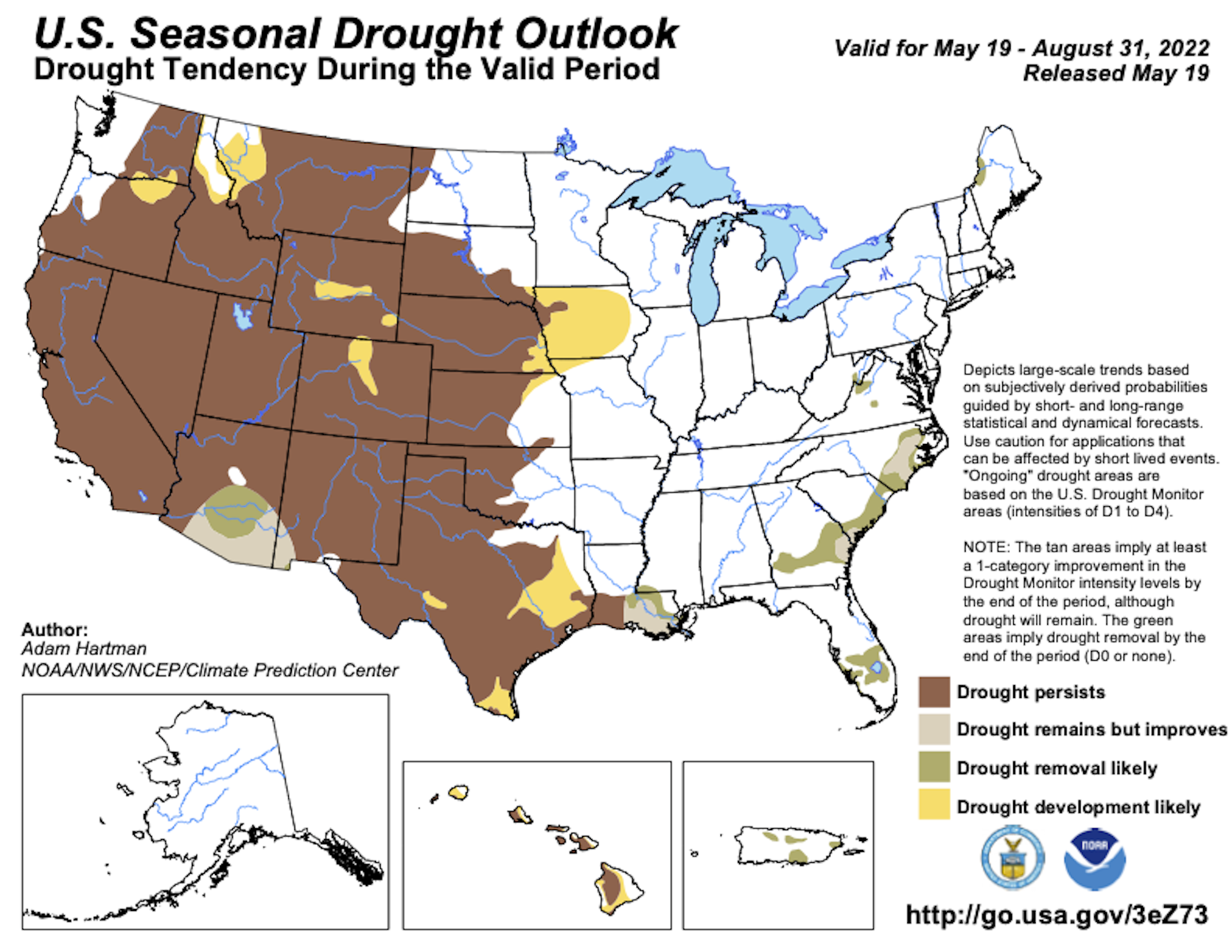
The ongoing drought in the U.S. West is expected to persist through this summer, raising the risk of water shortages and wildfires. While California, Arizona, and New Mexico are now facing the brunt of the drought, new research suggests that Colorado, Utah, and Wyoming will increasingly come to look like the Southwest as temperatures continue to rise.

In its latest seasonaloutlook, the National Weather Service projects the drought, which began in early 2020, will continue across virtually the entire American West. Cooler waters in the Pacific are giving rise to fewer storms in the Southwest, while higher temperatures on land are drying out soil. In the last two years, average temperatures have been upward of 2 degrees…

View original post 303 more words

Va. dog breeding facility accused of animal welfare crimes after 145 beagles seized

Exposing the Big Game's avatarExposing the Big Game


by Associated PressFriday, May 20th 2022

https://wset.com/news/local/virginia-dog-breeding-facility-envigo-research-accused-of-animal-welfare-crimes-after-145-beagles-seized-acute-distress-cumberland-county

UserWay icon for accessibility widget

FILE - Beagle (Photo by Jamie McCarthy/Getty Images)

FILE – Beagle (Photo by Jamie McCarthy/Getty Images)

Facebook Share Icon

Twitter Share Icon

Email Share Icon

RICHMOND, Va. (AP) — Federal officials have accused a company that runs a Virginia facility breeding dogs for research of violating animal welfare law and recently seized at least 145 beagles found to be in acute distress.

That’s according to a lawsuit the government filed Thursday against Envigo RMS.

RELATED:NIH spent $1.2 million on dogs from breeder under federal investigation for animal cruelty

The facility in Cumberland County has been under increasing scrutiny for months, drawing concerns from animal rights groups, members of Congress and Virginia lawmakers.

RELATED:New laws expand protection for cats, dogs being sold to Virginia animal testing facilities

Repeated federal inspections since Envigo acquired the facility in 2019 have found dozens of violations.

A spokesman said the company was working on a statement and would have a response Friday.

View original post

Va. dog breeding facility accused of animal welfare crimes after 145 beagles seized


by Associated PressFriday, May 20th 2022

https://wset.com/news/local/virginia-dog-breeding-facility-envigo-research-accused-of-animal-welfare-crimes-after-145-beagles-seized-acute-distress-cumberland-county

UserWay icon for accessibility widget
FILE - Beagle (Photo by Jamie McCarthy/Getty Images)

FILE – Beagle (Photo by Jamie McCarthy/Getty Images)

Facebook Share Icon
Twitter Share Icon
Email Share Icon

RICHMOND, Va. (AP) — Federal officials have accused a company that runs a Virginia facility breeding dogs for research of violating animal welfare law and recently seized at least 145 beagles found to be in acute distress.

That’s according to a lawsuit the government filed Thursday against Envigo RMS.

RELATED: NIH spent $1.2 million on dogs from breeder under federal investigation for animal cruelty

The facility in Cumberland County has been under increasing scrutiny for months, drawing concerns from animal rights groups, members of Congress and Virginia lawmakers.

RELATED: New laws expand protection for cats, dogs being sold to Virginia animal testing facilities

Repeated federal inspections since Envigo acquired the facility in 2019 have found dozens of violations.

A spokesman said the company was working on a statement and would have a response Friday.

NC community shows support for teen injured in hunting accident

Exposing the Big Game's avatarCommittee to Abolish Sport Hunting Blog

by:Cheyenne Pagan

Posted:May 20, 2022 / 10:40 PM EDT

Updated:May 20, 2022 / 10:40 PM EDT

SHARE https://www.cbs17.com/news/north-carolina-news/nc-community-shows-support-for-teen-injured-in-hunting-accident/

JACKSONVILLE, N.C. (WNCT) – A North Carolina community began rallying behind a local teen after he suffered a traumatic brain injury in January.

Bryson Capps, 13, was hunting whenhe was hit by a rogue bullet on New Year’s Eve.Months later, the community is still pulling together to support him as he recovers.

Hundreds of community members gathered for one cause on Friday and that’s to “Bring Bryson Back.”A benefit dinner was held for Capps at Tar Landing Baptist Church in Jacksonville.

ADVERTISING

“The injury took a lot away. So he’s having to relearn pretty much everything again,” said Bryson’s cousin, Emily Battle.NC teen suffers traumatic brain injury in hunting incident

Bryson is in a much better position now than he was in January, according to his cousin.

“He…

View original post 264 more words

‘Ghost’ fossils preserve haunting record of ancient life on a hellish Earth

Exposing the Big Game's avatarThe Extinction Chronicles

ByJoanna Thompsonpublished1 day ago

Geometric fossils in marine sediments have a story to tell.

https://www.livescience.com/ghost-nannofossils-ocean-acidification

The images show the impressions of a collapsed cell-wall covering (a coccosphere) on the surface of a fragment of ancient organic matter (left) with the individual plates (coccoliths) enlarged to show the exquisite preservation of sub-micron-scale structures (right). The blue image is inverted to give a virtual fossil cast, (i.e., to show the original three-dimensional form). The original plates have been removed from the sediment by dissolution, leaving behind only the ghost imprints.

The images show the impressions of a collapsed cell-wall covering (a coccosphere) on the surface of a fragment of ancient organic matter (left) with the individual plates (coccoliths) enlarged to show the exquisite preservation of sub-micron-scale structures (right). The blue image is inverted to give a virtual fossil cast, (i.e., to show the original three-dimensional form). The original plates have been removed from the sediment by dissolution, leaving behind only the ghost imprints.(Image credit: S.M. Slater/P. Bown/Science)

Ghostly imprints of tiny plankton-like creatures have been found haunting the sediments of prehistoric oceans at a time when such organisms were thought to be extinct. The so-called nannofossil imprints reveal that the organisms survived acidic oceans caused by climate change, and could offer a clue for how modern creatures can endure rising ocean temperatures, researchers…

View original post 737 more words