(Bloomberg) — The first U.S. hypersonic weapon will be delayed for as long as a year under a new schedule, even as lawmakers protest that the Pentagon is lagging behind in a new technology that Russia has already used in Ukraine and China has demonstrated in a space launch.
Earlier this year, Tesla Inc (NASDAQ: TSLA) CEO Elon Musk took to Twitter to warn his followers: “We should be much more worried about population collapse.”
Musk added that if there weren’t enough people for Earth, then there definitely won’t be enough people for Mars.
So, is population collapse something we should be seriously worried about?
Musk referenced United Nations numbers that estimated nearly 10 billion people on the planet by 2050. Musk called these numbers nonsense. Birth rates have declined in a lot of developed countries, including the U.S. But birth rates are cyclical and declined in large part during the COVID-19 pandemic.
Musk also chimed in recently about the COVID-19 baby “bust” and of lack of children as issues.
There Are Some Concerns: Shanna Swan is an environmental and reproductive epidemiologist and professor at the Icahn School of Medicine at Mount Sinai in New York. Swan’s book “Count Down” hit the shelves in February 2021.
Related video: Elon Musk, Twitter’s “Most Influential” Person (QuickTake)
Play
Current Time 0:08
/
Duration 7:44
Loaded: 10.34%LQCaptionsFullscreenUnmute
0
Elon Musk, Twitter’s “Most Influential” Person
In “Count Down,” Swan outlined the various ways chemicals and endocrine disruptors have lowered sperm counts throughout the last century, threatening humanity’s chance of survival. These chemicals are found in common aerosols and plastics. By some measures, sperm counts in the West have dropped as much as 50%, Swan said.
“Doomed is kind of an emotional word. It’s not a scientific word, right?” Swan said in an interview with GQ. “But let me tell you what I think. I think that sperm counts are really low in many places in the world, and people should be very concerned. Yes, I take it seriously. Am I panicking? No.”
So Why Isn’t She Panicking? Swan explained that while there are products and habits which have decimated the population’s sperm count, the reverse was also true. Swan suggested there are things we can do to alleviate, and even reverse, the harmful effects of chemicals.
Swan wrote about one man who was a regular sperm donor. One day he was told his sperm count didn’t pass the threshold for him to be a donor.
“He was one of their prime donors, and then suddenly he didn’t make the cut, and they said, ‘What’s up?’ And he said, ‘Well, let’s see: I changed jobs; it’s more stressful. I have a new girlfriend, she smokes,’ and so on. And so he went back and he cleaned up his act, and then after a couple of months, his sperm count returned,” Swan explained.
Now, this is very anecdotal and not the same as reversing a sociological effect that impacts millions of people. With that said, there is plenty of evidence that cutting out smoking, improving diet and increasing exercise are all real ways that one can increase sperm count.
Should you be worried about population collapse? Yes, but not panicked. There is little to no evidence indicating we are facing an imminent collapse of the population. But we should be more mindful of some of the negative effects associated with the products we use every day.
BEIJING (Reuters) -China warned on Thursday it would take strong measures if U.S. House of Representatives Speaker Nancy Pelosi visited Taiwan and said such a visit would severely impact Chinese-U.S. relations, following media reports she would go next week.
China considers democratically ruled Taiwan its own territory and the subject is a constant source of friction between Beijing and Washington, especially given strong U.S. military and political support for the island.
The possible visit has not been confirmed by Pelosi’s office or Taiwan’s government, but some Japanese and Taiwanese media reported it would take place after she visits Japan this weekend.
Chinese Foreign Ministry spokesperson Zhao Lijian told reporters that Beijing firmly opposed all forms of official interactions between the United States and Taiwan, and Washington should cancel the trip.
“If the United States insists on having its own way, China will take strong measures in response to defend national sovereignty and territorial integrity. All possible consequences that arise from this will completely be borne by the U.S. side,” he added, without giving details.
Related video: U.S. Trade Representative Katherine Tai Full Interview (Bloomberg)
interesting ideas and those are certainly not talking points orPause
Loaded: 61.45%LOCaptionsFullscreenUnmute
U.S. Trade Representative Katherine Tai Full Interview
In Taipei, Taiwan Foreign Ministry spokesperson Joanne Ou would only say that inviting U.S. officials and dignitaries had always been “an important part” of the ministry’s work, and that it would announce any official visits at an appropriate time.
Sunday marks the 43rd anniversary of the United States signing into law the Taiwan Relations Act, which guides ties in the absence of formal diplomatic relations and enshrines a U.S. commitment to provide Taiwan with the means to defend itself.
The last time a House speaker visited Taiwan was in 1997, when Newt Gingrich met then-President Lee Teng-hui.
Pelosi, a long time critic of China, particularly on human rights issues, held a virtual meeting with Taiwan Vice President William Lai in January as he wrapped up a visit to the United States and Honduras.
Pelosi is one of the ruling Democratic Party’s most high-profile politicians, and second in the U.S. presidential line of succession after the vice president.
Taiwan has been heartened by continued U.S. support offered by the Biden administration, which has repeatedly talked of its “rock-solid” commitment to the island.
That has strained already poor Sino-U.S. relations.
In March, a delegation of former senior U.S. defence and security officials sent by President Joe Biden visited Taiwan, a strong show of support coming soon after Russia invaded Ukraine.
(Reporting by Martin Pollard; Writing and additional reporting by Ben Blanchard in Taipei;Editing by Raissa Kasolowsky and Nick Macfie)
ALBUQUERQUE, N.M. (AP) — It is now illegal to use wildlife traps, snares and poison on public lands across New Mexico under a ban that took effect Friday. New Mexico joined a handful of Western states that have limited trapping on public lands. The New Mexico measure, dubbed “Roxy’s Law,” was approved in 2021 following several failed attempts by animal advocates over the years to rein in a practice they have described as archaic and indiscriminate. Ranchers and wildlife conservation officers have argued that trapping is an important tool for managing wildlife and protecting livestock in rural parts of the state.
The price of eggs has risen sharply since the start of a bird flu outbreak that has resulted in millions of birds being culled.
Justin Sullivan/Getty Images
A highly pathogenic bird flu virus is tearing its way through U.S. farms and chicken yards, spreading to at least 24 states less than two months after the first outbreak was reported in a commercial flock.
Nearly 23 million birds have died. It’s the worst U.S. outbreak of the avian flu since 2015, when more than 50 million birds died. The outbreak is driving up consumer prices for eggs and chicken meat that, like many costs, had already been rising due to inflation.
Here’s what you need to know about the outbreak.
22,851,072 birds have been wiped out
Some birds have died from the disease itself, but the vast majority are being culled to try to stop the deadly and highly infectious virus from spreading. That includes millions of chickens and turkeys in barns and backyards that had been raised to provide eggs or meat.
One of the worst-hit states is Iowa, where more than 5 million birds died at an egg-laying facility in Osceola on March 31, according to the U.S. Department of Agriculture. Overall, more than 13 million birds have been culled in the state.
As of around noon ET on Tuesday, 72 commercial flocks and 46 backyard flocks were reported to be infected around the country.
The bird flu poses only a low risk to humans, the CDC says
It’s rare for a human to become infected with the avian virus. No human infections of the highly pathogenic avian influenza (HPAI), which includes the H5N1 bird flu virus, have ever been reported in the U.S., according to the Centers for Disease Control and Prevention.
The virus does not pose a special risk in the nation’s food supply, either; the CDC states that like any poultry or eggs, proper handling and heating food to an internal temperature of 165˚F kills any bacteria and viruses present — including any HPAI viruses.
There have been only four human infections of low pathogenic avian influenza (LPAI) viruses ever in the U.S.,the CDC says, noting that those cases resulted in only mild or moderate illness.
The virus was first reported in wild birds
The first U.S. warning of the new outbreak came on Jan. 13, when the USDA announced a strain of the highly pathogenic avian influenza virus had been found in wild birds for the first time since 2016. Many of those first cases were in South Carolina and North Carolina, in birds killed by hunters.
The cases then spread north as wild birds migrated and spread the virus to farms. On Feb. 9, an outbreak was confirmed at a commercial turkey flock in Dubois County, Ind.
Ben Slinger, whose family raises turkeys for a meat processor, recently told Iowa Public Radio that he’s taking precautions to protect his flocks from infection, after they had to cull tens of thousands of birds in 2015. In addition to using disinfectant, workers wear separate pairs of boots for each barn.
“We know what the aftermath of that is like, and it is pretty disheartening,” Slinger said.
Known cases now range from Maine to Texas, where the virus was found in a commercial pheasant flock in Erath County on Sunday.
Land is prepared for the disposal of nearly 3 million chickens after avian influenza was recently discovered at a commercial egg operation near Palmyra, Wis.
Scott Olson/Getty Images
Grocery prices for chicken are rising
For the current week, the average U.S. price of chicken breasts rose to $3.93 per pound at major supermarkets — sharply higher than last week’s $3.14 price. A year ago, the price was $2.48, the Agriculture Department says.
Egg prices have also gone up compared to 2021, and breast tenders cost a full dollar more now than they did a year ago, according to the USDA.
“Prices for white parts are on the rise” with a few exceptions, the department said. “The cost for dark meat items are also increasing; bulk pack drumsticks, thighs, and leg quarters take up most of the spotlight.”
The last outbreak lasted about 6 months
The bird flu outbreak that peaked in the late spring of 2015 was “the largest poultry health disaster in U.S. history,” the USDA says.
Many of those infections were reported in Iowa and neighboring states near “the intersection of the Central and Mississippi flyways used by wild birds during seasonal migration,” the agency said. That’s the same region that’s now being hit hard by the virus.
In the 2015 outbreak, fomites — objects that can transfer disease — were seen as a key source of viral transmission. Such items include the boots and clothing of poultry industry employees and vehicles used to spread feed. Officials also pointed to the dense concentration of some production facilities as a source of case clusters.
The 2015 outbreak tapered sharply and ended in June of that year — but 3 million birds still died in that final month. Because of the lingering effect on the supply chain, it wasn’t until several more months later that some poultry prices peaked and then normalized, according to the USDA.
A new study provides the first evidence that rising greenhouse gases have a long-term warming effect on the Amundsen Sea in West Antarctica. Scientists from British Antarctic Survey (BAS) say that while others have proposed this link, no one has been able to demonstrate it.
Ice loss from the West Antarctic Ice Sheet in the Amundsen Sea is one of the fastest growing and most concerning contributions to global sea level rise. If the West Antarctic Ice Sheet were to melt, global sea levels could rise by up to three meters. The patterns of ice loss suggest that the ocean may have been warming in the Amundsen Sea over the past one hundred years, but scientific observations of the region only began in 1994.
In the study—published in the journalGeophysical Research Letters—oceanographers used advanced computer modeling to simulate the response…
The April 1 snow survey revealed just how critically low our snowpack is compared to normal, and how it’s contributing to a historic drought in California and the entire U.S. West region.
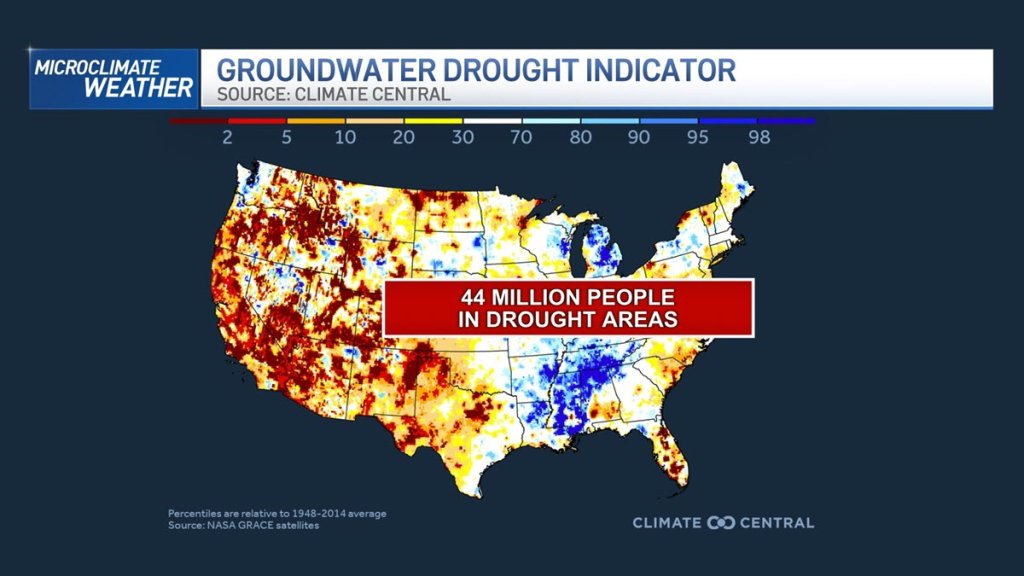
About 44 million people across the western United States are experiencing drought, according to Climate Central. The Sierra snowpack is at its lowest point in 70 years, and that translates to the worst megadrought in 1,200 years.
Due to climate change, snow melt is occurring on average 21 days earlier than in previous years. And because of the dry conditions, much of that snowmelt soaks into the ground before it gets a chance to run off and fill the reservoirs.
But there are ways to help preserve water sources in the future. Investment in wastewater treatment facilities and water storage, for example.
As the U.S. Supreme Court weighs the fate of Roe v. Wade, advocates on both sides of the fight are already positioning themselves for the next battle, over medication abortions or so-called abortion pills.
Why it matters: The pills for a medication abortion, mifepristone and misoprostol, are FDA-approved for use in the first 10 weeks of pregnancy. The FDA lifted long-standing restrictions in December and paved the way for doctors to prescribe them online and mail them to patients.
Republican states, meanwhile, are moving to increasingly limit access to the pills, setting up a new round of legal battles over who’ll have the final say over the distribution of the drugs.
What they’re saying: “That’s where the entire conflict is going to turn,” Mary Ziegler, a law professor at Florida State University specializing in reproductive health, tells Axios.
Since those drugs can only be used before 10 weeks of pregnancy, the right to surgical abortions will continue to loom large, Ziegler says.
Yes, but: “The kind of low visibility and flexibility of medication abortion is going to be really, really consequential” if the high court strikes down or guts Roe, she adds.
State of play: The abortion terrain has already shifted even before justices decided to review Mississippi’s 15-week abortion ban, which poses a direct challenge to Roe.
Medication abortion accounted for 54% of all U.S. abortions in 2020, up from 39% in 2017, according to the Guttmacher Institute.
The legal precedent: One of the cases that may be key in future arguments over limiting access to the pills involves a lawsuit over a painkiller. In 2014, Massachusetts instituted an emergency ban on the opioid Zohydro, saying the drug was dangerous and addictive.
But a federal judge struck down the ban, saying a state couldn’t take a drug off the market that the FDA had deemed safe, Rachel Rebouché, interim dean of Temple University’s law school, tells Axios.
Experts might argue that means states don’t have the authority to ban FDA-approved drugs, including abortion drugs. Some might even go so far as to argue that the FDA’s policies would preempt any attempt by states to ban abortion, Rebouché said.
“That’s a stretch,” she says. “I think a lot of people think that’s a difficult argument to make because states for so long have been able to regulate the practice of medicine and a law that says you can’t perform an abortion seems like regulating the practice of medicine.”
What’s next: Red states will likely pursue a strategy where they ban abortion and the use of drugs for abortion, but not the drugs themselves, according to experts who spoke with Axios.
“How a state crafts its law could impact how a court reviews it,” Greer Donley, an assistant law professor at the University Pittsburgh Law School, tells Axios.
Between the lines: This could all be a moot point since there are practical barriers to banning medication abortion.
“The reasons you see state banning medication abortion is because anti-abortion legislators recognized all too clearly that it is going to be really hard to track down pills you can take in your home and receive by mail,” Rebouché says.
That is already is causing skirmishes between states.
For instance, Missouri is also seeking to find ways to penalize out-of-state providers for providing any assistance in obtaining an abortion, Rebouché says.
“You’ll see not only this tension between state law and federal law … but you’ll see really intense interstate conflict,” Rebouché says.
What to watch: While previous abortion laws targeted those that help women seeking abortions, such as providers, it’s possible the approach may change in a world with self-managed abortions.
“Once providers are out of the equation or are outside the state’s jurisdiction, the only way to truly enforce these laws is to go after the pregnant people themselves,” Donley says.
“That’s historically something the anti-abortion movement has not wanted to do,” she adds. “But I’m curious if that’s going to change.”
To study emotions in animals, scientists need to look beneath feelings to the brain states that produce certain behaviors.
Fran Laurendeau/RooM RF/Getty Images
We humans often say that a growling dog is “angry” or a purring cat is “happy.”
But those terms are of little use to scientists like David Anderson, a biology professor at Caltech who studies the brain circuits involved in emotional behaviors. “We have to do more than just project our own emotions onto other animals,” he says, “because animals are not little people in furry costumes.”
And animals can’t tell us how they feel. Yet Anderson believes a connection exists between animal and human emotions.
“Emotions are brain functions that evolved over time by natural selection,” he says. “They didn’t just appear on the planet with the advent of Homo sapiens.”
That idea is central to Anderson’s latest book, The Nature of the Beast: How Emotions Guide Us. It’s also central to a growing scientific effort to find new treatments for disorders like PTSD by manipulating emotion-related brain circuits in animals.
In his book, Anderson describes research from his lab that suggests the brain circuits underlying human emotions have a lot in common with circuits found in mice and even fruit flies.
To study emotions in animals, Anderson says scientists first need to set aside their own perceptions of what people typically think of as emotions, such as anger, fear, sadness or joy.
In other words, they need to look beyond human feelings.
“The feeling part is just the tip of the iceberg, above the sea of our consciousness,” Anderson says. “The part below is what we share in common with animals.”
What lies beneath feelings, he says, are brain states that produce certain behaviors. And that’s the part of emotion that scientists can study. For example, Anderson’s lab has investigated fruit flies that become much more active when they see a moving shadow like the one cast by a flying predator.
“We see that the more times we deliver the shadow, the more jumpy the flies become, until they’re literally hopping around like popcorn,” he says.
And the flies keep hopping long after the shadow is gone.
Anderson would behave much the same way if he were on a hike and saw a rattlesnake.
“I’d jump in the air,” he says. “But even for minutes after the snake had slithered away into the bushes, my heart would be pounding, my mouth would be dry and I’d probably jump every time I saw a snakelike object in front of me — even if it was a stick.”
That sort of behavior is typical of a persistent brain state called defensive arousal. It’s present in both fruit flies and people, which is why Anderson believes studying fear in an insect or a mouse can reveal a lot about human emotions.
“We can try to figure out how the brain is generating that state and what makes it last so long and what makes the animal finally calm down,” Anderson says.
In mice, the answer appears to be specialized brain cells that become hyperactive when a mouse detects a threat and that return gradually to normal after the threat has passed. Anderson suspects people have a similar group of cells that generate the feeling we know as fear.
Aggression across species
Another human feeling that probably has its roots in animal emotion is anger.
There’s no way to know if animals have angry feelings, says Dayu Lin, a neuroscientist at New York University. But the sort of aggressive behavior associated with human anger can be found in fish, reptiles, birds and mammals.
So Lin has been studying the brain areas involved in aggression. And she has found one that appears to be critical.
“It’s a tiny, tiny region deep in the brain, and we all have it,” she says.
In people, this region is near the bottom of the hypothalamus, just above the pituitary gland. And studies show that in mice and other animals, this clump of brain cells is part of a core aggression circuit.
“We can evoke aggression by just artificially activating this area in the rodents,” Lin says.
Switch it on and a mouse will attack. Switch it off and even an animal’s natural aggression vanishes. There’s some evidence that this can also happen in people. Doctors sometimes use deep brain stimulation to deactivate the aggression circuit in extremely violent psychiatric patients.
“Usually the aggression is uncontrollable,” Lin says. “That’s usually the last resort.”
Trauma, fear and PTSD
Animal emotions are also helping scientists understand certain psychiatric disorders, including post-traumatic stress disorder (PTSD).
“We really see PTSD as a disorder in which this evolved, important fear response has essentially gone too far,” says Dr. Kerry Ressler of Harvard Medical School and McLean Hospital.
For a person with PTSD, even a minor event can produce a stress and fear response that lasts for hours, Ressler says. And there’s a parallel in animals.
A typical mouse will freeze when it hears a tone associated with a mild electric shock. But if the shocks stop coming, the animal soon learns to ignore the tone.
“If the animal’s had prior trauma, they’ll learn more quickly, they’ll freeze for longer and it takes them longer to extinguish or learn that that tone is actually safe,” Ressler says.
In both people and mice, trauma appears to alter a brain circuit involving the amygdala and the prefrontal cortex. And in rodents, it’s possible to regulate that circuit.
“We now understand specific parts of the circuit that increase fear and other parts of the circuit that decrease fear,” or at least the animal version of that emotion, Ressler says.
The next step, he says, is to figure out how to tweak that circuit to reduce the fear response in people with PTSD.
(Bloomberg) — President Joe Biden’s top economic adviser said the administration has warned India against aligning itself with Russia, and that U.S. officials have been “disappointed” with some of New Delhi’s reaction to the Ukraine invasion.
“There are certainly areas where we have been disappointed by both China and India’s decisions, in the context of the invasion,” the director of the White House National Economic Council, Brian Deese, told reporters at a breakfast Wednesday hosted by the Christian Science Monitor.
The U.S. has told India that the consequences of a “more explicit strategic alignment” with Moscow would be “significant and long-term,” he said.
While the U.S., Europe, Australia and Japan have piled economic sanctions onto Russia in response to its war against Ukraine, India has declined and instead has sought to continue imports of Russian oil.
New Delhi’s reaction to the invasion is complicating its relationship with Washington, where India is regarded as an important partner in countering Chinese influence in Asia.
Deese’s comments come after Deputy National Security Advisor Daleep Singh traveled to India last week for meetings with officials.
“What Daleep did make clear to his counterparts during this visit was that we don’t believe it’s in India’s interest to accelerate or increase imports of Russian energy and other commodities,” Press Secretary Jen Psaki said earlier this week.
India’s Ministry of External Affairs didn’t respond to a message seeking comment sent after normal business hours.
The U.S. and the rest of the Group of Seven nations will continue to collaborate with India and hope that they can align efforts to the greatest extent possible, a U.S. official said in a briefing for reporters Wednesday on new sanctions against Russia. India and the U.S. collaborate extensively on food security and global energy, the official said.
The official asked not to be identified as a condition of the briefing.
In addition to seeking Russian oil, India is the world’s largest buyer of Russian weapons. Indian Prime Minister Narendra Modi has resisted entreaties from the U.S. and Australia to scale back the relationship, insisting that India needs Russian weapons to counter both Pakistan and China and that alternatives are too expensive, according to people familiar with the matter.
(Updates with request for comment to Indian government in eighth paragraph. Modi’s title was corrected in a previous version of this story.)