Germany’s icebreaking reseach vessel Polarstern (operated by the Alfred Wegener Institute Helmholtz Centre for Polar and Marine Research). Credit: Alfred-Wegener-Institut / Thomas Ronge
Roughly 35 million years ago, Earth cooled rapidly. At roughly the same time, the Drake Passage formed between South America and the Antarctic, paving the way for the Antarctic Circumpolar Current. Thanks to these two factors, Antarctica was soon completely covered in ice. As a study from the Alfred Wegener Institute now shows, this massive glaciation was delayed in at least one region. This new piece of the puzzle concerning the early history of the West Antarctic Ice Sheet could help to predict its unstable future. The study was just released in theNaturejournalCommunications Earth & Environment.
Forclimate researchers, the West Antarctic has been in the spotlight for years. Here, the West Antarctic Ice Sheet lying atop the…
The webcast starts Monday (Feb. 21) at 7 p.m. EST.
The Virtual Telescope Project will provide a livestream Monday (Feb. 21) of an asteroid zooming safely past Earth, weather permitting.
You can catch live views ofasteroid1999 VF22 starting at 7 p.m. EST Monday (0000 GMT on Tuesday, Feb. 22) from Rome, Italy, where the project is situated. You can watch the livestream on this page ordirectly from the Virtual Telescope Projectif weather conditions allow.
“The Virtual Telescope Project will show it live, online, just before the fly-by time. This way, you can join the journey from the comfort of your home,” founder Gianluca Masisaid in a statement.
Russian President Vladimir Putin attends a ceremony to sign documents, including a decree recognising two Russian-backed breakaway regions in eastern Ukraine as independent entities, with leaders of the self-proclaimed republics Leonid Pasechnik and Denis Pushilin seen in the background, in Moscow, Russia, in this picture released February 21, 2022. Sputnik/Alexey Nikolsky/Kremlin via REUTERS
Register now for FREE unlimited access to Reuters.com
Register
LONDON, Feb 22 (Reuters) – Now that Russian President Vladimir Putin has recognised the independence of separatist enclaves in eastern Ukraine and ordered in “peacekeeping” troops, the big question is: where will he stop?
Western countries have been warning for weeks that Moscow may be preparing for a possible all-out massed invasion to conquer its neighbour. Russia denies this, and Putin’s moves so far have stopped well short of such a scenario.Report ad
But a televised address by Putin on Monday night – in which he characterised the Ukrainian state and its leaders as illegitimate – added to fears that he may aim to subjugate Ukraine by force.
Following are three possible scenarios:
1. SECURE THE EXISTING SEPARATIST ENCLAVES, THEN PAUSE THERE
While many commentators believe that sending troops into the separatist enclaves could be a first step towards a wider invasion, others note that it could also be a place to stop – or at least pause in terms of action on the ground – while trying to apply pressure to Ukraine in other ways.Report ad
“That gets him out of the ‘backed into a corner, has to invade’ scenario. He’s done something. He can claim a victory for his domestic audience,” said Tim Ripley, author of “Little Green Men: Putin’s Wars Since 2014”.
Ripley said he believes the most likely next steps – rather than immediately trying to take more territory – would be a “rolling campaign” to exert pressure on Ukraine in other ways, such as a naval blockade of Ukrainian ports on the Black Sea. The goal would be to intimidate Ukrainians by maintaining a constant crisis, while showing that Kyiv’s Western allies were “a paper tiger”, capable of offering little real help.
Meanwhile, Russia has already achieved some big objectives, such as forcing NATO allies to publicly acknowledge they will not send troops to defend Ukraine, and securing permission from neighbouring Belarus to station a large force there indefinitely.
“Belarus was quite a big move aimed at changing the balance in the region…. It transforms how NATO has to defend the Baltic states completely,” Ripley said.
2. SEEK TO EXPAND THE SEPARATIST TERRITORY, WHILE LIMITING CONFLICT TO EASTERN UKRAINE
The separatists in eastern Ukraine control less than half of the two provinces they claim, and Ukrainian forces have opposed them across a heavily fortified frontline frozen by a much-violated ceasefire since 2015.
Without launching a massed invasion of Ukraine as a whole, Russia could try to expand separatist territory. Moscow has given mixed signals in the past 24 hours about whether its recognition of the separatist enclaves also amounts to accepting their claims to more territory in Ukraine.
One target could be Mariupol, eastern Ukraine’s main port, which the separatists stopped short of attacking in 2014-2015. Capturing it would let Moscow link Russian-controlled Crimea over land to the separatist enclaves and secure complete control over the coast of the Sea of Azov, a strategic objective in itself and one that would also exert economic pressure on Kyiv.
But a war over incremental territory in eastern Ukraine, while likely to bring down tough international sanctions on Russia, would achieve only limited strategic gains. By itself, it would fall short of Moscow’s perceived aim of installing a more compliant government in Kyiv.
“Capturing six villages outside Donetsk: it doesn’t change the price of eggs at all,” notes Ripley.
3. LARGE-SCALE INVASION
Western countries, especially the United States and Britain, have been warning for several weeks now of the likelihood of a much larger operation by Russia to capture all of Ukraine, or at least move on Kyiv to overthrow the government there.
Some commentators saw Putin’s defiant televised speech on Monday night as evidence he will not be satisfied unless Ukraine is led by a government that acknowledges Russian hegemony.
“…It seems likely that Putin has much more in mind than simply taking a nibble out of Ukraine’s east and taking formal responsibility for territories he already de facto controlled,” wrote Shaun Walker, a journalist for Britain’s Guardian newspaper and author of “The Long Hangover, Putin’s New Russia and the Ghosts of the Past”.
“Putin’s final words, that if Kyiv did not stop the violence they would bear responsibility for the ‘ensuing bloodshed’, were ominous in the extreme. It sounded, quite simply, like a declaration of war.”
BOSTON (WHDH) – A Worcester man accused of breaking into the Franklin Park Zoo in Boston in an apparent attempt to gain access to the tiger enclosure has pleaded not guilty to charges in connection with the alleged incident.
Matthew Abraham, 24, was arraigned Tuesday in Dorchester District Court on charges of trespassing and disorderly conduct.
Abraham broke into the zoo by climbing over a gate around 9 a.m., according to state police.
“A lady let me in and after I was let in, I saw the caretaker by the tiger and I’m interested in the psychology of predatory animals such tigers and lions,” Abraham said.
A preliminary investigation indicated that he scaled multiple fences in his attempt to get to the tigers, ignoring multiple posted signs advising the public to stay out of that area, state police said. When asked why he did it, troopers said Abraham stated that he had an interest in the animals.
“I thought that since there was a fence, I wasn’t encroaching on his territory and I thought I would be OK,” said Abraham. “I just wanted to get close to it.”
Security staff detained Abraham as he tried to get into the tiger enclosure, state police said. Boston EMS responded to the zoo to evaluate him and determined he was mentally competent, state police added.
“The tiger was in his cage,” Abraham said. “The tiger saw me and growled at me and that was all…I didn’t realize I was trespassing or anything.”
A judge ordered Abraham to stay away from the zoo until further notice.
He is due back in court in April.
(Copyright (c) 2022 Sunbeam Television. All Rights Reserved. This material may not be published, broadcast, rewritten, or redistributed.)
By VLADIMIR ISACHENKOV, YURAS KARMANAU and AAMER MADHANI15 minutes ago
1 of 10
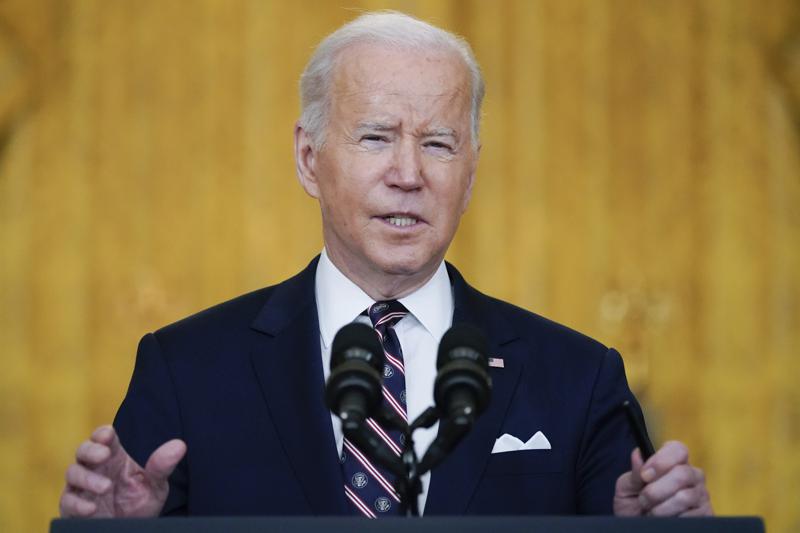
President Joe Biden speaks about Ukraine in the East Room of the White House, Tuesday, Feb. 22, 2022, in Washington. (AP Photo/Alex Brandon)
MOSCOW (AP) — President Joe Biden announced the U.S. was ordering heavy financial sanctions against Russian banks and oligarchs on Tuesday, declaring that Moscow had flagrantly violated international law in what he called the “beginning of a Russian invasion of Ukraine.”
“None of us will be fooled” by Russian President Vladimir Putin’s claims about Ukraine, the U.S. President said. And he said more sanctions could be on the way if Putin proceeds further.
Biden said he was also moving additional U.S. troops to the Baltic states on NATO’s eastern flank bordering Russia.
Biden joined the 27 European Union members who unanimously agreed on Tuesday to levy their own initial set of sanctions targeting Russian officials over their actions in Ukraine.
THIS IS A BREAKING NEWS UPDATE. AP’s earlier story follows below.
MOSCOW (AP) — Russian lawmakers on Tuesday authorized President Vladimir Putin to use military force outside the country — a move that could presage a broader attack on Ukraine after the U.S. said an invasion was already underway there.
ADVERTISEMENT
Several European leaders said Russian troops rolled into rebel-held areas in eastern Ukraine after Putin recognized their independence. But it was unclear how large the deployment was, and Ukraine and its Western allies have long said Russian troops were fighting in the region, allegations that Moscow always denied.
Members of Russia’s upper house, the Federation Council, voted unanimously to allow Putin to use military force outside the country — effectively formalizing a Russian military deployment to the rebel regions, where an eight-year conflict has killed nearly 14,000 people.
Putin said the crisis could be resolved if Kyiv recognizes Russia’s sovereignty over Crimea, the Black Sea peninsula that Moscow annexed from Ukraine in 2014, renounces its bid to join NATO and partially demilitarizes. The West has decried the annexation of Crimea as a violation of international law and has previously flatly rejected permanently barring Ukraine from NATO.
Asked whether he has sent any Russian troops into Ukraine and how far they could go, Putin responded: “I haven’t said that the troops will go there right now.” He added coyly that “it’s impossible to forecast a specific pattern of action –- it will depend on a concrete situation as it takes shape on the ground.”
ADVERTISEMENT
Biden scheduled an address for later Tuesday, but Germany made the first big move. It took steps to halt the process of certifying the Nord Stream 2 gas pipeline from Russia — a lucrative deal long sought by Moscow but criticized by the U.S. for increasing Europe’s reliance on Russian energy.
The rest of the European Union soon followed, with a first set of sanctions aimed at the 351 Russian lawmakers who voted for recognizing separatist regions in Ukraine, as well as 27 other Russian officials and institutions from the defense and banking world. They also sought to limit Moscow’s access to EU capital and financial markets.
With tensions rising and a broader conflict looking more likely, the White House began referring to the Russian deployments in the region known as the Donbas as an “invasion” after initially hesitating to use the term — a red line that President Joe Biden has said would result in the U.S. levying severe sanctions against Moscow.
“We think this is, yes, the beginning of an invasion, Russia’s latest invasion into Ukraine,” said Jon Finer, principal deputy national security adviser, said on CNN. “An invasion is an invasion, and that is what is underway.”
The Biden administration’s rhetoric hardened considerably in less than 24 hours. The White House announced limited sanctions targeting the rebel-region Monday evening soon after Putin said he was sending troops to eastern Ukraine. A senior Biden administration official, who briefed reporters about the sanctions targeting the breakaway region, noted “that Russia has occupied these regions since 2014” and that “Russian troops moving into Donbas would not itself be a new step.”
The administration initially resisted calling the deployment an invasion because the White House wanted to see what Russia was actually going to do. After assessing Russian troop movements, it became clear it was a new invasion, according to a U.S. official who spoke on the condition of anonymity to discuss internal deliberations.
For weeks, Western powers have been bracing for this as Russia massed an estimated 150,000 troops on three sides of neighboring Ukraine — and promised swift and severe sanctions if it materialized.
Western leaders have long warned Moscow would look for cover to invade — and just such a pretext appeared to come Monday, when Putin recognized as independent two separatist regions in eastern Ukraine, where government troops have fought Russia-backed rebels. The Kremlin then raised the stakes further Tuesday, by saying that recognition extends even to the large parts now held by Ukrainian forces.
Putin said Russia has recognized the rebel regions’ independence in the borders that existed when they declared their independence in 2014 — broad territories that extend far beyond the areas now under separatist control and that include the major Azov Sea port of Mariupol. He added, however, that the rebels should eventually negotiate with Ukraine.
Condemnation from around the world was quick. Ukrainian President Volodymyr Zelenskyy said he would consider breaking diplomatic ties with Russia and Kyiv recalled its ambassador in Moscow.
But confusion over what exactly was happening in eastern Ukraine threatened to hobble a Western response. While Washington clearly called it an invasion, some other allies hedged.
“Russian troops have entered in Donbas,” EU foreign policy chief Josep Borrell said in Paris. “We consider Donbas part of Ukraine.”
But he added: “I wouldn’t say that (it is) a fully fledged invasion, but Russian troops are on Ukrainian soil.”
Poland’s Defense Ministry and British Health Secretary Sajid Javid also said Russian forces had entered eastern Ukraine, with Javid telling Sky News that “the invasion of Ukraine has begun.”
Not all in Europe saw it that way. Spanish Foreign Minister José Manuel Albares noted “if Russia uses force against Ukraine, sanctions will be massive.”
The Kremlin hasn’t confirmed any troop deployments to the rebel east, saying it will depend on the security situation. Vladislav Brig, a member of the separatist local council in Donetsk, told reporters the Russian troops already had moved in, but more senior rebel leaders didn’t confirm that. Late Monday, convoys of armored vehicles were seen rolling across the separatist-controlled territories. It wasn’t immediately clear if they were Russian.
The White House issued an executive order to prohibit U.S. investment and trade in the separatist regions, and additional measures — likely sanctions — were to be announced Tuesday. Those sanctions are independent of what Washington has prepared in the event of a Russian invasion, according to a senior administration official who briefed reporters on the condition of anonymity.
The Russian moves pushed Germany to suspend the certification process for Nord Stream 2 pipeline that was to bring natural gas from Russia. The pipeline was built to help Germany meet its energy needs, particularly as it switches off its last three nuclear power plants and phases out the use of coal, and it has resisted calls by the U.S. and others to halt the project.
If Putin pushes further into Ukraine, NATO chief Jens Stoltenberg insisted the West would move in lockstep. “If Russia decides once again to use force against Ukraine, there will be even stronger sanctions, even a higher price to pay,” he said.
British Prime Minister Boris Johnson said the U.K. would slap sanctions on five Russian banks and three wealthy individuals. He warned a full-scale offensive would bring “further powerful sanctions.”
Even as alarm spread across the globe, Zelenskyy sought to project calm, saying in an address overnight: “We are not afraid of anyone or anything. We don’t owe anyone anything. And we won’t give anything to anyone.”
His foreign minister, Dmytro Kuleba, is in Washington to meet with Secretary of State Antony Blinken, the State Department said.
Russia has long denied it has any plans to invade Ukraine, instead blaming the U.S. and its allies for the crisis and describing Ukraine’s bid to join NATO as an existential challenge to Russia. Putin reiterated those accusations in an hourlong televised speech on Monday, when he announced that Russia would recognize the rebels.
“Ukraine’s membership in NATO poses a direct threat to Russia’s security,” he said.
The Western rejection of Moscow’s demands gives Russia the right to take other steps to protect its security, Putin said.
The Russian Foreign Ministry said Tuesday it will evacuate its diplomatic personnel from Ukraine “in the nearest time,” pointing to attacks on diplomatic buildings, cars and physical threats against diplomats in the Ukrainian cities of Kyiv, Odesa, Lviv and Kharkiv.
___
Karmanau reported from Kyiv, Ukraine, and Madhani from Washington. Jill Lawless in London, Lorne Cook in Brussels, Barry Hatton in Lisbon, Portugal, Zeke Miller and Aamer Madhani in Munich, Germany; Geir Moulson and Frank Jordans in Berlin; Edith M. Lederer at the United Nations, and Eric Tucker, Ellen Knickmeyer, Robert Burns, Matthew Lee and Darlene Superville in Washington, contributed.
___
This story has been updated to correct that Mariupol in on the Azov Sea, not Black Sea.
Kyiv and Lviv, Ukraine (CNN)Russian President VladimirPutin has ordered troopsinto separatist-held parts of eastern Ukraine in what the Kremlin called a “peacekeeping” mission, just hours after he signed decrees recognizing the independence of the Moscow-backed regions.
It is unclear if Russian troop movements marked the beginning of an invasion of Ukraine thatWestern leaders have warnedabout for weeks. But multiple US and Western officials cautioned Monday’s move could serve as the opening salvo of a larger military operation targeting the country.
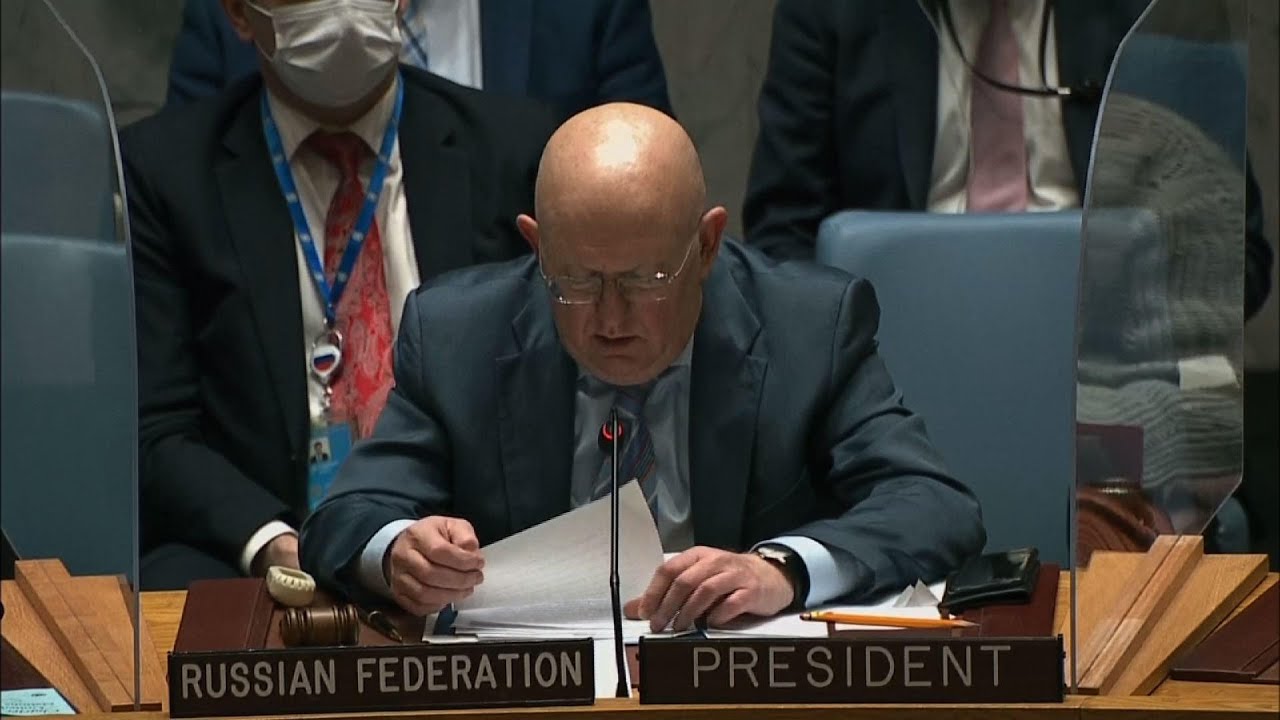
US Ambassador to the UN Linda Thomas-Greenfield told an emergency meeting of the UN Security Council Monday evening that Putin’s recognition of the pro-Moscow regions was an “attempt to create a pretext for a further invasion.”
She said his claim that Russian forces are entering those regions as “peacekeepers” is “nonsense.”
“We know what they really are,” Thomas-Greenfield…
The steamy, jungle-covered tropical island of Borneo was once considered one of the remotest, wildest places on earth. A place where orangutans and headhunters lurked undisturbed.
Together with neighboring Sumatra, it’s one of just two places in the world where the orangutan lives in the wild.
For decades, forestry and agriculture have whittled away orangutans’ forest home, placing them in great peril, according to the WWF.
As deforestation accelerates and more species are lost and threatened, now more trouble lurks.
Almost three years after announcing it, the Indonesian government is moving ahead with its plans to relocate the nation’s capital to the dense but dwindling jungles of East Kalimantan province.
That is, 730 miles (about 1,175 kilometers) away from sinking, overcrowded Jakarta to a new “forest capital,” as President Joko Widodo calls it, in Borneo’s hilly hinterland.
With the move now enshrined in law, work on Nusantara may begin this year, while relocation will start in 2024.
About an hour’s drive north of seaport Balikpapan, the location picked for the new capital straddles the North Penajam Paser and Kutai Kartanegara Regencies — or administrative districts.
An orangutan eats a pineapple at the Samboja Lodge eco-tourism resort, operated by the Borneo Orangutan Survival Foundation.
Dimas Ardian/Bloomberg/Getty Images
Orangutans’ habitat continues to shrink
The government envisages the “smart city in the forest” as an innovation hub.
But alongside the excitement, there’s also deep concern for the shrinking lowland tropical rainforest and its wildlife. The UN says humans are driving the orangutan to extinction.
Without a “transformative change” in human behavior, the critically endangered animal could be extinct within a few decades, it warns.
This has led to fears that while securing a future for the sinking megalopolis, Indonesian officials are sinking the future of one of the planet’s most remarkable creatures.
“The move will bring a large population but also big demands for changes to land-use to accommodate new housing and office complexes, even food production centers,” says Anton Nurcahyo, deputy CEO of the Indonesian non-profit Borneo Orangutan Survival Foundation (BOS).
A juvenile orangutan plays at the Samboja Lodge eco-tourism resort.
Dimas Ardian/Bloomberg/Getty Images
“This inevitably will create huge changes to the surrounding habitats.”
The foundation’s orangutan rehabilitation work began in East Kalimantan in 1991.
Since 2006, its orangutan sanctuary, Samboja Lestari, has been caring for injured and orphaned orangutans, rescued from jungle destroyed by logging and palm oil crops.
It lies precisely in the area of the new capital.
Today, staff here take care of over 120 rescued orangutans in a conservation area of regenerating forest. The idea is to release them back into “areas of safe, secure natural habitat” if they regain their health. But what if the fruit-rich forests suffer further losses?
“The neighboring Sepaku and Samboja districts (earmarked for Nusantara) do not have wild orangutan populations,” Nurcahyo says.
“But the orangutan rehabilitation center is located here, on 1,850 hectares of forest, which needs to be preserved in its current condition.”
NGOs and locals worry that a new city of some 1.5 million residents may be disastrous for the environment.
The influx, mostly of civil servants and their families from Jakarta, could force the dispossession of people and animals.
This aerial picture taken on August 28, 2019 shows the area around Sepaku, where Indonesia’s new capital is set to be built.
STR/AFP/AFP/Getty Images
The extent of the threat to rare wildlife will depend on the ongoing planning and surveys, says BOS.
“With the unique ecosystems in East Kalimantan, it is vital to have a mitigation plan in place tailored to these specific environmental needs,” Nurcahyo insists.
“That plan is still being developed. The first step will be to evaluate and map the impact of the move.”
Local government promises environment will be protected
Kalimantan has already seen vast habitat loss and the killing of 2,000-3,000 orangutans a year since the 1970s, according to the International Union for Conservation of Nature (IUCN). The orangutan is on its red list of critically endangered species.
In a century, total populations have almost halved, says the WWF — from 230,000 to about 112,000.
Nurcahyo says about 57,350 orangutans survive in Borneo, “spread into 42 pockets of wild population.”
The big worry is that most orangutans in Kalimantan exist outside of protected areas. Or, as the WWF puts it, “in forests that are exploited for timber production or are in the process of being converted to agriculture.”
Kato — a large male orangutan — is carried in a cage from a small boat from the River Bemban to his release site in Bukit Baka Bukit Raya National Park in Central Kalimantan, Borneo, Indonesia in 2017.
Jonathan Perugia/In Pictures/Getty Images
Officials have moved to allay fears about the impact of the new capital on the environment.
The Indonesian government has pledged no protected forests will be touched in the $32 billion megaproject.
It will be “a smart city, with green technology and friendly to the environment,” promised the president while discussing the move with journalists.
East Kalimantan Governor Isran Noor told media he admits some trees will fall to make way for the 256,000-hectare (2,560 square kilometers) site, which is almost four times the size of Jakarta.
“Of course, there will be a few sacrifices, but ultimately, we aim to achieve forest revitalization,” he told local papers. “When finished it will boast at least 70% open green space.”
Poor infrastructure along with continuing logging activity even in nature reserves has so far kept mainstream orangutan tourism at bay here.
Now the government is eager for the new capital to lure foreign tourists and investments. But it’s also aware of the importance of ecotourism, and that most visitors will come to see the wildlife.
Vehicles crowd a main road leading out Jakarta during the early evening rush hour on November 30, 2021.
Bay Ismoyo/AFP/Getty Images
Forest reserves surrounding Nusantara will play a pivotal role in ensuring conservation efforts and sustainability, Governor Noor told media.
So too will the orangutan sanctuaries.
“Nature and urbanization will coexist here,” Aswin, chief of East Kalimantan’s Regional Development Planning Agency, Bappeda Kaltim, told local media.
He noted strategic environmental studies are underway to ensure the forests are taken care of.
“The important thing is that our area can become an economic, tourist and other destination.”
But he’s also boasted of the huge profits to come. Investment in East Kalimantan is set to soar by 34.5% compared to a national rise of 4.7%, he said. And economic growth will double with the relocation.
Even the buffer zone around Nusantara — from Samrinda to Balikpapan — must benefit from the move, he said.
“We need East Kalimantan to be bright and sparkling.”
The Kalimantan Rainforest in Borneo, Indonesia is one of the most biodiverse spots on Earth. Bustling with life, the dense greenery is home to orangutans, all kinds of birds, frogs, you name it. But the rainforest won’t stay that way if mining and logging continues unchecked. Which is why The Nature Conservancy’s Dr. Eddie Game is listening to the sounds of the rainforest to measure the impact of human activity on the area’s wildlife.
Amid concerns that all that will come at a cost, the regional arm of the National Development Planning Agency, Bappenas, is reportedly busy consulting local communities about ecological conservation of the jungle tract.
Kalimantan’s Heart of Borneo forests must be preserved as Nusantara takes shape, said acting chief Muhammad Raudo. (Something local officials feel could take decades, not years.) The handling of protected forests and prevention of floods and forest fires are a concern, he told local community representatives.
Glimmers of hope
Beyond the rhetoric of Borneo’s jungles being the “Paru-Paru Dunia” — “lungs of the earth” — forest burning continues. Many fires are deliberately lit to clear land for agriculture.
Some worry that logging, land-clearing and fires will only worsen as construction takes off.
“These ecosystems are already hit by large-scale coal mining, logging and monoculture oil palm plantations,” said Sophie Chao at the University of Sydney, an expert in ecology and indigeneity in Southeast Asia.
She believes the move spells more strife for indigenous populations and thousands of species of flora and fauna.
“The region of East Kalimantan is immensely rich in biodiversity, with over 133 mammals, 11 primates species and 3,000 types of trees. These are found across a diverse mosaic of karst landscapes, peat marsh, mangrove, flatland dipterocarp forest and humid forest.”
Set against that specter, there are glimmers of hope.
Nurcahyo does not rule out the chance that shifting Indonesia’s capital to Borneo could bring more attention to the orangutan’s plight and bolster conservation efforts.
“All that depends on the mitigation plan and potential ecological ramifications of the move. We, meantime, will dedicate ourselves tirelessly to the conservation of the Bornean orangutans and their habitat.”
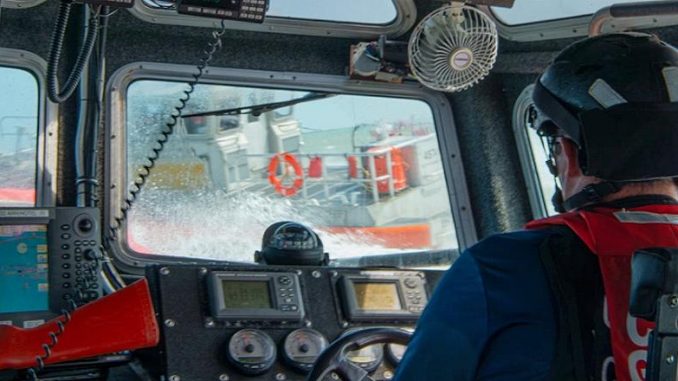
SOUTH PADRE ISLAND, Texas, February 18, 2022 (ENS) –“They’ll come into U.S. waters, they’ll fish, they’ll grab as much snapper as they can and they’ll go head back south before we can detect ’em. The average catch they’ll have on board is 1,000 to 3,000 pounds of snapper,” commanding officer of Coast Guard Station South Padre Island, Lieutenant Commander Dan Ippolito told reporters last year.
The station plays a critical role in preventing threatened fish species from being poached by unregulated foreign fishing vessels along the U.S./Mexico maritime boundary line.
Mexican fishing vessels now are prohibited from landing in U.S. Gulf of Mexico ports in a U.S. government effort to pressure the Mexican government to take action against illegal Mexican fishing of prized…
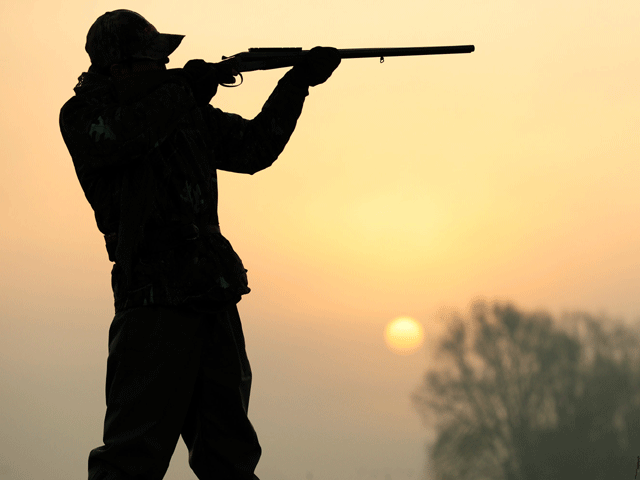
The Punjab Wildlife Department has imposed a ban on the hunting of wild birds and water birds across the province.
The ban will remain in force for eight months. Cases will be registered against poachers for violating the ban, arrests will be made, and poaching equipment will be confiscated.
The ban has been imposed with the start of the breeding season of wild animals to increase the breeding of wild birds and water birds – for which a formal notification has also been issued by the government of Punjab.
The ban focuses on black and white partridges, quails, ducks, rabbits and chicks. To enforce the ban, teams of wildlife inspectors and wildlife watchers have been constituted to protect hunting grounds and dense forests across the province.
Entrances and exits to forest hunting grounds will…
This is the horrifying moment a huntsman picks up a fox’s HEAD after the animal was ripped in half by a pack of dogs.
Footage shows a dozen hounds chase the fox through woods before tearing into the cornered animal.
The sickening scenes were filmed during the Warwickshire Hunt meeting in Walton and Combrook, Warks., on Wednesday (16/2) afternoon.
While members of the hunt watch, a man dressed in a green jacket and wearing riding boots, approaches the hounds and picks up the dead fox’s head and torso.
He then walks a few yards and picks up the mauled animal’s lower body before walking away. The remains were then collected by a terrierman on a quad bike.






 by


