


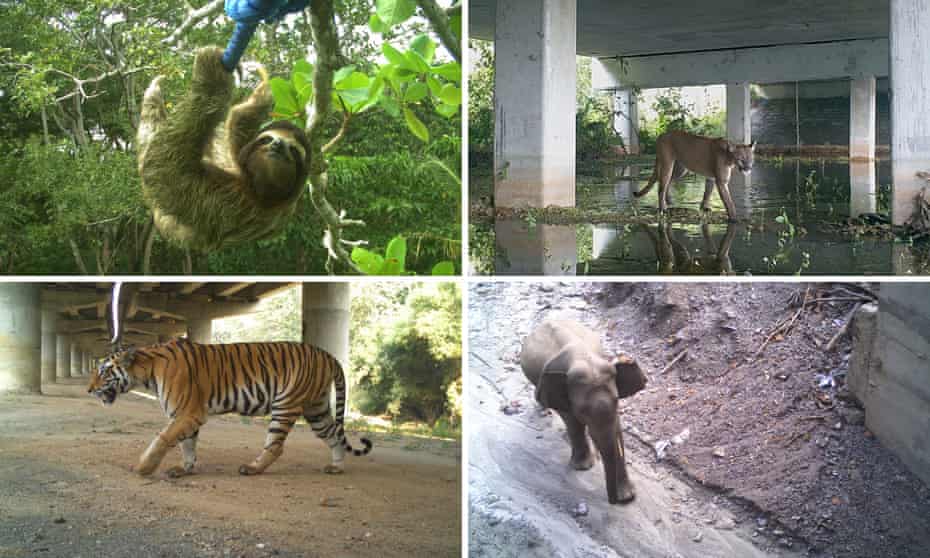
India’s tiger corridor and Australia’s possum ‘tunnel of love’ are among the myriad infrastructure projects providing safe passage
The age of extinction is supported by

About this contentPatrick Greenfield@pgreenfieldukWed 29 Dec 2021 05.15 EST
From a tiny railway bridge for dormice in the UK to elk, deer and bears benefitting from a slew of new animal crossings in Colorado, wildlife bridges are having a moment. As the human footprint on the planet continues to expand, a growing number of roads and railways include provisions for wildlife to pass through fragmented landscapes.
In January, we reported on Sweden’s plans to build a series of “renoducts” to help reindeer traverse the country’s main roads. The Swedish Transport Administration has since completed an ecoduct over the E6 in Skåne in southern Sweden, the third in the county. In southern California, work is due to begin on the largest wildlife bridge in the world in 2022, to connect isolated mountain lion populations north of Los Angeles that are becoming dangerously inbred. Joe Biden has earmarked $350m (£260m) of his $1.2tn infrastructure package for wildlife bridges to lessen the multibillion annual cost of collisions.Advertisementhttps://8ef1763cc532385f2086720612434a47.safeframe.googlesyndication.com/safeframe/1-0-38/html/container.html
“Ten years ago, wildlife bridges were experimental. We didn’t know whether they would work or not. Now they’ve shown they get huge reductions in collisions. In some cases, 85% to 99% reductions,” says Rob Ament, a road ecology expert at Montana State University. “You can design them for many species. Even out in the plains, we’re getting moose crossings in North Dakota.”
Wildlife bridges are found on every continent: there is an elephant underpass near Mount Kenya; the Netherlands has a network of ecoducts that may help the country’s first wolf pack in more than 140 years gain a foothold across the densely populated country; suspended water pipes are helping Java’s endangered lorises; and a bison bridge may help the animals cross the Mississippi.
Here are five projects from around the world helping animals make their way:
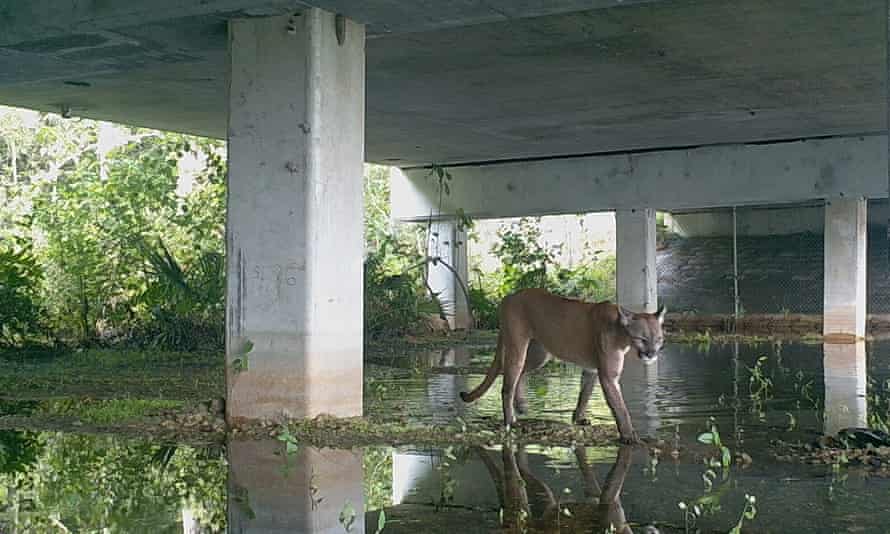
The 129km (80-mile) stretch of road between Naples and Fort Lauderdale bisects the Everglades, an enormous wetland that is home to thousands of alligators, deer and the endangered Florida panther. It used to be notorious for high-speed collisions with wildlife until the road was upgraded to a four-lane motorway and crossings were installed. Today, dozens of underpasses and fencing help wildlife navigate the road. A camera trapping exercise found panthers, black bears, skunks, deer, bats, birds and even fish use the crossings, and hope is growing the state’s wildlife bridge network could be extended north to connect potential habitats for the Florida panther. “Fencing is critical along Alligator Alley. It is a 10ft-high chain link fence with three-strand barbed wire on top. That’s to keep the wildlife off the roadway and on the crossing,” says Brent Setchell, a design engineer at Florida Department of Transportation, who identifies potential crossing sites by monitoring road collisions with panthers and bears. “The fascinating thing is we just started monitoring the crossings four or five years ago. We found an abundance of wildlife.”
Advertisement
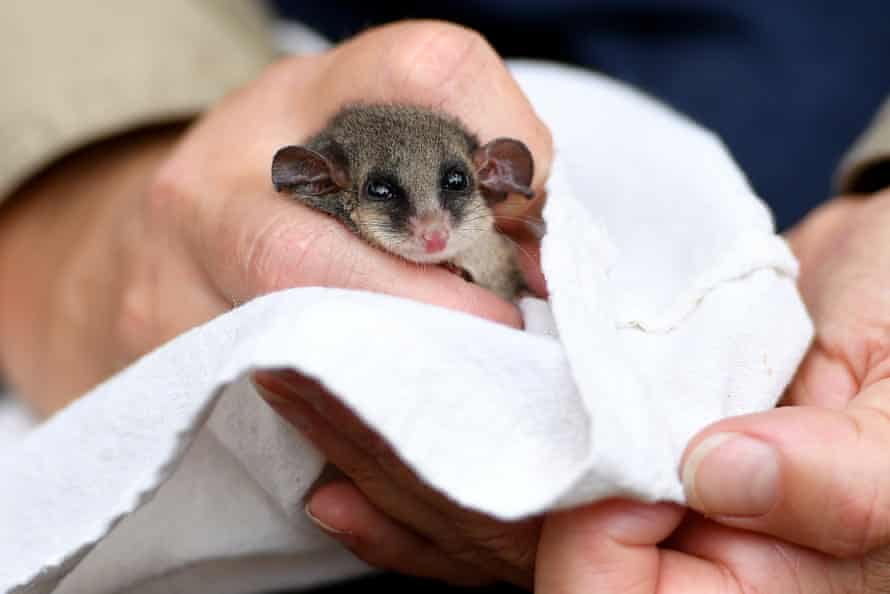
Stretching through the Victorian Alps in south-east Australia, the Great Alpine Road posed an existential threat to a colony of critically endangered mountain pygmy possums. Even though there are only about 150 of the marsupials on Mount Little Higginbotham, testing revealed genetic differences between sub-groups separated by the road, which are also threatened by fire, disappearing food sources and invasive species. Conservationists decided to build a “tunnel of love” between the isolated groups to improve mixing and strengthen their chances of survival. Over the last two summers, 30 possums have been identified using the tunnel of love, often in spring when they wake up from hibernation. The tiny marsupials can cross the nearly 15-metre tunnel in just 15 seconds – sometimes too fast for remote sensing cameras to capture them.
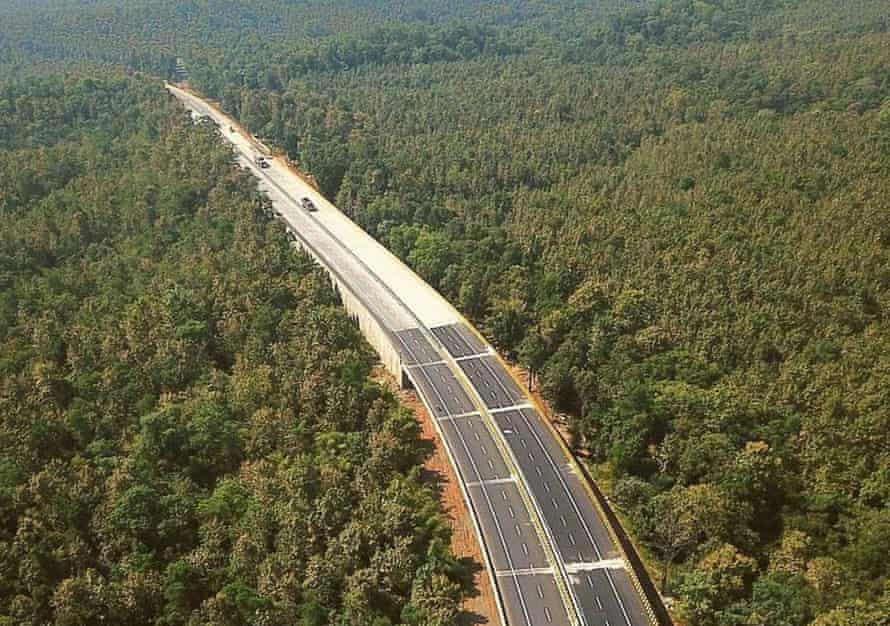
India’s first dedicated wildlife underpasses were a hard-fought victory for environmental campaigners. The nine crossings in the Pench tiger reserve were a court-ordered mitigation measure on the country’s longest road, the 4,112km National Highway 44, which runs down the middle of the country. Collisions with big cats still happen on the multi-lane motorway, but environmentalists say the underpasses have highlighted the need for more wildlife crossings on India’s road network. A 2019 camera trapping exercise found at least 18 species use the crossings, including tigers, wild dogs, sloth bears, civets and leopards. “According to our calculation, some 55,000km of roads pass through India’s forests and protected areas, many of them through wildlife corridors,” Milind Pariwakam, a road ecologist with Wildlife Conservation Trust Mumbai, told the Hindu. More infrastructure projects now have wildlife passes, including the 1,380km Delhi-Mumbai expressway currently under construction, which includes India’s first animal bridges.
Advertisementhttps://8ef1763cc532385f2086720612434a47.safeframe.googlesyndication.com/safeframe/1-0-38/html/container.html
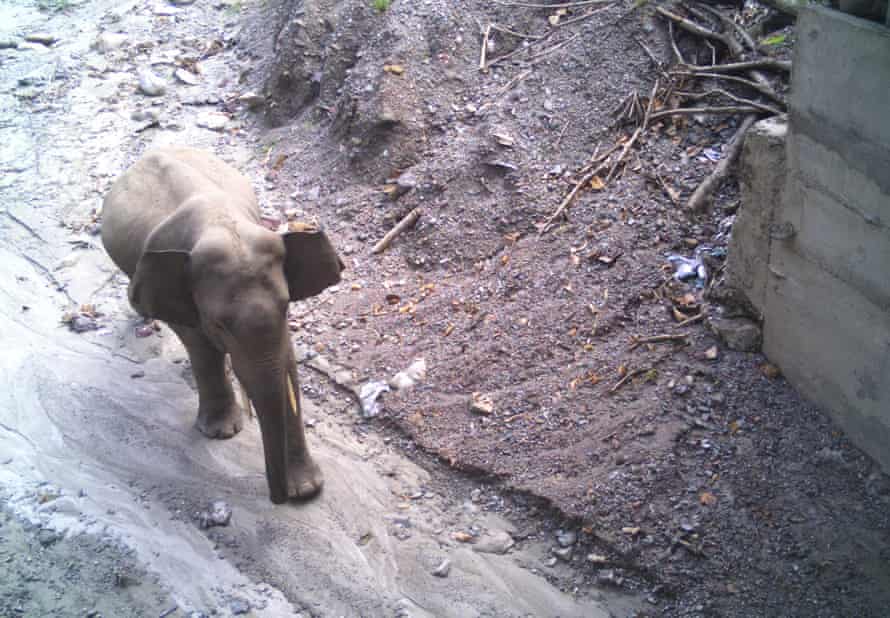
Nearly 700 Asian elephants roam Bhutan’s forest on the eastern edge of the Himalayas. The small Buddhist country sandwiched between China and India is known for its dramatic landscapes and environmental leadership, as one of the few carbon negative countries in the world. On the 183km east-west motorway, Bhutan’s first elephant underpasses were constructed to help the threatened animals move through the landscape.Monitoring from 2015 to 2017 found that 70 groups of elephants were recorded near the passes, with three-quarters passing through the structures.
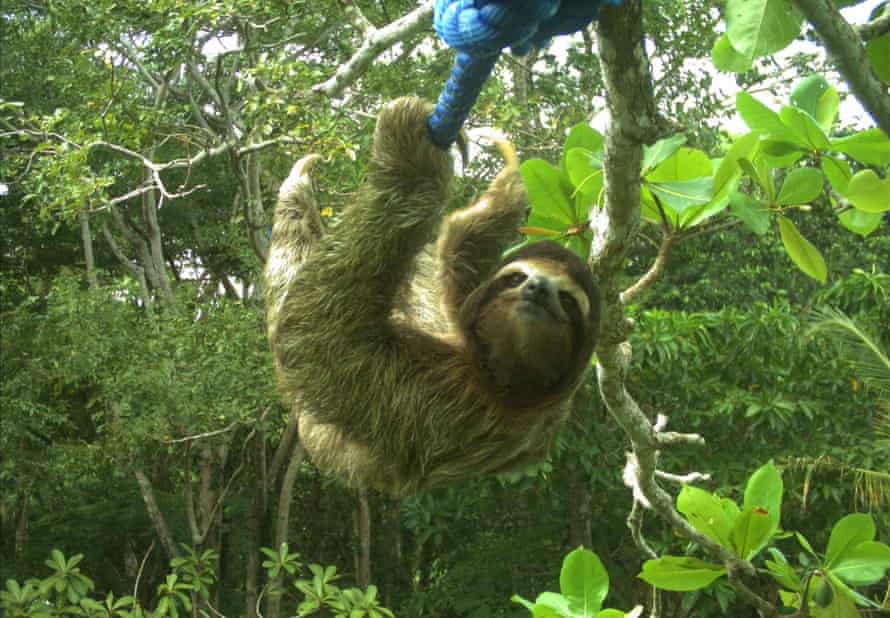
Wildlife passes are not always bridges or underpasses. In Costa Rica, canopy bridges are used to help sloths, monkeys and other wildlife cross roads to combat collisions, dog attacks and electrocutions on power lines. The rope bridges, which cost about $200 (£150), are installed by the Sloth Conservation Foundation in areas where rainforest has been interrupted by human development on the country’s Caribbean coast. Crossing roads is often deadly for the slow-moving creatures and the canopy bridges also help combat inbreeding. “People look at them and think that they’re so poorly equipped to survive because you see them crossing roads and trying to move around and they look so awkward and useless,” Rebecca Cliffe, head of the Sloth Conservation Foundation, told Bloomberg earlier this year. “But if you put them in a well-connected rainforest, then they are masters of survival.”
Find more age of extinction coverage here, and follow biodiversity reporters Phoebe Weston and Patrick Greenfield on Twitter for all the latest news and features
By Matthew Cappucci and Emily Schwing Yesterday at 12:47 p.m. EST|Updated yesterday at 4:17 p.m. EST
https://www.washingtonpost.com/weather/2021/12/28/alaska-record-temperatures-climate/
Imagine running a 5K and winning the race by 10 minutes. That’s analogous to what is transpiring in Alaska at the moment. An exceptional slew of records has tumbled in the wake of extreme warmth, with highs up to 45 degrees above average.
The anomalous warmth has also brought record moisture, with top-tier rainfall totals thanks to the air’s capacity to transport more humidity.
The ongoing spate of warmth is tied to a sprawling dome of stagnant high pressure banked southeast of the Aleutians in the northeastern Pacific. Reinforced by unusually warm ocean waters north of Hawaii, that high-pressure “heat dome” is inducing sinking air. That…
View original post 951 more words

By Staff ReporterDecember 27, 202133 Comments1067SHARE
 One of the trapped birds being released from the net (Cabs)
Two men, aged 41 and 51 have been arrested in connection with a case of illegal trapping and killing of wild birds in Zygi, following a complaint by anti-trapping activists.
The two were charged and released and are expected to appear before the Larnaca court.
According to police, a woman reported to the Zygi police that a man was attempting to trap wild birds in the area.
Police went to the scene and found two activists watching a man trying to trap the birds with nets.
Another man then arrived there who allegedly tried to intimidate the officer physically. This was the 51-year-old who then left with the other man.
Police issued arrest warrants for the pair and…
View original post 438 more words

BYRACHEL FRAZIN-12/26/21 05:55 PM EST30835Share to FacebookShare to Twitter
VIEW ALLhttps://imasdk.googleapis.com/js/core/bridge3.493.0_en.html#goog_21124030131 second of 15 secondsVolume 0%00:3302:06
With Sen.Joe Manchin(D-W.Va.) dashing Democratic hopes for major climatechange and environmental legislation, pressure is increasing on the Biden administration to take significant regulatory action.
The administration was already poised to impose stricter environmental rules, and has made progress reversing a number of Trump-era environmental rollbacks.
But, with the apparent end of the climate and…
View original post 753 more words
Over 5,000 migratory cranes die of virus, authorities warn of egg shortage as hundreds of thousands of infected hens are killedShare in FacebookShare in TwitterSend in e-mailSend in e-mailSaveSave article to reading listZen ReadPrint article

Water fowl in the Hula Nature Reserve area.Credit: Gil EliahuAdi HashmonaiGet email notification for articles from Adi HashmonaiFollowDec. 27, 2021 5:27 PMhttps://trinitymedia.ai/player/trinity-player.php?pageURL=https%3A%2F%2Fwww.haaretz.com%2Fisrael-news%2F.premium-thousands-of-cranes-die-of-bird-flu-in-israel-s-worst-blow-to-wildlife-in-history-1.10496965&subscriber=0&isDarkMode=0&unitId=2900001646&userId=346ee2e2-e51d-4731-93b1-a2067be26d4f&isLegacyBrowser=false&version=20211227_2f058fd7e68ff5fb03bc4902380f90ab98a29cbd&useCFCDN=0&themeId=190
Over 5,000 wild cranes have died of bird flu in northern Israel in what Environmental Protection Minister Tamar Zandberg called “the worst blow to wildlife in the country’s history” on Sunday.
Subscribe0:00– : –15Skip 15 seconds backwardsPlay audio15Skip 15 seconds ahead1XChange playback rate from 1 to 1.25Mute audio
Authorities declared the Hula Nature Reserve off-limits to the public a week ago over the outbreak. Some 25,000 cranes migrated to Hula Lake, along one of the world’s major bird migration routes, this year.
Rangers in hazmat suits have collected thousands of crane carcasses. Dozens of cranes were found to be sick around 10 days ago, and Israeli media outlets reported that children who visited the nature reserve may have touched an infected crane and thus contributed to the spread.- Advertisment –
In the nearby moshav of Margaliot, around 560,000 of its 570,000 egg-hatching hens have been infected and were slated to be culled by drowning or decapitation. Margaliot’s chicken coops provide 7 percent of all eggs consumed in Israel, and they are the main income source for most residents. Authorities were looking to import eggs from abroad and head off an egg shortage due to the cull.

Agriculture Ministry officials have already pledged to compensate residents for every destroyed chicken, but they say this only makes up part of the economic damage. Moshav residents say the process of sanitizing the coops takes about three to four months, only after which they’ll be able to restock them.
Israel Nature and Parks Authority officials believe there are dozens, if not hundreds, of cranes who have died across the Hula Valley, in addition to the thousands found so far.

Fearing further spread of the virus, authorities are set to close Route 886, a regional highway in the north, on Tuesday for ten days. Officials from the Upper Galilee Regional Council explained that the decision had been made at the request of the Agriculture Ministry, because the disease is so contagious. Just a few droppings from an infected bird that get picked up by a car can spread the deadly virus.
Previous


Next
27 Dec 2021 09:53PM(Updated: 27 Dec 2021 09:53PM)BookmarkWhatsAppTelegramFacebookTwitterEmailLinkedIn
JERUSALEM: An outbreak of avian flu has killed more than 5,000 migratory cranes in Israel, prompting authorities to declare a popular nature reserve off-limits to visitors and warn of a possible egg shortage as local poultry are culled as a precaution.
“This is the worst blow to wildlife in the country’s history,” Environment Minister Tamar Zandberg tweeted as rangers in hazardous material suits collected carcasses of cranes from the lake of northern Hula Nature Reserve and outlying marshes.
Hundreds of thousands of chickens had been culled, she said.
Israeli media said children who had visited the reserve may have touched a stricken crane and thus contributed to the spread of the flu. Authorities were looking to import eggs from abroad and head off an egg shortage due to the cull, the reports said.
CommentJames HockadaySunday 26 Dec 2021 11:44 am2.4kSHARES

A heartbreaking animation depicting the brutality of fox hunting has been released in a bid to expose how huntsmen still manage to get away with it.
Narrated by naturalist and campaignerChris Packham, the video claims legal trail hunts are used as a ‘smokescreen’ to cover up what’s really happening.
This ‘cruelty free’ version of hunting involvesdogschasing the scent of a fox, as opposed to the animal itself.
Fox hunting was outlawed in 2004, but campaigners argue trail hunting provides legal cover for it to continue as before.https://imasdk.googleapis.com/js/core/bridge3.493.0_en.html#goog_1440472999PauseNext video0:21Full-screenRead More
However, the Countryside Alliance insists it is a ‘lawful activity’, accusing ‘fanatics’ of making ‘ridiculous claims’ about the…
View original post 403 more words
Noga Tarnopolsky – 1h agoFollowReact61 Comments|87
Israel’s National Security Council has assumed control of a massive bird flu outbreak in the Galilee that scientists warn could become a “mass disaster” for humans.© Provided by The Daily BeastHadas Kahaner/Israel Nature and Parks Authority
Over half a billion migrating birds pass through the area every year, heading for the warm African winters or the balmy summers in Europe, meaning this is a catastrophic location for a major bird flu outbreak right at the nexus of global avian travel.
The virus is extremely deadly if it infects people. The World Health Organization says more than half of the confirmed 863 human cases it has tracked since 2003 proved to be fatal. Most strains or variants of avian flu, H5N1, are relatively difficult to transmit to people.
Yossi Leshem, one of Israel’s most renowned ornithologists told The Daily Beast, however, that it it the ability of these viruses to mutate into new strains which is such a threat, as we have seen with the coronavirus.Transfer Your Debt and Pay 0 Interest Until 2023AdCompareCards

“There could be a mutation that also infects people and turns into a mass disaster,” said Leshem, zoologist at Tel Aviv University and director of the International Center for the Study of Bird Migration at Latrun.
So far, at least 5,400 wild cranes have died infected with the new H5N1 avian flu, which Israeli authorities fear could expand into a global emergency.
Of the 30,000 Eurasian cranes passing this winter at the Hula reserve, 17 percent are dead, and scientists fear the worst for their surviving brethren, at least 10,000 of which appear to be ailing. The infection of the cranes is the same strain of avian flu which infested chicken coops throughout northern Israel, and led to the cull in recent days of nearly a million birds.
Israelis will be without their beloved chicken schnitzel—and without eggs—until a supply chain of imported birds is established.
The deaths of thousands of wild birds in the Hula Nature Reserve, one of the world’s premiere bird sanctuaries, “is an extraordinary event with global ramifications,” warned Tel Aviv University Professor of Zoology Noga Kronfeld Shor in an interview with Reshet Bet Radio.
Shor, who is also the chief scientist at Israel’s Ministry of the Environment, noted that the carcasses of other waterbirds, such as pelicans and egrets, have already been found.
Israelis have been cautioned not to come near any wild birds that look sick and not to touch any bird droppings.
Motro Yoav Motro, Director of Vertebrates and Locusts at Israel’s ministry of Agriculture, said that for now, H5N1 is presenting “like the opposite of COVID. Compared to COVID, the chances of [humans] catching this are very, very slight—but unlike COVID, the risks of dying from it if you do catch it are very high.”
“It is a tragic ecological event,” he said. “And we simply do not know how it will end, or where it will lead.”
Israeli scientists don’t yet know the full scale of the die-off in Israel because of the dangers inherent in fishing around marshes and wetlands while keeping safe from any possible infection. Observing birds that shy away from human contact and the urgent matter of retrieving bird carcasses is proving even more challenging because of the lack of waterproof protective gear currently available in the generally arid country.
While the disaster is evident in the Hula Valley, in Israel’s fertile north, crane mortality has also been observed in other sites, though not yet in Jerusalem, according to Yotam Bashan of the Jerusalem Bird Observatory.
“There is no way to know what is going to happen,” Motro said, in an interview with The Daily Beast. “When you identify avian flu in chicken coops you kill all the chickens and disinfect the coops. In the wild, at this level of infection, I don’t know where it will lead. I’m worried.”
Shalom Bar Tal, an experienced wildlife photographer, told The Daily Beast that he was one of the only people allowed nighttime access to observe the dead and dying birds.. It could turn into an ecological disaster no less significant than the corona epidemic,” he said.
For now, no Israeli has been known to be infected by H5N1, but Israelis who were exposed to wild birds are taking the antiviral Tamiflu.
Both Motro and Bar Tal noted the heartrending scenes of weak, infected cranes leaning over their dead. Cranes mate for life and live in strong family units, Motro said. “That means that when one dies, the rest of the family—I don’t know how to define it—but it mourns.”
The cranes’ close physical proximity to each other and tightly knit family structure almost ensures, he said, that when one crane dies, “a close family member will be the next to die.”
“There is no treatment,” he said, “no way to help.”
We can only hope it doesn’t mutate and jump species.

HELENA, Mont. – The closing date for public comment on the 2022/2023 hunting regulation proposals has been extendedfrom Jan. 14 to Jan. 21.
Montana Fish, Wildlife and Parks (FWP) says this is a second opportunity to provide input on the draft regulation proposals.
Biologists with FWP offered regulations proposals based on science that combine some hunting districts, reduce some license and permit types and eliminate hunting district portions.
You can view the proposals and provide commentsonline here. Comments can also be submitted by email tofwpwld@mt.gov.
Season-setting meetings are also being held by FWP around the state to discuss the draft hunting regulations with interested members of the public.
FWP says biologists will present information on the…
View original post 58 more words


