Most of the time, it’s the uninitiated who get themselves stuck in tricky nature situations, but even experienced outdoorsmen can find themselves in sticky situations.
Stratham Fire Department responded. After assessing the situation, they called for backup from neighboring departments equipped with boats and were able to rescue all three within about an hour, according to New England Cable News.
“Stratham Fire was called on this afternoon to help find and rescue two hunters and a dog stuck in the mud flats at low tide in the area of Chapman’s landing,” their post read.
“Stratham Crews we’re assisted by Newfields and Newmarket Fire departments with their boats to help locate the hunters. Crews utilized ladders and other hand equipment to reach the hunters and extricate them from the mud and marsh.
“It was a dirty job but it ended without injury for all involved. Rescues like this are just another example of how our volunteers continue to assist our citizens in need.
“Newfields and Newmarket responded with our boats yesterday to assist Stratham with a hunter stuck in the mud in the area of Chapman’s Landing,” Newfields posted.
The photos show just how treacherous the muddy banks were and how muddy the rescuers got. One photo shows a fireman holding the dog, who is also coated in mud and even looks a bit embarrassed.Advertisement – story continues below
Thankfully the firefighters were able to rescue the trio, but the hunters will probably be a little more careful the next time they visit the area to avoid another such public rescue.
Image caption,Parker must always keep its heatshield pointed at the Sun, this artwork shows
The US space agency (Nasa) is calling it a historic moment – the first time a spacecraft has flown through the outer atmosphere of the Sun.
The feat was achieved by theParker Solar Probe, which dipped, for just a short while, into a region around our star that scientists call the corona.
It occurred in April, but the analysis of data has only now confirmed it.
Parker had to withstand intense heat and radiation but gathered new insights on how the Sun works.
“Just as landing on the Moon allowed scientists to understand how it was formed, touching the Sun is a gigantic stride for humanity to help us uncover critical information about our closest star and its influence on the Solar System,” said…
Researchers used radiocarbon dating of eye proteins to determine the ages of 28 Greenland sharks, and estimated that one female was about 400 years old. The former vertebrate record-holder was a bowhead whale estimated to be 211 years old.
As lead author Julius Nielsen, a marine biologist from the University of Copenhagen, put it: “We had our expectations that we were dealing with an unusual animal, but I think everyone doing this research was very surprised to learn the sharks were as old as they were.”
Greenland sharks swim through the cold waters of the Arctic and the North Atlantic at such a sluggish pace that has earned them the nickname “sleeper sharks.” Image credit: Julius Nielsen
Greenland sharks are huge and can grow up to 5m in length. Yet, they grow at just 1cm a year. They can be found, swimming slowly, throughout the cold, deep waters of the North Atlantic.
A newly tagged Greenland shark returns to the deep and cold waters of the Uummannaq Fjord in western Greenland. Image credit: Julius Nielsen
The research was made possible, in part, by the atmospheric thermonuclear weapons tests conducted during the 1960s, which released massive amounts of radiocarbon that were then absorbed by organisms in ocean ecosystems. Sharks that showed evidence of elevated radiocarbon in the nucleus of their eye tissue were therefore born after the so-called “bomb pulse,” and were younger than 50 years old, while sharks with lower radiocarbon levels were born prior to that, and were at least 50 years old or older, the study authors wrote.
The scientists then calculated an age range for the older sharks based on their size, and on prior data about Greenland sharks’ size at birth and growth rates in fish.
A Greenland shark near the ocean surface after its release from research vessel Sanna in northern Greenland. Image credit: Julius Nielsen
According to the results of the analysis – which has a probability rate of about 95 percent – the sharks were at least 272 years old, and could be as much as 512 years old (!) with 390 years as the most likely average life span, according to Nielsen.https://www.youtube.com/embed/hz2HBk5sKlc?feature=oembed&enablejsapi=1
Pierre, SD, USA / DRGNewsJody HeemstraDec 13, 2021 | 7:43 AM
FARGO, N.D. (AP) — Federal prosecutors have recommended no jail time for a Wisconsin man who smuggled a bear carcass from Canada into North Dakota. The Wisconsin hunter brought the bear from Canada after exceeding a limit in Manitoba by killing two bears in the same year, KFGO-AM reported. The man pleaded guilty to Unlawful Transportation of Wildlife in Foreign Commerce, which carries a maximum sentence of up to one year in prison and a $100,000 fine. However, prosecutors have asked a federal judge to sentence him to one year of unsupervised probation and pay a $5,000 fine.
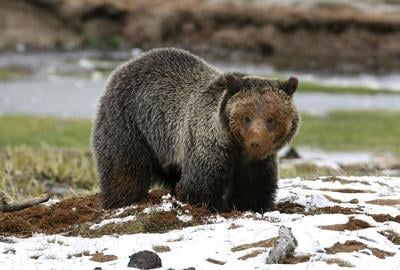
HELENA, Mont. – Wolf trapping season is being delayed due to grizzly bear activity.
A “floating” starting date for wolf trapping in areas with grizzly bears was adopted to the 2021 wolf trapping regulations.
Grizzly bear activity is assessed outside of dens to determine the potential for trapping conflicts, which determines when the start date for wolf trapping in affected areas according to Montana Fish, Wildlife and Parks (FWP).
With the adoption, wolf trapping in areas with grizzly bears will start no earlier than the Monday after Thanksgiving, and no later than Dec. 31 depending on grizzly activity.
“FWP biologists have monitored grizzly bear activity with a variety of methods through November, and now into December,” FWP Director Hand Worsech wrote. “This includes monitoring collar data, sightings of bears in the field, weather assessments, and reports from the public.”
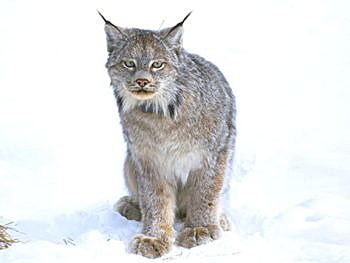
(CN) — Several conservation groups filed lawsuit in Idaho this month seeking to block the state’s new wolf-trapping laws, alleging Endangered Species Act violations because they will lead to injury and death among protected grizzly bears and Canada lynx.
Several conservation groups asked a federal court in Idaho Monday to block the state’s new wolf-trapping laws, which they claim will lead to injury and deaths among federally protected grizzly bears and Canada lynx.
Republican Governor Brad Little approved new rules in May that create a permanent wolf-trapping season on private property, get rid of limits on how many wolves a person can kill and authorize funding for the state to hire private contractor killings of wolves. Night-vision equipment, bait, dogs and motor vehicles are also allowed for use in hunting.
Lawmakers estimated the measures could lead to the killing of 90% of the state’s 1,500 gray wolves and said the state could whittle the number down to 150 before their population could be managed by federal authorities, according to The Associated Press. Hunters and the ranching sector backed the legislation.
The new rules do little to reduce risk of harm to grizzly bear and lynx, the new lawsuit alleges. The conservation groups said five lynx have been reported as trapped in Idaho since the 2011 to 2012 trapping season, including one in a wolf trap in 2014, while two grizzly bears were killed in incidents involving wolf snares in 2020.
“It’s sickening that Idaho has approved what amounts to unregulated hunting and trapping in an effort to wipe out its wolf population,” Center for Biological Diversity senior attorney Andrea Zaccardi said in a statement. “Other animals, like federally protected grizzly bears and lynx, will be injured or die in these cruel traps and snares. The state’s disregard for all of their lives is outrageous and unacceptable.”
The conservation groups, including the Center for Biological Diversity and the Sierra Club, provided the state a 60-day notice of their plans to file a lawsuit.
Earthjustice filed the 23-page complaint on behalf of the groups asking for a temporary restraining order to stop wolf trapping in grizzly bear and lynx habit during legal proceedings. Wolves are found in about two-thirds of the state.
The lawsuit names Little, the director of the Idaho Department of Fish and Game and members of the Idaho Fish and Wildlife Commission as defendants.
“Unfortunately, we’ve already seen grizzly bears caught and killed in wolf snares in Idaho. Expansion of wolf baiting, trapping and snaring in grizzly bear habitat will not only decimate the states’ wolf population but will result in more dead grizzly bears,” Bonnie Rice, the Northern Rockies senior campaign representative for the Sierra Club, said in a statement. “Idaho’s grizzly bear population remains small and vulnerable, and policies that threaten its full recovery cannot be allowed to stand.”
Montana also moved to expand wolf hunting earlier this year. Seven grizzly bears have been caught in wolf or coyote traps since 2010 and four lynx have been reported trapped since the 2011 to 2012 trapping season.
Idaho began reintroducing wolves in the mid-1990s and managed its wolf population from 2006 to 2010. Congress passed legislation in 2011 ending wolves’ protected status in Montana, Idaho, eastern Washington, eastern Oregon and north-central Utah and turning population management over to those states.
The Trump administration fully removed federal protections for wolves and the Biden administration has signaled it does not have plans to reinstate them.
“I’m appalled by the state of Idaho’s betrayal of its agreement to manage wolves ‘exactly like we manage black bears and mountain lions,’” Suzanne Asha Stone, a member of the reintroduction team in the 1990s and a director of the International Wildlife Coexistence Network, said in a statement. “Idaho is exterminating wolves not managing them and they don’t care that other species such as lynx and grizzly are also being impacted because of their obsession to persecute wolves.”
(Photo supplied/Indiana Department of Natural Resources)
A hunter is hospitalized with hypothermia after his boat sank on Webster Lake in Kosciusko County.
It happened on Saturday, Dec. 11.
D.N.R. officers say a 27-year-old Milford man and a 27-year-old Warsaw man were hunting waterfoul when large waves overtook their boat.
The two men used decoys and a floating gun case to swim back to shore in the frigid water.
The Milford man was unresponsive when they got to shore.
Indiana Conservation Officers remind the public that Indiana law requires life jackets to be readily accessible and in good condition for all boat occupants while underway. Hunters utilizing watercraft should also plan for severe environmental conditions
While an earlier study projected bacon prices soaring by up to 60 percent in California, another report estimated pork prices rising eventually by a more manageable 8 percent.
A hog walks in a holding pen on the Ron Mardesen farm, on Dec. 2, 2021, near Elliott, IowaCharlie Neibergall / AP fileDec. 13, 2021, 5:08 AM PST / Source: Associated PressBy The Associated Press
The lawsuit is the latest step in a tumultuous three-year process of enacting rules overwhelmingly approved by voters but that remain in question even as the law is set to begin. Since voters approved Proposition 12 by a 2-to-1 ratio in November 2018, state officials have missed deadlines for releasing specific regulations covering the humane treatment of animals that provide meat for the California market.
Most hog producers haven’t made changes to comply with the law. And now a coalition of business owners is seeking more than a two-year delay.
“We’re saying this is not going to work,” said Nate Rose, a spokesman for the California Grocers Association.
While groups are working to delay the measure, the state has eased the transition to the new system. It has allowed pork processed under the old rules and held in cold storage to be sold in California in 2022, which could prevent shortages for weeks or even months.
As Josh Balk, who leads farm animal protection efforts at the Humane Society of the United States, put it, California residents need not fear “pork industry claims of the apocalypse.”
Put simply, the law requires that breeding pigs, egg-laying chickens and veal calves be given enough space to stand and turn around. For pigs, that means they no longer can be kept in narrow “gestation crates” and must have 24 square feet of usable space.
Niman Ranch Pork Company founder Paul Willis, left, talks with Iowa hog farmer Ron Mardesen on his farm, on Dec. 2, 2021, near Elliott, Iowa. Charlie Neibergall / AP file
Producers of eggs and veal appear able to meet the new law, but hog farmers argued the changes would be too expensive and couldn’t be carried out until the state-approved final regulations for the new standards. An estimate from North Carolina State University found the new standard would cost about 15% more per animal for a farm with 1,000 breeding pigs.
The National Pork Producers Council has challenged California’s right to impose standards on businesses in other states, but so far those efforts have failed.
California is the nation’s largest market for pork, and producers in major hog states like Iowa provide more than 80 percent of the roughly 255 million pounds that California’s restaurants and groceries use each month, according to Rabobank, a global food and agriculture financial services company.
Without that supply, it’s unclear if a state that consumes about 13 percent of the nation’s pork supply will have all the meat it demands. The North American Meat Institute, an industry group, said packers and processors “will do their best to serve the California market.”
“What will happen in California? I don’t know,” said Michael Formica, the general counsel for the National Pork Producers Council. “One thing we know is there will be finite supplies to sell there.”
Adding to the uncertainty is the lawsuit filed last month in Sacramento County by the California Grocers Association, California Restaurant Association, California Hispanic Chambers of Commerce, California Retailers Association and Kruse & Sons, a meat processor. The suit seeks a 28-month delay until final regulations for the enforcement of the rules are officially adopted.
California’s agriculture and health departments have said the voter-backed measure didn’t give them enough time to approve final regulations. The agencies were still accepting public comments for revisions in December. That means it could be months before final rules are approved.
Given that delay, the groups claim in the lawsuit that they can’t be sure they’re complying and could be subject to penalties stipulated in the law.
“Our concern is the uncertainty,” said Rose, of the grocers association. He said a judge has scheduled a hearing for March, but the group is pushing for an earlier date.
If the law takes effect Jan. 1, it’s possible the state could avoid immediate shortages or steep price increases because the industry has about 466 million pounds of pork in storage. Not all of that meat can be sent to California, of course, but when combined with new supplies from processors that meet the new standards, it should meet at least some of the demand.
If there is a disruption, it “would be significantly smoothed,” said Daniel Sumner, a professor at the University of California-Davis, who teamed with colleagues to study the price and supply implications of Proposition 12.
While an earlier study projected bacon prices soaring by up to 60 percent in California, a UC-Davis report estimated that the uncooked pork prices rising eventually by a more manageable 8 percent in California.
Massachusetts has approved a similar animal welfare law that takes effect next month, but state lawmakers are considering a one-year delay because of supply concerns.
The accuracy of the California estimates could depend on how many farmers adopt the new standards and how long the transition takes.
Iowa farmer Ron Mardesen already meets the California standards, and for much of the year gives sows free rein to roam through large areas of his farm about 100 miles (160 kilometers) southwest of Des Moines.
With so much room, “They’re like a bunch of big, old sisters,” he said. “You can tell they’re happy. No one is squealing or crying.”
Chris Oliviero, general manager of Niman Ranch, a specialty meat company in Westminster, Colorado, said he hopes California’s new rules help change a system he calls “lower cost at any cost.” Although Niman charges more for its pork, he said he hopes the new California rules help limit the environmental consequences of large-scale animal agriculture.
“There is volatility in the markets, so I understand the fears that comes with that, but I also think most large agricultural companies have shown that when they put their mind to it they’re very capable of solving complex problems,” Oliviero said.
Most euthanized after becoming habituated to people and garbage, after drought blighted natural food sources
Janella Hamilton · CBC News · Posted: Dec 10, 2021 7:15 AM PT | Last Updated: December 10
A bear eats from an apple tree in Elkford, B.C., north of Fernie. (Rideout Photography)
70 comments
More than 30 bears have had to be euthanized in the Elk Valley region of British Columbia this year, most of them after becoming habituated to people, conservation officers say.
In one of the worst years for human-bear conflicts in the East Kootenay, 17 black bears were killed around Sparwood, B.C., while 12 black bears and two grizzly bears were put down in the Fernie area, according to staff at the B.C. Conservation Officer Service.
“Several bears were injured on the highway and had to be euthanized, but the majority of cases were bears who had become habituated to human food sources and were showing levels of aggression toward people,” said Ryan Gordon, a conservation officer in Fernie, B.C.
Gordon says euthanizing a bear is not an easy decision or one officers take lightly.
Several bears had to be euthanized after being injured on Highway 3. (Darryn Epp)
“It’s on a case-by-case basis. It depends if the bear is causing property destruction, risk to community safety or showing increased levels of habituation and is not scared of people. When those factors are there, then we have to interfere,” he said.
Those factors cropped up frequently in 2021, Gordon says.
“It’s been a number of years since we’ve had to deal with this many bears … but it’s usually based on environmental factors such as food availability.”
Most black and grizzly bears hibernate from four to six months starting in November or December. But Clayton Lamb, a wildlife scientist, says because of the summer drought and mild fall temperatures, some of these bears are still actively searching for food before they tuck themselves in for the winter.
“It was a really bad year for huckleberry crops, and that’s typically a really important food source for grizzly bears and black bears,” Lamb said.
“When bears find food waste … those specific bears will stay out much longer than bears eating natural foods.”
Lamb, who studies bear behaviour, says rehabilitation is difficult once a bear finds a high-calorie human food source, and those bears often end up being euthanized.
Clayton Lamb is a wildlife scientist in Fernie, B.C. (Laura Smit Photography)
Co-existence challenge
Conservation officers say there are laws surrounding feeding bears, whether that’s done intentionally or unintentionally.
“Every individual has a responsibility to ensure that they don’t have any attractants left out for bears, whether that be garbage, fruit or berry bushes — anything that is ripened and ready to be picked, needs to be picked,” said Gordon.
He says people who inadvertently leave food out will be issued an order to clean it up. Those who intentionally leave food out for bears will be ticketed under the B.C Wildlife Act and will most likely be prosecuted in court.
Lamb says this year’s spike in bear euthanization illustrates a continuing co-existence challenge in the Elk Valley.
He would like to see more provincial support and programs aimed at improving access to mitigation measures.
A bear sits by railroad tracks in Fernie, B.C. (Darryn Epp)
“We have no comprehensive co-existence program in the province. These issues will likely persist if we do not start investing in innovative solutions. Electric fencing is cost-effective and a powerful tool to protect things like livestock.”
Lamb also suggests using more bear-resistant garbage bins and removing unused fruit-bearing trees.
Here, with what is still seen as one of the greatest animal rights speeches of all time, is Professor Tom Regan (1938 – 2017) who opened the debate “Does the Animal Kingdom Need a Bill of Rights” at the Royal Institute of Great Britain in 1989.
I have lost count of how many times I’ve listened to this over the years. The talk is as spellbinding as it is quotable, but I couldn’t find an accurate transcript. I therefore decided to transcribe it myself, so the punctuation and emphases are mine.
It is truly astonishing and also rather tragic to find how timeless it is. Sadly, as we go through his ‘question and answer’ responses to the opponents of Animal Rights, we find the same tired old justifications are STILL being used. The difference is that the sheer number of our species’ victims is escalating year on year, so as…