It’s time to make fur farming history. Tens of thousands of mink and other fur-bearing animals are purpose-bred, raised and then killed for the use of their fur.
The issue of fur farming is more than an “animal rights” issue as it concerns the inextricable linking of human, animal and environmental health. The viral storm caused by Covid-19 exposed these overlapping interspecies vulnerabilities. Minks are vulnerable to SARS-CoV-2, the virus that causes COVID-19, and the virus can jump the species barrier to transmit to humans. Repeated outbreaks of Covid-19 at commercial mink farms in B.C., Europe, the U.S.A., and other parts of the world have spotlighted this cruel and unnecessary industry. Millions of minks have been killed attempting to stop the viral spread, and breed bans have now been put in place in many countries in the E.U. and beyond.
Several voices, including The Suzuki Foundation, The Union of British Columbia Indian Chiefs (UBCIC), Humane Societies, infectious disease physicians, and the Fur-Bearers, have been calling for the closure of the commercial fur farming industry. A recent article by Humane Society International outlined some of the main reasons. Canadian infectious diseases specialist Dr. Hajek was quoted: “Given the very real threat of viral mutations and the transmission of virus between animals and people in these facilities, the B.C. Government should now act decisively, prohibit and end industrial fur farming in the interest of public health and animal welfare.”
Kelly Butler, of H.S.I./Canada, stated, “The world community is taking urgent action to end fur farming because it is inherently inhumane, environmentally destructive, and poses a grave public health risk. More than 20 countries have already stopped fur farming within their jurisdictions. The B.C. government must follow the lead of these nations and end this cruel, high risk, outdated and needless industry.” Dr. Dubois, BC SPCA Chief Scientific Officer, stated, “fur farming exists in direct opposition to the values of British Columbians. The continuation of this industry would present unacceptable outcomes for both animals and people.” Grand Chief Phillip, president of the UBCIC, stated, “We are renewing our call for an end to fur farming in B.C. This industry not only goes against Indigenous values of wildlife stewardship and conservation but also has proven to be an unmanageable threat to public health.”
Are there some checks and balances under Canadian law? There are some laws and codes of practice, but many argue they do not go far enough. In BC, for example, the statute to regulate the fur farm industry is the Animal Health Act and Fur Farm Regulations. The act defines:
“fur bearing animal” means a chinchilla, fisher, fox, marten, mink or nutria;
“fur farm” means a place where two or more fur bearing animals are kept in captivity with the intention of breeding the animals, or producing pelts, for commercial purposes
Part 3 — Health of Fur Bearing Animals — Health management plan states:
7(1) A licensed fur farmer must
(a) establish a health management plan in accordance with subsection (2) for the fur bearing animals kept on the fur farm, and (b) ensure that all operators on the fur farm implement all protocols and procedures contained in the plan.
On July 6, 2021, a novel type of lawsuit concerning fur farming was filed in B.C. Supreme Court on behalf of the Fur Bearer’s. David Wu, of Arvay Finlay, one of the lawyers for the case (I am co-counsel), outlined the case in a nutshell: “The Fur-Bearer’s have launched a judicial review challenging the renewal of a fur farm licence to B.C.’s only chinchilla fur farm. The basis of the judicial review is that the licence was renewed with no animal health management plan in place. A health management plan is a requirement under the applicable regulation. The government does not dispute that there was no fur farm licence in place. Rather, it appears that the main arguments the government will advance are that the petitioners lack public interest standing and the issue is moot because the government is now working to address the lack of a health management plan. As such, whether the government can be held accountable over how it follows and enforces the regulatory scheme will likely become front and center in this case.” We expect this animal law case will go to a hearing later this year. (For further details, please see B.C. taken to court over chinchilla fur farm licence in Vancouver Is Awesome).
On July 21, 2021, under the Public Health Act, S.B.C. 2008, a moratorium was ordered on new B.C. mink farms and capped existing fur farms due to Covid-19. All provinces should follow suit, and funding programs that support the commercial fur farming industry, proven to be a threat to health, should be stopped.
A 2020 public opinion poll showed that 81 per cent of Canadians are opposed to killing animals for their fur. The overarching question is, why do we continue to allow fur farming now that the facts are in and the science is clear? The law needs to catch up by rapidly phasing out the industry and provide retraining to fur farmers. Big-name fashion houses have taken fur off their designer menus, including Prada, Gucci, Coach, and others, demonstrating an understanding of consumer demand for fur-free fashion.
Consumer appetite for using the fur coats of animals for human vanity has shrunk in the face of humane education. The killing of animals for their fur, for fashion is not socially or morally acceptable and needs to be banned. We are overdue in Canada to bring the anachronistic commercial fur farming industry to a swift close.
The Canadian Legal Newswire is a FREE newsletter that keeps you up to date on news and analysis about the Canadian legal scene. A separate InHouse Edition is delivered on a regular basis, providing targeted news and information of interest to in-house counsel.
Crews set a backfire in an effort to gain control of the massive Caldor fire near the Tahoe basin in California on Aug. 26.Ty O’Neil/SOPA Images/LightRocket/Getty Images
Through fires and hurricanes, through lethal heat waves and flash floods, the world seems to be ending — or at least, that’s what it feels like.
All around us, we’re seeing the effects of climate change.Wildfiresare raging through the West. Much of southeast Louisiana was flattened byHurricane Ida, and parts of New York and New Jersey are digging out from disastrous flooding.
And if it seems like natural disasters are happening more and more often, that’s becausethey are: Climate change has helped drive a fivefold increase in the number of weather-related disasters in the last 50 years. Climate change means disasters arehappening simultaneously…
A screenshot of Dr. Nicole Linder, chief hospitalist for OSF St. Francis Hospital Medical Group in Escanaba, Michigan. Linder spoke to reporters during a virtual press event Thursday, Sept. 9, about her experience working with COVID-19 patients and the importance of getting vaccinated to reduce risk of severe illness and death.
Dr. Nicole Linder has cared for countless COVID-19 patients throughout the pandemic, but one “very special patient” was on her mind as she spoke with reporters Thursday, Sept. 9, about the need to get more Michiganders vaccinated.
Linder, who serves as chief hospitalist for OSF St. Francis Hospital Medical Group in Escanaba, said she has cared for a patient named Kathy for the last three weeks, who had “refused the vaccine adamantly” before contracting COVID-19.
The woman voiced regret upon being admitted, and spent her time in the hospital calling friends and family who, like her, had refused to be vaccinated. Linder said Kathy convinced at least six people to get the shot before her condition worsened and she was sent home to spend her final days in hospice care with her family.
“It was too late for her,” Linder said. “Despite everything that could possibly be done for her, she’s going to lose her battle and lose her life. And she’s vivacious and gregarious and just a wonderful person and this did not have to happen. Her family didn’t have to lose her.”
The Upper Peninsula doctor spoke Thursday about her experience with COVID-19 patients in recent months, the vast majority of whom have declined to get vaccinated and wound up seriously ill from a coronavirus infection. In Delta County, where she works, 53% of residents had gotten a first shot as of Sept. 8, and 57% were fully vaccinated.https://83ac4b141531a7c646a1dcb2adbc8ec8.safeframe.googlesyndication.com/safeframe/1-0-38/html/container.html
“I’m fatigued, and I am heartsick and I’m tired of watching people suffer needlessly and die of a disease that could have been prevented by a simple and safe and effective vaccine,” Linder said. “I don’t want to watch my patients’ families suffer with the grief of this and also the guilt if they played some role in their family member’s decision not to be vaccinated.”
One of the most common reasons she hears for why people didn’t get vaccinated was because they “don’t want to inject some untested or foreign substance into their body.”
“I don’t think that people realize that if they do become ill enough to be hospitalized, they’re going to be injected with a lot of foreign substances and most of them less proven than the COVID vaccine,” she said. “… I think people overestimate the effectiveness of the treatments that we have for COVID in comparison to the vaccine.”
Pfizer’s two-dose vaccine has been granted full approval for use by the U.S. Food and Drug Administration for individuals 16 year and older. Additional vaccines by Moderna and Johnson & Johnson offer similar protection against severe COVID-19 illness, and have received emergency use authorization following clinical trials and review by an independent advisory committee made up of vaccine and disease experts.
“The best treatment for COVID is to never get it in the first place,” Linder said. “There really aren’t any miracle cures, despite what some of the media figures have led the public to believe.”https://83ac4b141531a7c646a1dcb2adbc8ec8.safeframe.googlesyndication.com/safeframe/1-0-38/html/container.html
As of Tuesday, Sept. 7, about 61% of Michigan residents 12 and older had gotten a first dose of vaccine, and 56.2% had been fully vaccinated. Vaccination rates remain higher among those 50 and older, with the lowest rates coming from teens and those in their 20s and 30s.
Vaccines are readily available at local pharmacies, health systems, clinics, and health departments. To find a vaccine near you, visit Michigan’s COVID-19 vaccine website or go to VaccineFinder.org.
Each week, we answer frequently asked questions about life during the coronavirus crisis. If you have a question you’d like us to consider for a future post, email us atgoatsandsoda@npr.orgwith the subject line: “Weekly Coronavirus Questions.” See an archive of our FAQshere.
We’ve been answering coronavirus questions from our audience for over a year, but this past week, I had some questions of my own. While on vacation with my family, I encountered four tricky COVID-19 situations. I really wanted an expert’s advice.
So I interviewed three COVID-19 specialists:Charlotte Baker, an assistant professor of epidemiology at Virginia Tech;Abraar Karan, an infectious disease doctor at Stanford University; andJill Weatherhead, an assistant professor of adult and pediatric infectious diseases at Baylor College of Medicine. Here’s what they had to say…
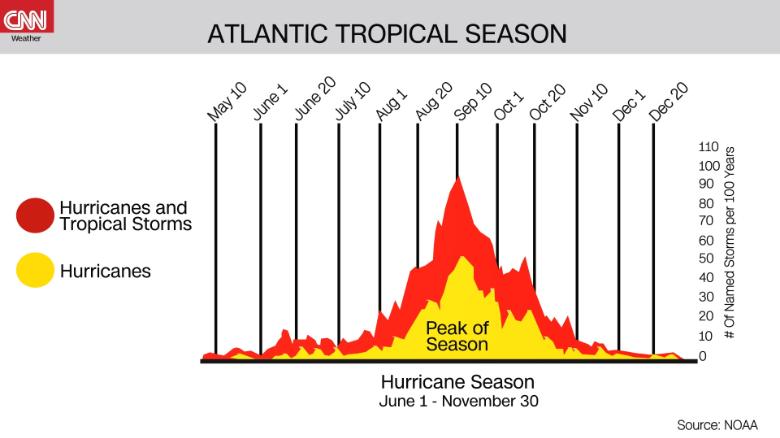
(CNN)Friday is the statistical peak of hurricane season, yet a monster named Larry is forecast to transform into a winter storm that will deliver feet of snow in Greenland.Yes, you read that correctly. A hurricane producing feet of snow. It’s been a crazy year for tropical systems already, so why not?This year is already ahead of pace in terms of storms, with 13 named. On average, we don’t see 13 named storms until theend of the season.
Hurricane-force winds arenot uncommonin Greenland, but hurricanes that bring significant snow are.
Feet of snow for Greenland
Hurricane Larry is forecast to slide up the east coast of Greenland this weekend. When it gets there, it will have sustained winds around 60 to 70 mph, with gusts as high…
Humans have already warmed the planet by at least 1 degree Celsius by burning fossil fuels that spew heat-trapping gases into the sky. The oceans are rising, and deadly disasters like wildfires, heat waves, and flooding are becoming more destructive. Almost every part of the world is experiencingthe effects of climate change.
That much is “unequivocal,” according to thelatest reportfrom the Intergovernmental Panel on Climate Change (IPCC), an international team of scientists convened by the United…
More comfortable with rounding up lost dogs and rescuing kittens from trees, a team of animal control officers in Maryland’s second-most-populous county is wrestling with an unprecedented challenge: how to catch a dazzle of free-roaming zebras.
Five of the animals broke free from a private farm in Prince George county more than a week ago and have been roaming neighbourhoods south of Upper Marlboro in a search of food.
“You can’t hunt them down. They’re just too fast, they run, they won’t let you get near them,” Rodney Taylor, chief of Prince George county’s animal services department, told the ABC affiliate WJLA news.
“We do have a feeding station set up, and we’re winning their confidence. They are eating there every morning between 2am and 4am.”https://platform.twitter.com/embed/Tweet.html?creatorScreenName=richlusc&dnt=true&embedId=twitter-widget-0&features=eyJ0ZndfZXhwZXJpbWVudHNfY29va2llX2V4cGlyYXRpb24iOnsiYnVja2V0IjoxMjA5NjAwLCJ2ZXJzaW9uIjpudWxsfSwidGZ3X2hvcml6b25fdHdlZXRfZW1iZWRfOTU1NSI6eyJidWNrZXQiOiJodGUiLCJ2ZXJzaW9uIjpudWxsfSwidGZ3X3NwYWNlX2NhcmQiOnsiYnVja2V0Ijoib2ZmIiwidmVyc2lvbiI6bnVsbH19&frame=false&hideCard=false&hideThread=false&id=1435675637289738244&lang=en&origin=https%3A%2F%2Fwww.theguardian.com%2Fus-news%2F2021%2Fsep%2F10%2Fzebras-escape-maryland&sessionId=f58ff6ff7b7751631f68bada4cd47f30d2faca2f&siteScreenName=guardian&theme=light&widgetsVersion=1890d59c%3A1627936082797&width=550px
“If you spook them, you’re just pushing them further out. And that’s when it can get dangerous, they can get out on the highway. Things can happen,” he added.
The zebras, part of a larger herd of 39 that reportedly arrived from Florida at the private farm in Upper Marlboro last month, broke free from their enclosure just over a week ago.
The farm’s owner, identified by Taylor as Jerry Holly, has not responded to media requests for comment, but is licensed to keep exotic animals, according to US Department of Agriculture records.
According to WJLA, the farm also had black-handed spider monkeys, dromedaries, mandrills, red kangaroos, brown lemurs, capybaras and gibbons as recently as 2018.
Residents who have spotted the zebras have been reporting their location to animal services, Taylor said.
Alexa Curling, who lives in the Marlton neighbourhood, recorded a video clip of the animals wandering near her house. Her sister Layla, 10, told WJLA she spotted them from an upstairs window and called out to her mother, who did not believe her.
“I thought it was a deer for about three seconds, and then I noticed it was actually a zebra. She said I was crazy and stuff. She believed me after we looked out the bathroom window,” she said.
Taylor said of the creatures: “They won’t attack you [but] please do not try to corner them or try to catch them. They’re not used to being handled by humans, so they will kick. Zebras do bite.”
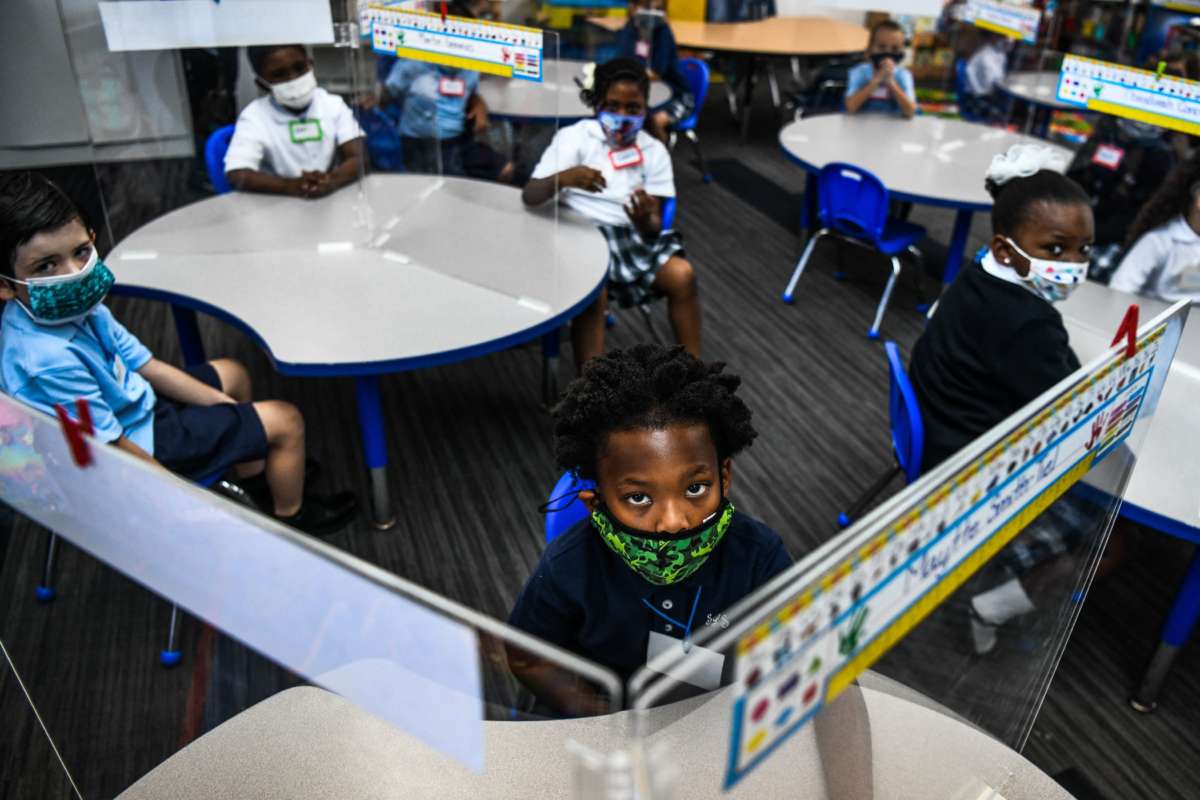
Students wear face masks as they attend their first day in school after summer vacation at the St. Lawrence Catholic School in North Miami, on August 18, 2021.
A woman looks at options for the mifepristone abortion pill on May 8, 2020, in Arlington, Virginia, after her home state of Texas temporarily banned abortions in March 2020. Having split with her boyfriend, she decided to buy pills on the internet and perform her own abortion at home.
As Texas’s remaining 15 abortion clinics grapple with the fallout of last week’s implementation of the nation’s most restrictive anti-abortion law, which now allows private citizens to sue anyone who “aids or abets” a person seeking an abortion after six weeks, at least three facilities in San Antonio have stopped offering the procedure to avoid lawsuits.
With access to the procedure shrinking rapidly even for Texans under six weeks, pregnant people without the ability or resources to travel out of state, especially undocumented Texans, rural Texans and/or Texans of color, are already turning to self-managed methods. That doesn’t necessarily mean the kinds of desperate measures pregnant people have traditionally turned to in the past when abortions were illegal, although it doesn’t rule them out either. Most commonly, self-managed abortion has come to look like women obtaining abortion-inducing pills from online telemedicine sites and online pharmacies.
After decades of Republican-backed abortion restrictions, low-income and rural Texans were already turning to self-managed abortions as the number of licensed clinics in the state dwindled from 41 in 2008 to only 15 by 2020. In that time, abortion-inducing pills quickly became the most common method to terminate early pregnancies. According to the reproductive rights research organization Guttmacher Institute, 60 percent of early-term abortion-seekers elect to take a pill over having surgery.
Never miss another story
Get the news you want, delivered to your inbox every day.
Email
But what many may have missed amid the flood of news coverage of the state’s harsh six-week abortion ban, Senate Bill 8 (SB 8), is that the state also passed a separate bill, Senate Bill 4 (SB 4), specifically targeting medication abortion. SB 4 creates a state jail felony offense for providers who prescribe medication abortions after seven weeks of pregnancy, effectively double banning medication-induced abortions in the state. The law also bans abortion-inducing pills from being mailed in Texas.
If you’re wondering how abortions could be banned at both six weeks and seven weeks, you’re not alone. Kamyon Connor, who is executive director of the Texas Equal Access (TEA) Fund, which provides abortion funding to low-income people in Texas, tells Truthout that the new seven-week abortion pill ban, while compounding the harms of the six-week abortion ban, is also somewhat in conflict with it. “It allows for more than six weeks’ worth of abortion, which is weird. So already, the state is contradicting itself in some ways by saying, ‘At seven weeks it’s still OK to do, but actually it’s not because of this other thing,’” Connor says.
But the contradictions don’t lessen the bills’ threats. The combined impacts of the two laws have left the state’s most marginalized people to seek out abortion-inducing pills on their own, and Texas abortion facilities, support networks and reproductive rights advocates say they are still struggling to provide answers.
“People were already self-managing their abortions under the watchful eye of an abortion provider, something that’s completely safe for folks to do in the privacy of their own homes,” says Connor. “What the state is trying to do is intimidate folks who might turn to self-managed abortion care outside of the realm of traditional, clinic-based, provider-managed care for their abortions because they’re unable to access them [under SB 8] in our state.”
The TEA Fund is now mostly dedicating its support to assisting low-income Texans of color in traveling out of state for abortions, and Connor says the Fund has not yet received inquiries from clients or potential clients about how to pursue self-managed abortion or how to seek abortion pills outside clinic-based supervision. In fact, most of the Fund’s referrals come directly from the clinics themselves.“What the state is trying to do is intimidate folks who might turn to self-managed abortion care outside of the realm of traditional, clinic-based, provider-managed care.”
But it’s not just that the organization isn’t specifically receiving those inquiries; the Fund’s help line has seen an overall drop in call volumes since SB 8’s implementation last Wednesday. Connor says that decrease has been typical in the immediate aftermath of prior state-legislated abortion restrictions, such as Gov. Greg Abbott’s executive order at the onset of the pandemic, which banned abortions as a “medically unnecessary” procedure. (That order was later struck down by courts.) “There’s an adjustment period of where people are trying to figure it out,” Connor says.
If someone were to specifically inquire about self-managed abortion, the Fund’s staff and volunteers would try to redirect them by providing resources and support to find the person care out of state instead, Connor says. The impacts of both bills are something Connor says the Fund has been preparing to handle for months by retraining staff and strengthening connections to regional, out-of-state clinics, as well as beefing up safety and security protocols.
“Abortion funds have this unique muscle developed by having relationships with clinics outside of the state already because our clients have always had to leave the state due to harsh restrictions here, but also because we understand that people should be able to access abortion care however they want,” Connor tells Truthout.“Abortion funds have this unique muscle developed by having relationships with clinics outside of the state already because our clients have always had to leave the state due to harsh restrictions here.”
Like SB 8, even if SB 4 is eventually overturned in the court system — an increasingly uncertain outcome amid the Trump-installed, conservative-majority Supreme Court’s refusal to block SB 8 from going into effect and soon weighing a Mississippi challenge to Roe v. Wade — barriers to medication abortion would remain. This is because of the way Texas regulated the procedure even prior to the passage of SB 4: Even as the COVID-19 Delta variant slams intensive care units in the state’s largest cities, Texas continues to prohibit appointments to obtain medication abortion via telemedicine, forcing women to see providers in person in order to be able to access abortion-inducing pills.
SB 4’s new restrictions do not align with the U.S. Food and Drug Administration’s (FDA) standards. The agency approved mifepristone in the U.S. for nonsurgical abortion in 2000, and the FDA’s 2016 guidelines allow practitioners to provide mifepristone and misoprostol, the two-drug combination prescribed for medication abortions, up to 10 weeks’ gestation.
The Texas Medical Association has called the Texas Legislature’s passage of two anti-abortion bills “unconstitutional” and an interference with the fundamental patient-physician relationship, while condemning SB 4 for containing “language that criminalizes the practice of medicine.”
“FDA standards dictate one thing, but apparently our Texas legislators feel it is upon their power to contradict medical expertise and limit medication abortion to seven weeks,” says Nancy Cárdenas Peña, who is Texas director of policy and advocacy the National Latina Institute for Reproductive Justice. “So we’ll have our hands full with SB 8, fighting against that legislation in courts, but we would still have yet another fight on SB 4, because while these attacks are connected, the fights against them can look a little different.”“FDA standards dictate one thing, but apparently our Texas legislators feel it is upon their power to contradict medical expertise and limit medication abortion to seven weeks.”
The fight against SB 4, Cárdenas Peña says, must be more focused on destigmatizing conversations around what self-managed abortion really looks like in the modern era. More often than not — with the proper information, resources and guidance — self-managed abortions are completely safe and preferable for many people, especially those in rural areas who may have to travel hours just to see a provider, and undocumented people in border regions who may be unable to cross immigration checkpoints.
That latter issue is one Cárdenas Peña says must be lifted up in the fight against both SB 4 and SB 8. “The intersection of immigration and reproductive health care is more close together than people realize. In areas like the Rio Grande Valley, we have internal immigration checkpoints that prevent people from leaving, so this conversation about, ‘We’re just going to go to another state for abortion care,’ is not the same for everyone,” she tells Truthout. “So folks who are undocumented and do not have papers cannot cross these checkpoints and access health care anywhere else and are therefore subject to the state laws that are in place.”“In areas like the Rio Grande Valley, we have internal immigration checkpoints that prevent people from leaving, so this conversation about, ‘We’re just going to go to another state for abortion care,’ is not the same for everyone.”
The criminalization efforts we see in Texas’s new anti-abortion laws are similar to tactics that have long been deployed against undocumented people, Cárdenas Peña points out. Anti-abortion hotlines and websites that encourage people to report on those seeking abortion access in Texas mirror Immigration and Customs Enforcement tip lines that collect reports on undocumented people and those aiding and housing them. “So in the same essence that immigration hotlines seek for loved ones to report other people, we see the rise of ‘whistleblower’ websites within the abortion movement asking people to report on each other and trying to attain this $10,000 bounty, which just a reminder, is the floor, not the ceiling … that people can ask for in court,” Cárdenas Peña says.
The intersection between abortion travel and immigration is especially important to emphasize amid reproductive rights advocates’ bittersweet celebration of the Mexican Supreme Court’s Tuesday ruling that punishing women for abortion is unconstitutional. The precedent-setting decision annuls several provisions of a law passed by a northern Mexican state along the Texas border. It has immediate implications for Texas’s SB 8 and SB 4 laws, too.
Mexico’s decision opens another option for Texans seeking legal abortions, both surgical and medication-induced. Even before the passage of SB 4, women in South Texas frequently crossed the border to go to Mexican pharmacies to buy misoprostol. With SB 4 limiting Texans’ ability to obtain both mifepristone and misoprostol beyond seven weeks in the U.S., Mexico is poised to see an explosion in abortion-seekers crossing the border — that is, among people with the ability to cross the border in the first place.“These are direct attacks on Black folks, queer, trans people, Indigenous folks, migrants and immigrants along our borders.”
Texas’s most marginalized people, however, will be stuck with the impacts of its abortions bans, something reproductive rights advocates say needs remain central in the struggle for reproductive justice.
“These are direct attacks on Black folks, queer, trans people, Indigenous folks, migrants and immigrants along our borders,” the TEA Fund’s Connor says. “This is also a direct attack upon young folks, who often try to seek this kind of [self-managed] care — specifically for our young people who don’t necessarily have supportive guardians in their lives or any kind of parental figures.”
Texas Gov. Greg Abbott (R) is facing stark criticism, including from Rep. Alexandria Ocasio-Cortez (D-New York), over recent comments he made defending his state’s highly restrictive abortion law. The newly passed law — which is in clear violation of the human right to health care — does not even make exceptions for access to abortion beyond the six-week period in the case of rape or incest, as many on social media have noted.
“Abortion should be free and accessible to anyone who wants one for any reason,” said author Lauren Hough. “If you have to list rape and incest to make your point, you’ve already lost. Abortion is healthcare.”
Organizer Kim Moore expressed a similar viewpoint.
Stay in the loop
Never miss the news and analysis you care about.
Email
“Framing your support of abortion solely around victims of rape and incest is ……. it’s something,” Moore wrote on Twitter. “People deserve the right to make their own reproductive decisions. Period.”
Abbott suggested on Tuesday that his state’s ban on the medical procedure after six weeks of gestation was not problematic for women because they had those six weeks after a sexual assault to decide what to do — ignoring the fact that, for many, six weeks is not enough time to know if one is pregnant or not.
A reporter asked Abbott how he could justify forcing a person to “carry a pregnancy to term” if they have been raped or been the victim of incest since the state’s new law didn’t carve out those exceptions. Abbott disregarded those concerns and wrongly implied that they were still protected.
“It doesn’t require that at all because, obviously, it provides at least six weeks for a person to be able to get an abortion” if they’re a victim of a sexual assault, he said.
But, Abbott added, the state would seek to stop rapes from happening.
“Let’s make something very clear. Rape is a crime, and Texas will work tirelessly to make sure that we eliminate all rapists from the streets of Texas by aggressively going out and arresting them and prosecuting them and getting them off the streets,” he said.
Not only is the statement absurd at face value in the context of sexual assault, but claiming an intent to “eliminate all rapists” is seriously misleading. As Philip Bump pointed out in The Washington Post, “prosecuting a rapist does not prevent a rape.”
“After-the-fact legal actions are of course important,” Bump added, “but even a successful effort to arrest everyone who has committed rape in Texas does not prevent a new rape from occurring.”
Abbott’s words are also racist dog whistles, as noted writer and human rights activist Leah McElrath pointed out.
“When people like Abbott talk about ‘eliminating’ rape, they’re talking about narrowing its definition to rape by strangers accompanied by violence. They’re telegraphing an intent to fear-monger about non-white men as sexual predators vis a vis white women,” McElrath wrote on Twitter. “That’s what’s ahead.”
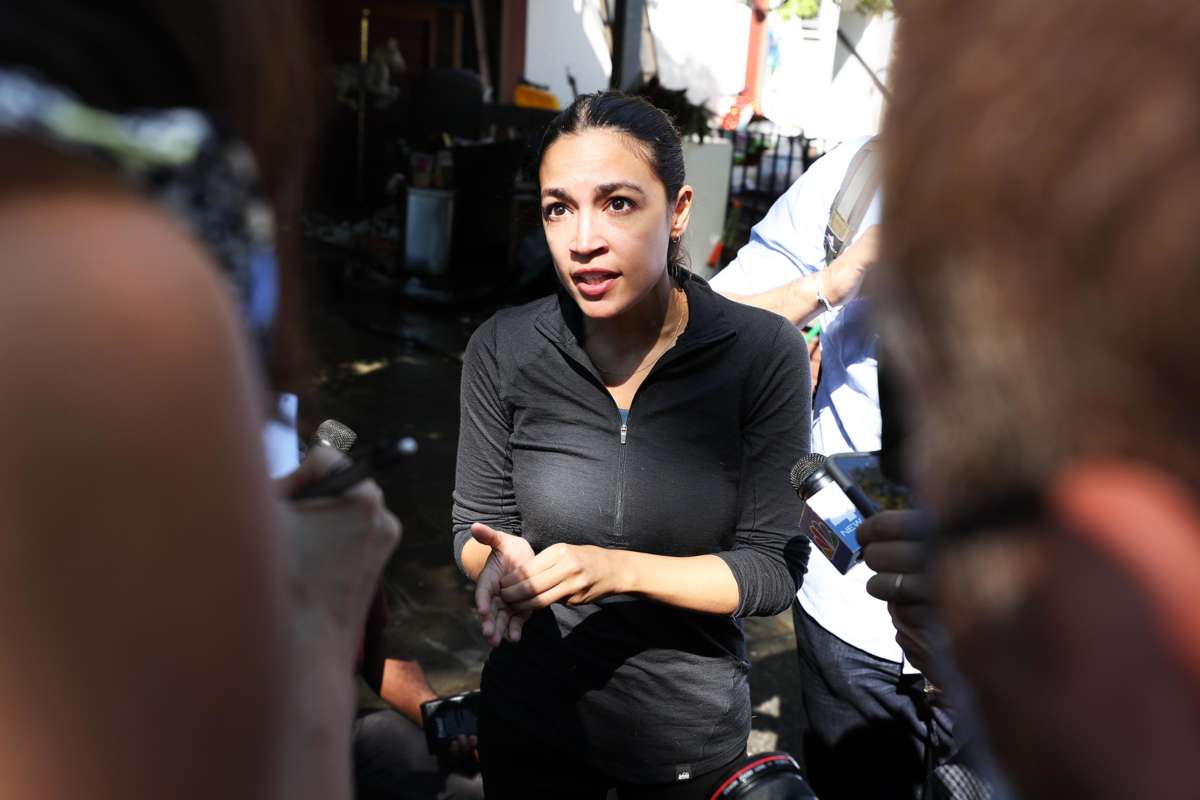
Countering Abbott’s comments while appearing on CNN Tuesday night, Ocasio-Cortez blasted the Texas governor for speaking “from such a place of deep ignorance” on the issue. Victims of rape, she rightly pointed out, are not always aware that they’re pregnant after just six weeks.
“I’m sorry we have to break down biology 101 on national television, but in case no one has informed him before in his life, six weeks pregnant means two weeks late for your period,” Ocasio-Cortez said. “And two weeks late on your period for any person, any person with a menstrual cycle, can happen if you’re stressed, if your diet changes, or for really no reason at all. So, you don’t have six weeks.”
The New York congresswoman also noted that Abbott’s words disregarded a critical point: that prosecuting rapists won’t stop offenders who are close to or know their victims.
“These aren’t just predators that are walking around the streets at night. They are people’s uncles. They are teachers, They are family friends and when something like that happens it takes a very long time, first of all, for any victim to come forward,” Ocasio-Cortez said.