


BANDA ACEH, Indonesia — A mother Sumatran tiger and her two cubs were found dead this week in a snare trap in Indonesia’s westernmost Aceh province.
Local people in Buboh, a village in South Aceh, discovered the tiger carcasses on Aug. 24 and reported them to authorities.
“The mother was entangled in the neck and left hind leg, while the left front leg was rotting,” Agus Irianto, the head of the Natural Resource Conservation Agency’s branch in Aceh, said on Thursday.
The Sumatran tiger (Panthera tigris sumatrae) is critically endangered, with only a few hundred thought to remain in the wild.
The species’ decline is largely due to the destruction of its rainforest habitat and poaching, with its body parts used in traditional Chinese medicine.
The incident follows the death of a female tiger in nearby Kapa Sesak village, also in South Aceh, in late June. It had apparently eaten a goat contaminated with poisonous chemicals.
Also this month, on Aug. 14, a male tiger, estimated to be seven or eight years old, was found dead in Pasaman, West Sumatra province.

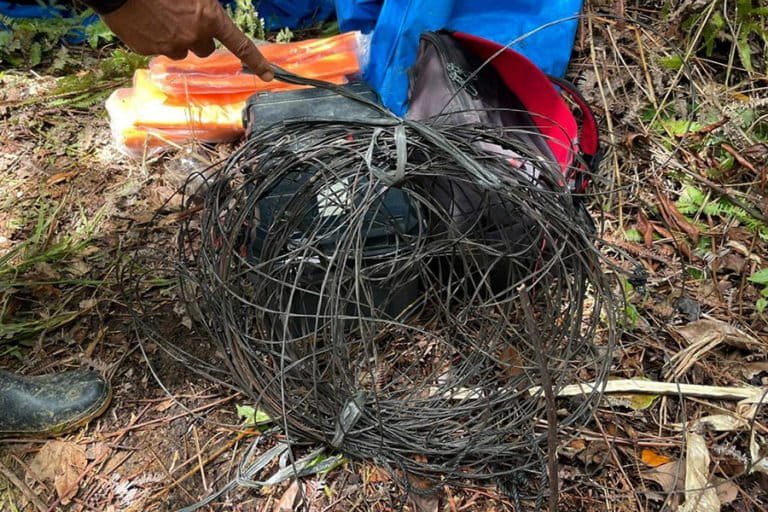
This article by Junaidi Hanafiah was first published by Mongabay.com on 26 August 2021. Lead Image: One of the dead tigers in Aceh. Image by Chandra.
Support ‘Fighting for Wildlife’ by donating as little as $1 – It only takes a minute. Thank you.
SEPTEMBER 9, 2021 BY DONNY MOSS — LEAVE A COMMENThttps://www.facebook.com/plugins/share_button.php?href=https%3A%2F%2Ftheirturn.net%2F2021%2F09%2F09%2Fpeta-protests-hermes-crocodile-abuse%2F&layout=button&size=small&appId=560935960731324&width=67&height=21https://platform.twitter.com/widgets/tweet_button.f88235f49a156f8b4cab34c7bc1a0acc.en.html#dnt=false&id=twitter-widget-0&lang=en&original_referer=https%3A%2F%2Ftheirturn.net%2F2021%2F09%2F09%2Fpeta-protests-hermes-crocodile-abuse%2F&size=m&text=PETA%20Protests%20Herm%C3%A8s%20Crocodile%20Abuse%20-%20Their%20Turn&time=1631305062862&type=share&url=https%3A%2F%2Ftheirturn.net%2F2021%2F09%2F09%2Fpeta-protests-hermes-crocodile-abuse%2FShare on TumblrSave
Undercover footage taken by Farm Transparency Project reveals shocking abuses at three crocodile factory farms in Australia owned by Hermès. Upon release of the footage, People for the Ethical Treatment of Animals (PETA) staged provocative protests at Hermès stores in New York City, London and Paris to call on the company to replace crocodile skin with cruelty-free fabrics for their handbags.https://www.youtube.com/embed/GdUo3Bjz2xw?feature=oembed
Australia accounts for 60% of the global trade of crocodile skins. Crocodiles, who have a natural lifespan of 70 years, are slaughtered by Hermès when they are just 2-3 years old. Birkin bags, which are made from the skins of four crocodiles, sell for tens, if not hundreds, of thousands of dollars at Hermès stores.
Hermès slaughters four crocodiles to produce one Birkin bag
Kindness Project, an Australian animal rights organization that released the Transparency Project footage, has launched a campaign to shut down Australia’s commercial crocodile farms and transition the workers into other jobs. “With so many sustainable and animal friendly alternatives available, there is no need for fashion houses to harm animals in the production of their clothing and accessories. We are asking for an end to Hermès crocodile cruelty, demanding they #dropcroc from their collections, in favor of protecting precious wildlife from cruelty and suffering.”
According to PETA, Hermès is planning to build what would be Australia’s largest crocodile farm, which would hold up to 50,000 individuals. Previous PETA investigations have shown workers shooting reptiles in the head; cutting into their bodies as they struggle to escape; and stabbing still-conscious animals in an effort to dislocate their vertebrae. They also show reptiles moving their legs and tails several minutes after these slaughter attempts. “No purse is worth an animal’s agonizing death,” says PETA Executive Vice President Tracy Reiman. “PETA is calling on Hermès to listen to the outcry against cruelty to crocodiles and bag exotic skins.”
People for the Ethical Treatment of Animals (PETA) staged a protest at Hermès in NYC after Kindness Project released undercover video footage of crocodile abuse at the company’s crocodile factory farms in Australia.
Keith A. Hobson, Fellow of the Royal Society of Canada, and Linda Wires
September 8, 2021
<https://rsc-src.ca/sites/default/files/Portrait2.jpg>
Artwork by Barry Kent MacKay reproduced with permission.
Keith A. Hobson and Linda Wires | September 8, 2021
Download Article
Keith A. Hobson, FRSC, Department of Biology, University of Western Ontario.
Linda Wires, Conservation Biologist and author of The Double-crested
Cormorant: Plight of a Feathered Pariah
Fall is a special time in the Great Lakes region of Ontario for those
interested in the movements of migratory species, as there are millions of
warblers, waterbirds and monarch butterflies moving south. Unfortunately, it
also heralds the highly controversial hunting season in the region that was
initiated in 2020, when from 15 September to 31 December hunters can kill 15
Double-crested Cormorants a day.
Sadly, Double-crested Cormorants have a lengthy history of being
insufficiently protected and indeed persecuted. While most migratory birds
in Canada are protected by the Migratory Birds Convention Act, the
Double-crested Cormorant is not, despite fully qualifying as a migratory
bird native to North America.
Instead, cormorants in Canada are managed provincially, enabling Ontario’s
Ford Government to legally declare open season on a migratory native species
that is not a game bird. The liberal “bag limit” is designed to cull the
populations to, as yet, an unexplained level in response to a vociferous
lobby group, chief among them the Ontario Federation of Anglers and Hunters
(OFAH).
OFAH asserts that cormorants are “destroying natural ecosystems” and
describes an “ecological mess caused by high concentrations of these
fish-devouring birds.” It is true that this species feeds almost exclusively
on fish and they aggregate during summer in impressive breeding colonies
along shorelines where they can nest in trees or on the ground, and
sometimes denude vegetation. Such attributes are common to colonial
waterbirds, yet the cormorant singularly evokes ire and it is not unusual to
find terms like “ugly”, “useless” and “marauding” on recent blog sites.
No scientific committees engaged in tackling the many ills of the Great
Lakes ecosystems have identified cormorants as an issue, but instead point
to the introduction of numerous invasive species, a suite of human
activities, and current and pending climate change as top concerns.
Furthermore, data from numerous scientific studies in various areas of North
America, including the Great Lakes of Ontario, have overwhelmingly shown
that cormorants pose no threat to sport or commercial fisheries. In fact,
the evidence indicates they are increasingly feeding on invasive damaging
fish, such as round goby and alewife. Similarly, cormorant impacts to
vegetation are local and part of a natural disturbance regime that has
occurred for millennia. Compared with the catastrophic and long-term
perturbation humans have caused, cormorant-caused impacts to the natural
environment are trivial.
In local cases where scientific evidence has demonstrated a need for
cormorant control, a targeted rational approach would include measurable
goals and be undertaken by skilled professionals. Within the spirit of
adaptive resource management, it would require continual justification,
data, and careful monitoring before and after any action is taken. It would
not be based on perception or opinion common in social media and advocacy
circles.
The ecological integrity of the Great Lakes should be of great concern to
everyone. But the decision of Doug Ford’s government to allow public killing
of cormorants throughout Ontario has absolutely no basis in science. Rather,
it signals a significant departure from professional evidence-based wildlife
management. The danger of such an approach is on full display in the US,
where public perception and dislike of the species has prevailed. There,
over the last two decades approximately one million cormorants have been
destroyed, despite no scientific evidence to indicate that such control was
warranted. As such, Ontario’s new fall “season” should indeed be a wake-up
call to Canadians.
Reference
Hobson, K. A. 2021. Ontario
<https://na01.safelinks.protection.outlook.com/?url=https%3A%2F%2Frsc-src.ca
%2Fen%2Fvoices%2FHobson%25202021%2520ACE-ECO.pdf&data=04%7C01%7C%7C51869111f
e894ebdeaba08d973c8e7c2%7C84df9e7fe9f640afb435aaaaaaaaaaaa%7C1%7C0%7C6376681
28979783358%7CUnknown%7CTWFpbGZsb3d8eyJWIjoiMC4wLjAwMDAiLCJQIjoiV2luMzIiLCJB
TiI6Ik1haWwiLCJXVCI6Mn0%3D%7C1000&sdata=B48Rs1OFeOxB2TsD1bD9oIvMFRaw68smdNLj
U5%2BEk7w%3D&reserved=0> ‘s decision for the province-wide cull of
Double-crested Cormorants. Avian Conservation and Ecology 16(1):24.
https://doi.org/10.5751/ACE-01949-160124
<https://na01.safelinks.protection.outlook.com/?url=https%3A%2F%2Fdoi.org%2F
10.5751%2FACE-01949-160124&data=04%7C01%7C%7C51869111fe894ebdeaba08d973c8e7c
2%7C84df9e7fe9f640afb435aaaaaaaaaaaa%7C1%7C0%7C637668128979793296%7CUnknown%
7CTWFpbGZsb3d8eyJWIjoiMC4wLjAwMDAiLCJQIjoiV2luMzIiLCJBTiI6Ik1haWwiLCJXVCI6Mn
0%3D%7C1000&sdata=ACLBQFVmJFg5hYMdSqulten5vf61RxQZD%2B%2BstCPrhEo%3D&reserve
d=0>
The article was published in the Globe and Mail on September 9, 2021.
https://rsc-src.ca/en/voices/open-season-science-double-crested-cormorants-u
nder-attack-again
<https://na01.safelinks.protection.outlook.com/?url=https%3A%2F%2Frsc-src.ca
%2Fen%2Fvoices%2Fopen-season-science-double-crested-cormorants-under-attack-
again&data=04%7C01%7C%7C51869111fe894ebdeaba08d973c8e7c2%7C84df9e7fe9f640afb
435aaaaaaaaaaaa%7C1%7C0%7C637668128979793296%7CUnknown%7CTWFpbGZsb3d8eyJWIjo
iMC4wLjAwMDAiLCJQIjoiV2luMzIiLCJBTiI6Ik1haWwiLCJXVCI6Mn0%3D%7C1000&sdata=SfH
zEIVJwd9IiK2usNJgZRvYciqetki%2Fd%2Fuy4BNKsjE%3D&reserved=0>
<https://na01.safelinks.protection.outlook.com/?url=https%3A%2F%2Frsc-src.ca
%2Fen%2Fvoices%2Fopen-season-science-double-crested-cormorants-under-attack-
again&data=04%7C01%7C%7C51869111fe894ebdeaba08d973c8e7c2%7C84df9e7fe9f640afb
435aaaaaaaaaaaa%7C1%7C0%7C637668128979803259%7CUnknown%7CTWFpbGZsb3d8eyJWIjo
iMC4wLjAwMDAiLCJQIjoiV2luMzIiLCJBTiI6Ik1haWwiLCJXVCI6Mn0%3D%7C1000&sdata=v0%
2FeWjo%2F59ostluDMvCgkEVctlh1H0DSFsu%2BG1x16sc%3D&reserved=0> Open Season on
Science: Double-crested Cormorants Under Attack. Again. | The Royal Society
of Canada
Keith A. Hobson and Linda Wires | September 8, 2021Download ArticleKeith A.
Hobson, FRSC, Department of Biology, University of Western Ontario.Linda
Wires, Conservation Biologist and author of The Double-crested Cormorant:
Plight of a Feathered Pariah
rsc-src.ca
Brandie Weikle · CBC News · Posted: Sep 08, 2021 5:46 PM ET | Last Updated: September 9

819 comments
Toronto-based Canada Goose Holdings Inc. is in hot water with China, which has fined the winter-apparel maker for allegedly misleading consumers about the materials it uses.
The country’s regulator, the National Enterprise Credit Information Publicity System, fined the company 450,000 yuan, the equivalent of about $88,202.
As first reported by Bloomberg News, a commentary in China’s state-affiliated Economic Daily newspaper Wednesday details the fine and accuses the company of flouting Chinese advertising laws.
The complaint centres on the company’s claim it uses “Hutterite down,” the warmest down available. It alleges the company uses other kinds of down in most of its products.
“The main filling is ordinary duck down, but it costs tens of thousands of yuan at every turn. Is the Canadian goose down jacket sold for warmth or IQ tax?” the commentary says.
In an emailed response to CBC News, the company said a technical error on a partner website was behind confusion about its products’ materials.
“Earlier this year a misalignment of text was found on a partner site, Tmall, in our [Asia-Pacific] region. The error was corrected immediately,” the email said.
Tmall is one of the largest online platforms for Chinese consumers.
The parka-maker said it uses both goose and duck down, depending on the construction of the garment.
Canada Goose isn’t the first foreign-owned apparel company to tangle with China about its marketing messages.
Earlier this month China fined Swedish retailer H&M 260,000 yuan ($51,000) for claims that some apparel items were exclusive to China; this after, in April, H&M came under fire for a map on its website and its depiction of China’s territory in the South China Sea.
Relations between Canada and China have soured since the detention of Huawei executive Meng Wanzhou at the Vancouver Airport in December 2018.
The U.S. wants to extradite Wanzhou to New York, where she faces fraud charges. A hearing in B.C. Supreme Court concluded Aug. 18, with the judge’s decision expected in October.

Since the arrest, the relationship between Canada and China can best be described as “very fraught,” said Jia Wang, interim director of the China Institute at the University of Alberta in Edmonton.
“Some would even say this is probably one of the low points of our bilateral relations over the past couple of decades,” said Wang.
While it would be a stretch to draw a direct line between the Canada Goose fine and the geopolitical situation, said Wang, the downturn in relations was most notable with the detention of Canadians Michael Kovrig and Michael Spavor shortly after Meng’s arrest. But there have been economic retaliations as well, she said.
“China’s ban on the imports of Canadian canola seeds, for example — that’s widely believed, for good reason, as a retaliation measure levied against Canada by the Chinese government.”
With its population of 1.4 billion and a growing middle class estimated at somewhere between 300 and 700 million, Wang said China is “the largest luxury goods market in the world,” representing about one third of the total global market.
“So that’s why a lot of luxury goods companies around the world, not just Canada, are really eyeing the Chinese market … because they see a downturn of their sales in other markets, the developed world markets, but they are hoping, of course, to maintain their revenue levels.
“They are looking at China, a big market, and it’s not shrinking. It’s still growing.”


| Reno, NV — The Reno City Council voted 6 to 1 in favor of a resolution condemning wildlife killing contests and calling on the Nevada Board of Wildlife Commissioners to ban contests at the September 8th meeting, much to the relief of local residents, scientists, activists, and national wildlife conservation organizations. Reno will join a growing number of states and counties that have formally criticized these contests, which award participants with cash, guns, or other prizes for killing the most, largest, or smallest of the target species.
Naomi Duerr of the Reno City Council and a devoted leader of the effort to pass the resolution, introduced the resolution in honor of the late Norm Harry, a lifelong advocate for Nevada’s precious wildlife. “I initiated this resolution as I feel strongly about the detrimental effects these inhumane contests have on our native wildlife,” Councilwoman Duerr said.Fauna Tomlinson, Project Coyote Program Associate and… |
View original post 500 more words
At least 866 arrested since April, as police condemned for violence against protesters defending Vancouver Island’s ancient forests

Supported by

About this contentJen Osborne in Fairy Creek and Leyland Cecco in TorontoWed 8 Sep 2021 11.11 EDT
A string of protests against old-growth logging in western Canada have become the biggest act of civil disobedience in the country’s history, with the arrest of least 866 people since April.
The bitter fight over the future of Vancouver Island’s diminishing ancient forests – in which activists used guerrilla methods of resistance such as locking their bodies to the logging road and police responded by beating, dragging and pepper-spraying demonstrators – has surpassed the previous record of arrests set in the 1990s at the anti-logging protests dubbed the “War in the Woods”.
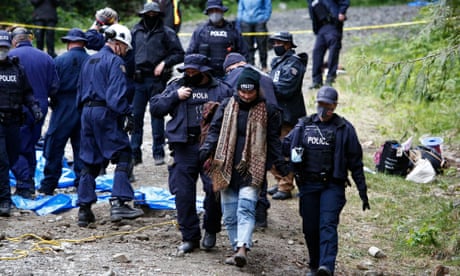
For months, hundreds of activists with the Rainforest Flying Squad have camped out in the remote Fairy Creek watershed in a desperate attempt to shift the course of logging in the region.
They have chained themselves to tripods crafted from logs, suspended themselves in trees and even locked their arms inside devices called “sleeping dragons” cemented into the ground.
“We have experts in rigging, we have climbers, we have carpenters – we have all these people getting together to build amazing, beautiful things,” said Jean-François Savard, who has been at the camp since the injunction was granted to a logging company in April. “The [police] are getting very frustrated by our tenacity because we’re constantly rebuilding and coming up with new ideas. People aren’t giving up.
Members of the Royal Canadian Mounted Police have been tasked with enforcing the injunction, but have increasingly faced sharp criticism for their tactics and use of force, including ripping off protesters masks to pepper-spray them and dragging them by their hair.
Police have also come under fire for wearing “thin blue line” patches, obscuring their faces, not wearing name badges – and for their attempts to bar media from reporting on the long-running protests. Last month, a British Columbia supreme court judge ruled that the police force’s expulsions zones – set up to prevent media from entering certain areas of the injunction area to monitor police action – were unlawful.
The RCMP did not respond to a request for comment, but Sgt Chris Manseau has previously told reporters that while police action is dictated by the actions of demonstrators and social media doesn’t show the entirety of events, a review of police action is likely.
“The more violent the RCMP are, the more it radicalizes younger people. We have teenagers who are getting arrested, who are risking their lives,” said Pia Massie, who was also present at the blockages at Clayoquot Sound in 1993. “As mom, it’s very, very scary. And that’s why I keep coming back – to try to counsel people, to try to protect people.”
Other veterans of the War in the Woods say the current police conduct has been “utterly disgusting”.
“At Clayoquot, the relationship between us and the RCMP was almost cordial. They did their job, we did ours,” said Warren Kimmit. “That was the way policing should happen. There’s no question there’s nothing to be gained by the violence that’s happening here. And that violence is just increasing as they become frustrated with our ability to lock the road down.”
At stake for the activists are swaths of old growth forest on the south-western watersheds of Vancouver Island. These trees – towering western red cedar, Douglas fir and Sitka spruce – are often hundreds of years old, and are the few remaining pockets of original old growth forest. Most have been logged.
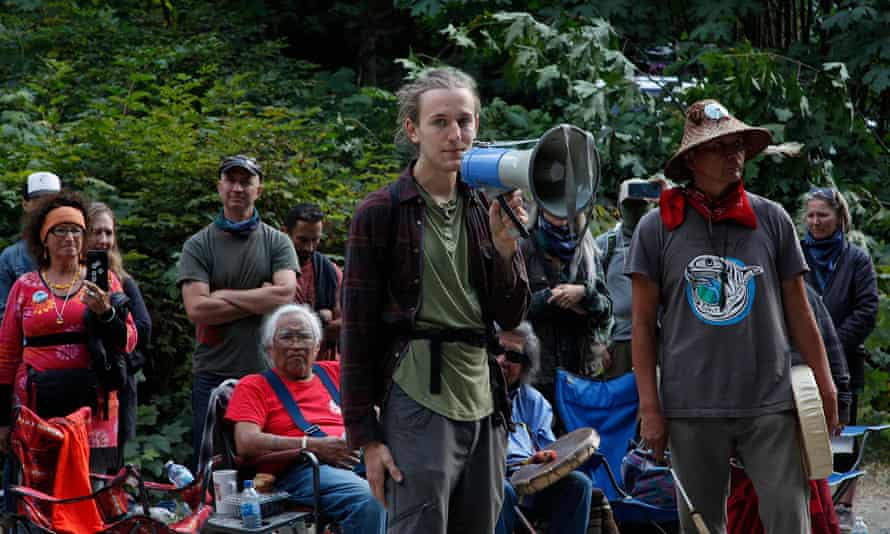
While the blockades have made headlines and figured into the country’s national election, they have also exposed both the legacy of old growth logging in a vulnerable ecosystem and the complex politics of the region, where a number of local First Nations receive royalties from logging operations.
The Pacheedaht elected council has a revenue sharing agreement with the logging company Teal-Jones Group and have repeatedly asked demonstrators to leave the area and to respect the sovereignty of the nation.
“We do not welcome or support unsolicited involvement or interference by others in our Territory, including third-party activism,” hereditary chief Frank Queesto Jones said in a letter from April.
Queesto Jones and fellow chief councillor Jeff Jones say the nation has grown worried about the “increasing polarization” over forestry activities and the anti-old growth logging movement.
But Pacheedaht elder Bill Jones, who has previously alleged that Frank Jones was not a true hereditary chief and did not represent the will of the nation, has become a key figure in the blockades.
“We’re surprised at the RCMP’s determination to crush us. We all come to the conclusion that it’s not just us they’re wanting to crush – they want to protect the economic and regulatory process that the Canadian government uses to get what they want off the land, under the directions of the large corporations,” said Jones.
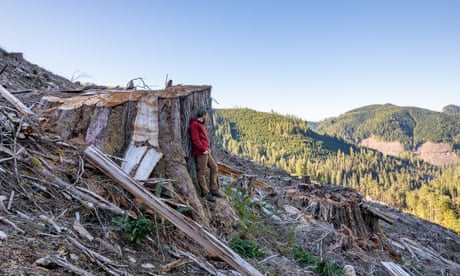
In June, the province of British Columbia and Pacheedaht, Ditidaht and Huu-ay-aht First Nations announced a two-year moratorium on cutting, a deal that protesters rejected, pointing out that other areas – the Caycuse and Walbran valleys – are slated for logging.
But those at the camps believe the confrontations at the blockades only underscore the stakes and the need for swift action to protect the few remaining stands of forest.
“The civil disobedience movement is very simple. We put our bodies on the line, we almost expect to be injured, we expect to be in a very uncomfortable situation,” said Warren Kimmit. “Our willingness to do that is what causes the public to see our commitment to a cause, to rally them and to put pressure on the government to act.”


Cover image from Born Free USA“Crushing Cruelty” reportreleased in April.
Trapping is perhaps the most egregious abuse of our wildlife. The targeted animals (and often, untargeted creatures who get caught incidentally) can sit in a trap for up to 96 hours in the state of Nevada without the requirement for trappers to check on them. Don’t bet that every trapper will check after four days, if it isn’t convenient for them.
Reportsfrom the Born Free USA wildlife advocacy organization have exposed the trapping industry and found that the few existing regulations that monitor trapping are often ignored by trappers who leave traps out after the close of the trapping season, continuing to capture animals. There are no authorities present when traps are set or an animal is killed.
The animals who get caught in these barbaric…
View original post 517 more words
https://www.nevadacurrent.com/2021/03/02/activists-hunters-have-stranglehold-on-nevada-wildlife/

Habitat, not predators, is the major factor determining mule deer numbers in Nevada. (Photo: U.S. Fish and Wildlife Service).
Nevada’s Department of Wildlife needs more oversight, says state Sen. Pete Goicoechea, who is sponsoringlegislationto add two members to the Wildlife Commission. But environmentalists and animal activists say the measure would tilt the board even more in favor of hunting, trapping and fishing interests.
The WildlifeCommission is the “the least democratic of all state boards or commissions which provide oversight to a public resource,” says Donald Molde of the Nevada Wildlife Alliance. “In fact, I’m not sure there is another that is so tilted.”
By law, Nevada’s nine-member Wildlife Commission, which has wide latitude to enact policy and spend money, must have five “sportsmen,” i.e. hunters, fishermen or trappers…
View original post 1,321 more words

(Nevada Department of Wildlife photo)
Nevada’s black bears, driven by drought, fire, and smoke from their habitats in the high country around Lake Tahoe, are about to face another existential threat — hunters.
The state’s season for hunting bears begins Sept. 15, but environmental organizations and animal activists are asking the governor and wildlife officials to call off the hunt for this year in the majority of designated zones.
“We are in a new era of wildlife management, where we have to directly consider the impacts ofclimate chaos on the management of our wildlife,” says a letter from the Center for Biological Diversity, the Sierra Club – Toiyabe Chapter, the Humane Society of the United States, Animal Wellness Action, No Bear Hunt NV, Nevada Wildlife Alliance, and Bear Defenders.
Two “massive conflagrations” less than eight miles apart have “profoundly affected the ecology and wildlife of the central Sierra Nevada,” says the letter, which was sent to wildlife officials Wednesday morning.
The Tamarack fire, declared an emergency by Gov. Steve Sisolak in late July, and the Caldor fire, which is still burning out of control and has consumed more than 218,000 acres, “form a nearly contiguous belt of burned terrain almost all the way across the Sierra Nevada,” according to the letter.
“Wildlife which lived within areas now burned would have fled as the fire approached, and while some likely perished, some would be pushed to outside the boundaries of the fire, into foreign terrain and other animals’ territories,” the letter says, warning of the effects of the forced migration.
“And with no refuge from the smoke and ash, these fires cause impacts to animal physiology and behavior far beyond the fire perimeters,” the letter says, similar to the effects one would see from humans forced to breathe heavy smoke, “decreased lung function, increased risk of heart illness, etc.”
Nevada’s bear hunt began in 2011. Since then, hunters have “harvested” 101 bears for sport. State records indicate more have been euthanized in that time by the state as a management protocol for so-called problem bears that enter homes, often through unlocked doors, in search of food.
“The state should call it off,” says Bob Fulkerson, founder and development director of the Progressive Leadership Alliance of Nevada, who tweeted as much to Gov. Steve Sisolak on Tuesday.
Fulkerson says he’s been camping in the Carson Range for four decades and has “never seen the plants and wildlife under this much stress. … The last thing those bears need are dogs fitted with GPS chasing them to exhaustion or until they tree to await being shot like a fish in a barrel.”
The Wildlife Commission has the authority to change the dates or areas of the hunt.
“I’m not aware of any recommendation being brought by the department,” commission chairwoman Tiffany East said via email.
The Department of Wildlife director also has the statutory authority to act “In cases of emergency, with the approval of the Governor,” until the commission meets.
“At this point, ending the bear hunt due to habitat loss is counter to the wildlife management science on carrying capacity,” NDOW director Tony Wasley said in an email. “The reality is that sometimes, reducing population numbers can improve habitat conditions and subsequently improve animal health which results in increased survival. Removing or killing 100, may allow for the survival of hundreds and hundreds more. It is population management, not the saving of individuals.”
Wasley says “sudden and drastic decreases in available habitat” have predictable consequences for the displaced animals as well as those who “fight to establish territories and find food.”
“As counter intuitive as it is for some people to understand, the Department has implemented multiple emergency doe hunts for mule deer and pronghorn with the objective of keeping animal populations in sync with the capacity of the land to provide for them,” Wasley said. “We will not be recommending an emergency bear hunt and similarly we have no plans to recommend a season closure due to wildfire and drought either.”
Sisolak did not respond to requests for comment.
Ann Bryant, co-founder of California’s BEAR League, says many of the bears have been “running for their lives” and are “confused, displaced and completely out of energy… weakened and already terrorized beyond comprehension.”
A Tahoe bear whose paws had been so badly burned it was unable to move, according to California wildlife officials, was shot and killed to prevent it from being burned alive, the San Francisco Chronicle reported last week.
“Given the habitat destruction and displacement the bears are experiencing due to the fires, to now also chase them with packs of hounds to then be shot in a recreational hunt is cruel beyond measure,” says Kathryn Bricker, executive director of No Bear Hunt NV. “Have we no moral compass?”

