Caldor Fire Update: Neighborhood Firefight In Meyers; Flames Advancing Toward South Lake Tahoe

August 31, 2021 at 10:34 amFiled Under:Caldor Fire, Evacuations, Highway 50, South Lake Tahoe, Strawberry, Wildfire, Wildfireshttps://www.cbsnews.com/live/cbsn-local-bay-area/?premium=1&optanonConsent=15

COVID-19 Latest With Stanford Health Care00:00 – 1M AGOJohn Cox Talks Recall Election11:22 – 15M AGOBay Area Weather Forecast02:21 – 17M AGOLIVE: Gov. Newsom Highlights Vaccine Milestone00:01 – 17M AGOLIVE: Gov. Newsom Highlights Vaccine Milestone00:02 – 17M AGOLIVE: Gov. Newsom Highlights Vaccine Milestone29:19 – 47M AGOLIVE: Gov. Newsom Highlights Vaccine Milestone00:03 – 47M AGOLIVE: Gov. Newsom Highlights Vaccine Milestone00:03 – 47M AGOLIVE: Gov. Newsom Highlights Vaccine Milestone05:46 – 53M AGOCOVID-19 Latest With Stanford Health Care10:40 – 1H AGOBay Area Weather Forecast00:36 – 1H AGOJohn Cox Talks Recall Election11:22 – 1H AGOBay Area Weather Forecast02:22 – 1H AGO

MEYERS (CBS SF) — Hundreds of firefighters battled the advancing flames of the wind-whipped Caldor Fire in the subdivisions surrounding the Sierra Mountain community of Meyers early Tuesday, dousing spot fires in attempt to save homes from the destructive path of the raging wildfire.

The megafire has grown to 191,607 acres and was 16% contained. In describing the conditions Tuesday morning, Cal Fire officials said flames were spreading among the tree tops.READ MORE:49ers Not Alone In Mulling When To Start Rookie QBs

“Crown fire runs and ember casting remained active covering distances of up to three quarters of a mile,” officials said. “Lower elevations of the fire saw strong down canyon winds that tested control lines.”

The fire roared over Echo Summit on Monday evening after leaving a path of burned trees and homes along Highway 50, and began its downslope run toward the evacuated city of South Lake Tahoe.

By early Tuesday, the blaze was burning in and around Park River Estates along Highway 89, in the Meyers subdivision of Tahoe Paradise and advancing on Christmas Valley, about 10 miles from South Lake Tahoe.

Red Flag Warning winds fanned the flames and were expected to gust up to 40 mph on Tuesday. Combined with fuel from thick forests, difficult terrain and bone-dry underbrush, the wall of flames was unrelenting in its advance.

“This fire has show us to be unpredictable, terrain driven, weather driven, it’s been very active, very rapid progression at times,” said Cal Fire spokesman Keith Wade.

The blaze — combining with the Dixie Fire burning farther north in Plumas and Lassen counties — has also dashed the decades-long belief that a wildfire could not cross the Sierra Nevada. Both fires crossed the Sierra and had burned more than 1 million acres combined by Tuesday morning.

“We haven’t had wildfires burn from one side of the Sierras to another,” said Cal Fire Chief Thom Porter. “We did that with the Dixie [Fire], now we have with the Caldor. Two times in our history and they’re both happening this month. So we really need to be cognizant that there is fire activity happening in California that we have never seen before.”

Clouds of silver dollar size embers were being churned by the flames, fueling the rapid advance near Meyers and down Highway 89. The advancing blaze forced officials to order nearly 22,000 South Lake Tahoe residents from their homes in a mass exodus on Monday.

“These ember casts can travel sometimes up to a mile ahead of the fire,” Wade said. “It tells you that there is a risk, and that’s why we are evacuating them, this fire can easily extend and those communities down there and the people, we want them out of harms way.”

CALDOR FIRE:

Among the evacuees was long-time resident Will Cottrell. He was stunned as he watched the flames reach Echo Summit.

“That’s a climbing area up there too,” he said. “That hillside. It’s cooked.”

The 77-year-old waited until the last minute to leave his home just south of Meyers, turning on the sprinklers and packing up whatever he couldREAD MORE:Homicide Victim Found In San Francisco Portola District

“I’m a physician and so my whole medical home office where I had to work for the last year is now squeezed into the back of the car,” said Cottrell, as flames surrounded his neighborhood. “What I see now says bail out.”

Initially, residents fleeing the fire clogged the only route out of town. But by late Monday afternoon, the normally bustling tourist mecca took on the appearance of a ghost town. Hotel and casino parking lots in Stateline were empty, businesses and restaurants shuttered.

Meanwhile, evacuation centers set up in nearby Gardnerville, Reno and Truckee were filled to near capacity.

Among the evacuees housed in Gardnerville was South Lake Tahoe resident Don Caudle.

“I think it’s going to be weeks before we can go back,” he said. “I lived in Tahoe for 40 years and they’ve never had a fire like that.”

Porter said at a briefing on the state’s wildfires that the Caldor Fire grew by more than 20,000 acres since Sunday and in conditions that had fire spreading in all directions.

ALSO READ: Caldor Fire Threatens Beloved Camp Concord on Shore of Lake Tahoe

“Difficult road conditions, hard to access. It’s been burning in heavy timber, just very, very difficult conditions,” said Porter. “We’ve been making headway at times. I reported last week about how we have effectively an inversion that puts kind of a lid on fire activity. But then when the air clears, it’s like taking a lid off of your pot of boiling water. All of a sudden, there’s that plume of heat and steam that comes out, same thing happens on a fire. Also it sucks in oxygen from all directions, put fires and spot fires in all directions. That’s what happened yesterday.”

Outside of the Tahoe Basin, spot fires also erupted Monday in Lower Echo Lake, Aloha Lake and Desolation Wilderness areas.

The El Dorado County Sheriff’s Department issued additional mandatory evacuation orders Monday for the western shore of Lake Tahoe, from Emerald Bay to Tahoma on the Placer County line and then west to the border of the Desolation Wilderness.

Cal Fire Operations Chief Tim Ernst said the fire made a run on Sunday from around Strawberry on Highway 50 northeast to Echo Lake, where it was burning on Monday morning.

“A number of structures were lost in that area,” Ernst said.

So far, the flames have destroyed 482 homes — many of them residences in the fire-ravaged community of Grizzly Flats and along Mt. Ralston Road off Highway 50 — and were threatening another 21,451 structures.

Flames also continued to threaten the Sierra-at-Tahoe ski resort, located near Echo Summit. On early Tuesday, webcams showed towering flames near the ski runs where large snow-making machines were being used to keep the vegetation wet.MORE NEWS:4.1 Earthquake Rattles San Benito, Monterey Counties

The fire, which was first reported on Aug. 14 near the community of Grizzly Flats, is not expected to be fully contained until at least Sept. 8. Officials said the cause is under investigation.
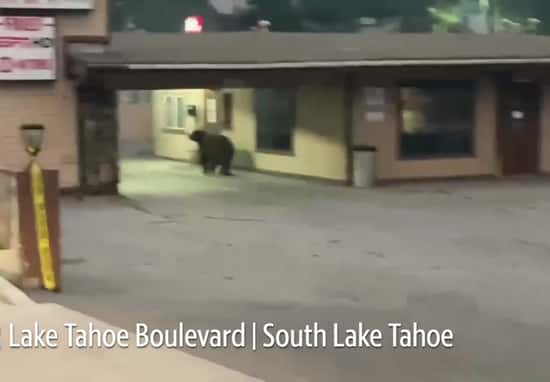
Bears and police roam empty South Lake Tahoe as town prepares for worst from Caldor Fire

https://www.sacbee.com/news/california/fires/article253878883.html

BY SAM STANTON AND

JASON POHLUPDATED AUGUST 31, 2021 10:15 AM

Play VideoDuration 0:28See lone bear roam a deserted South Lake Tahoe boulevard amid Caldor Fire evacuationsA large bear roams South Lake Tahoe, deserted after the Caldor Fire forced evacuations. Only police patrols and a few bears are making their way along roads in the tourist town as the California wildfire roars on. BY SAM STANTON

READ MORE


California Wildfires

The latest on the wildfires burning in California. Get updates on the Caldor Fire, Dixie Fire and others, including size, containment, evacuation orders and more.

EXPAND ALL

SOUTH LAKE TAHOE

South Lake Tahoe was virtually deserted early Tuesday, with only police patrols and a few bears making their way along the roadways as the Caldor Fire edged closer to the evacuated tourist town.

Police guarded the city throughout the night, rolling through parking lots where a handful of journalists and evacuees were spending the night in their cars, and driving through neighborhoods to keep looters from entering abandoned homes.

Sacramento Bee journalists who were stopped and checked for identification late Monday were told by police only a handful of people have decided to stay. With a population of 22,000 and thousands of daily visitors, South Lake Tahoe is a popular spot during the summer and winter seasons. Many people who live here work in the nearby casinos, restaurants, resorts and shops.TOP VIDEOSWATCH MOREhttps://imasdk.googleapis.com/js/core/bridge3.478.1_en.html#goog_1860454687https://imasdk.googleapis.com/js/core/bridge3.478.1_en.html#goog_1506353084https://imasdk.googleapis.com/js/core/bridge3.478.1_en.html#goog_1320145774https://imasdk.googleapis.com/js/core/bridge3.478.1_en.html#goog_1320145776https://imasdk.googleapis.com/js/core/bridge3.478.1_en.html#goog_1320145778×See lone bear roam a deserted South Lake Tahoe boulevard amid Caldor Fire evacuations

The quiet morning followed a hectic day that saw thousands flee as the Caldor Fire grew overnight to 191,607 acres, hours after it spilled over Echo Summit into the Lake Tahoe basin. The fire was only 16% contained, and the head of Cal Fire, Thom Porter, said it marked only the second time in recorded history that a fire had burned over both sides of the Sierra Nevada. The first was the Dixie Fire earlier this summer.

Late into the evening, the fire was menacing the communities of Christmas Valley and Meyers, just south of South Lake Tahoe. But the fire grew by only about 5,000 acres overnight.

Labor Day Sale

Unlimited digital access – $3 for 3 monthsCLAIM OFFER

The lack of a human population in South Lake Tahoe and Meyers offered opportunities for bears that frequent the area. Just after 6 a.m. Tuesday, a large bear could be seen pawing through the rear end of a pickup truck parked at the Loud Wedding Chapel on Lake Tahoe Boulevard.

The bear had apparently made its way along the road that leads from Stateline, Nevada, to South Lake Tahoe. Overturned trash cans at the Shell gas station and other businesses lined the roadway.

There was no sign that any businesses plan to reopen today. The McDonald’s near South Lake Tahoe from Echo Summit had a flashing open sign, but it was not. Patients have been evacuated from Barton Memorial Hospital in South Lake Tahoe, and the El Dorado Sheriff’s Office moved inmates to another facility away from the approaching fire.

Many motels that dot this resort community had “no vacancy,” “sorry,” or simply “no” signs lit up, despite the fact that their parking lots were completely empty.

California Wildfires newsletter

Get the Bee’s latest coverage on wildfires in our state.SIGN UP

This site is protected by reCAPTCHA and the Google Privacy Policy and Terms of Service apply.

The story was different across the Nevada state line where many evacuees went to spend the night along with hundreds of police officers from around the region.

The lake that makes this community so famous was barely visible early Tuesday, as a thick blanket of smoke from the Caldor Fire had settled over it. There was no visible sunrise at 6:30 a.m., just an Air Quality Index that read 500 — the maximum value on the iPhone weather app.

Driving in from Nevada had a feeling of navigating through light snow, only with flakes of ash reflecting in the headlamps a stifling haze of smoke dropping visibility along the road that rings the pristine border lake.

“You don’t want any part of that,” said a man in a Nevada Department of Transportation state employee working a roadblock.

Visibility downtown along Highway 50 is a mile or less. The El Dorado Savings Bank clock — which flashed the wrong time — said it was 44 degrees. The only other movement on the streets, aside from bears, crows and emergency vehicles: the occasional snake of ash on the road that looks like snow.https://26dc4c9bd865234235f7c4f7957d9d5a.safeframe.googlesyndication.com/safeframe/1-0-38/html/container.html

BLANKET OF SMOKE OVER TAHOE BASIN, EMPTY STREETS

Inside Harrah’s casino early Tuesday, four men were playing slot machines with names such as “Treasure Ball” and “Buffalo Link” while dozens of police officers streamed up the escalators for the morning briefing.

The casino parking lots were overflowing with law-enforcement vehicles from agencies all over Northern California, including the South Lake Tahoe police, the California Highway Patrol, and the Rocklin and Folsom police departments.

In the Safeway parking lot, two boats on trailers and a camper had been left behind. And many of the homes and businesses in South Lake Tahoe had tall ladders leaning against their eaves, a move designed to give firefighters easy access to the roof if needed during a fire.https://26dc4c9bd865234235f7c4f7957d9d5a.safeframe.googlesyndication.com/safeframe/1-0-38/html/container.html

Throughout the night, the fire burned the hills along Christmas Valley, which includes a subdivision of homes along the Upper Truckee River south of the lake. Echo Summit lies directly above.

David Cochran, chief of the Reno Fire Department, posted a video at 5 a.m. Tuesday of crews working overnight to protect the Echo Summit Lodge, a hostel operated by volunteers at about 7,400 feet in elevation with views over the Lake Tahoe basin and South Lake Tahoe below.https://platform.twitter.com/embed/Tweet.html?dnt=false&embedId=twitter-widget-0&features=eyJ0ZndfZXhwZXJpbWVudHNfY29va2llX2V4cGlyYXRpb24iOnsiYnVja2V0IjoxMjA5NjAwLCJ2ZXJzaW9uIjpudWxsfSwidGZ3X2hvcml6b25fdHdlZXRfZW1iZWRfOTU1NSI6eyJidWNrZXQiOiJodGUiLCJ2ZXJzaW9uIjpudWxsfSwidGZ3X3NwYWNlX2NhcmQiOnsiYnVja2V0Ijoib2ZmIiwidmVyc2lvbiI6bnVsbH19&frame=false&hideCard=false&hideThread=false&id=1432669720579244036&lang=en&origin=https%3A%2F%2Fwww.sacbee.com%2Fnews%2Fcalifornia%2Ffires%2Farticle253878883.html&sessionId=5d6b6124ea1851052fbbbed528bca4be1e4a1da4&siteScreenName=sacbee_news&theme=light&widgetsVersion=1890d59c%3A1627936082797&width=550px

RELATED STORIES FROM SACRAMENTO BEE

FIRES

Watch Caldor Fire as it reaches Christmas Valley, jumps Highway 89 near South Lake Tahoe

AUGUST 30, 2021 7:11 PM

FIRES

Slight damage to Sierra-at-Tahoe ski resort. See the scene after Caldor Fire burned through

AUGUST 30, 2021 4:03 PM

FIRES

Ida collapses Mississippi road; kills 2, injures at least 10

Exposing the Big Game's avatarThe Extinction Chronicles

https://news.yahoo.com/mississippi-highway-collapses-2-killed-090206465.html

Associated Press

Tue, August 31, 2021, 2:02 AM·3 min readIn this article:

    LUCEDALE, Miss. (AP) — Two people were killed and at least 10 others were injured when seven vehicles plunged, one after another, into a deep hole where a dark, rural highway collapsed asHurricane Idablew through Mississippi, authorities said Tuesday.

    Torrential rain may have caused the collapse Monday night, and the drivers may not have seen that the roadway in front of them had disappeared, Mississippi Highway Patrol Cpl. Cal Robertson said. The George County Sheriff’s Department received the first call about a crash at about 10:30 p.m.

    Robertson told The Associated Press that some of the vehicles ended up stacked on top of each other as they crashed into the abyss, which opened up in a rural area without street lights. Ida dumped as much as 13 inches (33 centimeters) of rain as…

    View original post 236 more words

    Greta Thunberg: Scotland not a world leader on climate change

    Exposing the Big Game's avatarThe Extinction Chronicles

    https://www.bbc.com/news/uk-scotland-58387017

    By Kevin Keane
    BBC Scotland’s environment correspondentPublished10 hours agoShareRelated Topics

    media captionGreta Thunberg on COP26, travel plans and Cambo oil field proposals

    Campaigner Greta Thunberg says she doesn’t regard Scotland as a world leader on climate change.

    The Swedish activist told BBC Scotland she recognised that some countries “do a bit more than others” but that none were coming close to what was needed.

    Onthe Scottish Greens’ deal to enter government, she said some politicians were “less worse” than others.

    But she said tackling climate change was not as easy as voting for a green party.

    The 18-year-old said: “Of course there might be some politicians that are slightly less worse than others. That was very mean but you get the point.

    “It’s a hopeful sign that people want something that’s more ‘green’ – whatever green means – but in order to solve this we need…

    View original post 802 more words

    South Africa detects new coronavirus variant, still studying its mutations

    Exposing the Big Game's avatarThe Extinction Chronicles

    Reuters

    FILE PHOTO: People queue outside a coronavirus disease (COVID-19) vaccination centre in Cape Town

    FILE PHOTO: COVID-19 vaccination in Houghton, Johannesburg

    1/ 2

    South Africa detects new coronavirus variant, still studying its mutations

    FILE PHOTO: People queue outside a coronavirus disease (COVID-19) vaccination centre in Cape TownAlexander WinningMon, August 30, 2021, 9:19 AM·2 min read

    By Alexander Winning

    JOHANNESBURG (Reuters) – South African scientists have detected a new coronavirus variant with multiple mutations but are yet to establish whether it is more contagious or able to overcome the immunity provided by vaccines or prior infection.

    The new variant, known as C.1.2, was first detected in May and has now spread to most South African provinces and to seven other countries in Africa, Europe, Asia and Oceania, according to research which is yet to be peer-reviewed.

    It contains many mutations associated in other variants with increased transmissibility and reduced sensitivity to neutralising antibodies, but they occur in a different mix and scientists are not yet sure how they affect the behaviour…

    View original post 207 more words

    Rand Paul says ‘hatred for Trump’ is stopping study of horse and human drug to treat COVID-19

    Exposing the Big Game's avatarThe Extinction Chronicles

    https://thehill.com/changing-america/well-being/570130-rand-paul-says-hatred-for-trump-is-stopping-study-of-horse-and

    Demand for ivermectin has surged despite it being an unproven treatment for COVID-19.ByJoseph Guzman | Aug. 31, 2021https://imasdk.googleapis.com/js/core/bridge3.478.1_en.html#goog_1550167755Volume 20%00:1701:01More Videos00:35Rand Paul: ‘Hatred for Trump’ blocking research into Ivermectin as COVID-19 treatment00:58In ‘horrifying and amazing’ video, a giant tortoise attacks, devours baby bird02:26Study says new Lambda variant could be vaccine-resistant02:50Trita Parsi- Other Major, U.s.-backed Middle East Powers Are Just As Interventionist As Iran00:55OPINION: In Afghanistan, President Biden had to play the losing hand his predecessors dealt him00:49The signs you have the delta variant are different than original COVID-1901:39Briahna Joy Gray- Voters Are ‘Torn’ Over Ohio Special Election03:39Zaid Jilani: ‘I Don’t Think’ Anyone Will Try To Defund The Police After Milley’s Comments00:33NBC News reporter accosted during live coverage of Hurricane Ida00:59Kennedy family erupts over release of assassin who killed Robert F KennedyClose

    Story at a glance

    • During a meeting with dozens of his constituents Friday, Paul claimed researchers are…

    View original post 632 more words

    Climate Crises Converge as Wildfire Burns West and Hurricane Pummels South

    Kandaysha Harris wipes her face before continuing traveling through the storm of Hurricane Ida on August 29, 2021 in New Orleans, Louisiana.
    Kandaysha Harris wipes her face before continuing traveling through the storm of Hurricane Ida on August 29, 2021 in New Orleans, Louisiana.

    BYSharon Zhang, TruthoutPUBLISHEDAugust 30, 2021SHAREShare via FacebookShare via TwitterShare via Email

    A white lower-case t on a black background

    READING LISTWAR & PEACEAs Biden Threatens More War, Don’t Forget the Afghanistan Invasion Was IllegalENVIRONMENT & HEALTHClimate Crises Converge as Wildfire Burns West and Hurricane Pummels SouthPRISONS & POLICINGThe Court Knew She Didn’t Commit the Murder. They Sentenced Her for It Anyway.WAR & PEACEDon’t Listen to Panetta and Bolton. The US Must Stay Out of Afghanistan.POLITICS & ELECTIONSRand Paul Says “Hatred for Trump” Is Why Med Experts Oppose Ivermectin for COVIDREPRODUCTIVE RIGHTSAnti-Choicers Fail to See That Overturning “Roe” Will Impact Their Own Rights

    Hurricane Ida made landfall in Southern Louisiana on Sunday as one of the most powerful hurricanes to ever hit the U.S. It has knocked out power to the hundreds of thousands of residents of New Orleans and over 1 million in Louisiana and has caused at least one death so far.

    Scientists say that the climate crisis has, without a doubt, made Ida more intense as higher water temperatures offshore act as fuel to a hurricane’s fire. Greenhouse gases resulting from human activity have contributed to a rise in average water temperatures in the Gulf of Mexico by 3 to 5 degrees Fahrenheit since the late 20th century. The category 4 storm has so far blown entire roofs off buildings, devastated the Louisiana town of​ Jean Lafitte, and overwhelmed hospitals already filled with COVID patients.

    Ida’s storm surge was so strong as it made landfall that the hurricane actually reversed the flow of the Mississippi River, something that experts say is extremely rare. With the threat of levee failure hanging over Louisiana, the hurricane, since downgraded to a tropical storm, is headed into Mississippi.

    Uncompromised, uncompromising news

    Get reliable, independent news and commentary delivered to your inbox every day.

    • Email

    Though many residents evacuated the region before the storm, many others, unable to evacuate, have been left behind. Some people simply cannot afford the costs associated with seeking shelter out of the storm or may not have reliable access to transportation out of the area, such as a car. Other populations, such as incarcerated people, have no choice either way.

    As Ida blasted through Louisiana, the climate crisis intensified blazes across the country. Wildfire Caldor has engulfed hundreds of homes in its wake as it has moved across eastern California in the past two weeks. It now threatens Lake Tahoe, where residents on the California side have been ordered to evacuate.

    The Caldor fire has been particularly hard to contain. Firefighters have pushed back their estimated date for containment of the fire to September 8. As the Caldor fire blazes on, the Dixie Fire, just 65 miles to the North, is well into its second month of burning. At nearly 50 percent containment and with over 770,000 acres burned so far, the Dixie Fire is the second-largest fire in California history, beaten only by the August Complex fire from last year.

    California’s weather has become drier for longer periods over the past decades as global warming and climate disruption have lengthened the wildfire season and pushed winter rains further and further back in the year. It has wreaked havoc on the state, where six of the seven largest fires in the state, including the Dixie Fire, have occurred over the past year or so.

    It’s unclear if all of these disasters were caused directly by the climate crisis, but they were surely fueled by it. As climate scientists warn of dire consequences if the world continues on its current path, the western part of the U.S. has experienced record heat waves, making July 2021 the hottest month in recorded history on Earth.

    The converging climate disasters come as officials struggle to contain the pandemic scouring the country and contend with massive unrest in Afghanistan: Two crises that may seem unrelated but have actually been exacerbated by the climate crisis. Climate change helps spread infectious diseases, scientists have warned for years. There’s evidence that air pollution, including that of burning fossil fuels, has worsened COVID outcomes for frontline communities living in areas that bear the brunt of increased air pollution. Meanwhile in Afghanistan, the Taliban has exploited the economic devastation and serious resource shortages brought on by the twin effects of drought and flooding caused by climate change to successfully overthrow the government that was propped up by the U.S.

    Climate unrest has been on full display through this year and the last. But nearly all of these problems exacerbate each other, solidifying the so-called threat multiplier effect of the climate crisis.

    Conservation Groups Sue Wisconsin Natural Resources Board to Stop Illegal November Wolf Hunt

    from Project Coyote:

    Madison, WI. — Today Animal Wellness Action, the Center for a Humane Economy, Friends of the Wisconsin Wolf and Wildlife, and Project Coyote sued the state of Wisconsin over its reckless and politically motivated decision to authorize a quota of 300 wolves for the November wolf hunt, on top of the 218 known killed in a February hunt. The combination of two killing seasons in a single year, at these inordinately high levels and contrary to scientific data, may result in the destruction of half of the state wolf population in 2021, and puts the survival of the Wisconsin wolf population at risk.

    The lawsuit alleges that the political appointees on the Wisconsin Natural Resources Board (Board) – including a hold-over member from the Scott Walker Administration who refuses to cede control of his seat – disregarded the recommendations from professional staff at the Wisconsin Department of Natural Resources (DNR) and chose to set an arbitrary and unsustainable kill level without regard for the health and well-being of the wolf population or sustainable ecosystems in which the wolves play an integral role.  

    The lawsuit also alleges that the 2011 law that requires Wisconsin to hold an annual wolf hunt is unconstitutional. It asks the Dane County Circuit Court to overturn the law, reverse the quota set by the Board, and enjoin DNR from issuing licenses for the November hunt.

    “The Natural Resources Board should know its role– to oversee and ratify the decisions of the professional staff at the Wisconsin DNR,” stated Paul Collins, AWA’s Wisconsin State Director and resident of Stoughton, WI. “Instead, the Board has hijacked wolf management. The courts cannot allow this arbitrary and capricious decision-making to drive wildlife management decisions in Wisconsin.”  

    The last wolf trophy hunt in Wisconsin took place just 6 months ago, when hunters engaged in a 60-hour killing spree of at least 218 wolves, exceeding the quota set by the state by 83 percent. The injury to the wolf population was compounded as breeding females and dominant males were killed, thus impacting pup production and survival in the spring. Wildlife researchers have analyzed the February hunt and have conservatively estimated that hunters and poachers killed 27-33 percent of the wolves in the state, putting the current population as low as 695 animals. 

    “The combination of the February hunt and the planned fall hunt could result in a 60 percent decline in Wisconsin’s wolf population,” said Melissa Smith, founder of Friends of the Wisconsin Wolf and Wildlife. “That is extraordinarily reckless and cannot be allowed to happen. This is a species fresh off the federal endangered species list, with a current federal legal challenge arguing that the delisting itself was not warranted.”

    Wolves number only slightly more than 5,000 across their range in the lower 48 states, and they face a panoply of threats. Without the shield of federal protection, the human persecution of wolves has ramped up in a way reminiscent of the 19th-century slaughter of the animals, with Wisconsin, Idaho, and Montana in particular unleashing ruthless wolf-killing plans for 2021.  

    “Of all the wolf-killing states, Wisconsin may be the worst because it is the only one to allow the barbarity of using hounds to chase, capture and kill wolves,” said Michelle L. Lute, PhD in wolf conservation science and National Carnivore Conservation Manager for Project Coyote. “These egregiously cruel methods and extreme kill quotas make clear the dire situation for not only wolves and dogs but for our ecosystems as well as science-based reason and democracy.”

    The groups are represented by lawyers with Animal & Earth Advocates, Greenfire Law, and the Wisconsin-based Laffey, Leitner & Goode.

    ###


    Read our complaint here.

    Watch our video about
    Wisconsin’s wolf hunt here

    Protecting Alberta’s Grizzly Bears

    Exposing the Big Game's avatarCommittee to Abolish Sport Hunting Blog

    https://www.exposedwildlifeconservancy.org/projects/albertagrizzlies

    This EXPOSED Wildlife Conservancy campaign is a joint campaign in partnership with the Grizzly Bear Foundation working toward a continued ban on the provincial grizzly bear trophy hunt in Alberta, Canada. The campaign also includes a call to action for the Alberta government to fully implement and fund its own Grizzly Bear Recovery Plan. The end goal is to ensure that grizzly bear management in Alberta continues to work toward recovery and coexistence with this iconic Threatened species with input from all stakeholders, including First Nations.https://www.youtube.com/embed/7G61twkGsGI?rel=0&controls=1&autoplay=0&mute=0&start=0

    In the Crosshairs

    THE ROAD TO RECOVERY FOR ALBERTA’S THREATENED GRIZZLY BEARS

    This 30-minute documentary brings together the most recent science-based research with stunning visual footage and photographs to tell the story of the past, present, and future of grizzly bear recovery in Alberta. The film explores hunting, habitat loss, and coexistence issues, delving into the latest population estimates and the very real…

    View original post 732 more words

    Do animals suffer from post-traumatic stress?

    https://www.bbc.com/future/article/20210827-do-animals-suffer-from-post-traumatic-stress

    What is BBC Future?Future PlanetBright SparksThe Lost IndexBeyond NaturalFollow the FoodBest of BBC FutureImmune ResponseDeep CivilisationLatest

    MorePSYCHOLOGY Share using EmailShare on TwitterShare on FacebookShare on Linkedin(Image credit: Jim Cumming/Getty Images)

    Snowshoe hares show changes in their behaviour and brain chemistry that appear similar to PTSD in humans (Credit: Jim Cumming/Getty Images)

    By Sharon Levy29th August 2021From Knowable MagazineCommonly thought of as a human response to danger, injury and loss, there is growing evidence that many animals show lasting changes in their behaviour after traumatic events. Can they point to an evolutionary source for PTSD?E

    Every few years, snowshoe hare numbers in the Canadian Yukon climb to a peak. As hare populations increase, so do those of their predators, lynx and coyotes. Then the hare population plummets and predators start to die off. The cycle is a famous phenomenon among ecologists and has been studied since the 1920s.

    In recent years, though, researchers have come to a startling conclusion – hare numbers fall from their peak not just because predators eat too many of them. There’s another factor: chronic stress from living surrounded by killers causes mother hares to eat less food and bear fewer babies. The trauma of living through repeated predator chases triggers lasting changes in brain chemistry that parallel those seen in the brains of traumatised people. Those changes keep the hares from reproducing at normal levels, even after their predators have died off.

    And it’s not just snowshoe hares, as behavioural ecologists Liana Zanette and Michael Clinchy have shown. Zanette and Clinchy, both at the University of Western Ontario, are a married couple who majored in psychology as undergraduates. Today, they study what they call the ecology of fear, which combines the psychology of trauma with the behavioural ecology of fear in wild animals. They’ve found that fear of predators can cause other wild mammals and songbirds to bear and raise fewer young. The offspring of frightened voles and song sparrows, like those of stressed snowshoe hares, are less likely to survive to adulthood and succeed in reproducing.

    These findings add to a growing body of evidence showing that fearful experiences can have long-lasting effects on wildlife and suggesting that post-traumatic stress disorder, with its intrusive flashback memories, hypervigilance and anxiety, is part of an ancient, evolved response to danger. The work is part of a wider scientific debate over the nature of PTSD and whether it is an evolved response shared among mammals, birds and other creatures, or is unique to humans.Fearful experiences such as being hunted by predators or humans may leave a long-lasting effects on animals (Credit: Arctic Images/Getty Images)

    Fearful experiences such as being hunted by predators or humans may leave a long-lasting effects on animals (Credit: Arctic Images/Getty Images)

    Studies of the ecology of fear started in the 1990s. Before then, scientists assumed that the impact of a predator on an individual prey animal was either deadly or fleeting. If a hare survived a coyote attack, or a zebra escaped the claws of a lion, it would move on and live its life as before.

    But research shows that fear can alter the long-term behaviour and physiology of wild animals, from fish to elephants. “Fear is a response all animals mount to avoid being killed by predators,” says Zanette. “It’s enormously beneficial, because it keeps you alive to breed another day. But it does carry costs.”

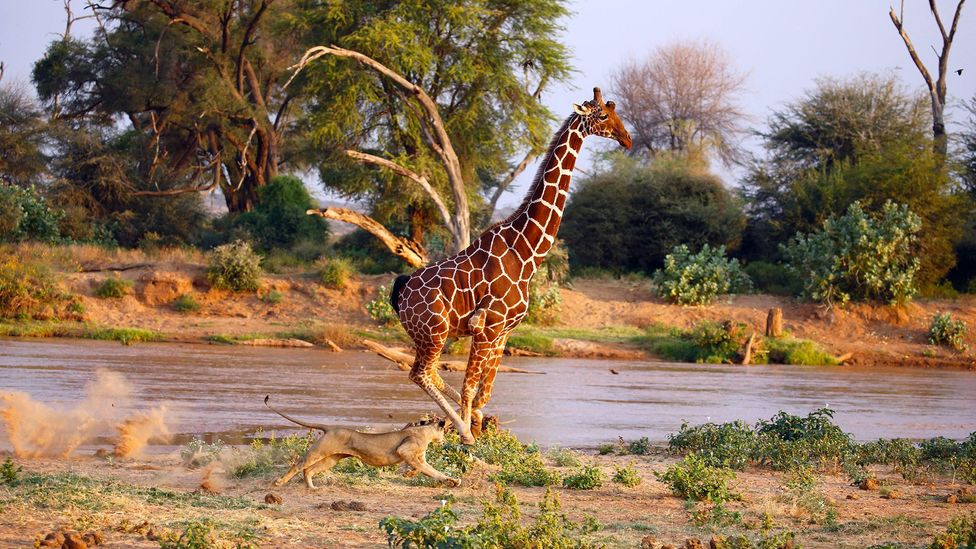
    The reasons to fear are clear. Recent studies have found that up to 32% of adult female giraffes in parts of the Serengeti carry scars from lion attacks, 25% of harbour porpoises in the southern North Sea have claw and bite marks from grey seals and three quarters of manta rays in some African waters bear multiple bite wounds from sharks. These survivors may carry memories of terror along with their physical scars.

    Rudy Boonstra, a population ecologist at the University of Toronto, has studied the impacts of extreme stress on the snowshoe hares and other small mammals of the Canadian Yukon since the 1970s. He was inspired by his own family history: Boonstra was born in the Netherlands, where his mother — like many of the Dutch — experienced severe stress during World War Two. “That likely affected her children,” he says. “That sense of stress being a relevant factor in our biology was always in the back of my mind.”

    Boonstra knew that during the decline phase of the snowshoe hare cycle, the great majority of hares are killed by predators. But there turned out to be more to the story. When Boonstra’s student, Michael Sheriff, tested faeces of live-caught hares during the rise and fall phases of the population cycle, he found that levels of the stress hormone cortisol in mother hares fluctuated with predator density, peaking when predators were most numerous.

    Those highly-stressed mothers, the researchers found, bore fewer, smaller babies. And heightened stress hormone levels were also passed from mothers to daughters, slowing the rates of hare reproduction even after predators had died off and abundant vegetation was available for hares to eat. This explains why the hare population remains low for three to five years after predators have all but vanished from Boonstra’s study site.

    Animals stressed by many predators spend more time hiding and less time feeding, so they produce fewer young — but that may allow more adult hares to survive to rebuild the population

    Early pioneers of stress physiology focused on human problems and viewed such stress responses as pathological, but Boonstra has come to disagree. He sees the response of snowshoe hares as an adaptation that allows the animals to make the best of a bad situation. Animals stressed by many predators spend more time hiding and less time feeding, so they produce fewer young — but that may allow more adult hares to survive to rebuild the population when the cycle starts again.

    Some of the most dramatic impacts of wildlife trauma have been observed in African elephants. Their populations have declined drastically due to poaching, legal culling and habitat loss. Undisturbed elephants live in extended family groups ruled by matriarchs, with males departing when they reach puberty. Today, many surviving elephants have witnessed their mothers and aunts slaughtered before their eyes. A combination of early trauma and the lack of stable families that would ordinarily be anchored by elder elephants has resulted in orphaned elephants running amok as they grow into adolescence.

    You might also be interested in:

    “There are interesting parallels between what we see in humans and elephants,” says Graeme Shannon, a behavioural ecologist at Bangor University in Wales who studies the African elephant. Trauma in childhood and the lack of a stable family are major risk factors for PTSD in people. And among elephants who’ve experienced trauma, Shannon notes, “we’re seeing a radical change in their development and their behaviour as they mature”. Elephants can remain on high alert years after a terrifying experience, he says, and react with heightened aggression.

    Shannon experienced this first-hand when he and his colleagues were following a herd of elephants in South Africa’s Pongola Game Reserve. The researchers kept their car at a respectful distance. But when they rounded a curve, Buga, the herd’s matriarch, stood blocking the road. The driver immediately turned off the engine, which generally causes elephants to move on peaceably. Instead, Buga charged the car. “Next thing we knew, the car was upside down and we were running,” remembers Shannon. Buga’s extreme reaction, he suspects, was linked to trauma she experienced when she was captured and relocated six years earlier.

    Human responses to danger, injury and loss are likely part of this same evolved set of responses. A vast body of evidence shows that the brains of mice, men — in fact, all mammals and birds, fish, even some invertebrates — share a common basic structure, and common responses to terror or joy. The brain circuitry that signals fear and holds memories of terrifying events lies in the amygdala, a structure that evolved long before hominids with bulging forebrains came into being.Many adult giraffes bear the scars from lions, but these encounters may leave non-physical marks too (Credit: BiosPhoto/Alamy)

    Many adult giraffes bear the scars from lions, but these encounters may leave non-physical marks too (Credit: BiosPhoto/Alamy)

    Most modern people with PTSD have been traumatised in combat or during a criminal attack or a car crash. But the intrusive memories of trauma, the constant state of alarm that can wear down the body’s defences and lead to physical illness — these arise from the same ancient brain circuits that keep the snowshoe hare on the lookout for hungry lynx, or the giraffe alert for lions.

    The amygdala creates emotional memories, and has an important connection to the hippocampus, which forms conscious memories of everyday events and stores them in different areas of the brain. People or other animals with damaged amygdalae can’t remember the feeling of fear, and so fail to avoid danger.

    Brain imaging studies have shown that people with PTSD have less volume in their hippocampus, a sign that neurogenesis — the growth of new neurons — is impaired. Neurogenesis is essential to the process of forgetting, or putting memories into perspective. When this process is inhibited, the memory of trauma becomes engraved in the mind. This is why people with PTSD are haunted by vivid memories of an ordeal long after they’ve reached safety.

    In a similar manner, fear of predators suppresses neurogenesis in lab rats. And Zanette and Clinchy are demonstrating that the same pattern holds in wild creatures living in their native habitats.

    The scientists began by broadcasting the calls of hawks in a forest and found that nesting female song sparrows that heard the calls produced 40% fewer live offspring than those that did not. In later experiments, they showed that brown-headed cowbirds and black-capped chickadees that heard predator calls showed enduring neurochemical changes due to fear a full week later. The cowbirds had lowered levels of doublecortin, a marker for the birth of new neurons, in both the amygdala and hippocampus.Repeated chases by predators can alter snowshoe hare behaviour and lead them to have fewer young (Credit: Tom Brakefield/Getty Images)

    Repeated chases by predators can alter snowshoe hare behaviour and lead them to have fewer young (Credit: Tom Brakefield/Getty Images)

    The same pattern has been shown in wild mice and in fish living with high levels of predator threat. These neurochemical signals parallel those seen in rodent models of PTSD that researchers have long used to understand the syndrome in humans.

    Despite the mounting evidence that a wide range of animals experience long-term impacts of extreme stress, many psychologists still see PTSD as a uniquely human problem. “PTSD is defined in terms of human responses,” says David Diamond, a neurobiologist at the University of South Florida. “There is no biological measure — you can’t get a blood test that says someone has PTSD. This is a psychological disease, and that’s why I call it a human disorder. Because a rat can’t tell you how it feels.”

    Some researchers now disagree with this human-centric view of PTSD, however. “A lot of things are shared between humans and other mammals,” says Sarah Mathew, an evolutionary anthropologist at Arizona State University. This includes learning about and responding to danger, and avoiding situations that present life-threatening risks. Mathew believes that PTSD has deep evolutionary roots, and that some of its symptoms arise from adaptations — like a heightened state of alert — that allow individuals of many species, including our own, to manage danger.

    This evolutionary perspective is beginning to change minds. Clinchy and Zanette have organized conferences on the ecology of fear and PTSD that bring together ecologists, psychiatrists and psychologists. “The psychiatrists and psychologists were talking about PTSD as maladaptive,” recalls Clinchy. “We were arguing that this is an adaptive behaviour, to show these extreme reactions in this particular context, because that increases your survival.”

    Diamond came to agree. The brain of someone with PTSD, he says, “is not a damaged or dysfunctional brain, but an overprotective brain”.

    “You’re talking about someone that has survived an attack on his or her life,” he adds. “So the hypervigilance, the inability to sleep, the persistent nightmares that cause the person to relive the trauma — this is part of an adaptive response gone awry.”

    “There’s a stigma involved in PTSD, frequently,” says Zanette, “so people don’t seek treatment. But if patients can understand that their symptoms are perfectly normal, that there is an evolutionary function for their symptoms, this might relieve some of the stigma around it so that people might go and seek treatment.”

    * This article originally appeared in Knowable Magazine, and is republished under a Creative Commons licence.