By Bart PfankuchSouth Dakota News WatchAD0:23SKIPhttps://imasdk.googleapis.com/js/core/bridge3.478.1_en.html#goog_1748814541
Editor’s note: This is the first part of a South Dakota News Watch story on the state’s predator control bounty program. Two more partsof the story will be published in the days to come.
A state-sanctioned pheasant protection program that pays South Dakota youthand adults $10 for every raccoon, skunk and other predator they trap has led to the killing of more than 134,000 animals in the past three years with no scientific evidence the program is working.
Known as the Nest Predator Bounty Program, the effort to boost pheasant and duck populations by paying trappers to kill animals that eat the eggs and hatchlings of pheasants and ducks began in 2019 and recently completed its third year of operation. The program that takes place for a few months during the spring pheasant nesting season has been approved for another year in…
Photo by: Oregon Department of Fish and Wildlife via APThis Feb. 1, 2017 photo provided by the Oregon Department of Fish and Wildlife shows the Western gray wolf Snake River pack seen by a remote camera in the Hells Canyon National Recreation Area. (ODFW via AP)By:MTN NewsPosted at12:05 PM, Aug 30, 2021and last updated1:18 PM, Aug 30, 2021
After a public comment period that drew more than 26,000 comments, the Montana Fish & Wildlife Commission at its August 20 meeting adopted several changes to the 2021/2022 wolf hunting and trapping regulations.
Changes include eliminating quotas, increasing the number of wolf trapping and hunting licenses allowed for individual hunters, extending wolf trapping seasons, and the allowance of snares for trapping wolves.
“It’s really a success story when you look at enhancing our trapping traditions and outdoor heritage,” said Kevin Robling, GF&P secretary.Written By:Bart Pfankuch / South Dakota News Watch|2:00 pm, Aug. 30, 2021
Shown here is a trap used to catch nest predators that are included in the state’s Nest Predator Bounty Program, which was created to enhance pheasant nesting success. (Sam Fosness / Republic)
A state-sanctioned pheasant protection program that pays South Dakota youths and adults $10 for every raccoon, skunk and other predator they trap has led to the killing of more than 134,000 animals in the past three years with no scientific evidence the program is working.
Known as the Nest Predator Bounty Program, the effort to boost pheasant and duck populations by paying trappers to kill animals that eat the eggs and hatchlings of pheasants and ducks began in 2019 and recently completed its third year of…
See picturesque Lake Tahoe obscured by smoke from wildfire02:21
(CNN)The ragingCaldor Firein Northern Californiaprompted evacuation ordersand warnings in the Lake Tahoe Basin Sunday night after fire conditions resulted in rapid spread, causing at least one hospital to transfer all of its patients out amid the flames.All patients were being evacuated fromBarton Memorial Hospitalin South Lake Tahoe.”Patients will be transferred to regional partner facilities & patients’ families will be notified,” the hospital said in atweetSunday night. “Barton’s Emergency Department remains open for emergent health needs only.”
Five people have been injured in the fire that has destroyed more than 650 structures and damaged nearly 40 more since it began August 14, Cal Fire said.
Photos:Wildfires raging in the WestFirefighters try to reach a fire site in…
You’re seeing it everywhere: Impossible Whoppers, Beyond sausage at Pizza Hut, eventually plant-based chorizo at Chipotle, popping up on fast food and fast-casual menus all over the place. It’s a plant-based bonanza! That trend isn’t about to plateau, at least not anytime soon. Piplsay, a consumer opinion company, polled 30,700 people across the United States to see what they really thought of these products on fast food menus, and it’s interesting to see how many people are starting to embrace the movement.
Above all, it starts with faux-meat awareness. How many people actually know about the availability of plant-based options at their favorite fast food restaurants? The answer: 71%. That means 29% of the people polled weren’t even aware that this was an option yet at many places. (People, where have you been?)
Of those who were aware of the products, 54% said they’ve tried them. Of that group, 21% who identified as meat eaters said they’ve tasted those items once or twice, and 18% of meat eaters said they’d eaten fake meat offerings several times (aka more than twice). Meanwhile, of the respondents who are vegan or vegetarian, only 8% had plant-based meat on repeat visits and 7% of them gave it a shot only once or twice. Are you surprised by those findings? If these stats seem backward—as in, it would seem more likely that non-meat eaters would appreciate and order a meatless burger more often than carnivores—consider the fact that, as Vox explains here, plant-based meat is designed for “flexitarians” and meat eaters to replace the meat that’s already in their diet. Not as many vegetarians and vegans are actively craving products that mimic the taste and texture of meat.
The remaining 46% of respondents said they were aware of plant-based fast food options, but hadn’t tried any of them. Of that group, 22% were flat-out uninterested in giving the vegan meat substitutes a shot. I know some people who are vehemently against plant-based meat for whatever reason, but I mean…you can’t really have an opinion about something you refuse to try.
In terms of satisfaction, 70% of those who tried vegan meat substitutes reported that they enjoyed the experience, and 60% said they’d eat them again. The remainder said their experiences were not so good (18%) and not good at all (12%). A lot more people seem to like it than hate it, which must mean it’s doing a pretty good job imitating beef—or providing a similarly satisfying experience, at least. If you haven’t tried it yet, admit it: aren’t you a little curious?
Updated: 1:40 PM PDT Aug 30, 2021Infinite Scroll EnabledKCRA StaffPlay Video
GET LOCAL BREAKING NEWS ALERTS
The latest breaking updates, delivered straight to your email inbox.Your Email AddressSUBMITPrivacy Notice
Evacuation orders were issued Monday for all of South Lake Tahoe after expanded evacuations the night before as the massive Caldor Fire in El Dorado County experienced a “rapid spread,” Cal Fire said.
Watch continuous coverage live in the player above
Monday’s new evacuation orders are for the following areas:
Heavenly:East of Pioneer Trail between Larch and Al Tahoe, to include the area of Heavenly Ski Resort out to the Alpine County Line and the Nevada State line on the East.
Stateline:East of Ski run on the lake side of Pioneer Trail and also both sides of Pioneer Trail between Larch and the Nevada State line.
PUBLISHED MON, AUG 30 20217:43 AM EDTUPDATED 5 HOURS AGOCatherine Clifford@IN/CATCLIFFORD/@CATCLIFFORDSHAREShare Article via FacebookShare Article via TwitterShare Article via LinkedInShare Article via EmailKEY POINTS
Environmental studies professor Sarah Ray wrote “A Field Guide to Climate Anxiety: How to Keep Your Cool on a Warming Planet.”
Ray hopes it will better equip people with the morphing and sharpening fears her Humboldt State students brought to her classroom.
In this conversation with CNBC, Ray shares how she thinks climate communications and psychology need to change to help young people.
Her advice is useful for anyone struggling to find a way to productively move through climate change fears and paralysis.
Sarah Ray, a professor of environmental studies at Humboldt State University in Arcata, California, and author of “A Field Guide to Climate Anxiety: How to Keep Your Cool on a Warming Planet.”Photo courtesy Sarah Ray
Young people are not coping well with climate anxiety.
CNBC is publishing a series of accounts of how climate watchers, leaders and others are facing the emotional toll of climate change and finding a way through their anxiety, and this is a piece in that series.
The following are excerpts of Ray’s comments in a telephone interview with CNBC. They have been edited for brevity and clarity.
‘This new generation is radically different’
The existential weight that my students were bringing to me personally and into the classrooms to each other was something I had no tools to deal with.
I was seeing a great impatience with doing the work of classes: “Why am I wasting my time in college when this stuff is happening out there?” Very much like what we hear from Greta Thunberg and the youth climate movement. This sense of impatience with the types of activities we do in classes, a real desire for action, a real desire for getting out there, rolling your sleeves up and doing something and fixing these problems. The urgency has totally sunk in. There was a fetishizing of action over thinking or talking or reading.
Economics, politics, law, engineering, science used to be the places where students would go into if they wanted to get into environmental stuff. And they were predominantly white, and they often came in with a nostalgia about wanting to get things back to nature the way it was before “bad stuff happened to it.” And that was the modus operandi of the field.
This new generation is radically different.
Sarah Ray, a professor of environmental studies at Humboldt State University in Arcata, California, with her two kids, ages 10 and seven.Photo courtesy Sarah Ray
There is a real awareness of the social justice dimensions and the sort of systems change thinking around climate change. The new generation doesn’t think of this as just something that we need to go into science to fix or technology to fix or engineering to fix or even politics or law. There’s a sense of this being a systemic thing that we need all hands on deck to address. We need all the talents, we need all the skills we from the artists, to the creative types, to the imagination people, to the children’s book writers, to the teachers to the parents — in addition to all of the usual suspects that used to be in sort of thinking about the major leverage points of affecting climate change.
It used to be that climate change was sort of imperceptible, abstract, hard to get your head around hard to deal with. It was a communication conundrum. It evaded all of the risk perception, tick boxes that need to be checked to create a good villain, for people to perceive something as a problem — especially for young people for whom the future feels really far away.
No longer is it abstract, or in the future. It is now, and it’s perceivable. And that has been a huge achievement, because by definition, climate change is the least narratable villain in a story.
They won’t be flying as much. They will refuse things that my generation takes for granted, like plastic and single-use containers. They will slowly, hopefully, successfully change how infrastructure works, how their transportation works, how they build their families, how they build their homes, how they live on this planet and walk on this Earth. Their lifestyles won’t accept what my generation has accepted as normal.
There’s going to be a real reckoning around reproductive refusal. What’s fascinating about that is environmentalists have long chosen not to have children as a way to reduce their impact on the planet, but this generation is choosing not to have children because they don’t think their children will have a livable future. That’s a very, very, very different reason to do it.Environmentalists have long chosen not to have children as a way to reduce their impact on the planet, but this generation is choosing not to have children because they don’t think their children will have a livable future.Sarah RayPROFESSOR AND AUTHOR
The climate movement forever has thought, “We’re never going change capitalism, this is never going to happen.” This real sense of futility of the whole endeavor, and that futility is less, I feel like that is diminished.
The younger generations are saying, “No, actually Covid has shown us that we can change a lot of stuff.” They feel more politically powerful than previous any previous generation before them, except for maybe in the ’60s. In the last 50 years, this is the most powerful feeling generation, and they have good reason to feel that way.
Necessity is the mother invention. Desperation is the mother of action. These two things absolutely go together. You can’t have such a politically organized generation and group without such clear and present danger.
For a sustainable future: Focus on what’s working
The story is not already prewritten. The dominant narrative is about inevitability. And that is an excuse for inaction. And I am utterly early against that. My favorite book on this is the newest book by Elin Kelsey, “Hope Matters.”
The story that we can build the future we want has to be the central story with young people. I don’t care whether that’s rose tinted. I don’t care if that’s Pollyanna to some people. The science is out there on what happens with young people if they think that their future is already written for them, and that is not good. That is not an option for me.
The future of climate communication, the future of climate psychology has to simply be the “both-and” orientation. It’s just going to have to be, because we’re all going to learn at some point that living in doom and gloom narratives is very ineffective, and it makes us literally want to kill ourselves. This is very scary. We’ve gone from nobody caring enough about climate change to people caring so much that they’re nihilistic. We cranked up the urgency and then we’ve like overshot the mark.
It’s not that urgency is a bad thing. Urgency has a rhetorical situation and purpose and audience that is very effective and needs to happen. And we need to keep using urgency where appropriate. So I am not rejecting urgency outright. But for people who do really care a lot, it is not a productive thing.
We are going to be in this for a while. There is some urgency needed, but we need to focus on those fears that we do have control over, and slow down and do the work in a way that is sustainable for ourselves. And simply put that is the recipe for engaging in this work without burning out, without getting overwhelmed.
We need to be clear-eyed about it. I’m not suggesting that we block out everything that we can’t control. Taking in of all this information through the news, social media, all the ways that we have a 24-7 news stream, in general, that negativity bias of media and negativity bias in our psychologies and in our brains does not equate to reality. And it does equate to serious depression and anxiety.
We can be aware of how bad things are, and also how good things are. We can counterbalance the overwhelming negativity of news and our own biases around negativity by consuming and actively seeking out things that are positive. And that’s not about being in denial or naive. That is about making sure we are consuming, that we’re exposed to reality, which is not all bad.
The Interior Department on Monday announced an expansion of hunting and fishing rights across 2.1 million acres, which it tied to the Biden administration’s lands conservation target.
The announcement applies to a single national fish hatchery and 88 national wildlife refuges, according to an Interior announcement.
“Increasing access to outdoor recreation opportunities is essential to advancing the Administration’s commitment to the conservation stewardship of our public lands,” Interior SecretaryDeb Haalandsaid in a statement. “Responsible hunting and fishing helps to promote healthy wildlife habitats while boosting local recreation economies.”
“Today’s announcement furthers a rich tradition of providing quality outdoor recreation experiences to the American people on our public lands,” Service Principal Deputy Director Martha Williams said…
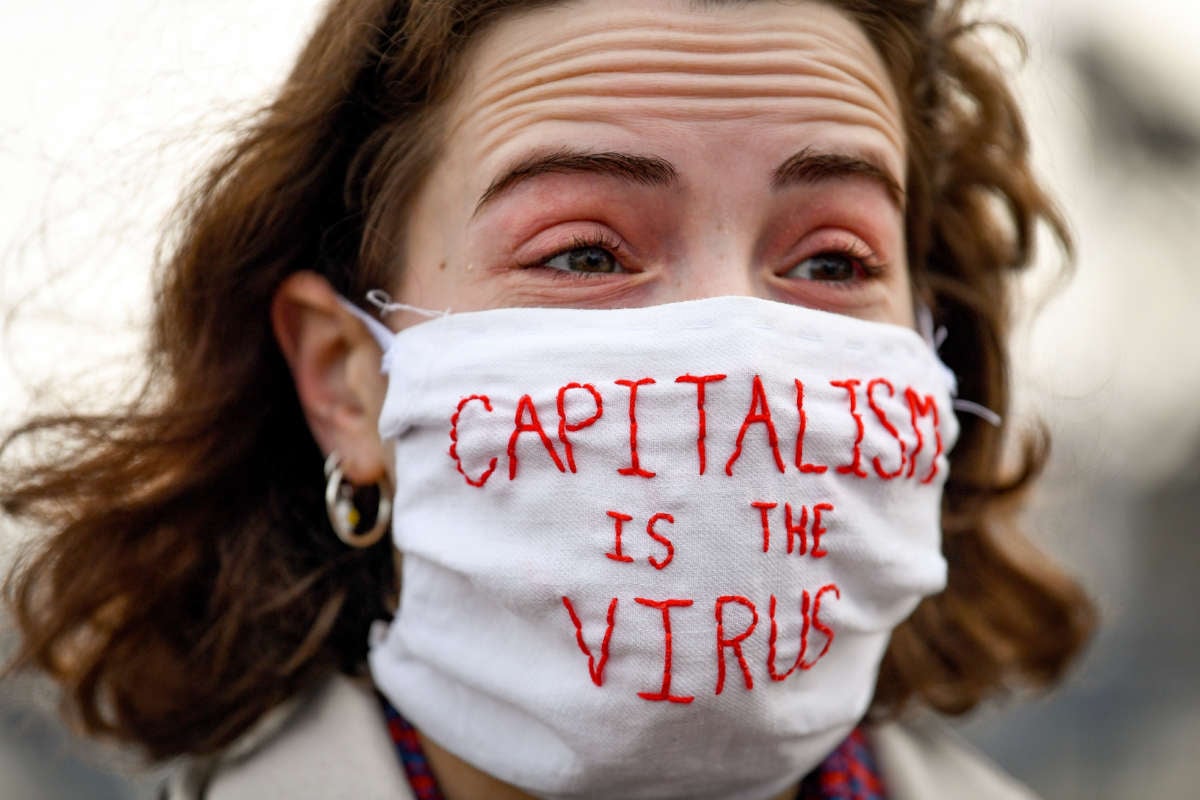
Activists hold a demonstration marking the delayed COP26 UN climate negotiations on November 13, 2020, in Glasgow, Scotland. The 26th United Nations Climate Change conference was delayed for a year due to the COVID-19 pandemic.


 Top Videos



 Top Articles


 Updated: 1:40 PM PDT Aug 30, 2021Infinite Scroll Enabled