1 of 18A distinctive fan-shaped ginkgo leaf in the Fossils Atmospheres Project is seen in the morning sun at the Smithsonian Research Center in Edgewater, Md., Tuesday, May 18, 2021. “Ginkgo is a pretty unique time capsule,” said Peter Crane, a Yale University paleobotanist. “It is hard to imagine that these trees, now towering above cars and commuters, grew up with the dinosaurs and have come down to us almost unchanged for 200 million years.” (AP Photo/Carolyn Kaster)
WASHINGTON (AP) — Richard Barclay opens a metal drawer in archives of the Smithsonian Natural History Museum containing fossils that are nearly 100 million years old. Despite their age, these rocks aren’t fragile. The geologist and botanist handles them with casual ease, placing one in his palm for closer examination.
Embedded in the ancient rock is a triangular leaf with rounded upper lobes. This leaf fell off a…
BYROSE L. THAYER•STARS AND STRIPES•AUGUST 24, 2021Sgt. 1st Class David Frederick White, a 40-year-old combat veteran and Purple Heart Medal recipient, was found dead Saturday in Wrangell-St. Elias National Park and Preserve. Searchers who found his body believe he attempted to cross a creek, but was swept away by the current. (Photo provided by Joint Base Elmendorf-Richardson)
An Army noncommissioned officer and Purple Heart recipient assigned to Fort Wainwright, Alaska, was found dead in a nature preserve Saturday after he was reported overdue from a hunting trip, according to officials at Joint Base Elmendorf-Richardson.
Sgt. 1st Class David Frederick White, 40, served as an explosive ordnance disposal specialist with the 65th Explosive Ordnance Disposal Company, according to base officials. He was a 19-year Army veteran who deployed four times to the wars in Iraq and Afghanistan.
“The loss of Sgt. 1st Class White came as a shock, jarring…
Concerns in the towns and resort communities near the famed alpine lake as only 9% of the wildfire has been contained
California’s Caldor fire moves east toward Lake Tahoe as crews continue to battle a blaze that has grown to more than 180 sq miles with only 9% containment.Photograph: Michael Nigro/Pacific Press/Rex/Shutterstock
Thousands of firefighters battled on Tuesday to keep a behemoth blaze from surging closer to Lake Tahoe, the blue alpine lake surrounded by resort communities straddling the California-Nevada state line.
The Caldor fire, just 9% contained, has become the nation’s number one priority for firefighting resources, said Thom Porter, director of the California department of forestry and fire protection.
California Caldor fire burns thousands of hectares in weekend surge – video
“It is knocking on the door to the Lake Tahoe basin,” Porter said. “We have…
Gov. Andrew Cuomo of New York left his dog at the governor’s mansion, Albany’s Times Union reported.
Cuomo, who resigned amid scandals, left the mansion last week to stay with one of his sisters.
He asked staff recently “if anyone would like to keep his dog,” according to the Times Union.
10 Things in Politics: The latest in politics & the economyEmail addressBy clicking ‘Sign up’, you agree to receive marketing emails from Insider as well as other partner offers and accept our Terms of Service and Privacy Policy.
Outgoing Gov. Andrew Cuomo of New York has been without his dog Captain ever since moving out of the governor’s mansion last week, Albany’s Times Union reported.
Cuomo has been staying with one of his sisters ever since leaving the mansion in Albany, but staff at the residence were asked “if anyone would like to keep his dog,” the Times Union reported.
Captain has “nipped a few people” at the mansion since being adopted in 2018. Two state-police sources who spoke with the Times Union said, “A mansion staffer recently took the dog home for a few days but decided he was too much.”
Cuomo’s spokesman Rich Azzopardi — who recently described his boss as being “railroaded” in the sexual-harassment scandal — told the Times Union the arrangement was “temporary” until Cuomo returned from a vacation he plans to take upon leaving office.
The two state-police sources talked to the paper on Saturday and said the Siberian-shepherd-malamute mix has continued roaming about the mansion.
When a similar hunt was allowed there earlier this year, trophy hunters gunned down 218 wolves in just 72 hours. Now the war on wolves is escalating even further.
Wisconsin is becoming Exhibit A for why wolves need their federal Endangered Species Act protection restored. The state even has a law thatrequiresa wolf hunt each year.
The newly announced 300-wolf quota is more than double the number recommended by a state wildlife agency. Last winter’s slaughter annihilated at least 20% of the state’s wolf population.
Wisconsin allows hunters to use despicable techniques to kill wolves, including using dogs to hunt them down. More tags are sold to kill wolves…
Get the latest news sent daily to your inbox so you’re always in the know.Contact us or unsubscribe anytime.ShareTweetSave this Article
Whoever’s been blatantly breaking the rules to feed coyotes at Pine Hills Cemetery in Toronto should feel really bad right now, as their actions have forced officials to remove a prominent member of the pack from its mate and its pups. Forever.
The animal in question, a collared coyote dubbed “Urban 23” by Ontario’s Ministry of Natural Resources and Forestry, has been raising concern among residents of some Scarborough neighbourhoods in recent months.
“Although coyote experts agree that the behaviour of the collared animal was not aggressive, his comfort level around people continued — reinforced by the food rewards he continued to receive — to the point where his behaviour was no longer considered acceptable by city officials,” reads a release issued by Toronto Wildlife Centre (TWC) on Monday.
“A coyote or other wild animal whose behaviour has been significantly changed by feeding could potentially hurt someone, even if the animal is playing or merely seeking a food treat.”
Thus, officials made the decision to relocate Urban 23 as part of a “large-scale effort to resolve the situation with coyotes in Pine Hills Cemetery in Scarborough and the surrounding neighbourhood.”
TWC says that someone continues to feed the coyotes in Pine Hills, despite a rash of recent eductational initiatives, aversive conditioning programs, widespread media coverage and signs posted throughout the neighbourhood.
“One person was even seen walking past a sign that warned of the dangers of feeding, with food in their hand for a coyote,” wrote the non-profit in its release.
“Of greatest concern to all involved is that the feeding continues, and there are other coyotes in the neighbourhood being affected by it… Human behaviour needs to change, because wild animals fall victim as a result.”
Urban 23 is safe, but his life is forever changed thanks to those who’ve been feeding him and his family scraps of people food: The coyote was carefully tracked, located and captured on Aug. 9.
“He was tucked away under some waste rubble, where he had taken shelter to get out of the heat. Once approached, he came out of his resting spot. He then paused to assess who was there,” writes TWC of the capture.
Fortunately, Muskoka’s Aspen Valley Wildlife Sanctuary (AVWS) has agreed to accept Urban 23 as a permanent resident. He will become part of the rescue’s guided tours, which they say “serve to educate the public on the negative impact of human interference, including feeding wildlife.”
His story now serves as yet another reminder for people that the best thing they can do for most wild animals is appreciate them from a distance (read: leave them the heck alone).
“Some might consider this a happy ending, but we think the whole situation is just so sad,” said TWC’s executive director Nathalie Karvonen of the case.
“This coyote’s whole life has been changed, his whole future as a wild animal taken away, by the thoughtless and selfish actions of the people who refused to stop feeding him.”
An image shared by the rescue, seen at the top of this article, drives the message home in TWC’s release, with the caption: “Urban 23 playing with his family — June 2021.”
He will never see members of his pack or any coyote pack in the wild again.Lead photo by
A version of this story appeared in CNN’s Wonder Theory newsletter. To get it in your inbox, sign up for free here. Tell us what you’d like to see more of in the newsletter at sciencenewsletter@cnn.com.
(CNN)What makes humans a successful species?We’ve been around for a long time, and we’re still here (unlike Neanderthals). But it hasn’t been an easy road — and we don’t always make great choices. Maybe it’s because we strive, we fail, and we learn.
As my college photojournalism teacher Mark Johnson often said, “Fail faster.” It means that failure is possible in anything we undertake, and the sooner we accept and learn from our failures, we have a greater chance of turning them into achievements.
Part of that process is learning from each other, a vital component of the human connection. Even during the pandemic, we’ve found ways to stay present in each others lives over great distances. Perhaps our success stems from our ability to grow, learn and share, no matter the odds.
Fantastic creatures
Great apes say hello and goodbye.You say goodbye, and I say hello. Just like people, some great apes don’t leave each other hanging.
Instead, they purposefully use signals to begin and end social interactions.Enter your email to subscribe to the CNN Fareed Zakaria global analysis newsletter.close dialog
Receive Fareed Zakaria’s Global Analysisincluding insights and must-reads of world newsActivate Fareed’s BriefingBy subscribing you agree to ourprivacy policy.Researchers observed more than 1,200 interactions within groups of chimpanzees and bonobos in zoos. These apes were more likely to hold hands, butt heads and touch each other before and after playing.This is much bigger than common courtesy, and it shows a deep-rooted sophisticated behavior observed only in humans until now, the scientists said. But can you guess which ape greeting is more popular: hello or goodbye?
We are family
A new clue to human evolution’s biggest mystery has emerged.The only evidence we have of Denisovans, an enigmatic group of early humans first identified by researchers in 2010, belong to fossil fragments that can fit in the palm of your hand.A Philippine ethnic group known as the Ayta Magbukon has the highest known level of Denisovan ancestry in the world. Denisovan DNA can be traced in some modern humans because our Homo sapiens ancestors had children with them about 50,000 years ago.Scientists have some new theories for why there are so few of these fossils and where to look for them next.
Across the universe
This illustration depicts asteroid Phaethon being heated by the sun.The Geminid meteor shower is a skywatcher’s delight every December, and it comes from an unlikely source: an asteroid named Phaethon. Typically, meteor showers are caused by comets. This oddball asteroid behaves like a comet.Until now, scientists weren’t really sure why. As Phaethon makes its closest approach to the sun during orbit, our star’s heat may cause sodium inside the asteroid to “fizz” and vaporize.This week, researchers also shared that ripples within the rings around Saturn have revealed the planet’s “fuzzy” core.Rather than solid rock, Saturn’s core is likely a slushy mix of ice, rock and metallic fluids — and it’s much larger than previous estimates.
Going green
An agreement between nations in the 1980s helped us avoid a “scorched Earth” outcome, according to new research.The Montreal Protocol to ban CFCs, or chlorofluorocarbon chemicals once commonly used in aerosol sprays, refrigeration and air conditioners, was signed by dozens of countries in 1987.Scientists modeled how unabated use of CFCs would have affected the ozone layer, which sits between 9 and 22 miles above Earth.The ban helped us avoid a breakdown of the ozone layer by the late 2040s, which would have devastating impacts on our planet and even our health.
Turn, turn, turn
Colorful fall foliage on display at the White Mountain National Forest in New Hampshire in October 2020.If summer’s heat has you dreaming of fall, wait before shrugging on a sweater; otherwise, you’ll swelter. (But we won’t step on your pumpkin spice dreams.)The Climate Prediction Center’s outlook for September through November is showing above-average temperatures for most of the country. Things will eventually cool off, but that crisp feel in the air may come later than expected.NOAA has also increased chances for La Niña this fall, which may be good news for the drought-stricken Western states, but this could be tough for areas impacted by tropical systems in the Atlantic. Speaking of storms, stay updated all weekend on Henri. Sign up for email alerts from CNN meteorologists and reporters in the field.Historic drought conditions also have an impact on fall foliage. This is what leaf peepers might see, depending on where you live.
Just a thought before you go: Look up for August’s full moon this weekend and set your clocks for a NASA spacewalk next Tuesday at 8 a.m. ET.Like what you’ve read? Oh, but there’s more. Sign up here to receive in your inbox the next edition of Wonder Theory, brought to you by CNN Space and Science writer Ashley Strickland, who finds wonder in planets beyond our solar system and discoveries from the ancient world.
Biden could save wolves and end state-sponsored wolf hunts if he wanted to.
Instead, his administration has decided to toe the same line as Trump — that wolves don’t need Endangered Species Act protection.
After Trump took away federal protection from gray wolves across the lower 48, we knew what to expect: States like Wisconsin would hold their first wolf hunts in years.
Meanwhile, states like Idaho and Montana have escalated their war on wolves by extending trapping seasons and allowing the use of cowardly tactics like chasing the animals down in ATVs.
Which is why we’re in court to get federal protection for gray wolves restored.
But now, instead of saving wolves, the Biden administration is defending Trump’s decision to take away wolves’ protection under the Act — rubber-stamping a policy that’s not based on science and threatens to wipe out decades of recovery.
At least 20% of Wisconsin’s wolves were killed in just three days in February. Without their protection restored, more bloodletting hunts will occur — including one planned for this fall.
· GET THE SHOT AND FOR THOSE WHO HAVE – I SALUTE YOU FOR DOING THE RIGHT THING.
After reading Lauri Garrett’s book The Coming Plague in (1995) and after diligently reading the articles for the last two years in New Scientist and Scientific America on Covid and after refreshing my history lessons on the great influenza epidemic that began in 1918, I absolutely support vaccinations and the wearing of masks.For those who choose not to, because of whatever reasons you care to choose, I don’t care to hear them. Take the risks and be neglectful of others especially those in the high risk category if you wish to be so selfish.Children are dying from a combination of Covid, irresponsibility, ignorance and just plain stupidity. Yes there is a government conspiracy. It’s called trying to save lives and to support health care workers and children. The same conspiracy…
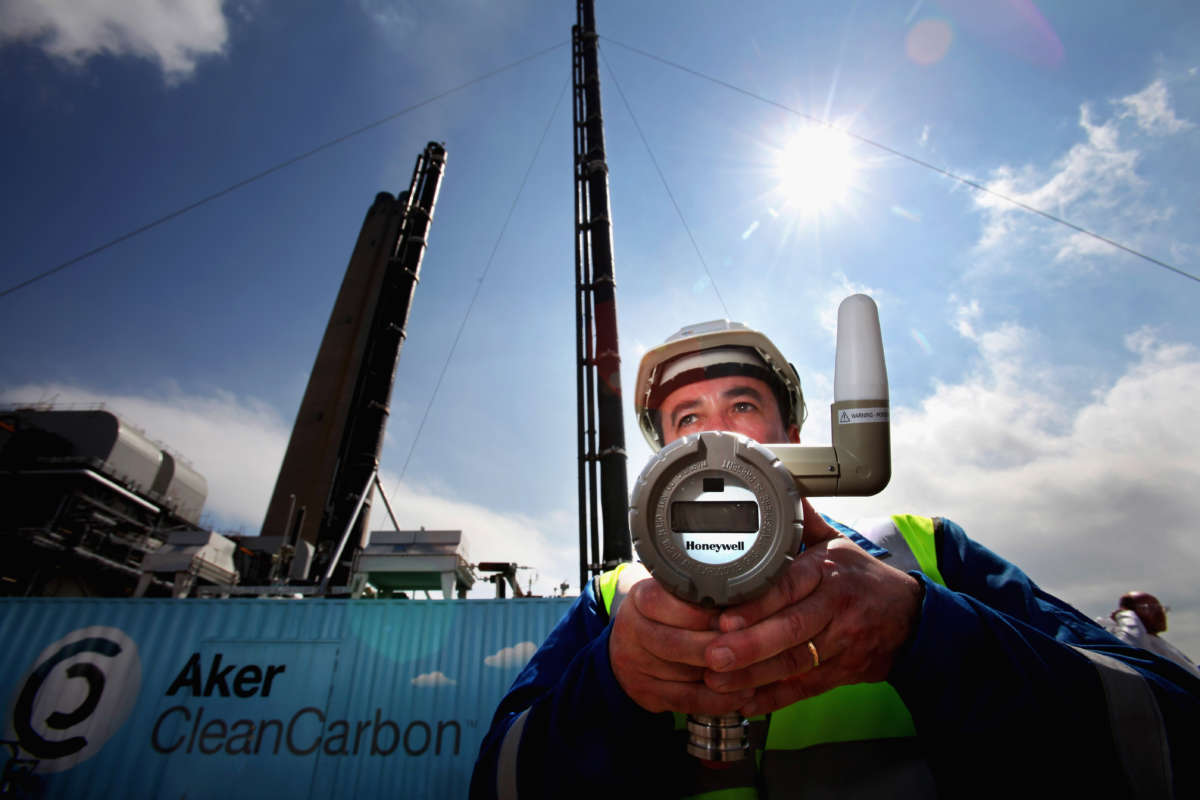
A scientist holds a pressure monitor beside a carbon capture test unit at the coal-fired Longannet power station on May 29, 2009, in Longannet, Scotland. The technology uses chemicals to remove carbon dioxide and turns it into a liquid stored underground.
This month, the Intergovernmental Panel on Climate Change (IPCC), the world authority on the state of Earth’s climate, released the first installment of its Sixth Assessment Report on global warming. It was signed off by 195 member governments. It spells out, in no uncertain terms, the stakes we are up against — and why we have no time to waste in taking dramatic steps to build a green economy.
The IPCC has been publishing reports on the state of the climate and projections for climate change since 1990. The first IPCC report surmised that human activities were behind global warming, but that further scientific evidence was needed. By the time the Fourth Assessment Report came out in 2007, the evidence for human-caused global warming was described as “unequivocal,” with at least a 9 out of 10 chance of being correct. The report confirmed that the warming of the Earth’s surface to record levels was due to the extra heat being trapped by greenhouse gases and called for immediate action to combat the challenge of global warming.
The Sixth Assessment Report finally states in absolute terms that anthropogenic emissions are responsible for the rising temperatures in the atmosphere, lands and the oceans. In other words, the fossil fuel industry is destroying the planet. And, in a similar tone to some of its previous reports, the IPCC warns that time is running out to combat global warming and avoid its worse effects. Without sharp reduction in emissions, we could easily exceed the 2 degrees Celsius (2°C) temperature threshold by the middle of the century.
Stay in the loop
Never miss the news and analysis you care about.
Email
Of course, we are already in a climate crisis. Heat waves have broken records this summer in many parts of the world, including the Pacific Northwest of the United States and western Canada; wildfires have ravaged huge areas in southern Europe, causing “disaster without precedent” in Greece, Spain and the Italian island of Sardinia; and deadly floods have upended life in China and Germany. Global average temperatures stand now at 1.1°C above pre-industrial levels. A global warming increase of 1.5°C would have a much greater effect on the probability of extreme weather effects like heat waves, floods, droughts and storms, and at 2°C, things get a lot nastier — and for a much larger percentage of the world’s population.
At current trends, it’s most unlikely that global warming can be held at 1.5°C. We have already emitted enough greenhouse gases into the atmosphere to cause 2°C of warming, according to a group of international scientists who published their findings in Nature Climate Change. Even a 3°C increase or more is plausible. In fact, the Network for Greening the Financial System (a group of central banks and supervisors) is already considering climate scenarios with over 3°C of warming, labeling it the “Hot House World.”
Yet, in spite of all the dire climate warnings by IPCC and scores of other scientific studies, the world’s political and corporate leaders continue with their “business-as-usual” approach when it comes to tackling the climate crisis.
Almost immediately after the release of the new IPCC report, the Biden administration urged the Organization of the Petroleum Exporting Countries (OPEC) to increase oil production because higher prices threaten global economic recovery. In fact, Biden’s national security adviser, Jake Sullivan, actually criticized the world’s major oil producers for not producing enough oil. Naturally, Republicans responded by demanding that the Biden administration should encourage U.S. oil producers to boost production instead of turning to OPEC.
Preposterously, the Biden administration seems to think that the best way to tackle global warming caused by anthropogenic emissions is through increasing levels of combustion of fossil fuels.
This must also be the thinking behind China’s affinity for coal, as the world’s biggest carbon polluter is actually financing more than 70 percent of coal plants built globally.The Network for Greening the Financial System (a group of central banks and supervisors) is already considering climate scenarios with over 3°C of warming, labeling it the “Hot House World.”
Or perhaps this is all part of a framework that assumes, “We are doomed, so let’s get it over with quickly.”
In either case, one suspects that political inaction and the prospect of losing the battle against the climate emergency may be the reason why the new IPCC climate report has fully embraced the idea of carbon dioxide removal from the atmosphere with the aid of technology as a necessary strategy to contain global warming.
The need for carbon removal was also addressed in the IPCC’s 2018 special report on the 1.5°C temperature limit, both through natural and technological carbon dioxide removal strategies. And an IPCC special report on carbon dioxide capture and storage (CCS) dates all the way back to 2005. But it seems that IPCC is now placing greater emphasis than before on innovation and carbon-removal technologies, especially through the process known as direct air carbon capture and storage (DACCS).
The actual rationale for the emphasis on a technological fix (geoengineering, by the way, which involves large-scale intervention in and manipulation of the Earth’s natural system, is not included in the IPCC’s latest report) lies in the belief that we can no longer hope to limit global warming to 1.5°C without carbon dioxide removal of greenhouse gas emissions from the atmosphere, which will then be stored into underground geologic structures or deep under the sea.
Unfortunately, there is a long history of technological promises to address the climate crisis, and the main result is delaying action towards decarbonization and a shift to clean energy, as researchers from Lancaster University have so convincingly argued in a published article in Nature Climate Change.
As things stand, technological solutions to global warming are largely procrastination methods favored by the fossil fuel industry and its political allies. The carbon removal industry is still in its infancy, costs are extremely high, and the methods are unreliable. Nonetheless, both governments and the private sector are investing billions of dollars in the industry and attempts are being made to sell the idea to the public as a necessary step in avoiding a climate catastrophe. A Swiss company called Climeworks is just finishing the completion of a new large-scale direct air capture plant in Iceland, and a similar project is in the works in Norway with hopes that it would actually lead to the creation of “a full-scale carbon capture chain, capable of storing Europe’s emissions permanently under the North Sea.” South Korea is also working on a carbon capture and storage project that may become the biggest in the world.
In the U.S., Republican lawmakers have also been very aggressive in touting carbon capture and storage technologies since the introduction of the Green New Deal legislation by Rep. Alexandria Ocasio-Cortez and Sen. Edward Markey in 2019.
It all adds up. Relying on technology to attempt to meet climate targets at this stage of the game is meant to obstruct the world from moving away from the use of fossil fuels. If we emphasize those false “fixes,” we are simply quickening the pace of a complete climate collapse with utterly catastrophic consequences for all life on planet Earth.
Our only hope to tackle effectively the climate crisis and save the planet rests not with technological solutions but, instead, with a Green International Economic Order. We need a Global Green New Deal (GGND) to reach net zero emissions by 2050. And this means a world economy without fossil fuels and the industry behind them that is destroying life on the planet.
Decarbonizing the global economy and shifting to clean energy is not an easy task, but it is surely feasible both from a financial and technical standpoint, as numerous studies have shown. According to leading progressive UMass-Amherst economist Robert Pollin, we need to invest between 2.5 to 3 percent of global GDP per year in order to attain a clean energy transformation. Moreover, while 250 years of growth based on the use of fossil fuels have delivered (unequal) economic benefits to the world, a world economy run on clean energy will bring environmental, social and economic benefits. One major study released out of Stanford University shows that a GGND would create nearly 30 million more long-term, full-time jobs than if we remained stuck with what it calls “business-as-usual energy.”
The latest IPCC report, just like previous ones released by the organization, predicts disaster if we do not radically — and immediately — curb carbon dioxide emissions. But we know by now that we cannot rely on our political leaders to do what must be done to save the planet. Nor can we expect technology to solve the climate emergency. Carbon removal and carbon capture technologies won’t solve global warming in time, if ever. Only a roadmap calling for a complete transition away from fossil fuels will save planet Earth.
Pressures from below — led by those on the front lines, labor unions, environmental groups, civil rights movements and students — are our only hope for the necessary changes in the way we produce, deliver and consume energy.
And change is happening. We are moving forward.
Think of how a climate awareness protest by a Swedish teenager turned into a global movement. Or the impact that the Sunrise Movement has had on U.S. politics on account of its activism on the climate crisis within only a few years after it was founded. Or the fact that we have 20 labor unions in California (including two representing thousands of oil workers) endorsing a clean energy transition report produced by a group of progressive economists at the University of Massachusetts-Amherst. Or of the great work that the Labor Network for Sustainability is doing in engaging workers and communities in the mission of “building a transition to a society that is ecologically sustainable and economically just.”
The future belongs to the green economy. It can happen. It will happen.


 Sgt. 1st Class David Frederick White, a 40-year-old combat veteran and Purple Heart Medal recipient, was found dead Saturday in Wrangell-St. Elias National Park and Preserve. Searchers who found his body believe he attempted to cross a creek, but was swept away by the current. (Photo provided by Joint Base Elmendorf-Richardson)




 Great apes say hello and goodbye.You say goodbye, and I say hello. Just like people, some great apes don’t leave each other hanging.
 This illustration depicts asteroid Phaethon being heated by the sun.The
 Colorful fall foliage on display at the White Mountain National Forest in New Hampshire in October 2020.If summer’s heat has you dreaming of fall, wait before shrugging on a sweater; otherwise, you’ll swelter. (But we won’t step on your