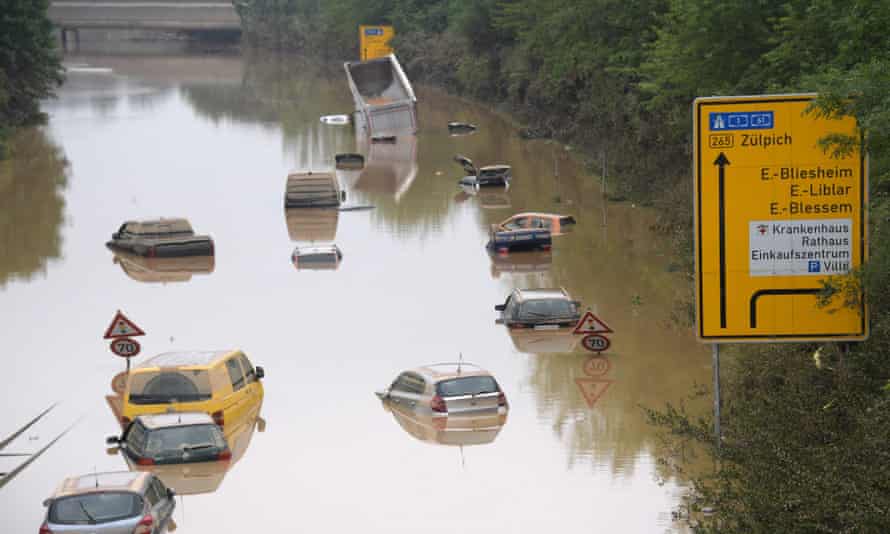
Submerged cars and other vehicles seen after flooding in Erftstadt, western Germany, in July. Extreme weather events will become more frequent as the earth heats up.Photograph: Sébastien Bozon/AFP/Getty Images
“It is unequivocal.” Those stark three words are the first in the Intergovernmental Panel on Climate Change’s new report. The climate crisis is unequivocally caused by human activities and is unequivocally affecting every corner of the planet’s land, air and sea already.
The report, produced by hundreds of the world’s top scientists and signed off by all the world’s governments, concludes that it could get far…
Dylan Zuber pled guilty to willful destruction of wildlife and other misdemeanor counts on July 26 in Mesa County Court.(Colorado Parks and Wildlife)
ByMadelynn FelletPublished:Aug. 9, 2021 at 11:27 AM PDT|Updated:49 minutes ago
GRAND JUNCTION, Colo. (KKCO) – 23-year-old Dylan Zuber, was charged with 20 counts of wildlife violations, including willful destruction of wildlife and the illegal possession of three or more big game animals. Zuber pleaded guilty to one count each of willful destruction of wildlife, illegal possession of three or more big game animals and hunting with artificial light on July 26 in Mesa County Court.
He was ordered to donate $2,500 to Colorado Operation Game Thief and pay the $3,360.50 in fines and court costs. Zuber was also sentenced to a four-year deferred judgement for the felony charge of willful destruction of wildlife. This includes a court ordered prohibition of hunting and…
Climate change is widespread, rapid and intensifying – and it’s down to us
For those who live in the West, the dangers of warming our planet are no longer something distant, impacting people in faraway places.
“Climate change is not a problem of the future, it’s here and now and affecting every region in the world,” said Dr Friederike Otto from the University of Oxford, and one of the many authors on the UN’s Intergovernmental Panel on Climate Change (IPCC) report.
It is the confidence of the assertions that the scientists are now making that is the real strength of this new publication.
EUGENE, OR — A bill introduced August 6, 2021 by Rep. Peter DeFazio (D-Oreg.) seeks to ban the use of wildlife-killing M-44 devices, commonly known as ‘‘cyanide bombs,’’ on federal public lands. These deadly devices — spring-loaded capsules armed with cyanide spray — have injured people and inhumanely killed thousands of animals every year. “Working closely with M-44 victims for almost 30 years, I have witnessed what these indiscriminate devices have done to families,” said Brooks Fahy, executive director of Predator Defense, a national wildlife advocacy group. “Countless people have lost beloved pets, and both children and adults have been poisoned. The emotional scars are permanent. Since M-44s can never be used safely, they must be banned. A…
Montana’s grizzly and human populations have both risen substantially since 1975, when the bears were protected under the Endangered Species Act. Bill Whitaker reports on conservation efforts that have led to grizzly recovery, and the farmers, ranchers and residents now encountering these ferocious animals.
When Lewis and Clark first encountered grizzly bears, there may have been a hundred thousand of them in the American West, from what is now Canada all the way down to Mexico. Grizzlies are among the most fearsome predators on the planet so, for the next 150 years, they were systematically exterminated by settlers, ranchers and farmers who saw them as a threat to their lives and livelihoods. By the 1960s there were just a few hundred left in the lower 48 states.
In 1975, grizzly bears were among the first animals to be protected under the Endangered Species Act. And as we reported last year, what’s happened since – especially in the state of Montana – is a story both of conservation and conflict. Ever been face-to-face with a grizzly? Neither had we.
The bear the 60 Minutes crew came upon ERIC KERCHNER/CBS NEWS
In the Swan Mountains of northwestern Montana, we’re carrying bear spray and following state bear specialist Erik Wenum and his colleague Milan Vinks deep into the woods.
Wenum’s checking one of several traps – called snares – that he has baited with beaver meat.
Erik Wenum: Oh, there’s a bear. Grizzly bear.
Bill Whitaker: Hear that????
Erik Wenum: The closer we get, the more agitated she’s going to become, so we’ll kind of be quiet– get a good weight assessment on her, and then we’ll just drift right back out, okay?
After the wire snare around its wrist stops the first charge at Wenum, the grizzly makes another effort to get at our cameraman, Don Lee.
Erik Wenum: (GROWL & CHARGE) Yeah, you’re alright. All right, we’ll drift out.
Bill Whitaker: You have an estimate of how big that bear is? How much do you think she weighs?
Erik Wenum: I think it’s right around 300 pounds.
That’s mid-sized for a grizzly. They can weigh as much as a thousand pounds and stand nine feet tall on their hind legs.
Erik Wenum: We’re going to mix a little bit of medetomidine.
Erik Wenum
Wenum and Vinks mix a cocktail of veterinary sedatives and load them into a dart gun.
Bill Whitaker: You have the dart, I have the bear spray, we’re ready—
Erik Wenum: There you go, we are set.
Vinks carries a shotgun loaded with lethal ammunition, just in case.
Wenum insists that neither the tranquilizer nor the snare do any lasting harm, and that he needs both as part of a project to attach radio collars to grizzlies and track their population’s recovery.
Hilary Cooley: To me, having a grizzly bear population means that the ecosystem is intact.
Hilary Cooley is the wildlife biologist in charge of grizzly bear recovery for the U.S. Fish and Wildlife service.
Hilary Cooley: Grizzly bears were listed in 1975 as a threatened species in the lower 48 states.
Bill Whitaker: Thought their survival was in jeopardy?
Hilary Cooley: Yeah. Their range had been reduced by about 98%.
Hilary Cooley
Two places grizzlies hadn’t been wiped out were Glacier and Yellowstone National Parks, where a few hundred were protected from eradication. So, starting 45 years ago, the recovery effort focused on millions of acres around those two parks.
Hilary Cooley: They’ve probably more than tripled their numbers, and their range now is more than double what it was at the time of listing.
Since listed as an endangered species back in 1975, the grizzly bear population in this region has made a remarkable comeback – a true success story. But at the same time, another population has also been growing around here – the human population – with houses and subdivisions built right next to the wilderness. And that’s often where the trouble starts.
Montana’s human population has grown by 250,000 since grizzlies were protected in 1975. Most of those people live on valley floors or in foothills not far from bear country.
Bryce Andrews: When you can look at the telemetry from their collars, you realize that at night this valley belongs to bears. A bear has walked, I’ve seen the telemetry, through the spot where you and I are sitting right now. And we are within 100 feet of my house.
Bryce Andrews is a rancher, author, and field director for a non-profit called People and Carnivores, which tries to minimize human-bear conflict. He’s seen all the videos of grizzlies going through trash cans, raiding chicken coops and backyard bird-feeders, even the fridge. They are true omnivores, and really hungry from the moment they emerge from hibernation each spring.
Bryce Andrews: Anything with caloric value, a bear will turn it into what they need to survive.
Bill Whitaker: So they will eat any and everything.
Bryce Andrews: Any and everything. They’ll come for bird seed. They’ll come for the residue on a barbecue.
Bill Whitaker: It’s their appetites that get them into trouble with humans.
Bryce Andrews: Absolutely.
Bryce Andrews
The greatest trouble comes when grizzlies go after livestock or crops that ranchers and farmers count on for their livelihood.
Hilary Cooley: Bears can be really hard to live with. They kill livestock. There are producers who have 20, 30 cows a year killed by grizzly bears. And so, for those–
Bill Whitaker: Sounds like a lot.
Hilary Cooley: –folks– it’s a lot. It’s a big impact.
Greg Schock: The bears probably knocked down between 20 and 25% of my corn that I couldn’t harvest every year.
Greg Schock farms in Montana’s Mission Valley. He says grizzlies live in the woods about a mile from his home.
Greg Schock: We had 18, several years in a row in our cornfield and nobody believed that I had that many until they put cameras up and– and actually had footage of them.
Bill Whitaker: Eighteen in your cornfield?
Greg Schock: In a hundred-acre cornfield, yeah.
With so many grizzlies around – now nearly 2,000 – the federal government has considered removing some populations from the endangered species list. So far, court challenges from environmental groups and Native Americans have prevented that.
Bill Whitaker: You think it is possible to coexist?
Greg Schock: I think we have to. If we don’t coexist, what’s– who’s leaving? The bears aren’t leaving and we aren’t leaving. So…
Greg Schock
So Bryce Andrews’ organization does things like install high-voltage electric fences around fields like this 30-acre melon farm. Grizzlies are smart enough to “test” the fences, and sometimes even get around them.
Bryce Andrews: We’ve got an electrified gate, here, which is off right now.
Andrews has an electric fence around his backyard chicken coop. But not all of his neighbors do.
Bryce Andrews: Generally, when there are unprotected chickens in grizzly habitat, it’s only a matter of time before something goes wrong.
Bill Whitaker: The grizzly bear will win.
Bryce Andrews: They’ll win, and see, they have these phenomenal noses. They smell everything.
Including neighborhood trash cans. If a grizzly develops a taste for garbage, gets accustomed to being near people, and then teaches those bad habits to her cubs, it can prove fatal.
Bears that get into such trouble are often trapped by state bear managers. At first, they’re relocated to remote regions and released. But if they keep coming back, federal official Hilary Cooley may need to authorize killing them.
Hilary Cooley: Ultimately, that’s my decision.
Bill Whitaker: What’s that like?
Hilary Cooley: It’s the worst part of the job. It’s– but it’s necessary.
Bill Whitaker: Why “necessary”?
Hilary Cooley: If we think it’s a threat to human safety, for example a food-conditioned bear, bears can kill people. And it’s something we don’t mess with. If there’s a threat to human safety, we remove it right off the bat.
Bill Whitaker: And remove, you–
Hilary Cooley: Euthanize.
Bill Whitaker: Euthanize.
She had to authorize the killing of nearly 50 grizzlies in 2019. Just last year, she had to authorize the killing of nearly 50 grizzlies. The grizzly bear we saw Erik Wenum tranquilize in the swan mountains may never have seen a human being before, let alone gotten into trouble.
Bill Whitaker: Do you know, is it a male or a female?
Erik Wenum: I don’t yet.
Bill Whitaker: How long will this grizzly be out?
Erik Wenum: About an hour and– 20 minutes–
Bill Whitaker: About an hour.
Erik Wenum: Argh!
Milan Vinks: It’s a male.
Bill Whitaker: Why, why were you hoping for a female?
Erik Wenum: We want to radio collar females. Females drive the system. They– they really do.
Bill Whitaker: Will you collar him?
Erik Wenum: We collar some males. We’re not gonna collar this guy though.
Bill Whitaker: Boy, look at those claws.
The paw of the grizzly the 60 Minutes crew came upon. ERIC KERCHNER/CBS NEWS
The forest becomes a field hospital as they attach monitors and even an oxygen bottle to the grizzly.
Erik Wenum: So he’s at 88% oxygen. I like it when it’s 90– 95, so I want to get him up.
We measured every part of the bear. Blood is drawn, tufts of hair pulled for DNA analysis.
Erik Wenum: I’m gonna call him a 5-year-old bear, okay? So you can see these are his incisors, and if you run your fingernail over the top, you can still feel some cusping.
Bill Whitaker: Tell me I can do this? Stick my hand in a grizzly bear’s mouth.
Erik Wenum: I’m tellin’ you you can do that.
Bill Whitaker: Oh yeah. How about that.
Less than an hour after being darted – a bit ahead of schedule – the grizzly starts to stir.
Bill Whitaker: So he’s starting to wake up–
Erik Wenum: Okay. Everybody we’re ready to go. You guys head on out. Everybody go.
We didn’t need to be told again. As we hustled out, Wenum removed the hood from the bear’s head, and hurried out himself.
Erik Wenum: Your first question’ll be, “Does that happen often?” (LAUGHTER)
Bill Whitaker: Yeah, when he was sniffing up, that was time to go–
Erik Wenum: When he was lifting his head, it’s time to go.
Bill Whitaker: It’s time to go.
We had about as safe an encounter with a grizzly bear as is possible to have. But with more people going deep into bear country – to hike or bike or camp or hunt – there are several decidedly unsafe encounters every year.
Anders Broste
Anders Broste: I didn’t really get a warning, and– all of a sudden there’s a grizzly bear running at me. And in about probably less than a second– it was on me.
Anders Broste was hunting for deer and elk with a friend in the wilderness north of his Montana home on November 11, 2018, when he stumbled upon a grizzly who’d been dozing in the snow.
Anders Broste: It bit my arm here, kinda thrashed it around. And then bit my leg here. Started pulling on me and kind of tossing me around. And then it just dropped my foot and ran off.
Bill Whitaker: Do you have any idea why he didn’t just finish you off or drag you off?
Anders Broste: Nope.
Broste’s hunting partner Dan reached him within a minute or two. Luckily, they had a cellphone signal to call 911. State bear specialist Erik Wenum was one of the first responders on the scene, and he snapped a photo of a very large pawprint in the snow.
Bill Whitaker: They had to chopper you out?
Anders Broste: Two choppers.
Bill Whitaker: How long were you in the hospital?
Anders Broste: I was in the hospital for six days. In that six days, I had three different surgeries. My arm was broken, my thumb was broken, and my hand was dislocated. My foot was basically held to my, my ankle with soft tissue.
This is the grizzly that attacked Anders Broste, in a photo taken four years earlier when state bear managers trapped and released him. DNA samples proved the match.
Bill Whitaker: So– the bear that attacked you is still out there.
Anders Broste: Yep.
Bill Whitaker: Does that bother you? You okay with that?
Anders Broste: I’m okay with it. I was intruding. So, to me, the bear’s response was not any more inappropriate than what somebody else’s response would be if I trespassed into their home.
Broste, who’s the co-founder of a company that makes mountain bikes, is back on his, after many months of tough rehab. And he says he and his friend Dan plan to go hunting again this November 11th, the anniversary of the attack.
Anders Broste: I think it’s part of what makes Montana wild. If we didn’t have grizzly bears, like, it’d be a little less wild. They’re a part of our ecosystem. They play a role in everything that’s going on around here. And I think that’s kind of cool. I’d– I’d prefer not to see one that close again though. (LAUGH)
Two people have been killed by grizzlies in Montana so far this year, a man attacked in April while fishing and, just last month, a woman who was pulled out of her tent by a bear. Both grizzlies were found and killed by authorities.
Humans have long insisted on believing that we are different from other animals, and somehow better. This idea, however, is slowly starting to change. Animals have moved into our homes as companions. We spend hours watching their antics on social media. We throw birthday parties on their behalf and spend millions every year on their care. And while our relationships with our pets are changing, research is also increasingly demonstrating sentience in nonhuman animals, challenging the idea that humans and animals are separated by an insurmountable gap.
Who Is a Sentient Being?
There are a number of different definitions for sentience, and thus sentient beings. Most of the disagreements surrounding who qualifies are about different animals and where they fall on the scale of sentience.
In Buddhism, a sentient being includes every conscious creature. There are several classes of sentient beings. Amongst these are a class for humans and one for animals. The class of animals includes all species whether mammal, bird, fish, or insect. The classes are ranked, however, with people ranking above animals. Plants are the only living thing excluded from consideration as a sentient being, because Buddhists do not see them as conscious.
Animals have also been recognized as sentient beings in many legal systems around the world, due to their ability to feel pain. The European Union (EU) recognizes animals as sentient beings in Article 13 of the Treaty on the Functioning of the EU, which is relevant in particular to the welfare of farmed animals. This classification is the reasoning given for protecting their welfare.
Within the United States, there is no federal legal recognition that animals are sentient beings, though there are several laws that reference animals’ ability to suffer. The definition of animal in some legislation, however, has several glaring exceptions including rats, mice, and birds. Individual states within the union have taken the step and recognized animals as sentient beings. One such state is Oregon.
There are other governments, such as India, that implicitly recognize animal sentience by recognizing animals’ ability to suffer both physically and mentally. India goes further by applying this standard to all living creatures and, in its constitution, requiring that all people “have compassion for living creatures.”
What Makes a Creature Sentient?
Though there has been disagreement between legal systems, religions, and individual scholars about sentience and what it means to be sentient, there are a few standards that are broadly accepted. The Sentience Institute put forward the idea that sentience is simply the ability to have both positive and negative experiences. This definition is recognizable in many laws pertaining to animal sentience which discuss animals’ ability to feel pain as a means of demonstrating sentience.
Which Animals Are Sentient Beings?
When following a broad definition of sentience, almost every animal, human and nonhuman, would qualify as a sentient being. A few examples of different species that are sentient beings can be found below.
Dogs
Anyone who has had a relationship with a dog can attest to their sentience. They get extraordinarily happy when they see their person after a long day of being apart; they tuck their tail and whine when visiting the veterinarian; they sulk when they don’t get what they want. Leading scientists researching neuropsychology and dogs have recognized that canines share many of the same emotions and experiences as humans. The study of the brain structure of not only dogs, but a variety of other species including dolphins and bats, shows striking similarities with human brains, supporting the idea of shared emotions and experiences.
Sheep
Though being a sheep has been associated with an inability to think for one’s self, being compared to this species should really be considered a compliment. Research has demonstrated that sheep have the ability to plan and make judgments based on remembered information. They also have excellent learning and memory abilities and are able to recognize faces and expressions. Sheep are also able to experience both positive and negative emotions, fulfilling the definition of sentience set forth above.
Fish
When considering animal sentience, it might be surprising to learn that fish are also considered sentient beings. Yet this becomes less surprising given the amazing tricks and skills that fish can learn through positive reinforcement training techniques. This process of learning suggests that fish have significant memories. Also suggesting sentience are the many studies that demonstrate that fish feel pain and will seek ways of alleviating it.
Which Animals Are Not Sentient?
While the vast majority of animals can be recognized as sentient beings, there are a small number of animals that, as far as scientists can presently tell, do not have the ability to experience sensory phenomena whether positive or negative. One example of such a species is the oyster. While oysters do have a heart and organs, they lack a central nervous system, making it unlikely that they experience pain.
Another example of an animal lacking a nervous system and thus likely unable to experience pain is the silkworm. In both these species, however, scientists cannot rule out the possibility that they do experience some form of pain or unpleasant sensation or emotion when they come into contact with negative phenomena, such as being eaten or boiled alive for the production of fabric.
For this reason, it is still important for their welfare to be considered when using them for food, textiles, or any other purpose. Instead of assuming that no suffering occurs when we lack conclusive evidence, the more humane stance is to act as though creatures might suffer as a result of their use by humans, and take the steps necessary to limit or eliminate discomfort.
Are Plants Sentient Beings?
There is an ongoing debate in the academic community over whether plants can be considered sentient or not. Some scientists argue that because plants do react to stimuli such as sunlight they should be considered sentient. Others argue that applying terminology used to talk about animal’s experiences, such as sentience and consciousness, is inaccurate due to the difference in physiology between plants, which lack organs and the ability to move, and animals (including humans).
Research Supporting Animal Sentience
There is a wealth of research pertaining to animal sentience. The publication Animal Sentienceprovides publicly available essays, reviews, and other formats of academic inquiry for those interested in the topic. Below are just a sample of the many articles that can be found pertaining to animal sentience. Many may only be available through an academic institution or library; consider reaching out to such an entity if there is an article that you would like to read but to which you lack access.
“Why Do We Think Humans Are Different?” by Colin A. Chapman and Michael A. Huffman considers how a lack of recognition of the similarities between animals and humans may have contributed to human cruelty to animals.
“And Say the Cat Responded? Getting Closer to the Feline Gaze” by Kara White focuses on the feline-human relationship and seeks to establish that appreciating the differences between the two species rather than what they have in common is key to understanding how they relate.
There is a wealth of information and research establishing sentience in animals. Though it is not new, the idea of animals forming relationships, experiencing emotions, and learning has become sufficiently mainstream that it has begun to be included in the law around the world. Despite this, humans are still causing animals to suffer for their own needs. In order to consume cows’ milk, we separate calves from their mothers, despite the distress it causes to both. We engineer chickens so that they grow too large to live comfortably within a matter of weeks, just to increase the efficiency with which we can harvest their flesh. These animals do not deserve to suffer.
With plant-based alternatives to all the products that they provide to us becoming ever more accessible, the practice of keeping these animals confined becomes less and less justifiable. These animals deserve a life worth living, a life during which they can create and maintain relationships, play, learn, and be free. All sentient beings do.Read More
image captionFormer Business Secretary Alok Sharma is now leading COP26, the climate summit in Glasgow in November
The world is “dangerously close” to running out of time to stop a climate change catastrophe, the UK government’s climate chief Alok Sharma has said.
Mr Sharma – who is leading COP26, the climate summit hosted by the UK this year – said the effects were already clear with floods, fires and heatwaves.
“We can’t afford to wait two years, five years, 10 years – this is the moment,”he told the Observer.
But he did not condemn the government for allowing more fossil fuel projects.
Joy Ufford Pinedale Roundup Via Wyoming News Exchange
PINEDALE — If a hunter posts self-congratulatory photos on Facebook with an elk, moose, wolf, badger or deer taken in a questionable hunt, a wildlife investigator might be calling one day.
After a multiyear investigation that spanned western states and Facebook pages, Melanie M. Peterson, of Merna, west of Pinedale, is charged with 19 misdemeanor violations of hunting regulations.
Peterson and her husband Kirby own and operate Timberline Lodge and Big Country Outfitters at the edge of the Wyoming Range.
The alleged violations resulted from an investigation into nonresident hunts Peterson arranged and guided in 2011, 2014, 2016, 2017 and 2018, court records show.
Peterson is listed on the lodge’s website as a “seasoned guide and outfitter.”
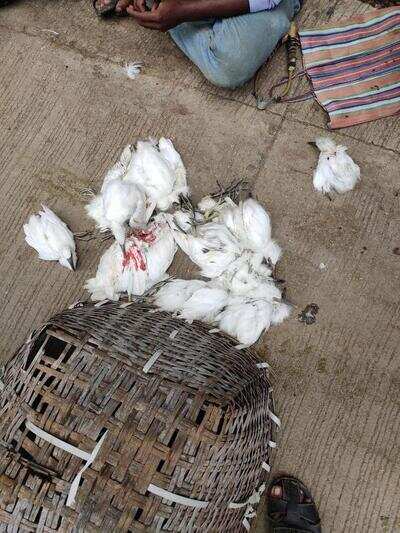
As per wildlife lovers, the accused were hitting the birds relaxing on a tree with slingshotsNagpur: The mobile squad of Nagpur forest division arrested three persons from Hudkeshwar (Budruk) in the city for hunting egrets. The officials seized 11 dead and 9 injured birds from them. All the accused belong to Chhattisgarh. The accused have been identified as Mahesh Solanki, Choradevi (Bilaspur), Nanduram Solanki, Junwani (Bhatapara), and Rakesh Malviya, Kora (Bilaspur). They were staying temporarily in the city under the Narendra Nagar bridge. Egrets are listed…