The United States Court of Appeals for the 9th Circuit ruled against the National Pork Producers Council and the American Farm Bureau Federation in their challenge to Proposition 12, the strongest farm animal protection law in the world. tongchuwit/iStock.com7.3KSHARES
Championed by the Humane Society of the United States, Proposition 12 is the ground-breaking animal welfare ballot measure passed by California voters in a landslide in 2018. It bans the extreme confinement of egg-laying hens, mother pigs and baby calves used in the veal industry, and prohibits the sale in California of eggs, pork and veal if they are the products of animals confined inside cruel cages.
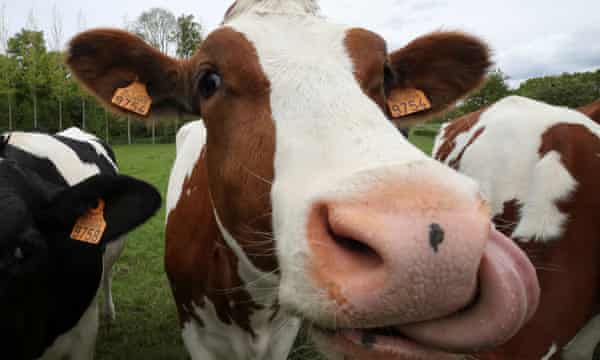
USDAProposition 12 bans the sale in California of meat produced using extreme animal confinement, like gestation crates, where pregnant pigs are kept for months, hardly able to move.
Today’s news comes just one month after the U.S. Supreme Court rejected a separate meat industry legal challenge to Proposition 12. The 9th Circuit’s ruling affirms what the HSUS and the Humane Society Legislative Fund have long advocated, and what courts have repeatedly held: that states have the right to pass laws that reject cruel products and protect their citizens’ health and safety.
The HSUS intervened to defend Proposition 12, along with Animal Equality, Animal Legal Defense Fund, Animal Outlook, Compassion in World Farming USA, Farm Sanctuary and the Humane League.
The vast majority of egg-laying hens, veal calves and mother pigs in the U.S. are locked in the type of extreme confinement systems Proposition 12 outlaws. Animals inside factory farms suffer horrifying abuses on a daily basis. For nearly their entire lives, egg-laying hens, mother pigs and baby calves are crammed in tiny, dirty cages where they can hardly move, leaving them unable to engage in many of their most basic natural behaviors. The cruel, filthy conditions have also been linked to zoonotic disease by the United Nations.
The HSUS and HSLF are battling every day to end this animal cruelty. Our legislative campaigns have resulted in the passage of farm animal protection laws in over a dozen states, and our corporate campaigns have convinced hundreds of food corporations to adopt cage-free policies. The transition to a more humane, safe and sustainable agricultural model is underway, and we urge the Biden Administration to support this effort.
Today’s legal decision makes it even more clear that the cruel caging of farm animals has no place in a humane society. We’ll keep making that point in boardrooms, legislatures, courtrooms and public discourse until the crates and cages are just a bad memory.
Sara Amundson is president of the Humane Society Legislative Fund.
With international attention continuing to shed light on Wisconsin’s reckless and grossly over quota February 2021 wolf hunt, the Department of Natural Resources (WDNR) remains tight-lipped about recent scientific reports that as many as a third of the state’s wolves were killed legally and illegally since losing federal protections in January of this year. Instead, WDNR officials are simply moving forward with plans for the next hunt in November 2021, while bear hunters continue to feed bears and wolves from thousands of intentional bait sites.
In 2020, more bear hunting hounds were killed by wolves than livestock in the state. Despite arguments for the February wolf hunt centering on the reported impact wolves were having on livestock producers, the biggest conflict that has hunters hating wolves more than any other game animal, is the killing of an average of two dozen bear hounds a year in mostly state and national…
ALBANY — The New York State Department of Environmental Conservation said Wednesday that hunting and trapping licenses and deer management permits (DMPs) for the 2021-2022 seasons are on sale.
In addition, DEC announced new opportunities for hunters this year, including expanded hunting seasons and allowing youth ages 12 and 13 to hunt deer with a firearm or crossbow in Upstate counties that have passed a local low and “opted in” to participate.
Angus Murray is suing Jason Stone for allegedly falsifying measurements of big game animals that he helped him hunt, such as a Roosevelt Sable Antelope.Shutterstock
A wealthy financial advisor claims a well-known game hunter swindled him out of more than $2 million — by faking the measurements of his high-profile kills to rack up accolades and drive up business, a new lawsuit charges.
Angus Murray, the CEO and founder of investment firm Castlestone Management, says alleged wolf-in-sheep’s-clothing Jason Stone falsified measurements of…
August 6, 2021 | 11:30amPopular Texas fishing guide Raymond “Skipper” H. Mock died after contracting a “flesh-eating” disease from an oyster cut.Facebook
A popular Texas fishing-boat guide tragically died last month after contracting a ravenous “flesh-eating” bacteria from a seemingly innocuous wound.
South Padre Island’s Raymond “Skipper” H. Mock, 61, had reportedly been infected with vibriosis, or fish poisoning — a bacterial infection most commonly associated with eating raw or undercooked seafood or exposing open wounds to water,the Houston Chronicle reported.Family and friends believe he most likely picked up the flesh-ravaging microbes through an oyster cut,according to Newsweek.
The fisherman officially died July 30 due to organ failure caused by sepsis, a “life-threatening condition that occurs when the body’s response to an infection damages its own tissues,”per the Mayo Clinic.
“It’s a very invasive disease,” said Dr. Sandra Lozano, a physician…
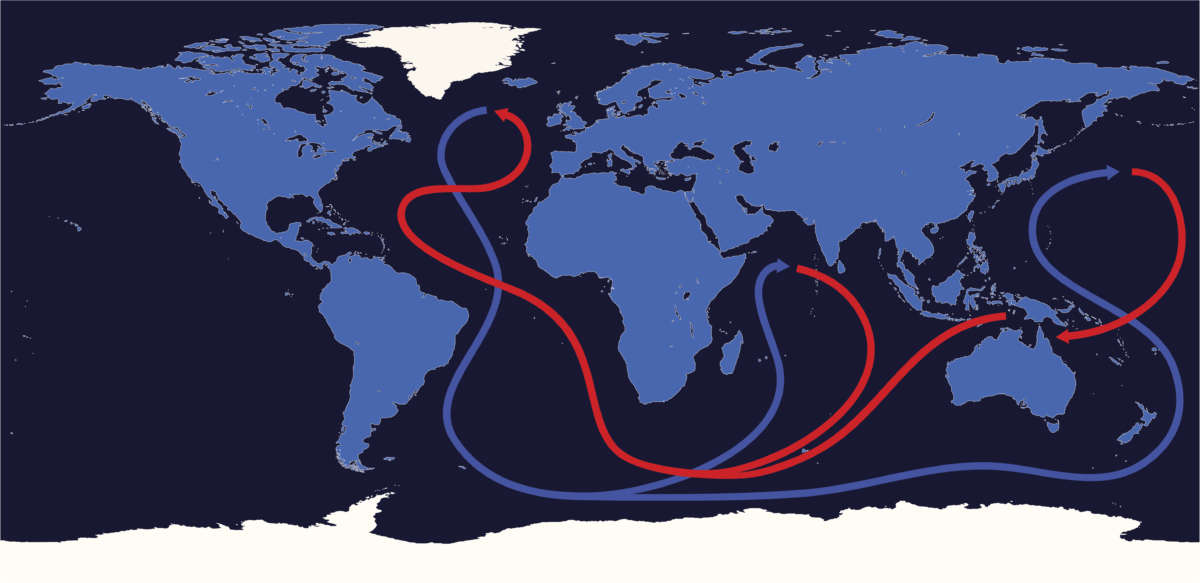
While heatwaves, fires, and floods produce warnings that “we are living in a climate emergency, here and now,” a scientific study suggested Thursday that a crucial Atlantic Ocean current system could collapse, which “would have severe impacts on the global climate system.”
The study, published in the journal Nature Climate Change, focuses on the Atlantic Meridional Overturning Circulation (AMOC), which includes the Gulf Stream. As the United Kingdom’s Met Office explains, it is “a large system of ocean currents that carry warm water from the tropics northwards into the North Atlantic,” like a conveyor belt.
Previous research has shown AMOC weakening in recent centuries. The author of the new study, Niklas Boers of the Potsdam Institute of Climate Impact Research (PIK), found that this is likely related to a loss of stability.
Don’t miss a beat
Get the latest news and thought-provoking analysis from Truthout.
Email
“The Atlantic Meridional Overturning is one of our planet’s key circulation systems,” Boers, who is also affiliated with universities in the U.K. and Germany, said in a statement.
“We already know from some computer simulations and from data from Earth’s past, so-called paleoclimate proxy records, that the AMOC can exhibit — in addition to the currently attained strong mode — an alternative, substantially weaker mode of operation,” he continued. “This bi-stability implies that abrupt transitions between the two circulation modes are in principle possible.”
In the absence of long-term data on the current system’s strength, Boers looked at its “fingerprints,” sea-surface temperature and salinity patterns. He said that “a detailed analysis of these fingerprints in eight independent indices now suggests that the AMOC weakening during the last century is indeed likely to be associated with a loss of stability.”
“The findings support the assessment that the AMOC decline is not just a fluctuation or a linear response to increasing temperatures,” he continued, “but likely means the approaching of a critical threshold beyond which the circulation system could collapse.”
As The Guardian’s Damian Carrington reports, the collapse of “one of the planet’s main potential tipping points” would be devastating on a global scale:
Such an event would have catastrophic consequences around the world, severely disrupting the rains that billions of people depend on for food in India, South America, and West Africa; increasing storms and lowering temperatures in Europe; and pushing up the sea level in the eastern U.S. It would also further endanger the Amazon rainforest and Antarctic ice sheets.
The complexity of the AMOC system and uncertainty over levels of future global heating make it impossible to forecast the date of any collapse for now. It could be within a decade or two, or several centuries away. But the colossal impact it would have means it must never be allowed to happen, the scientists said.
“The signs of destabilization being visible already is something that I wouldn’t have expected and that I find scary,” Boers told the newspaper. “It’s something you just can’t [allow to] happen.”
It is unclear what level of global heating would cause a collapse, “so the only thing to do is keep emissions as low as possible,” he added. “The likelihood of this extremely high-impact event happening increases with every gram of CO2 that we put into the atmosphere.”
Some climate action advocates responded to the study by highlighting a science fiction movie that, as famed film critic Roger Ebert wrote nearly two decades ago, “is ridiculous, yes, but sublimely ridiculous — and the special effects are stupendous.”https://platform.twitter.com/embed/Tweet.html?dnt=true&embedId=twitter-widget-0&features=eyJ0ZndfZXhwZXJpbWVudHNfY29va2llX2V4cGlyYXRpb24iOnsiYnVja2V0IjoxMjA5NjAwLCJ2ZXJzaW9uIjpudWxsfSwidGZ3X2hvcml6b25fdHdlZXRfZW1iZWRfOTU1NSI6eyJidWNrZXQiOiJodGUiLCJ2ZXJzaW9uIjpudWxsfSwidGZ3X3NwYWNlX2NhcmQiOnsiYnVja2V0Ijoib2ZmIiwidmVyc2lvbiI6bnVsbH19&frame=false&hideCard=false&hideThread=false&id=1423354708865990657&lang=en&origin=https%3A%2F%2Fwww.commondreams.org%2Fnews%2F2021%2F08%2F05%2Funimaginably-catastrophic-researchers-fear-gulf-stream-system-could-collapse&sessionId=82a4e79f48f64c64814c576ccb0afdb18090df3b&siteScreenName=truthout&theme=light&widgetsVersion=1890d59c%3A1627936082797&width=500px
“We all laughed at The Day After Tomorrow, back in 2004,” said Guy Shrubsole, policy and campaigns coordinator at Rewilding Britain. “Turned out it was a documentary.”
The environmental advocacy group 350 Tacoma responded to the findings with a call to action.
“There are warning signs that the Gulf Stream could collapse, an unimaginably catastrophic (and irreversible) impact of fossil fuel-caused climate breakdown,” the group tweeted. “Scientists say we cannot allow this to happen. People in power stand in our way.”
The study comes ahead of a United Nations climate summit in Glasgow set to begin October 31. Last month, U.N. Secretary-General António Guterres noted the upcoming event and reminded leaders of wealthy countries that “the world urgently needs a clear and unambiguous commitment to the 1.5-degree goal of the Paris agreement,” and “we are way off track.”
Exclusive: IPCC says gas, produced by farming, shale gas and oil extraction, playing ever-greater role in overheating planetFiona HarveyEnvironment correspondentFri 6 Aug 2021 02.00 EDT
Cutting carbon dioxide is not enough to solve the climate crisis – the world must act swiftly on another powerful greenhouse gas, methane, to halt the rise in global temperatures, experts have warned.
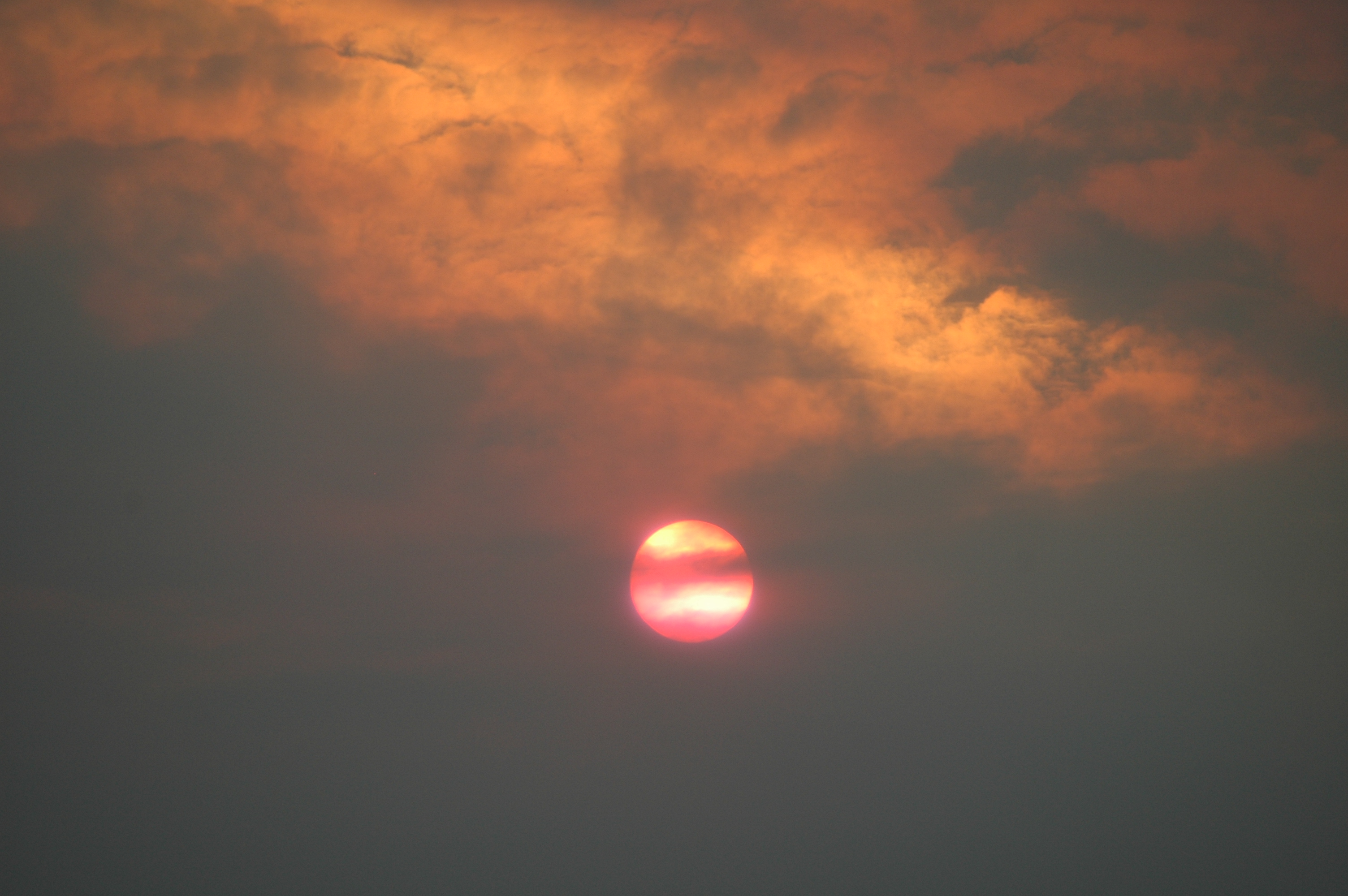
Leading climate scientists will give their starkest warning yet – that we are rushing to the brink of climate catastrophe – in a landmark report on Monday.The Intergovernmental Panel on Climate Change will publish its sixth assessment report, a comprehensive review of the world’s knowledge of the climate crisis and how human actions are altering the planet. It will show in detail how close the world is to irreversible change.
Greenland mass ice-melting event is latest worrisome sign of climate crisis
David Knowles·Senior EditorThu, August 5, 2021, 1:29 PM·3 min read
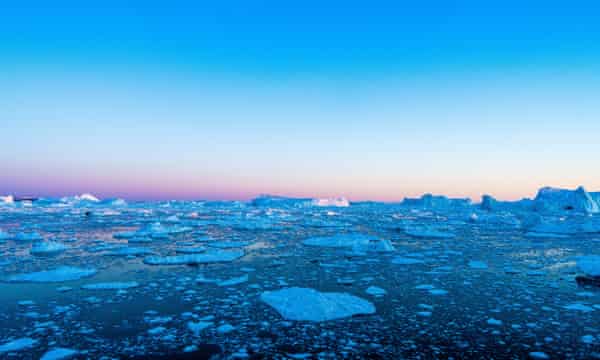
In recent days, Greenland’s massive ice sheet has been melting at twice its average summer rate, shedding enough water to cover the entire state of Florida with 5 inches of water, research from Danish scientists shows.
Greenland’s ice sheet covers just over 660,000 square miles and is 5,000 feet thick in places, but since July 27 it has lost 9.37 billion tons of ice due to rising surface and water temperatures in the Arctic and a recent heat wave that sent temperatures close to 70 degrees.
Rivers of meltwater carve into the Greenland ice sheet near the Sermeq Avangnardleq glacier in western Greenland in August 2019. (Sean Gallup/Getty Images)
“This ice melt is accelerating and it’s going to be unbelievable over the next decade or two,” Harold Wanless, professor of geography and urban sustainability at the University of Miami, told Yahoo News. “We’re just at the beginning.”
Wanless, who has spent nearly six decades studying the geological impacts of rising seas on global coastlines since the last ice age, noted that mass melting events have been occurring with greater frequency over the past 20 years.
“In 2012, when Greenland had their first dramatic melt across the whole ice sheet, it was unexpected,” he said. “That wasn’t in the models for decades to have anything like that. Now that has become pretty commonplace.”
The Greenland ice sheet. (Martin Zwick/REDA&CO/Universal Images Group via Getty Images)
In the summer of 2013, Wanless traveled to Greenland and was shocked by what he saw.
“The top of the ice sheet was amazing. The top 3 feet of it was soft with vertical holes where the water was melting down through this ice,” he said. “I had a friend who went further onto the ice sheet with a military group and they got out of their helicopters and were halfway to their knees in slush. That’s just a very unhealthy ice sheet.”
While summer melting of Arctic ice is not new, warmer ocean water has sped up the rate. A recent study found that while the Earth lost an average of 760 billion tons of ice in the 1990s, that rate grew to more than 1.2 trillion tons in the 2010s.
“When you’re in a warming climate and the presence of ice, you have these pulses of rapid collapse of ice and that’s what we have to look forward to,” Wanless said. “We just started melting ice in about 1990, and we’re seeing this rapidly accelerate in both polar areas.”
A shutdown would have devastating global impacts and must not be allowed to happen, researchers sayDamian CarringtonEnvironment editor@dpcarringtonThu 5 Aug 2021 11.08 EDT
Such an event would have catastrophic consequences around the world, severely disrupting the rains that billions of people depend on for food in India, South America and West Africa; increasing storms and lowering temperatures in Europe; and pushing up the…



 Popular Texas fishing guide Raymond “Skipper” H. Mock died after contracting a “flesh-eating” disease from an oyster cut.Facebook