The higher court ruled on an Alpena County court case in which hunter Jeff Payne claimed his father, David Payne, behaved recklessly when a gun the father held fired unexpectedly, resulting in the loss of two of the son’s fingers.
The father’s degree of responsibility for his son’s injury depends on whether it was reasonable for the son to believe he was safe as the two shared a blind, the appeals court said, sending the case back to Alpena courts for further consideration.
In the fall of 2015, the two experienced outdoorsmen participated in a European-style pheasant hunt, in which teams of hunters in two-person blinds…
Especially critical to otter well-being is the companionship of other otters, one of many necessities that captive animals used for “otter encounters” often don’t have.iStock.com1.3KSHARES
It is a sad reality that human beings always seem to be inventing new ways to exploit, mistreat and profit from animals, but people can also help correct such harms and point the way to a better and more humane world. One of the most positive actions we can take is to educate ourselves and others about the threats facing animals. We’re hopeful thatour recently released undercover videowill encourage people to steer clear of patronizing businesses that hurt and exploit wild animals. The video captures a cruel and unsafe practice that is becoming increasingly popular at roadside zoos and other animal exhibits across the country:otterencounters.
Our undercover investigator captured the screams and struggles…
Reporters raise their hands after U.S. President Joe Biden speaks about COVID vaccinations in the East Room of the White House in Washington, D.C., on August 3, 2021.
Tuesday’s strong winds stoked Dixie fire, which grew to over 395 sq miles across Plumas and Butte countiesGuardian staff and agenciesWed 4 Aug 2021 11.33 EDT
California’s largest wildfire exploded again after burning for nearly three weeks in remote mountains, with officials warning that hot, dry weather threatened to further stoke the flames.
Strong winds on Tuesday stoked the Dixie fire, which grew to over 395 sq miles (1,024 sq km) across Plumas and Butte counties. The blaze jumped perimeter lines in a few spots, prompting additional evacuation orders for…
By Ashley Strickland, CNN Updated 7:54 AM EDT, Wed August 04, 2021
(CNN)Earth hasn’t always experienced the 24-hour day we’re so familiar with now. In fact, the way the world turns not only determines the length of our day, but it could have contributed to an influx of oxygen on early Earth that helped life to flourish, according to new research.
Researchers studying a unique environment in Michigan’s Lake Huron used it to effectively look back at ancient Earth and how changing day length could have impacted the earliest forms of life that existed: tiny organisms called cyanobacteria.
Cyanobacteria doesn’t have a great reputation these days because it’s associated with toxic algae blooms in Lake Erie and other bodies of water. But this bacteria has been around longer than any other life form on Earth, and it was the first to convert light into energy through photosynthesis — and release oxygen as a byproduct.
Researchers began to wonder how an increasing day length on early Earth might have allowed cyanobacteria to create more oxygen and lead to a diversity in animal life.
“When the Earth-Moon system formed, days were much shorter, possibly even as short as six hours,” said study coauthor Brian Arbic, a physical oceanographer at the University of Michigan, in a statement. “Could this mean that changing daylength would have impacted photosynthesis over Earth’s history?”
When the moon became the Earth’s satellite, the tug of the moon’s gravity slowed down the rotation rate of our planet, leading to longer days. More sunlit hours would then have a positive effect on photosynthetic activity of cyanobacteria.
Answers in a sinkhole
Beneath Lake Huron is a bedrock formed from ancient seas that once covered the North American continent. This bedrock includes limestone, dolomite and gypsum, and over time, groundwater has dissolved some of it. This has formed cracks and caves, both of which have created submerged sinkholes.A scuba diver is shown observing the purple, white and green microbes covering rocks in Lake Huron’s Middle Island Sinkhole.
The submerged Middle Island Sinkhole in Lake Huron is where cold groundwater rich in sulfur and poor in oxygen seeps out of the lake bottom. While most plant and animal life avoid this area, microbes have found a home in this extreme environment 80 feet (24.4 meters) below the water’s surface. The brightly colored bacteria form colonies called microbial mats, and they are the perfect analog for researchers wanting to study similar colonies that once existed on land and the seafloor billions of years ago.New find shows animal life may have existed millions of years before previously thought
Today, two types of cyanobacteria form competing colonies here. One is a purple cyanobacteria that produces oxygen, while the other is a white bacteria that generates energy with the help of sulfur.
The sulfur-fueled bacteria lie on top of the cyanobacteria from dusk until dawn, which blocks their access to sunlight. But once the sun emerges, the top bacteria colony moves down and allows the purple cyanobacteria to start the photosynthetic process to produce oxygen.
“However, it takes a few hours before they really get going, there is a long lag in the morning. The cyanobacteria are rather late risers than morning persons, it seems,” said study author Judith Klatt, a geomicrobiologist at the Max Planck Institute for Marine Microbiology in Germany, in a statement.Space dust reveals clues about Earth’s early atmosphere
“I realized that daylength and oxygen release from microbial mats are related by a very basic and fundamental concept: During short days, there is less time for gradients to develop and thus less oxygen can escape the mats,” Klatt said.
By modeling the link between sunlight and oxygen production, Klatt and her colleagues discovered that the release of oxygen during two 12-hour days on early Earth would not match that of a 24-hour day. The study team’s findings showed a direct link between day length and how much oxygen can be released by microbes.Small hills and “fingers” in the mats of the sinkhole are caused by gases bubbling up beneath them.https://e3e2f857a4987e6c96ef14388d73b9e2.safeframe.googlesyndication.com/safeframe/1-0-38/html/container.html?n=0
“Simply speaking, there is just less time for the oxygen to leave the mat in shorter days,” Klatt said.
This suggests that two great jumps in oxygen on Earth, including the Great Oxidation Event more than 2 billion years ago and the Neoproterozoic Oxygenation Event between 800 and 540 million years ago, could both be connected to longer days on Earth.
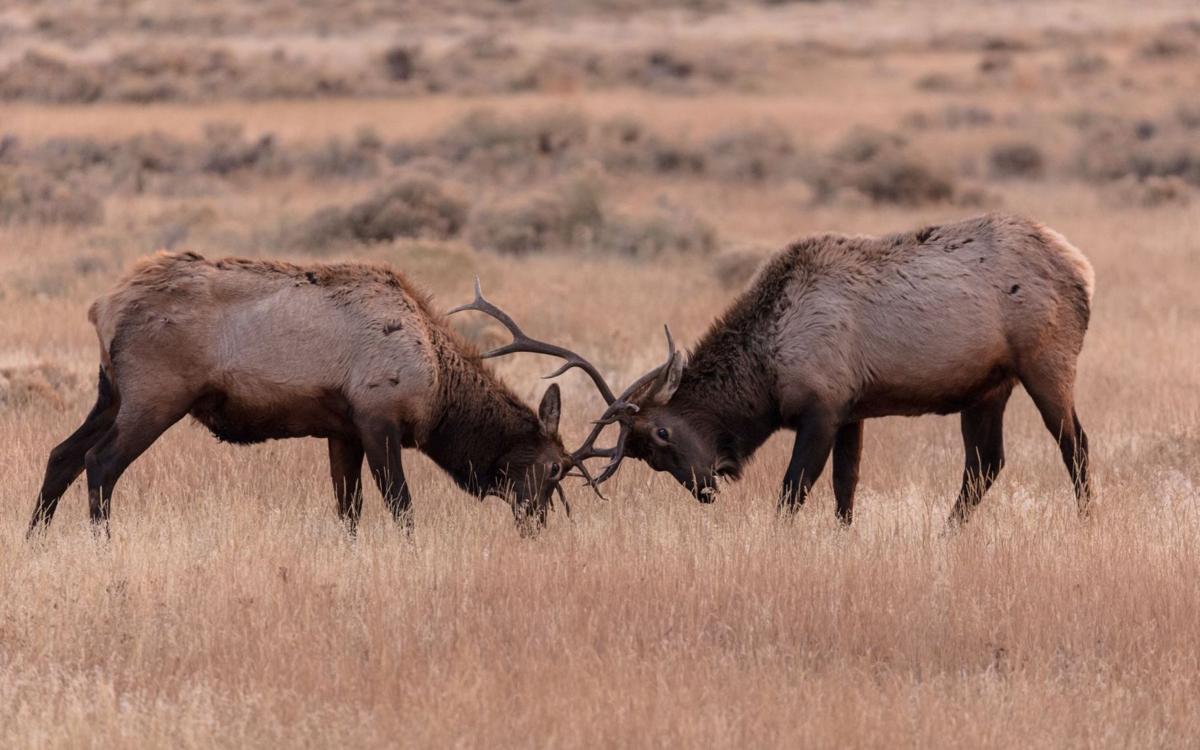
Hunting this fall could be largely shaped by the widespread drought hitting the state this summer, from potential access closures to impacts on wildlife fitness and location.
While some early hunts start in August, Montana’s hunting season really begins in earnest Sept. 4 with the start of the six-week archery season. On Oct. 23 general season kicks off for five weeks and ends the Sunday after Thanksgiving. And new for this year, traditional muzzleloader hunters will have their own nine-day season to chase elk and deer in December.
A bachelor group of mule deer bucks near the Missouri River in Chouteau County.USDA NRCS
Most big game herds fared pretty well following a mild winter by Montana standards. Cold snaps remained relatively short-lived with little lower elevation snow. And hunter success hovered around average levels in most parts of the state.
Persistent drought this summer affected green up with many areas of Montana reporting stifled grass growth. That can mean less nutrition for elk, deer and other wildlife.
“I think we’re seeing that doubled-edged sword,” said Brian Wakeling, Game Management Bureau chief with Montana Fish, Wildlife & Parks. “We did see a relatively mild winter and were looking forward to that with fawns and calves hitting the ground. But the real challenge for that of course is we’re also dealing with drought (and) fires. So while we might’ve seen some favorable winter survival, we may see some reduced survival in terms of recruitment and getting those young animals into adulthood.”
Montana’s wide expanses mean a variety of habitats and different species handle tough conditions better than others. Northeast Montana has seen a surge in mule deer populations so numbers likely remain favorable, Wakeling said. In the southeast, mule deer numbers are not quite as rosy.
Whitetails overall seem to be doing better than mule deer and elk tend to be less sensitive to extreme summer conditions, Wakeling said.
Lush grasses in the spring and summer are when animals bulk up for the stresses of fall ruts and winter, said Butte-area FWP biologist Vanna Boccadori.
“Any calves or young born this year are probably going to be pretty darn light going into the fall,” she said. “Adults just won’t have the fat, which can affect breeding potential so you could see this affect two generations of animals.”
New legislation has outlawed salmon farming in Argentina following concerns about sustainabilityby Jemima Webber2nd July 2021Updated 26th July 2021
Share:
Print
Reading Time: 2 minutes
The Argentine province of Tierra del Fuego approved a bill this week that bans salmon farming. The practice has come under fire due to concerns about sustainability.
The decision follows a proposal to begin farming in the Beagle Channel in Tierra del Fuego. According to MercoPress, it’s the only area that Argentina could feasibly farm salmon in.
Lawmakers unanimously approved the bill to ban salmon farming. The decision is the first of its kind globally.
Estefanía González of Greenpeace told the publication that ‘Argentina is making history’.
“This is very important because once this industry is installed it is very difficult to combat it, even when they commit illegalities and environmental disasters. The impacts they leave can be irreversible.
“In the eyes of the world, it manages to take a tremendous step towards protecting the ecosystem and also its culture,” she said.
Is salmon farming sustainable?
Salmon farming has attracted criticism for its impact on the planet and animal welfare. Fish farms spread parasites like sea lice to each other but also wild fish.
To combat this, farmers use antibiotics. However, these then enter the surrounding waters, contributing to antibiotic resistance in both marine life and the people consuming them.
“There is no right way to do the wrong thing,” González commented. “Salmons are an exotic species in the seas of Argentina and Chile, they are not a species that is present naturally.”
“Therefore the amount of chemicals and antibiotics that are needed for their production and the impact they generate on the ecosystem makes it is practically impossible for this activity to be carried out without environmental consequences.”
‘A reckless industry’
Faye Lewis, Head of Communications at vegan charity Viva!, said Argentina’s rejection of salmon farming is a ‘hugely significant moment’.
She said to Plant Based News: “It sets a real precedent for the rest of the world to follow. Salmon farming is a reckless industry that is responsible for huge environmental and ecological problems.”
Lewis mentioned ‘huge numbers’ of salmon mortalities, as well as the intensification of toxic algae blooms, and the entanglement of marine mammals.
She continued: “When Viva! ran an investigation into salmon farming we uncovered fundamental changes in the density and occurrence of lice in coastal waters. Our investigators also saw the putrid conditions first-hand which are a breeding ground for invasions of parasitic sea lice.
“Argentina is hopefully the first of many countries to take this huge step forwards.”
Photo of Sydney and her dad, Pete, courtesy of Brenda Burns
August 2, 2021
Online registration opens August 16
The Alabama Department of Conservation and Natural Resources’ (ADCNR) Division of Wildlife and Freshwater Fisheries (WFF) provides several youth dove hunt opportunities throughout the state each fall. A simple hunting setup combined with a fun, family-friendly atmosphere makes WFF’s youth dove hunts an ideal way to introduce young people to the outdoors.
Registration for this year’s hunts will open at 8 a.m. on August 16, 2021. Although the hunts are free, online registration is required. The first youth dove hunts of the 2021 season begin on September 4. For more information including a complete hunt schedule, visitwww.outdooralabama.com/youth-hunting/youth-dove-hunts.
Brenda and Pete Burns of Spanish Fort, Alabama, took their daughter, Sydney, to a youth dove hunt in Macon County in October of 2020. Sydney, who was 9 at the time…
On July 29, a coalition of 70 conservation, Indigenous, and animal welfare groups filed a formal petition with the U.S. Fish and Wildlife Service (USFWS) to re-list the gray wolf as an endangered species throughout the American West under the Endangered Species Act.
The gray wolf has been protected under the Act since 1978, and since then, wolf populations have increased in Illinois, Indiana, Iowa, Michigan, Minnesota, Missouri, Ohio, Wisconsin, Washington, Oregon, Montana, Idaho, and now California.
On January 4, of 2021, USFWS announced that Canis lupus had recovered and was no longer listed as Endangered under the Endangered Species Act. That means that management of wolf populations fell to states.
It is estimated that roughly 1,500 gray wolves live in Idaho, and in May of this year, Idaho lawmakers passed S1211, a bill that enables the year round trapping of wolves on private property. Wolves can be trapped, snared, poisoned, or shot, and an unlimited number of hunting tags will be issued. Governor Brad Little signed the bill into law, which took effect on July 1.
In Montana, lawmakers passed three bills that enable the hunting of wolves. SB224 would enable the use of chokehold snares. HB225 extends the wolf trapping season by 30 days. SB267 is a bill that effectively brings back bounties, or payment of expenses, for killing wolves.
But petition concerns go beyond new hunting laws and regard “poaching, genetic problems associated with low population levels, fragmented habitats, and disease outbreaks that strike at random, potentially reducing populations below critical thresholds.”
The petition calls for the U.S. Fish and Wildlife Service to protect wolves in the West as a “Distinct Population Segment.”
“Wolves remain completely absent from suitable habitats or perilously close to extinction in many western states, and the handful of states surrounding Yellowstone National Park are now driving the larger populations toward extinction — endangered species listing — by ramping up wolf killing and stripping away hunting and trapping regulations in Montana, Idaho, and Wyoming,” said Erik Molvar, a wildlife biologist and Executive Director of Western Watersheds Project. “This petition gives Secretary Haaland and Interim Director Williams a legal and scientific blueprint for restoring federal protections and counteracting the irresponsible state policies in Idaho, Montana, and Wyoming.
“The American West has vast tracts of public lands that offer ideal habitat for gray wolves,” said Molvar. “In order to return the wolf and restore the balance of nature, it is necessary to apply federal protections that supersede anti-wolf state politics that push wolf populations toward extinction rather than recovery.”
PUBLISHED MON, AUG 2 20213:26 PM EDTUPDATED 2 MIN AGOAnnika Kim Constantino@ANNIKAKIMCSHAREShare Article via FacebookShare Article via TwitterShare Article via LinkedInShare Article via EmailKEY POINTS
GOP Sen. Lindsey Graham commended the Covid vaccine after testing positive for the disease, saying that his “symptoms would be far worse” without it.
Senate Judiciary Committee Chairman Sen. Lindsey Graham (R-SC) attends the Senate Judiciary Committee executive business meeting on Supreme Court justice nominee Amy Coney Barrett in Hart Senate Office Building, in Washington, DC, October 15, 2020.Tom Williams | Pool | Reuters
GOP Sen. Lindsey Graham on Monday lauded the Covid vaccine after testing positive for the disease, saying that his “symptoms would be far worse” without it.
Graham, 66, said in a tweet that the House physician notified him he tested positive despite being fully-vaccinated. The South Carolina Republican said he begun having…







 A scuba diver is shown observing the purple, white and green microbes covering rocks in Lake Huron’s Middle Island Sinkhole.
 Small hills and “fingers” in the mats of the sinkhole are caused by gases bubbling up beneath them.

 by


